by James Holden

Stephen Hough’s recording of Liszt, ‘Bénédiction de Dieu dans le solitude’, Harmonies poétiques et religieuses, S.173/III on the CD Rhapsodie espagnole; Mephisto Waltz; Bénédiction de Dieu  released on Virgin as 724356112926.

There are moments when the piano ceases to sound like a box full of hammers being thrown against metal. It ceases to be a blacksmith’s instrument, all anvil-struck notes, all blows and impact.

Stephen Hough’s performance of Liszt’s ‘Bénédiction de Dieu dans la solitude’ is one such moment.

I first heard this recording when I was still relatively unversed in the nineteenth-century piano repertoire. I had listened to some Chopin and knew a few of Mendelssohn’s Songs Without Words.I wasn’t familiar with anything by Schumann and knew no Thalberg, Alkan or work by any of the other virtuosos.What little I knew of Liszt I had learnt from reading, and not least from those references to him in Proust.

Like so many other happy cultural discoveries, I first borrowed the CD on which this recording is to be found from the local library (Barnsley). It was there on the racks with the other discs, compilations, popular classics, opera box sets and the like. Stephen Hough, Liszt: Rhapsodie espagnole; Mephisto Waltz; Bénédiction de Dieu.I turned it over, looked at the track listing on the back, weighed it up and then walked it to the desk. I thought, ‘Why not?’

The love I immediately felt for the ‘Bénédiction’ made me a confirmed musical Romantic.There is something in its combination of simple melody and complex accompaniment that, from the very first notes, seems to care for me, the listener, and seeks to protect me. This is not just music to love but music by which one is loved. I’ve only ever had this same feeling with a few other recordings, including Björk’s song ‘Undo’ from her 2001 album Vespertine.

Under Hough’s hands, Liszt’s notes spread outwards; they diffuse themselves. There is nothing struck here, or so it seems, nothing metallic. All is radiated.

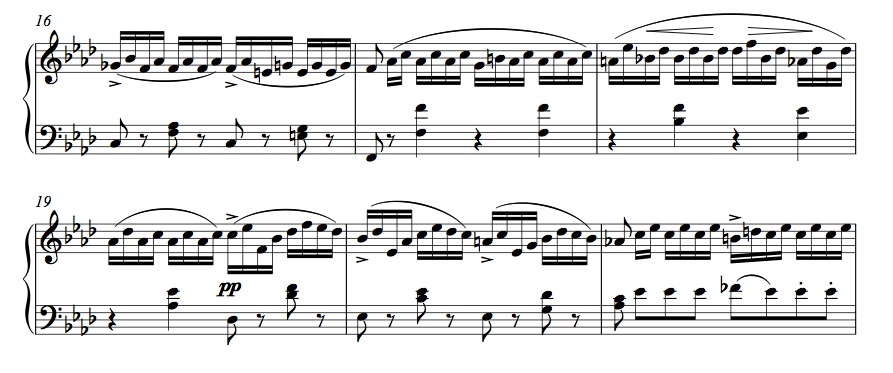
Hough’s gestures respect both the work’s grandeur and the composer’s profound religiosity whilst never straining for emotion or effect. Consider, for example,the moment when the right hand part is extended by a series of arpeggios (the passage marked ‘poco a poco animato il Tempo’ on the score). The upper notes seem to open out of the main melodic material, as though the chord was always already there, in the tune, and has only now risen to an audible volume.What great touch on the keyboard; what pedal control!

No other performance of the ‘Bénédiction’ has affected me in quite the same manner. Leslie Howard’s recording of it for Hyperion is undoubtedly brilliant but its brilliance is that of the bright midday sun reflected off of polished stone surfaces. It’s a little too insistent, too sharp edged, a performance whose volume and clarity causes the overall effect to be lost. The more Howard makes things visible the harder it is to see the work. I own a recording of Claudio Arrau playing this piece that is, by contrast, seemingly formed of those reflective stone surfaces themselves. It gives the impression of blocks of notes being moved into place. The Andante is especially hard, too clearly delineated, too marked in outline.

For all its wavering poetry, Hough’s performance is unwaveringly certain of the work’s coherence. As the piece stretches out to over seventeen minutes this is very welcome – essential, even. To take some examples: we can sense the connection between the partial melody in bars 44-49 and that in the later ‘quasi Preludio’ passage; and at the end of that same Preludio, just before the return of the main melodic material, Hough calls our attention to the communication between the hands, the passing backwards and forwards of the notes. In the Coda we can feel everything combine in one final, calm cadence.

Hough’s recording has affected my own playing. I’m only an enthusiastic amateur at best and doubt that I’ll ever be able to play the ‘Bénédiction’ properly and in full (I can play the comparatively simple Andante and quasi Preludio sections). However, my joy at listening to this recording did lead me to learn Liszt’s ‘Schlummerlied’, another work in F♯ major, one with a similar, albeit much simpler, repeating C♯-D♯ right hand figure. When I worked at this piece it was like working at a ‘Bénédiction’ in miniature, only one within my ability range.

As the piece ends, as the last chord dies away I have felt myself suspended, unwilling to speak or move, to intrude into the space created by Liszt and Hough.

Dr James Holden was born in Ashford and educated at Loughborough University. He graduated with his PhD in 2007. He is the author of, amongst other things, In Search of Vinteuil: Music, Literature and a Self Regained (Sussex Academic Press, 2010). His website is www.culturalwriter.co.uk and he posts on Twitter as @CulturalWriter

© James Holden 2014

Many people regard piano teaching as a vocation rather than a profession, including some who are active practitioners, and I have encountered many people outside the profession of piano teaching who regard the role as some kind of superannuated “hobby”: on one occasion the parent of one of my (former) students actually said to me: “You’re so lucky to be able to do your hobby as a job”, thus totally overlooking the fact that I take my job as a piano teacher very seriously, and regard myself as a professional within the sphere of piano teaching.

But how to define “professional” with regard to piano teaching?  Sally Cathcart, a musician, educator, researcher and director of the Oxford Piano Group, has been exploring the issue of professionalism and piano teaching in a series of posts on her blog The Curious Piano Teacher, and she poses some interesting questions about the definition of a professional:

  • Do you consider yourself a ‘professional’ piano teacher? What, in your view, makes you a professional?
  • How is your piano teaching validated ? By reference to others’ expectations or by continuous questioning of fitness for purpose?
  • Do  you adhere to a set of professional standards or teaching principles, either your own or others?
  • Do you think that being a member of a group that represents professional musicians and teachers (e.g. EPTA UK, ISM, MU) is relevant to your work as a piano teacher?

Do visit Sally’s blog to read her articles on this subject. and to respond to these questions, or contact me via my Contact page and I will pass on responses to Sally.  This is an area which is of great interest to myself and many of my piano teaching colleagues, and I would be most interested to hear people’s responses.

Read the full text of Sally Cathcart’s article here

Links to Sally’s previous articles:

Being Professional – the beliefs and attitudes of UK piano teachers

Two Stories about Piano Teachers

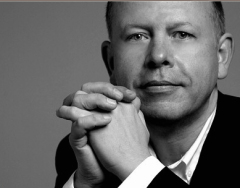
Daniel Grimwood (photo: Ian Dingle)

Who or what inspired you to take up the piano, and make it your career?

I owe everything really to Charlie and Ciss Hammond, who were our next-door neighbours when I was a toddler in Kent; they had an upright piano on which I used to fiddle around. Although I don’t come from a musical background it must have been apparent to my family that I was musically inclined very early on. I was too young to remember much about it, but my guess is that it was exactly the same instinct which makes us learn language as children. I was extremely fortunate that my first teacher, Dr Jennie Coleman currently of Dunedin, was beyond excellent and gave me a very solid foundation at a very early age.

Who or what were the most important influences on your musical life and career? 

Originally I had intended to be a violinist. At that time Yehudi Menuhin was it! I think the experience of having been a good string player has shaped my way with the piano.

Later on I hero-worshipped (and still do) Sviatoslav Richter and I am lucky enough to have been one of the few of my generation to have heard him live outside of Russia, an experience I shall never forget. No recordings represent what I heard on those evenings.

As I get older two figures return to my work over and over again; if I face a thorny technical problem or one of those little niggles where the head contradicts the heart I will ask, “what would Graham Fitch or Peter Feuchtwanger recommend?”. I believe the advice of these two men will always be a guiding light.

Being a pianist is less about playing the piano than it is about being a human being. The numerous extra-musical things which have made me who I am have also made me the artist I am. A musician can only express what they are and what they know.

What have been the greatest challenges of your career so far? 

I’m in my early forties and still a musician – that is challenge enough.

Which performance/recordings are you most proud of?  

My complete Faure Nocturnes. I recorded it in tremendously difficult emotional conditions. My whole heart is in it and it is the recording I feel most accurately mirrors my inner being.

Although I move forward from past stuff quickly, I will always take pride in my Liszt and Erard project. The concert at the Wigmore was a definite high point in my career and I can still bear to listen to the CDs, which is unusual for me. (http://www.youtube.com/watch?v=h_wSsz-K8Cg)

Which particular works do you think you play best? 

Schubert

How do you make your repertoire choices from season to season? 

I am a Gemini and my mind is always jumping from place to place, this has given me a very large repertoire so my choices are more often than not subject to passing whim.

Do you have a favourite concert venue to perform in and why? 

Give me a piano that works and people who want to listen and I will play.

Favourite pieces to perform? Listen to? 

This changes by the hour though I always seem to return to Schubert and Liszt who I think of as artistic brothers. Last year I subjected my home village of Brenchley to the entire first book of the Frescobaldi Toccatas, which I was in love with at the time – the following week I performed Liszt. I have a hungry mind and like not only to know the music posterity calls great, but the music around it.

Mostly I listen to music other than piano. I love the Organ and wish I were clever enough to play it well. I listen to the Symphonic repertoire most and lately I have been much impressed by the Symphonies and Cantatas of Sergei Tanayev.

I listen to the Monteverdi Vespers every Christmas and I love them.

Who are your favourite musicians? 

I favour different artists for different qualities. Some because they resonate with my nature, others because they challenge my nature. For example, I have long loved Ignaz Friedman, and there is something in his improvisatory streak that I recognise in myself. On the other hand, Daniel Barenboim, a pianist who couldn’t sound more different from me in many ways, fascinates me. The tone production is extraordinarily concentrated. I can’t get enough of his late Beethoven at the moment. I have worn out Stephen Hough’s CDs of the Saint-Saëns Concertos and I’ve lately very much enjoyed listening to Maria Joao Pires play Chopin with unusual depth. I just bought a splendid recording of Bart van Oort playing Field and Chopin Nocturnes on original pianos with highly original extemporisations. I could carry on…there are so many of us! But what is amazing is that we all have something totally different to say.

I can’t not mention Ingrid Haebler – hardly anyone I know has heard her Schubert Sonatas yet it is some of the most cultivated music making I have ever heard.

What is your most memorable concert experience? 

One in a London hotel where a leg fell off the piano.

What do you consider to be the most important ideas and concepts to impart to aspiring musicians? 

Follow your own instincts at all times. Arm yourself with as much knowledge as possible. Know your audience – all of them – and always remember that music is a birthright not a luxury. Never forget that we are the luckiest people alive; our job is our hobby – however difficult a life in music gets, and at times it really, really does – never lose sight of how much you love your art.


Where would you like to be in 10 years’ time?

In front of a piano

What is your idea of perfect happiness?

Dvorak in the bath by candlelight…

What is your most treasured possession?

My family

What do you enjoy doing most?

Outside of music, running

What is your present state of mind?

Contented


www.danielgrimwood.co.uk

The Old Sorting Office (OSO) arts centre in Barnes, SW London, provides a vibrant and busy community for artists and audiences to gather and interact. The Centre opened in September 2002 and provides a venue for theatre and live performances, art exhibitions, dance classes, music, drama for all ages and abilities, writers’ groups, Yoga, Pilates classes, education opportunities… in fact, anything and everything!

Yvonne Evans, Barnes resident and indefatigable concert promoter, is currently engaged in a fundraising campaign to secure £10,000 for the purchase and upkeep of a Steinway grand piano for the OSO, a beautiful historic instrument with a fascinating provenance, generously donated by Susan Tod Boyd, whose late husband David Tod Boyd, was a long time Barnes resident and an illustrious member of London’s musical life. For details of how to contribute to the OSO Steinway Fund, please contact Yvonne direct on Yvonne7star@live.co.uk

10579992_903606133112854_1779029172401043231_n

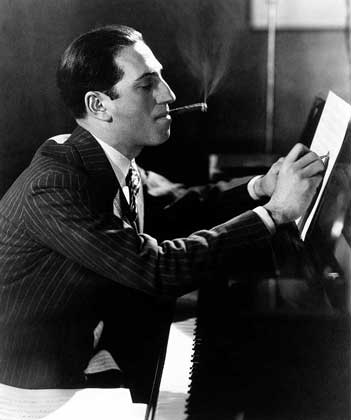
The piano will be unveiled in a special concert at the OSO on Saturday 9th August. ‘Classic Gershwin’ explores the world of ever-popular composer George Gershwin  by weaving his vibrant music with the fascinating story of his life – from his birth in the colourful, teeming New York of 1898 to his tragically early death in 1937. David Tod Boyd loved Gershwin so, fittingly,  this concert will be dedicated to him.

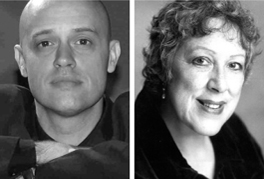
With prize-winning pianist and famed Gershwin interpreter Viv McLean and renowned classical actress Susan Porrett narrating, this music and words concert presents an eclectic mix of Gershwin’s music from the much-loved Rhapsody in Blue, I got Rhythm Variations and Swanee to the rarely-played, classical Preludes and the virtuoso challenge of the Piano Concerto and offers an intriguing insight into Gershwin’s little-known, many faceted personal history.

‘Classic Gershwin’ is the third words and music collaboration between actress/writer Susan Porrett and pianist Viv McLean, and comes in the wake of their much-loved Shakespeare show ‘Touches of Sweet Harmony’ and the critically acclaimed ‘Divine Fire’ – the story of Fryderyk Chopin and George Sand, which has now toured throughout the UK for three years.

‘Classic Gershwin’ is at the OSO Barnes on Saturday 9th August at 7.30pm. Book tickets

The formal dedication of the Tod Boyd Steinway will be on 23rd September at the Grand OSO  Black & White Piano Party – a celebration of  the piano and musical theatre in music and words featuring pianists Bobby Chen, Anthony Hewitt, Viv McLean and GeNIA, poet Graham Roos and actress Susan Porrett and friends. The legendary Fenella Fielding will officially launch this very special piano. Further details and tickets here

www.sevenstarconcerts.com