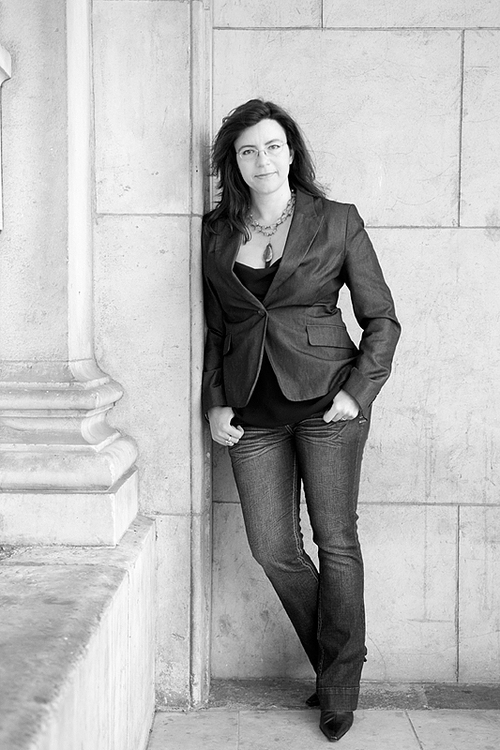
Guest review by Tristan Jakob-Hoff

Whatever you may think of Ivo Pogorelich’s piano playing, there is no doubt you will think *something* about it. He’s not a pianist who inspires an indifferent shrug, nor a polite round of applause. With Pogorelich, you’re either with him, or against him.

I found my position wavering during his Royal Festival Hall performance on 24th February. There were moments where his eccentricities utterly overwhelmed the music, smothering it in a blanket of weirdness. Entire passages verged on – and frequently crossed the line into – incoherence. His slow tempos constantly felt like they would break off and stop altogether. Faster sections were often magicked into slow sections, seemingly just to see what would happen.

So: infuriating, yes. But this is Pogorelich. We know this about Pogorelich. This is why the RFH was only about three-quarters full for a pianist who would once have sold it out easily.

The thing is, sometimes all those mannerisms and bizarre quirks coalesce into something magical. And that happens more frequently than we might have been led to believe by his reviews over the last decade or so. Those moments where he hits just the right wavelength and makes you feel like you’re wandering around inside the music, gazing at the melodies and counter-melodies and harmonies and rhythms as though they were exhibits in an art gallery. In these moments, you notice things you’d never noticed before, discover a hundred shades of pianissimo you never knew existed, comprehend the most obscure of connections between notes. Those moments can revitalise even the mangiest of warhorses.

Other times, of course, he misses that special wavelength completely and turns in a clunky, thumping performance of Stravinsky’s ‘Three Movements from Petrushka’, or a disjointed, unmusical opening movement of the Schumann ‘Fantasy in C’. It’s telling that his best performance tonight was of the Brahms ‘Paganini Variations’, whose short contained little blocks of music offered few opportunities for epic self-indulgence.

And yet, I think it is the strange and beautiful closing movement of the Schumann I will most remember from this evening. It’s a piece I sort of play myself (slowly, with many wrong notes and retakes) and yet it felt thoroughly unfamiliar in Pogorelich’s hands, as if he were inventing it there and then. It’s that sense of spontaneity and discovery that makes Pogorelich a special artist. Yes, he may frequently discover utterly perverse new ways to play something. But even those failures are fascinating, and worth hearing.

In an age where young musicians are hewing ever closer to a uniform, idealised style of performance – as exemplified by whatever classic recordings they’ve heard growing up – here is a resolutely individual performer who sounds like he’s never heard another pianist in his life. We need more Pogorelichs in our world, in all their perverse, egotistical, infuriating and ultimately scintillating glory.

Tristan Jakob-Hoff is a freelance writer and critic based in London. He plays the piano not nearly as well as he would like to.

Teacher and pupil took the stage at London’s Wigmore Hall on Friday 20th February in a joint concert by Maria João Pires and Pavel Kolesnikov featuring late works by Schubert and Beethoven, and Schumann’s love letter in music to Clara Wieck, the Fantasy in C, Opus 17.

Pavel Kolesnikov © Colin Way

Pavel Kolesnikov, the young Siberian pianist who has already garnered many prizes and much praise for his playing, is a soloist of the Music Chapel in Brussels, studying with Maria João Pires as part of her ‘Partitura Project’ which offers a benevolent relationship between artists of different generations and seeks to thwart the “star system” by offering an alternative approach in a world of classical music too often dominated by competitions and professional rivalry. In keeping with the spirit of the Partitura Project, the pianists shared the piano in two works for piano four-hands by Schubert and each remained on the stage while the other performed their solo. From the outset, this created a rather special ambience of support and encouragement.

Read my full review here

What is your first memory of the piano?

I saw and played a piano when we were visiting one of my father’s colleagues at his family home. It was a long visit, and I had time to explore: I fell in love with it at first sight and although I was around 4 years old, I remember I sat and tried to play using my fingers. I was glued, and although my parents looked a bit embarrassed I had taken over somebody’s possession, they were clearly impressed. Apparently our hostess tried to impress on my parents I should start lessons.

Who or what inspired you to start teaching?

My piano teacher in Greece, the well-known concert pianist and pedagogue D. Toufexis, a Julliard graduate and former Lateiner pupil along with concert pianist Danae Kara, both staff at The American College of Greece, inspired me to maintain a portfolio career. I loved how I could go see them perform at major venues and festivals and then have the privilege of private conversations and lessons with them.

Who were your most memorable/significant teachers?

The teacher who inspired me to become a musician was the head teacher of a large, state primary school in a well-to-do leafy suburb of Athens. He was himself a frustrated violinist with real passion for music education. His class produced three concert pianists (me included), one musical theatre singer-actress, and a musicologist. Yet the school was an ordinary non-selective state one.

Who or what are the most important influences on your teaching?

I finished my studies at the conservatoire in Greece, yet I knew that I could not trust myself to teach. When I came back from my Master of Music studies in the US at West Chester University of Pennsylvania (1994), I felt I could tackle anything: intensive courses in piano pedagogy were compulsory and included teaching practicums under supervision. At the end of my studies, my teachers were very eager to impress on me the need for certain books which became my bibles, especially the Denes Agay books on Teaching Piano, and were packed in my already impossibly heavy suitcases. Greece at the time felt quite cut off in many ways, and I still remember sending and receiving letters to the US which took about a couple of months: this was the era before Internet and Amazon!

Most memorable/significant teaching experiences?

Despite having taught at all levels for at least 20 years, I still remember being 10 or 11 and helping my friend practice her sonatina. After about 20 minutes her mum couldn’t help herself anymore and stormed in with my mum to stop me from what she thought was merely distracting my friend. My friend whispered “thank you”, as I had helped her to repeat sections rather than play through mindlessly. Years after, when we met again, the first thing she remembered was how grateful she was for helping her practice that one time. I’m sure her mum is still not convinced, but I know it was the earliest confirmation that I could actually be of real help, and is certainly my fondest memory.

What are the most exciting/challenging aspects of teaching adults?

I’ve been teaching adults almost from the beginning of my career. Challenges, except for time constraints, include self-imposed limitations, mainly arising from clashes with self-image, and definitions of achievement and prospects. That’s why my best adult student to date is a hard working dad of three who is totally committed to his lessons because he sees it as personal growth.

What do you expect from your students?

A certain level of commitment: I can inspire, demonstrate and explain, but I can’t force them to practice. There needs to be an initial interest, and in the case of younger students, there has to be parental support.

What are your views on exams, festivals and competitions?

Exams and festivals can be great motivators while providing benchmarks of attainment. Competitions are both exciting and a necessary evil: as long as there are transparent selection processes they have a place in one’s development. I think it is important for a musician to enter any form of competition trying to achieve playing their personal best (rather than focusing on being better than the other competitors). At the same time it is important to come into contact with one’s peers. What I do not like is the message that one has to comply with what’s expected – and certainly there are pianists who are unhappy at the suggestion of modifying their affinities for certain repertoire. I also do not condone excessive emphasis on performativity at younger ages: young children and teenagers should not be criticised for being their awkward selves on stage, especially if this does not interfere with projecting the music.

What do you consider to be the most important concepts to impart to beginner students, and to advanced students?

Smart practice, healthy posture-technique, and fingering, along with reading notation and counting are all concepts presented from the very first lessons and reinforced throughout the studies. Style and phrasing, along with pedalling, however, take a lot of exposure to repertoire and are more gradually introduced.

What are your thoughts on the link between performance and teaching?

My preference is for teachers who teach by example, as I found it most exciting to watch my own teachers perform. I am therefore a performer who teaches pupils how to perform on the piano, rather than how to play the piano. To perform is more than just pressing keys as instructed through notation: it is to communicate without the burden of words. The process of learning to perform is a complicated one of empathy with the perceived intention of the composer, and of enculturation.

Who are your favourite pianists/pianist-teachers and why?

Martha Argerich is a firm favourite for her transcendental technique, as are the Labeque sisters. I saw the Labeque sisters perform live in Greece and their communication and poise were simply amazing. From my own teachers, Dimitri Toufexis taught me a lot about projecting phrasing through physical gestures, Danae Kara stepped in as my mentor at the early stages of my career and pushed for a totality of conception in extended works. Dr. Bedford introduced me to Alexander Technique and Tai Chi to focus the mind, and my dearest Dr McHugh taught me how to control my hands and the piano keys in what she termed “slow key-depression”. Martino Tirimo and Elena Riu will always occupy a special place for being so flattering and incisive as duet coaches.


Natalie Tsaldarakis is a concert pianist and member of the Ivory Duo Piano Ensemble. Natalie has also been active as a lecturer, piano teacher and examiner since the 1990s.

In 1994 Natalie was invited to membership by the American National Music Honour Society Pi Kappa Lambda for excellence in performance and she has been the recipient of numerous awards and prizes, including first and second place winners in piano competitions in the US, and Greece (MTNA Wurlitzer Collegiate Competition, West Chester State University Concerto Competition, the Pottstown Orchestra Competition, Deree College Faculty Development Award, WCU Graduate Development Award etc.).

Since 2005 Natalie has been based in London, UK. Between 1995 and until 2005, Natalie was artist teacher in residence at the American College of Greece as well as piano professor and examiner for Greek conservatoires of music including the National Conservatory of Greece.

Natalie has performed extensively at various venues and festivals in the UK and abroad, including the Southbank Centre, St John’s Smith Square, Oxford University, St-Martin-in-the-Fields, Glasgow City Halls, Sibelius Academy, Athens Concert Hall, Fairfield Halls, Winchester Cathedral.

Natalie has recorded both solo and with the Ivory Duo Piano Ensemble for the National Greek Radio (ERA-1, ERA-3), and has appeared on Greek television, and UK’s Resonance FM 104.4. The duo’s CD “Romantic Dance Music for Piano Duet” was requested by the Archive for Greek Music and Musicians (Lilian Voudouris Library, Athens Concert Hall) and hailed as an important musical event of international standing by the Greek specialist press.

http://natalie6784.wix.com/ivoryduopiano

https://m.youtube.com/Ntsaldaraki

http://www.twitter.com/Ntsaldaraki


Who or what inspired you to take up the piano and make it your career?

The San Francisco Symphony concerts I attended as a child were my inspiration.  I also attended concerts by brilliant young musicians in Belgrade that were just as inspiring.

In college I studied mathematics, but music seemed like a bigger challenge.  It seemed like a bigger risk too; that attracted me.  Also, I intuited that a career in music would be a more enriching way to develop as a person.

Who or what were the most important influences on your musical life and career?

At a pivotal moment in my musical development, just before I moved to France, I met Steve Coleman, a saxophonist, improviser and composer.  By a stroke of luck, my final year at university coincided with the year he was in residence there.  Studying improvisation with him changed everything for me.  He is the most inspiring musician I’ve ever met.

But in general I’ve learned more from non-musicians than from musicians.  Music is a technical subject; as a result musicians often have limited horizons.  The most important lessons I’ve learned were from personal experience, analogies I drew from other fields, and my own research.

What has been the greatest challenge of your career so far?

The reconciliation of my intellectual curiosity with my career as a performer.  I’m starting to find ways of combining the two.  But for years it was terrifying to be in a field where there is so little critical questioning of the fundamentals.  The typical performer’s career is, in many ways, anti-intellectual.  One is expected to act, and to leave the thinking to others.  Countering that trend has become a guiding principle for me.

Which performances/recordings are you most proud of? 

Recordings are more important to me than performances.  From experience, I know not to trust in-the-moment feelings I have at concerts.  Performances feel like experiences, whereas recordings feel like achievements (or failures).  Studio recordings are, first and foremost, an incredible tool for self-knowledge.  I can’t imagine my musical life without them.  For musicians, a recording is “proof” that they can do something.  It’s a powerful message.

Further, the ability to edit has elevated recording into a process of constructing a version of a piece that is what you would like it to be, within the limits of what you can do.  Recordings have become frozen, idealized performances that can be revisited.  Making them is exhilarating.  At its best, a recorded version of a piece feels like it has an almost physical weight, or inertia, like a sculpture.  It’s built to last.  If it’s good enough, it does.

People often remark that recordings rarely have the same “magical” atmosphere as a fine performance.  There does seem to be a Faustian bargain involved: you trade the feeling of communion with an audience for a musical artifice.  But the insight you gain and the ability to spread the music are just two of many reasons why recordings have become an unavoidable part of how we experience music.

A friend of mine suggested that performers make recordings as a way of compensating for the fact that they don’t “create”.  It’s an interesting idea.  But my reply is that recordings are proof that we do create, that playing is a creative act.  The ability to forge an interpretation that doesn’t instantly evaporate has destabilised the work-performance dichotomy, which has become outdated.  Now there is a trichotomy: work, performance, and recording.  One might even say that recordings are neither performances, nor works, but something in between.  Or perhaps they form a triangle.  The position of recordings is ambiguous and hard to pin down.

This has certain philosophical implications.  For example: does an excellent recording erode the importance of the score?  What is the essence of the work: the dots on the page?  The sounds that result when you play the dots?  Your intention, the ideal that you strive for, or the actual sounds themselves?  A combination of all of these?  These questions are important, and when you try to answer them you realize how elusive they are.  Strangely, classical music is a field in which many people get angry if you even ask such questions.

The recording of sound is only about 140 years old.  It is the musician’s printing press.  We still haven’t come to terms with the extent to which it has changed musical culture.

Which particular works do you think you play best?

Any work I’ve never heard before.  When I have no reference points I am the most free.

How do you make your repertoire choices from season to season?

It’s changed over the years.  I used to play repertoire at the intersection of my interests and those of concert promoters.  Now things are much more skewed towards what I feel I must do, for myself.  I’ve come to rely on fear as a guide for finding the right repertoire.

My left-hand Godowsky project (2012) is an example.  When I had the idea, I was petrified.  As I began to pursue it, many people tried to talk me out of it.  The amount of work was overwhelming.  But it was a great success, the reaction was like a tidal wave.  It allowed me to break out from my generation, and from the pernicious influence of other people’s opinions.  The experience transformed me.

Do you have a favourite concert venue to perform in and why?

Before an important recital I often play for a friend at home, a few days before.  Always a non-musician, and always someone I trust.  The person is only 2 meters away, which makes it very difficult.  But the one to one communication is powerful.

Favourite pieces to perform? Listen to?

At the moment my favourite piece to perform is Morton Feldman’s Palais de Mari (1986).  I’ve never heard audiences listen as intently as they do when they listen to it live.  I expect that in ten years the piece will become mainstream, i.e. it will be programmed alongside Chopin, Debussy, and Scriabin.

When it comes to listening, nothing replaces the physical vibrations and the welling-up of emotion one gets when listening to a first-rate orchestra, live, in a great hall.  And, contrary to popular opinion, we live in an age with many worthwhile composers.  I heard a wonderfully glamorous orchestra piece by Péter Eötvös recently, the orchestra sparkled.

Who are your favourite musicians?

For the past two years my favourite musician has been Morton Feldman.  His works have deeply affected me, as well as his interviews and his lectures about music.  He’s taught me so much, even though he’s been dead for 27 years.

What is your most memorable concert experience?

There have been concerts where I had epiphanies that permanently changed my playing.  Those are the most memorable.

Progress is not linear in music.  You can labour for weeks on something, then one day it comes together.  Sometimes the practice accumulates.  But other times you just try something differently and – bang! – you understand something you never understood before.  For musicians, as with athletes, these moments are usually coupled with a new physical sensation.  Sometimes there is even a transcendental sense of being “connected” to something.

One example was a recital I gave in 2006.  Because the audience was seated all around me in an intimate setting, I changed my gestures at the piano, making them more expressive, because it fit the moment and the sound of the room.  I could never have planned it, I just did it.  And that aspect changed permanently from then on.  Being in a new situation seems to be an important common factor with these experiences.

What do you consider to be the most important ideas and concepts to impart to aspiring musicians?

Read.  Write.  Refine your mind as well as your musicianship.  Cultivate what makes you different from others.  Exercise.  Don’t underestimate the importance of sleep.  Socialize with people with whom you have nothing in common, preferably of all ages.  In addition to music school, study at a university and take classes in as many diverse subjects as you can.  Demand access to the best teachers.  Listen to them carefully and with scepticism.  Never compromise anything having to do with your education.  If a subject is difficult for you, ask for help.  Eat well.  Be wary of distractions (read: smartphones).  If you can, live somewhere other than where you were born, preferably in a foreign language; it’s the best cure for arrogance.  Be generous: if you pursue a living as a musician, chances are you were the recipient of selfless generosity from dozens of people over the years.  Say thank you.  Never let anyone tell you you can’t, or won’t succeed.  You will.

What are you working on at the moment?

Improving my learning speed.  It’s interesting how if you focus on improving one quantifiable aspect of your playing, everything else tends to improve with it.

Ivan Ilić recently released a new CD on Heresy Records entitled The Transcendentalist, featuring works by Alexander Scriabin, John Cage, Morton Feldman and Scott Wollschleger (b 1980). The album has enjoyed substantial critical acclaim and is broadcast often on six continents.  

Ivan Ilić’s full biography

http://www.ivancdg.com