
Who or what inspired you to take up the piano and pursue a career in music?
My parents bought a piano, at first just as a piece furniture, when I was aged 6, and (so I am told!) I asked them ‘When am I going to have lessons?’ They said ‘Oh, hadn’t thought about that’, but I went to lessons with the local piano teacher (in Hartlepool), Christopher Simmonds, who was great in many ways. Within a year he could see that I had the potential to go places, and I went to Chetham’s when I was 10.
But I got inspired to really go with it mostly through taking music out of my local library and bashing through it at the piano, as well as listening to lots of recordings. I bashed my way through the whole of the Ring cycle, and lots of other operas, and got absolutely hooked. And then at around age 10, I first heard music of Stockhausen, Cage and Messiaen, and was instantly transfixed (I also read the Richard Kostelanetz volume on Cage which was available then, in the late 1970s). I just found a world of the untethered imagination there which was unlike anything else I knew in life. I was equally interested in composing in those days, too. Nowadays, composing is very occasional, but I do have plans to do more at some point when time permits!
I was very inspired by listening to a few pianists at an early stage – Brendel, Barenboim (I still love Brendel in particular); later on I got to know a much wider range, and was transfixed by Horowitz, Cziffra, Rosenthal, Hofmann, Gieseking and various others. But listening to recordings of Furtwängler and Karajan conducting Beethoven, Wagner, Musorgsky, Strauss, and so on, was every bit as important.
I think I just naturally took to the piano as an instrument – I could do a lot on it without it being too difficult at an early stage, though it was later that I really refined all sorts of technical things.
Who or what were the most important influences on your musical life and career?
Too many to mention! I would like to try and honestly say something about how humanistic and socialist values are the most important influences, right down to how I play music, but that might sound very loaded. In some sense which is very very important to me, I want as a musician to somehow expand, even if only a small amount, the range of experience, consciousness, thoughts, desires, feelings, ideas, available in the cultural realm, to as many people as possible. This is of course a huge ambition, only ever likely to be achievable with a relatively small few, but that is still valuable. I play, and play in what some would say is a relatively uncompromising manner, because I believe in humans, believe in listeners, believe in their potential. I despise elitism for its own sake, but equally despise dumbing-down, and those who claim to be on the left who think culture should be reduced to a lowest common denominator in the name of some pseudo-egalitarian notion of ‘accessibility’. There is absolutely no reason whatsoever why a relatively average human being (if such a person exists!) could not engage with music of Lachenmann, or Ferneyhough, or Nono, or Finnissy – or late Bach, late Beethoven, Brahms, Debussy, Schoenberg, Ornette Coleman, or whoever – if they are open-minded and prepared to put a bit of effort in. I came to all this stuff for that reason – it certainly was not instilled in me through canonical education or anything like that. The same is true of the most advanced literature, film, theatre, painting or other artistic medium.
I am an academic and university lecturer as well as a pianist, teaching a range of musical areas, not just performance-related. I cannot express how rewarding it is to me when I read essays from students, many of whom have only had a relatively limited exposure to music and ideas thereof upon coming up to university, writing intelligent and incisive essays on musical subjects. I can be uncompromising as a teacher as well – I do not wish to provide pre-digested ideas to be parroted unthinkingly, nor to preach some credo in order to gain followers. There are unfortunately plenty in higher education today who primarily look to students for self-validation, rather than looking to bring out creative and critical thinking in students themselves and listen to what they have to say; and towards that former end some teach via spoon-feeding in a way that to which some will respond positively. I just want to expose students to a range of music and ideas that they might not otherwise have encountered (and, alas, in many cases still will not even after a university education), and let them arrive at their own conclusions, even if they are radically different to my own. And in some ways I feel the same way about giving a performance – I do not really feel any need or desire to win listeners round to my own perspective, I just offer it up for them to arrive at their own perspective.
To answer this question more directly, perhaps unsurprisingly I would say that the most important influence on my playing was my main piano teacher, György Sándor, with whom I studied in NYC in the early 1990s. I discovered his book On Piano Playing: Motion, Sound and Expression when I was about 18, and it completely transformed everything about how I play, at least in a physical sense. I knew then that this was who I wanted to study with, where I would find what I had not found with previous teachers. I had no teacher for the next four years as I prepared above all to study with Sándor, and I was not disappointed at all. He was also a tremendously generous, warm, human being, entirely void of any type of affected grandeur, preciousness, or anything like that. We disagreed violently about various things – he had no time for any atonal music, or much after Bartók, and also little time for historically-informed approaches to performance. I did and do disagree with him strongly on both those things, but still admired the coherence of his positions. As a teacher myself, I teach in a way based upon his pianistic methods, which I continue to believe are move valuable than any other systematic approach. Having spent a lot of time (not least in a scholarly context) studying other schools of playing, I see many of their limitations; some Russian schools preclude a pointed attack and to my mind rather restrict the range of articulations as a result, whilst some French schools (not all!) make a true legato impossible.
I could name any number of composers whose work has been an influence in one way or another, but that probably goes without saying; amongst performers, all of those mentioned above, and then very different ones including David Tudor, Frederic Rzewski, Andreas Staier, all sorts of singers, string players, conductors, and others, some pop and jazz musicians, lots of writers, film-makers, and so on. Overall – perhaps as a natural extrovert in some ways – I feel a natural empathy with all types of artists who I seem able to externalise somehow, and in whose work I find a type of honesty (a much maligned category, but which I continue to find meaningful – perhaps I might put it better by saying a quality of vulnerability?) rather than cynical calculation or preciousness. For those reasons I love the playing of Gieseking, or Charles Rosen, say, but have much less time for that of Alfred Cortot or Edwin Fischer or Samuel Feinberg.
What have been the greatest challenges of your career so far?
There have been many. I like to think I am something of an idealist, though my ideals have changed or at least been modified over time (I’m 48 now, and think quite differently to how I did 20 years ago, say, though the underlying motivations are similar). I’ve always felt somewhat estranged from what I perceive as the rather precious and snobbish culture which surrounds classical music, and have sought approaches other from those which satisfy that culture’s concomitant expectations, but without this entailing musical compromise.
That has taken many forms, some of them hard-line to the point of belligerence, and sometimes led to some resistance. In some cases, deliberately avoiding a particular approach was interpreted by some as a simple inability to do it, which I don’t think was true, and I could get disappointed by this. I wouldn’t deny that I’m sensitive to criticism, though inwardly some of my own criticism can be as harsh – though not necessarily of the same nature – as that of anyone. Not that I expect everyone to like all I do (I don’t like everything I’ve ever done), by any means, but at least realise that this is a conscious choice rather than knowing no better. Towards the end of the 1990s, I moved towards more of an ‘anti-romantic’ position, with implications in terms of general approaches to articulation, voicing, pedalling, and so on (though with flexibility), at the same time becoming more deeply interested in historically-informed performance; in the mid-2000s I wanted to relax this more and more. Coming to terms with how one used to play, when things have changed, is not easy – and maybe my approach will change again?
Feeling truly at ease with concertising – at least as much as one can do (nerves never completely go away for me at least) – is not something I think I achieved regularly until the late 1990s, a little bit into my performing career. I made a lot of very significant technical adjustments when working with Sándor, and just sometimes, when very tense, I found I might revert inadvertently to some of the bad old ways. In time, I came to see how this might come about, and which preventive steps to take in advance of a concert.
Overall, dealing with the internal politics of the profession, and some of the poison therein which exists, is very hard and wearing. The depths to which some people will sink shocks and upset me – for example when I heard one composer invent a story about another one’s father beating him up (definitively not true – that latter composer would have told me long before he told the other person) in order to portray him as mentally unstable. Certainly in the end the music we produce matters more than the musicians, but musicians are human beings, and it is far too easy to lose sight of this in the name of some elevated aesthetic ideals. Ultimately human interests do matter more than art.
In terms of academic music, I’m in many ways quite at odds with the dominant ideologies and approaches in a sizeable part of the Anglo-American world (perhaps less so with other schools from elsewhere). There is a good deal of musicology (though by no means all) which distrusts music and especially its particular quality of ambiguity, wanting instead to pin it down to firm, fixed meanings, or investigate anything except for the actual sounding music. And at the same time there is the strong presence of a market-based ideology, especially in the so-called ‘new musicology’, which is utterly dismissive of the idea that there could be any music with some degree of autonomy from commercialism, or that there could be any value in such a thing. As such, many academic musicians have put up little resistance to a lot of dumbing-down of wider education, not to mention cuts to public funding of classical music. Some will happily consign a good deal of Western art music to the dustbin when it seems fashionable to do so, and in the process deny a lot of students help with grappling with a repertoire which those academics themselves could take for granted (you can read more of my thoughts on some these subjects on pp. 28-29 of the following – http://www.sma.ac.uk/wp-content/uploads/2016/02/SMA_newsletter_2015.pdf ). In quite a bit of musicology, I see a bit of a cynical jostling for position, which privileges whatever are the ‘right’ conclusions in order to win favour with particular factions, as well as what are often quite simple arguments bathed jargon in order to impress. My models for academic writing (not ones I remotely think I could match!) are the likes of Charles Rosen, or Richard J. Evans – extremely clear and intelligent writers who convey complex ideas but have an ability to communicate to a wider public. At the same time, I do not accept what a ‘reductive’ view of music in terms of its social context; no music or other culture can probably be entirely autonomous of such a thing, but still, most fundamentally, I believe in the importance of culture which does more than simply reflect its conditions, but can reflect back critically upon them, in various ways, not least by offering up the possibility of other types of experience than those otherwise provided by its context. To deny that is really to deny creativity, I would say. This is an unfashionable view in academia today, but one which is vividly apparent to me coming first and foremost from the world of musical practice.
To make a more general point, one about which my thoughts have been influenced by regular conversations with many other academics in many institutions: I would say the corporate structures of much contemporary academia, and the ways in which power is distributed and exercise, can work against academic freedom and the possibilities for critical thinking. The very principles of independent rational and critical thought can be strongly at cross-purposes with hierarchical organisations which reward conformity and compliance. Some are unbothered by this, so long as they can derive personal gain and advancement. With this can come bullying, though attempts to ostracise scapegoat anyone who doesn’t go with the flow. I have seen, heard about, and experienced this sort of thing.
But nothing is more of a challenge than coming to terms with the extent of abuse, mistreatment and bullying in music education and the wider musical world. In early 2013, the former Director of Music at my old school, Chetham’s, was found guilty of sexually abusing a pupil, Frances Andrade, from when she was 14; she tragically took her own life during the trial. I and others knew that this was far from the only case at Chetham’s – in particular the atrocious way in which the case of Chris Ling (a serial abuser at the school, who fled the country (at first together with six girls from the school) to avoid prosecution, and who shot himself when facing extradition last year) had been hushed up.
Why did I get involved with all of this? I think that, as a musician and an educator, I have felt for a very long time (perhaps in part as a response to the toxic culture which existed in my time at Chetham’s) that there can be a hideous conflation of supposedly artistic, aestheticized values, and a culture of dehumanisation and brutalisation. I don’t want to exaggerate this parallel, but I was influenced by some of my academic research into aesthetics and fascism, seeing how a fundamentally aesthetic view of humankind can lead to an easy way to utterly dehumanise those who do not fit that aesthetic vision (see for example Frederic Spotts’ work on this subject). A lot started to make sense to me more clearly than ever, and my belief in the vital importance of working for a music world in which despicable behaviour was not excused by the veneer of artistry became hardened. Michael Brewer epitomised everything that was wrong, something I saw but maybe did not fully comprehend when at school.
Anyhow, after the verdict, I hosted on my blog (http://ianpace.wordpress.com ) a petition calling for a public inquiry into abuse in musical education in general (all types of abuse – sexual, physical, psychological). Within a couple of weeks, I had got thousands of signatures from the musical profession, including many former pupils from the five specialist music schools. But with this, a great many people wrote to me with testimony of their own awful experiences, glad that at last there was a climate where people might be prepared to believe this had happened. As a result of this, I had inadvertently become an expert on the subject, and there was no turning back (this was not information I could easily turn over to anyone else). I submitted the petition to the appropriate authorities, but didn’t get much positive response. I came to realise that if I was to be taken seriously on this subject, I needed to know more about the wider issues of abuse (which to politicians and others seemed more significant), especially if abuse in music might be connected to these. This led me to the case of Alan Doggett (a conductor associated with Lloyd Webber and Rice, based at Colet Court School and then elsewhere), and to the organisation PIE (I don’t want to go into detail on this now – you can look on my blog for more). It took over a significant part of my life for an extended period – I have pulled back a little now, but am still active, and have compiled many documents on the basis of my research.
You cannot imagine how upsetting and frightening this can become – I had heard people say so, but never really had the measure of it until I actually felt it first-hand. The personal toll this has taken has been immense, both in terms of state of mind, relationship, and many other things, and it has coincided with other difficulties (including some other academics exploiting the situation to try and undermine my work in general). It is also impossible to avoid getting caught up in the wider politics of this, which is complicated by the fact that there are clearly some involved with other agendas, some far from benign, and also simply the fact that there are inevitably some very damaged people there. This has been the biggest challenge of my life. But I don’t regret doing it at all.
Some might want to use this issue to undermine classical music in general. In no sense is that my agenda – I care about that music very deeply, but want to see it practised and taught in a more humane environment. This should not be impossible.
Which performance/recordings are you most proud of?
Performances: mostly I go away from them thinking of the things I was least happy with, but as time goes on I come to think a bit more positively. Not through listening to recordings (I rarely record live concerts from choice – live performance and recording are to me fundamentally differently mediums, as much so as theatre and film), but just having time to reflect and digest. I recall being quite pleased with a concert in Leeds in 2010 where I played Finnissy’s English Country-Tunes, probably the best I have played it. I also greatly enjoyed a concert the previous year as part of my leaving event at Dartington College of Arts, where I used to teach. This included the Fauré Nocturne No. 4, Janáček In the Mists, and Stravinsky Three Movements from Petrouchka and Rebecca Saunders’ Mirror, Mirror, on the Wall. There was a performance of Stockhausen Klavierstück X I gave at City University in 2014 which I think was not bad at all. What else? Radulescu’s Third Sonata in Leuven in 2007, in an extra concert after the main one (where I had given the premiere of the Sixth Sonata). And a performance of Feldman’s For Bunita Marcus right back in 1997, within the context of a series of the music of Howard Skempton. And any number of performances of Christopher Fox’s More Light, which I adore. Also a performance of Lachenmann’s Serynade in Aberdeen last autumn. And a concert in the Festival d’automne in Paris in 2002 where I played all of the Dusapin Études (the premiere of the complete set) and Beethoven’s Diabelli Variations. One concert in my home town of Hartlepool in 2014, with Debussy, Ravel, Stravinsky, Janáček, and Earl Wild’s Fantasy on Themes from Porgy and Bess. These are a handful of those about which I feel reasonably happy.
Recordings: harder to say, because soon after they are released, I stop listening to them. When you have dissected them in the process of preparation, you know all the things which didn’t quite turn out how you wanted them too, and those become more difficult to handle with every listening. My recording of Dusapin’s Études and piano concerto À Quia is not bad, also that of Walter Zimmermann’s piano works, at least some of them. And I’m not unhappy with my biggest recording project to date, that of Finnissy’s The History of Photography in Sound, a 5-CD set.
Which particular works do you think you perform best?
I’m less and less convinced about how well a good deal of repertoire from before around the mid-19th century works on a modern piano, so can’t imagine that I play much of that particularly well now. Best? Some Liszt, Brahms, some Debussy and Ravel, Bartók, Stravinsky, Messiaen, Stockhausen, Cage, Feldman, Ligeti, Xenakis, Lachenmann, Kagel, Rzewski, Ferneyhough, Finnissy, Sciarrino, Radulescu, Dusapin, Fox.
Chopin I adore (and above all I see as a contrapuntal composer), but I’m never really convinced that I can do what I want to on a modern instrument. The same is true of Schumann (all that thick passagework in the central registers is one reason his music is mistakenly assumed to be somewhat muddy). Scriabin I continue to try to negotiate (I find its exaggerated qualities can lead to banality, and have too much of an ironic sensibility to take all that mysticism and affected sensuousness at face value) with mixed results. Schoenberg is hard to bring off.
How do you make your repertoire choices from season to season?
In many cases, depending upon what I get asked to play! But I like to expand what I do, as well as playing some of my well-ingrained repertoire. In the last few years I’ve been doing various new things – the transcriptions by Earl Wild of music of Rachmaninoff and Gershwin, the amazing Piano Sonata of Sergei Zagny, more recent work of Christopher Fox, whilst on my own looking more at composers like Florent Schmitt and Frederic Mompou. I want to play more lesser-known Slavic music of various types. This year I played the Dukas Sonata for the first piece, and have been documenting the process for an article on practice-as-research.
I hope at whatever age I will continue to champion the works of younger composers. In many ways that is the most important thing to do. Of course not everything is fantastic, but if these people do not get a proper hearing, we will never know which stuff is.
I love playing new work. I’ve just premiered an incredible new piece by Finnissy called Beethoven’s Robin Adair, and later on in the year I will be playing new works by Lauren Redhead and Patrícia Almeida. I cannot say how excited I am about this.
Do you have a favourite concert venue to perform in and why?
Various ones I have enjoyed: the main radio concert hall at Bayerischer Rundfunk, the Berliner Konzerthaus, the Warehouse in London. In general, venues without tiered seats sound best!
Favourite pieces to perform? Listen to?
To perform: many things mentioned above! Above all Liszt, Debussy, Stockhausen, Lachenmann, Finnissy, Radulescu, Dusapin, I think.
To listen to: then things get much broader. I can listen to any amount of medieval music of whatever type, though some music of the Renaissance leaves me cold (but I like Josquin, Ockeghem, and then later Marenzio (very much) and Gesualdo). After that, much of what I listen to is from the nineteenth and twentieth (and twenty-first) centuries. I adore a great deal of opera (and teach a module on it). I also listen to a good deal of jazz of all periods, and have a real love for British jazz of the 1930s and 1940s – Henry Hall, Ambrose, and so on. A good deal of popular music – perhaps more British than American, though I go for 1940s and 1950s American music of many types, and then stuff of Hendrix, the Doors, and Zappa and Beefheart on one hand, and lots of Motown and Chicago funk on the other.
All sorts of music which I find somehow culturally significant, I suppose. My listening habits are extremely eclectic and catholic, but not undiscerning, I hope.
Who are your favourite musicians?
Again – see the above! I also am drawn to many historically-informed performers and groups: Harnoncourt (especially), Goebel, Europa Galante, Il Giardino Armonico, Music Antiqua Köln, Frieburger Barockorchester the ORR and Gardiner, countless medieval vocal groups (but not so much those in the British traditions). I love the work of Ensemble Organum under Marcel Pérès, and also that of my university colleague Alex Lingas’s group Cappella Romana.
Some other pianists as well as those mentioned before: Josef Lhevinne, Ignaz Friedman, Egon Petri, Grigory Ginsburg, Earl Wild, Julius Katchen, Paul Jacobs, Jörg Demus, Aldo Ciccolini, Lazar Berman, Friedrich Gulda, Samson François, Kristian Zimerman, Dezsö Ránki, Marc-André Hamelin, Janusz Olejniczak, Bart van Oort.
Some other composers beyond those listed above who are favourites: Adam de la Halle, Guillaume de Machaut, John Dunstable, Guillaume Dufay, Marenzio, Monteverdi, both Scarlattis, Frescobaldi, Biber, Purcell, J.S. Bach, Rameau, Couperin, Charpentier, Vivaldi, Mozart, Beethoven, Schumann, Chopin, Bellini, Donizetti, Liszt, Wagner, Verdi, Bizet, Musorgsky, Rimsky-Korsakov, Fauré (cannot hear enough of his music), Albéniz, Ives, Debussy, Ravel (every work is worth hearing, many times), Puccini, Rachmaninoff, Schoenberg up until the early 1920s, and then from the late 1930s, Varèse, Bartók, Kodály, Percy Grainger, Pierre Boulez, Jean Barraqué, Dieter Schnebel, Luciano Berio, Luigi Nono, Sylvano Bussotti, Franco Evangelisti, Josef Anton Riedl, Hans Otte, Galina Ustvolskaya, Hans-Joachim Hespos, Ivo Malec, Nicolaus A. Huber, and lots of others.
What is your most memorable concert experience?
The final concert in my 1996 series of Michael Finnissy – the high I felt after that was really something. Various occasions where I have stepped in at the last minute to play things. I can do this, and sometimes it generates such a level of adrenalin that the performance has something particularly special, even if it feels knife-edge! A few occasions where I really didn’t know if it was going to be possible: the world premiere of Brian Ferneyhough’s Opus Contra Naturam in Leuven in 2000 (finished just three days before the concert), or of Wieland Hoban’s when the panting STARTS four years later in the same place.
Playing with lots of singers, having the chance to play operatic repertoire I love so much.
It is difficult to answer this question, really.
What do you consider to be the most important ideas and concepts to impart to aspiring musicians?
Find a really good technical approach as early as possible – remember there is loads of quackery around. For pianists, if anyone tells you to play with your elbows locked into the body, or with a fixed wrist, find someone else instead.
Listen to all types of music, you can never listen to too much. And listen to many types of performers, and really listen – when you find something really striking, see if you can see how that is brought about. And don’t just listen to your own instrument, or even your own musical genre. For pianists, listen in particular to singers, but also to orchestras. Listen to music from outside of Western traditions. Look for music you would not encounter otherwise.
Try and have some experience of all of the following: keyboard, singing, percussion. All vital skills. Learn at least basic harmony and counterpoint as early as possible, and develop aural skills as best as possible. Get used to being able to listen intently and mentally analyse many musical and aural phenomena you encounter. Read more widely about music, music history, music theory, and lots of critical questions surrounding music.
Do lots of sight reading from an early age – that is how the skill is developed (spending time bashing through opera scores and the like when I was young helped immensely here). I can’t stress enough how important a skill this is, and how much one needs to be able to absorb music and get into a performable state in a short amount of time in a professional career, and with all the other pressures and demands of life.
If any teachers or others try to dismiss the music you care about, on grounds of its being allegedly elitist, Eurocentric, or whatsoever, remember they almost invariably have a chip on their shoulder about it for other reasons. Stand up for what you believe in against such people, even if they are your teachers.
Become more widely conversant with many arts – literature, poetry, theatre, film, painting, sculpture, architecture, etc. and ideas, and the world in general. Understand what you can about the cultural, social and historical context of the music you play, but try and understand the context in which you are playing it too. Look outwards as well as inwards. Embrace the world and people with all their imperfections. Remember how much you can always learn from others. Try and imagine yourself inside the mind of someone who shares few of the same core assumptions about music and culture as yourself. Then you will have a clearer idea of how you might be able to communicate with them.
Take on board two bits of advice I heard from different pianists: Peter Donohoe once said that when young and starting out, do whatever you can that is to do with music, it will all benefit. John Lill once said that a musician has to be very sensitive to the music they play, but very insensitive to all the crap they will put up with because of the politics of the profession. Both of these are very good pieces of advice.
Where would you like to be in 10 years’ time?
Mostly doing the same type of thing, perhaps a bit more recognition, feeling a more supportive general environment in society as a whole (with a different complexion of government) for what I believe. Having issued more recordings and writings. Maybe composing some more. Commissioning lots more new works. Remaining in good health as I approach 60!
What is your idea of perfect happiness?
Just spending time together with my wife Lindsay, in a nice place, such as in Italy.
What is your most treasured possession?
My piano and my books.
What do you enjoy doing most?
Playing, reading, listening, eating and drinking well, cycling, teaching, and being with Lindsay. Seeing friends and people in general.
What is your present state of mind?
Somewhat anxious, distrustful, ever-aware of how easily corruptible and awestruck by power so many people are. Concerned about the world is getting even more ruthless and inhuman all the time, and how fear is being stoked to breed prejudice. The US might elect Donald Trump President – that is terrifying, and speaks of a wider malaise in that society. Also concerned to see classical music and other forms of demanding artistic education get lost (or rather, become restricted to those privileged enough to have an elite education) in a mire of relativism and eschewal of value judgement. Preparing to go on strike tomorrow against real-terms cuts in pay for academics, casualization, and gender inequality. But still ultimately hopeful and optimistic, refusing to give in to complete cynicism.
I think I feel very internationalist in outlook. And as inspired as ever when encountering creativity. That’s why I remain an optimist, however jaded by experience.
I would like to mention another project I am involved in, crowd-funding to make a recording of the piano music of Marc Yeats. This is something I so want to make happen, and has less than two more weeks to run. Full details, and ways of supporting the project, can be found here – https://ianpace.wordpress.com/2016/03/26/my-recording-of-marc-yeats-piano-music-please-support-this-project/ . Please do help!
Ian Pace is a pianist of long-established reputation, specialising in the farthest reaches of musical modernism and transcendental virtuosity, as well as a writer and musicologist focusing on issues of performance, music and society and the avant-garde. He was born in Hartlepool, England in 1968, and studied at Chetham’s School of Music, The Queen’s College, Oxford and, as a Fulbright Scholar, at the Juilliard School in New York. His main teacher, and a major influence upon his work, was the Hungarian pianist György Sándor, a student of Bartók.
Ian Pace’s website

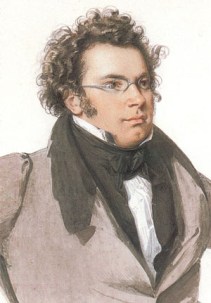 This quote from Schumann actually refers to Schubert’s “Great” C major Symphony, but the phrase “heavenly length” is often used in relation to Schubert’s late piano sonatas. The final triptych, drafted in the spring of 1828 and completed a few months before Schubert’s death in the autumn of the same year (extant manuscripts suggest a preliminary sketch and then a full final version), are big works, each with four movements, meticulously structured with cyclic motifs running through each individual sonata and the set as a whole, revealing Schubert’s innate sense of musical geometry and bold treatment of the traditional sonata form. These are works in which one sees the entire arc of the work mapped at the very beginning, neatly concluded at the close of the finale, and it takes a particular performer to tackle both this musical architecture and the sonatas’ length.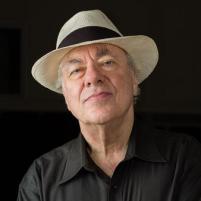
 The latest release from pianist




 The Cross-Eyed Pianist