Guest post by Dr Michael Low

Nostalgia has a two-fold meaning: firstly, it is a longing for the past, and secondly, within such longing, an attempt to recreate and glorify the values of a bygone age. The 19th century’s obsession with nostalgia can be traced back to the Romanticism itself, where the name of the movement is a reference to the old French word romance, which referred to the often extravagant and fanciful literature of the Middle Ages. Don Quixote (published 1605 and 1615) by Miguel de Cervantes Saavedra (not to be confuse with the fictitious Cervantes de Leon of the Playstation and Xbox fame) was perhaps the most notable of such literature it was also referenced in some of the 19th century’s most famous novels: Alexander Dumas’s The Three Musketeers (1844), Mark Twain’s Huckleberry Finn (1844) and Edmond Rostand’s Cyrano de Bergerac (1897). All three novels have been adapted into films during the 20th century with varying degree of success.
GetInline

Though it is not often implicit in the musical text, an example of nostalgia can be found in the Romanze of Chopin’s E minor Piano Concerto (1830), the composer himself described this movement as: ‘Calm and melancholy, giving the impression of someone looking gently towards a spot that calls to mind a thousand happy memories. It is a kind of reverie in the moonlight on a beautiful spring evening.’ A more obvious example of nostalgia can be found in Liszt’s Ninth Transcendental Etude entitled ‘Ricordanza’. The title itself has a two-fold meaning. It can mean ‘recollection’, possibly even a literal reference to the fact that this etude looks back and adheres to its 1827 prototype as no other etude in the ‘Transcendentals’ does (Liszt himself wrote three versions of the Transcendentals Etudes, the 1827 juvenile prototype, the 1839 Paganini inspired Grandes Études, before the final version in 1857 which stripped the exorbitant technical demands of its intermediate predecessor). In Italian, the term ricordanza can also refer to a memento, an object that was stored over a period of time to recall a specific moment of the past. The eminent pianist composer Ferruccio Busoni famously compared the musical content of this Liszt etude to ‘a bundle of faded love letters from a somewhat old-fashioned world of sentiment’.

It is also possible that Beethoven’s An die ferne Geliebte (To the Distant Beloved, 1816) is a musical reference to the composer’s own Unsterbliche Geliebte (Immortal Beloved) letters. Written in 1812 and never sent, the anonymity of the intended recipient triggered what was perhaps the most comprehensive sleuthing exercise in the history of Western Art Music. In fact, the controversy about these letters is such that they have been the subject and title of a Hollywood film (Immortal Beloved 1994), which was dismissed by scholars for its lack of historical evidence and speculative ending (casting Gary Oldman as Beethoven didn’t exactly help…), as well as making a brief appearance in the award winning HBO Series Sex and the City. In these letters, Beethoven expressed his longing for the beloved, and how he looks forward to the day of their next meeting. A similar situation appears in An die ferne Geliebte, where for reasons unknown to the listener, the poet and his beloved are also separated. Here Beethoven recalls the opening song as a symbol of memory within the last song, which not only gives the song cycle a sense of completeness and closure, but also signifies that the distance which initially appear between the poet and his beloved has now been bridged by the songs he sang to her, showing that music has the ability to transcend time and space. And just as in the Immortal Beloved letters, hope springs eternal in the poet’s heart with regards to his next meeting with the beloved.
GetInline-1

In Romantic music, nostalgia can represent either a bitter sense of lost happiness or a wistful yearning of the past, both of which are often linked with the idea of cyclic reprise. This can be found in the coda of Schumann’s Dichterliebe and Frauenliebe und leben (both composed in 1840). Further significant examples can be found in Schumann’s Fantasie (1836) and Fantasiestücke (1837). In the former work, Nostalgia took the form of Beethoven as the Fantasie was an attempt to raise fund towards the construction of a Beethoven monument in Bonn – this is most evident the majestic march-like second movement in the key of E-flat major – a key reserved for some of Beethoven’s most heroic compositions such as the Eroica Symphony, and the Emperor Concerto. The element of longing and passion in Schumann’s Fantasie was prefaced firstly by Schlegel’s quote:

Durch alle Töne tönet

Through all the notes

Im bunten Erdentraum

In earth’s motley dream

Ein leiser Ton gezogen

One soft note

Für den, der heimlich lauschet

Can be heard by one who listens stealthily

Second and more importantly, nostalgia adheres to a musical quotation from Beethoven’s song cycle An die ferne Geliebte as a mean to express the unattainability of his own love for the then seventeen-year-old Clara Wieck. This haunts the first movement in its fragment before appearing fully in the coda. Schumann’s sketchbook showed that there were actual attempts to quote the Beethoven quotation in the valedictory last movement before he changed his mind.

Similar to the Fantasie, Schumann also uses a falling five-note motif to enshrine the image of Clara in the Fantasiestücke. This motif appears prominently in Des Abends, a piece which evokes the haunting stillness of the Fantasie’s final movement, before returning in the opening and the coda of Ende vom Lied, a piece which Schumann confessed that had him dreaming of ‘wedding bells’ (evident in the middle section) before realising that there was still much distance between himself and Clara. Worth mentioning is that the third piece of the set – Warum? – with its persisting motif, was perhaps Schumann’s own way of asking fate why the lovers remained apart.

Although she is just a peripheral figure in Goethe’s Wilhelm Meister Lehrjahre (Wilhelm Meister Apprenticeship 1795), the enigmatic Mignon has been immortalised in the lied by composers such as Reichardt, Schubert, Schumann, Spohr and Wolf. In Goethe’s novel, the eponymous hero first encounter the androgynous Mignon after meeting a group of assorted actors who not only seek his wisdom but also funding for their aspiring theatre troupe. Having learnt that Mignon was abducted from her country of birth in Italy (one of the spiritual homeland of the Romantic imagination), Wilhelm proceeds to rescue her by buying her from the acrobats who had taken her. In Wolf’s setting of Mignon’s Kennst du das Land (Do You Know the Land 1875), Mignon nostalgically recalls the land where ‘the lemon blooms and the orange grows, and remembers the house with ‘marble statues and pillar roof’. Here nostalgia is two-fold, as Mignon longs for her distant homeland, and for a vaguely remembered past.

In Schubert’s Winterreise (1827), the poet’s recollection of the past serves only to remind him of his present suffering and lost happiness. The images of rural life and (in particular) of nature became symbols of his lost love: the gate of his beloved where he passes to bid her farewell (Gute Nacht), the weather-vane that reminds him of her fickleness (Die Wetterfahne), the frozen stream which became a metaphor of his own heart – frozen, but overflowing with passion beneath the icy exterior (Auf dem Flusse), the ‘town of inconsistency’ where two eyes captivated the poet (Rückblick), and the linden tree that recalls past happiness and promises rest (Der Lindenbaum). It is possible to interpret Müller’s text in such a way that the ‘rest’ here signifies death as this is the only release from the poet’s longing and pain. Schubert’s Lindenbaum looks forward to the final song of Mahler’s Lieder eines fahrenden Gesellen (Song of a Wayfarer 1885), where the poet recalls the ‘two blue eyes of his beloved’ also by symbolically embracing death under a linden tree.

GetInline-2

The title Rückblick also appears as the title in the fourth movement (Intermezzo) of Brahms F minor Sonata Opus 5. Literally translated, Rückblick means retrospect, or remembrance, and this is evident in the way the music recalls the second movement (Adagio espressivo) in its thematic materials and programmatic intentions. Prefaced by Sternau’s poem Junge Liebe (Young Love), the Adagio espressivo depicts the image of two lovers embracing beneath a moonlit sky:

Der Abend dämmert, das Mondlicht scheint

The evening falls, the moonlight shines

Da sind zwei Herzen in Liebe vereint

Two hearts are united in love

Und halten sich selig umfangen

And keep themselves in bliss enclosed

The emotional directness of this movement such that one of the 20th century’s greatest pianist, Claudio Arrau, described it as ‘the greatest love music after Tristan, and the most erotic.’ However, whilst Brahms was obvious in regards to the programmatic intentions of the Adagio espressivo, the composer was far more cryptic about the subject matter behind the fourth movement. Although is it not identify in the score, the Intermezzo is based upon Sternau’s poem Bitte (Request), which depicts a love that has grown cold similar to a withered tree or a barren forest.

Furthermore, it is possible to see Brahms’s late piano and chamber works as music which verges on the dream-like realm of nostalgia. Unlike the early works, (in particular the F minor Piano Sonata and the D minor Piano Concerto) which place titanic demands on the soloist in terms of technique, emotion and physical stature, the late works (in particular Opus 117, 118, 119 and the Clarinet Quintet) are much more intimate in their conception and exude an autumnal atmosphere. In these works, we no longer hear the intense, passionate young composer haunted by Schumann’s attempted suicide as well as his love for Clara (as attested by the opening bars of the Concerto and its slow movement, written as Clara’s ‘portrait’). The drive, the titanic tussle, and the composer’s allegorical triumph over adversary fate (in the finale of both the F minor Sonata and the D minor Concerto, Brahms utilised the frequently adopted 19th-century compositional device of transition from the minor key to the tonic major identical to that in Beethoven’s Fifth and Ninth Symphonies), all of which were hallmarks in the Brahms’s early, large-scale works, were replaced by a sense of contentment, acceptance and serenity in the composer’s late musical essays.

In a similar way, Schumann’s Kinderszenen (1838) is the composer’s own nostalgia of childhood. Although it is difficult to speculate the autobiographical content (or the lack of) within these pieces, Schumann himself admitted to Clara that they were inspired by her comment in regards to the composer who seemed ‘like a child’ at times. Most poignant is the first piece of the set entitled Von fremden Ländern und Menschen (Of Foreign Land and People), which (to me at least) is a musical portrait of a toddler’s foremost interaction with the outside world. Perhaps the most famous piece of set is Träumerei (Dreaming), immortalised by Vladimir Horowitz as a favourite encore and used in the 1947 Hollywood film Song of Love, starring Paul Henreid as Robert Schumann and Katherine Hepburn as Clara Wieck.

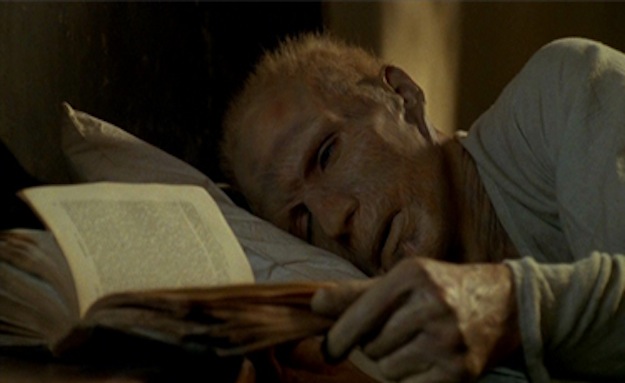
Romanticism’s idea of nostalgia has been one that was well adapted by Hollywood. In Anthony Minghella’s adaptation of Michael Ondaatje’s The English Patient (1996), Almásy’s heavily annotated copy of Herodotus’s The Histories serves only to recall his torrid love affair with Katherine Clifton (expertly captured under Minghella’s direction), which was to have devastating ripple effects on those around them. At the same time, Irving Berlin’s ‘Cheek to Cheek’ is a mere reflection of the Almásy’s state of mind (and heart) for it is only in heaven (hence death) that he is able to ‘find the happiness that he seeks’. In David Fincher’s adaptation of F. Scott Fitzgerald’s The Curious Case of Benjamin Button (2008), Daisy Fuller’s deathbed merely serves as the only consistent variable throughout the course of the film as Daisy recalls her life, along that of her lover, Benjamin Button, whilst her daughter Caroline reads from the protagonist’s diary. The film was also haunted by the use of Scott Joplin’s Bethena Waltz (1905) which serves as a reference to period when the film was set. And finally, it was the grown up Peter (Pan) Banning (played by Robin Williams), who enlist the help of Tinkerbell (Julia Roberts) as he rummages through his childhood memory in search of the one big ‘happy thought’ that will enable him to fly in Steven Spielberg’s Hook (1991).
the-english-patient-scars
Ralph Fiennes in ‘The English Patient’


Recommended listening (All of which can be found on YouTube)

Ludwig van Beethoven: An die ferne Geliebte Opus 98

Johannes Brahms: Piano Sonata No 3 in F minor Opus 5

Johannes Brahms: Piano Concerto No. 1 in D minor Opus 15

Johannes Brahms: Sehnsucht Opus 14 No.8

Johannes Brahms: Clarinet Quintet in B minor Opus 115

Johannes Brahms: Piano Pieces Opus 117, Opus 118 and Opus 119

Frederick Chopin: Larghetto from Piano Concerto in E minor Opus 11

Franz Liszt: Transcendental Etude No. 9 in A Flat Major ‘Ricordanza’

Gustav Mahler: Lieder eines fahrenden Gesellen: Die zwei blauen Augen von meinem Schatz

Franz Schubert: Die Winterreise D911

Robert Schumann: Fantasiestücke Opus 12

Robert Schumann: Kinderszenen Opus 15

Robert Schumann: Fantasie in C Major Opus 17

Robert Schumann: Frauenliebe und leben Opus 42

Robert Schumann: Dichterliebe Opus 48

Robert Schumann: Lieder und Gesänge aus ‘Wilhelm Meister’: Mignon (Kennst du das Land)

Hugo Wolf: Goethe Lieder: Mignon (Kennst du das Land)
11

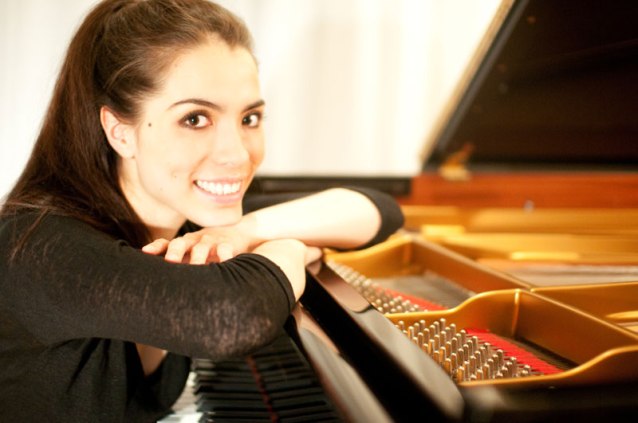
Who or what inspired you to take up the piano and make it your career? 

There are no musicians in my family but we always had a piano at home (my mother played as a hobby pianist) and my older sister was also having lessons, so I started playing as soon as I could climb onto a piano stool. I didn’t decide to become a professional pianist until quite late – I was 16 when I was in professional environment for the first time at Chetham’s School of Music and knew this was what I wanted to do for the rest of my life.

Who or what were the most important influences on your musical life and career?

My most important influence in my musical life was definitely my time at the Royal College of Music. I really feel that I met many of the most important people in my life today there and that I found myself as musician, pianist and person in the seven years I studied at the RCM for.

What have been the greatest challenges of your career so far? 

I think the greatest ongoing challenge for a musician is to be able to accept that each piece of music you choose to play is a life-long work. You will never be entirely content with what you have achieved at the time or when you come off stage. You always strive for something better – but in a way, it’s also the beauty of music making.

Which performances/recordings are you most proud of? 

My debut album for the label KNS Classical is very exciting. I recorded a disc with two major works by Schumann (Sonata No.3 and ‘Davidsbündlertänze’) which are both very special to me.

Which particular works do you think you play best? 

I can identify myself most with the German Romantic repertoire. I always felt that the music by Brahms and Schumann were very innate in me. But I also enjoy playing many works by Liszt and much of the Russian repertoire. I have been able to explore much of this with my professor and long-term mentor Dmitri Alexeev.

How do you make your repertoire choices from season to season? 

I tend to have long-term projects for the next few years and I usually combine these with my current interests. I always think that coherence or an inner connection of works in a recital programme is very important.

Do you have a favourite concert venue to perform in and why? 

I don’t necessarily have one favourite concert hall but one of my favourites is definitely the Laeiszhalle in Hamburg. It’s a beautiful hall with a wonderful acoustic and it brings back great memories as Hamburg is the city where I spent most of my childhood.

Favourite pieces to perform? Listen to? 

Currently works by Schumann and Rachmaninov’s Second Piano Concerto. I always love working on every programme I choose for each season. For listening it’s perhaps slightly different – I tend not to listen to that much piano music. I mainly listen to orchestral and chamber music and operas. I do occasionally enjoy listening to Jazz as well.

Who are your favourite musicians? 

Many great artists from the past have given me much inspiration over the years, it’s impossible to list all of them but there are a few that I would single out: Furtwängler, Edwin Fischer, Sofronitsky, Kempff to name a few.

What is your most memorable concert experience? 

The most memorable concert I have experienced was a piano recital by Radu Lupu in Brighton where his rendition of Schubert’s Sonata in A D959 was beyond description..…

What do you consider to be the most important ideas and concepts to impart to aspiring musicians?

First and foremost, to choose music as a career for the right reasons – one must love music to the extend that you could not live without it. Being creative, imaginative and respectful towards the music you are playing.

Where would you like to be in 10 years’ time? 

Having the freedom to combine concertizing, teaching and family life.

What is your idea of perfect happiness? 

To lead a harmonious life where I can enjoy music and family life to the full.


Caterina Grewe’s debut solo album of piano music by Robert Schumann is available now on the KNS Classical label. More information

German-Japanese Pianist Caterina Grewe, born in Tokyo in April 1988, has performed to great critical acclaim throughout the UK and continental Europe as a Steinway Artist.

More about Caterina here

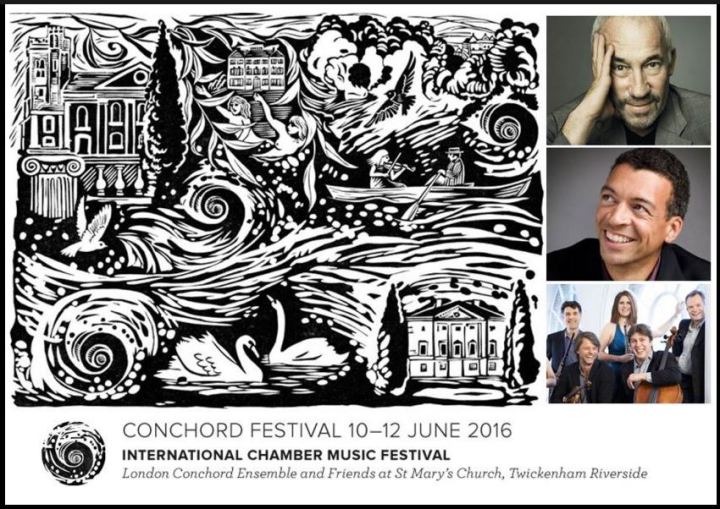
conchordfestival2016

10-12 June 2016
St Mary’s Twickenham
A new weekend festival of chamber music in a beautiful setting by the river Thames in Twickenham

The festival, which takes place over three days, features performances by international artists including baritone Roderick Williams (who will also premiere a new work), Julian Milford, Alisdair Beatson, Thomas Carroll, Emily and Daniel Pailthorpe, and the London Conchord Ensemble, with special guests Simon Callow and James Redwood.

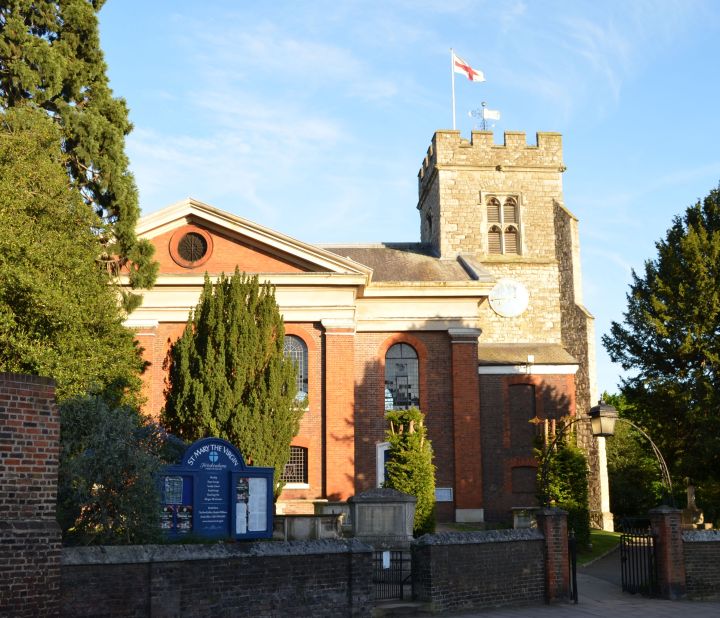
The opening concert showcases soloists from London Conchord Ensemble playing well-loved pieces by J S Bach, musical master of the Baroque. Featuring the Oboe d’amore Concerto and Flute Suite, with its famous dancing ‘Badinerie’, the programme culminates in the eternally popular Double Violin Concerto. All concerts take place in St Mary’s church, Twickenham, an elegant eighteenth-century church with views to the river.

For more information and tickets, please visit the Conchord Festival Website

st-marys-church-twickenham

The ‘Raymond Variations for Piano’ (Set: 1) by S. G. Potts are based on the Andantino themes from the Raymond Overture of 1851 by French composer Ambroise Thomas (1811 – 1896). The work received its world premiere in London on 2nd December 2015 at the 1901 Arts Club, performed by Lorraine Womack-Banning as part of a concert in memory to her late husband Raymond Banning (former professor of pianoforte at Trinity College London)

The Variations are based on the three Andantino themes which form a central part of the Raymond Overture (although the third andantino theme from the overture is in itself a variant of the second theme). There are nine piano variations in total which include a mix of both full and short partial variations (including a very short declamatory two chord introductory variation). The variations are not numbered or set-apart in a conventional manner, rather they form part of a continuous whole, and are separated only by bridge passages and/or cadence points. They have been written for the most part in an easily accessible tonal style (with a passing nod to Messrs. Beethoven and J.S. Bach). A pdf perusal copy of the score can be downloaded from the British Music Collection at: http://britishmusiccollection.org.uk/… And a more in-depth analysis of the variations can be found at: http://open.academia.edu/StephenGPotts

The recording heard here in this ‘virtual performance’ has been produced through Sibelius 7.5, in anticipation of the next live performance(s) due to be filmed and recorded later in the year.  In agreement with the composer, and until September 2016, Lorraine Womack-Banning holds exclusive performance rights to the Raymond Variations, after which time the sheet music will be published and made available for wider performance.

Lorraine Womack-Banning, who premiered the work at the 1901 Arts Club in December 2015, writes about the music:

In April 2015 I received an email from Stephen Potts asking me to consider giving the premiere and making a recording of his new composition.

I agreed to consider this project and Stephen then sent me the MP3 along with a couple of pages of the score to help me make my decision. I was stunned to open the title page ‘Variations for Piano on the Andantino Themes from the Raymond Overture (by Ambroise Thomas 1811-1816)’ as I had just arranged to play a Memorial Recital for my late husband the Pianist and Trinity College of Music Professor Raymond Banning; it seemed as if fate had sent this score especially as it transpired that Stephen had no knowledge whatsoever of Raymond nor my connection to him.

As soon as I listened to the MP3 I absolutely loved Stephen’s composition and it was agreed that I would premiere it at the Memorial Concert for Raymond at the 1901 Arts Club on December 2nd 2015, the 3rd Anniversary of Raymond’s death.

The longer I live with this work the more I love it: the opening Andantino theme is deeply romantic with little indication of turbulence to come later. I love the drive and dark energy of the Variations and the dramatic ending. It is a work of extremes and a great piece to play. I will always feel strongly connected to it.


The composer, Stephen Potts, kindly took part in the Meet the Artist interview series:

Who or what inspired you to take up composing, and pursue a career in music?

My first hearing of the Tchaikovsky 1st piano concerto when I was 14 sparked my interest in classical music, this inspired me to study music seriously, and in particular to take up composition.

Who or what were the most significant influences on your musical life and career as a composer?

I feel I have been influenced most by the music of Beethoven and J. S. Bach more than any other composers. I admire the raw passion and strength inherent in Beethoven’s style and the contrapuntal and fugal writing inherent in Bach. On a more personal level, I was helped early in my music career by Layton Ring (former harpsichordist with the Northern Sinfonia) who helped stage my first large orchestral work (Romanza for Violin and Orchestra) and who successfully conducted a number of performances of this piece in the Newcastle Chamber Orchestra’s 1992 season.

What have been the greatest challenges/frustrations of your career so far?

The greatest challenge I usually have is in being satisfied with what I have written. I am by far my own most severe critic, this usually results in compositions taking an extremely long time to complete. Frustrations often include raising sufficient awareness of my music, which then leads to difficulties in finding performers to perform the music. I became so frustrated some 20 or so years ago at being unable to get much of my music performed and published that I gave up writing music completely; I instead concentrated on bringing up my young family and began a career in computing. In fact I have only just returned to composition some 3 or 4 years ago, and now that I am older and wiser, I don’t concern myself nearly as much about performances or publication. I am particularly less concerned with publication as there are so many other opportunities available today, especially with the avenues that have opened up thanks to digital media. It is also nice that publishing houses are not now monopolising (so much) what is delivered to an audience.

What are the special challenges/pleasures of working on a commissioned piece? 

The pleasures of working on a commissioned piece include: dedicated performers; a guarantee of a performance(s); and payment. Although with payments currently being so seriously low for a commissioned piece (on average within the UK only £918, Source: Sound and Music Composer Commissioning Survey Report 2015), I feel commissions are a luxury I can ill afford! However, I am fortunate enough that I do not have to rely upon commissions, this also brings with it the advantage that I can write what I choose, whenever I choose.

What are the special challenges/pleasures of working with particular musicians, singers, ensembles and orchestras?

There is the opportunity to write to an individual musician’s strengths, and you are usually ensured of a very committed performance; also the opportunity to learn from individual performers and to receive their feedback during composition can be very valuable to a dedicated composer, particularly in my case, as I am not a performer myself. Therefore I find that not being a performer, I tend to have a very good relationship with musicians performing my music, they tend to trust me to write the music and I trust them to perform it.

Of which works are you most proud? 

I am proud of all the work(s) I write, otherwise I wouldn’t class them as ready for release, (I have actually shelved many more works than I have released) this due to being such a stern critic of my own work. I am very proud of the Raymond Variations for Piano (Set: 1) which I have just recently completed, but also equally as proud of the piece I am currently working on, a mixed choir setting of Longfellow’s Christmas Bells, I am particularly proud of the melody I have written for this piece and I believe it captures the essence of the season in the manner of carols from the Victorian age.

How would you characterise your compositional language? 

Tonal, with occasional elements of advanced 20th and 21st century harmonies where appropriate. Uppermost in my mind when I write music is that it needs to be passionate and that I need to reach out and engage with the audience. I do not write for academics, critics, or academic/critical praise; with me it’s always the listener first and foremost. I like it if an audience can walk out of a concert whistling or humming one of my melodies, to quote Webern, I will know I am accepted as a composer if I ever hear a Postman whistling one of my melodies!

How do you work? 

In many different ways, but the composition process is always very difficult for me, I think long and hard before I ever begin a piece. I have to be fully committed to the idea, and it all stems from an initial melody, motif or text; I won’t begin a piece until these aspects are clear in my mind. Tools I use are a piano for initial improvisation, and (nowadays) Sibelius software to notate and produce the score. The piano improvisation part usually comes first, (although I do often create melodies in my mind away from the piano) then I move onto notating with Sibelius, But once I have devised a theme or motif I am content with, (and this always goes through many changes) I develop that idea thoroughly in my mind and this is where the true composition process takes place. For example, once I decided that I wanted to write some variations on the Raymond overture, my mind couldn’t rest, I developed and mentally wrote the introductory variation in my kitchen while doing some cooking. But even after I have finished a piece, I invariably make changes: days, weeks, months, and sometimes even years later. I also find that if I am unable to sleep at night, that working on a piece as I am lying in bed can be very productive, it enables me to gather my musical thoughts from that day. I especially find the peace and quiet a perfect setting for creating some new snippets of music, and for developing and discarding other music that I might currently be working on.

Who are your favourite musicians/composers? 

Composers: J. S. Bach, Beethoven, and Janacek from the Baroque/Classical/Romantic periods, and Carl Vine the Australian composer, and Jennifer Higdon the American composer, from contemporary music.

Some favourite musicians include, pianists Andras Schiff, and Khatia Buniatishvili, and conductor Mark Elder.

What is your most memorable concert experience? 

The premiere of my ‘Romanza for Violin and Orchestra’ in 1992 at the Newcastle Gulbenkian Theatre, this was the first time I had heard one of my full orchestral works publicly performed, it was received quite favourably, and I went home that night very pleased.

What do you consider to be the most important ideas and concepts to impart to aspiring musicians?  

This is tricky…I think one thing I would personally raise to composers is: don’t feel pressured into writing atonal music (or ‘modern’ music) simply to try to impress academics, or to develop the cause of composition, or simply to write in an accepted contemporary style. This can be done in many other different ways (in my own personal opinion) which can incorporate tonal harmony and melodic motifs. Having written in both styles, I can personally state that I find it much more difficult to write in a tonal style, but ultimately it is more rewarding. However, this is not to say that I dislike contemporary art music written in the more ‘modern’ style, there are many pieces I could list that I really do like that are written in just this style.

Where would you like to be in 10 years’ time? 

Seated in a nice concert hall awaiting the premiere of my 9th symphony…So I’d better get started on those other 8!

What is your idea of perfect happiness? 

That’s easy, spending time in and around Southwold, and on Southwold beach with my partner Emma, then later relaxing and watching the sun go down with a nice pint of beer to hand.

What is your most treasured possession? 

My late father’s watch, it reminds me just how important time really is.

What do you enjoy doing most?

Studying and learning, I particularly enjoy studying and listening to new pieces of music.

Away from music, I love to spend time with my two year old grandson Harry.

What is your present state of mind? 

Hopefully it’s enough to say that I am an optimist.

Stephen G. Potts was born and lives in the North East of England. He has recently  returned to composition following an almost 20 year period of absence from music. He has studied: Traditional and 20th Century Harmony; Orchestration; Advanced Composition, and holds a Master’s degree in music. Works in progress (during 2016/17) include: a mixed choir setting of H. W. Longfellow’s Christmas Bells, and Set 2 of the Raymond Variations for Piano.

This is a featured post