
il_570xn-375692039_r8tt

A plethora of P’s PP’s and PPP’s by three guest writers for this entry in A Pianist’s Alphabet

Piano……Whisper it softly, everything we do as pianists is indicated in advance by the letter ‘P’. If we play the piano as a piano – which is to say play it piano – then we are simply following this alphabetic instruction.

We might, therefore, be tempted to say that the most pianistic pianist was Chopin, who played his piano so piano that his audiences often struggled to hear him play at all. Importantly, Chopin achieved this pianism not through the use of another ‘p’, the una corda pedal (signed ‘ped’), but through the fingers. He played with great touch, preferring to practise and perform on instruments that suited his style – notably, on Parisian Pleyels.

And yet, shout it loudly, the great strength (or forte) of the piano is that it holds within itself its polar opposite. It was originally conceived by Cristofori as a harpsichord that could be played both quietly and loudly. It is the gravicembali col piano e forte. The piano, that is, is always the pianoforte or ‘pf’.

Thus it was that Liszt, who had been inspired by Paganini (another ‘P’), was able to perform in places like La Scala, Milan, and to thousands of gathered aristocrats in St Petersburg without any loss of sound. Not that it was it just about sheer volume for Liszt. The Hungarian was, by all accounts, the master of pianoforte playing in the fullest sense. In performance, one of his strengths was that he played the pianoforte ‘pf’, moving from quiet to loud, from lyrical passages to bravura runs and back again. For him, the pf was to be played ‘pf’.

James Holden is a writer working across the critical-creative divide. He is a specialist in British and European culture from the birth of Chopin in 1810 to the death of Monet in 1926. His published work includes In Search of Vinteuil: Music, Literature and a Self Regained (Sussex Academic Press, 2010). He is currently working on a philosophical reading of romantic pianism. James also writes experimental prose and poetry. He is currently associated with the HOARD art project in Leeds. 

His website is www.culturalwriter.co.uk and he tweets as @CulturalWriter 


P  is  for  Piano. Many call it the Perfect instrument. It can Play every note, high and low, that the orchestra can. It can be both melody and accompaniment. Or a wash of sound and colors. Or even five individual voices all vying for their chance to sing above the others. It can be Percussive, Pulsating, Pounding, or Powerful. It can be Pensive, Profound, Philosophical, or Prayerful. It can be Playful, Presto, or Peculiar. It can be Pleading, Poetic, Plaintive, or Pianissimo. The Piano can express a range of emotions, to the audience of course, but also to the Performer, who often experiences the music in a totally different way than the audience. It can at times sound Pompous and Pretentious. Or Produce the most Private, Personal, innermost thoughts and feelings.

P  is  for  Practicing. Many a Pupil will Procrastinate on this essential Part of Piano Playing.  Picking apart a Piece to understand it, analyzing minute details like the chord to chord Progressions, and the overall structure and compositional form. Researching Performance Practice, to ensure that the Pedaling is appropriate for the Period, or that the Portato touch is not too short. Practicing means Painstaking Preparation. Patience. Persistence. Repeating Parts, over and over, literally thousands of times. Purging wrong notes and solving Problems that arise along the way. It means Pleasure in Perfecting a Passage. Or Sometimes Physical Pain, when a Pianist overworks his muscles and Pushes himself too hard. Or even emotional Pain, because Practicing Piano also means being alone.

P  is  for  Psychology. As performers and teachers, not only do we need to know how to Physically Play the Piano, but we need to be our own and often our students’ Psychologists. We Practice Performing to Prepare ourselves for Principal dates and venues and maybe even Premieres. We try out our Programs, Playing for whoever will listen, making ourselves nervous with the hope that at the “real” Performance we will be calm and collected, and therefore able to make music more easily. Mistakes still happen, though, even though we Played our Program Perfectly many times in the Practice room and beyond. Bad mistakes can sometimes lead to a Phobia of Public Performance, which is tough to overcome. With our Psychology in one hand, and solid Preparation in the other, however, we Push down the Panic, the Palpitations, and the Perspiration (often on our Palms!) and get back on stage, encouraging our students to do the same, hoping to share a musical moment with the audience. After all, Playing the Piano is not about Perfection, but about making a connection: to the music, to ourselves, and to the audience.

Francesca Hurst

Francesca Hurst is a New Music and Classical Pianist and teacher in Washington, DC. 

www.francescahurst.com


P is for PPPP –  Plan, Practise, Prepare and Perform!

It’s Spring 2016, and I’ve just been planning my repertoire for concerts in 2017 and 2018. In this post about the Performance of a new piece, let’s begin with the Planning, which starts a long time in advance. Yes, we must be conversant with different periods of music and different styles, but think long-term, play to your strengths and play music you respect, believe in – and enjoy; this will communicate itself to your audience.  Keep learning new repertoire, investigating the unusual as well as the familiar, to keep programmes fresh and interesting.

Then comes the Practice. If a musical performance can be likened to an architectural structure in sound, then the score is the blueprint, and much can be gleaned from studying it away from the instrument. See how the piece is put together; what are the musical motifs which form the building blocks, how are they used, and which sections reappear in different guises? What stylistic features are apparent; to what stage of the composer’s life does the composition belong, what else was he/she writing at the time in other genres, and what does the title tell us? What were the characteristics of the instruments of the day, and what else was going on in the world ?

Having grasped an overview of the piece and ascertained its context, it’s time to start the Practice. Be strategic; learn similar sections simultaneously. I would always start with separate hands and careful fingering in small sections, gradually building into longer sections with hands together when they are fluent. Memorise as you go using not only muscular memory, but an awareness of keys, patterns, harmony and structure.

After learning the piece, we then enter the crucial Preparation stage before the first Performance.  Here we need the aim of a complete play-through some weeks, or even months, before – keep going, no matter what happens. Seek to replicate performance conditions, and try ‘stress-testing’ by getting friends and family to reproduce the noises which seek to distract us in public. Coughing, rustling, mobile phones, glasses clinking… you’ll think of others, I’m sure. Try recording yourself in private or making a video –  anything that raises the expectation and which highlights areas that need reinforcement. Seek out opportunities for trying-out pieces in informal settings. Have a dress rehearsal; ensure that clothes –  and shoes –  are suitable. Brendel writes amusingly of a piano duet performance with Daniel Barenboim wherein he became tangled in Barenboim’s concert outfit; they had rehearsed in their shirtsleeves.

And so – The Performance. Everyone approaches Performance differently; some withdraw into isolation before it, some are gregarious. Find what works for you. Try the piano in advance. Before you play, take deep breaths, smile, walk tall and enjoy! You’ve Planned, Practised and Prepared; be confident.  And afterwards …  Ronald Smith used to say that pieces always improve themselves after the first performance, and he was right. Learn from what went well, note what still needs attention – then move on. Tomorrow is another day.

Christine Stevenson

Christine Stevenson enjoys a distinguished career as a recitalist and concerto soloist in the UK and abroad. She is a Director of the Summer School for Pianists, and is on the staff of the Royal College of Music Junior Department in London.

Her concerts continually draw critical acclaim for her virtuosity, musicianship, and the engaging rapport she establishes with audiences of all ages.

www.christinestevenson.net

www.notesfromapianist.wordpress.com

Meet the Artist……Christine Stevenson

The other week I gave a concert in a church in a small town in Cheshire. I felt well-prepared and confident, my anxiety was under control and I was looking forward to performing the programme to a friendly audience. The opening sentence of the Sonata passed off without incident: I felt it had the requisite majesty to contrast with the falling arpeggios which followed. I was just silently congratulating myself on having played the arpeggios with just the right amount of wit and playfulness when the left hand flopped onto the keyboard and produced a chord sequence of utter rubbish. And at that point, a voice piped up in my head warning me of the perils of pianistic hubris, that “pride comes before a fall”, and that I should probably focus fully on the task in hand.

The mind can play strange games with us when we are performing and also when practising. At that moment when we should be concentrating hardest, the head has a tendency to wander off on other pathways and cul-de-sacs of thought. Most of us are well aware of the “inner critic”, that poisonous, heckling little voice within that reminds us of our fallibility and our weaknesses, that we haven’t prepared this or that section properly, that we are going to make a mistake, or repeats negative comments from teachers. This voice can seriously get in the way of our concentration and, if allowed, can sabotage a successful performance with its judgemental tone which can rob us of confidence and self-esteem.

A number of adult piano students have talked to me about their difficulties with concentration when practising and particularly when performing to others such as teachers, other pianists or in exams.

Concentration can be learnt, and trained, and I have successfully used some simple strategies to improve my concentration when practising and performing:

  • Do not practise for long periods of time. The idea that one should do hours and hours of practising is a fallacy. Successful practising is about quality rather than quantity: set aside small segments of time (up to 45 minutes in one session) and achievable targets for practising. After 45 minutes take a break, make a cup of tea, do some arm- and shoulder-loosening exercises, take a walk round the garden.
  • Banish your phone and tablet, either to a drawer away from your piano or better still turn it off and put it in another room. The urge to check in with your social media networks, “just to see what’s happening”, can be quite potent. These quick check-ins distract the mind away from the task in hand (practising) and can seriously affect concentration.
  • Practise with extraneous background noise – the radio playing in another room, for example (this is my normal practising state as my husband works from home and listens to Radio 4 all day), someone mowing the lawn outside or vaccuming in the house (the Canadian pianist Glenn Gould would practise while his mother vacuumed). Rather than attempt to completely shut out the noise and grow frustrated because it is distracting, accept that the noise is present and then switch your attention back to the music. I find practising when I cannot always hear every single sound I make encourages me to really focus on other aspects, such as touch, flexibility and fluency in passage work.
  • Get someone to come in and try to distract you. In the preparation for some recent concerts, I asked my husband to randomly stroll through the piano room, go in the garden, crash around a bit, come back in etc. On one occasion he did his Pilates routine right next to the piano. I’m glad to say I was able to carry on playing while accepting that he was there.
  • Accept that the Inner Critic exists – when we do this we take away his/hers/its power and regain control ourselves. Then show him/her/it the door – literally by imagining you are ushering the nasty creature through a doorway and out of your brain.
  • Use techniques drawn from Neuro-Linguistic Programming and mindfulness
  • Often something as simple as taking a deep breath in and exhaling slowly can pull your focus  back to the task in hand.
  • Aim for excellence in your music (which is achievable) rather than perfection (which is impossible)
  • Take confidence from knowing you are well-prepared and use positive affirmation such as “I can do it” and “I know my pieces”.
  • Don’t worry about what other people are doing – just because your friend from piano club practises Hanon exercises every day, it doesn’t mean you should be too. Find a practise regime that works for you.
  • Take confidence from positive comments and endorsements from trusted friends, colleagues, teachers and mentors. Carry these positive comments with you into the performance situation.
  • Take time after the performance to reflect on what happened and why, and then find positive ways to avoid such things happening again. Most errors can be identified and put right very easily.

“There is nothing either good or bad, but thinking makes it so.”

~William Shakespeare


Further reading:

The Inner Game of Music – Barry Green

The Musician’s Way – Gerald Klickstein

Music From the Inside Out – Charlotte Tomlinson

The piano and Neuro-Linguistic Programming

Mindfulness and piano playing


The ABRSM has announced the launch of a new performance-only Diploma, the ARSM (“Associate of the Royal Schools of Music”). This will be an “entry level” Diploma, somewhat lower than the DipABRSM, and intended to “bridge the gap between Grade 8 and DipABRSM”. Details are sketchy at present, but the ARSM will consist of a 30-minute performance consisting of music selected from the current DipABRSM repertoire list and own-choice repertoire of Grade 8 standard. At present, it is not clear whether candidates will be required to produce programme notes, but there is no sight-reading/quick study element to the ARSM, nor a viva voce.

Currently, the gap between Grade 8 and the Associate level Diploma (DipABRSM, ATCL, DipLCM etc) is very wide. At Grade 8 candidates play three pieces lasting approx 10-12 minutes in total. They may play a single movement of a sonata by, say, Beethoven, Haydn or Mozart as part of their Grade 8 programme, but at Associate Diploma level, candidates are expected to play a full sonata (for example, Beethoven ‘Pathetique’ Sonata, Mozart Sonata in F K332, Schubert Sonata in A, D664). The candidate’s standard of playing, musical insight, musicianship and general level of attainment is expected to be considerably higher than at Grade 8, and the time taken to study for and complete a diploma can be around 2-3 years. The first, Associate, diploma is an equivalent standard to the first year’s study in conservatoire, while the highest, Fellowship, diploma is equivalent to a Masters module.

There is quite a lot of snobbery surrounding Diplomas, with the ABRSM diplomas being considered “better”, in no small part due to the ABRSM’s longstanding reputation and its royal affiliation. In fact, the repertoire lists for Associate, Licentiate and Fellowship diplomas across the main exam boards are almost identical, and all carry the same QCF and EQF points, providing candidates with a recognised professional qualification which can be used as a pathway to further study, for example at conservatoire or university. Ultimately, the choice of diploma and exam board should be based not on snobbery but on the candidate’s personal preference, which Diploma syllabus is most appropriate/ beneficial for the candidate and so forth.

So what will the new ARSM offer to candidates? Already some of my piano teaching colleagues have commented that it will be “Grade 9 without the scales, aural and sightreading” or that is it simply a “money spinner” for the ABRSM. Some anxieties have also been expressed about whether this new diploma will lead to further dumbing down or devaluing of the higher diplomas. However, a number of adult amateur pianists whom I know have expressed interest in the ARSM and regard it as a useful opportunity for those seeking a challenge post-Grade 8 but who do not feel ready to attempt the Associate diploma.

Further details about the ARSM will be available next month and I will share them here. Meanwhile, I would be very interested in people’s views on this new diploma – please feel free to leave comments below, or contact me direct with your views.


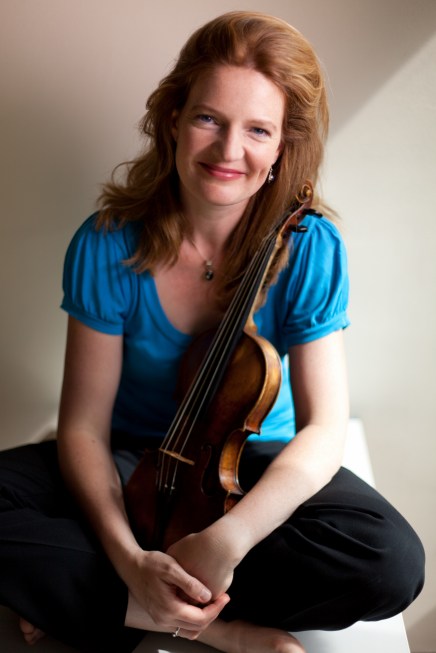
rachel_podger_photo
(Photo: Jonas Sacks)

Who or what inspired you to take up the violin, and pursue a career in music?

Playing or hearing music around me was such a normal occurrence when I was growing up. From an early age I was involved in many concerts a year, whether playing or singing, that I didn’t need to choose whether to do music; the choice was more about which directions within music to take, and also where to study after school in Germany.

Who or what have been the most important influences on your musical life and career?

Peter Werner, a Eurythmy teacher and conductor at the Steiner school I went to in Kassel, Germany was an important influence on me. He had enormously creative energy which sometimes became feverish. His rehearsal technique was engaging and involved every player in the (big) school orchestra, and he taught me how to listen. I remember hearing Gidon Kremer and Reinhard Goebel in Kassel and being stuck by their different sound worlds and charismata.  And then of course my violin teacher at the Guildhall School of Music, David Takeno, who was much more than a violin teacher, but connoisseur of all musical styles with an uncanny musical intelligence, knowledge and generosity in his teaching.

What have been the greatest challenges of your career so far?

Apart from playing concerts when I’m jetlagged or ill (!), the hardest thing for me was playing Bach solo recitals after I had my first baby, (15 years ago) when I could hear her screaming backstage because the milk had run out, and all my instincts were telling me to run to her – but I was in the middle of the C major Fugue!!

Which performance/recordings are you most proud of?

Tricky one, as there are always things you want to play again when you come off the stage… But I quite like the Biber Passacaglia on my disc the ‘Guardian Angel’ and also the Bach A minor Concerto with my group Brecon Baroque on the Bach Violin concerto disc (both Channel Classics).

Which particular works do you think you play best?

That’s another tricky one to answer… I commit myself entirely to whatever it is I’m playing, and I adore most of what’s on the musical menu. But Bach, Mozart and Vivaldi stand out for me…

How do you make your repertoire choices from season to season?

Repertoire choices are often decided by the theme of a festival, or the preferences of a promoter, recording plans and the recording back catalogue, so in the end there actually isn’t that much choice left! Who knows, if I had a completely new season to choose without any strings attached (as it were!) I might come up with Schubert and Brahms!

Do you have a favourite concert venue to perform in and why?

There are a few concert halls I’ve played in that seem to make you play like a dream…one of them is the Symphony Hall in Boston, another the Suntory Hall in Tokyo and then I absolutely adore playing at the Wigmore Hall in London.

Favourite pieces to perform? Listen to?

I adore listening to styles I don’t get to play like polyphony, music from the Renaissance, symphonic repertoire, Jazz…I get to listen to some pop too since I have teenage daughters…I always wake up to ‘Breakfast’ on  BBC Radio 3 and look forward to their ‘Bach before 7’ slot, but am continually intrigued by all I get to hear.

Who are your favourite musicians?

Creative ones! I’ve been lucky to play/work with many of them…Trevor Pinnock, Gary Cooper, Pamela Thorby, Richard Egarr, Phoebe Carrai, Elizabeth Blumenstock, Pavlo Beznosiuk, Jane Rogers, Alison McGillivray, Marcin Swiatkiewicz, Robert Hollingworth, Julian Podger (yes, my brother!), Alfredo Bernadini and many more…and then there’s the amazing Kris Bezuidenhout!

What is your most memorable concert experience?

There are many amazing moments I’ve been lucky to be part of, and often while performing with a larger group of musicians when there is a sense of unity within the music making.

Once while playing the Biber Mystery Sonatas in concert I was struck by the physicality in the ‘Crucifixion’ Sonata and got so involved in that aspect that I didn’t hear the applause afterwards and just stood there for a while (or so I’m told!) looking like I’d been the one crucified…

Another time playing the ‘Erbarme Dich ‘ aria from the Matthew Passion with Trevor Pinnock and The English Concert when I was pregnant and my unborn baby was utterly still while I stood up alongside the alto and played that heartfelt piece about mercy. Afterwards when I sat down the baby kicked and danced to the rest of the piece!

What do you consider to be the most important ideas and concepts to impart to aspiring musicians?

Practise intelligently, i.e. use your time well and efficiently and set yourself goals, even if it’s within a ten minute time frame, or even within one phrase. The relationship between musical intention and execution is essential, and it’s good to ask yourself how you’ll best get from one to the other. Aimless practice might help some mechanical workings, but is less effective. If your musical intention is unclear or confused, read the score in your head, sing it or parts of it, imagine how it might sound, play one part and sing the other, read it like a book on the train! Self-belief is utterly important, but so is an acute self-awareness. Lastly: try to keep the big picture in view!

Where would you like to be in 10 years’ time?

Happy, healthy, loving life and playing music.

What is your idea of perfect happiness?

Happiness is fleeting – I’d like to make sure I never miss one of those uplifting moments that seem to come out of nowhere and are a complete gift.

What is your most treasured possession?

My violin.

What do you enjoy doing most?

Looking at the sunset over the Brecon Beacons sipping a glass of white wine with my partner.

What is your present state of mind?

Looking forward to getting home! (Am writing this on a plane after a concert with EUBO in Regensburg!)


Over the last two decades Rachel Podger has established herself as a leading interpreter of the Baroque and Classical periods and has recently been described as “the queen of the baroque violin” (Sunday Times). In October 2015 Rachel was the first woman to be awarded the prestigious Royal Academy of Music/Kohn Foundation Bach Prize. She was educated in Germany and in England at the Guildhall School of Music and Drama, where she studied with David Takeno and Micaela Comberti.

Rachel Podger’s website

