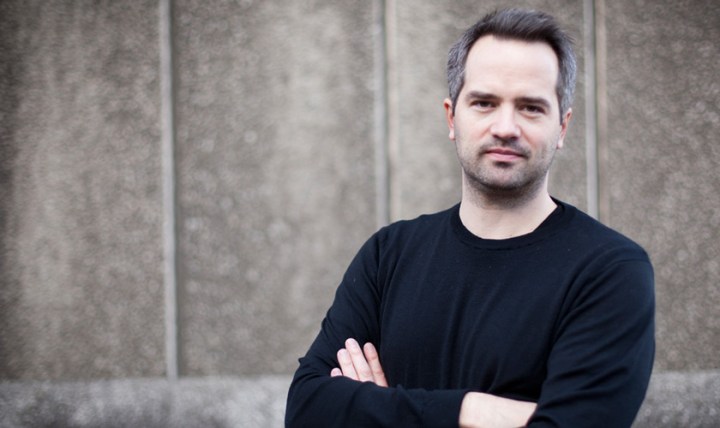
peter_jablonski

©Peter Jablonski

Who or what inspired you to take up the piano and pursue a career in music?

I never took a conscious decision to have a “career in music”. Music was all around me when I was little. I was interested in sport, but my father was a musician, classically trained, from Poland. He came to Sweden in late 60s as the leader of his own jazz quintet, so there was a lot of music at home – jazz and also classical. I grew up with music. I started playing drums early on and that was what I was going to do. I toured and played drums.

At 6 I started having piano lessons with my dad, and then I discovered this amazing instrument and its possibilities, and that got a hold of me. At 11 I went to a Polish piano teacher at the college of music in Malmo. The way he spoke about music – about the smell, sense, colours, pictures of the music – it just opened my mind. And after 4 years study with him I was a pianist.

In my last year at the Royal College of Music, I got a record contract. I had good people around me but I never took a conscious decision to pursue a career in music. It was a need – I couldn’t be without it

When I started on the professional circuit I felt uncomfortable with the “business” side of it – i.e not to cancel, not to use music if one wants to. Things that felt to be anti-artistic to me as a young musician …. I love music, I love being with it, practising, playing. You get into this groove on the professional circuit which can be difficult for a young artist

Who or what were the most important influences on your musical life and career?

In a purely practical sense it was Vladimir Ashkenazy. In a way he “spotted” me, and he is the reason I didn’t have to go down the competition route (I and some colleagues applied for the Tchaikovsky competition in our final year at college). My first recordings with Decca were with Ashkenazy. I encountered him by chance through my Swiss manager who lived in the same village as him. My manager took him a tape and he listened and said he wanted to hear me. It was pure luck.

I did a few local competitions, but I was spared that world. I was lucky enough not to have to go down that route. And I came out of college at the time when recordings still mattered in your career.

What have been the greatest challenges of your career so far?

From a practical standpoint, when you are younger and thrust in to the limelight, the challenge is finding the time to get the repertoire learn and to be a human being. I have a rebel in me that didn’t like being on the road. I loved playing and I liked the solitude. I have a family, a daughter, I basically missed the first 2 years of her life. I struggled with that. I want to live with the music, enjoy it, chew on it, be with it, but the modern career does not allow it. But I think most young performers find this. I wanted other things in my life – family, friends, freedom, I wanted to enjoy the music.

But of course there is an adrenaline high connected with that life. I have colleagues who play 100 concerts a year, but that would just kill me and my love of the music. Some people are at odds with the “career” side of being a pianist.  When you’re on the road and you play a lot, you get to a state of readiness and you’re ready always – but you cannot make it any easier. The requirement of the repertoire is keeping the love for it, it’s difficult when it gets busy. Many different concertos, practising non-stop – sometimes I didn’t even like the piano very much because of the concert schedule.

Which particular works do you think you perform best?

I don’t know…..a very difficult question. That’s for other people to say. Because of my drumming side, I’ve had an affinity for the more rhythmical music (Bartok, Barber for example) but that also applies to Beethoven. I’m feeling more and more comfortable playing Beethoven now. I’m programming Schubert sonatas and Scarlatti – such fresh air! And I’m getting quite heavily into Brahms now

How do you make your repertoire choices from season to season?

I have always loved the nooks and crannies of the repertoire – Szymanowski, Scriabin, Barber, Copland. Incredible music. But of course I have played most of the standard concertos. The only one I’ve stayed away from is Brahms 2 from pure respect and love.

How long does it take you to bring a concerto back into the fingers ready for a concert?

It depends on which one it is. Some I have played so many times (100 times each)  I can play them tonight. I could go and play the Grieg tonight – I have about 10 concertos like that. Then there are a few concertos which are a few days away, then a week, and some I have lost completely.

Are there certain composers/works which always remains difficult?

Beethoven 4 – because I love it too much!

Chopin 2 is immensely difficult. There’s a simplicity/naturalness/ delicacy which is bordering on impossible on a modern piano. You have to over-articulate and then it doesn’t feel like Chopin. It becomes “Panzer Chopin”. It shouldn’t be forceful. Very often today the pianos are voiced quite aggressively so that they carry to the back of the hall over the orchestra. Trying to playing Chopin 2 or Beethoven 4 on those pianos is not easy, it kind of grates.

Do you have a favourite concert venue to perform in and why?

Concertgebouw in Amsterdam is amazing, and the Musikverein in Vienna, but it’s also the history of those places, knowing who played there, who stood on the stage.

In general halls in Asia, in Japan, are wonderful, not least because of the incredible choice of pianos: 5 or 6 pianos to choose from at Suntory Hall. But it’s also incredible difficult. The audiences in Japan are scary. I’ve been to Japan 21 times. At my first recital in Tokyo, there was lots of applause and then the second I sat down they stopped clapping, and it’s almost like you’re alone. It’s spooky. Even in the big halls, it’s the same. They don’t cough, no speaking, no rustling programmes, no one shaking their foot in the front row….. That’s both wonderful and scary. You can literally play to 2000 people without knowing anyone is there. And there is something quite unnatural playing this music to 2000 people. It’s a strange thing to do – to play the piano in public!

For me the music is the most important, it’s not about not me, what I wear…. The only thing you can do is really focus and draw people in. The ideal is when you play in a way which brings people to the music

What is your most memorable concert experience?

There are many for different reasons. For strange reasons, playing Tchaikovsky 1 with the Philadelphia Orchestra outdoors, with Charles Dutoit. And they were going to end with the ‘1812 Overture’ and the canon went off in the slow movement of the piano concerto. It was a like a real bomb! The nerves disappeared after that!

I can’t remember all my concerts, but if someone mentions one to me, the memory of it comes back and I can remember how it went, how it felt sitting on the stage.

On recording

It’s very difficult. I’d much prefer a live concert, the sense of purpose, the adrenaline, which can get lost in the studio. It’s very artificial, it’s a tricky process.

What do you consider to be the most important ideas and concepts to impart to aspiring musicians?

First of all you have to be crazy about music. It starts there. You have to be obsessed without it otherwise don’t do it. You have to have to do it, otherwise the cost is too high.

For young pianists they have to be careful with their repertoire choices. Most people have their strengths, but somehow young prizewinners have to play ‘Feux Follets’, ‘Petrushka’ and late Beethoven sonatas. They are often influenced by teachers and the market. This a big mistake which many pianists make. One needs to have a strong sense of self, which can’t be taught. You have to have a sense yourself of what you feel you can say, you have to live with the music, love it, be with it.

This is the transcription of an interview recorded on 19th April 2016

Peter Jablonski performs music by Chopin, Szymanowski, Bartok and Liszt at Manchester’s Bridgewater Hall on Thursday 20th October. Further information here

Born in the south of Sweden to Swedish and Polish parents, Peter showed an early talent for music when he started playing the drums at the age of five and piano at six. Rapid development on the drums led to performances at some major festivals and venues including the `Village Vanguard` in New York aged nine and with musicians such as Buddy Rich and Thad Jones. Peter even received praise from the legendary Miles Davis.
 
Meanwhile, Peter’s interest developed in the classical piano repertoire which led to his first solo performance aged eleven and his debut with orchestra, playing Mozart’s piano concerto in G, K.453 the following year. At this time he was accepted to the Malmo Academy of Music to pursue studies in piano and percussion and by the time of his graduation he was invited to perform Beethoven’s Concerto No.1 with the Swedish, Danish and Polish radio orchestras.
 
Further studies in piano and conducting followed at the Royal College of Music in London when, in his final year, Peter was heard by Vladimir Ashkenazy who invited him to record his debut disc for Decca with Ashkenazy conducting the Royal Philharmonic Orchestra in London.


Jazz pianist and composer Rick Simpson is trying to convert me to his particular genre – and he’s succeeding, with the help of espresso martinis and improvisations of Gershwin on my old Bechstein grand, which preened and purred under his fingers.

Jazz is largely uncharted territory to me: when I listen, I feel like the classical music ingenue, entering the sacred shoebox of the Wigmore Hall for the first time. I worry that I won’t understand the music, or the specialist lingo. In fact, just as with classical music, jazz is begging you to surrender to its sounds.

Rick is a regular performer at Ronnie Scott’s, the 606 Jazz Club, The Vortex and The Bull’s Head, and he performs with many renowned jazz musicians, in addition to his sextet. His new album ‘Klammer’ contains nine original pieces composed and performed by Rick along with some of the UK’s best jazz musicians of their generation – Michael Chillingworth, George Crowley, Ralph Wyld, Tom Farmer and David Hamblett. The album reflects many of Rick’s influences (which you can read about in more detail in his Meet the Artist interview with me), including hip-hop and classical music, but this album is not a simple hommage to genres or musicians from another time. Instead, these influences are passed through the lens of Rick’s personal musical voice to create music which is vivid, urgent, smoochy, energetic, urban, tender and distinct. There’s fine ensemble playing, revealing multi-layered textures, crunchy sonorities and sensitive voicing, but equally there is freedom for individual improvisation and flights of fancy.

I’m definitely on the road to conversion.

My personal pics from this album


Established in 2012, the weekly Meet the Artist interview slot, in which musicians and composers reflect on various aspects of their creative lives, has gone from strength to strength and is now an integral and very popular part of The Cross-Eyed Pianist’s content. To celebrate this, Meet the Artist now has its own dedicated website.

Meet the Artist interviews will continue to appear on this site every Thursday, while the new site will act as a supplement with a growing catalogue of interviews with both well-known classical musicians and composers and young and up-and-coming artists. Do consider following the site in order to receive updates every time a new interview is released. In addition to interviews there will also be news, reviews and other articles relating to the artists featured on the site.

I feel very privileged to have the opportunity to share so many fascinating and often unexpected insights from such a wonderful range of musicians and composers, and I would like to take this opportunity to thank everyone who has taken part in the Meet the Artist project so far for their contributions to the series.

header


news-3412Who or what inspired you to take up composing and pursue a career in music?


I was surrounded by music from a young age and went to a music school (city of Edinburgh Music school, then St Mary’s Music School) where everyone was encouraged to compose. It’s difficult to put my finger on what exactly inspired me to pursue composing but I think it was this ethos combined with individuals such as the pianist, Peter Evans and ecat (Edinburgh Contemporary Arts Trust at the time)taking an interest and performing as well as commissioning me.

Who or what are the most significant influences on your musical life and career?

Coming to London and studying with Julian Anderson and Edwin Roxburgh made a real shift. They introduced me to so many composers as well as ideas and techniques, and this really instilled me with a desire to always be ambitious with he music I write. Studying in Tanglewood (2008) and working closely with composers Oliver Knussen, Augusta Read Thomas and others was also a very important time for me, not least because I was immersed in the music of Elliott Carter during their celebration of his centenary.

What have been the greatest challenges/frustrations of your career so far? 

Having my son, in 2013, has been a real challenge, although not a frustration. I was used to devoting any or all my time to composing and this had to change, I’m much happier for it though!

What are the special challenges/pleasures of working on a commissioned piece? 

Each commission has its own challenges, this may be linked to a brief. It often feels like you have to learn composing anew for each piece and that’s tough. Another challenge can be the pressure you feel to produce your best work and not to let the commissioner/organiser/individual/performers down, this can be very daunting at the beginning of the composing process.

What are the special challenges/pleasures of working with particular musicians, singers, ensembles and orchestras?

Working with musicians for the first time, whether soloists, singers or orchestras can be very exciting but also completely nerve racking. I want so much for them to respond well to what I’m doing and also enjoy learning and performing my music. My music (everyone tell me) is pretty difficult and detailed, even when I fell I’m doing something very simple. I know it takes a huge amount of energy and time to embrace a new sound world and am always incredibly grateful when musicians seem to get what I’m doing and really believe in it.

Which works are you most proud of?

It takes me a long time to feel really comfortable with a piece and it might take several years and different performances for me to let go and enjoy it. For this reason it’s a difficult question, also, how I feel about a piece can be linked to other people’s reactions at the time or the performance. I think I’m most proud of some chamber pieces such as Aviary Sketches for string trio and my Three Whistler Miniatures for Piano trio. I am proud of my Violin Concerto just now, but it’s not receiving its premiere until December so I will have to wait and see! Often I’ve had particular compositional challenges in these works but don’t feel I’ve had to compromise on my language or original vision for the piece.

How would you describe your compositional language?

My language is detailed and intricate. I am drawn to rich harmonies, initially influenced by Messiaen, Takemitsu and Boulez, and long expressive musical lines. I love to create different layers in my music and often slow music exists at the same time as fast music. Clarity and focus, as well as a dedication to always get exactly the right notes, are always paramount for me.

How do you work?

I work in a spare bedroom and spend a lot of time sketching on manuscript and using piano. Once I have developed and discarded a lot of material as well as discovered what I want to try to achieve in a piece, I start using Sibelius software alongside, always moving back and forth manuscript to rework and draft passage. This is usually pretty extensive.

Who are your favourite musicians/composers?

Difficult to say, but Ravel, Stravinsky, Janacek, Byrd, Bach,Ligeti, Knussen feature pretty highly- obviously there are many others, living and dead, but these are composers whose music I love in its entirety.

What is your most memorable concert experience?

Berg violin concerto with Christian Tetzlaff when I was an usher at the Usher Hall during the the Edinburgh International Festival.

What advice would you give to aspiring musicians and composers?

To always keep a core of self belief and never ever give up, even in really tough times. Keep an open mind but always be true to your musical identity and don’t compromise on that.

What is your idea of perfect happiness?

Snuggled by an open fire with a good glass of red and a good book on a winter day.


Born in 1981, Helen studied oboe with John Anderson and composition with Julian Anderson and Edwin Roxburgh at the Royal College of Music. In 2003 she won a British Composer Award for her Oboe Concerto, and was awarded the intercollegiate Theodore Holland Composition Prize in 2003 as well as all the major composition prizes in the RCM. In 2008 she was awarded a Leonard Bernstein Fellowship to study at the Tanglewood Music Center where she studied with John Harbison, Michael Gandolfi, Shulamit Ran and Augusta Read Thomas. Grime was a Legal and General Junior Fellow at the Royal College of Music from 2007 to 2009. She became a lecturer in composition at the Department of Music at Royal Holloway, University of London, in January 2010.
 
Helen has had works commissioned by some of the most established performers including London Symphony Orchestra, BCMG, Britten Sinfonia, BBC Scottish Symphony Orchestra and the Tanglewood Music Center. Conductors who have performed her work include Daniel Harding, Pierre Boulez, Yan Pascal Tortelier and Sir Mark Elder. Her work Night Songs was commissioned by the BBC Proms in 2012 and premiered by the BBC Symphony Orchestra, conducted by Oliver Knussen. In 2011 she was appointed Associate Composer to the Hallé Orchestra for an initial tenure of three years. Her first commission for them, Near Midnight, was premiered on May 23, 2013 and a recording of her orchestral works performed by the Hallé was released as part of the NMC Debut Disc Series in 2014, which was awarded ‘Editors Choice’ by Gramophone Magazine.
