Iannis Xenakis (1922-2001) – composer, architect, boffin. Fearsomely experimental, he linked his disciplines by writing and designing co-dependent music and listening spaces. He arguably laid the foundations for modern electronica. And he was one of the first composers to use mathematical theory in creating music.
(photo: Ulf Andersen/Getty Images)
Why does Xenakis belong in a pianist’s alphabet? Because his first longer-form work for the instrument has been called ‘the most difficult piano piece ever written’. Clearly seeing this as underperformance of some sort, 12 years later he produced a second piece for solo piano that is, strictly speaking, ‘impossible’. What’s not to like?
In both pieces, Xenakis uses certain mathematical techniques or theories to shape and generate the music. When I heard about this kind of composition in my teenage years, I was suspicious in my ignorance. 1: If it was all down to maths, was it really composition at all, or just some kind of automated exercise? And contrarily, 2: Surely all music – including the really tuneful, harmonious stuff – has mathematical perfection at its root… so why does THIS have to sound so deranged?
I recently decided to go back to Xenakis’s piano music, purely as a listener. I wanted to satisfy myself that without considering ANY of the scientific background – deploying my ear over my brain – it still worked for me, had something non-clinical to offer.
Here is the earlier piece, ‘Herma’:
and the later one, ‘Evryali’:
I was genuinely surprised by some of my reactions.
* I found both pieces enjoyable and invigorating – but I wasn’t expecting to hear such a world of difference between the two. I think in ‘Herma’ you hear the maths, and in ‘Evryali’ you hear the music.
* The unpredictable dance to the extremes of the keyboard in ‘Herma’ make it feel like performance art – raindrops one minute, rubble the next. As a result, the piece attains a kind of spiky ambience.
* In ‘Evryali’, however, I think the sweeping curves in the structure are audible, the notes – however dissonant – seem to belong together, journey with each other. The images it conjures up in my head are geometric, symmetrical – spirals, waves.
There’s a twist in the tale, however. ‘Evryali’ is ‘impossible’ partly because in places it’s written using more than two staves (as you can see on the YouTube video). The pianist must create their own version based on which notes they want to cover and which they can live with leaving out.
Of all things, this reminds me of jazz. Jazz has very little to do with mayhem; rather it is (as the critic Whitney Balliett put it) ‘the sound of surprise’ – the unexpected choices players make within the established parameters. With ‘Evryali’, we seem to have a truly original hybrid: a composed framework through which the pianist can follow their own unique path. I love the idea that from mathematical principles, Xenakis has created a piece dependent, like so much other music, on flexibility, spontaneity and feel.
Adrian Ainsworth
Adrian Ainsworth writes for a living, but mostly about things like finance, tax and benefits. For light relief, then, he covers his obsessions – overwhelmingly music, but with sprinklings of photography and art – on the ‘Specs’ blog, which you can find at http://www.adrianspecs.blogspot.co.uk
John Pitts’ somewhat unusual book How to Play Indian Sitar Raags on a Piano is designed for adventurous pianists. Indian raags have an extraordinary musical heritage dating back several centuries (from the area that is now India, Pakistan and Bangladesh) – a truly unique musical genre of fascinating melodic beauty and rhythmic intricacy – freely combining elaborate composed melodies with carefully rehearsed improvisation. But now the amazing world of Indian raags has been opened up in a sympathetic but thorough reinvention for piano solo (or duet or two pianos) by an award-winning British composer.
In this guest post, John explains how his fascination with Indian raags began, leading eventually to his new book…..
My fascination in Indian raags (also spelled raga/rag) was sparked back in 1994-95 during a gap year in Pakistan before going on to study Music at Bristol and Manchester Universities. I had the great pleasure of several late night music sessions in a rural farming village in the Punjab, with local amateur musicians and a visiting classically-trained and highly accomplished ‘radio singer’, known to me only as ‘Ustaad’ – an Urdu term of respect. He accompanied himself on a harmonium – a little equal-temperament reed organ with the bellows pumped by his left hand. Drone notes were held down in the mechanism and his right hand loosely doubled some of his sung melody. Our generous host, a keen music enthusiast, provided the percussion layer on a pair of tabla. It was enthralling music, exotic to my youthful ears, gradually developing from a slow and atmospheric exploration of a tiny handful of notes to fast and frantic, highly rhythmic, full of passion and energy and intoxicating vocal virtuosity. The following year I had a few sitar lessons with Baluji Shrivastav in London – on an instrument I’d bought in Lahore’s music bazaar.
Both as pianist and composer I found an affinity with this music. There’s a peacefulness (and a certain self-indulgence) which I love – a focussed and absorbing stillness – in slowly improvising, with an evocative scale only gradually emerging, initially without the restrictions of a regular pulse. There are beautiful, richly ornamented melodies, and the organic sense of journey and destination. Then comes the thrashing rhythmic drive and the rapturous metric games, the fast and the furious. For the performer the pleasures bear many of the hallmarks of intelligent free jazz, along with a rich eastern mystique.
As composer I explored various aspects of Indian musical thinking in a number of my own pieces, in 2011 culminating in a virtuosic piano duet RaagGezellig. This sounds partly improvised but is actually through-composed within a fairly typical raag structure. While composing that duet, extensive googling of ‘piano’ plus ‘raag‘ or ‘raga‘ resulted in very little. Harmoniums have been used by Indian classical musicians for the past 150 years; pianos on the other hand have generally only gained a small foothold in Indian pop and in Bollywood film references to western classical music – but not in raags – the highest classical musical art-form of India.
The raag is a genre of highly ornate, partly-improvised music with a typical set of conventions and a typical structure. The nearest equivalent western musical term might be a cross between ‘air’ (a composition dominated by melody) and ‘sonata’ (a musical form with established conventions). The word raag literally means ‘colour’ and from that also ‘passion’ or ‘emotion’. Each individual, named raag is defined by a set of musical ingredients which determine its distinct ‘colour’. Raags are typically played by a melody instrument (or voice) accompanied by a drone instrument and rhythmic percussion, with performances lasting anywhere between a few minutes and a few hours.
Englishman William Bird published from Calcutta his “Airs of Hindustan” way back in 1789 – a collection of short keyboard pieces in a European classical style using Indian melodies (albeit largely major scale) that he’d collected. The result was European music with a slight Indian twist. Subsequently there have been plenty of other musicians – classical composers through to jazz and rock guitarists – who have found a fascination with music from the east and who have created European music inspired by features of Indian music.
But in the past very few years there has been a newly emerging development, on Youtube at least, which has quite suddenly featured a number of musicians, both Indian/Pakistani and European/American, playing classical raags on a piano – ie: using the piano as an Indian instrument playing truly Indian music – not some kind of crossover or simply one genre of music influenced by another. I’d recommend looking up videos of Utsav Lal, a brilliant young raga pianist from Scotland.
As a secondary school music teacher I wrote a simple piano version of Rag Desh in 2013to help our GCSE students develop an understanding of how raags work. From there came the idea of a bigger piano book containing a number of raags plus instruction on typical ways to improvise on the different sections of musical material. That summer, the book’s scope and size quickly grew because there are countless different and interesting raags to choose from – so many exotic scales, so many characterful motivic permutations and interesting time signatures and rhythmic cycles (talas). Now in December 2016 the finished 258-page book is a collection of 24 raags – reflecting the idea that individual raags are associated with a particular time of day. As well as the sheet music,there are loads of musical examples and a section of ‘Pick and Mix Ingredients’.
The purpose of “How to Play Indian Sitar Raags on a Piano” is first and foremost to open up the astonishing world of Indian classical music to pianists from western classical or jazz traditions who otherwise have no easy way to engage with Indian raags. The aim is to help enable you to perform a (pretty much) authentic, improvised raag, having understood the structure and having practised using, playing around with, and generally enjoying the key raag ingredients, and immersing yourself in a whole new emotional experience. I also hope that some more adventurous pianists will be encouraged to develop the raag tradition further in interesting new directions. The book is for good amateur pianists through to virtuosic professionals. It is suitable for any pianist who enjoys discovering new music, or who has an interest in music from other cultures, or who knows the pleasure of jazz noodling and wants to explore a rewarding and fresh (but centuries-old) form of improvisation.
What exactly is a raag?
At the age of 18 it was difficult for me to get my head around what a raag is, because as a concept it is really rather different to any western music. Western music is written by a composer, who chooses the notes – the pitches, the rhythms and the order they go in etc etc, it is all written down, and the completed piece of music has a title by which it is identified and copyrighted. Performers then play (more-or-less) what the composer has written. But traditional raags just don’t work like that. If ‘Raag Desh’ is listed in a concert programme, for example, all an informed audience can tell from that is that the performance is likely to contain a set of conventions and musical ideas that are historically associated with that raag – ie: improvisation using a particular scale, particular rising and falling versions of that scale, a particular set of little musical motifs etc etc. It does not specify the key, time signatures, rhythms, tempi, character, mood etc. And it probably doesn’t tell us anything that is affected by copyright laws – for instance it doesn’t tell us the name of the tune(s) being used, or who composed it. It is about as specific as saying that the performer is going to play ‘a boogiewoogie blues’
The term ‘Raag Desh’ conveys only this approximate set of historical musical ideas and conventions. This approximate set of ideas is then used by different performers as the starting point for creating a whole range of very different pieces, ie: live performances. Each of these pieces/performances is named ‘Raag Desh’ (despite frequently using completely different melodies), and on paper is distinguishable from the numerous other ‘Raags Desh’ only by the name of the performer and date of performance. To make matters worse, the pre-composed melody (the gat) rarely even has a name (unless it is taken from a song) and is not usually identified anyway, so you don’t know whether it is a variant of an old traditional melody or a newly composed one (by the performer or anyone else). Countless melodies may be associated with a particular raag. To help avoid this issue in “How to Play Indian Sitar Raags on a Piano”, as well as the Indian name I have given appropriate English titles to each of the 24 raags, which I hope my readers will find attractive and evocative. These titles have two functions – first to help you quickly capture the right atmosphere when learning the music, and second, as usual in western classical music, to give a formal identity to these particular melodies and raag adaptations – not least for the benefit of the Performing Right Society – I’ve got kids to feed!
John Pitts is a British composer who lives in Bristol, England, with his wife and four children. He composes mostly chamber music, especially for piano solo and duet, in styles perhaps best summarised as melodic, motoric, motif-driven, jazz-tinged, post-minimal impressionism. His pieces for two pianists have been performed at concerts and festivals in several European countries, Armenia, Australia, Russia, Ukraine and the USA, including in March 2015 a concert dedicated to his music in Perpignan’s “Festival Prospective 22ème siècle” by French duo Émilie Carcy and Matthieu Millischer.
His 2009 album Intensely Pleasant Music: 7 Airs & Fantasias and other piano music by John Pitts, performed by Steven Kings, was released to critical acclaim – receiving a 5 star review in Musical Opinion Magazine, several 4 star reviews including the Independent newspaper, with descriptions such as “beautiful, moving and relaxing”, “delicious”, “lovely”, “colossal… stunning and seriously impressive”, “great character and emotional integrity”, “exciting stuff all round… toes – prepare to tap.”
John studied at Bristol and Manchester Universities, under composers Wyndham Thomas, Adrian Beaumont, Raymond Warren, Geoffrey Poole, John Casken, John Pickard and Robert Saxton, and briefly with Diana Burrell in a COMA Composer Mentor scheme. He won the 2003 Philharmonia Orchestra Martin Musical Scholarship Fund Composition Prize at the Royal Festival Hall in London, and two of his chamber pieces were shortlisted by the Society for the Promotion of New Music. He has also written music for four plays and two short operatic works – “Crossed Wires” (Huddersfield Contemporary Music Festival 1997), and “3 Sliced Mice” (commissioned by Five Brothers Pasta Sauces). He writes music for Christian worship, with two hymns on Naxos CDs recorded by his eldest brother composer Antony Pitts and Tonus Peregrinus, including one in Faber’s The Naxos Book of Carols. In 2006 Choir & Organ magazine commissioned “I will raise him up at the last day” for their new music series.
John was the secretary of the Severnside Composers Alliance from its inception in 2003 until 2015, with a special interest in music for piano triet by living composers. His own first triet “Are You Going?” (“a toccata boogie of unstoppable, unquenchable verve” Jonathan Woolf, MusicWeb International) was premiered at the 2010 Kiev Chamber Music Session Festival by the Kiev Piano Duo (with Antoniy Baryshevkiy), for whom he wrote “Gaelic Faram Jig” for 2 pianos and 2 percussionists for the 2012 festival. John has conducted four Bristol Savoy Operatic Society productions, arranging Pirates of Penzance, Gondoliers and Iolanthe for small band. In January 2010 he became the Associate Conductor of the Bristol Millennium Orchestra.
In 1994 he spent a gap year in Pakistan, which led to a number of chamber pieces heavily influenced by Indian classical music, including “Raag Gezellig”, a piano duet composed as the compulsory work for the Valberg International Piano 4 Hands Competition 2011, subsequently recorded by French duo Bohêmes (Aurélie Samani and Gabriela Ungureanu) and released by 1EqualMusic/Hyperion. Hearing that virtuosic Indian piano duet performed by a number of superb duos led to the idea of writing this book – and to the desire to make Indian raags accessible to many more pianists. The sheet music for “Raag Gezellig” is available in the book “7 Piano Duets & Triets”.
Described by The New York Times as “a man whose nature was designed with pianos in mind”, Anthony Goldstone was recognised as one of Britain’s most respected pianists. This exceptional musician passed away 2 January at the age of 72. As a major figure in the Divine Art Records catalogue (as well as recording for Toccata and previously Olympia and Gamut) both as a soloist and duo partner with his wife Caroline Clemmow, he will be very sadly missed. Held in the highest esteem by critics worldwide, for some reason he never quite achieved the international media recognition he deserved. Divine Art is currently working on Goldstone’s last solo recording which is likely to be released in the summer (“Piano at the Ballet, Vol. 2”) and also the re-release of the stunning 7-CD set of the complete works for piano duet by Franz Schubert, which when first issued by Olympia in 1999, established Goldstone and Clemmow as Britain’s leading piano duo.
Born in Liverpool, Anthony Goldstone studied at the Royal Manchester College of Music, now the RNCM, which later honoured him with a Fellowship, where his piano professor was Derrick Wyndham, and later in London with Maria Curcio, one of Schnabel’s greatest pupils – which incidentally makes him a sixth-generation pupil of Beethoven. Inspired by this wonderful heritage, Goldstone always regarded the classics and Romantics as being at the heart of his repertoire; this is illustrated by two specific CD projects: a series of rare Russian Romantics – Rebikov, Lyapunov, Arensky and Glière – and a series of six CDs devoted to the major solo works of Schubert which were very highly praised: “Goldstone is a native speaker of Schubert in the highest degree. This is perhaps the greatest version of the work [Sonata, D. 959] I have ever encountered, either live or on disc.” – Fanfare, USA. His series of solo CDs for Divine Art have ranged from Beethoven and Mozart to 20th century British composers (all with new completions and including many rarities and premiere recordings) to transcriptions from ballet and opera, all of which have received the highest accolades.
International prizes in Munich and Vienna and a Gulbenkian Fellowship launched him on a busy schedule of recitals and concertos. His travels took him to concert appearances in Europe, North and South America, Asia, Africa and Australasia, prestigious festival invitations and many broadcasts. Numerous London appearances included important solo recitals and Promenade Concerts, notably the 1976 Last Night, after which Benjamin Britten wrote to him, “Thank you most sincerely for that brilliant performance of my Diversions. I wish I could have been at the Royal Albert Hall to join in the cheers.” This was one of four Proms appearances.
Complementary to the mainstream repertoire was his avid interest in exploring intriguing musical byways – not only unknown works by acknowledged masters, leading to première recordings and performances of works by Parry, Sibelius, Bruch, Franck, Mendelssohn, Dvořák, Holst and many more but also unjustly neglected nineteenth-century composers such as Goetz, Herzogenberg, Alkan and Moscheles.
A personal reflection from Divine Art founder and CEO Stephen Sutton:
“Tony first told me of his illness back in the summer of 2016; it had developed rather quickly and long term treatments were scheduled, but sadly liver failure brought his life and creativity to an early end. Until the very last week, he was writing to me about his projects, retaining an amazing level of wit and even frivolity in what must have been extremely difficult circumstances, referring to the ongoing Schubert Duets project as ‘Sherbert Dips’.
I first met Tony and his wife Caroline, who I am also honoured to call a friend, in late 2000 (if I recall correctly without digging up files!) when he approached me about the release of his recordings of Schubert solo piano works; I believe he had been introduced by one of our other artists. Long story short – we issued three double CD sets of the Schubert Masterworks which received the most wonderful reviews, and led to my encouraging Tony and Caroline to submit more projects. This they did in spades: both solo and duo recordings appeared at the rate of two or three a year, forming the backbone of our piano repertoire. And while Tony was not enamoured of the avant-garde, his delight in finding unpublished manuscripts and unfinished pieces, which soon became new performing editions, matched our own ethos of expanding the recorded repertoire, not only in new music but from all ages. His completions of unfinished works by Schubert, Mozart and others also garnered much praise for the seamless ‘invisible joins’ – testament to Tony’s high skill as a composer. Through the years Tony and Caroline (though we met but infrequently) became very special to me; for the quality of musicianship and performance, but also efficiency and speed in providing detailed program notes – models of their type – that avoided the delays and foot-thick files that some projects seem to engender! Always a perfectionist, our main quibbles usually centered around whether an apostrophe in a certain typeface should be curly or straight. What most customers (and critics) have not realized, because we did not promote the fact, is that practically all of the Goldstone recordings were made by Tony himself at his local church of St John the Baptist, Alkborough, which has housed the couples’ twin Grotrian-Steinweg instruments for many years. To do this and be given so much praise for sound quality is another facet of Tony’s skill and dedication.
In the early spring of 2016 Tony presented his last solo recording; this will be released later this year as ‘Piano at the Ballet, volume 2’. (In fact, the contract for this project, which he signed last week, arrived in my office today – 4 January). Whilst still a fantastic performance by any standard, I could tell that it was not Tony at 100%. I said nothing but was less surprised to hear, some months later, of the illness that was afflicting him. As well, the 7-CD box set of Schubert’s Complete works for piano duet is in progress for release in early summer. Both recordings will be suitable memorials to a wonderful musician, and a lasting gift for Caroline.”
Who or what inspired you to take up percussion, and pursue a career in music?
I was introduced to music at a very early age and so it was instilled in me right from the start. I began with piano lessons, however at the age of 9 I decided that the drum kit was my true calling, and the rest is history!
Who or what have been the most important influences on your musical life and career?
I have had many inspirational teachers throughout my education who have nurtured my musical learning in many different ways and have all influenced me in my musical life and career.
What have been the greatest challenges of your career so far?
The greatest challenge for me is becoming accomplished on as many different percussion instruments as I can – there are so many to choose from!
Which performance/recordings are you most proud of?
As part of a percussion quartet, we spent a day recording three pieces in November 2016 in preparation for a competition in May. We encountered many unusual setbacks in the lead up to the recording and on the recording day itself including a power cut, despite this I feel that we did a really great job and I’m really looking forward to hearing the results.
Which particular works do you think you play best?
I really enjoy the performance aspect of being a soloist and find that the more unusual the piece of the music, the more I enjoy it and therefore the better I play it! At the moment, I’m working on a piece for body percussion and mime called Ceci n’est pas une Balle. It’s a really energetic piece that requires a lot of audience interaction and is really exciting to perform.
How do you make your repertoire choices from season to season?
I choose repertoire based on what I appreciate listening to and what I feel will work best with my musical personality. Above all, I choose pieces that I know I will enjoy playing and performing to an audience.
Do you have a favourite concert venue to perform in and why?
For orchestral playing, I really enjoy the atmosphere of Birmingham’s Symphony Hall, the vast space is thrilling to perform in. Small solo venues can also have the same thrilling effect, with much more intimacy between performer and audience.
Favourite pieces to perform? Listen to?
I’ve recently been introduced to an array of traditional Irish folk music and am enjoying both listening to and playing along to (with the aid of my bodhran) some awesome tunes. There are lots of great bands/artists on the Irish scene who mix traditional tunes with contemporary beats, some great ones to listen to are: Donal Lunny, Flook, Kila, and Planxty.
Who are your favourite musicians?
My favourite musicians are the percussionists and educators who I have had the chance to meet and work with during my education. These are the people who I can consolidate about my career and who will give honest and accountable opinions. They are the musicians who work tirelessly day in day out to make a success of their own careers, they are exceptional players and can give some of the best advice a fellow musician could ask for.
What is your most memorable concert experience?
This would probably have to be my very first visit to the proms when I was a younger. The vastness of The Royal Albert Hall was mesmerising and I can remember being particularly in awe when the orchestra played The Storm from Britten’s Four Sea Interludes.
What do you consider to be the most important ideas and concepts to impart to aspiring musicians?
Make yourself as versatile a musician as you possibly can. There are so many opportunities out there for musicians to take, not just as a performer. Immerse yourself in all aspects of music, from community work to concert organising, from being a session musician to creating your own folk band. Do as much as you can and experience as much as you can, while you can. Above all, make sure that you continue to enjoy all that you do!
What do you enjoy doing most?
Aside from all things musical, I enjoy going rock climbing and bouldering as often as I can. It’s great fun and important to occasionally take myself away from the musical world. Miriam graduated from Birmingham Conservatoire in June 2016 with a First Class Honours degree in Music Performance; she is now studying for her Master’s degree at the same establishment. Miriam has worked with many percussion teachers and educators from around the world including Adrian Spillett, Alexej Gerassimez, Ney Rosauro and Colin Currie to name but a few. Miriam is a versatile percussionist with interests stretching from the Irish Bodhrán to the music of Latin America; from orchestral playing to solo repertoire. Miriam also has keen interests in learning and participation projects within the wider community and the arts management that surrounds them.
The Cross-Eyed Pianist is free to access and ad-free, and takes many hours every month to research, write, and maintain.
If you find joy and value in what I do, please consider making a donation to support the continuance of the site

 Xenakis
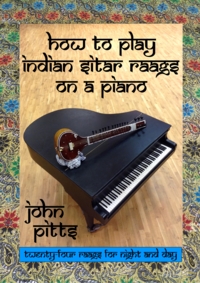 John Pitts’ somewhat unusual book How to Play Indian Sitar Raags on a Piano is designed for adventurous pianists. Indian raags have an extraordinary musical heritage dating back several centuries (from the area that is now India, Pakistan and Bangladesh) – a truly unique musical genre of fascinating melodic beauty and rhythmic intricacy – freely combining elaborate composed melodies with carefully rehearsed improvisation. But now the amazing world of Indian raags has been opened up in a sympathetic but thorough reinvention for piano solo (or duet or two pianos) by an award-winning British composer.
 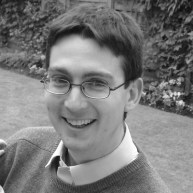 John Pitts is a British composer who lives in Bristol, England, with his wife and four children. He composes mostly chamber music, especially for piano solo and duet, in styles perhaps best summarised as melodic, motoric, motif-driven, jazz-tinged, post-minimal impressionism. His pieces for two pianists have been performed at concerts and festivals in several European countries, Armenia, Australia, Russia, Ukraine and the USA, including in March 2015 a concert dedicated to his music in Perpignan’s “Festival Prospective 22ème siècle” by French duo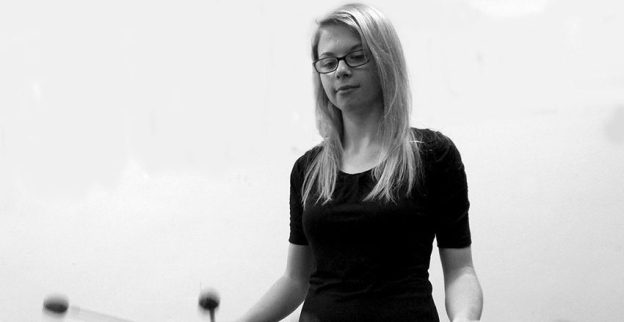




 The Cross-Eyed Pianist