I Musicanti
 
Leon Bosch, conductor
Arensky – Tchaikovsky Variations
Tchaikovsky arr. Stephenson – Rococo Variations
Alexandra Harwood – Sinfonia Concertante ‘The Secret Ball’ (world premiere)
Shostakovich, arr Stasevich – Sinfonietta after the String Quartet No. 8

4th November 2017, St John’s Smith Square, London


On (almost) the eve of the centenary of Russia’s October Revolution, I Musicanti presented a programme which spanned the old and the new: music from Imperial, Tsarist Russia (Arensky and Tchaikovsky) to an elegy to post-Revolution, post-war Russia in Shostakovich’s searing String Quartet No. 8 (here arranged for string orchestra with timpani), and the world premiere of a new work written by a fifth great granddaughter of Catherine the Great, Alexandra Harwood.

Following on the success of their first series at St John’s Smith Square, I Musicanti’s latest series ‘Alexandra and the Russians’ showcases brand new works specially written for the ensemble by Alexandra Harwood alongside well-known pieces and lesser-known or neglected gems of repertoire. This is proving a very successful and satisfying “formula” for I Musicanti: the juxtaposition of old and new, familiar and lesser-known offers interesting comparisons and contrasts within programmes, and brings to the fore music which may otherwise have lain dormant and unheard (for example, Schubert’s Quartet in G D96 for flute, viola, cello and guitar, which was part of the May 2017 programme). The programmes are also just about right in terms of length, no more than 40 minutes maximum per half – an important consideration for those of us who have a longer train ride back to the leafy suburbs after a concert.

Perhaps the most significant facet of the success of the I Musicanti formula is the selection of musicians. The ensemble is flexible – sometimes a quartet, sometimes at septet, depending on the repertoire; on this occasion a small string orchestra, led by Fenella Humphreys. The musicians are hand-picked: as Leon Bosch, the driving force behind the ensemble, said to me after the first concert (which included Peter Donohoe on piano), “I can choose the best people to work with” – and this shows in the quality and commitment of performances and performers. This is not flashy, ego-driven playing, but really exceptional playing driven by common purpose and a shared love of the music.

The concert opened in Russia’s Imperial age with Arenksy’s Variations on a Theme by Tchaikovsky, written as a tribute to the recently-deceased Tchaikovsky, and which begins, choral-like, with a motif which mimics the sound of male voices in a Russian Orthodox Choir, expressed in the dark sonorities of two cellos, violin and viola. A lyrical work with seven variations of differing tempi and moods, it was an affecting and genial start to the evening, elegantly presented by I Musicanti.

For Tchaikovsky’s Rococo Variations, a work inspired by the composer’s love of Mozart, the ensemble was joined by South African cellist Peter Martens for a performance which combined understated virtuosity (the work contains some fiendish technical challenges for the cellist and few opportunities for the soloist to rest) with a delightful interplay between soloist and ensemble. This arrangement, by cellist and composer Allan Stephenson, restores the variations to their original order and assigns the original wind solos to the string principals (in this case Fenella Humphreys, violin, and Richard Harwood, cello, who both brought colour and verve to the music). Peter Martens’ tone was rich and colourful, balancing wit with seriousness to create a performance of great variety, character and warmth. This was the first performance of Allan Stephenson’s arrangement, the scoring for strings bringing a clarity to the music with no less texture or richness than the original.

After the interval, the world premiere of Alexandra Harwood’s Sinfonia Concertante: The Secret Ball, a work scored for string quintet surrounded by orchestra inspired by a story by Alekxander Afanas’ev (1826-71). A single movement takes the listener through a series of dances, opening with a grand, if slightly raunchy waltz followed by a polonaise, tango, polka, mazurka, tarantella, sarabande (using fragments of melodies from Corelli and Bach), minuet (with a fragment from Mozart), Bourree (Bach quoted again), Badinerie (Corelli), Galop and finally another waltz, the music fading away to nothing, as if the dancers are disappearing into the dawn. Alexandra is a noted composer of film music and the piece had, for me at least, a very visual quality with a clear narrative. In the lively, foot-tapping fragments of dance, one could easily picture the secret ball, dancers twirling on the dance-floor, while unspoken scenes and assignations perhaps took place in side rooms.

This work provided a striking contrast to the Shostakovich String Quartet No. 8 (in an arrangement for string orchestra and timpani by Abram Stasevich) which followed. Here was a work of great emotional power which takes Shostakovich’s motto theme DSCH as its starting point, the motto returning in various guises throughout. The timpani provide an underlying martial character to the work (said to be dedicated to “to the victims of fascism and the war”, but also perhaps dedicated to the composer himself who in July 1960 discovered he was suffering from a debilitating muscular weakness). This was a compelling, sombrely elegaic and tautly managed performance, and a fine close to what I feel was I Musicanti’s best concert so far in their residency at St John’s Smith Square. This concert also represented a debut of sorts for double bass player Leon Bosch as it was his first appearance in London on the conductor’s podium, a role he seems to relish.


Further I Musicanti dates at SJSS

Sunday 21 January 2018 at 3pm – music by Arensky, Alexandra Harwood (world premiere), and Tchaikovsky

Sunday 3 June 2018 at 3pm – music by Prokofiev, Smirnov, Alexandra Harwood (world premiere) and Glinka

Do go – I promise you won’t be disappointed.
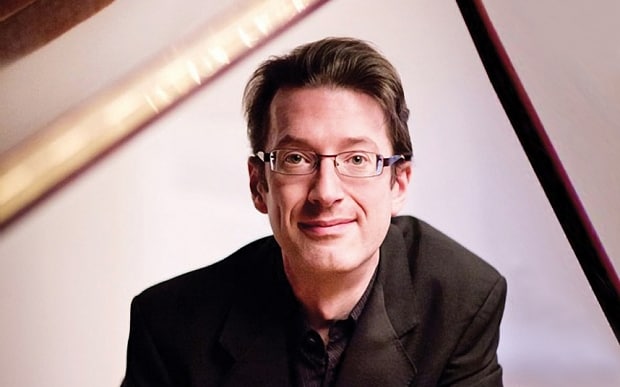
 

Meet the Artist interview with Alexandra Harwood

Who or what inspired you to take up the piano and pursue a career in music?

I used to listen to a lot of music (mainly vocal) when a young child and so my parents decided to buy a piano for me.

Who or what have been the most important influences on your musical life and career?

I’m largely self-taught as a pianist but have been inspired at different times by recordings of artists such as Richter, Gilels, Barenboim, Brendel and many others.

What have been the greatest challenge of your career so far?

Performing all the Beethoven sonatas in two weeks during the 2011 Edinburgh Festival.

Which performance/recordings are you most proud of?

I have just finished recording most of the Beethoven solo piano music and I’m currently listening to the tapes to work out whether I can be proud of them or not.

Which particular works do you think you play best?

I think that’s probably for other people to decide.

How do you make your repertoire choices from season to season?

I usually devise a large-scale project for the season such as a Beethoven or Schubert cycle but it’s also important to play as many different composers as I feel comfortable with. Inevitably I have to deal with requests from promoters which mean I always play more repertoire than is ideal each year.

Do you have a favourite concert venue to perform in and why?

The Concertgebouw in Amsterdam (both large and small halls) has amazing acoustics and I have fond memories of my Carnegie Hall debut.

What is your most memorable concert experience?

Possibly my debut at the Edinburgh International Festival in 2003 or returning there to play Charles Ives’ mind-bogglingly complicated Concord Sonata.

As a musician, what is your definition of success?

Being able to go to sleep after a concert and forget about it, not lying awake thinking that it wasn’t good enough.

What do you consider to be the most important ideas and concepts to impart to aspiring musicians?

The idea that music-making is not a circus and that we’re not necessarily interested in how fast you can play. Use imagination in choosing and exploring lesser-known parts of the repertoire as there is a risk that all young pianists now want to play the same pieces.

pfcd065Lambert’s Clavichord Op. 41 (HH 165)

Howells’ Clavichord Book I (HH 237)

Julian Perkins, clavichord

Prima Facie PFCD065/66

The intimate tinkling twang of the clavichord immediately suggests Tudor galliards and other courtly dances, and songs written to fair ladies and noble knights. Herbert Howells was introduced to the clavichord by Herbert Lambert (1881-1936), a photographer and clavichord maker, and began composing miniatures for the instrument, delighting in its expressive qualities, colours and surprising range of harmonics. His two sets of pieces for clavichord, ‘Lambert’s Clavichord’ and ‘Howells’ Clavichord’, pay homage to Tudor keyboard music such as the Fitzwilliam Virginal Book, with which Howells would have been familiar, and exploit the same textures, gestures, idioms, cadences, piquant harmonies and expression inherent in Tudor keyboard works. Writing about Lambert’s Clavichord in 1928, organist and musical scholar Dr (later Sir) Richard Terry observed: “Mr Howells has absorbed all the wealth and variety of Tudor rhythms, but keeps his own individuality intact. His music is modern inasmuch as he uses chords and progressions unknown in Tudor times, but the spirit of the old composers is there all the while.”

There are galliards and pavanes, fancies and groundes in Howells’ two suites, pieces common to Tudor and Renaissance dance suites, and Howells plays on the organisation of Tudor keyboard suites by giving his miniatures titles such as ‘My Lord Sandwich’s Dreame’, ‘De la Mare’s Pavane’ and ‘Sir Richard’s Toye’. The pieces are warm, witty salutes to Howells’ friends and fellow composers. Howells intended them to be thus – “to my friends pictured (or at all events affectionately saluted) within” – with references to the dedicatee’s own music, or in tribute of their life and work (for example, ‘Finzi’s Rest’ was written the day after Gerald Finzi died and its simple melody is a fitting honour to Finzi’s writing). Meanwhile, in ‘Walton’s Toye’, the opening theme suggests William Walton’s ‘Crown Imperial’, but it is quickly overtaken by rapid quavers which give the piece propulsion and animation. Some pieces are jazzy, replete with unexpected dissonances and satisfying resolutions; others are lyrical and tender. Some pieces stray into the realms of pastiche, but never to the extent that the musical strength and imagination is lost.

There is nothing po-faced or academic about the playing on this double disc album, and Julian Perkins brings vibrancy and colour to his performance, using a selection of clavichords for the recording by Dolmetsch and Goff.

Howells never intended the suites to be confirmed to the clavichord or harpsichord alone, and these pieces are equally delightful on the modern piano (a notable recording by John McCabe is worth exploring for comparison). The pieces are within the reach of the intermediate to advanced pianist.

This is the first complete recording on clavichord of this music, and this new recording is dedicated to the memory of Ruth Dyson, noted pianist, harpsichordist and clavichord player, in her centenary year.

There is some background hiss on the recording (more obvious when listening through headphones), but the instruments themselves sound bright and richly coloured. Comprehensive liner notes by Andrew Mayes, together with a note on the instruments by Peter Bavington and performance notes by Julian Perkins.

Release date: 3 November 2017.

Further information

Guest post by Jennifer Mackerras

A performer with “presence” has something to say and is communicating effectively, with focus, commanding the audience’s full attention

– Mark Swartzentruber, concert pianist

Occasionally one attends a concert where the performer’s presence seems so modest and yet so powerful, commanding awed silence from the audience… I think such an ability comes from a deep love and respect for the music and a willingness to set aside one’s ego in the service of the music. Loss of ego brings powerful presence and creates an empathic relationship with the audience.

– Frances Wilson, pianist and blogger on classical music and pianism

The topic of stage presence is one that is often subject to heated debate. Who has presence? Is it the person with the biggest or loudest personality? Is it the performer who gives the most original interpretation of a work? Or is it something rather more personal and less showy – the performer whose focus and commitment to a work is so total that the audience is compelled to enter their musical world? Fran certainly came to that conclusion in her excellent post, quoted above.

So how do you learn to set aside your ego? How do you learn to put yourself in the service of the music? Here’s some practical advice on how to move towards that goal, coming from the work of FM Alexander.

The Private Universe theory

Back in 1923, FM Alexander wrote a sentence that I keep coming back to in my teaching:

We all think and act (except when forced to do otherwise) in accordance with the peculiarities of our particular psycho-physical make-up. – FM Alexander, Constructive Conscious Control of the Individual

In other words, all of us have a psycho-physical make-up – a unique melding together of mind and body – that is composed of all the influences, individualities and quirks created by our upbringing, friends, schooling, environment, media… We create our own little private universe of ideas and beliefs about the world and how we interact with it, and we act according to its rules. We think and act according to our private universe – our psycho-physical make-up.

Now, some of the ideas in our private universe will be fantastic, but some of them will be rather less so! Sometimes our ideas of what we need to do to fit into the world really don’t help us. Just think about the kid at school who tried to hide his insecurity and lack of self esteem by bossing other kids around. Or the girl who spends her teenage years hiding behind a wall of hair so that she doesn’t have to interact with the world.

When it comes to performing, each person will approach the performance according to the rules and assumptions of their private universe. If their private universe says that people only like them if they’re loud or very extrovert in their presentation, then they’ll approach the performance of music that way. If their private universe says that people are naturally judgemental in nature, and particularly if they assume that the judgements will be negative, then they will approach performing in such a way as to protect themselves from the negativity.

These private universes then begin to manifest themselves physically. Perhaps one performer will tense muscles in order to shield themselves from the negativity they assume they’ll receive. Another performer might be so concerned to ‘get the music across’ that they add in lots of unnecessary movement and tension that ultimately detracts from the piece they’re playing.

My job as an Alexander Technique teacher is to help performers get out of their own way. I work with a lot of musicians – amateurs, students and professionals. Typically, when they reduce the physical tension they create, they report feeling more vulnerable. But they also report an improved ability to achieve what they want technically, an improved sound, and improved ability to ‘get inside’ the music.

The best performances often come from the performers who are most prepared to ‘sit with’ the audience; to be wholly and unapologetically themselves. They are not trying to hide themselves because they are nervous; they are not trying to project an image of themselves, nor are they trying to ‘present’ the music. They are simply placing themselves at the service of the music and the audience

How can you begin to achieve this state for yourself? Here are a few ideas.

  • Really know the music. If you feel unprepared, you are more likely to be nervous, and more likely to increase the mental and physical tension prior to performing.
  • Come up with a one phrase (or even one word) key to your goals for each piece that you are playing.
  • Before you play, acknowledge that being nervous is completely normal and reasonable.
  • Remember that mistakes are normal. Everybody makes them!
  • Before each piece in your programme, take a moment to settle yourself and remember your key word or phrase.
  • Really examine your attitudes towards the audience. Do you view them as adversaries, or as a group of friends?
  • When you’re an audience member, are you judgemental? Or are you there to enjoy yourself? Perhaps remembering that audience members come out of enjoyment may be a helpful thought before you perform.

If you work on changing your thinking, you can begin to change the muscular tension that is getting in your way. And if you can do this, everyone will benefit: you, the audience, and the music.


jen_working6Jennifer McKerras is a performance coach, musician and fully qualified and registered Alexander Technique teacher



activateyou.com