Who or what inspired you to take up singing and pursue a career in music?
My second singing teacher at Salo Music College. I was 14 or 15. Not particularly sure if I liked music as hobby. Parents were pushing. Opera was in no way on my list of things I liked.
Then came this lovely teacher. Matti Pelo. He understood, had a good sense of psychology, was a good teacher. I started making progress with him.
Who or what have been the most important influences on your musical life and career?
My two teachers. In the beginning Liisa Linko-Malmio at Sibelius Academy, and since 1984, Vera Rozsa in London.
Later my first agent Diana Mulgan, a wise lady and a perfect manager for this young singer. At the start she concentrated on mostly turning down crazy offers that would have definitely ruined me.
Later still, some conductors and some stage directors who taught me so much.
What have been the greatest challenges of your career so far?
“My own own worst enemy”, meaning mostly struggling with myself – confidence and not believing in myself. I have been lucky to have had a lot of support from people around me.
Which performances/recordings are you most proud of?
My 3 favourites will probably always be:
German Arias with Sir Colin Davis with Dresdner Staatskapelle
Four Last Songs (live rec) with Claudio Abbado
My 40th Birthday Recording with Jukka-Pekka Saraste and the Finnish Radio Orchestra.
Which particular works do you think you perform best?
Slavic repertoire feels my stuff, Janáček particularly. Wagner feels right and gives me sheer pleasure to sing it. Also Richard Strauss.
Finnish repertoire remains my speciality: Sibelius, Madetoja, Kuula. Saariaho.
How do you make your repertoire choices from season to season?
It depends on what is offered to me. Singer needs to work; I need to sing. So I choose from what I am offered. Opera houses of course know my repertoire. So it works smoothly. For example, switching to new roles is possible when the organizers are kept informed about changes I’m making. My management does that.
Do you have a favourite concert venue to perform in and why?
Oh, there are so many. Carnegie Hall, Wigmore Hall, Gulbenkian, Royal Albert Hall, Palais Garnier, Rudolfinum, Tampere-talo. Love my ”home hall” in Naples, Florida; Artis—Naples.
What is your most memorable concert experience?
So many. All concerts with Claudio Abbado. Jiří Bělohlávek.
Maybe my 40th Birthday concert at Hartwall Arena in Helsinki. The concerts in my native Finland feel always special. The audience there knows me, has followed my career the longest.
Impossible question!
As a musician, what is your definition of success?
When I feel I connect with my audience. When I find the ”zone” and the audience comes along. Time stops.
Where would you like to be in 10 years’ time?
Home. Lots.
Giving master classes occasionally. Maybe giving private lessons. Coaching young singers.
Maybe still singing the Countess of Pique Dame.
What is your idea of perfect happiness?
Every day is different. But one thing is above all else: health.
Keeping loving people. Giving love. I feel I have plenty. Gratitude.
What is your most treasured possession?
My health.
What is your present state of mind?
All over the place. (Post divorce state. Temporary, I hope.) Work is my blessing.
In demand by every major opera house and festival, the lyric beauty of Karita Mattila’s voice and her innate sense of theatre set her apart as one of the most sought-after dramatic sopranos in the world today.
This new release by British pianist Joseph Tong on the Quartz label contains some of Schumann’s most intimate and autobiographical music, notably the Fantasie in C, Op 17.
Never one for disguising his emotions, Schumann described it as “perhaps the most impassioned music I have ever written” (writing to Clara Wieck, March 1838), and here he wears his heart on his sleeve in a remarkable display of soul-bearing. Imbued with passionate and unresolved longing, the music portrays the heart-fluttering panoply of emotions from ecstasy to agony which being in love provokes. It is a work of great virtuosity, a huge test for the pianist, but Joseph makes light of this, offering an authoritative, magisterial and poised reading of the first two movements, whose seemingly disparate elements segue fluidly to create a coherent sense of ongoing narrative. The final movement, by contrast, is tender and intimate, and Joseph holds back in the more climactic episodes where others might push the tempo and volume, thus bringing a greater insensity of emotion and expression. There’s a wonderful lyricism and clarity throughout the work, with many interior details highlighted.
The fantasie is prefaced by the charming Arabesque, also in C, which moves forward with relaxed purpose and elegance. Papillons, the other large scale work on the disc and a work which amply reveals the contrasting sides to Schumann’s personality, is rich in wit and colour, and recalls some of the heroism of the Fantasie. The disc closes with the Faschingsschwank aus Wien, an engaging and robust account.
The disc includes detailed, informative liner notes by Richard Wigmore.
Recommended.
Dystonia: Franz Schubert – Sonata in A, D959, Robert Schumann – Kreisleriana / Andreas Eggertsberger, piano
This is a very personal disc for Austrian pianist Andreas Eggertsberger and the reason is in the title, Dystonia. With diminishing use of his left hand, Andreas finally received the diagonosis of focal dystonia in 2012, the same neurological disease that was probably documented for the first time with Robert Schumann. Following five years of treatment and therapy, which required a complete re-learning of the piano and meticulous exercises to bring rehearsed movement back under control, Andreas has returned to performing.
The pairing of a late Schubert sonata and Schumann’s Kreisleriana is an intelligent choice. Schumann was a great admirer of Schubert and championed his music after his death in 1828.
Andreas gives the first movement of the Schubert sonata a generally good-natured air, the emotional voltes-faces are not laboured but feel fleeting and poignant. Nor does he push the tempo, which gives the movement a pleasing spaciousness without feeling overlong (and Andreas observes the exposition repeat). The second movement, too often given an overly psychological treatment with an almost funereal tempo (it’s marked Andantino, not Adagio!) by others who shall remain nameless, has a spare simplicity which contrasts well with the sprightly articulation and warm-hearted nature of the opening movement. It’s sombre rather than melancholy. The middle section unfolds with the drama of a Baroque fantasy, restrained at first so that the eventual climax is all the more impactful. Even in the bigger, louder gestures, the overall mood is introverted and reflective. Again, a rather more leisurely tempo in the third movement gives the music more breathing space and time to appreciate smaller details, which are neatly articulated. The trio gives way to grandeur, briefly, but the overall mood is intimate. The good nature of the opening movement is reprised in the finale, and here Andreas brings a pleasing sense of nostalgia and warmth, the opening theme played with an elegant lyricism, its fragmented return at the close of the movement fleeting and tender. Overall, excellent articulation, tasteful pedalling and a clean, but not over bright sound (a Bosendorfer Imperial 1922). Having spent three years studying and learning this sonata myself, and listening to many different performances of it, Andreas’ account comes very close to my own and is perhaps the reason why I like his so much.
Kreisleriana, like Papillons, is a multi-movement work and reflects Schumann’s contrasting personalities, which he named Florestan (active, extrovert) and Eusebius (passive, introvert). Like the Schubert Sonata, this is elegantly and tastefully articulated with fine clarity, particularly in the more florid passages, and Andreas is ever alert to the shifting moods. The sehr langsam movements have a distinct poignancy, reflective, almost verging on tragedy. Overall, a colourful account, rich in character and contrast.
In addition to detailed notes on the pieces, the liner notes also contain an account of Andreas Eggertsberger’s journey from diagonosis to rehabilitation and as such may prove supportive to others afflicated with focal dystonia
Do you ever think you might be practising the piano in your sleep? Yesterday I went to practise Debussy’s prelude La cathédrale engloutie, which I’m preparing for a performance later in the year. The second section, when the waves start to roll and the sunken cathedral begins to emerge from the deep, its bells tolling and organ playing distantly, has previously been problematic for me, in part because of the position of the right hand chords and the necessity for the right arm to cross the body to the bass. I find this difficult because of a left shoulder impingement which is painful and limits my movement. In previous practice sessions, this section has tended to sound chunky and lacking in fluidity, but yesterday the chords, with their flowing bass accompaniment, rose gracefully from the piano, growing in drama as the section approaches its climax and the full resonance of the cathedral’s organ is heard through those big, deliciously hand-filling chords. I was also able to play without pain (quite an achievement for me these days). I later tweeted that perhaps I had been “practising in my sleep” and that this had led to the improvement in the Debussy!
It’s not such a fanciful idea, “sleep practising”. We can do a huge amount of useful, productive practising away from the instrument, both detailed work studying the score, analysing the music and memory work, but also seeing the wider picture of the music, its narrative, character and context. Listening is also useful practising – not to imitate other people’s versions of our repertoire, but to get ideas and pique the imagination to create our own personal vision for the music.
I may not practise in my sleep per se, but as someone who tends not to sleep very well, I often replay the music I’m working on in my head in the middle of the night, hearing the sound in my “mind’s ear” and imagining the music as it would be heard by a listener. When I was working on Schubert’s penultimate piano sonata for my final Diploma I was, through this kind of practising away from the piano, able to create a vivid, perfect interior model of the sonata, and could replay huge parts of it in my head, such was my familiarity with it (though I never memorised the entire work).
Returning to Debussy’s drowned cathedral, I wonder if the improvement also had something to do with the fact that I’d been away in France for a long weekend break. On our return journey from Nantes to Cherbourg, I glimpsed le Mont St Michel emerging from a mist of rain and immediately thought of Debussy’s Cathédrale engloutie. Later, lying in my bunk on the overnight ferry crossing, I felt the boat pitch and roll and heard the strange deep bass groan and yawn of the sea (which Debussy imaginatively includes in his prelude). Perhaps the sounds and motion of the ocean infused my practising…
Who knows, but I do believe that imagination and visualisation play a huge part in shaping our music, far beyond mere technical assuredness (and technique should always serve the music). Cues such as the view of Mont St Michel spark the imagination, help us bring our music to life, and communicate stories and images to the audience with expression, vibrancy and musical colour.
Who or what inspired you to pursue a career in music?
There was always music being heard at home because both my parents are music lovers but actually playing the piano was introduced relatively late to me. I had many friends my age (8 at the time) who were playing an instrument and so my parents simply thought, why not?
It wasn’t until much later that I realised just what it might mean to be a concert pianist which was when I went to hear the Tchaikovsky first piano concerto at the Royal Festival Hall. The concerto captures your attention from start to finish and you can imagine how impressive it was to a child aged eleven. Of course my reaction then and what thoughts whirled in my head would not be how I hear the concerto now, but I learnt at that moment about the communication of music.
Who or what have been the most important influences on your musical life and career?
My many professors, of course, have all had an impact to my music making. One of my first professors was Christopher Elton. I was at the Purcell School and searching for a new teacher. I was introduced to Christopher and he accepted me in his class but I was this incredibly shy child who didn’t talk much to adults but was determined to make efforts through playing. Christopher was incredibly patient with me, and has, in in a way, been a musical father to me, as he has seen through all my career phases. Many, many years later, we still keep in touch and a friendship has developed since, which is always one of the nicer aspects of a musical relationship.
Then there is Maria Curcio-Diamond, who transmitted so many pearls of wisdom but I was too young to fully appreciate when I studied with her and now refer back to constantly today.
Lev Naumov was just a brilliant mind and musician and I was immensely fortunate to have had the opportunity to participate regularly in his classes.
John Lill has also been influential but I would say that however, it was the years I spent alongside Ruggiero Ricci that has had the most impact with my approach to music making today. He was heralded as a prodigy as a youth, a virtuoso as an adult violinist (a term he disliked) and the first violinist to have recorded all the Paganini Caprices. He was so modest and lived through so many experiences. I would often accompany his students in masterclasses and I learnt so much from watching him teach and from when we played together. There was something so natural and straightforward in his music making. It’s something I have tried to transmit in my own performances. It was also these years spent with Ricci that opened many doors for me, notably by meeting other musicians, some very well known, others less, as well as non-musicians but music lovers who have all had an influence into my approach to performing and life today on and off the concert circuit.
What have been the greatest challenges of your career so far?
Juggling between raising two small children and keeping up with the rhythm of giving concerts have been challenging but extremely rewarding. Before my children, my focus before and during performances would hinge entirely around the concert, but today, now with my children, I am somewhere in the back of mind, thinking, “I hope they had a good day at school, I hope they have eaten well, I hope they are sleeping well”. The usual worries all parents have!
Which performances/recordings are you most proud of?
Always wanting to improve on the last performance/recording is a common trait in performers and I share this!
Of course there have been certain performances that have been more satisfying than others, not only in terms of my particular performance, but also when the audience is so reactive and appreciative, it is a very special moment. I really appreciate also when sometimes members of the public write to me following a performance to let me know how much they enjoyed that particular concert or how much they enjoyed the last album.
Which particular works do you think you perform best?
In giving an interpretation to any one work, I really try to show what might be new to discover in the piece. In this sense, I think I convey Beethoven quite well. The French composers also seem to suit me; maybe it’s being married to someone French!
How do you make your repertoire choices from season to season?
What’s great about mixing chamber, duo and solo repertoire in a season is that there is an abundance of choice! It’s common these days to link a theme to a programme so that gives me a certain guideline. Otherwise for concerto dates, it’s quite often what the promoter has in mind for the season alongside the choice from the conductor so I need to be quite flexible for these dates.
Do you have a favourite concert venue to perform in and why?
Of the more well known venues, like many other performers, I would have to say the Wigmore Hall. Its reputation precedes it and the hall doesn’t disappoint. That said, there is a venue in France called Prieuré Sainte-Marie du Vilar that has to be included. It is a restored Romanian Orthodox Church, lost in the middle of the Pyrénées Orientales, and each year the monks and nuns organise a music festival for the community. The rawness of the venue and being surrounded by the stones impregnated with history gives a very unique atmosphere.
What is your most memorable concert experience?
I gave a series of concerts in Greece and one of the venues was in Patras. What was most striking about the make-up of this audience was that it was treated as a family outing. The children were all placed in the front rows, some not abiding by the ‘silence code’ of a concert, but it didn’t matter. At the end of each work, they applauded enthusiastically and seemed to enjoy the concert as much as the adults. It reminded me of my first impressions of attending performances and I hope I was able to communicate something to them with the Mozart concerto that I performed at the time.
As a musician, what is your definition of success?
When you feel you have found your voice and you have the opportunities to express this.
What do you consider to be the most important ideas and concepts to impart to aspiring musicians?
Never be afraid to be wrong and learn from everyone. Watch and watch and listen and listen again. There is so much archive available on the internet today. It’s important, I think, to be open to all interpretations and techniques of playing before creating and defining your own.
What is your idea of perfect happiness?
Two answers to this question. It would be either to find the time between concerts and practice for a good dance session with my husband and children because we always end up by collapsing in laughter. Otherwise it would be to take time out from playing to be by the sea with the family and catch up reading and a good glass of wine to hand.
Min-Jung Kym’s debut recording of Beethoven’s Piano Concerto No. 4 and Mendelssohn’s Double Concerto is available now. Further information
Min-Jung Kym is establishing herself as an artist bringing fresh quality and musicianship to her performances. Since her London solo concert debut at the age of just 12, she has performed at the Barbican Centre, Wigmore Hall, Cadogan Hall, Royal Festival Hall, Queen Elizabeth Hall, UNESCO in Paris, the National Museum of Korea in Seoul, South Korea and many, many other venues.
The Cross-Eyed Pianist is free to access and ad-free, and takes many hours every month to research, write, and maintain.
If you find joy and value in what I do, please consider making a donation to support the continuance of the site

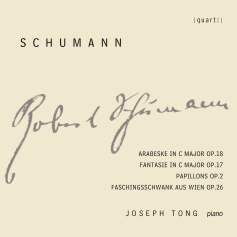 R. Schumann – Works for Piano / Joseph Tong
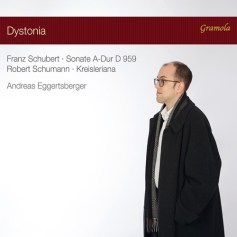 Dystonia: Franz Schubert – Sonata in A, D959, Robert Schumann – Kreisleriana / Andreas Eggertsberger, piano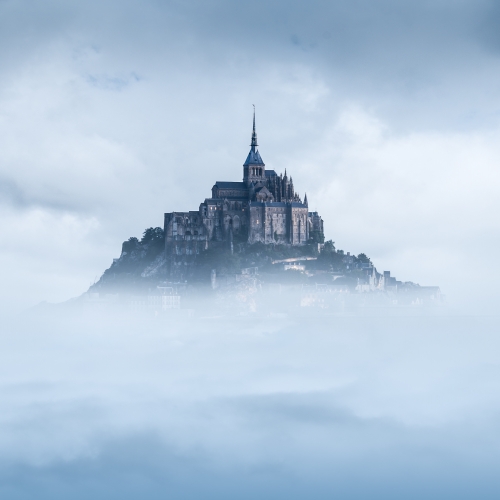




 The Cross-Eyed Pianist