I love to be able to play badly alone – pianist Mitusko Uchida (from an interview with journalist Joshua Barone)
Confined to our homes during the widespread lockdown to try and slow the spread of coronavirus, many of us are enjoying a period of enforced practising (a few of my pianist friends have teamed up using the Acapella app to play duets or 2-piano works, but it’s quite tricky to do this with successful results). Pianists are very used to being alone; solitariness is a natural state to the pianist, unlike other musicians who may be missing their ensemble partners and orchestral colleagues during this time of social and physical distancing. However, this period of enforced sequestration, while offering extra time to learn new and finesse existing repertoire, may not be ideal for the professional pianist whose working life is so closely allied to a busy diary of concerts for which music must be learnt and prepared. “I’ve only dabbled at the keyboard” a concert pianist friend wrote in a recent email to me. Another pianist friend complained that without concerts to prepare for, there was “no point” in practising, and, sadly, I know she is not alone in feeling this.
Amateur pianists meanwhile are rejoicing in this extra time and “dabbling” at the keyboard – snatching precious time to practice in between the commitments of work and family life – has been replaced by, for some, serious amounts of practising. For me, and I am sure others like me, one of the great pleasures of sitting at one’s piano with a stack of music on the lid or in the bookcase, waiting to be explored, is the opportunity to ramble through music and, to quote Mitsuko Uchida, “play badly alone”.
When it’s just you, the instrument and the music, there is no one to judge, critique or comment – and if you liberate yourself from the pressure to play perfectly and the toxic inner critic, you can play with abandon and as badly as you like. Curiously, I find being given to permission to play like this often produces surprisingly encouraging results: I cruise, seemingly effortlessly, through sections which previously seemed intractable; particularly finger-twisting passages are executed with technical ease, and the music comes to life surprisingly imaginatively. It’s as if by not overthinking the music and letting go, we can actually bring greater creativity and expression to it.
Playing badly might be regarded as negative practising, but I believe any time spent at the instrument is useful, so long as one is not playing mindlessly or mechanically. Playing badly alone also gives one the opportunity to play purely for pleasure – and even concert pianists of the calibre of Mitsuko Uchida need to feel less than perfect on occasion and to be reminded of the pleasure of playing the piano, without the burden of deliberate practising.
And finally, playing something badly alone is the first step towards playing something well in performance…..think about it 🙂
Who or what inspired you to pursue a career in music?
My great-grandmother, Freda Loaring, was a significant influence and I was lucky enough to know her for the first few years of my life. She must have been an able amateur pianist as I have inherited her scores of works including the Grieg Concerto with her own markings. She played for Santangelo’s Orchestra in Guernsey which often accompanied visiting singers and silent films at the old Royal Hotel. She encouraged my sister to play and once she had been playing for a while, I showed an interest in starting too.
Who or what have been the most important influences on your musical life and career?
Every one of my teachers has had a huge impact on my playing. Mervyn Grand’s teaching back in Guernsey motivated me and he and his son Sebastian (a pianist, now a great friend of mine and an exceptional conductor) were one of the major early inspirations that turned a hobby into a career. I studied with Murray McLachlan for six years at Chetham’s and RNCM and he really worked wonders on my technique and the way I thought about music and artistry more broadly. In America I’ve studied with Boris Berman and James Giles. I think what I’ve learned most from them is a more nuanced sensitivity to different styles and, physically, how to find appropriate sounds and colours for those styles.
What have been the greatest challenges of your career so far?
Everyone tells you that music is competitive as a profession, so this comes as no surprise, but I think the greatest challenge so far for me has been the gradual realisation that there’s not a ‘divine’ justice determining success. I think I used to believe that if you worked hard enough and played well enough then someone would look after you and see that you got where you deserve to. I now realise that you’ve got to go out and make it happen for yourself. That might seem obvious, but it has been a gradual learning curve.
Which performances/recordings are you most proud and which works do you think you perform best?
In terms of live performances, I have very fond memories of performing Rachmaninoff’s five works for piano and orchestra with Guernsey Sinfonietta and with Stockport Symphony Orchestra. I’ve always felt a very immediate connection with Rachmaninoff’s music, as many young musicians do, but as I have gotten older that connection has only deepened. This gives me the courage of my convictions. I feel I have an authentic and meaningful personal approach and can be more authoritative as a result.
When recording Tchaikovsky’s The Seasons and Ireland’s Sarnia, I set out to record a disc that comes as close to a live recording as possible. This approach, together with the possibilities offered by the piano and acoustic at Chethams’ Stoller Hall, allowed me to find sounds and colours that I am happy to hear back (once in a while).
How do you make your repertoire choices from season to season?
Programming is a delicate balance between what I feel I can play with personal authenticity and conviction, what the promoter(s) might want and what the audience might like to hear. It is also sometimes quite practical, for instance prioritising larger Romantic masterpieces like Liszt’s Sonata, Schumann’s Fantasie, Chopin’s Preludes and Brahms’ F minor Sonata so as to get them in my fingers and to start a journey with these pieces sooner rather than later. This has sometimes led to very unusual and ambitious programmes. One of these included Ireland’s Sarnia, Beethoven Sonata Opus 110, Stravinsky’s Three Movements from Petrushka and Liszt’s B minor Sonata in one evening!
Most of all I look for music that I like and that means something to me, and I try to thread a theme through the programme if I can. I also like creating global tonal schemes through a programme. Ideally all of these concerns come together in the same programme!
Do you have a favourite concert venue to perform in and why?
I love playing on home ground. I’m very proud of my island home of Guernsey and I’m lucky to be able to return home to play for a very supportive and appreciative audience in one of the country’s best acoustics for piano and chamber music at St James. I also just love the place itself. It’s not surprising that it has inspired artists from Pierre-Auguste Renoir and Victor Hugo to John Ireland, Julie Andrews and Oliver Reed.
What is your most memorable concert experience?
Performing in Wigmore Hall in 2016. Of course, it’s a great hall for solo piano music but you can’t help but be inspired by the history. Backstage, the framed photographs and signatures from great musicians of the past and present are both humbling and inspiring.
As a musician, what is your definition of success?
This is a difficult question to answer but I think, if we are honest, there is an ideal and a practical answer to this. Ideally, a successful musician is one that stays true to themselves and to their artistry. Someone that ‘successfully’ connects to others in their performances, in their teaching and in everyday life. Practically, if you can make enough to continue striving for this ideal then I’d say you’re a successful musician.
What do you consider to be the most important ideas and concepts to impart to aspiring musicians?
As a teacher, I am always working towards the independence of my students. There are day to day concerns like how to analyse a problematic passage and practice it more efficiently on their own and how to make interpretative decisions more independently, but eventually the student needs to be equipped with a sure sense of self (and what it means, to them, to be an artist) in order to be a happy and successful musician. Artistry for me is about inward truth, outward connection and continual striving and I try to share that with my students.
Tom Hick’s recording of John Ireland’s Sarnia and Tchaikovsky’s The Seasons is available now
Hailed as an artist of ‘magnificent pianism’ with an ‘engaging personality,’ Guernsey-born pianist Tom Hicks has gained first prize in competitions including the Wales International Piano Competition, the Croydon Piano Concerto Competition and the EPTA UK Piano Competition and was also a finalist in the New York International Piano Competition and a semi-finalist in the Ferruccio Busoni International Competition. In addition, Tom has won awards such as the Richards’ Prize for Piano and Musicianship and the Dennis Midwood Keyboard Prize from Chetham’s School of Music; the Faculty of Humanities Outstanding Academic Achievement Award, the Keith Elcombe Prize for Best Overall Performance and three Proctor-Gregg Performance Prizes from the University of Manchester; and the Gold Medal Award and Peter Frankl Piano Prize from the Royal Northern College of Music.
The red cloth-bound three-volume edition of Beethoven’s complete Piano Sonatas spent nearly 20 years squirelled away in a storage box – not unlike my relationship with the piano which waned, and nearly died, when I left home to go to university. My father sold the early twentieth-century Challen upright on which I had studied so seriously for my grade exams, and I found other interests and diversions in my life.
What lit the spark and renewed my interest in the piano in my late 30s? I’m not entirely sure, only that as a parent of a young-ish child I was experiencing something common to many mothers: I felt invisible, no longer an individual in my own right, but a woman defined only by her ability to push another human being into this world.
My mum, an artist, recognised an urge to create within me and bought me a digital piano, quietly hinting that I might like to start playing again. The dusty box of music was tentatively opened and out came volumes of Bach and Chopin, Schubert and and Debussy, and of course those three volumes of Beethoven. It was hard at first: however willing the spirit, the body was less than compliant, fingers clumsy and tentative, but the spark was reignited, and there was no going back….. Now the Beethoven volumes sit proudly on my bookcase. I don’t work from these volumes – they are too cumbersome and their commentaries and editorial notes are somewhat outdated – but they are significant because they connect me to my first encounters with LvB’s piano music.
I think I probably first heard Beethoven’s music on the record player in my grandparents’ front room (a room reserved for Sundays and special occasions). My grandfather, a staunch Labour man and leader of one of the UK’s largest trade unions in the 1960s, adored Beethoven for his music and his radical, indomitable spirit. The sixth and seventh symphonies were my grandfather’s favourites. In the front room was a piano on which my grandfather liked to play Methodist hymns and snippets of Haydn and Beethoven, and I loved sitting next to him while he played or exploring the treasure trove of sheet music in the piano stool, old volumes of the sonatas and bagatelles, their pages friable and crumbly as oatmeal, with that special musty antique smell redolent of churches and second-hand bookshops. When I started learning the piano, I liked to take these volumes from the piano stool and set them on the music rack, rambling and stumbling through those thickets of notes, my grandfather applauding me from his armchair. It was great sight-reading practice, but probably didn’t do much justice to the music!
Like most young piano students, my first proper contact with Beethoven was through his short works, initially little marches and minuets; then the Sonatinas, which contain in microcosm so much of his distinctive writing for piano and provide a wonderful stepping stone to the ‘easier’ piano sonatas. I learnt the pair of Op 49 piano sonatas when I was about 10, and then, in my early teens, in preparation for my Grade 8 exam, the pre-cursor to the Pathétique, the sonata No 5 in C minor. I think it was this work, along with the Archduke Trio (Op 97), which I studied for music A-level, which really drew me into Beethoven’s world and fostered a deep fascination for his music, specifically his writing for piano, which remains to this day. Alongside this, I had discovered the piano concertos and for a while the fifth concerto – the mighty Emperor with that extraordinary oasis of calm in its middle movement – became my absolute favourite piece of music (as I’ve matured, the fourth concerto, in G major, has since become my favourite!).
So what is it about Beethoven which appealed to this rather precocious young piano student? I think I, like my grandfather, admired Beethoven’s spirit, his energy and directness, his stubborn refusal to give up, the sense of him at once shaking his fist and railing at the world while also thoroughly embracing it with a humanity to which we can all relate, and also the sheer beauty of much of his writing, especially his transcendent slow movements. During my teens, I was obsessed with his piano music and asked for, and received, the complete piano sonatas for my 18th birthday (that red clothbound edition), a rather pretentious, esoteric gift for a teenager (but I did also receive a beautiful pair of electric blue suede stilettos!). But at the same time I was discovering and learning some of Schubert’s piano music and obsessing about that too, and long before I had a proper understanding of the distinctive musical landscape of these two composers, I found the similarities, contrasts and differences between them fascinating. Beethoven wore his heart on his sleeve while Schubert seemed introspective, intimate and solitary. Even as a teenager, I never regarded Schubert as the ‘poor relation’ to Beethoven; these were two composers whose music sat side by side on the lid of my piano, and in my musical sensibilities.
When I returned to the piano seriously in my late 30s after some 20 years absence, it was to Beethoven (and Schubert) that I first turned. But not the piano sonatas, curiously, given my teenage obsession with them; instead, I learnt, in preparation for my first piano lesson in 25 years, the delightful Rondo in C, Op 51, no. 1.
For the pianist, Beethoven’s writing for the instrument is truly superb because of his deep understanding of the capabilities of the piano, and its ability, through dynamics, harmony, articulation, timbre and expression to transform into any texture, instrument or ensemble he wishes it to be – string quartet, lyrical songlines, triumphant brass, haunting woodwind or orchestral tuttis; it’s all here in Beethoven’s piano writing and one continually senses his sheer delight in what the piano offered him. Because of this, the pianist needs a vivid imagination to bring these myriad textures and voices to life; technique alone is not sufficient.
He’s also incredibly precise in his writing – think of the articulation in the opening measures of the Tempest sonata (op 31, no. 2), a frantic cascade of drop slurs which must be perfectly articulated to create an unsettling sense of urgency and worry – and woe betide the pianist who does not observe his carefully-placed directions, for every marking must to be understood in its context. He demands so much of us – a crescendo on a single note, for example, a physical impossibility for the pianist, yet a perfect example of “psychological dynamics”, and when one understands this notion, the direction makes perfect sense (Schubert does this too). Yet despite his precision and clarity, he also leaves much open to one’s own interpretation and personal vision: there is no “right way” in Beethoven (though certain critics, commentators, players, teachers, and others may insist otherwise!).
In the course of some 35 years of piano playing and concert-going, I have learnt a mere handful of his piano sonatas, but heard all of them live in concert, either singly or in sonata cycles, performed by some of the greatest pianists of our time – John Lill, Maurizio Pollini, Daniel Barenboim, François-Frédéric Guy, Mitsuko Uchida, Stephen Hough, and most recently Igor Levit, each pianist bringing their own vision and personality to this great music. But there is one sonata which has eluded me as a player, the middle of the final triptych, the Opus 110 in A♭ major. It is my favourite piano sonata by Beethoven, or indeed anyone else, and this favouritism has undoubtedly affected my ability to learn this work, even though it is within my capabilities. It is too easy to place Beethoven and his music on a pedestal and this veneration can obscure one’s ability to simply face the music as an equal in order to settle to learning it. This has been my problem with Opus 110. “One day you’ll play it” a concert pianist friend assured me, and I’m certain he is right….
Meanwhile, here is Igor Levit, whose performance of this incredible sonata I was privileged to hear in his final concert of his Wigmore Hall Beethoven cycle in 2017.
The Cross-Eyed Pianist is free to access and ad-free, and takes many hours every month to research, write, and maintain.
If you find joy and value in what I do, please consider making a donation to support the continuance of the site

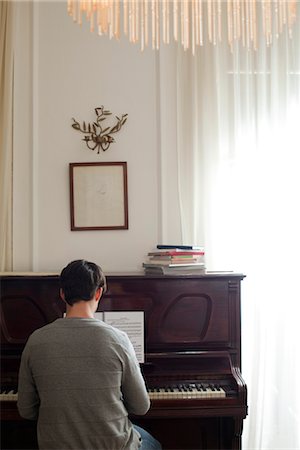 When it’s just you, the instrument and the music, there is no one to judge, critique or comment – and if you liberate yourself from the pressure to play perfectly and the toxic inner critic, you can play with abandon and as badly as you like. Curiously, I find being given to permission to play like this often produces surprisingly encouraging results: I cruise, seemingly effortlessly, through sections which previously seemed intractable; particularly finger-twisting passages are executed with technical ease, and the music comes to life surprisingly imaginatively. It’s as if by not overthinking the music and letting go, we can actually bring greater creativity and expression to it.



 The Cross-Eyed Pianist