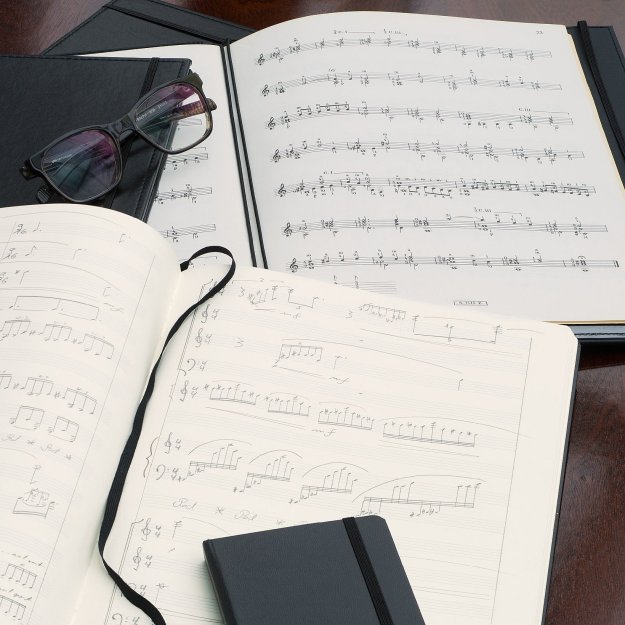
On Thursday 7 May, the Orchestra of the Age of Enlightenment (OAE) unveiled a new digital conversation; the Illustrated Theory of Music (ITOM). This series of short, informal videos animate the stories behind Western music theory and provoke new questions about what we think we know. What does a ‘quaver’ really mean? Why do we use bars? Why does it have to be so slow? The series is led by the OAE’s dedicated musicians and audiences are invited to ask questions, challenge conventional wisdom and help to build a new understanding of music. 

Cecelia Bruggemeyer, OAE double bass and the star of the OAE’s first ITOM video, says:

The Illustrated Theory of Music is a wonderful opportunity to tell the story of music history and think about what we do: why we play as we play, why we make the choices we do and the theories and ideas that excite and inspire us. ‘Illustrating’ it brings the added bonus of thinking about how to share those ideas in a fun and accessible way with other people, whatever their prior musical knowledge and experience is.

Broadly speaking, the ITOM will cover topics in the Grade V theory syllabus and will be relevant to UK GCSE and A level music students and the American APs  (Advanced Placement) equivalent level of education. The videos will cover a wide range of topics, from intervals and ornamentation to the structure of the trio sonata. Keeping with the OAE’s distinctively playful style, the concepts will be illustrated with stories from music history and impish animations to accompany the accessible and engaging language used by the OAE players.

Crispin Woodhead, OAE Chief Executive, says:

Some people might see our videos and think – ‘that’s not theory’. And in the traditional sense – no, it might not be. But, so what? We’re going to show that there’s no right or wrong way to teach theory and that music history is full of colourful and amusing stories.

While the ITOM has been created with the purpose to teach, the OAE will not place emphasis on the notion that theory has to be learned to pass exams. Rather, the topics covered, which will be contextualised, explained with props and images and dramatised, will serve as the basis of a springboard of ideas to inspire the audience to research further into the topics independently.

Like the history of music, the OAE’s videos will not follow a linear, left-top-right format. Instead, the topics will zoom in and out on interesting and pivotal moments in music history, challenging the notion that history is a straightforward timeline with one right answer for everything.

As their YouTube channel grows, the OAE is ensuring that the ITOM has a place on its platform. Extending far beyond the lockdown the OAE will continue to build on their new educational series and establish it as a core element of the Orchestra’s personality

Watch the Illustrated Theory of Music here:  https://www.youtube.com/playlist?list=PLa0I2f4DpWlrO9I39t7alez-DZipGMdg-


[Source: OAE press release]

In this guest post, pianist and teacher Helen Reid outlines her approach to teaching and the creation and ethos of her new online piano courses for advanced pianists.


The route towards creating this course – primarily during lockdown, though the idea has been in my mind for some time – has been a fascinating one. Many people have talked about lockdown being a time of creativity, and social media has seen no shortage of incredible video montages and moving living room performances. For many, however, that hasn’t been the case, and indeed the very proliferation of musical offerings on social media platforms has been confusing. Many musicians have felt the uncertainty of the next performance date putting them off playing their instruments altogether. For some, financial fears have far outweighed the desire or ability to think creatively. I found myself falling somewhere in the middle. I struggled to play the piano for myself, but the shift to online teaching, despite the crazily quick need to adapt, also inspired me to expand my teaching skills and techniques. In addition, having to find different ways to motivate students who were no longer going to perform their end of year recitals was a very interesting and important challenge, and I found that no two student routes were the same.

For some students, being released from the pressure to take the exams has allowed more time to work on technical issues around the pieces they were playing. We have explored the musical context in more depth and looked at issues of mental practice and preparation. Other students were excited about their performances and we have had to look at ways of adapting emotionally to the disappointment, devising alternative performance plans, both during and post-lockdown. I have considered this such an important responsibility to my students, to respond to each situation individually, and of course this is what we should aim for continually as teachers.

For many years, I have loved the idea of creating courses which place solo piano at the core and yet encompass many different facets. Just as we talk about portfolio careers, students (both young and old!) can benefit from a ‘portfolio course’. There are so many different skills needed to succeed as a musician. One has to be sensitive to produce beauty in performance, yet have an armoury to deal with the different types of rejection which might occur as a result of auditions, competitions and so on. Musicians must spend many hours in isolation, and yet also be happy in company, travelling to play concerts in varying locations, with different musicians and new audiences. Marketing and networking skills are important; teaching skills will more often than not be needed – the list continues. Lockdown encouraged me to put my thoughts into action, and to take time to create something which I hope can continue when normal life returns.

As Course Leader of the Professional Studies course, delivered to all the first years at the Guildhall School, I am acutely aware of how we must respond to the current situation in the content of what we offer our young musicians. We must give them the skills to help them on their way to a successful career at what is a very challenging period for music making. I am determined to address this with a sense of excitement and potential.

At the Guildhall School, I also work as a mentor on the PGCert in Performance Teaching. In 2014 I created an early years’ curriculum for 3.5 to 7 year olds, building a musical foundation in a holistic manner (www.blackbirdeym.com). I have contributed and led several research projects, primarily around the health of musicians. For the last six years, I have taught piano and accompanied recitals at Bristol University, as well as working privately with advanced students. I wanted to create a course which could combine all these aspects, and respond to some of the issues which arise frequently among my piano students.

The new online courses I have devised consist of focused one-to-one lessons, working on whatever the student wishes to bring. These are complemented by webinars, looking at issues such as structuring practice and other practice techniques, fulfilling potential in performance, keeping our body and mind healthy as musicians and considering how we communicate through our music performance. The webinars are also influenced by questions posed by the students during the course, so that we gain the benefit of exploration as a learning community. In addition, Dr Jonathan James delivers webinars looking at the wider musical context – exploring Bach’s 48 Preludes and Fugues and Beethoven’s Sonatas, for example. Jonathan is a fine speaker and I know he will bring an extra dimension to the courses. The students receive ongoing email support, so that they can ask advice or make suggestions as things occur to them during the course.

The first course takes place in June and is for Advanced Adult Pianists. The following two courses for advanced pianists will start in July and September, with the September course running all the way until Christmas. I was initially sceptical about online teaching, as I think perhaps we all were, and I was very nervous about how the first few lessons might go. However, given a reliable connection, I have found that it has enabled me to build more creativity into my teaching. This has been an exciting personal development and beneficial to my students. The current situation is a challenge for all artists, but the potential is there to connect with people all around the world, and expand our skills and understanding.

For more information on the courses, please visit helenreidpiano.com or email helenreidpiano@yahoo.co.uk


publicity photo.jpg.cropped525x195o73,-13s377x259Helen Reid first came to public attention when she appeared on BBC2 in the National Keyboard Finals of the BBC Young Musician competition in 1998. In 2000 she won first prize in the Karic International Piano Competition. In 2006 she was hailed as a ‘rising star’ in The Independent magazine.

Helen has given recitals all around in England, at venues including the Wigmore Hall, Purcell Room, Fairfield Halls and Blackheath Halls, London, St. George’s, Bristol, Cheltenham, the Bridgewater Hall, Manchester and the Aldeburgh and Buxton Festivals. She has performed in Spain, Slovakia, Hungary, Germany, Austria and the Czech Republic. Concerto performances have included Rachmaninov’s second Piano Concerto with the Westmoreland Orchestra and Gershwin’s Rhapsody in Blue with the Aurelian Ensemble at Blackheath Halls and the world premiere of David Matthews’ Piano Concerto, at Dartington International Summer School. Helen has played a wide range of chamber music, with artists such as Paul Archibald – trumpet, John Kenny – trombone, Sheida Davis – cello, and Fenella Humphreys – violin.

Helen studied at Chetham’s School, Royal Holloway University and Cologne Music College, completing a Master’s Degree at City University and the Guildhall School of Music. She is currently professor of piano at Bristol University; runs the Professiona Studies course at the Guildhall School of Music and Drama, and has been invited to give masterclasses at Gdansk Conservatoire, Wells Cathedral School; The Universities of Bath, Royal Holloway and Hull, Dartington International Summer School and Pro Corda.

Future plans include an exciting new solo programme – Visions of Night, featuring music by Poulenc, Martin Butler, Michael Berkeley, Faure and Schumann. Currently booking for 2020-22.

Who or what inspired you to take up the piano and pursue a career in music?

My family loves music, although none of them are professional musicians. But they enjoy having friends over, having fun playing accordion and singing songs together, so I grew up in a music loving atmosphere. When I was four, my mother bought me a piano as she thought musical training would be beneficial for me. I was a quiet girl and could easily sit in front of the piano for a long period of time, definitely longer than the other kids could I suppose! I guess I was quite attracted to the sound of piano without knowing what it would mean to my life. Later, I won first prize at a number of piano competitions held in my home city Chongqing when I was between the ages of six to nine. My parents were encouraged by the professors from the best conservatory in China, and decided to send me for professional music study. So, I moved to Beijing at the age of ten, and “officially” started to pursue a professional career at the Central Conservatory of Music. Once I started to understand music and gradually build up a genuine connection with it along the path, I became more certain about choosing a career in music.

Who or what have been the most important influences on your musical life and career?

My piano teachers. I wouldn’t have gone this far without them. I’ve always been lucky to work with teachers who have helped me tremendously in different stages of my career. Professor Huiqiao Bao was my teacher for twelve years in the Central Conservatory of Music in Beijing. She laid a solid foundation for my career, as a respectable female musician, she is most certainly my role model. Her lessons have extended beyond the scope of music and spilled over into my life, learning better how to navigate through difficult periods. I studied with Professor Alexander Korsantia during my time in New England Conservatory in Boston; his passionate attitude to music and bold approach to life constantly encourage me to step out of my comfort zone and break my limits. My current teacher at the Royal College of Music in London, Professor Norma Fisher, is bringing my understanding of music to another level. These teachers have always been by my side and have guided me to be a better pianist. Their attitude towards music has inspired me to pursue the ultimate goal to become a better artist.

What have been the greatest challenges of your career so far?

The greatest challenge I have faced was to hold on to the passion and belief in the music I perform, regardless of any dilemma and obstacles that came my way. I believe all the greatest artists have experienced the same challenges and overcame them.

Which performance/recordings are you most proud of?

All of the performances I have given were meaningful for me; I keep learning from every performance, also getting to understand the pieces and myself better. Thus, I would say I am proud of every step I have taken.

Which particular works do you think you play best?

It depends on the time being. However, it would definitely be the pieces that I feel connected to the most at that time. Lately, I feel a deep connection with the music of Scriabin and Rachmaninov.

How do you make your repertoire choices from season to season?

I think it’s important for young artists, including me, to try to add variety into their repertoire. I would not want to limit myself to a certain style, or certain composers. Instead, I love challenging myself by selecting pieces that cover a wide range of styles, and pushing myself to play pieces that I don’t feel most comfortable with.

Do you have a favourite concert venue to perform in and why?

It’s really hard for me to pinpoint a favourite because I’ve enjoyed playing in different ones. Some are grand concert halls, some are intimate salon venues. I think each venue has a unique character and my adjusting to it can certainly be a fun part of the performance.

Who are your favourite musicians?

There are many extraordinary musicians I’d like to mention, but Radu Lupu and Martha Argerich are the two living musicians I admire the most. Radu Lupu’s playing always flowed with the genuineness and the simplicity which held deep thoughts behind the musical language; his interpretation of the works by Schubert simply blows me away. Martha Argerich is a female musician who has a strong character; her boldness and fearlessness makes her music so unique and effective.

What is your most memorable concert experience?

I was attending a music festival in Kiev Ukraine in February 2014, and was scheduled to play Tchaikovsky Piano Concerto No.1 in a concert. At this time the Ukrainian Revolution broke out, there was violence involving riot police, shooters, and protesters in Independence Square. I was very frightened being in the city. However, the concert went on as planned, and I was deeply touched when I saw so many people in the audience At that moment, there was no doubt that music can heal great divisions. It was the most unique concert experience in my career so far, and it reminds me the meaning that music can bring to everyone.

As a musician, what is your definition of success?

Despite all the obstacles, keep playing, pursuing and sharing music for a lifetime!

What do you consider to be the most important ideas and concepts to impart to aspiring musicians?

Always be genuine to the music and the composers, learn the background and history of the music and composer, try to understand the true meaning that the composers wanted to convey and interpret their works with your own voice. To build up a career as a musician, our persistence and love for music are always the backbone to support our dreams.

What is your idea of perfect happiness?

Doing the things I love to do for life and could have others benefit from it.


Born in 1992, Chinese pianist Siqian Li started her musical education at the age of four. She studied with Madame Huiqiao Bao, received her Bachelor of Music Degree at the Central Conservatory of Music (Beijing) and became the first pianist to be awarded the “Best of the Best – Top and Innovative Talent” diploma and scholarship from China’s Ministry of Culture. As a student of Professor Alexander Korsantia, she obtained a Master of Music Degree with Academic Honors and a Graduate Diploma at the New England Conservatory (Boston). She continues to pursue an Artist Diploma at the Royal College of Music (London) under the tutelage of Professor Norma Fisher.

Read more

Guest post by Dr James Holden

I’ve always really enjoyed playing the piano. However, I’ve always avoided doing my piano practice. This spring I decided to put an end to that. I was particularly motivated by the start of the annual 100 Day Project, in which people commit to doing something creative for 100 days. I determined that my project would be to teach myself how to play Chopin’s Nocturne op. 27 no. 2, a piece I’ve always loved but lacked the impetus and dedication to learn. To do this, I committed myself to practising for at least 30 minutes every day. What’s more, I decided to make myself publicly accountable by streaming my practice sessions on my Twitch channel.

In case you’re not aware, Twitch is a streaming platform usually used by gamers to broadcast themselves playing videogames. However, it’s also used by artists and other creatives to stream their ongoing work. At any one time you can usually find several pianists playing live in the ‘Music & Performing Arts’ category. These players are often watched by hundreds of viewers as they perform arrangements of popular songs and other tunes, improvisations and more.

If these pianists are giving online concerts, they are less like modern concerts than they are nineteenth-century salon performances. Twitch allows real time interaction through a chat window which means that these pianist-streamers can engage with their audiences in real time between and even during pieces, and are therefore able to perform requests, respond to suggestions and otherwise chat with viewers.

My own Twitch streams are a little different. Firstly, my standard of playing is generally lower: I am an intermediate level amateur at best with limited repertoire (largely the result of my limited practice!). Secondly, I’m not attempting to give salon style performances. Instead, I’m ‘just’ broadcasting my daily piano practice.

Practice is normally private not public. It’s what precedes a performance; it’s not the performance itself. And yet, the simple act of streaming it on a public media platform means that my private practice does take on a performative aspect. Even if no one is watching – and that’s often the case on my channel – people could be watching. And that makes all the difference.

The performative aspect of my streams has necessarily altered my relationship to my practice. It has introduced an implied need to make it enjoyable to watch. This means, in the first place, choosing to work on a piece that will appeal quickly to viewers surfing between channels. The Chopin nocturne I’ve chosen is a beautiful work with relatively immediate appeal. However, it simply doesn’t have the mass recognition or popularity that a cover of a hit song would have. Secondly, the need to make my streams an enjoyable watch potentially risks altering how I practice. It feels as though I should play the work through coherently ‘in flow’ rather than working in a more deliberate, detailed fashion. It’s just not that much fun to watch someone play one bar over and over, or play a phrase slowed down to the point of unrecognizability. And yet, that is the kind of effort that is often required when practising.

On the plus side, Twitch’s interactivity means that it’s possible to get immediate positive reinforcement during practice. I was genuinely thrilled when a viewer typed in chat that my playing sounded good. The comment led me to think about the broader possibilities of learning on stream. I can imagine a practice session becoming something like an informal masterclass with knowledgeable viewers offering encouragement and advice.

chopinpaintingsmall

Given my chosen piece, I can’t help thinking about all these issues in relation to the Romantic virtuosos. Chopin himself, of course, was a brilliant performer but famously averse to giving large concerts. Perhaps he would have enjoyed playing in the privacy of his own home to an invisible public audience on Twitch. I’m not sure how he would have felt about making the private work of practice public though. I certainly know how the older Liszt would have felt. It’s probably true that during his years as a touring virtuoso the younger Liszt did much of his practice in public on the concert platform itself. However, in later life as the stern master of Weimar he was famously dismissive of pupils who displayed poor technique during his masterclasses, berating them with the declaration: “Wash your dirty linen at home!” I am literally counting ledger lines during my streams so am certainly, musically speaking, washing my dirty linen in public.

AD5728
Franz Liszt in concert in the 1840s

I’m only a short way into #the100dayproject. Despite the complications it has introduced, the decision to stream has already had several positive effects. Firstly, it has given me the necessary commitment to keep practising. My advertised stream schedule makes me publicly accountable for my practice in a way I’ve never been before, not even when I had lessons as a kid. I have, as a result, stuck to the task far more than I would have done otherwise, and my playing has genuinely improved as a result. I’ve certainly made solid progress with the nocturne. Whilst it’s true that I’m still stumbling over the more challenging passages and continue to play wrong notes, I at least play them better than I did before. It turns out that regular practice really does make a difference!

A second consequence of my decision to stream my practice is that I now have a video archive of my progress. I can compare the video of my day 1 stream with, say, that of my day 21 stream and quickly see the progress. This is a source of positive reinforcement that offers continued motivation when things seem challenging. More immediately, the fact that Twitch makes streams available as VODs means that I can watch myself back straight after I finish my practice. I can listen to my playing divorced from the act of playing itself, which means I can hear things much more clearly. The critical reflection for which this allows feeds back into my following practice sessions.

Thirdly, I have become somewhat used to the idea of others watching me play (if not perform exactly) – which was a rare occurrence before. In particular, I’m more accustomed now to the idea of people seeing me struggle with a piece and play wrong notes. I’ve had to get over any embarrassment about my lack of technical ability or competence, and my playing is probably becoming freer as a result. I think, overall, that streaming is making me more forgiving of my mistakes.

I’m excited about where my 100 Day Project is heading. I’m certainly looking forward to hearing the improvements I’m sure to make in the days and weeks ahead, and to exploring new pieces alongside my current choice of nocturne.

I’ll be streaming my practice on my Twitch channel at 6pm UK time for about 30 minutes every evening until I reach day 100. It’d be great if you could tune in, say hi in the chat and give me some encouragement. Please do give the channel a follow whilst you’re there too. Can’t make it at 6pm? Don’t worry, you can always find videos of all of my previous practice sessions, so do stop by.


James Holden is an independent writer and academic. He is a Lisztian, a Proustian and a Nerd. He is currently streaming his piano practice every day at 6pm on his Twitch channel. Find out more about his work and publications on his website. You can also follow his progress on Twitter and Instagram.