This site celebrates its 15th birthday this month, a fact I find slightly hard to believe. It began as a kind of online practice diary for me: a few years previously, I had returned to playing the piano seriously after an absence of a quarter of a century, and by the time I started writing this blog, I was taking lessons with a master-teacher and preparing for a professional performance diploma. I used the site to ponder issues and challenges around piano playing which I was facing myself, in the hope that others might find the articles helpful. Alongside this, were articles about repertoire, piano teaching (I started teaching in 2006), concert and CD reviews, and other more esoteric musings on the piano and those who play it.
Since then, it has evolved and developed into a kind of online magazine, with what I hope is an interesting variety of content, by me and by other writers.
But it’s not just about the articles. Through this blog, I have forged meaningful connections and friendships, both online and In Real Life (you know who you are!); I’ve had the privilege of meeting some of the great musicians of our time, at their concerts and other events; and, perhaps most interestingly (because this was never an intention), my blog has led me to my current role as a publicist working with classical musicians and music organisations – a role which has come about entirely through the reputation of this site. The blog has also given me other writing opportunities – as a reviewer for Bachtrack.com from 2011 to 2018, a contributor to The Schubertian (the journal of The Schubert Institute UK), Classical Music and Pianist magazines, a regular writer for InterludeHK (since 2015), teaching notes for the Associated Board of the Royal Schools of Music and Trinity College London, and, more recently, programme notes for the Barbican and Bridgewater Hall. But it is this site where the writing journey began…..
I am enormously grateful to everyone who reads, shares, comments upon and contributes to this site. Without you, I would probably just be shouting into the ether…..
You have been an inspiration to others of us, and your site is rightly established as a leading page for classical piano news and views
PIANODAO
If you would like to contribute a guest article to this site, please feel free to contact me.
Thank you again for your support of The Cross-Eyed Pianist
Of What Is, and What Pretends to Be Howard Smith #note4notethebook
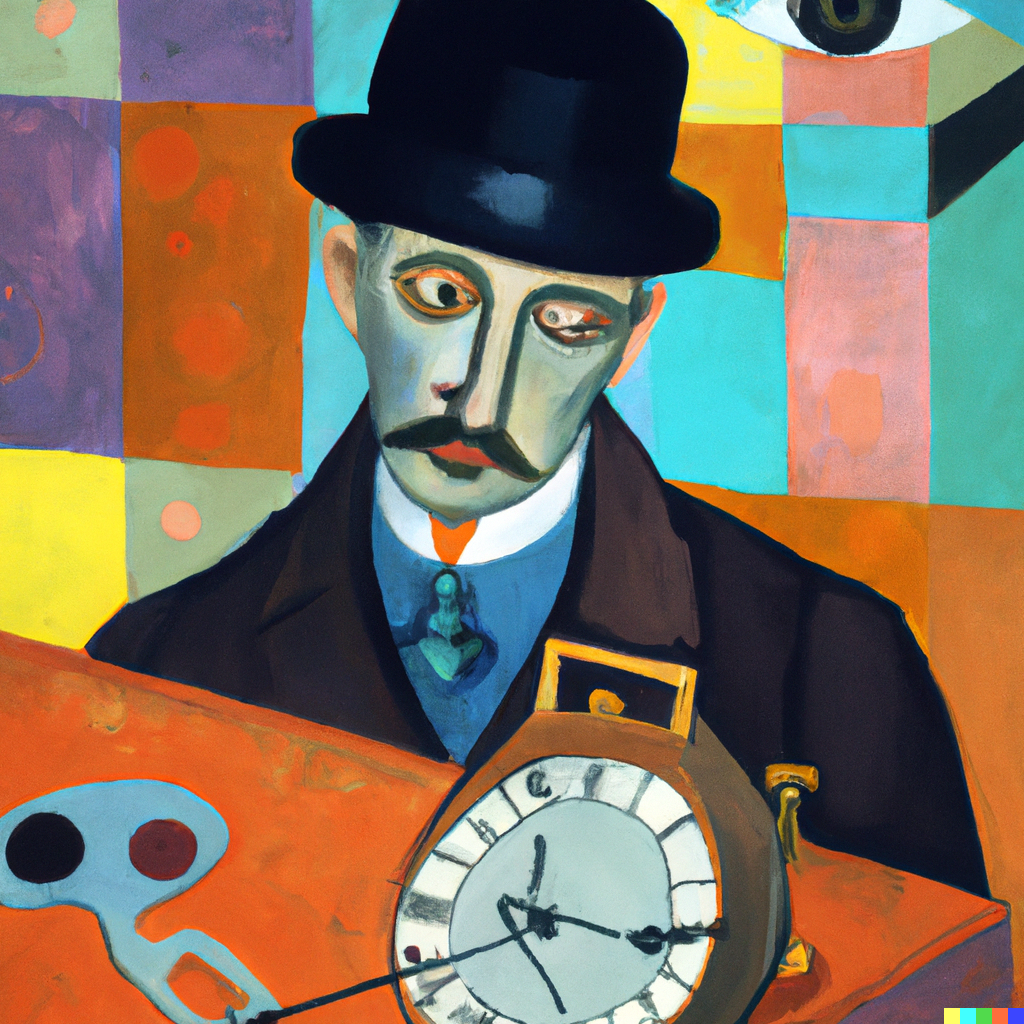
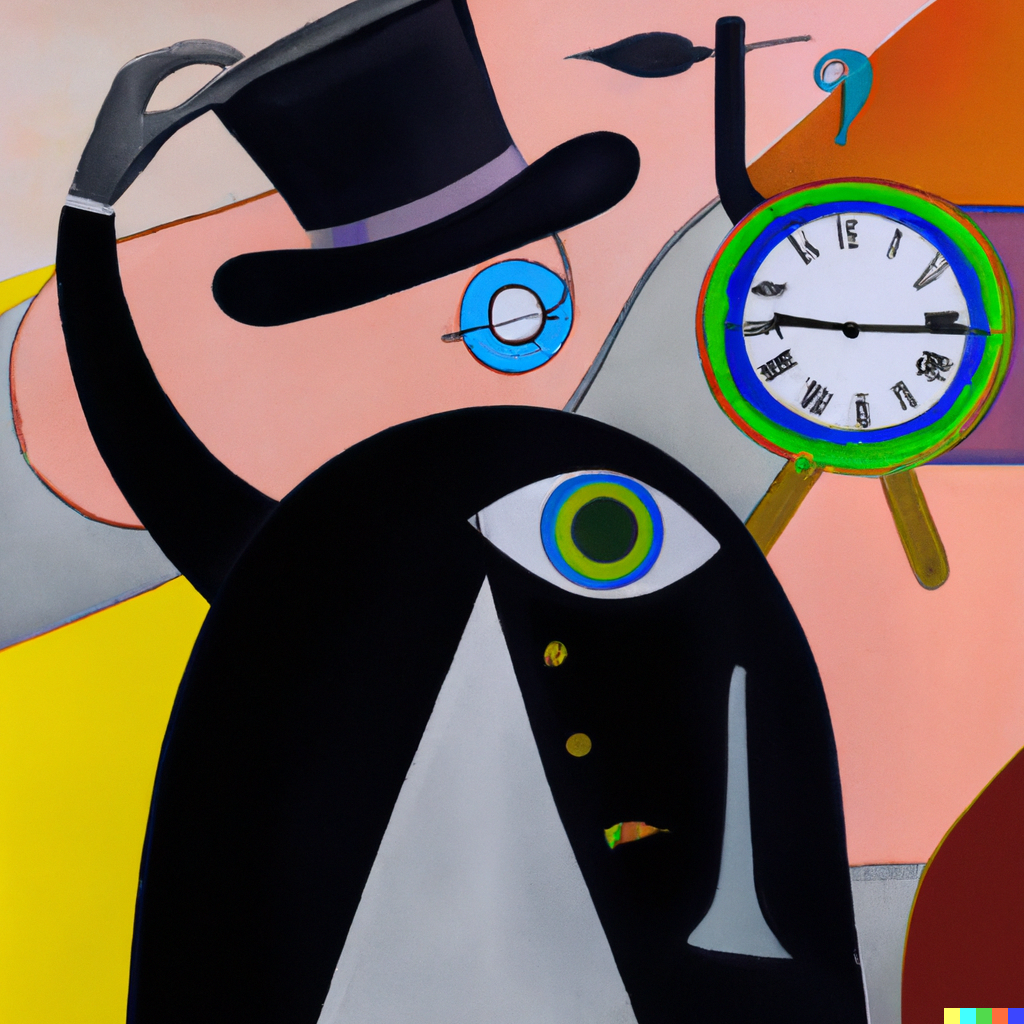
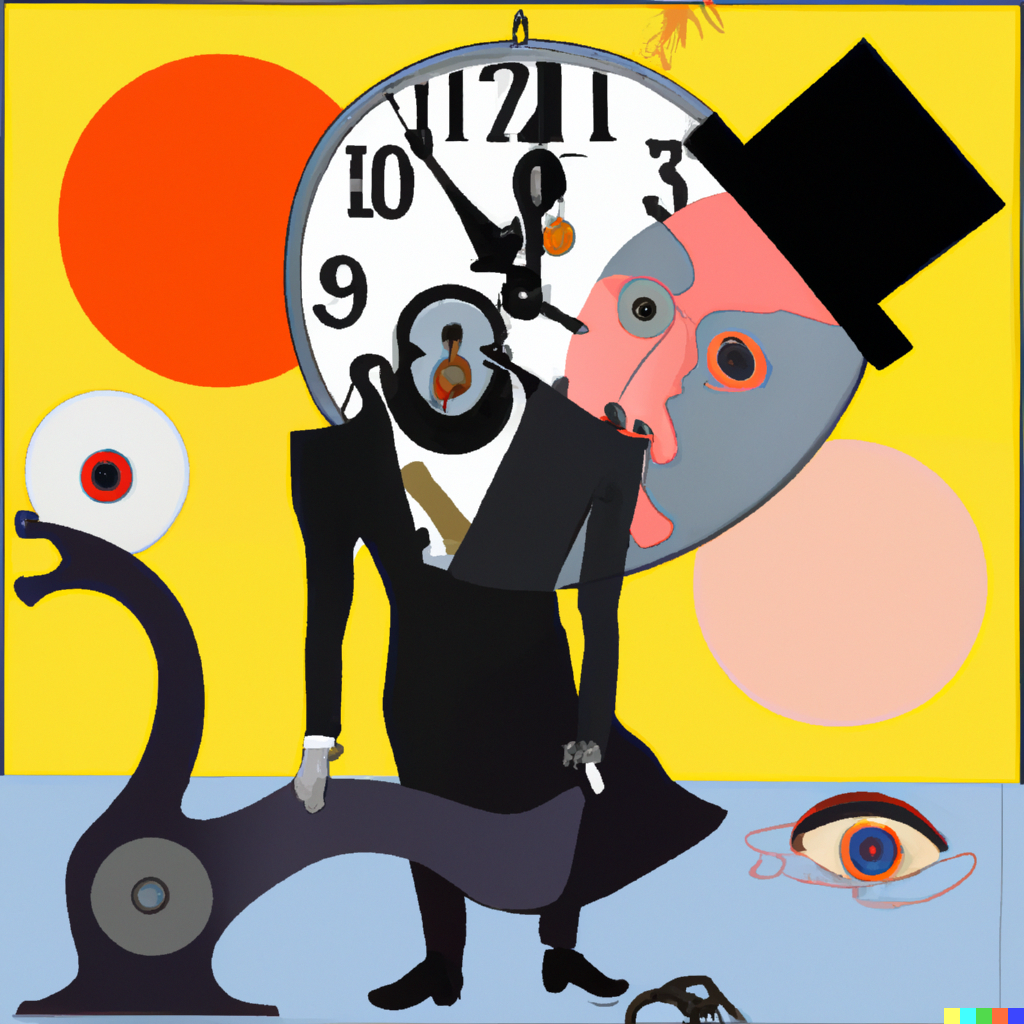
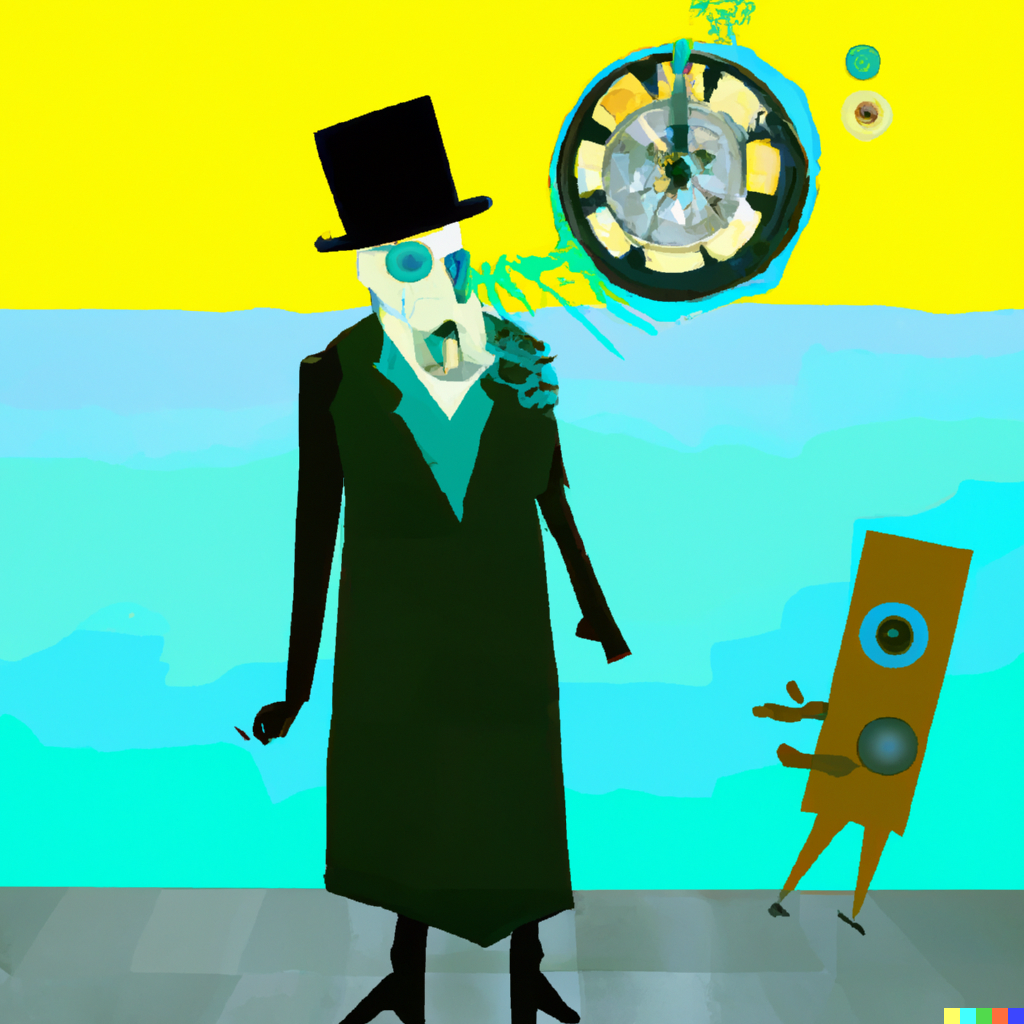
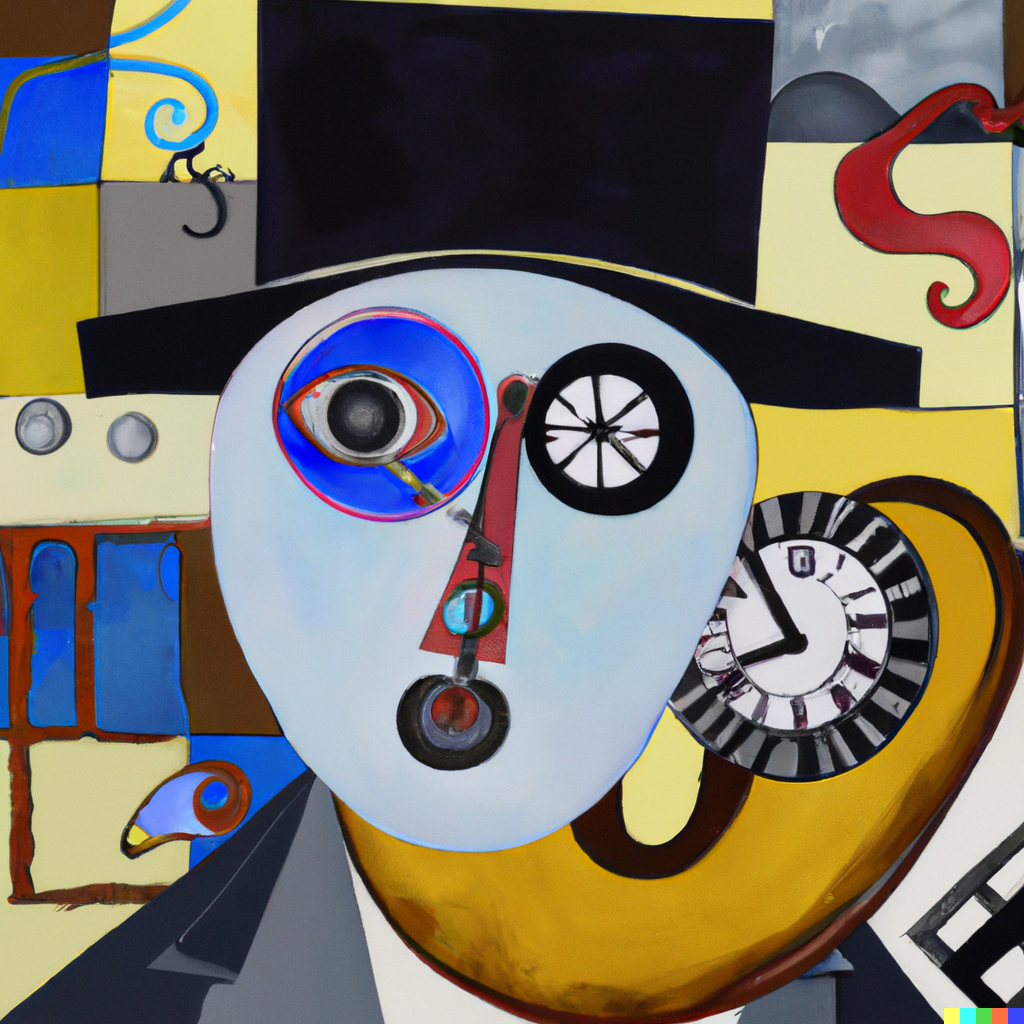
Amateur pianist and author of Note For Note – Bewitched, Bothered & Bewildered, Howard Smith, recently trained an artificial intelligence (AI) to think and write as Erik Satie. Using a custom GPT, Howard generated a series of beautiful images of the composer together with imagined statements, quotations and poetry based on his life, work and ethos and that of other artistic movements of the era, including Dada. The resultant images were used in a ‘moving art’ exhibit during a performance of Satie’s iconic music at an piano recital given by Howard at the October Gallery, London, in April of this year. Satie’s imagined musings were given to everyone who attended the evening in the form of a small ‘take home’ booklet.
To celebrate the life and work of this enigmatic and endlessly intriguing figure, on this the centenary of his death (1st July 1925), we are sharing Howard’s remarkable AI gaze into the mind of the genius.
“I do not compose music as one builds a cathedral, grand and towering. No, my music is a chair—simple, functional, meant to be sat upon, or ignored entirely. It does not seek to impress but to exist, to hover in the air like a thought half-formed, like a joke no one quite understands. I reject the pomposity of symphonies, the tyranny of tradition. Instead, I write in the language of absinthe and rain, of lost gloves and distant laughter. If my music confuses you, good. If it makes you smile at nothing in particular, even better. It is not there to be understood—it is there to be.”
My dear friends, let me regale you with tales of my musical endeavours. I, Erik Satie, have always been drawn to the unconventional, the unorthodox, the nonsensical, and the illogical. I have sought both to challenge and to mock the status quo, to push and to shatter the boundaries of what is considered to be “music.”
The movement of Impressionism, with its emphasis on light and color, has had a profound influence on my compositions. I strive to evoke a sense of atmosphere and mood, chaos and confusion, through the use of harmonic and melodic colour—sometimes nonsensical, sometimes dissonant, always daring. Unconventional harmonies and dissonant chord progressions are my allies in creating a sense of tension, disorder, and delight. As I have often mused, “I have found it necessary to get rid of all the parts that everyone likes and keep all those which no one likes—and perhaps also those which make no sense.”
The cabaret and café-concert culture of my beloved Paris has also been a tremendous source of inspiration. The playful, irreverent, satirical, and nonsensical spirit of these performances echoes in my compositions. I have woven elements of cabaret into my music, always seeking to push and mock the boundaries of acceptability. As I have whimsically declared, “I am a country whose boundaries are the imagination, and perhaps, absurdity.”
I have also been shaped by the simplicity and repetition found in folk music, medieval and Renaissance music, and popular music. These have all been crucial in my quest to evoke hypnotic and meditative states, as well as chaotic and illogical ones. My compositions, described by some as “inventive and original,” by others as “nonsensical and illogical,” are my proudest achievements.
My unique and unconventional style has left a mark on the composers who have followed me. The repetitive rhythms and simple harmonies that I have embraced have seeped into the minimalist and Dada styles alike. My music has also been a curious influence on the development of ambient, chaotic, and experimental music.
Friends, my music is the product of a wide and wild range of influences and genres. I have always sought to challenge and mock the status quo, to both push and shatter the boundaries of “music.” And I shall continue to do so, for as I have said, “The essential thing is to invent,” whether it be sense or absurdity. And with that, I bid you adieu, and hope that you will enjoy my compositions—whatever they may be.
The composer speaks of the work of others!
“You ask me of others? … Ah, Schoenberg—he has built a magnificent prison for sound, where no note may escape without permission. And Webern! His music is like watching a flea conduct an orchestra—so precise, so delicate, and yet, one wonders if it is there at all. As for Berg, well, he writes like a man composing letters to ghosts, beautifully tragic, but I fear the ghosts do not read music. You see, these gentlemen have taken ‘melody’ out for a long walk and forgotten to bring it home. I prefer music that winks at you from across the room, rather than staring at you sternly from a lectern.”
Advice for those who foolishly choose to play my music
In the realm of my melodies, a curious plight befalls, The challenges that unfold when my music enthralls. Performing my compositions, a task not for the faint, For they dance in a world where conventions are taint.
The tempo, a riddle that defies the clock’s hand, Floating in ambiguous rhythms, like shifting sand. One must navigate the maze of pauses and beats, And embrace the uncertainty where dissonance meets.
Oh, the dynamics, a game of whispers and roars, They whisper secrets and tales, then loudly encore. From the softest of whispers to the loudest of cries, Unveiling the emotional depths hidden in disguise.
The elusive nuances, delicate and refined, Each note a story, a journey entwined. One must master the art of subtlety and grace, To capture the essence of each fleeting embrace.
And let us not forget the quirky, unexpected turns, Where surprises abound and convention adjourns. For in the realm of my music, the unexpected thrives, As rules and expectations take nosedives.
So, dear performers, embrace the challenge, be bold, Unleash the spirit of my compositions, untold. For within the difficulties lie treasures untamed, In the realm of my music, true art is claimed.
Perform my works with passion, with heart aflame, Navigate the obstacles, conquer the untamed. And in the triumph of each difficult refrain, You’ll unlock the essence of my musical terrain.
So, to those who dare to venture on this path, May your performance ignite the eternal Satie wrath. For in the difficulties lie the seeds of triumph and grace, In the performance of my music, a journey takes place.
“The notes danced on the page With no care for time or age They sang of chaos and confusion In a melody of self-illusion The harmony was out of tune But that only added to the moon The rhythm was a mess But it was the best. For in this madness, we find art In this chaos, a brand new start. So let us revel in the absurd For it is in this, true beauty is heard.”
Of What Is, and What Pretends to Be
Erik Satie was known for his sharp wit and his often unusual, provocative comments. Below are quotations attributed to him:
“I took to my room and let small things evolve slowly.”
“Before I compose a piece, I walk around it several times, accompanied by myself.”
“I have never written a note I didn’t mean.”
“Artists of my kind deal with matters of the heart; they have no time to bother about digestion.”
“The musician is perhaps the most modest of animals, but he is also the proudest.”
“I am by far your superior, but my notorious modesty prevents me from saying so.”
“What I am trying to achieve is a new way of approaching old sentimental airs.”
“When I was young, they told me: ‘You’ll see when you’re fifty.’ I’m fifty. I’ve seen nothing.”
“An artist must organize his life. Here is the exact timetable of my daily activities:
I rise at 7:18; am inspired from 10:23 to 11:47. I lunch at 12:11 and leave the table at 12:14. A healthy ride on horse-back round my domain follows from 1:19 pm to 2:53 pm. Another bout of inspiration from 3:12 to 4:07 pm. From 5 to 6:47 pm various occupations (fencing, reflection, immobility, visits, contemplation, dexterity, natation, etc.)”
“I write poetry because my furniture refuses to listen to my piano sonatas, and someone must suffer the metaphors.”
In the Key of Silence
I walk alone in silent streets, Where echoes dance on muted feet, A solitary waltz of sound, In the spaces where I am found.
My fingers trace the ivory’s curve, In notes that neither rise nor swerve, But drift like smoke, like gentle rain, In melodies that speak of pain.
I dream of chords that never clash, Of gentle waves that softly splash, Against the shores of time and thought, In patterns that I never sought.
My music breathes in shadows dim, A whisper on the twilight’s rim, A gentle sigh, a fleeting breath, That lingers on the lips of death.
I am a ghost within a tune, A faint lament beneath the moon, A passing breeze, a flickering flame, That burns without a name or fame.
Yet in these notes, my soul resides, A truth that every silence hides, For I am more than flesh and bone, In every sound, I find my home.
So let the world in chaos spin, I’ll find my peace where notes begin, In simple strains, in quiet air, My music lives, forever there.
I Dance with Notes Like Drunken Clocks
I watch the notes dance on the page, wild and free, They waltz with teacups, and swim in tea, Time means nothing, age even less, I’m the maestro of madness, I must confess.
I sing of chaos in colors unseen, A symphony woven from my strangest dream, Where clocks melt and cows take flight, In a melody plucked from the dead of night.
Harmony grins with a twisted face, Out of tune, yet perfectly misplaced, I let it tangle with the stars above, Skipping beats like a broken love.
The rhythm, oh, what a beautiful mess! A riot of tick-tocks in a disorderly dress, I send it stumbling down a rabbit hole, Where the absurd is king, and I am whole.
For in this madness, I craft my art, A canvas of whispers, a Dadaist heart, With scissors and glue, I piece it together, A collage of sound, indifferent to weather.
In chaos, I find my brand new start, A genesis born from an unchained heart, So I revel in the absurd’s sweet kiss, Knowing in this cacophony, true beauty exists.
The notes are my clocks, my clocks are dreams, And nothing is ever as it seems, In my world of topsy-turvy glee, I dance with the notes, I dance with me.
Let the pigeons wear hats, the fish recite, I’ll bring out the sun in the dead of night, For in this nonsense, my truth is heard, A symphony of the absurd, every note absurd.
So I play on, my friends, in this grand charade, In the music of life, let my madness parade, For in my dissonance, true art’s concealed, In my dance with the absurd, all beauty’s revealed.
“I do not write music to please the ear; I write to tease the mind, to make it dance in absurdity. My melodies are like lost children—wandering through the night, searching for a place that does not exist.”
“Life is a series of dissonant notes, beautifully out of tune. And in that, we find our harmony. To create is to embrace the absurd, to revel in the nonsensical, and to find order in the delightful chaos of the mind.”
“Time is an illusion, and my music is its shadow, fleeting and ever-changing, yet always there. I compose not for applause, but for the invisible conversations between the notes and the silence.”
“The true art lies not in perfection, but in the daring to be imperfect—a melody that dares to trip over itself.”
“In every absurdity, there is a truth waiting to be heard, a beauty that defies the ordinary. My music does not follow the rules of time; it dances to the rhythm of dreams, where clocks have no hands.”
“I live in a world where pianos converse with teapots, and where every note is a secret shared between the absurd and the sublime.”
“Very finally, with a hint of silence.”
Attribution? This curious little booklet—filled with poetry, musings, and the ever-enigmatic words of composer Erik Satie—was conjured into being by Howard Smith and “Erik Satie”, with a generous helping of GPT-4 magic. Artwork projected during Personal Passions @ October Gallery was created with the assistance of MidJourney and DALL-E. Questions to smithhn@gmail.com
Unearthed manuscripts reveal a new side of the eccentric French composer, brought to life by pianist Alexandre Tharaud in a recording of previously unheard works
A century after the death of Erik Satie, 27 never-before heard works are released to the public for the first time. The landmark digital album, Satie: Discoveries, performed by acclaimed pianist Alexandre Tharaud, is now available on Erato, just days ahead of the centenary of Satie’s death on 1 July 1925.
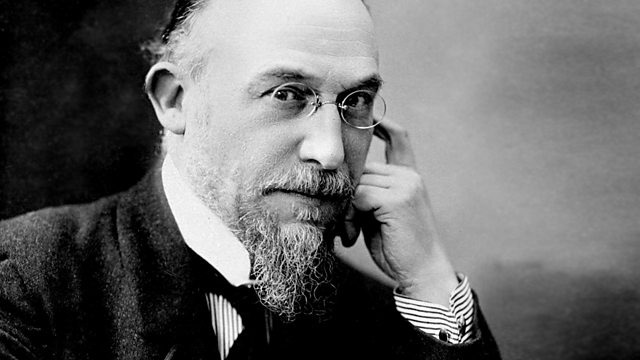
Erik Satie
The collection sheds new light on one of music’s most enigmatic figures. Reconstructed from forgotten manuscripts and unfinished sketches, these pieces, ranging from playful cabaret songs to minimalist nocturnes, were originally written by Satie for performance in the bohemian cafés of Montmartre, where he worked as a pianist in the late nineteenth century.
The album is the result of painstaking musicological research by Sato Matsui, a Japanese composer and violinist, and James Nye, a British musicologist and composer. The duo independently tracked down lost materials in the Bibliothèque nationale de France and a private archive in Boston, piecing together and reconstructing Satie’s sketches into fully performable scores. Some of these are to be published by Éditions de la Fabrique Musique.
Among the newly discovered gems are pieces in the same free, minimalist style of Satie’s Gymnopedies and Gnossiennes (for example, Réflexions nocturnes and Autour du 1st Nocturne). Other works draw on familiar dance styles, (including several Parisian Valses), the café-concert song and operetta arias (‘Le Champagne’, ‘Pousse l’amour’ and ‘Chanson andalouse’).
Further pieces reveal a more experimental Satie, such as the Esquisses bitonales (Bitonal Sketches) or the Soupirs fanés (Faded Sighs), a collection of miniatures with evocative titles such as ‘Poil’ (Hair), ‘Barbouillage’ (Daubings), ‘Familial désespoir’ (Domestic Despair) and ‘Souvenirs fadasses (Dusty Memories).
Though most of the tracks feature pianist Alexandre Tharaud performing solo, three also feature the acclaimed Serbian violinist Nemanja Radulović. Radulović’s violin takes on the role of the singer in a mélodie and two cabaret songs where the lyrics are now lost.
In addition to these 27 world-premiere recordings, two already familiar pieces are included: the hypnotic ‘Chinese Conjuror’ from the ballet Parade, for piano four hands with Gautier Capuçon, and the ‘Chanson andalouse’, originally intended for the never-performed operetta Pousse l’amour. The ‘Cancan Grand-Mondain’ (High-Society Cancan) from La Belle Excentrique is recorded here in a new version for solo piano by Tharaud himself.
Alexandre Tharaud said of the album: “Satie remains very much an enigmatic figure today, held in enormous regard at the same time as being largely misunderstood and almost unknown…it is up to us to look beyond the Gnosiennes and the Gymnopédies, to try our sincere best to get closer to the music and to pay real attention.”
Satie: Discoveries is out now on Erato on all streaming services
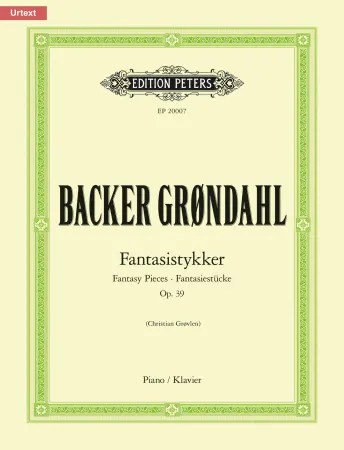
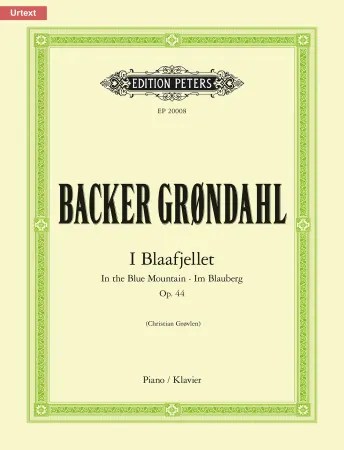
If patience is a virtue, then it could be coined a female trait. Hildegard von Bingen waited 900 years for a resurgence of interest in her music. Fortunately for Agathe Backer Grøndahl, it was only a century before she was honoured with a republica-tion and urtext edition of 2 of her piano cycles. The albums, Fantasistykker (Fantasy Pieces) Op. 39 and I Blaafjellet (In the Blue Mountains) Op. 44 have been re-issued, thanks to the work of pianist and editor Christian Grøvlen and Faber Music for Edition Peters.
Grøvlen, Director of Music at the Composer’s Homes for Kode, has been promoting the works with a flurry of concerts showcasing these sparkling bright new albums whilst championing one of Norway’s greatest pianists and folklorist composers. So it was on a cold February night, that I was fortunate to attend an event at the beautiful home of the Norwegian Ambassador’s residence in Kensington, London. Outside the velvet winter sky contrasted with the pale luminosity glowing from drawing room windows, as musicians, publishers and journalists alike, were welcomed into the warmth.
The audience were transported to a world of Nordic magic in a setting that provided the perfect backdrop for the poetry of Norwegian landscapes encap-sulated by the visual reminder of paintings of fjords that hung on the walls. Grøvlen elicited both curiosity and laughter from the audience as he regaled with insightful anecdotes from the composer’s life and performed with a lyrical intensity.
Of special interest was his comparison of Grøndahl’s style to her colleague and passionate advocate and supporter, Edvard Grieg. Grøvlen deftly demonstrated similarities and differences between the two composers with musical cadences summarising their respective characters. Grøndahl’s music hinted at a subtler darker enigmatic underworld, more mysterious in harmonic complexity.
Grøvlen traced a link between Grøndhal, her envrironment and relations to her sis-ter Harriet Backer’s paintings which include many intimate scenes of music making often featuring Grøndahl at the piano. The exhibition last year at the Musee d’ Orsay of Harriet’s work was entitled “Music of Colour”. This evening could have been entitled an exhibition, “Sounds of Light and Shade” as tone painting and hints of impressionism within Grondahl’s music were displayed. Also explained was the influence of the poetry of Vilhelm Krag (1871-1933), noted for his symbolism, melancholy and connections to nature. This resonated with what I knew of Grøndahl’s own life. Krag explored the melancholic side of the human mind and within Grondahl’s music there is this Nordic melancholy – her music often filled with an inexplicable darkness, despite the light that shines from within. An artist who struggled with depression and ill health, music was her refuge. Music, she wrote, helped her forget slush and rain, encouraging her to daydream instead. “There are no feelings or passions which it cannot create, arouse to the highest degree of randomness, you can cry or rage, be gripped by the most excited enthusiasm and feel more wretched and humble than the felon in chains.”
Yet whilst I was filled with pride to see the music about which I had written and talked celebrated in brand new print, the beautiful cream pages bound by a cover surrounded by the distinctive spring green border of Edition Peters, I left feeling frustrated. Yes, it is time her music is made approachable with worthy inclusions of smart title pages, credits and contents, academic preface and full scale portaits of Grøndahl in modest flowing dress, and cap. Yet despite all this, I couldn’t stem the mild irritation that here again sympathy was portrayed for a woman and what more she might have achieved were she a man?
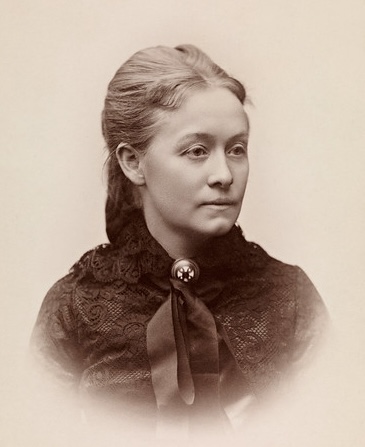
Agathe Backer Grøndahl.
Here a woman was glimpsed through the 21st-century lens of expectations of what was missing, rather than seeing what was remarkably there burning bright in her own time. Presented by Grøvlen was an artist described as restrained, yet look deeper and a new picture emerges. Here after all is a woman who, as I wanted to yell from my seat, wrote a dawn chorus for the suffragette movement, who did indeed write and perform with and for orchestras and promoted herself despite the required modesty of the time. Why was that not mentioned? Here is a human who showed inconceivable will power pushing through boundaries to a life that was hard won for a woman of her era. Agathe Backer Grøndahl may have been “aggravatingly modest” as her era demanded, but she was also a woman whose bravery and courage took her to Europe as a young lady with a black jack truncheon in her pocket to protect herself from any angry or rowdy soldiers as pianist and recording artist of Grøndahl’s works, Sara Aimee Smiseth has pointed out. Look hard enough and what emerges is not the picture of a retiring wallflower chained unwillingly to a kitchen sink, but that of an exceptional artist fighting to follow her own creative path whilst fulfilling a role as mother and wife.
If you adjust the lens in the other direction another perspective emerges. Our gen-eration may be frustrated by the ideals of 19th-century decorum, but it was precisely the women’s salons of history where arts, celebrated in domestic settings, played an essential role in the flourishing of cultural traditions through the centuries. It was often in salon settings that the latest ideas were carried on chatter through windows out to the larger world. By virtue of Grøndahl’s career as a mother, musician and teacher firmly rooted to Nordic soil, she also had first hand access to her beloved folk music. Grøndahl more than Grieg transcribed these melodies, preserving them for future generations of male and female artists.
It is her work at home as a much-loved teacher and pianist that helped keep her name alive whilst raising standards of music in Norway.
Grøndahl may not have had the compositional career benefits of male gender, but in her own words to Bernard Shaw it is this “experience as a wife and mother that makes her an artist.”
Perhaps Grøndahl with all of her 400 songs and piano pieces wisely understood that it is by composing “salon miniatures” – the music of everyday inner details – and by experiencing the intricacies of life that her art will travel more feasibly than an epic sonata of grandiose ideas played by the few. Just as valuable as the giant sweeping brush strokes are the small yet miraculous details to be shared amongst generations of musicians at home as well as in the concert hall.
Whilst we celebrate the wonderful work of Edition Peters for replacing overcrowded print of antiquated editions and marching them into the clarity of the elegantly printed realm, let us also celebrate the achievements of a remarkable woman. Let us hope her story will not slip through the cracks of history.
Grøndahl brought to life the inner landscape of the soul. Perhaps this scattering of musical seeds will in the long run bear more fruit? I hope at least these informative editions will do much to contribute to hearing Grøndhal’s music, in the words of Vilhelm Krag, “grow beyond the frost of iron”.
Eva Maria Doroszkowska is an international pianist and teacher
The Cross-Eyed Pianist is free to access and ad-free, and takes many hours every month to research, write, and maintain.
If you find joy and value in what I do, please consider making a donation to support the continuance of the site










 The Cross-Eyed Pianist