Guest post by Orlando Murrin

Have you ever wondered why we ‘play’ musical instruments? If you’re like me, it doesn’t feel at all like playing; ‘practising’, ‘learning’ or ‘studying’ are the usual descriptions.

This got me thinking – are we missing out? What if – at least some of the time – we approached the piano in a more playful spirit? Instead of self-improvement, we sat down at the keyboard and had fun for its own sake. Experimented… Fooled about… Played, in the true sense.

I’m in the lucky position of being an amateur, with occasional, optional opportunities to perform. For a short while as a teenager I considered pursuing a career in music but my then teacher, the Czech pianist Liza Fuchova, advised strongly against it. ‘You’ll get far more pleasure from it as a hobby,’ she said, generously ignoring the side-issue that I wasn’t nearly talented enough.

At this time – the 1970s – piano lessons were in vogue, and many homes had instruments. At parties, there would be an unseemly scrambling for who could bag the keyboard first, and woe betide you if you didn’t have a flashy piece or two up your sleeve with which to dazzle the others. I find it sad so few homes seem to have pianos nowadays, or not real ones.

Last year I met up with a friend over from New York. He always asks how my piano is going, which is sweet of him considering he’s Steve Ross, one the greatest living cabaret pianists.

‘I’m learning some Scarlatti,’ I told him, ‘but I’m not sure why. At the touch of a button, I can hear it performed by the greatest pianists in the world, infinitely better than I ever will. Seriously – why play at all?’

He looked at me, puzzled. ‘Because it’s a beautiful thing to do.’

I’ve thought about this ever since, and of course he’s right. Those of us who play – with any degree of competence – are blessed. We’re also the envy of everyone else.

I feel particularly lucky that for various reasons I’ve kept my playing up all these years. I’m now in my sixties. How many times have I heard people say: ‘I stopped at Grade 5. I so wish I hadn’t.’?

Another comment I get a lot is, ‘It must be fantastic just to sit down and play’. I usually counter this with a boring monologue about how you don’t – you’re too busy learning new pieces and toiling away at technical problems – but what if they have a point? What if playing is what it’s really all about?

With this in mind, I’ve recently been setting aside my ‘serious’ music projects (for which read, far too difficult for me ever to play in public but that won’t stop me trying) and going through my huge sheet music selection, picking things out to play through for pleasure. Having caught Barenboim conducting ‘Bolero’ on YouTube, I fumbled my way through it (love the modulation on the last page), and after watching Death in Venice, Mahler’s Adagietto. When Radio 3 played ‘Lotus Blossom’ by Billy Strayhorn, I was so intrigued by the weird, drifting harmonies that I bought a sheet music download – two quid well spent.

While we’re talking words, here are two worth scrutinising in this context. We use ‘amateur’ to mean sub-professional, forgetting that it really means doing the thing for love. Not out of duty, or to improve ourselves, or to keep our minds nimble. But because we love it.

And finally, the French verb for attending a recital or concert is assister. Next time I play in front of an audience, I will try and think of it as assisting me – helping me to bring the music alive – rather than listening out for mistakes.

Seen that way, playing stops being a test and becomes a form of participation: with the instrument, the music, and sometimes the people in the room. Which feels indeed a beautiful thing to do.

If you want to be reminded of what ‘playing’ should be, watch young children at the piano. Their small hands tumble, their concentration is fierce, and the delight is unmistakable – theirs and the audience’s alike. They’re not performing, or proving anything. They really are playing.

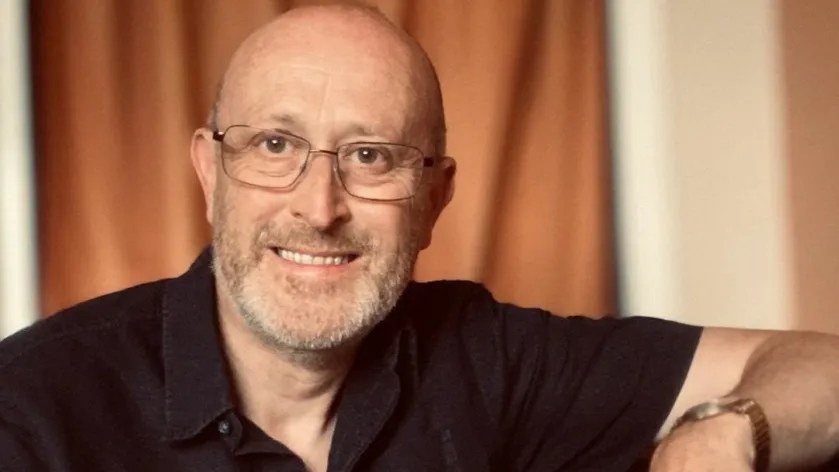
(Image: BBC)

Orlando Murrin is a food writer, now crime writer, and forever amateur pianist.

orlandomurrin.com

Guest review by Tara Yonder

Sky’s Amadeus miniseries sets out to revive one of the most deliciously operatic stories ever told about artistic genius – the supposed rivalry between Wolfgang Amadeus Mozart and Antonio Salieri – for 21st-century viewers. This latest portrayal of the feud that never was, and the persistent myth that Salieri attempted to poison Mozart, comes from Peter Shaffer’s 1979 play ‘Amadeus’ (which itself was inspired by Pushkin’s 1830 play ‘Mozart and Salieri’), and subsequent acclaimed 1984 film of the same name, adapted from the stage play (Shaffer wrote the screenplay) and directed by Milos Forman.

I’m old enough to remember the debut of both the play and the film, and the hoo-har surrounding the film in particular, especially the casting of Tom Hulce as a punky, pink haired, potty-mouthed Mozart with an irritating high, cackling giggle. Critics were largely won over by the inspired casting, its rich emotional landscape and of course Mozart’s magnificent music. Music historians still criticse the film’s historical inaccuracies, but Shaffer never claimed it was intended as an authentic biography of Mozart, describing his play as a “fantasia on [a real-life] theme”.

Tom Hulce as Mozart in the 1984 film ‘Amadeus’

I loved the film ‘Amadeus’, and repeated viewings reveal greater depths. It’s a brilliant, beautifully-crafted film. Visually and aurally arresting, it combines humour and wit, absurdity and poignancy, tenderness and tragedy, and celebrates both Mozart’s genius and the exigencies of his life in late 18th-century Vienna.

The play was revived by the National Theatre in 2016 (to mark the death of Peter Shaffer that year). I saw it twice, and loved it, in particular the way the music and musicians came to the fore in a thrilling piece of complete ‘music-theatre’.

Sky’s five-part miniseries ‘Amadeus’, which dropped on 21 December, mostly proves that some legends are perhaps better left echoing in memory. The creators of this latest incarnation of the Mozart-Salieri myth clearly adore Shaffer’s play and Forman’s film, but admiration is perhaps not the same thing as inspiration. It doesn’t feel like the tribute it might have intended to be.

The problem isn’t that ‘Amadeus’ takes liberties with history; that controversy was there from the start – Shaffer was openly unapologetic about turning Salieri into a mediocrity driven mad by his proximity to genius, and Forman doubled down on this with visual extravagance and black humour. It’s rather than Sky’s version, stretching the narrative into 5 hour-long episodes, somehow finds less to say, padding out familiar scenes with ‘prestige-TV’ glamour and gloom, interlaced with dreary banality, especially in the script, rather than genuine dramatic tension.

True, it’s lavish and visually stunning – the costumes, the wigs, the grand settings (it was filmed in Hungary) – with that uber-high-res, hyper-real format which is now the norm in film and tv drama (see also ‘Black Doves and Giri/Haji’ – both directed by Joe Barton, co-creator of Sky’s ‘Amadeus’, – and ‘Rivals’).

Credit: Adrienn Szabo/Sky

Mozart’s genius is repeatedly asserted but hardly truly felt: we are told he is transcendent, but rarely allowed to actually experience that transcendence because there are so few examples (instead we have music by, amongst others, Jonny Greenwood, and Max Richter). What was shocking in the original play and film – the gleeful vulgarity, the blasphemous rage at God, the audacity of portraying divine talent as a cruel joke – here feels pedestrian, superficial or simply contrived. There are the obligatory gratuitously lewd scenes, and plenty of zeitgeisty swearing (though far less scatological than in the original play or Mozart’s own letters), but this adds little to the overall narrative. If it’s intended to shock, it never really lands.

Paul Bettany is well cast as Salieri, emotions simmering beneath an austere, thin-lipped surface, while Will Sharpe plays Mozart as childish and brilliant. The scenes between the two do have a crackle of real tension, and overall the series is confidently acted and staged, and undeniably ‘modern’.

But other aspects of the casting simply grate. There’s the ‘diverse casting’ we’ve come to expect from 21st-century tv/film drama, and while that may not matter in fiction, it feels clunky and inaccurate in the portrayal of real historical figures at a particular period in history (for example, women did not play in orchestras in the 18th century). And overall, it’s hard to feel empathy or connection with any of the characters (except perhaps Mozart’s long-suffering wife Constanze) so one never truly cares about their fortunes.

But the greatest heresy is against the music, which is strangely absent when it should be centre stage. Sure, there are excerpts, but while the music was omnipresent in the original play and film, providing a powerful narrative and character all of its own (in particular, the quotes from Mozart’s Requiem), there is simply not enough in this series. It becomes footnote to the main characters, and their egos and jealousy; thus, Mozart’s sublime pieces serve as background, rather than argument. ‘Amadeus’ is, first and foremost, about the music – music which should overwhelm the narrative, interrupt and challenge it, and impel the audience into the same state of awe that overwhelms Salieri.

Sky’s ‘Amadeus’ is technically accomplished, visually stunning, and intermittently entertaining. Watch it as one might ‘Rivals’ and it’s fun and unserious, the ideal drama for our narcissistic, unserious times, but in no way does this feel like a worthy tribute to the original play and film. And that’s a shame because it could have been a great opportunity to create fine drama on an obviously very large budget.

This remake is not that bad. It’s clearly well-intentioned, often intelligent, and occasionally arresting. But it forgets the crucial thing that made the story immortal and universally compelling: Mozart was not great because others envied him. He was great – and others envied him – because he made contact with something eternal and gave it voice.


Tara Yonder is a music lover, amateur pianist, and unashamed dilettante

Header image credit: Sky

Opus 109 – Vikingur Olafsson

A late masterpiece by Beethoven lies at the heart of this new release by Icelandic pianist Vikingur Olafsson to create a dialogue across the centuries.

The works of Beethoven’s third creative period feel both intimate and cosmic. It is the music of the future, yet it is fuelled by the music of the past – the music of Bach.

Vikingur Olafsson

Olafsson eschews the usual custom of presenting Beethoven’s final three sonatas together and instead places the transcendent Opus 109 alongside pieces by J S Bach and Franz Schubert as well as Beethoven’s Sonata Ppus 90 to create a ‘concept album’ where pieces connect and reflect.

For Olafsson, it was Bach’s Goldberg Variations (which he recorded in 2023) that drew him to Beethoven’s last three sonatas. He “felt the presence” of Bach in these late masterpieces, works where Bach’s influence is most strongly felt in their “wild polyphony”. The Sonata Opus 90, meanwhile, offers a prelude to the Opus 109 with its intimate, fleeting first movement and warm second movement, while also looking forward to Schubert’s early period sonata in E minor, D566, also scored in two movements. The other works on the album are Bach’s prelude in E major from the Well-Tempered Clavier and the imposing E minor Partita, perhaps the greatest of his keyboard suites.

Another unifying thread through the album is that all the pieces are in the key of E (major and minor modes) which for Ólafsson, who has a form of synaesthesia, represents lush and vibrant shades of green.

The album opens with the Prelude No. 9 in E from Book 1 of the Well-Tempered Clavier, played with Olafsson’s trademark luminous tone. It’s an intimate opener and contrasts with the drama of Beethoven’s Sonata No. 27, the first movement of which is imposing yet carries with it, especially in the second movement, the same airy elegance of the Bach Prelude.

The E minor Partita is serious, majestic, articulated with clean Baroque detachment and sensitive voicing. Olafsson finds the same intimacy in the middle movements of the Partita, in particular in the Allemande, which is almost tender in its counterpoint. The Sarabande, prayer-like and sombre, has an improvisatory quality. The closing Gigue, meanwhile, is energetic and crisply articulated.

We stay with E minor in Schubert’s two-movement Sonata D566. Olfasson’s transparent sound and subtle phrasing suit Schubert and he brings a warm cantabile to the music, in particular in the second movement.

With his characteristic clarity, poetic imagination and instinct for colour, Ólafsson approaches Beethoven’s late-period masterwork as a living, breathing meditation – fragile, searching, ultimately transcendent. The opening movement is natural, almost spontaneous, with a conversational quality in its phrasing.

The middle movement bursts forth with a controlled ferocity. Here, Ólafsson’s articulation is exceptionally clean, almost crystalline, but never merely virtuosic.

The emotional heart of this sonata is the third movement, with its tender, prayerful theme. Each variation has its own emotional landscape, shaped with meticulous attention to detail and rich in genuine feeling, yet Olafsson never loses sight of the overall narrative arc of this movement. His voicing allows inner lines to glow while the delicate filigree in the upper registers shimmers delicately. The music seems to unfold in a single, unbroken breath, time almost suspended in the later variations. Here is the music’s spiritual core and Olfasson invites us to bask in its radiance.

The album closes with the Sarabande from the E major French Suite, as Olafssons takes us back to the beginning, as it were, with J S Bach, the daddy of them all.

As with his previous releases, notably his recordings ‘Rameau and Debussy’ and ‘From Afar’, Olfasson brings a fresh perspective to well-known repertoire through thoughtful programming, finding intriguing connections and shining a new light on the familiar. And it’s all beautifully presented too.

Opus 109 is released on Deutsche Grammophon on CD and streaming