
Can you give us a brief background to this piece?
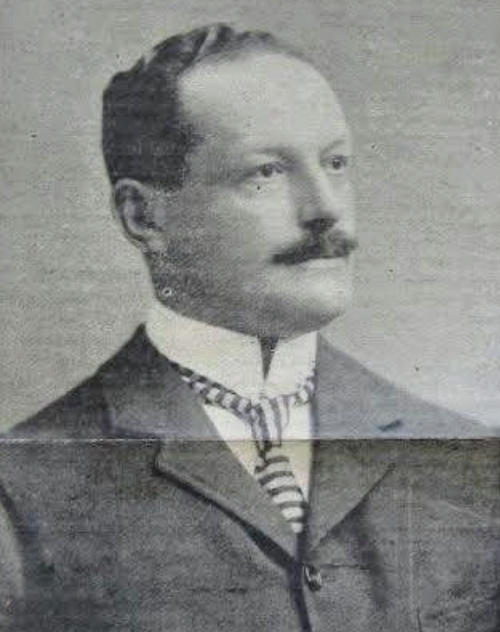
Thomas Adams (note that there are two composers of this name!) was a Victorian/early Edwardian composer and organist based in London. He was Organist and Director of Music at St Alban’s, Holborn, from June 1888 until November 1918 where he died in post. The church itself was heavily shaped by the Oxford Movement, a tradition which it still up holds to present day. The cantata is a devotional work focused on the meaning of the Cross. Rather than retelling the story of Christ’s crucifixion – as in The Crucifixion by John Stainer – it instead offers a reflection on sacrifice, love, and discipleship. The text draws on scripture, including Psalm 91, Corinthians, Matthew, Genesis, and others.
Scored for chorus with soprano, tenor, and bass soli, the work is, in its simplest form, a piece of devotional music intended to transport a congregation into a state of wonder, reflection, and piety.
How did you discover this music and what drew you to it?
I think it is an exceptional privilege that, as musicians, we are not only artistic creatives but also custodians and historians of the rich tradition of church music. On a weekly basis, we carry the responsibility of reinventing the archaic, returning to familiar repertoire, and exploring the modern expressions of the genre.
We have this precious window of opportunity to delve into the archives, to rediscover music that once served its purpose in the Victorian period, and to reimagine it in a 21st-century context—something I am sure the original composer could never have envisaged.
I spent time researching what cantata we can do this year. I wanted to do something obscure as a challenge to the choir. I was personally drawn to this work by the opportunity to dust off music from the archives and bring it back to life. Like most Directors of Music, I also approached it with a practical eye, considering the timescales required to learn the work and how it would fit within an already full term schedule.
You say there are no recordings of it. How has this influenced your preparation of the music with the choir/soloists? What kind of interpretative decisions have you made with no “benchmark” recording to refer to?
Whenever musicians perform a piece, it is essential that they understand what they are actually performing. For example, there is little value in singing music in Latin if one does not understand the text or its meaning. A clear grasp of the words is crucial if we are to convey them with integrity and convincingly.
Although the score provides some tempo and dynamic indications, these are often quite general, and so our approach must be more analytical. We begin by asking fundamental questions: what is the text saying? How does the harmony support the word-painting? How is tonality being used? How do the voices interact with one another?
One of my favourite moments (spoiler alert!) occurs in a choral movement where there is a sudden shift from E major to C major – initially quite surprising. However, when the text is examined closely, the modulation makes perfect sense, serving to uplift and intensify the meaning of the words at that point.
Listening to and studying other Victorian repertoire has also helped to establish a broader stylistic context and offered valuable insight into the musical language of the period—though I appreciate that Victorian church music is not every church musician’s cup of tea!
What are the most challenging aspects of singing this work, and the most enjoyable?
Most enjoyable:
– It feels like piecing together a jigsaw, with each individual movement gradually forming part of a larger, unified picture.
– Sharing the cantata’s purpose and historical context with the choir, and inspiring them through a deeper understanding of the work.
– Finding every possible opportunity to be excited about church music and to pass that enthusiasm on.
– Offering the piece as an act of worship rather than as a concert performance, which gives it an entirely different interpretative lens and depth of meaning.
Most challenging:
– Working from what is essentially a blank canvas, while finding creative and imaginative ways to shape the music.
– Reading and navigating an older style of musical typography.
– Many of the choir, some of which have sung with us for a long time, are enjoying learning new hymns! The combination of learning hymns where both words and music are new is a welcome (and refreshing!) challenge.
What do you hope your audience will take away from hearing this work at your Lenten performance?
Our performance will be part of a service – whether you are attending for worship purposes, or curiosity, we hope that the listener will take away one or more:
- Through music and text, be transported to a space of reflection on the meaning of the cross.
- A chance to listen to music of a forgotten time.
Tell us more about your choir at All Saints Aston.
The Choir of All Saints, Aston, stands at the heart of the church’s worshipping life, upholding a rich tradition of Anglican choral music within our vibrant parish community. With a commitment to musical excellence and reverent service, the choir seeks to enhance the liturgy through music that inspires devotion and reflects the beauty of the Christian faith.
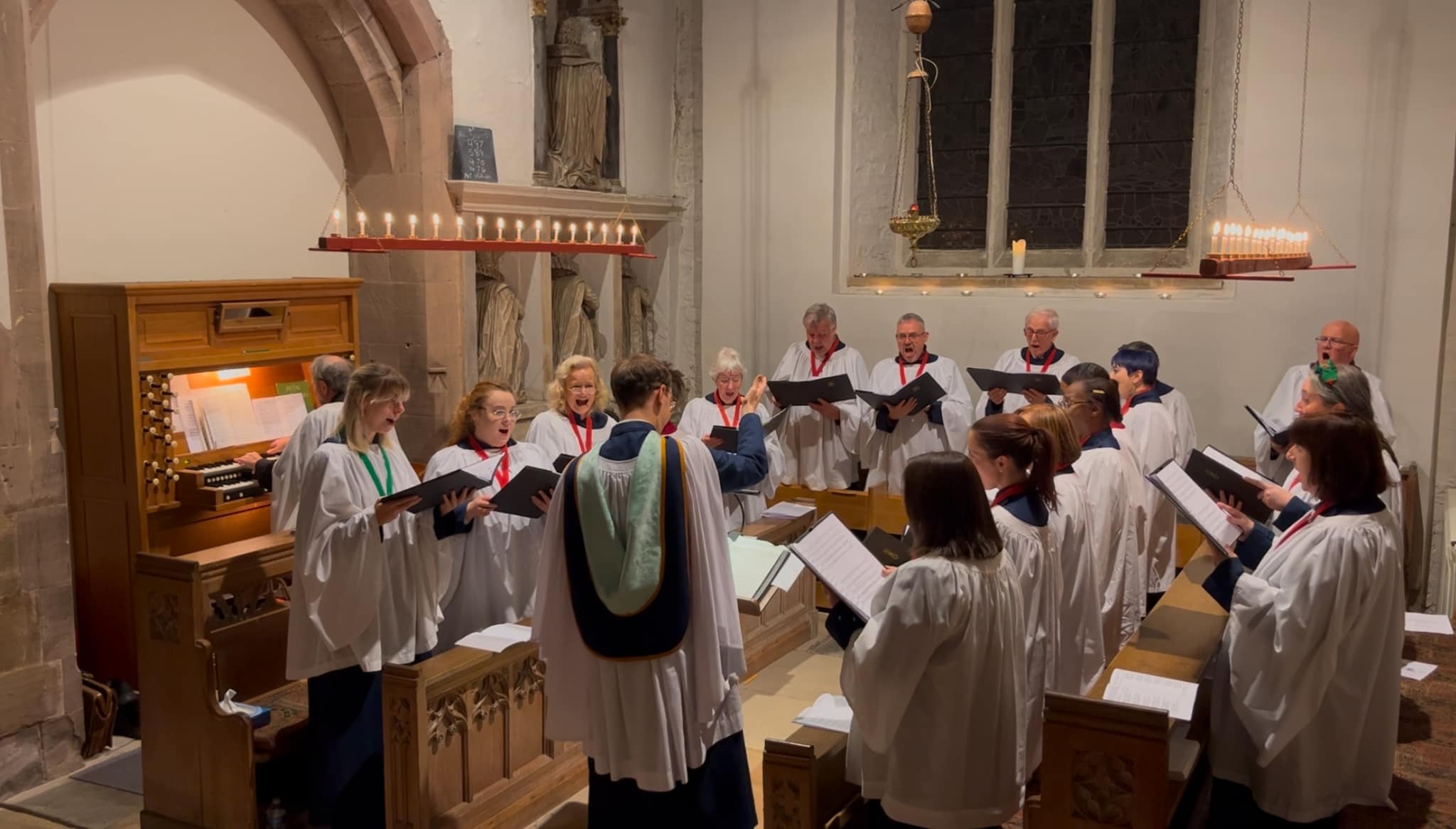
We sing a wide variety of sacred music drawn from across the centuries – from early choral works and Anglican repertoire to modern settings by contemporary composers. The choir leads the musical worship at services throughout the liturgical year, offering both congregational and choral music that enriches our worship and deepens our sense of praise. Regular choral services such as Choral Evensong and Sung Compline form an important part of our musical life, alongside occasional services of Choral Matins, special festivals, and other significant occasions in the church calendar.
Our mixed adult SATB choir, under the direction of our Director of Music, Elliott Walker, comes from a range of backgrounds and musical experiences, united by a shared love of singing and service through music. We all have a shared vision of upholding the highest standards of liturgical music-making. We take what we do with pride, but also with great joy.
The choir has also been involved in new music, including the premiere of a commissioned composition, Ave Verum, by composer Joseph Shaw, furthering our commitment to supporting living composers and expanding the Anglican choral tradition. In addition, we have hosted “Come and Sing Evensong” events for churches across the Diocese, encouraging participation in choral worship and nurturing a wider appreciation of Anglican liturgy and music. Last year, we performed Stainer’s The Crucifixion as our Lenten offering.
How do you feel the Royal School of Church Music (RSCM) supports church music in the UK and choirs such as yours?
The RSCM plays a vital role in supporting church music in the UK and choirs such as ours by enabling worship to flourish through music in all its forms. As a church with 45 years of affiliation to the RSCM, we wholeheartedly uphold its mission, values, and virtues.
This support is not limited to any single style of church music. Whether through contemporary worship, traditional choral repertoire, or lesser-known cantatas, the RSCM’s inclusive and fluid approach affirms the richness and breadth of sacred music. Through this openness and encouragement, the RSCM continues to nurture choirs, musicians, and congregations alike, ensuring that church music remains vibrant, relevant, and spiritually enriching.
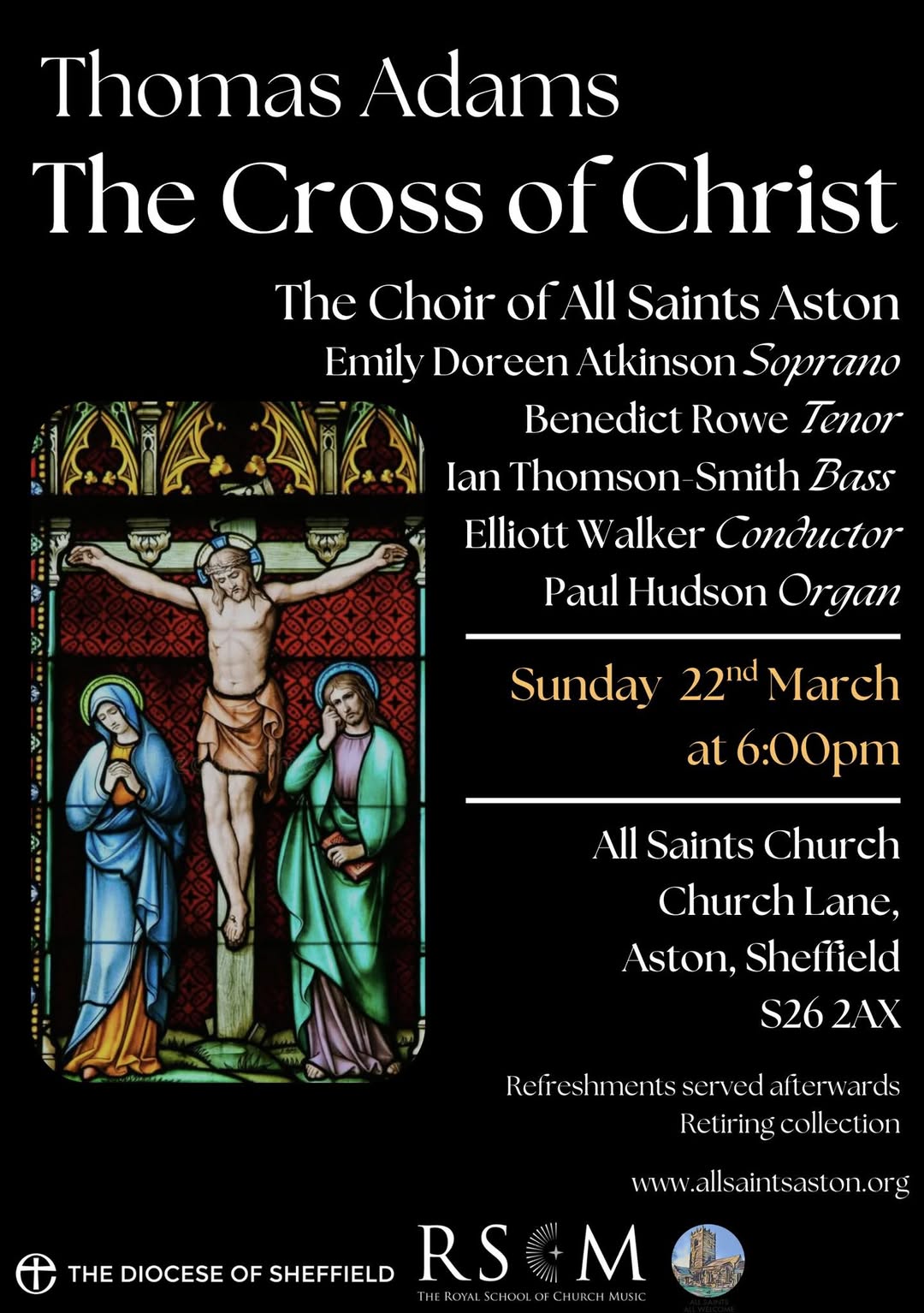
Performance is on Sunday 22nd March at 6pm
All Saints Aston, Church Lane, Aston, Sheffield, S26 2AX
We are exceptionally excited to be working with our talented soloists: Emily Doreen Atkinson (soprano), Benedict Rowe (tenor), Ian-Thomson Smith (bass), and Paul Hudson (organist).
Keep up to speed with how we are getting on by finding our Choir’s Facebook page: Choir of All Saints Church Aston.
Discover more from The Cross-Eyed Pianist
Subscribe to get the latest posts sent to your email.




 The Cross-Eyed Pianist