Who or what inspired you to take up the piano?

My grandfather had an upright piano in the front room of his house in Ipswich. This room was kept for Sundays and special occasions. He liked to play Methodist hymns, excerpts from Haydn and Beethoven and old music hall songs. I loved to sit next to him as he played, or leaf through the music in the piano stool, with its special antique smell and friable, crumbly pages.

There was lots of music at home when I was growing up: on the radio, LPs and from my father, who was a fine amateur clarinettist. When I was in bed, I used to listen to him practising Mozart’s Clarinet Concerto to Music Minus One: for a while I believed he had a whole orchestra in the sitting room with him!

I think I was about 5 or 6 when I started piano lessons with Mrs Scott in Sutton Coldfield. My piano was an early 20th-century Challen upright. It had lived in a conservatory for two years before it came to us and it needed quite a lot of restoration, but once overhauled it was a really nice instrument, of which I was very fond.

My parents were keen concert-goers and my love of live classical music developed in childhood. We went to many concerts at Birmingham Old Town Hall where a conductor with wild hair conducted the CBSO (this was Louis Fremaux, pre-Simon Rattle). I loved, and still do, the etiquette of concerts – the excited buzz of anticipation in the foyer beforehand, reading the programme, sinking in to the plush seats. Once a year, as a treat, I would be taken to London to go to the Proms, and we also went to the opera and ballet regularly. I was lucky enough to see/hear some of the “greats”: Ashkenazy, Brendel, Lupu, du Pre, Barenboim, Lill. I grew up thinking classical music was something everyone could enjoy and engage with (and music was readily available in state school in the early 1980s) – it felt entirely normal to me – and it was only when I went to secondary school, where my talent for music (I was tested for perfect pitch in front of my entire class, an excruciatingly embarrassing episode – and I don’t have perfect pitch!) marked me out as “different” in a school where being “a team player” was important. Music and the school music department became a place of escape and I threw myself into the school’s musical activities: I took up the clarinet so that I could play in the school orchestra, and joined the choir, recorder group and wind band.

I took all my ABRSM grade exams while still at school, and really wanted to apply for music college, but a rather throwaway comment by my music teacher that I perhaps “wasn’t good enough” to audition led to me to follow a different path into further education and I studied Medieval literature at university. I stopped playing the piano seriously at 19 and hardly touched the instrument until I was in my late 30s and my mother bought me a digital piano, urging me to start playing again. Not long after I turned 40 I had a brand new Yamaha acoustic piano and had begun teaching local school children and a handful of adults. By the time I was 50, I was preparing to take a Fellowship performance diploma, having passed my Licentiate and Associate diplomas with distinction.

Who or what were the most important influences on your musical life and career?

My parents nurtured and encouraged a love of classical music. This was enhanced by my then piano teacher Mrs Murdoch and particularly my music teacher at secondary school, an incredibly energetic and enthusiastic man who organised all sorts of wonderful musical activities in and outside of school, including trips to dress rehearsals at the Royal Opera House (where I saw Tosca, Billy Budd, Peter Grimes, La Bohème and Turandot, amongst others). In c1981, the school choir took part in a performance of Elgar’s Dream of Gerontius with massed school choirs at the Royal Albert Hall, an unforgettable experience, which has stayed with me ever since.

Since I started blogging and writing about music, encounters with other pianists and musicians all feed into my musical life and inform my approach to the piano. My study with a number of master teachers and concert pianists while preparing for professional performance diplomas has had a huge impact on my confidence and skill as a pianist, and the deep learning that is required to prepare for such qualifications enables me to pick up new repertoire without feeling daunted by its challenges.

What have been the greatest challenges of your career so far?

Convincing people that being a musician and writer is “a proper job”.

Dealing with ongoing imposter syndrome, which I think comes from not having attended music college at 18. I don’t think it’s entirely a bad thing, however, as I believe it keeps one humble.

Which performances are you most proud of?

I played Messiaen’s Regard de la Vierge from the ‘Vingt Regards’ at an event hosted by Murray McLachlan at Steinway Hall in 2011 as part of the preparations for my Associate performance diploma. It was the first time I had played a Steinway D piano and the first time I’d played the Messiaen in public. The feedback from Murray and the response from the audience was wonderful and an incredible boost to my diploma preparations and confidence.

In recent years, I have had the great pleasure of performing at a friend’s house concerts in his beautiful home in the Sussex countryside. A lovely setting, convivial atmosphere, friendly audience and a truly stunning Steinway B piano make these concerts the best I’ve ever experienced, and I was very pleased with my performance of the final movement of Schumann’s Fantasie in C, Op 17 at last winter’s house concert. I have yet to learn the other two movements of the Schumann…..!

Which particular works do you think you play best?

I recently read an interview with the pianist Richard Goode, whom I much admire, in which he said he chooses to “perform only the pieces that will be best for you and the audience” and that one should understand one’s own limits. As pianists we have a vast repertoire and one should never feel under pressure to be able to “play everything”. I used to think I was somehow failing if I did not have the requisite number of Bach Preludes & Fugues, Beethoven Sonatas, Chopin Etudes or Debussy Preludes in my fingers; now I just play what interests me and what I believe I can play well.

How do you make your repertoire choices?

I play whatever music interests me, and my tastes change constantly. More and more I am choosing to play 20th-century and contemporary piano music, and the wilder shores of repertoire – I like oddities and lesser-known works. These are often easier to play than the core canon as one is not constantly up against the weight of history and perceived “right ways” to play this repertoire.

Having said all this, Schubert remains my favourite composer; I really should play more of his piano music!

I am currently working on a programme called A Sense of Place – piano music inspired by or evocative of real or imagined places and landscapes. The pieces include movements from Alan Hovhaness’ Visionary Landscapes, John Cage’s In A Landscape, Cyril Scott’s Lotus Land and Britten’s Night Piece.

Favourite pieces to perform? Listen to?

To play, perhaps Bill Evans’ Peace Piece. I played it at a charity concert a few years ago and the audience loved its meditative atmosphere.

I get sent CDs to review all the time and listen fairly widely as a result, though I always tend towards piano music. If I had to pick a favourite recording, it would be Resonance de l’Originaire by Maria Joao Pires.

Most memorable concert experience?

It has to be Steven Osborne’s performance of the complete Vingt Regards at the Queen Elizabeth Hall – I have now heard him play this monument of 20th-century piano music twice, and on both occasions the experience has been transcendent, beautiful, moving, and incredibly profound. Talking to Steven in the bar afterwards, he simply said “one just has to go with this music”.

What do you consider to be the most important ideas and concepts to impart to aspiring musicians?

Be true to your musical self and try not to be distracted or downhearted by what others in your profession are doing. Don’t endlessly compare yourself to your peers or to others in the profession – this can lead to feelings of dismotivation, dissatisfaction and worse, depression. Navigate your own course to find your own musical identity and voice.

Live and love life fully: go to concerts, exhibitions, films, read, eat, socialise, enjoy. Everything feeds the artistic temperament!

What is your definition of success?

Seeing people come out of a concert truly touched or moved by the music they’ve hard.

Witnessing a piano student’s “lightbulb moment”

Being able to play Schumann’s Fantasie in C, Op 17 in its entirety! (one day!!)

img_228121

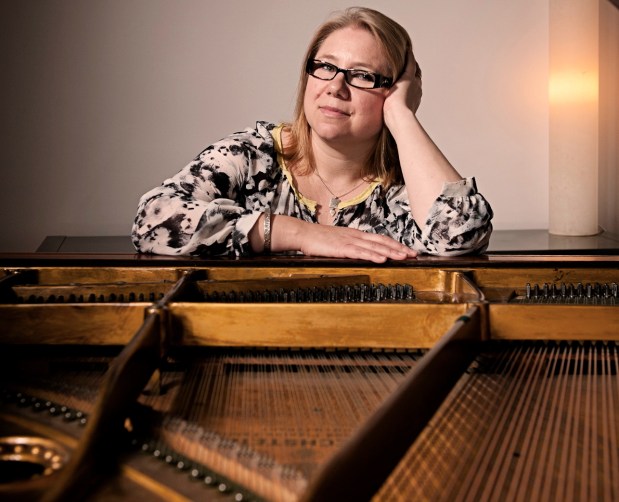
Frances Wilson is a pianist, piano teacher, writer and blogger on classical music and pianism as The Cross-Eyed Pianist, described by concert pianist Peter Donohoe as “an important voice in the piano world”.

Read more

franceswilson.co.uk


The delightful 1901 Arts Club, tucked away down a side street close to Waterloo Station, seems just about ideal for intimate chamber recitals, and the perfect retreat on a cold November evening to enjoy a superior concert of music by Brahms and Schubert played by Korean/British pianist Yoong Chung.

The concert marked the launch of Yoon’s first CD of late piano works by Schubert, the Sonata in C minor D958 and the Drei Klavierstücke D946, which formed the main part of the programme, but the evening commenced with Brahms’ Albumblatt (“album leaf”), a short work which was only discovered in 2011. Sensitively played, a simple singing melody over a rippling bass line, it was an appropriate opening piece for an evening of music written for the salon, to be played amongst friends.

Schubert’s Drei Klavierstücke (literally “piano pieces” – the title was given by Brahms on the publication of these pieces) are sometimes also termed “impromptus”, and each expresses perfectly the sense of the word: spontaneous and extempore. Composed during 1828, that annus mirabilis of output for Schubert and only a few months before his death, they are rich in contrasts, colours and moods, and Yoon was alert to the shifting characters and improvisatory nature of these pieces. His opening of the second Klavierstück was particularly tender and lyrical, its tempo relaxed and elegant, and a reminder that Schubert was a composer of songs. Throughout, tasteful pedalling, limpid sound, clarity of expression, precise articulation, and convincing use of tempo rubato, all underpinned by solid technique and musical understanding, made for an extremely satisfying performance.

The Sonata in C minor, D958, is the most portentous of Schubert’s last three piano sonatas and also the most overtly “Beethovenian”, not least in its use of Beethoven’s “favourite” key, C minor, and the darkly dramatic opening statements of the first movement. Once again, we were treated a performance of great transparency, profound expression and sensitivity to Schubert’s writing, and while some purists may not approve of Yoon’s use of rubato here, as in the earlier pieces, I found his account wholly convincing and refreshingly imaginative. This was not surface artifice but a performance founded on clear purpose and musicality. It was the best Schubert I have heard all year.

After a rollicking Rachmninov encore, we retired to the elegant upstairs bar and sitting room at the 1901 for prosecco and convivial conversation, much in the manner of Schubert and his friends in the 1820s. It was a pleasure to meet Yoon, and two of his former teachers.

The same expression, clarity and precision is evident on his CD, all tastefully packaged with a minimalist monochrome design and attractive slipcase. For further information about the CD, please visit Yoon’s website

My Meet the Artist interview with Yoon Chung

1901 Arts Club


Who or what inspired you to take up the piano and make it your career?

My parents were given a piano as a wedding present so it was a natural step for me to try the piano. Fortunately, (or, some might say, unfortunately) I took to it and liked it immediately.

Who or what were the most important influences on your playing?

I owe a great deal to my teachers:  Maria Curcio and Mark Swartzentruber for their guidance in my formative years in London, Benjamin Frith for his passion, Joaquin Achucarro for his discipline, Ferenc Rados for opening my mind.

What have been the greatest challenges of your career so far?

Finding a happy balance.

Do you have a favourite concert venue to perform in?

Wigmore Hall is pretty special.

Favourite pieces to perform? Listen to?

I could happily play Brahms and Beethoven all day long.

Who are your favourite musicians?

Richter, Gilels, Haskil, Horowitz, Argerich and Schiff, to name but a few. I have also heard staggeringly beautiful recordings of Lili Kraus and Annie Fischer recently.

What is your most memorable concert experience?

Performing in the cloister of Sant’Andrea Apostolo in Amalfi. It was utterly magical.

What do you consider to be the most important ideas and concepts to impart to aspiring musicians?

Honesty and truth.

What is your idea of perfect happiness?

Not to have any worries. Alternatively, a good, leisurely breakfast.


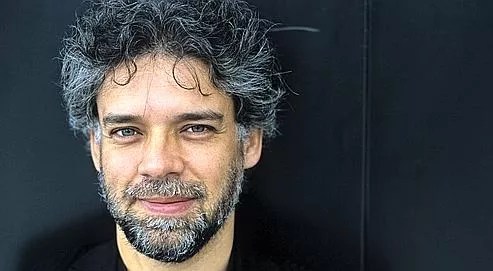
Pianist Yoon Chung is a versatile musician and has performed throughout Europe, America and the Far East.  His London appearances include the Wigmore Hall, Southbank Centre, Kings Place, St. John’s Smith Square and St. James’ Piccadilly.  He has been broadcast in France, Japan, Korea and America.  Born in Seoul, Korea, Yoon spent his formative years in London under the tutelage of Maria Curcio and Mark Swartzentruber and was an ABRSM postgraduate scholar at the Royal Northern College of Music.  Further studies were undertaken in America and Hungary under Joaquìn Achùcarro and Ferenc Rados.  Yoon is a founder member of Trio Andante and currently resides in London.

Yoon Chung’s full biography

www.yoonchung.co.uk

(Picture © Guy Vivien)

Who or what inspired you to take up the piano and make it your career?

I heard my father playing Chopin, Grieg and Schumann at home almost every evening on our small upright piano. Then I tried to imitate him! As I was gifted, he decided to do everything necessary to help me in my development: courses with great teachers, day to day work. He believed in my musical career from the very beginning and that was probably the most important.

Who or what are the most important influences on your playing?

Arthur and Karl-Ulrich Schnabel (with whom I really learned my Beethoven), then Leon Fleisher, who was for me a kind of Mentor, and Christian Ivaldi, who opened my brain to the world of Wagner and Strauss, which radically influenced radically repertoire and the texture of my personal sound.

What have been the greatest challenges of your career so far?

Playing the 32 Beethoven sonatas in 10 days.

What are the particular challenges/excitements of working with an orchestra/ensemble?

Playing a concerto with orchestra is the utmost gift a pianist can receive! The piano concerto repertoire is just fabulous and I always feel like it’s an achievement in a solo career. The main problem is to build a relationship with a conductor in a very short rehearsal time. You can feel a kind of frustration sometimes. It is why my relationship with Philippe Jordan is very special, as we have recorded and played so many concertos since 2007! The complete Beethovens on CD and in concert as well as Mozart, Brahms and Saint-Saens. The musical result is amazing because we feel like chamber music partners.

Which recordings are you most proud of?

My Brahms 2nd concerto with LPO and Paavo Berglund, the Beethoven Fifth Concerto with O.P. Radio-France and Philippe Jordan, and my last live recording of Beethoven’s ‘Hammerklavier’ Sonata recently released.

Do you have a favourite concert venue?

This is a tough question. For recital, I would say Wigmore hall and Queen Elizabeth Hall, Köln Philharmonie and Metz Arsenal.

With orchestra, Suntory Hall in Tokyo, Salle Pleyel in Paris and Royal Festival Hall in London. Next season I will make my debut in two great European hall: Tonhalle in  Zürich and the Concertgebouw in Amsterdam!

Who are your favourite musicians?

Among others – Furtwangler, Celibidache, Barenboim, Boulez, Brendel, Pollini and Sokolov. I rediscovered Arrau recently: a genius.

Regarding the conductors I’ve played with I would mention Esa-Pekka Salonen, Daniel Harding, and of course Philippe Jordan. Recently I played with the young conductor Edward Gardner: he was astonishing.

What is your most memorable concert experience?

Philippe Jordan conducting Parsifal in Bayreuth.

What is your favourite music to play? To listen to?

Beethoven always to play and listen, I listen more than ever Wagner’s Ring..and all the others.. Then Bruckner 4/5/7/8/9, the complete Mahler

What do you consider to be the most important ideas and concepts to impart to aspiring musicians/students?

Do not only work solely at your instrument, although it is crucial to spend hours on practising. The main thing is to have an exhaustive knowledge of orchestral and operatic repertoire in order to make the piano like a real orchestra

What are you working on at the moment?

The 5 Beethoven Concertos and the 32 Sonatas, as well as some Wagner paraphrases to celebrate this genius!

I also have some modern music as usual, new studies from Georges Benjamin and a Piano Concerto by Tristan Murail.

Where would you like to be in 10 years’ time

Any place where I could perform Beethoven’s music.

What is your idea of perfect happiness?

My wife’s love forever and music everywhere.

What is your most treasured possession?

Patou, my dear cat!!!!!

What is your present state of mind?

Promethean!

Interview date: November 2013

François-Frédéric Guy is regarded as one of the most fascinating pianists of his generation since his career was launched by his debut with Orchestre de Paris and Wolfgang Sawallisch in 2000.

Guy is an artist of immense interpretative authority and superlative technique. He has spent much of his career performing the works of Beethoven, recently completing recordings of the five concertos with Philippe Jordan, and the 32 Sonatas.  Guy has performed worldwide with orchestras such as the Berlin Symphony, Hallé, Philharmonia, London Philharmonic, Munich Philharmonic, Orchestre de Paris and San Francisco Symphony and conductors including Esa-Pekka Salonen, Bernard Haitink, Daniel Harding, Neeme Järvi and Michael Tilson Thomas.

www.ffguy.net


