
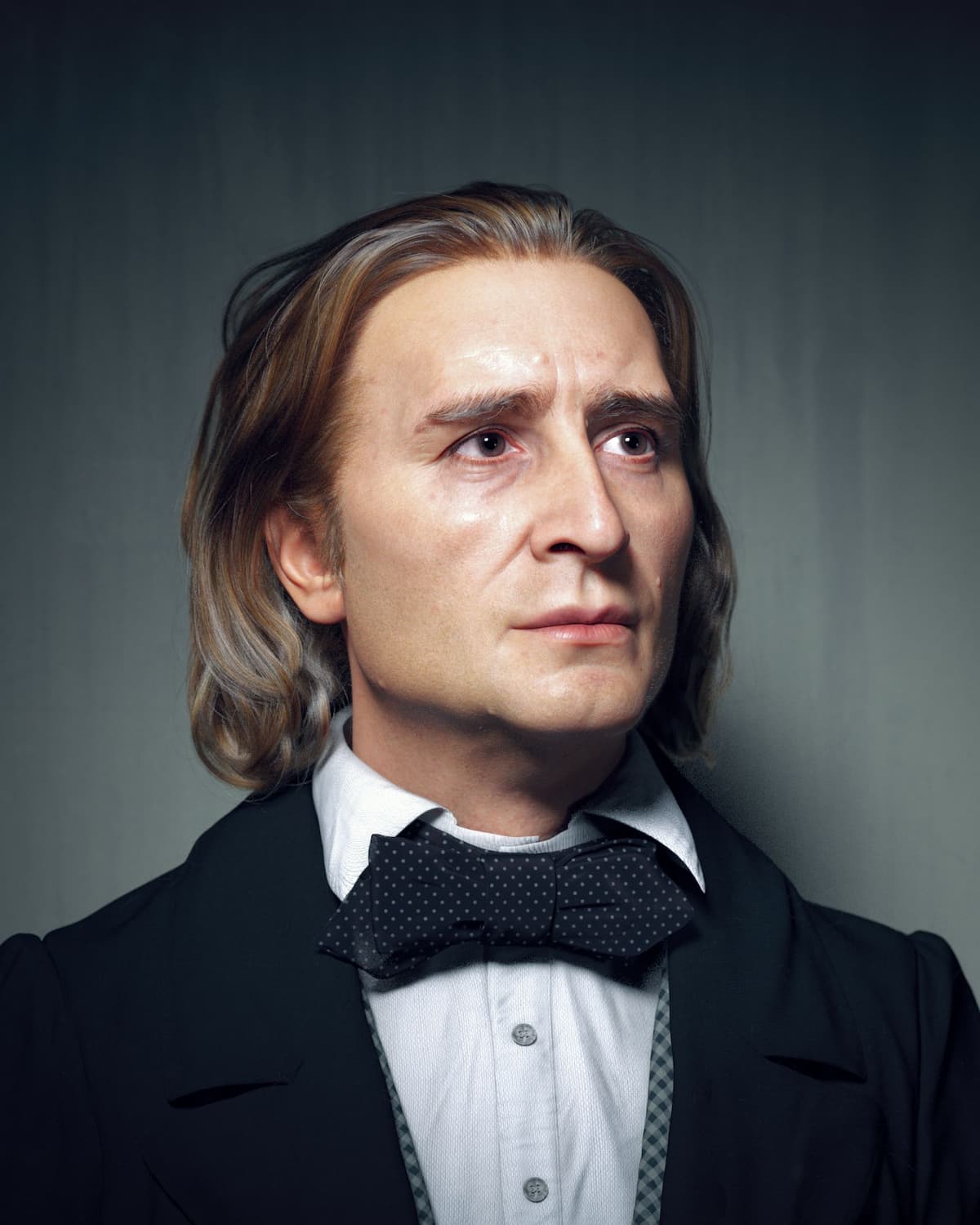
 In fact, he was a remarkable musician and human being. Sure, as a performer he could be flamboyant and extravagant in his gestures, but he helped shape the modern solo piano concert as we know it today and he also brought a great deal of music to the public realm through his transcriptions (he transcribed Beethoven’s symphonies for solo piano, thus making this repertoire accessible to both concert artists and amateur pianists to play at home). He was an advocate of new music and up-and-coming composers and lent his generous support to people like Richard Wagner (who married Liszt’s daughter Cosima).
His piano music combines technical virtuosity and emotional depth. It’s true that some of his output is showy – all virtuosic flourishes for the sake of virtuosity – but his suites such as the Années de Pèlerinage or the Transcendental Etudes, and his transcriptions of Schubert songs demonstrate the absolute apogee of art, poetry, and beauty combined.
Martha Argerich
Martha Argerich brings fire and fluency to her interpretations, underpinned by a remarkable technical assuredness. Her 1972 recording of the B-minor Sonata and Hungarian Rhapsody No. 6 is regarded as “legendary”.
Leslie Howard
Australian Leslie Howard is the only pianist to have recorded the solo piano music of Liszt, a project which includes some 300 premiere recordings, and he is rightly regarded as a specialist of this repertoire who has brought much of Liszt’s lesser-known music to the fore.
Lazar Berman
Berman’s 1977 recording of the Années de Pèlerinage remains the benchmark recording of this repertoire for many. Berman brings sensibility and grandeur, warm-heartedness, and mastery to this remarkable set of pieces.
Alim Beisembayev
Winner of the 2021 Leeds International Piano Competition, the young Armenian pianist Alim Beisembayev’s debut recording of the complete Transcendental Etudes is remarkable for its spellbinding polish, precision, and musical maturity, all supported by superb technique.
Yuja Wang
Yuja Wang has been praised for her breath-taking interpretations of Liszt’s First Piano Concerto which combine force and filigree, emotional depth, and technical mastery to create thrilling and insightful performances.
Other noted Liszt pianists include Georges Cziffra, Jorge Bolet, Krystian Zimerman, Lang Lang, Daniil Trifonov, Sviatoslav Richter, Marc-André Hamelin, Nelson Freire, Claudio Arrau, and Vladimir Horowitz.
In fact, he was a remarkable musician and human being. Sure, as a performer he could be flamboyant and extravagant in his gestures, but he helped shape the modern solo piano concert as we know it today and he also brought a great deal of music to the public realm through his transcriptions (he transcribed Beethoven’s symphonies for solo piano, thus making this repertoire accessible to both concert artists and amateur pianists to play at home). He was an advocate of new music and up-and-coming composers and lent his generous support to people like Richard Wagner (who married Liszt’s daughter Cosima).
His piano music combines technical virtuosity and emotional depth. It’s true that some of his output is showy – all virtuosic flourishes for the sake of virtuosity – but his suites such as the Années de Pèlerinage or the Transcendental Etudes, and his transcriptions of Schubert songs demonstrate the absolute apogee of art, poetry, and beauty combined.
Martha Argerich
Martha Argerich brings fire and fluency to her interpretations, underpinned by a remarkable technical assuredness. Her 1972 recording of the B-minor Sonata and Hungarian Rhapsody No. 6 is regarded as “legendary”.
Leslie Howard
Australian Leslie Howard is the only pianist to have recorded the solo piano music of Liszt, a project which includes some 300 premiere recordings, and he is rightly regarded as a specialist of this repertoire who has brought much of Liszt’s lesser-known music to the fore.
Lazar Berman
Berman’s 1977 recording of the Années de Pèlerinage remains the benchmark recording of this repertoire for many. Berman brings sensibility and grandeur, warm-heartedness, and mastery to this remarkable set of pieces.
Alim Beisembayev
Winner of the 2021 Leeds International Piano Competition, the young Armenian pianist Alim Beisembayev’s debut recording of the complete Transcendental Etudes is remarkable for its spellbinding polish, precision, and musical maturity, all supported by superb technique.
Yuja Wang
Yuja Wang has been praised for her breath-taking interpretations of Liszt’s First Piano Concerto which combine force and filigree, emotional depth, and technical mastery to create thrilling and insightful performances.
Other noted Liszt pianists include Georges Cziffra, Jorge Bolet, Krystian Zimerman, Lang Lang, Daniil Trifonov, Sviatoslav Richter, Marc-André Hamelin, Nelson Freire, Claudio Arrau, and Vladimir Horowitz.
(image credit: 3D rendering of Franz Liszt by Hadi Karimi)
This site is free to access and ad-free, and takes many hours to research, write, and maintain. If you find joy and value in what I do, why not





 The Cross-Eyed Pianist