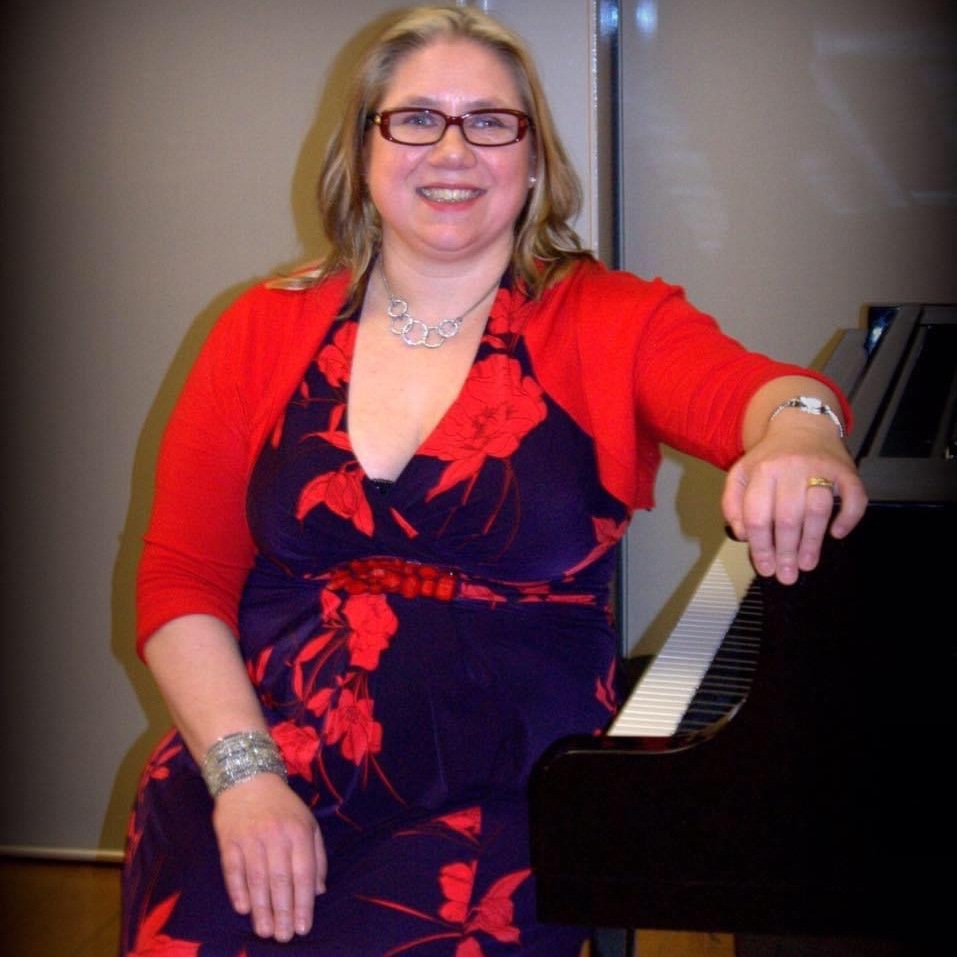
Weymouth Lunchtime Chamber Concerts (WLCC), which celebrated its 20th anniversary in 2022, is undergoing a ‘rebrand’ to reflect exciting expanding plans to bring more high-quality classical music and musicians to the popular Dorset seaside resort.

The series, founded by Weymouth-born pianist Duncan Honeybourne on his return to his hometown at the age of 25, has become well known as a platform for young professionals and established artists, and is now taking its activities up a gear. Last year’s summer concert, featuring chamber musicians coached by Duncan at the Royal Academy of Music Junior Department, was such a success that this year a special summer series of four extra Sunday afternoon concerts is being presented under the organisation’s new name CHAMBER MUSIC WEYMOUTH.

In addition to two Young Artist Showcase events on 9th and 16th July, Chamber Music Weymouth will also present a special concert of sea shanties and music inspired by or evocative of the sea and coastal landscapes with Lyme Bay Moonrakers and Duncan Honeybourne (14th July). The summer series will conclude on 28th July with a song recital given by baritone John Barker and pianist Helen Cawthorne.

Artistic Director Duncan Honeybourne says, “We’ve always made a point of welcoming young musicians, and last year’s young piano trio thoroughly enjoyed their trip to the seaside, eating ice cream on the beach after playing Mendelssohn to a large, supportive and enthusiastic audience. Everyone loved the event, and there were calls for a repeat, so this year we decided to expand the enterprise.”

Frances Wilson, herself a major voice in the piano world through her blog ‘The Cross-Eyed Pianist’, joined Duncan in 2019 as Concerts Manager, and together they plan to put their stretch of the Jurassic Coast firmly on the musical map. Frances says, “We have enjoyed record audiences since we returned to our regular monthly concerts following the challenges of the covid lockdowns, and we look forward to capitalising on this enthusiasm for what we do here with an expanded programme of concerts and other related events as we approach our 25th anniversary in 2027.”

Thanks to a generous donation from the Weymouth Music Club, which closed in 2023 after presenting concerts in the town for almost 80 years, Chamber Music Weymouth will, in addition to the regular monthly lunchtime concert series, offer further opportunities to young musicians at the start of their professional careers. Future plans also include a music festival, piano competition and masterclasses/piano courses.

The first Young Artist Showcase concert, presented by Chamber Music Weymouth, takes place on Sunday 9th June at 3pm at St Mary’s Church in central Weymouth. Students of Duncan Honeybourne from the Royal Academy of Music Junior Department and the University of Southampton will perform music by Mozart, Lalo, Paganini, and Beethoven. Tickets cost just £5, available online or on the door.

Book tickets

Full details of all concerts/events and a detailed history of the series can be found at weymouthchamberconcerts.com

a really special concert series” – Joseph Tong, pianist

“Weymouth is truly fortunate to have a concert series that benefits both local people and the wider musical community…..this is a valuable initiative that deserves continuing support and celebration.” – James Lisney, pianist


Launched in 2002 by concert pianist and Weymouth resident Duncan Honeybourne, Weymouth Lunchtime Chamber Concerts presents high-quality chamber music in the heart of Weymouth and offers a platform for musical partnerships with friends and colleagues. The concerts also give young musicians, often recent graduates from conservatoire or university, valuable performing experience to a friendly, loyal audience.

Programmes are varied and imaginative, mixing well-known works with lesser-known repertoire and composers, and all concerts take place in the attractive surroundings of St Mary’s Church, an early 19th-century church in central Weymouth, built of Portland stone.

Since its return to normal concert-giving following the covid lockdowns, the series has enjoyed record audience numbers with concerts by, amongst others, pianists Margaret Fingerhut, Joseph Tong, Allan Schiller and John Humphreys, Viv McLean, Penelope Roskell, James Lisney, Matthew Schellhorn and Katharine Lam, cellist Joseph Spooner, bass-baritone Timothy Dickinson, violinists Peter Fisher, Christopher Horner and Leora Cohen, and clarinettist Poppy Beddoe, as well as talented young musicians or recent graduates from conservatoire. Featured contemporary composers include Sadie Harrison, Adam Gorb, Ben Gaunt, Liz Dilnot Johnson and Fazil Say.

The series receives no funding or sponsorship, and all artist fees and other costs are met through ticket sales alone.

prodigy
ˈprɒdɪdʒi/
noun
noun: prodigy; plural noun: prodigies
1. a young person with exceptional qualities or abilities.
“a Russian pianist who was a child prodigy in his day”
synonyms: child genius, genius, wonder child, wunderkind

We’ve all seen them on YouTube – the tiny child at the vast piano playing technically and musically advanced repertoire. We marvel at their prowess, their facility and, more often than not, the extraordinary fleetness of their little fingers, as they rattle off Chopin’s most challenging Etudes or entire piano concertos.

Musical prodigies are not a new phenomenon – Mozart, Beethoven, Schubert and Mendelssohn were all described as prodigies – and so these modern “mini Mozarts” are following in a long tradition.

Daniel Barenboim, himself often described as a “child prodigy”, has suggested that these remarkable children are prodigies only in the eyes of their parents, and it’s true that some parents regard a special aptitude in a particularly young child as a sign of “giftedness”. This is in part due to a certain “Olympics syndrome” – a competitiveness amongst parents to push their children to greater things and to compete against other children, and their parents.

Why do prodigies, and specifically musical prodigies, fascinate and provoke so much awed attention? Fundamentally, it’s the incongruity of seeing a child, especially a very young child, engaging in what is generally regarded as an adult activity for which substance, maturity, emotional depth and artistry are essential ingredients. True prodigies are able to function at an advanced adult level in a facility such as music, maths or chess before the age of 12, and so we marvel at these talented young people who seem to demonstrate, at their tender age, the heights of human achievement.

Meanwhile, others may display a cynicism towards prodigous children: the critic Philip Hensher has commented that “serious art music could never be written by a child”, and some point to the fact that young children lack the requisite knowledge, emotional intelligence or life experience to bring interpretative depth, meaning or insight to the complex music they play; that they simply imitate others. For some, the parading of prodigous children on chat shows and talent contests, where they might be required to perform “tricks” such as improvisation on random notes pulled out of hat, is akin to watching a circus act.

Whatever one’s view, there is no question that prodigies and gifted children are different. Many are homeschooled, which immediately sets them apart from other “normal” children (whatever that means). For some, the school system simply cannot fulfil their needs: exceptionally gifted children need specialist support just as children with learning difficulties such as dyslexia or dyspraxia do, and some child prodigies also have Attention Deficit Disorder, Obsessive Compulsive Disorder or Asperger’s. A heavy responsibility may thus fall upon the parents of prodigious children to ensure they thrive, are supported, allowed as normal a childhood as possible, and avoid burnout. Equally, parents who do not support their child’s talent may deprive that child of the life he or she craves and is happiest in, which can lead to problems later on.

The latest “new Mozart” is Alma Deutscher, an apparently very bright and sweet British girl, who plays the piano and violin to a high level, and who, more remarkably, had by the age of just 12 composed concertos for violin and piano, a full-length opera and numerous other works. Her love of “beautiful music” is evident in her own works which hark back to the “galant” style and the romantic music of composers such as Schubert and Tchaikovsky. Alma herself sensibly dismisses the comparison to Mozart, but it’s a convenient tag for those who find her fascinating or marketable. Her musical abilities have been widely praised by leading musical doyens Sir Simon Rattle and Zubin Mehta, and also Stephen Fry, but also criticized for their derivative and unadventurous character. Yet when you listen to Alma Deutscher’s music it is perhaps exactly the type of sweet, tuneful romantic music one would expect from a girl with a vivid imagination and a penchant for elaborate fantasy, who perhaps has had little exposure to more avant-garde music.

The anxiety over children such as Alma Deutscher is that they are missing out on a “normal childhood” and that as a consequence of too much exposure may burn out in their teens or twenties, and then fade into obscurity. As well as parental support, there is a responsibility on the media, artist agents and concert promoters to ensure prodigious children are not cynically exploited and are allowed to mature and develop as artists. The transition from child prodigy to grown up artist can be difficult, especially if one has spent much of one’s childhood confined to a practice room instead of playing with other children, and the older the child, the harsher the criticism, and the harder the fall from grace.

Of course, the real challenge is whether the child prodigy can truly stand the test of time and is enjoying a successful career 20-plus years later. Notable examples include Daniel Barenboim, Martha Argerich, and Anne Sophie Mutter. Others simply retreat from the limelight into a contented ordinary life. One can but hope for happiest outcome for prodigious children like Alma Deutscher…..


If you enjoy the content of this site, please consider making a donation towards its upkeep:

Buy me a coffee

prodigy
ˈprɒdɪdʒi/
noun
noun: prodigy; plural noun: prodigies
1. a young person with exceptional qualities or abilities.
“a Russian pianist who was a child prodigy in his day”
synonyms: child genius, genius, wonder child, wunderkind

We’ve all seen them on YouTube – the tiny child at the vast piano playing technically and musically advanced repertoire. We marvel at their prowess, their facility and, more often than not, the extraordinary fleetness of their little fingers, as they rattle off Chopin’s most challenging Etudes or entire piano concertos.

Musical prodigies are not a new phenomenon – Mozart, Beethoven, Schubert and Mendelssohn were all described as prodigies – and so these modern “mini Mozarts” are following in a long tradition.

Daniel Barenboim, himself often described as a “child prodigy”, has suggested that these remarkable children are only prodigies in the eyes of their parents, and it’s true that some parents regard a special aptitude in a particularly young child as a sign of “giftedness”. This is in part due to a certain “Olympics syndrome” – a competitiveness amongst parents to push their children to greater things and to compete against other children, and their parents (having lived in an affluent and high achieiving area of SW London for 25 years, I encountered this behaviour quite frequently; one of the more unpleasant recent manifestations of this can be seen in the British tv series Child Genius, a competition for “highly gifted” children aged 7 to 12 in which rote learning and the ability to regurgitate memorized information are regarded as indicators of “genius” and exceptional ability.)

Why do prodigies, and specifically musical prodigies, fascinate us and provoke so much awed attention? Fundamentally, it’s the incongruity of seeing a child, especially a very young child, engaging in what is generally regarded as an adult activity for which substance, maturity, emotional depth and artistry are essential ingredients. True prodigies are able to function at an advanced adult level in a facility such as music, maths or chess before the age of 12, and so we marvel at these talented young people who seem to demonstrate, at their tender age, the heights of human achievement.

Meanwhile, others may display a cynicism towards prodigous children: the critic Philip Hensher has commented that “serious art music could never be written by a child”, and some point to the fact that young children lack the requisite knowledge, emotional intelligence or life experience to bring interpretative depth, meaning or insight to the complex music they play; that they simply imitate others. For some, the parading of prodigous children on chat shows and talent contests, where they might be required to perform “tricks” such as improvisation on random notes pulled out of hat, is akin to watching a circus act.

Whatever one’s view, there is no question that prodigies and gifted children are different. Many are home schooled, which immediately sets them apart from other “normal” children (whatever that means). For some, the school system simply cannot fulfil their needs: exceptionally gifted children need specialist support just as children with learning difficulties such as dyslexia or dyspraxia do, and some child prodigies also have Attention Deficit Disorder, Obsessive Compulsive Disorder or Asperger’s. A heavy responsibility may thus fall upon the parents of prodigious children to ensure they thrive, are supported, allowed as normal a childhood as possible, and avoid burnout. Equally, parents who do not support their child’s talent may deprive that child of the life he or she craves and is happiest in, which can lead to problems later on.

The latest “new Mozart” is Alma Deutscher, an apparently very bright and sweet British girl, who plays the piano and violin to a high level, and who, more remarkably, has by the age of just 12 composed concertos for violin and piano, a full-length opera and numerous other works. Her love of “beautiful music” is evident in her own works which hark back to the “galant” style and to the romantic music of composers such as Schubert and Tchaikovsky. Alma herself sensibly dismisses the comparison to Mozart, but it’s a convenient tag for those who find her fascinating or marketable. Her musical abilities have been widely praised, by such doyens as Sir Simon Rattle and Zubin Mehta, but also criticized for their derivative and unadventurous character. Yet when you listen to Alma Deutscher’s music it is perhaps exactly the type of sweet, tuneful romantic music one would expect from a girl with a vivid imagination and a penchant for elaborate fantasy, who perhaps has had little exposure to more avant-garde music.

The anxiety over children such as Alma Deutscher is that they are missing out on a “normal childhood” and that as a consequence of too much exposure may burn out in their teens or twenties, and then fade into obscurity. As well as parental support, there is a responsibility on the media, artist agents and concert promoters to ensure prodigious children are not cynically exploited and are allowed to mature and develop as artists. The transition from child prodigy to grown up artist can be difficult, especially if one has spent much of one’s childhood confined to a practice room instead of playing with other children, and the older the child, the harsher the criticism, and the harder the fall from grace.

Of course, the real challenge is whether the child prodigy can truly stand the test of time and is enjoying a successful career 20-plus years later. Notable examples include Daniel Barenboim, Martha Argerich, and Anne Sophie Mutter. Others simply retreat from the limelight into a contented ordinary life. One can but hope for happiest outcome for Alma Deutscher…..