Schubert Lieder: Love’s Lasting Power – Harriet Burns, soprano, and Ian Tindale, piano

This is the first joint recording from longtime musical partners Harriet Burns and Ian Tindale, and it celebrates not only the last ing power of love, in its many guises, but also the lasting appeal of Schubert’s lieder. Harriet Burns’ voice is wonderfully expressive and operatic, with a golden tone and clear diction. This is complemented by Ian Tindale’s sensitive, supple playing. Together they highlight all the contrasting colours, nuances and moods of Schubert’s lyrical writing. Recorded at St Mary’s church in Haddington, near Edinburgh, the overall sound is at once resonant and intimate – perfect for this music.

This has been a thrilling opportunity to curate and record a powerful sequence of songs that speak strongly to some of the relationships Schubert held dearest in his life. It is also deeply meaningful music with which we have a close affinity as a duo, and it is a world of repertoire in which we have come to feel at home over the years. 

Ian Tindale, pianist

Harriet and Ian are giving the album’s launch recital at Oxford International Song Festival on Tuesday 30th January at Wolfson College, Oxford. Further information

Released on the Delphian label and via streaming


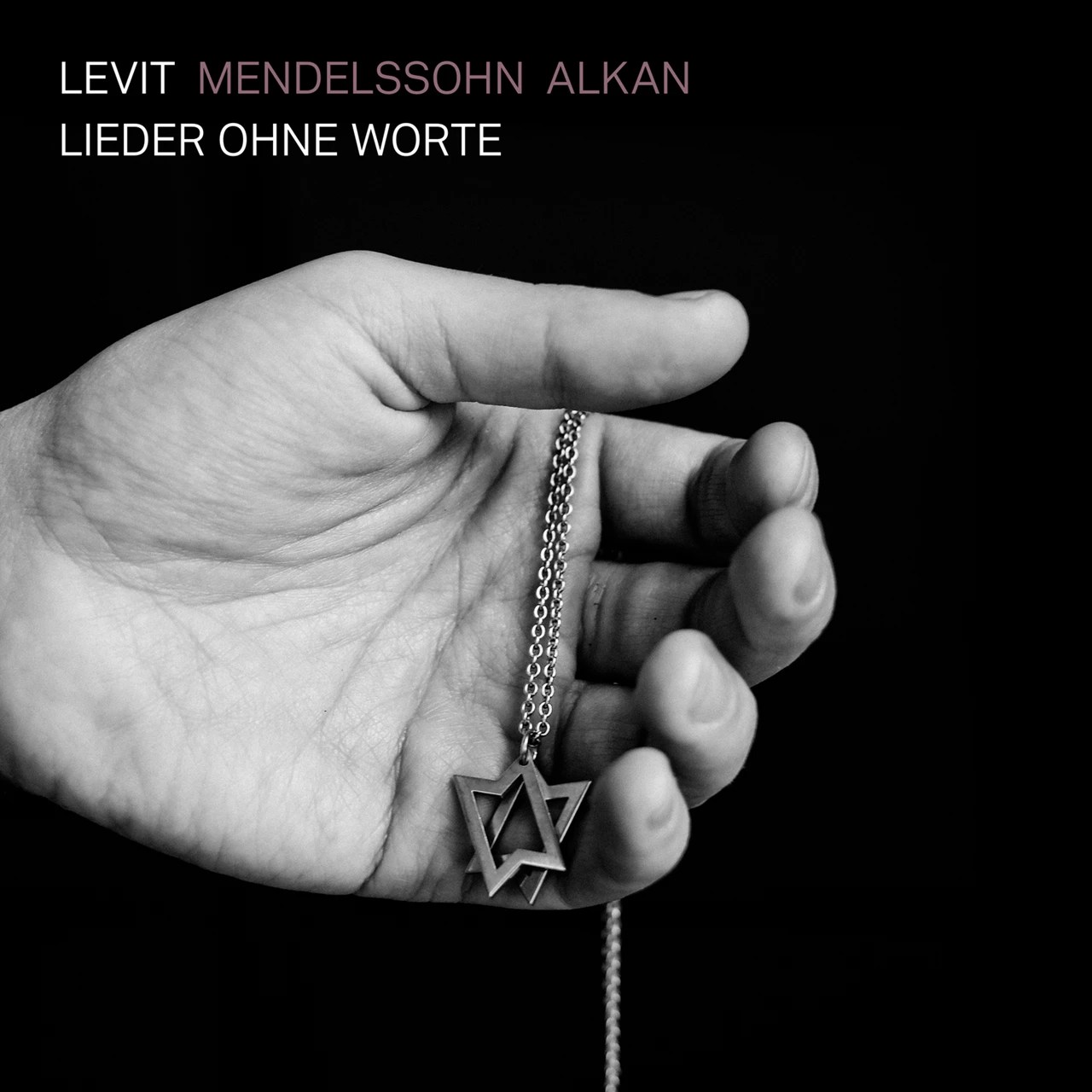
Mendelssohn: Lieder Ohne Worte (Songs Without Words) – Igor Levit, piano

More lieder, this time without words, and another set of romantic music which has a lasting appeal. Released digitally before Christmas, the CD is released today. This is a very personal project for Levit: the album is his own artistic response to the 7th October atrocities in Israel and the current rise of anti-semitism worldwide.

I made this recording out of a very, very strong inner necessity. I spent the first four or five weeks after the attack on October 7th in a mixture of speechlessness and total paralysis. And at some point, it became clear that I had no other tools than to react as an artist. I have the piano. I have my music. And so, the idea came to me to record these works, the “Songs without Words

Igor Levit

Levit and his team gave their time pro bono for this recording and proceeds from CD/download sales will be donated to to two German organisations fighting anti-Semitism – OFEK Advice Center for Anti-Semitic Violence and Discrimination and the Kreuzberg Initiative Against Anti-Semitism.

Perhaps it is the context in which this recording was created which gives it so much depth and poignancy. There’s strength and passion too, often in the more intimate or tender pieces.

Available on the Sony Classics label and via streaming

Pianist Igor Levit is one of the heroes of lockdown – a “key worker”(!), if you will, who provided comfort and distraction in those anxious, early days of the pandemic. At a time when the concert halls of the world were shuttered and silent, Levit gave hauskonzerts from his home in Berlin, broadcast live on Twitter. Each day he would announce a programme and a time to tune in. He streamed more than 50 concerts, performing on a 1920s Steinway B that had once belonged to the Swiss pianist Edwin Fischer. He dressed casually and gave a brief introduction to each performance in German and English – no need for the formality and etiquette of the Wigmore Hall here. He played Bach and Schubert (a tear-jerkingly wonderful D960), Beethoven and Feldman, and people tuned in from around the world. His daily house concerts provided an anchor in a troubled sea.

Maybe for the first time do I understand what it means to speak of music as something life-keeping. It really keeps me alive. . . . I don’t care if it’s wrong or right, whatever B.S. that means….” said Levit in an interview with Alex Ross of The New Yorker. His house concerts challenged our notions of what a concert really is, reminding us that we don’t have to sit in stiff, reverential silence in plush red velvet seats to feel the power of the collective shared experience of music. Separated by a global pandemic, confined to our homes, music connected us, delighted, soothed and comforted us.

Levit’s new album, Encounter, which comes just two years after the release of ‘Life’ (my album of the year in 2018), confirms the spirit of his hauskonzerts. Here is music by Bach-Busoni, Brahms-Busoni, Reger and Feldman that seeks to comfort the soul and provide inner strength while expressing a desire for encounters and togetherness in a world fractured by a global pandemic. Like ‘Life’, it is another very personal album for Levit, the repertoire carefully chosen: these are “works in which all questions about love and death, loneliness and the possibility of real love for others are examined“. The pieces on ‘Encounter’ were those which drew especially positive comments from Levit’s online audience.

The entire album has a processional quality, leading the listener to the hushed serenity of Morton Feldman’s final work for piano – and the final work on this disc – Palais de Mari, a 28-minute contemplation, meditation, or what you will, of exquisitely-placed notes and piquant chords that fall upon the ears and mind like the softest of summer showers. It works in the same way as Bill Evans’ ‘Peace Piece’ did on ‘Life’ – the sentiments of the music match the intensity and spirituality of the works that precede it, yet it also provides a contrast in its delicate minimalist textures and hauntingly spacious pauses.

No one questions the spirituality of J S Bach, but Levit thankfully steers away from an overly-reverential approach which colours so many performances of his music. Alert to the contrasting characters of the Chorale Preludes, elegantly and occasionally flamboyantly transcribed for solo piano by Ferruccio Busoni, Levit finds vibrancy and immediacy, authority, solemnity and joy, and draws on the full range of the piano’s sound and resonance to highlight the voices and layers of this music.

Brahms’ six Chorale Preludes, also transcribed by Busoni, are rarely-heard as a set, and Levit successfully sustains the devotional, introspective nature of these pieces, almost to the point of intimacy. Reger’s transcriptions of Brahms’s Vier ernste Gesänge (Four Serious Songs) are similarly pensive, and Levit’s sensitivity of touch and musical imagination save them from becoming overwhelmed by the richness of their textures.

Reger’s Nachtlied, a sacred motet for unaccompanied mixed choir, provides the bridge to Feldman in this transcription for piano by Julian Becker. Its textures are more transparent, its mood gentler and more prayer-like, settling the listener in for Feldman’s music, which gradually retreats into its own world with a sense of closure and inner calm.

The album was recorded in May at Berlin’s Jesus-Christus-Kirche and is best heard in one sitting, as if as a recital – because here Levit manages to create a very palpable, highly concentrated musical presence throughout the recording.

‘Encounter’ is available on the Sony Classical label and via streaming services

Who or what inspired you to take up the cello, and pursue a career in music?

I’m not from a musical family. My parents and I never thought that I would become a cellist. It all started randomly as my first cello was a gift from my mom’s friend. However, we never took it too seriously and I was not especially curious to learn how to play the cello until a friend of mine came to my home to play games with me. She showed a great interest in the cello and my mom was about to give it to her but that definitely triggered something in me and it was the moment I decided to pick up the cello and learn to play it.  I perhaps would never have become a cellist if this didn’t occur and I have never stopped playing the cello ever since then.

 Who or what have been the most important influences on your musical life and career?

Curiosity coupled with a willingness to push myself out of my comfort zone. I always strive to broaden my perspective on life as a global citizen and to be resilient.

What have been the greatest challenges of your career so far?

As a cellist, the challenge is to reach people with my instrument who don’t necessarily know much about cello and classical music.  I hope to continue to make classical music more accessible to a wider audience and that my instrument will be appreciated as much as the piano or voice.

Which performance/recordings are you most proud of?

My first recording of French Cello Concertos with the London Symphony Orchestra.  It was a dream come true as a musician.

Which particular works do you think you play best?

I play everything from my heart.  Works that speak to me the most are the pieces I play so that can change with time.

How do you make your repertoire choices from season to season?

When I choose repertoire for concerts, I do this by consensus and after discussion with the artistic director, fellow musicians and the conductor. I do always try to include some new pieces so that I can expand my repertoire and bring something new to audiences.

Do you have a favourite concert venue to perform in and why?

I do love playing in Seoul in particular because it’s my hometown.  It is always special to perform in my home country.

Who are your favourite musicians?

I love the work of Yannick Nézet-Séguin, former chief conductor of the Rotterdam Philharmonic, with whom I used to work.

What is your most memorable concert experience?

It was one of my most recent concerts in the UK – a recital at the Bridgewater Hall in Manchester.  I was so honoured to be there to and felt privileged to play in this wonderful hall.

As a musician, what is your definition of success?

For me, I feel most rewarded when I overcome difficulties or discover new ways to interpret a piece I have been practicing. Finding my own way to play a piece means a lot to me.  It gives me a confidence and I am full of joy to play the music.

What do you consider to be the most important ideas and concepts to impart to aspiring musicians?

For myself, I always look for an inspiration so I visit art exhibitions, I travel a lot, I look for new partnerships, I seek out new repertoire…I like discovering new things.  Life is full of surprises that open up my mind and I would encourage aspiring musicians to always be curious about the world.

Where would you like to be in 10 years’ time?

I would hopefully be in a place where I can continue to follow my passion of music-making.

What is your idea of perfect happiness?

I’m not sure if such perfection exists, but for me I definitely feel most happy when I can immerse myself in music.

What is your most treasured possession?

My cello

What is your present state of mind?

I live in the present

Hee-Lim Young’s recording of French Cello Concertos with the London Symphony Orchestra is available now on the Sony Classical label.


Hee-Young Lim was appointed as the Principal Solo Cellist of the Rotterdam Philharmonic Orchestra under Yannick Nézet-Séguin. She was one of the first female Asian cellists ever to lead a section in a major European orchestra. In 2018, she was invited to join the teaching faculty of the Beijing Central Conservatory, the first Korean professor ever appointed to this prestigious conservatory. Praised by the Washington Post as “a deeply gifted musician, with a full, singing tone, near- flawless technique and a natural lyricism that infused nearly every note she played,” cellist Hee- Young Lim has quickly established herself as one of the most charismatic and fast-rising cellists of her generation.

Born in Seoul, she was accepted to the Pre-College division of Korean National University of Arts and Yewon Arts School, winning prizes for Excellence in Music and the Most Distinguished Alumni Award. She entered the Korean National University at age 15, as the youngest student ever to be accepted. She moved to the United States to further her education at the New England Conservatory. Upon graduation, she went on to study at the Conservatoire National Supérieur de Musique de Paris, studying with Philippe Muller, where she graduated with ‘Highest Distinction’. She is also a graduate of Hochschule für Musik ‘Franz Liszt’ Weimar, where she earned her degree summa cum laude.

In-demand as a soloist, she has in recent years performed with distinguished ensembles including the German Berlin Chamber Orchestra, the Budapest Radio Philharmonic, the Warsaw National Philharmonic, the Jena Philharmonie, the Houston Symphony Orchestra, the KBS Symphony Orchestra, the Seoul Symphony Orchestra, the Baden-Baden Philharmonie, the Württembergische Philharmonie Reutlingen, the Bandung Philharmonic, the Korean Chamber Orchestra, the Incheon Symphony Orchestra, the Ningbo Symphony, Zagreb Soloists and many others.

As an enthusiast advocate of contemporary music, Hee-Young Lim is privileged to champion the work of today’s composers. Most recently, Columbia University in New York commissioned her to give the European premiere of Peter Susser’s Cello Suite in Paris and in 2019 she will give the Asia premiere of Jakub Jankowski’s Aspects of Return at the Tong Yeong International Music Festival.

Teaching has been a very significant aspect of Hee-Young Lim’s career. She has held master classes at Seoul’s Ewha University, Rotterdam Conservatory, Paris Reuil-Malmaison Conservatoire and Jakarta University, among others.

She plays on a 1714 Joseph Filius Andrea Guarneri Cello graciously given by a private donor and a Dominique Peccatte bow.

Guest review by Adrian Ainsworth

Rick Wakeman has been a consistently fascinating artist throughout his decades-long career. As a fan of both classical and progressive rock music, I feel he’s been a constant presence, his cape sweeping nonchalantly across any so-called dividing lines between genres and styles.

In contrast to the grandeur of some of his earliest and most familiar work, Wakeman’s most recent releases have felt more intimate and introspective. The 2017 album ‘Piano Portraits’ was just that: solo piano treatments – somewhere between arrangements and variations – of an eclectic range of pieces that covered Debussy and Fauré, Elgar and Holst, Bowie and the Beatles… and not to leave out his own band, Yes.

This new album, ‘Piano Odyssey’, is in many ways a sequel with seemingly deliberate echoes of its predecessor. As before, there are two Beatles tracks, and just the one from Bowie this time, amid other carefully chosen cover versions. Yes is represented by two new arrangements. On the classical team are Liszt, Dvorak and Handel.

As the album title suggests, though, a journey of some kind has taken place. Rather than simply repeat himself, Wakeman has added strings and a choir more or less throughout, diluting the forensic focus on the lone piano. However, the lush arrangements can’t disguise the fact that this feels like an even more personal project, surveying Wakeman’s career more incisively and giving it a perhaps unexpected unit

I think this unity is behind the quality I loved most about the disc, which is that it sounds exactly like something its creator would pull together – and yet at the same time, it feels like a surprise, not quite like anything else. In theory, given the forces involved, the classical feel should dominate, but that isn’t what happens. Instead, it’s rather more like listening to a kind of ‘chamber’ prog: Wakeman often deploys his string players and singers as if they were band members, the choir in particular performing ‘solos’, moving in and out of tracks as needed rather than saturating them. His own distinctive playing has him operating like a combined rhythm and lead guitar might, capturing the melodies at the top end with great delicacy (and some very agile embellishments!), without sacrificing a sense of real propulsion.

As a result, the pieces that really hit home for me are the two Yes songs, in particular ‘And You & I’, and the reworks of two of his solo tracks, ‘After the Ball’ (now merged with Liszt’s ‘Liebestraume’), and ‘Jane Seymour’ (originally composed on organ, and with Bach coursing through its bloodstream). In the CD liner notes, Wakeman explains how the new versions make what he was trying to do clearer, more audible. And there’s no doubt that ‘Piano Odyssey’ is giving him the opportunity to shine a light on his practice: without trying to ‘match’ or ‘outdo’ Liszt, he has deliberately designed his medley to show how the composer influenced him. (Elsewhere, he uses this technique to illuminating effect in ‘Largos’ – merging Dvorak and Handel with the utmost respect, but a refreshing lack of deference.) Equally, in ‘And You & I’, the sparkling high-pitched melody is so evocative of Jon Anderson’s vocal it’s somehow uncanny.

I don’t think the record is totally flawless. How you react to the more familiar covers will inevitably depend on your relationship to the originals, and what you want a new version to achieve. I felt ‘The Boxer’ was a misfire: to me, the song, while tender, has an underlying resolve and pugnacity that befits its title. Here, the slow pace fatally weakens it, along with oppressive strings and the choir contributing isolated ‘lie la lie’s with no context. On the other hand, a similarly sentimental treatment of ‘While My Guitar Gently Weeps’ fits the song like a glove. The version of ‘Bohemian Rhapsody’ is shot through with wit, subverting any bombastic expectations the listener might have – even Brian May’s guitar cameo appears out of nowhere.

Two completely new compositions again emphasise the personal – named for two adopted moon bears, Rocky and Cyril (Wakeman is a passionate animal rights advocate). Writing from scratch in this idiom allows Wakeman to produce probably the most nakedly emotional tracks on the record, the signature traits (again, the steady motor, the climb to the high register) reflecting how much of himself he has put into these pieces. And I think it’s fair to say that the whole album – a heart-on-sleeve musical autobiography-of-sorts – wins through as an accomplished yet totally sincere attempt by the artist to communicate a true audio sense of himself.

Rick Wakeman’s ‘Piano Odyssey’ is available now on the Sony Classical label.

Meet the Artist interview with Rick Wakeman


Adrian Ainsworth writes for a living, but mostly about things like finance, tax and benefits. For light relief, then, he covers his obsessions – overwhelmingly music, but with sprinklings of photography and art – on the ‘Specs’ blog, which you can find at

Twitter: @adrian_specs

Adrian is a regular guest writer for The Cross-Eyed Pianist