jeremydenk_3226643k

When the concert is perfect, does that make the reviewer redundant?

As regular readers of this blog will know, I enjoy writing about the concerts I attend but I also struggle with the purpose and value of concert reviews. At the most fundamental level, a review is a record of the event, setting it in context and as a moment in history. A review should also offer readers a flavour of the event and the thoughts and opinion of the reviewer about that event. When I left Milton Court last night I told my concert companion I could not write about the concert we’d just attended because it was so perfect that to write about it could not possibly do justice to the quality of the performance…..

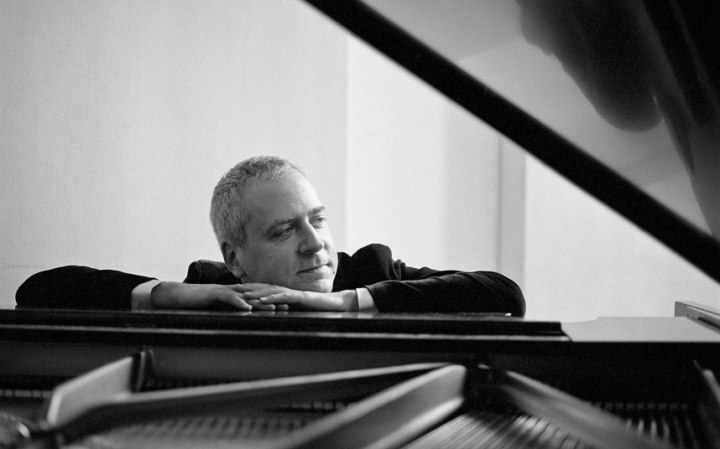
Last night I attended American pianist Jeremy Denk’s concert at Milton Court, one of London’s newest concert venues and, in my opinion, the finest for piano music because of the clarity of its acoustic. Add a pianist whose musical insight and intellectual clarity, magical touch and sense of pacing bring the music to life so that you want to hear him “no matter what he performs” (NY Times), and we have the makings for an evening of exceptionally fine pianism.

It was a typically piquant programme, changed from the published version to include just three works – two magisterial, transcendent late sonatas by Beethoven and Schubert and Prokofiev’s Vision Fugitives, twenty fleeting miniatures, by turns quirky, ethereal, rambunctious, grotesque, poetic, delicate, fragmentary….. Denk revealed their individual characters so carefully, so delightfully that each tiny gem felt like a stand alone piece in its own right.

Beethoven’s piano sonata in E, op 109, the first of his triptych of last sonatas, also opens with a fragment – a tiny arabesque of just two notes in the right hand to which the left hand replies with a similar figure. It’s not a melody, yet that opening is immediately memorable. In Denk’s hands the music unfolded before us, its narrative flow so naturally paced. A muscular middle movement which dissolved into a theme and six variations, surely some of the most transcendent Beethoven ever wrote and handled with a delicacy and robustness, when required, by Denk which pulled one into this otherwordly soundworld so completely that one was transported, fully engaged and utterly overwhelmed. It was akin to meditating.

It felt almost wrong to leave the auditorium for the interval and face the noisy crush around the bar, but we knew the second half would take us to another special place, the unique world of late Schubert, his final sonata completed just a few months before his death.

Is the Sonata in B flat, D960 Schubert’s “final word”? A valediction for his departure from this world? I’ve always been suspicious of this view of this great sonata, whose expansive opening movement is like a great river charting is final course before the ocean, and whose finale is a joyful outpouring of hope, a reminder perhaps that Schubert had more, much more to say, had he lived longer. This was certainly Denk’s take on Schubert’s last sonata. The opening movement’s first theme had the serenity of a hymn, the second theme more unsettled, but the overall sense of repose remained, occasionally interrupted by dark, but never ominous, rumbling bass trills.

The meditative quality of the Beethoven variations was felt again in the slow movement of the D960. In some pianist’s hands, this movement can sound funereal, but Denk gave it a mystical grace and a sense of forward movement, so that the warmth of the A major middle section when it came infused rather than surprised the ear. The Scherzo poured forth with the agile freshness of a sparkling mountain stream, but the Trio reminded us that melancholy is never fair away in Schubert’s world, the bass accents (too often overlooked in other performances/recordings) here perfectly highlighting the change of mood….

The finale opens with a bare G, potentially as cold as the opening of the first Impromptu, but a dancing sprightly rondo quickly ensures, rising to a joyous conclusion, all masterfully and imaginatively presented by Denk. The overall pacing of this Sonata, like the Beethoven, was so elegantly managed: it is a long work (around 40 minutes) yet Denk’s clear sense of a through narrative and overall architecture of the music ensured there were no longueurs, not a moment when the mind wandered to other realms.

The encore was Brahms’ ever popular Intermezzo in A, from the Op 118. Tender and poignant, it was a lovely conclusion to an exceptionally fine evening of pianism.

when I have felt in the moment of the performance I have brought the notes on the page to life in a weird way which is outside of me – that is the kind of success that I am after

– Jeremy Denk (interview with The Cross-Eyed Pianist)


Meet the Artist – Jeremy Denk

Startling contrasts

The dark arpeggiated sonorities at the close of the Andantino are transformed into the sparkling arpeggiated chords which open the Scherzo, and a sense of levity is portrayed through staccato articulation and a lyrical dance-like figure, which is further developed in the second section. The Scherzo serves several purposes in the overall scheme and narrative of the sonata: it provides a breath of fresh air between the Andantino and the Rondo (to omit a third movement and go straight to the finale would be too ponderous for Schubert), and through its tempo, concision and directness, highlights the breadth of the finale.

The second section of the Scherzo (m 17) begins with a LH figure redolent of the rambunctious opening of the third movement of the ‘Great’ C major Symphony and rich in ‘cello and double bass resonances. The tone here is distinctly bucolic, but the pastoral mood is disturbed by “startling flashes of irritability” (Schiff): a dramatic descending scale which recalls the middle section of the previous movement, with a reference to the desolate main melody of the Andantino in the ensuing passage. For a moment it seems as if the desolation of the previous movement has returned, but the atmosphere is quickly dispersed by a chord (m 47) before the effervescent opening theme returns. In the contrasting Trio, scored in D major, Schubert re-imagines the initial theme of the first movement with a serenity redolent of choral writing or a choir of woodwind, closing with a sequence of ethereal chords.

The opening section is then reprised via the Da Capo marking. The musicologist David Montgomery makes the case for observing all the repeats during the reprise. Like many piano students, I was taught that DC repeats should be dropped, a practice Montgomery suggests developed during the late nineteenth-century and certainly when early recordings began to be made, for reasons of limited disc or piano roll space. In the case of Scherzos or Minuets, there is almost complete agreement amongst performers that the DC repeats should be omitted (I have only heard one performance of the D959 in concert where the DC repeats were observed), regarding them as “vestigial” and unnecessary in such a diminutive movement as a Scherzo. In the case of the D959’s third movement, there is a good argument for maintaining them because 1) they make the movement longer, roughly equivalent to the Andantino, and thus create a sense of structural balance between the first and final movements and the inner movements (a “golden ratio”); 2) repeating previously heard material reiterates Schubert’s unusual harmonies and musical signposts (the same argument applies to exposition repeat in the first movement).


Select bibliography

Brendel, Alfred, ‘Schubert’s Last Sonatas’, in Music, Sense and Nonsense: Collected     Essays and Lectures (London: The Robson Press, 2015)

Fisk, Charles, Returning Cycles: Contexts for the Interpretation of Schubert’s Impromptus and Last Sonatas (Berkeley, Los Angeles and London: University of California Press, 2015)

Hetenyi, G: The Terminal Illness of Franz Schubert and the Treatment of Syphilis in Vienna in the Eighteen Hundred and Twenties (Bulletin Canadien d’Histoire de Medecine, 1986 Summer;3(1):51-64.)

Montgomery, David, Franz Schubert’s Music in Performance. Compositional Ideals, Notational Intent, Historical Realities, Pedagogical Foundations (Hillsdale, NY: Pendragon Press, 2003)

Schiff, Andras, ‘Schubert’s Piano Sonatas: thoughts about interpretation and performance’, in Brian Newbould (ed.) Schubert Studies (Aldershot and Burlington: Ashgate, 1998)


A longer version of this article will appear in a future edition of The Schubertian, the journal of the Schubert Institute UK

A personal journey through Schubert’s penultimate piano sonata (read previous posts here)

With a good deal of reading, of both the score and books and articles on this sonata and Schubert’s piano music in general, and listening, and thinking, by late November 2014, it was time to embark on some serious note learning……

As noted in an earlier post, Schubert’s late piano sonatas are large-scale works: their first movements alone, with exposition repeats intact, can last as long as an entire sonata by Beethoven, and this “heavenly length” can pose problems for the performer in terms of stamina (it takes me around 43 minutes to perform the D959 in its entirety, with repeats), retaining a clear sense of the cyclic elements which recur throughout the work, and appreciating the overall narrative of the work. From my reading of the score, and other materials, I had concluded that the second movement, the infamous Andantino was the most “difficult” (though this is all relative when considering such a large piece of music!). This is the movement which provokes the most discussion and theorising amongst pianists, musicologists, critics and audience members, many of whom believe this movement is the clearest indication we have of Schubert’s emotional and mental instability, probably due to his advanced syphilis. Musically, it feels like an aberration in the overall scheme of the D959, which is generally warm-hearted and nostalgic in its character and prevailing moods, and it is unlike anything else Schubert wrote. “Its modernity is incredible even today” (Andras Schiff, Schubert Studies). It has a “desolate grace behind which madness lies” (Alfred Brendel), the lyricism of the outer sections providing a dramatic foil to the savage intensity of the middle section. Its position in the overall structure of the sonata creates a striking contrast between the majesty and expansiveness of the opening movement and the quirky, playful Scherzo which follows it. In my own practical approach to this movement, I decided to ignore much of the psychobabble and work with what is given in the text.

The movement is in straightforward ABA (ternary) form, the A section reprised with a more intricate left-hand accompaniment and a haunting triplet figure in the treble.

The middle, B, section unfolds initially like a Baroque fantasia (bars 73-86), with descending diminished seventh arpeggios which take the music into C-minor. Gradually all the elements speed up (Schubert indicates this through note sub-divisions, striking modulations and volume of sound) and the music continues to build with increasing savagery via extreme registers and the use of trills to sustain tension, eventually arriving at C-sharp minor and culminating in dramatic fortissimo chords (bars 120/121). A short recitative-like section follows, interrupted by dramatic chords, before a serene passage reminiscent of the G-flat major Impromptu (D899/3). The A material returns at bar 159.

The opening A section combines a barcarolle bass line with a right-hand melody redolent of several of the Heine songs and ‘Der Leiermann’ from Winterreise, while its expressive qualities and character relate to the song ‘Pilgerweise’, also in F-sharp minor. Some pianists like to treat this movement as a barcarolle with a storm in the lagoon (the middle section). Daniel Barenboim has called A section “a melancholy folksong”, a description which I particularly like: the lilting style of a folksong is implied by the recurring bass figure and the simple melody from which is unleashed the turbulent and chaotic middle section.

A rather chilly, tread-like quality in the bass is created through the use of staccato on the first note and the slur on the second and third notes, with the third note lighter (although this is not indicated specifically after bar 2, we can safely assume that this is what Schubert intended throughout). I found it helpful to think of this in terms of a cello or bass pizzicato figure: it needs resonance but should also be balanced with the right-hand melody. I don’t sustain the staccato note with the pedal here, and indeed the pedal is used sparingly throughout this section. The repeated use of falling seconds and a limited range, together with largely understated dynamics, create a feeling of stasis and melancholy contemplation. With so many repetitive elements in this section, it is necessary to create contrasting musical colour (for example between bars 1-8 and 9-12). At bar 19 the music moves into A Major, one of those magical Schubert moments where the mood seems at once warmer and yet even more poignant because it is expressed pianissimo. I like to use the una corda pedal for this pianissimo passage, and the corresponding passage at bars 51-54 to create a sense of other-worldliness.

getfileattachment
Page 3 of the Andantino with my annotations
Other details worth noting throughout this section (bars 1-32) are the inner voices in bars 7, 15, 16, 25, 29 and 31 (and then at bars 39 and 57), and the ornaments which should be played on the beat (though many celebrity pianists prefer to do otherwise, admittedly to beautiful effect). For example, in bar 15, the A sounds with the E sharp on the beat and the turn at bar 23 begins on the note above, but need not be pedantically with the bass C sharp. (See David Montgomery Franz Schubert’s Music in Performance for more on ornaments.)

At this point I feel it’s important to mention the overall tempo of the movement. It is marked Andantino, and needs a sense of forward propulsion. Despite this, some pianists tend more towards Adagio, and at this speed there is, in my opinion, a very fine line between the music sounding meditative or funereal, or even boring, which I do not feel is appropriate. I have aimed towards a metronome mark of quaver = c90 bpm. A quick browse through Spotify reveals quite a broad range of tempi, with some versions of the Andantino coming in at well over 8 minutes (Schnabel, Pollini, Uchida, Perahia) and others at around or under 7 minutes (Lupu, Schiff, Goode).

Here is Uchida

And Lupu


And so on to the B section, which leads to the most passionately and extraordinary part of the movement and indeed the whole sonata. It is typical of Schubert to create sections in the music which are vividly contrasting yet also complementary: the A sections are reflective in their lyrical subject while the middle section completely destroys this frame of reference, only for it to return at the reprise of the A section. It is the strong contrast between the A and B sections which makes this movement so arresting and so powerful.

The bridging passage begins at bar 69, and is preceded by three bars whose dark, descending chords mirror in their reverse movement the chords which form the opening sentence of the sonata (and a figure which recurs elsewhere). I like to create a sense of mystery in bars 69-72 with a wetter pedal effect and a little rubato to suggest improvisation as the music unfolds. The main difficulty I encountered in the entire B section was maintaining a sense of the underlying 3-in-a-bar pulse and clarifying the different note hierarchies, while also continuing the improvisatory/fantasia feel. In order to achieve this, I drilled the section strictly with the metronome for several weeks, a tedious but necessary task for once the note hierarchies and subdivisions were well learnt, I could let the music break free, particularly in bars 102-122, to create a rising sense of hysteria. 

A clear sense of pulse is required through bars 124-146, as the recitative section takes over. After all the “busyness” of the previous page, I like to create a sense of the music being restrained once again, with the contrasting disruption of the FFz chords. At bar 147 the music arrives in C-sharp major in a passage which seems directly drawn from the G-flat Impromptu. At bar 159 the A section returns, this time with the more elaborate LH figure and the triplet figure in the RH, which should have the quality of a separate, “other” voice. Throughout this section, it is important to retain a sense of the opening melody and a similar lightness in the LH to that in the opening bass figure (note the demi-semiquaver rests at the end of each bar). Bars 177-182 the RH accented E’s sound as tolling bells above the melody, and once again I like to use the una corda pedal here to give a more ethereal quality and to create contrast with the forte chords in bars 185/66 and the descending figure in bar 187. The movement closes with dark, arpeggiated chords which echo those at bars 65-68, and which are transformed into sparklingly joyful spread chords in the Scherzo which follows. I try to keep these in tempo until bars 198/9 at which I introduce a rit. to signal the close of the movement. The dynamic landscape here is very quiet and muted, and I feel una corda is perfectly acceptable in these closing statements.

It took me three months of fairly consistent work to bring the movement to a point where I felt confident enough to perform it for others (for friends at home). I then “rested” it for some weeks while I turned my attention to the first movement, the subject of the next article.

A personal journey through Schubert’s penultimate piano sonata

The journey continues…..

My nature tends towards the intellectual when studying and learning music, and my approach to the Sonata in A D959 was no different. After an initial sight-read through the entire work to gain a sense of the overall structure and narrative arc of the piece, I set about reading and listening around the music as far as possible to understand the context and background to this music before the serious note-learning process began. Here I share my reading list and “background listening” Spotify playlist. I have starred the books/articles I found most useful

Books:

Schubert’s Late Music: History, Theory, Style – Lorraine Byrne Bodley (ed) and Julian Horton (ed) (Cambridge: CUP, 2016)*

Music Sense and Nonsense – Alfred Brendel (London: The Robson Press, 2015)*

The Cambridge Companion to Schubert – Christopher H Gibbs, ed (Cambridge: CUP, 1997)

Franz Schubert: an essential guide to his life and works – Stephen Jackson (London: Pavilion Books/ClassicFM, 1996 )

Franz Schubert’s Music in Performance – David Montgomery (Hillsdale, NY: Pendragon Press, 2003)

Schubert Studies – Brian Newbould, ed (Aldershot: Ashgate Publishing, 1998)*

Schubert: The Music and the Man – Brian Newbould (Berkeley: University of California Press, 1999)

The Classical Style – Charles Rosen (London: Faber & Faber, 1997)

Articles:

‘Schubert the Progressive: The Role of Resonance and Gesture in the Piano Sonata in A, D. 959’ – Robert S. Hatten Intégral Vol. 7 (1993), pp. 38-81

Schubert’s Dream’ – Peter Pesic, 19th-Century Music, Vol. 23, No. 2 (Autumn, 1999), pp. 136-144

‘Schubert’s Volcanic Temper’ – Hugh MacDonald, The Musical Times, Vol. 119, No. 1629, Schubert Anniversary Issue (Nov., 1978), pp. 949-952

In addition, various reviews of the sonata in performance, interviews with pianists, blogs and other resources, the internet proving a rich and varied source of reading material.

Alongside the reading, I undertook a lot of listening to immerse myself in Schubert’s distinct and very personal soundworld. This included some 15 recordings of the D959, from Arthur Schnabel and Shura Cherkassy to Inon Barnatan and Shai Wosner (whose recording of the sonata includes an interesting “take” on the andantino by Missy Mazzoli), and 5 live performances of the Sonata (including by Piers Lane, Andras Schiff and Richard Goode). This kind of listening is incredibly useful – one does not seek to copy or imitate these pianists in their interpretation of the work, but comparative listening and concert going offers useful context/insight into interpretative possibilities and how to present the work in performance. As the playlist below reveals, I have also listened to songs, chamber music, and symphonies. The idea that Schubert’s piano music is informed by his lieder writing is true up to a certain point, but the late piano sonatas are also rich in orchestral and string-quartet writing.

Playlist:


