Alim Beisembayev and Eric Lu, winners of the Leeds International Piano Competition in 2021 and 2018 respectively, have both released new albums. 

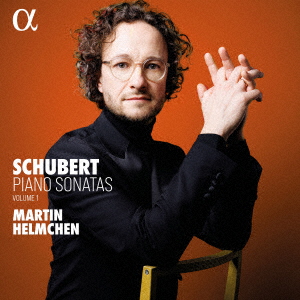
Eric Lu impressed at the 2018 competition with his beautiful tone and the phrase “poet of the piano” is regularly attached to his playing. Elegant lyricism is highly appealing, especially in the music of Chopin, which Lu recorded for his previous album.  There is no doubt that Schubert too was a spinner of beautiful, long-spun melodies, but in the case of the music selected by Lu for his latest release, I do not believe that poetry and golden cantabile are enough to convince in this instance.

Lu says in interviews that Schubert is “the composer who moves me most intensely….I love Schubert. It is difficult to describe how meaningful his music is to me.” Yet I felt on listening to this album that Lu had not fully absorbed the “essence” of Schubert’s writing: to play this music pianistically, one must also absorb the songs, chamber music, other piano music et al. The result, for me at least, is a rather contrived sound. Lu aims for expression, overly romanticising the “tragedy” he perceives in Schubert’s writing, in particular in the Allegretto in c and the Sonata in A, D959, and clearly subscribing to the rather hackneyed, oft-quoted view that this work, along with the other two final sonatas, is a portent of the composer’s imminent demise. He portrays this through ponderous tempi (the Andantino of the D959 is positively funereal) and rather suspect use of rubato and agogic accents, which I suppose are intended to emphasise the pathos, poignancy, tragedy et al, in this music, but too often just sound artificial and interrupt the rhythmic flow of the music (most obviously in the Allegretto in c). Throughout the album, I found Lu’s playing rather too ‘safe’, too concerned with beauty of sound rather than highlighting the dramatic shifts of mood and contrasting colours in this music. Personally, I would have liked a little more “bite”, both rhythmically and dynamically, to disturb the beauty.

Contrast this with the new release from Alim Beisembayev, the young Kazakh pianist who at just 23 wowed the 2021 Leeds competition judges and audience with a dashing performance of Rachmaninov’s Variations on a Theme of Paganini in the final, and who displayed remarkable poise, musicianship and maturity in his playing throughout the competition. 

In Liszt’s Transcendental Etudes, an ambitious choice for anyone, Beisembayev positively glitters: superlative, secure technique underpin playing which is daring and fearless from the outset (the Preludio is a stunning opener), with perfectly managed tempi and split-second precision (at no point does one feel that the pianist is in any way out of control), elegant lyricism when required (Paysage – the only piece in this set which I can actually play! – is tender, freighted with poignancy; likewise, the middle section of a fiercely dramatic Mazeppa), tasteful, subtle rubato, vibrant colours and contrasts, and a remarkable control of the momentum and drama within each piece. Feux Follets trips along with gossamer lightness and wit; Vision emerges from the darkness of G minor into heroism, while Harmonies du Soir is delicate yet sweepingly passionate. There is so much to enjoy and marvel at in this album, from tumultuous tumbling descents to sparkling virtuosity, tonal depth and colour, reverie and delicacy. And never once does one feel an ego getting in the way of the music. It’s showy playing, as demanded by the score, without being showy. A absolute treat of an album which reveals the myriad facets of Liszt’s musical personality, played by this young pianist who fully appreciates the variety and range of expression in this music. 

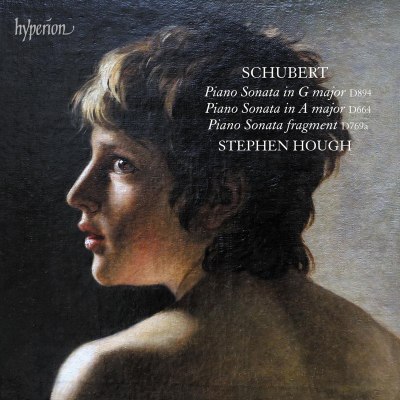
Piano Sonatas D664, 769a & 894 – Stephen Hough (piano). Hyperion, 2022

In his memoir ‘Every Good Boy Does Fine’, American pianist Jeremy Denk says of Schubert, “He likes to let his ideas spread out, like pets that hog the bed.” He’s referring specifically to Schubert’s penchant for length or expansiveness, most evident in his late piano sonatas. This is not a criticism from Denk; later in the same paragraph he goes on to explain how Schubert uses his “heavenly length” to accumulate meaning.

In the first movement of Schubert’s G major piano sonata, D894, which opens this new recording from recently-knighted Stephen Hough, the ideas are certainly spread out, each clearly delineated, from the chordal, prayer-like first subject to the delicately dancing second subject (where the cantabile clarity of the upper registers of the piano is utterly beguiling in Hough’s hands), yet without the longueurs of Richter’s interpretation (and such a slow tempo really only works in Richter’s hands!). Hough favours a molto moderato which moves forward with vigour and colour when required but also allows time to savour all the details and nuances of this wondrous first movement.

The second movement is genial and intimate, a simple aria elegantly sculpted by Hough, reminding us that this is music for the salon rather than the concert hall. Hough really appreciates this, creating intimacy and introspection through supple phrasing and rubato, pauses (so important in Schubert’s music to create drama and breathing space) and tasteful pedalling.

The third movement scherzo revisits the chords of the first movement, this time in B minor, its robustness quickly offset by another dance figure. The trio, almost entirely in ppp, weaves a pretty melody around a handful of notes, with an offbeat bassline, like the memory of a forgotten Viennese waltz. And when the music shifts into the major key, it is almost more tender and poignant than when Schubert is writing in the minor key. The rondo finale is also a dance, graceful yet playful, occasionally insistent, played with an elegant clarity and some delicious bass details.

A curious interlude between two complete sonatas comes with the unfinished sonata fragment in E minor, D769a, a mere 1 minute of music yet profound and inventive in its expression. It finishes on a repeated figure, pianist and listener suspended, wondering where Schubert might have gone next with this music.

The Sonata in A, D664, is wholly delightful, Schubert at his most good-humoured. The affable first movement sings in Hough’s hands, while the second movement is thoughtful, poignant and tender, marked by gently sighing phrases. The sunny mood is soon restored in the finale, to which Hough brings a joyful light-heartedness with its tumbling scales and dance-like passages.

The recording was made on a C Bechstein Model D piano and there’s an intimacy and warmth to the piano sound which perfectly suits Schubert’s introspection, while a bright but sweet treble brings a lovely clarity to the melody lines and highlights Hough’s deftness of touch.

Mitsuko Uchida, piano

Schubert – C Major Sonata, D. 840

Schubert – G Major Sonata, D. 894


Like almost every other festival this year, Petworth’s annual summer music festival, which normally takes place in July, fell victim to the restrictions imposed in response the coronavirus pandemic, but rather than cancel this year’s festival altogether, its organisers sensibly moved the music festival to the autumn and combined it with the literary festival. The events are all online, though some are live, with audience, to create “a real ‘Petworth’ feel about them” (Stewart Collins, Artistic Director) and, as always, there’s a fantastic line up of performers and guests, including Sheku and Isata Kanneh Mason, The London Mozart Players with Howard Shelley, and Mitsuko Uchida. Petworth Festival always attracts an impressive roster of performers and amply confirms that there is very high quality music-making to be found outside of the capital.

We’re all pretty used to watching concerts via livestream and videocasts now; superior technology allows such broadcasts to be presented with high-quality sound and visuals, which undoubtedly enhances the experience. It’s impossible to entirely recreate being in a concert hall, but one of the advantages of livestream is that you can choose when the view the concert: watch it live or at your own convenience, perhaps in the middle of the afternoon, as I did with this particular concert. With my laptop connected to the tv in the living room and a cup of tea in hand, I settled down to enjoy Mitsuko Uchida playing two sonatas by Franz Schubert.

I’ve only ever seen Uchida performing in the vast space of the Royal Festival Hall, yet every time she has managed to shrink the space, drawing us into her personal, musical world to create the atmosphere of a salon concert. This is particularly true when she plays Schubert, a composer who despite writing large-scale works, is a master of the introspective, and, as I have written on this blog, a composer for these corona times.

Uchida is very alert to Schubert’s idiosyncrasies, his chiaruscuro and elusive, shifting moods, and I always feel that she is very at home with this music. She creates the most remarkably sense of intimacy through hushed pianissimos, tapered sonorities and a sensitivity to Schubert’s “psychological dynamics” – where a fortissimo, for example, is tempered by a certain restraint and emotion is implied rather than made explicit in sound. She highlights details or moments of significance with a touch of rubato here, a little more pressing forward there, and these feel spontaneous, of the moment, never contrived (of course the ability to do this so effortlessly comes from a long association with the music and a deep knowledge of it).

Uchida also seems to subscribe to Andras Schiff’s assertion that one must “follow” Schubert, allowing the expansiveness of this music to unfold gradually. Her melodies have a warm cantabile, her dynamics subtly shaded, often revealing dark, mysterious layers beneath.

In the D894, described by Robert Schumann as “most perfect in form and conception”, she created a timeless serenity in the opening movement, opting for a relaxed moderato (rather than Richter’s famously ‘meditative’ slowness) to allow the narrative to flow naturally into the dramatic grandeur of the development. What followed was a second movement with a contrasting rhythmic vigour in the more passionate passages, a tender, folksy lullaby in the third movement, and an elegant, supple finale replete with pastoral charm.

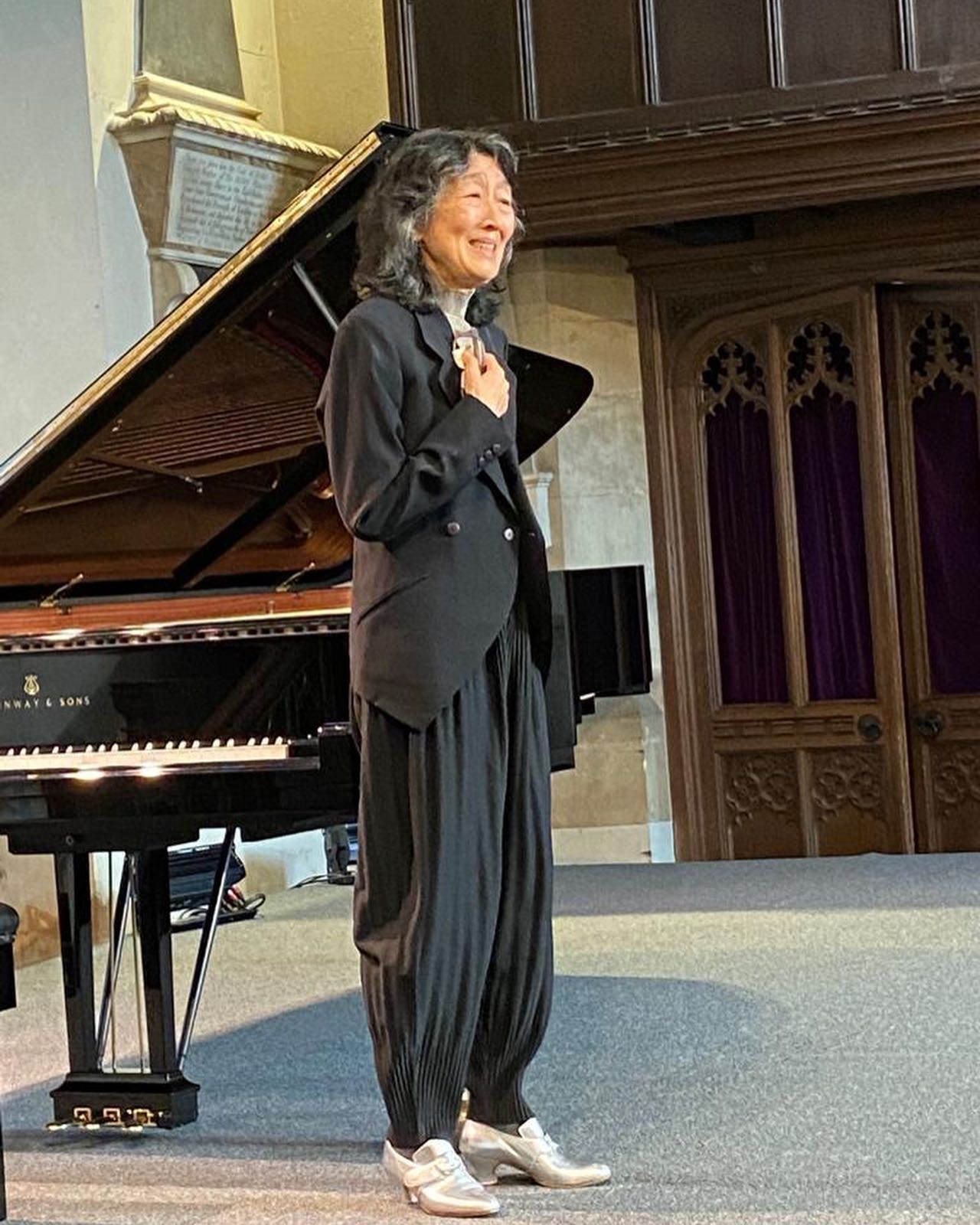
122117455_4474452515958519_7672388628339138679_oSchubert isn’t a showy composer, and nor is Uchida a showy performer. For this concert, she was dressed soberly in a dark fluid trouser suit, but there was a glint of showiness in her footwear – the most elegant silver shoes which lent a roccoco flair. Of course, the superb camera work allowed one to enjoy such details: to get up close and personal with the performer as the camera lighted on her  hands and face, revealing myriad expressions, often unconscious, and which perhaps offered a glimpse to the personality beyond the notes.



Petworth Festival continues until 1 November – more information

Photo credits

Decca/Justin Pumfrey

Petworth Festival

This site is free to access and ad-free, and takes many hours to research, write, and maintain. If you find joy and value in what I do, please consider making a donation to support the continuance of this site

Make A Donation

Schubert…..makes tears catch at the edge of my eyes; such fragile hope, such powerful emotions.

Ian McMillan, poet (via Twitter)

I was reminded of Ian McMillan’s quote while listening to the final lunchtime lockdown concert from London’s Wigmore Hall, a devastatingly beautiful, austerely unsentimental yet profoundly poignant rendering of Schubert’s late great song cycle Winterreise, performed by tenor Mark Padmore with pianist Mitsuko Uchida. Music so fitting for these strange days, with its narrative of loss, longing and separation.

Schubert is the composer for our corona times. Listening in isolation to performers playing to an empty hall, this acccount of isolation, its chill frequently tinged with the tenderest poignancy, seemed particularly appropriate. We are at home, but we are separate, living in our “bubbles”, unable to hug our family and friends, yet finding a sense of closeness, warmth and solace through music.

That same sense of isolation is evident in the Andantino from Schubert’s penultimate piano sonata, or the bare “horn call” first subject of the F minor Fantasie, D940, the fearful tread of the second movement of the Trio, D929, or the haunting opening measures of the unfinished sonata D 571. There are numerous other examples, of course….

In both the Andantino of D959 and the D929, it is those unexpected modulations into the major key, when the sun comes out to warm one’s skin and the chill of winter momentarily recedes, that make this music so magical, so breathtakingly extraordinary in its harmonic and emotional volte-faces. And then, only a few bars later, the melancholy and the sorrow flood back…. Often even more tragic in the major key, it is as if Schubert recognises the darkness visible, acknowledges and accepts it.

No one does chiaroscuro quite like Schubert: he mixes light and dark more subtly than any other composer and colours his musical palette with an elusive hue of mystery. Light and dark, levity and depth all reside in close proximity in Schubert’s music, perhaps even more so than in Mozart’s (and Mozart too is a master of light and shade).

I’ve loved Schubert’s music, and, more specifically, his later piano music since I was a child. I grew up listening to my parents’ recordings on LP of the ‘Trout’ Quintet, the Unfinished and ‘Great’ Symphonies, the string quartets, and The Shepherd on the Rock, which my father would play on the clarinet – and, when I became a more competent pianist, I would accompany him. When I was about 12, still a fairly novice pianist, my mother gave me an Edition Peters score of the Moments Musicaux and both sets of Impromptus – works which portray in perfect microcosm the breadth and variety of Schubert’s artistic vision and emotional landscape. I stumbled my way through these works, mostly too advanced for me at the time, though there were fragments of each which I could actually play. I took the A-flat Impromptu to my then teacher and instead of ticking me off for trying to learn music which was far in advance of my capabilities, she helped me find my way through the score. At this time, in the late 1970s, Schubert was regarded as the poor relation to Beethoven, his melodies sweet as sachertorte, his structures incoherent, and his emotions too introverted. Then I had little knowledge about Franz Schubert beyond the notes on the page, but there was definitely something that drew me to his unique soundworld….

Much as I love Beethoven, his gruffness and uncompromising spirit, as I’ve grown older I turn more and more to Schubert’s introspection, his tenderness and his intimacy. He speaks more softly, more personally than Beethoven for me. His unmatched gift for melody enables him to spin the agony of desire, melancholy and sorrow, and the joy of living  – and a whole gamut of emotions in between. He has a remarkable ability to switch rapidly between terror and lyricism, from the darkly tragic and melancholic to golden transcendence or joyous other-worldliness, all rendered in music of incredible, almost revolutionary inventiveness. Often this is achieved through the most miraculous modulations, an unexpected sonic shift and, for me, as a synaesthete who sees the musical keys in colour, a completely new luminosity.

His other great skill is in managing rests and pauses. Silences abound, freighted with poetic imagination and who knows what, suspending time and offering pause for reflection, while also clarifying the structural expansiveness of the music, his “heavenly length”. In addition, Schubert’s use of dynamics is often ‘psychological’ rather than purely physical, suggesting an intensity of feeling rather than volume of sound. As pianists, we shouldn’t play Schubert as if you would Beethoven (though some do!). Even in his grandest gestures, for example the fff passages in the first movement of the Sonata in G, D894, there’s a restraint. His generous use of pianissimo in particular creates an ethereality in his music as if hovering between different states of mind.

In those moments, his music makes you feel as if you are the last person in the universe…..

How does one explain Schubert? The simple answer is – one can’t.

Steven Isserlis, cellist