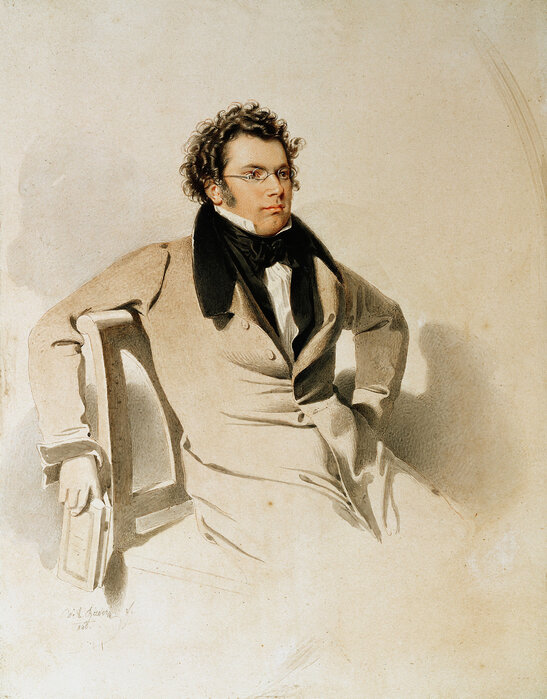
“Schubert’s music is the most human that I know.” – Sir András Schiff, pianist

I will never quite have the words to express what Schubert’s music has meant to me…and I will never stop looking for them. His ability to convey loneliness — and console in its wake — is perhaps his most ineffable quality…” – Jonathan Biss, pianist

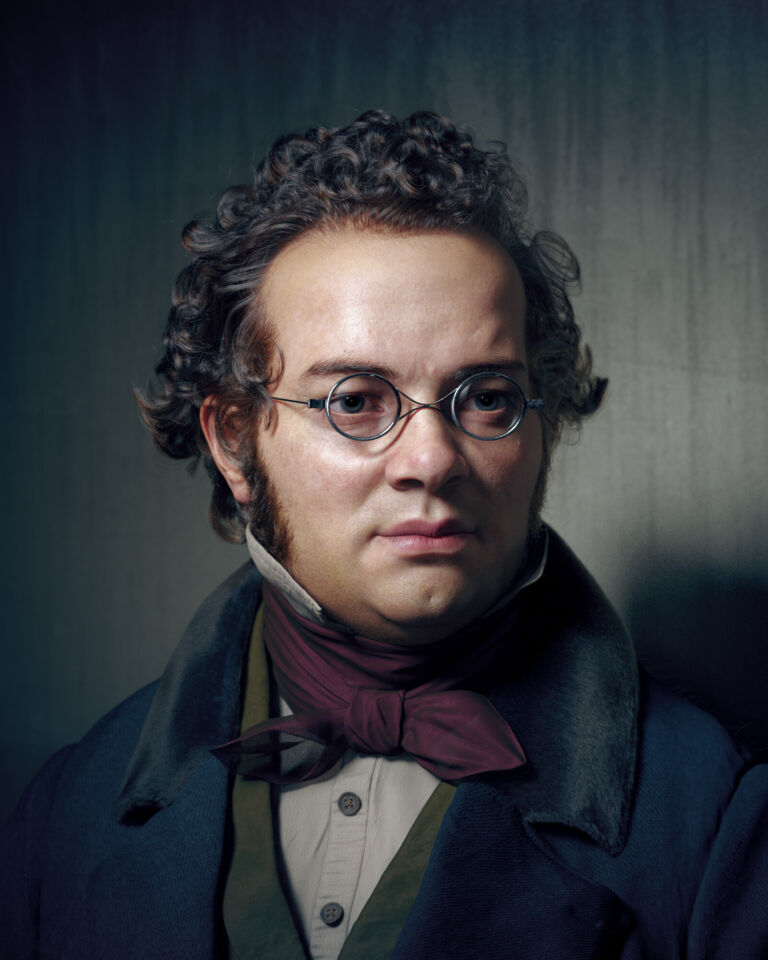
Image credit Hadi Karimi

Schubert’s music provides the bridge between the classical and romantic eras. Yet his music was not well known during his lifetime outside of Schubert’s own intimate circle of friends. His piano music was largely neglected right up to the early part of the 20th century when it was given the attention it deserved by pianists such as Artur Schnabel, who can be partly credited for introducing it into the regular concert repertoire with pieces such as the late piano sonatas, the two sets of Impromptus, the Moments Musicaux, and the “Wanderer fantasie”. Today, these works are staples of the pianist’s repertoire, much loved by performers and audiences alike.

Schubert’s musical sensibilities and invention were inspired by the human voice – he wrote over 600 songs – and lyrical melody and long-spung cantabile lines are distinctive elements of all his music.

For the pianist, his music remains an interpretational challenge and the best Schubert players have absorbed the essentials from his songs and chamber music. Because of his proximity, and admiration for Beethoven, there is a tendency among some players to approach his music like Beethoven’s; but Schubert is a composer who speaks more quietly and introspectively, even in his more declamatory moments. The skill in playing his music well is a sensitivity to these aspects without sentimentality.

British pianist Clifford Curzon (1907-1982) had a special affinity for Schubert, fostered by his studies with Artur Schnabel. His performance of Schubert’s last sonata, the D960 in B-flat, is considered by many to be one of the greatest performances ever. In this recording, his concentration and nervous intensity are so palpable it is almost like eavesdropping.

Clifford Curzon Plays Schubert’s Piano Sonata in B-flat major, D.960

A protégé of the great Russian pianist Sviatoslav Richter, himself a fine Schubert player, Russian pianist Elisabeth Leonskaja is noted for her performances and recordings of Schubert’s piano music. As an artist, she is unfailingly intelligent, tasteful and musical, whose performances display great refinement, romantic fervour, delicacy, and power, all underpinned by commanding technique.

Franz Schubert: Fantasy in C Major, Op. 15, D. 760, “Wandererfantasie” – Allegro con fuoco ma non troppo (Elisabeth Leonskaja, piano)

No appraisal of Schubert pianists would be complete with András Schiff, who really honours every work, and who has recorded the piano music on Schubert-era instruments, offering listeners an intriguing insight into the range of colours and nuances afforded by Schubert’s writing. Always fastidious in his close attention to the details of the score, Schiff really gets to the heart, soul, and fundamental humanity of Schubert in his playing and brings a compelling intimacy to his performances, even in the largest of concert halls.

The great Romanian pianist Radu Lupu, who died in April 2022, was described by Gramophone magazine as “A lyricist in a thousand”, who placed Schubert’s music at the centre of his repertoire throughout his career. Sensitive to Schubert’s mercurial moods, his playing demonstrates immense control, subtlety of shading and dynamic nuance, an almost ethereal luminosity of sound, and a myriad range of colours which fully reveals Schubert’s inventiveness and imagination, the rich seam of his ideas, and his forward vision.

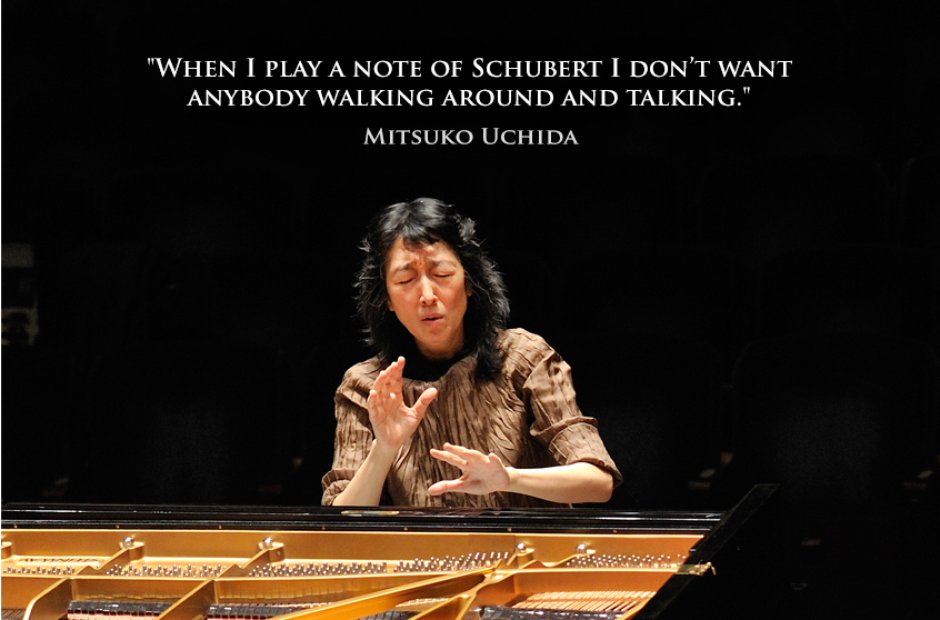
Like András Schiff, Mitsuko Uchida has an unerring ability to bring an intimacy and sense of a conversation to her performances of Schubert’s music, and she does so with clarity, commitment, and a clear sense of the narrative line, the lightness and lyricism, and also the roughness in his music. Uchida is very alert to Schubert’s idiosyncrasies, his chiaruscuro and elusive, shifting moods: beauty and delicacy, poignancy and loneliness abound in her performances of this composer whose music has been a lifelong presence for her.

Other fine Schubert players to explore include Shura Cherkassy, Rudolf Firkusny, Walter Gieseking, Rudolf Serkin, Wilhelm Kempf, Paul Lewis, Maria João Pires, Alexander Lonquich, Imogen Cooper, Krystian Zimerman, Murray Perahia, and of course Alfred Brendel. Of the younger generation, recent discoveries include Inon Barnatan, Yehuda Inbar, Pavel Kolesnikov and Samson Tsoy

An earlier version of this article appeared on the InterludeHK website


Support The Cross-Eyed Pianist

This site is free to access and ad-free, and takes many hours to research, write, and maintain. If you find joy and value in what I do, why not

Guest review by Adrian Ainsworth


Edna Stern’s latest release is a fascinating find. Beautifully performed, for sure, but those performances are led by an intriguing, impeccably realised idea.

The pieces on this disc are well-loved and oft-recorded: the first four ‘Impromptus’ (D899) and the ‘Moments Musicaux’ (D780). But Stern, following the courage of her convictions, has arrived at a new way of hearing them. Or perhaps, more accurately, a very old one.

The artist’s sleeve-notes explain the background at length, and if you buy this album, you’ll find they are an excellent read. So I will just try to summarise here. Broadly, Stern became disenchanted with modern digital recording – in particular, the facility to edit performances into ‘perfection’. To the non-expert listener, what can sound like a seamlessly executed rendition of a work is sometimes a painstakingly finessed collage from multiple takes. Flashes of divine inspiration that don’t conveniently occur within the same run-through are made to do so, after the fact.

This came to a head, Stern tells us, when working with a sound engineer who produced an edit that was stitched together to the point where she could barely recognise her own interpretation. For this project, then, each of the ten pieces is represented by a single, intact take. Of course, Stern recorded them several times in order to choose her favourite, but no artificial mix-and-match took place. She picked the versions she found the most interesting or appealing, if not necessarily the most accurate: the integrity and spirit of the performance outweighed the occasional stray note or tempo.

One of the reasons I enjoyed Stern’s booklet essay so much is the extremity of her position. While she acknowledges the value and skills of everyone involved, she calls that game-changing edit a ‘monster’, and likens the studio correction of mistakes to offering a performance from a robot over a human. It’s forcefully argued stuff.

And thought-provoking. Schubert-lovers who are tripping over Impromptu recordings – anyone with shelves (or hard-drives) full of versions of their favourite works: what are we looking for? I realise there’s an element for many of seeking an ideal version that matches the one in their head, of looking for the ‘best’… and I don’t envy critics who have to make these sorts of comparisons all the time. But what it’s really about, surely, is hearing the works you love ‘renewed’, enjoying the surprise and delight of seemingly infinite reinterpretations of the same music.

You could argue that, most of the time, these differences survive modern recording techniques. What must be Stern’s worst nightmare – correcting every error or deviation from the score so that every pianist’s Schubert CD comes out identical to all the others – hasn’t come to pass. But by removing the safety net, Stern has thrown down a gauntlet of sorts – will other classical musicians follow suit and subject their unvarnished playing to scrutiny?

I use the word ‘classical’ here deliberately. Pristine clarity may be the common goal in this genre, but over on the rock side of the fence, many acts have often wanted to go back to the source, in their search for authenticity. There’s the huge number of bands who went through the ‘Unplugged’ rite of passage in the 90s. There are producers like Steve Albini, who seems to carry out the intensive labour upfront, listening to his clients and finding exactly the right place for the microphones in the room – then documenting the resulting live sound, with staggering results. There’s the formidable roster of groups – perhaps most famously, the White Stripes – who have made records at London’s Toe Rag Studios, renowned for their totally analogue set-up.

There is a rock-snob trap here, of course: “when it’s me, it’s authenticity – when it’s you, it’s nostalgia”. But Stern is totally alive to this, seeking to recapture the sound of the recordings she loved most during her early development. Has she succeeded?

When you start ‘Schubert on tape’, you could be forgiven for thinking you’d just lowered the stylus on to vinyl, or pressed the clunky play button on a cassette player. You hear the room before the piano. Instead of a CD’s usual dead silence, you hear an ambient noise that I instantly want to describe as ‘warmth’: it’s not disruptive, there’s no hiss or clicking, just a hushed presence that replaces any potential dryness or sterility.

There’s no doubt about it. I was hit by two waves of entirely pleasurable nostalgia. One, true: my youth, playing records and tapes in my room. Two, false: the feeling evoked by Stern of being at a Schubertiade, hearing the composer perform his work in intimate, informal surroundings.

Because once the music starts, you are there in the room (especially if using a decent pair of headphones). You can hear some of the pedal work – towards the end of Impromptu No. 4, for example, there’s a passage where this almost becomes a percussion feature – and the rise and fall of the keys, even (I think) accompanied once or twice by the click of a fingernail. This sustained, audible ‘physicality’ really brings home the effort involved in a good performance and, in the salon of the imagination, makes you feel genuinely close to the player.

I think there is also a pleasing effect on the dynamics. I was reminded of something the rock writer David Hepworth said on a podcast, when discussing the merits of vinyl over CD – almost his instant response was: “The drums don’t hurt.” Analogue recording as evidenced here has a generosity of scope – I can hear that Stern is across every pp and ff, and all points between, but the sound never becomes a bang or a whimper – it’s all accommodated in the bandwidth.

We hear chiming, keening top notes and a gorgeous bass rumble – particularly in, say, Impromptu No. 2 or Moments Musicaux No. 2 – reminiscent of a fortepiano (I was interested to read that Stern also plays this instrument). The dexterity and sensitivity of Stern’s playing is still immaculately conveyed, shining through – while benefiting from – the tape’s ambience.

As a result, I think Stern’s particular strengths and this style of recording are perfectly aligned. A successful experiment, then – I look forward to seeing the research continue, and hearing which composer becomes its next subject.

Schubert on Tape is available on the Orchid Classics label

This review first appeared on sister site ArtMuseLondon.com


105491206_266430451442172_334752493078903436_nAdrian Ainsworth is, by day, a copywriter specialising in plain language communications about finance and benefits. However, he spends the rest of the time consuming as much music, live or recorded, as possible – then writing about it, often on Specs, his slightly erratic ‘cultural diary’ containing thought pieces, performance and exhibition write-ups, playlists, and even a spot of light photography. He has a particular interest in art song and opera… and a general interest in everything else.
Twitter @Adrian_Specs

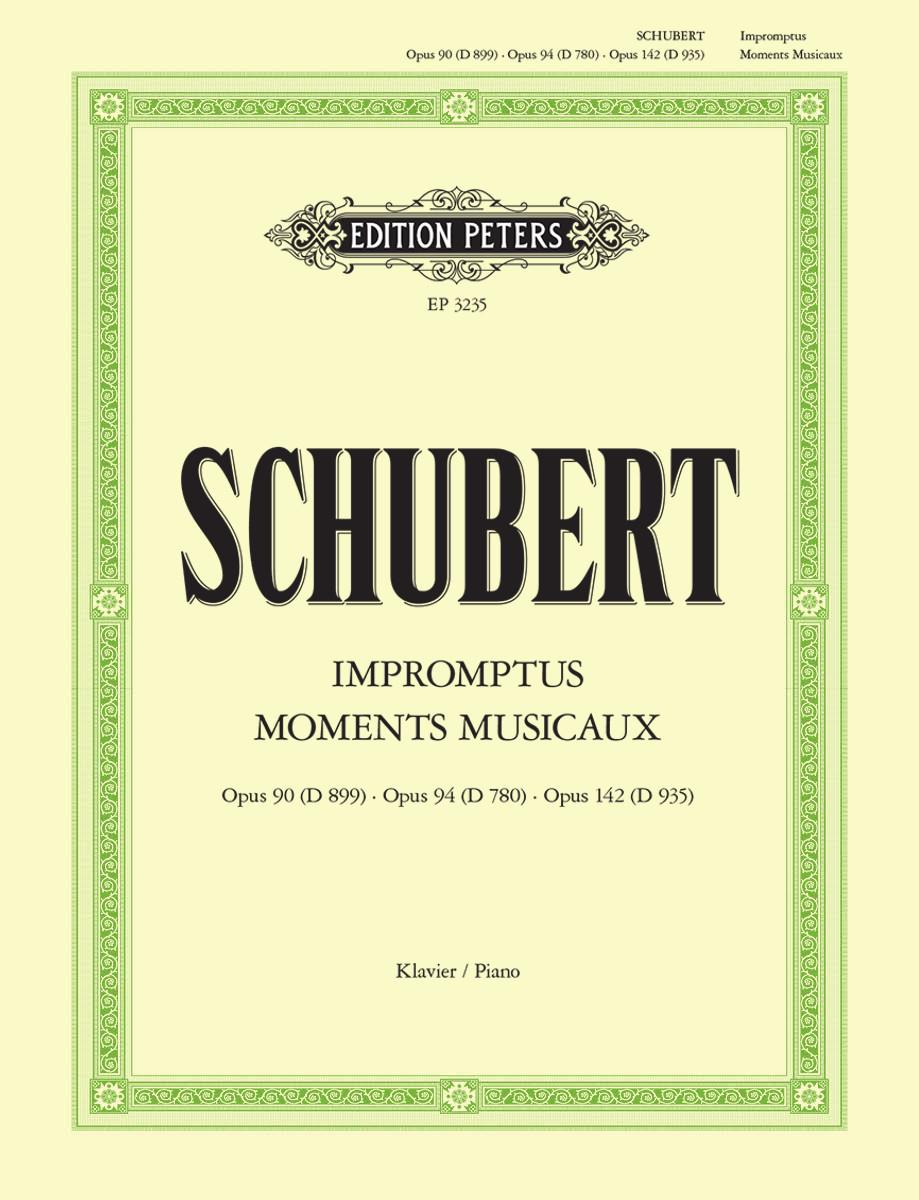
Schubert editionPublished in 1828, the year Schubert died, and written between 1823 and 1828, the six Moments Musicaux (literally “musical moments”) are amongst Schubert’s best-loved works for piano and are as accessible to the competent amateur pianist as they are to the concert artist. They are akin to Beethoven’s Bagatelles in their brevity and quixotic character. I first encountered these pieces in my early teens when my mother bought me an Edition Peters copy of the two sets of Impromptus with the Moments Musicaux sandwiched between them; they, and the Impromptus, have remained favourites of mine ever since.



These fleeting pieces, all lasting less than 10 minutes and one just over a minute, were written to satisfy the Viennese public’s growing appetite for Albumblätter – literally “album leaves” – short pieces which could be played and enjoyed at home. It is quite likely that Schubert played them himself at informal musical gatherings with his friends. They may be brief but they are rich in character and display Schubert’s many moods, the paradox of Schubert’s life and indeed of all human existence and the wonder of being alive – from happiness and hope to profound introspection and poignancy, intimacy and tenderness, terror, rage and desolation.

What I find so wonderful about the Moments Musicaux is that they encapsulate Schubert’s compositional style and musical personality in microcosm. The name “Moments Musicaux” suggests something improvisatory or unpremeditated, but like the piano sonatas and Impromptus these are carefully structured works (usually in ABA/Ternary form). Yet Schubert’s daring use of harmony, and unexpected or enigmatic modulations, combined with a subtly shifting dynamic palette, disrupt the usual established continuity of form, creating music which is intense, dramatic and emotionally profound. The Moments Musicaux are supreme examples of Schubert’s ability to suggest the subtlest nuances of emotion which shift and alter, literally in a moment. Even in their bigger, louder gestures, these pieces are intimate, almost confidential in tone, private and mysterious, their kaleidoscopic, fleeting yet profound emotions revealed in the apparent simplicity of the music.

The first Moment, in C major, opens with a sweetly bucolic but also rather haunting fanfare, and within three bars the mood has shifted with the introduction of c minor chords. It is these harmonic shifts which give the music a tender wistfulness, while the recurring triplets infuse a sense of playfulness, even in the minor key. The switch between tonalities creates emotional drama and often Schubert is at his most poignant when writing in the major key.

The second in seemingly serene A flat major is structured ABABA, with the A section varied each time it returns. Despite its Sicilienne rhythm, the A section is suffused with tragedy, reinforced by the circular form and repeating themes.  Again, unexpected harmonies and astonishing modulations give the music a dramatic intensity, and the f-sharp minor sections are painfully sad, especially the second one, the plaintive melody now magnified with accented chords. The return of the A-flat major section is a momentary consolation before the shadow of sadness descends again, though without any sense of regret.

The third (f minor) by contrast is a naive dance, originally published as an Air Russe, and in ABA (ternary) form with a coda. Its sprightly character, highlighted by accents, staccato and grace notes, is akin to the ballet music for Rosamunde and the Marche Militaire. The constant oscillation between minor and major confirms the folksy, playful nature of this music.

The fourth (c-sharp minor) is the longest of the set, again scored in ternary form with a coda. The A sections are a perpetuum mobile, with a flavour of a Baroque dance in the RH semi-quavers and stomping bass quavers. Although marked Moderato, its mood is restless. A single bar’s rest signals the B section. Dreamy, lilting and intimate, the sense of release is palpable in this rather Bohemian trio. The opening material returns at bar 114 but there is a 2-bar recollection of the middle section in the coda, like a fleeting memory.

The fifth (f minor) is the most energetic of the set. Like the previous piece, it is also in ABA form and is marked by an emphatic rhythmic motif of one long note (crotchet) and two short ones (two quavers), reinforced by accents on the first beat of the bar and abrupt dynamic shifts. There is no room for a consoling middle section in this galloping music.

The final moment (A flat major) is one of the pieces I learnt as a child without appreciating its emotional depth. Coming back to it in my 50s, and having spent several years immersed in one of Schubert’s late piano sonatas, this music encapsulates Schubert’s extraordinary soundworld in miniature form. Like the first moment it is a minuet and trio (in D flat), and once again daring, amibiguous harmonies, unexpected modulations and graduated dynamics,  together with the use of rests, create a dramatic intensity. Here tiny gestures speak eloquently, and a single line is freighted with emotion. The closing cadence is utterly desolate, its bleakness reinforced by the unharmonized A flat in double octaves.

Recommended recording: Maria Joao Pires (Deutsche Grammophon, 2014)


Header image:

Schubert at the Piano – Gustav Klimt (1899)


The musical Fantasy (or Fantasia or Fantasie) has its roots in improvisation and rarely follows a strict musical structure (such as Sonata or Ternary form). In this respect the Fantasy is related to the Impromptu (a genre favoured by Schubert). The term was first applied to music in the 16th century and suggested an imaginative musical idea rather than a specific compositional structure. The Fantasia became popular in the Baroque period, its form offering scope for free invention and musical imagination with alternating sections of differently textured music – demanding toccata-like/virtuosic passages, slow recitative often embellished with many ornaments, improvisation, free modulation, deceptive cadences or fermata, and varied characters and mood. In a typical Fantasy, the composer sets out a theme at the opening, or near the beginning, and the remainder of the music is a musing or musings on the theme, full of drama, imagination and expression.

It is principally in improvisations or fantasias that the keyboardist can best master the feelings of his audience – CPE Bach

The “Wanderer” fantasy – one of Schubert’s most well-known and frequently performed works, and one of the greatest pieces in the entire piano repertoire – takes the fantasy form to another place, developing an idea (it is based on one of his own songs) to create a substantial work in four sections (or one long movement), linked by a unifying theme on which all four movements are based. Structurally, the Wanderer is akin to traditional sonata form: the first section sets out of the main theme (an “exposition” as it were), the second, “slow movement” section acts as a development, the third section – a scherzo and trio – is the recapitulation; and the final section acts as a coda, which reinforces the tonic (C). Throughout the work, thematic and rhythmical “cross-references” create a sense of unity between the sections (a device Schubert was to use again in his late piano sonatas). The final Allegro section is unquestionably a “finale”, containing the most obviously virtuosic music of the entire work and exploiting the full sonic range of the instrument (for an interesting exploration of this “sonic range”, I recommend Alexander Melnikov’s 2018 recording of the Wanderer on an 1820’s Alois Graff fortepiano).

But the Wanderer breaks free of classical disciplines in that it is designed to be performed without a break between the sections. In addition, the repetition and gradual variation of motivic elements, the daring use of harmonies and “remote” keys, the bold symphonic sweep of this work, and its dramatic power and emotional tension mark Schubert as a “romantic progressive” whose influence was clear in the works, for example, of Liszt (his B-minor Sonata and E-flat Concerto) and Richard Strauss (symphonic poems). The principal challenge for the pianist, in addition to the learning and upkeep of all those notes, lies in maintaining a unifying narrative thread and an underlying sense of forward propulsion throughout the whole work.

Schubert’s earlier, rarely-performed ‘Grazer’ fantasy, also in C, is closer to the Baroque and Classical model, yet it laid the foundations for the Wanderer and the later Fantasie in f minor for piano four-hands, D940. The provenance of this work is disputed (a copy whose title page was written by Schubert’s friend Joseph Huttenbrenner was discovered in the 1960s in the Graz estate of Rudolph von Weis-Ostborn). It is thought to have been composed around 1818 and as no autograph exists, its authenticity is still in doubt. However, there are clear “Schubertian” elements which closely resemble other works by Schubert, such scalic and chromatic runs, Polonaise rhythms, the mercurial emotional landscape of the work and varied colourings, and, perhaps most obviously, the beautiful Bel Canto opening melody, fragments of which recur throughout the work in different guises and keys – a device which is also used in the Wanderer and the D940. The lyrical opening theme is fully reiterated at the end, dissolving into a gentle cadence of quiet nostalgia, which in itself looks forward to the hushed, plaintive ending of the Fantasy in f minor, D940.

The most unexpected transition in the Grazer Fantasy occurs at bar 55: after the beautiful opening section – a simple but highly lyrical melody in octaves in the right hand over an extended Alberti bass which fades into a delicate pianissimo passage – a fermata following a brief descending chromatic scale signals the change. What is so magical is the shift to F-sharp major and the Alla Pollaca (polonaise) section, which despite the quiet dynamic range, is sprightly and bright in mood. This is followed by the first of several startlingly dramatic passages before the Polonaise returns. These seemingly casual, almost improvisatory, yet highly virtuosic sections employ devices found in Mozart’s keyboard fantasies such as chromatic passages in widely contrasting registers and arpeggiated figures in the left hand. Rather than linking sections, they feel more like virtuoso interludes, redolent of similar passages in particular in Mozart’s Fantasy in c minor, K475, and they create a continual sense of restlessness and drama, only briefly relieved by the fragmentary return of the opening melody. Calm is restored in bar 281 with the restatement of the opening theme, lightly embellished with runs and trills.

In the Grazer fantasy Schubert finds much of emotional depth, expression and changes of mood, which he was later to put to even greater effect and intensity in the f-minor Fantasie for four hands, D940.

Rarely performed today (I have never heard this work in concert myself), the Grazer fantasy was given its premiere by Lili Kraus shortly after it was discovered, and subsequently recorded by her (Odyssey, 1970). Other notable recordings include James Lisney (through whose 2006 recording I first discovered this work), Michael Endres (Oehms, 2009) and Paul Berkowitz (Meridian, 2017). The score is published by Barenreiter.


Here is Paul Berkowitz, who has lived with Schubert’s music for many years. His reading is reading is rich, romantic and glamorous.