I create in order to learn; there has not ever been a piece of music that I have composed without the wish to discover something and develop my artistry.
While it is, I believe, observable in all my works, it is most obvious in Portraits, and the soon to be released Landscapes.
With both projects, I intend — through microscopic study — to portrait composers that I have found influential or with whom I have spent considerable musical time. My creative approach consists of identifying the subjective elements that define these composers and, through a process of translation, make them mine.
Through a broad selection that spans over each main period of Western classical music, I have selected Couperin, Vivaldi, Mozart, Schubert, Mendelssohn, Debussy, Glass and Stravinsky. Some influences are quite noticeable in my works already, some much less, and some will perhaps become more prominent as I evolve musically.
Let’s take “Vienna 2”, the first of the eight pieces of Landscapes that I have recorded and released, and examine how I have composed it and what the result has been.
The first phase of creation for this piece is one of learning; through a selection of some of Schubert’s motifs, and rhythmic, melodic or harmonic cells, I analyse, transcribe and identify the elements that make the music so interesting to me. I immerse myself in the composer’s world in order to bring the personality traits out and understand his creative process. It is similar to the work of the archaeologist, who brushes the dust and reveals the keys and symbols. It is a process of listening, reading and copying.
The second phase is then an opportunity for translation and creation. It is how I adapt Schubert’s vocabulary to mine, how I reappropriate his sentences and make them mine.
This last phase is crucial for me as it is the one that decides whether the piece will sound like a simple pastiche, or whether it will have the flavours of Schubert’s music, while being truly my own musical DNA. It might translate into improvising over the elements until something emerges or an intellectual process of shuffling the pieces and structuring new elements together.
What I find truly interesting with such an approach, aside from the enrichment, is the end result. What I see as being very much Schubert’s words out of my mouth has actually become my own expression. Had I not mentioned Schubert, “Vienna 2” might have been perceived very differently, and the secret would have been intact.
When Richter wrote Infra, a large inspiration was also Schubert’s, and his Impromptus, yet although the musical material is very similar, it is no one else but Richter’s works.
Hopefully, I can say the same about “Vienna 2”, Portraits and Landscapes. Ultimately, I feel richer.
Doug Thomas is a French composer and artist based in London. He also publishes articles, interviews and reviews, and is a regular contributor to this site and its sister site ArtMuseLondon.
Sylvia is a music-lover and The Cross-Eyed Pianist’s most longstanding reader
Dear Fran,
Your blog’s 10th anniversary reminded me that I’ve been meaning to send you a musical message. Lockdown has meant a lot more listening time which, though solitary, has been a great pleasure.
As you know, I have a tendency to have mini love affairs with selected composers, meaning that temporarily I listen to little else. You’ll remember my ‘Chopin period,’ I’m sure. Before that there was Ravel. And Mendelssohn’s chamber music. Bach puts in an appearance regularly, as does Haydn, who always lifts my spirits. And so on.
Anyway, lately it’s been all about Schubert’s piano sonatas for me. Not necessarily the final three, but early and middle ones. Years ago, I bought a 7-CD set of them, played by Ingrid Haebler. The earliest sonata on there is no. 3, and already he’s modulating in a way that reminds me of a tightrope walker without a safety net! It makes me smile to hear him tie himself up in knots, only to untie them a moment later, as if by magic.
Beethoven famously remarked that the piano “couldn’t sing,” but I think Schubert put paid to that idea. (And Mendelssohn.) If you’re able, listen to the slow movement of Schubert’s sonata in B major (D.575). It’s a song. It IS a song. A beautiful, sad one.
On the subject of whether the piano sings or not, I have never forgotten the study day that Robert Levin presented at the British Museum about the evolution of the piano. Focusing on the period that is his forte (sorry, pun), late 18th/early 19th century, he made the very interesting point that composers like Mozart and Haydn didn’t expect the piano to sing, they wanted it to SPEAK, in the manner of well-argued discourse or civilised conversation.
I was reminded of this in Paris in February, where I picked up a free copy of the New York Times in our hotel, and read an article about John Eliot Gardiner entitled “Treating Beethoven as a Revolutionary.” It was about rehearsing Beethoven’s symphonies with his Orchestre Révolutionnaire et Romantique in connection with Beethoven 250 (I expect those performances didn’t happen, sadly), and he said something that really struck me:
“Another thing I think is important [as well as the clarity and exhilaration you can achieve with original instruments] is to encourage the players to “speak” their lines, so that each phrase emerges as a kind of sentence made up of words that they articulate with consonants as well as vowels. Beethoven, it seems to me, is asking for declaimed narration. He conceives of his symphonies as developing and dramatic narratives, and that, in turn, demands an acutely conscious declamatory approach from the players.”
So interesting! I do often think of music as a language, and individual composers’ styles as their ‘handwriting.’ This wordless language has its own structure, vocabulary, grammar—none more so than the music composed around the time of the Enlightenment. Mozart and Haydn spoke it fluently and effortlessly, and we as listeners need to be familiar with the rules of the language before we can experience the thrill that comes when we hear them broken.
Beethoven and Schubert – both voracious readers – inherited this formal language. But I think they became less and less interested in the discourse/conversation aspect, focusing rather more on what Gardiner calls “dramatic narratives.”
Lockdown has afforded me time to think more about the music I’m listening to, which is one of the many good things that have come out of it. A good friend and I keep marvelling at how unconstrained we’ve felt (I know, a contradiction!), and how the extra time we’ve had has not been a burden. Rather, it’s been a gift.
I’ll leave you on that happy note.
With love and warmest congratulations on The Cross-Eyed Pianist’s tenth birthday,
Sylvia
A note from The Cross-Eyed Pianist:
Sylvia is a good friend of mine and, when she lived in London, a very keen concert-goer, especially at the Wigmore Hall. It was Sylvia who encouraged me to start going to classical concerts again, when my son was at an age when he could be left more happily with a babysitter, and we have enjoyed many memorable concerts together. Sylvia was this blog’s first reader and remains a loyal supporter (and eagle-eyed proof-reader!).
The Cross-Eyed Pianist is free to access and ad-free, and takes many hours every month to research, write, and maintain. If you find joy and value in what I do, please consider making a donation to support the continuance of the site
Published in 1828, the year Schubert died, and written between 1823 and 1828, the six Moments Musicaux (literally “musical moments”) are amongst Schubert’s best-loved works for piano and are as accessible to the competent amateur pianist as they are to the concert artist. They are akin to Beethoven’s Bagatelles in their brevity and quixotic character. I first encountered these pieces in my early teens when my mother bought me an Edition Peters copy of the two sets of Impromptus with the Moments Musicaux sandwiched between them; they, and the Impromptus, have remained favourites of mine ever since.
These fleeting pieces, all lasting less than 10 minutes and one just over a minute, were written to satisfy the Viennese public’s growing appetite for Albumblätter – literally “album leaves” – short pieces which could be played and enjoyed at home. It is quite likely that Schubert played them himself at informal musical gatherings with his friends. They may be brief but they are rich in character and display Schubert’s many moods, the paradox of Schubert’s life and indeed of all human existence and the wonder of being alive – from happiness and hope to profound introspection and poignancy, intimacy and tenderness, terror, rage and desolation.
What I find so wonderful about the Moments Musicaux is that they encapsulate Schubert’s compositional style and musical personality in microcosm. The name “Moments Musicaux” suggests something improvisatory or unpremeditated, but like the piano sonatas and Impromptus these are carefully structured works (usually in ABA/Ternary form). Yet Schubert’s daring use of harmony, and unexpected or enigmatic modulations, combined with a subtly shifting dynamic palette, disrupt the usual established continuity of form, creating music which is intense, dramatic and emotionally profound. The Moments Musicaux are supreme examples of Schubert’s ability to suggest the subtlest nuances of emotion which shift and alter, literally in a moment. Even in their bigger, louder gestures, these pieces are intimate, almost confidential in tone, private and mysterious, their kaleidoscopic, fleeting yet profound emotions revealed in the apparent simplicity of the music.
The first Moment, in C major, opens with a sweetly bucolic but also rather haunting fanfare, and within three bars the mood has shifted with the introduction of c minor chords. It is these harmonic shifts which give the music a tender wistfulness, while the recurring triplets infuse a sense of playfulness, even in the minor key. The switch between tonalities creates emotional drama and often Schubert is at his most poignant when writing in the major key.
The second in seemingly serene A flat major is structured ABABA, with the A section varied each time it returns. Despite its Sicilienne rhythm, the A section is suffused with tragedy, reinforced by the circular form and repeating themes. Again, unexpected harmonies and astonishing modulations give the music a dramatic intensity, and the f-sharp minor sections are painfully sad, especially the second one, the plaintive melody now magnified with accented chords. The return of the A-flat major section is a momentary consolation before the shadow of sadness descends again, though without any sense of regret.
The third (f minor) by contrast is a naive dance, originally published as an Air Russe, and in ABA (ternary) form with a coda. Its sprightly character, highlighted by accents, staccato and grace notes, is akin to the ballet music for Rosamunde and the Marche Militaire. The constant oscillation between minor and major confirms the folksy, playful nature of this music.
The fourth (c-sharp minor) is the longest of the set, again scored in ternary form with a coda. The A sections are a perpetuum mobile, with a flavour of a Baroque dance in the RH semi-quavers and stomping bass quavers. Although marked Moderato, its mood is restless. A single bar’s rest signals the B section. Dreamy, lilting and intimate, the sense of release is palpable in this rather Bohemian trio. The opening material returns at bar 114 but there is a 2-bar recollection of the middle section in the coda, like a fleeting memory.
The fifth (f minor) is the most energetic of the set. Like the previous piece, it is also in ABA form and is marked by an emphatic rhythmic motif of one long note (crotchet) and two short ones (two quavers), reinforced by accents on the first beat of the bar and abrupt dynamic shifts. There is no room for a consoling middle section in this galloping music.
The final moment (A flat major) is one of the pieces I learnt as a child without appreciating its emotional depth. Coming back to it in my 50s, and having spent several years immersed in one of Schubert’s late piano sonatas, this music encapsulates Schubert’s extraordinary soundworld in miniature form. Like the first moment it is a minuet and trio (in D flat), and once again daring, amibiguous harmonies, unexpected modulations and graduated dynamics, together with the use of rests, create a dramatic intensity. Here tiny gestures speak eloquently, and a single line is freighted with emotion. The closing cadence is utterly desolate, its bleakness reinforced by the unharmonized A flat in double octaves.
Recommended recording: Maria Joao Pires (Deutsche Grammophon, 2014)
The Stakhanovite work ethic among young piano students in China shows no sign of fading as their tiny fingers fly up and down the keyboard ten or twelve hours a day. Competitions are welcoming the new Asian talent and European concert halls tend to fill with admiring fans. Some of us (including me) don’t quite know what to make of it.
It’s not all about Lang Lang, Yuja Wang or Yundi Li. Potential new superstars are emerging each year. Brace yourself for more in the years ahead. Some 20 million Chinese are said to be practicing madly as our European and American kids play with their smart phones and iPads.
Two contrasting Chinese women have caught my eye (no, not like that …) recently and promise to leave indelible marks. They both have worked hard to get noticed and – contrary to myth — they are capable of absorbing and mastering the Western canon.
Ran Jia, the Shanghai-born daughter of an established composer, has become a recognised Schubert interpreter. And Zhu Xiao-Mei has adopted the Goldberg Variations as virtually her own. Music without borders is no longer a cliché.
Elegant, poised and deeply musical, Ran Jia has brought a new freshness to Schubert, a phenomenal achievement considering how often the piano sonatas have been performed by the greatest pianists of the past 75 years. The music press in Germany, where she played all eleven works in a four-day marathon last year, christened her “the challenger”.
And Xiao Mei, a battered survivor of five years in the labour camps of Mao’s China, recovered her piano training and managed to escape, first to Hong Kong, then Los Angeles, then Boston, and finally Paris. It’s difficult to read her book “The Secret Piano” without welling up.
In one passage, she describes the beginning of her career at Beijing Conservatory.
“We worked at the piano like galley slaves, in little closed rooms whose doors were fitted with a small, round window (for monitors to check up on students)… The school’s leaders encouraged rivalry between students. The best pupils not only had the right to more classes but also to better food.”
Living conditions were Spartan. “At night, forty of us slept in the same dormitory hall. Bunk beds were placed next to each other so closely there was just enough space to move about the room. The atmosphere was suffocating.”
And her first serious teacher, Pan Yiming, was “unrelenting”, she recalls. He ran her through the Hanon virtuoso book plus the main volumes of Czerny, Cramer, Moszkowski and Brahms, plus Bach’s “Inventions” and the Well-Tempered Clavier”. He told her, “I want you to play all this by heart. From now on, for each lesson, you must play a piece by Bach and two etudes from memory with no mistakes.”
By a circuitous route she ended up at the New England Conservatory in Boston, studying under Gabriel Chodos who had trained under a student of Arthur Schnabel. “Professor Chodos was forbidding. With him, it was a life-or-death struggle. After every class, I wanted to quit the piano.”
When he assigned the Schumann “Davidsbüldlertänze”, he warned her it would be the “ultimate test … Once again, he was right.”
She saves her greatest enthusiasm for the Goldbergs, which she says “took over my existence – it contained all one needed to live.” The variations, she says, “are all about flow … this is what makes Bach’s music so soothing for its listeners.”
Her mastery is evident in this sample of her Goldbergs:
Ms. Jia rejects talk of competitive striving among the Chinese. “My dream is simple,” she told me in an interview, “to share my musical inspiration deep down in my heart with the audience …” To her, Schubert’s music “dances between our world and heaven”.
Her modest persona comes as a welcome change in the face of the flamboyance of other young Asian players seeking to distinguish themselves through hair-styles or performance antics. She may well be the next Chinese superstar, a versatile player who thoroughly understands her music and performs it for us without excesses.
One American critic noted that onstage she simply and calmly “looked as though she were thoroughly enjoying herself, frequently smiling at Schubert’s more engaging nuances”.
I asked her about the growing criticism of young pianists who place technique above musicality. Not wishing to join the polemic, she agreed however that “music is not only related to the physical action but also the knowledge, emotion and the depth of the spirit behind it”. She brings all these crucial elements to her playing.
I have spent the past few days listening attentively to her latest CD (Ran Jia Schubert, Sony Music) a pairing of Sonata No. 19 in C Minor and Sonata No. 16 in A Minor. As a bonus, she includes “Three Preludes for Solo Piano” by her well-known composer-father (also an accomplished painter), Jia Daqun.
In this video she discusses her love of Schubert and demonstrates her exquisite playing.
Ms. Jia has already built the foundations of a long-lasting career, with debuts at the Shanghai Conservatory of Music and Alice Tully Hall, Lincoln Center, New York. As she explains in our interview (below) she became a multicultural musician by growing up in a musical household. Her father is Senior Professor of Composition and Theory at Shanghai Conservatory. He is regarded as China’s leading composer and has worked in various musical styles, including traditional Chinese music.
A bonus on the new CD is the world premiere recording of his Preludes. Most captivating is his variation swirling around Schubert’s A Minor sonata and placing it very much in the 21st century. After absorbing his daughter’s pure Schubert, this contrast is chillingly beautiful.
INTERVIEW WITH RAN JIA
Q. Your four-recital cycle of Schubert the eleven piano sonatas in Germany last year left critics in awe. They called you an “astonishing” artist, a “piano poet”. How has that success changed you?
A. I would say it changed me as a pianist. After this almost impossible mission, I suddenly found peace and freedom in myself as a musician.
Q. You are in very good company, devoting so much of your musical talent to Schubert. The competition could not be stronger – Brendel, Schiff, Perahia, Kempf, Lupu, Richter, Barenboim, among others. What drew you into this stratosphere?
A. Schubert has been my favorite composer since I was a teenager. Ever since I played his music the first time, I have felt a unique connection. All his music has become my mission in my musical life. I don’t feel there should be any competition between the interpreters as you mentioned in the question. For me, my dream is simple, to share my musical inspiration deep down in my heart with the audience, and to diligently dig into Schubert’s music as much I can.
Q. Will you really spend the rest of your life discovering Schubert’s “spiritual delicacy and profoundness”, as you have written? Is your ambition to become the definitive interpreter of Schubert?
A. Of course I will spend the rest of my life discovering Schubert’s music. For more than a decade I have continuously studied his pieces. I feel his music is still underrated compare to his genius — he is so much more than just a songwriter (even though the songs are amazing!) The boldness of his harmony is absolutely stunning and he uses music to express his philosophy of life.
Q. You have said that you moved from your native China to Europe to better understand the Germanic culture of Schubert. In what way did this help your interpretations?
A. The language, the culture, the atmosphere, those are the foundations for better understanding his background.
Q. What is Schubert’s secret in drawing the tragic and painful strains from major rather than minor keys?
A. True, major brings a brighter feeling than minor, but Schubert’s use of the key changes make me feel that major is more sad than minor because of the way he uses the major sounds seem like a beautiful dream that will never come true.
Q. What are you preparing now in repertoire? Do you plan more ensemble work?
A. I am at the moment preparing a lot of repertoire. I have some interesting projects, for example all the Beethoven concertos, and a Schubert cycle in China in the second half of the year and some trio concerts (mainly transcriptions) with piano, saxophone and violin.
Q. Your father, the distinguished Professor Jia Daqun, is perhaps the ultimate cross-over East-West composer, combining some Chinese traditions with vigorous Western-style contemporary music, as he does in “Melodies from Sichuan Opera” on your new CD. Has his musical culture always combined a balance of the two?
A. Yes, he wrote a lot of interesting chamber works with the combination of Chinese folk melody and Western modern composition technique. He has recently been commissioned by Yo-Yo Ma for a string quartet for the Silk Road Project.
Q. In your own musical life, did you have to move from the Asian pentatonic to the Western heptatonic scales? If so, did you make this adjustment gradually?
A. I never had to move because music of all kinds was always just naturally there with me. I started studying piano when I was three and half years old. Because of my father, I heard a lot of music in different periods, of course including Chinese folk music. I didn’t need to change anything.
Q. Are you still interested in Chinese music or have you definitively crossed over?
A. I don’t think you can speak of crossing over in this context. It is not a question of interest in Chinese music, because this music is a part of me. I am Chinese :).
Q. How should we understand the current explosion of popularity of Western music in China? Some observers think it has become a status symbol to love Western music, like the “Gucci shoes of the music world”, as one pianist has called it. How true is this?
A. First of all, there are a lot of Chinese, so it might seem like it’s an explosion of popularity of western music. Second, the competition in the schools in China is enormous, the teenagers usually have to have several interests besides their normal subjects of study. And music became very popular because it can cultivate one’s feelings.
Q. What drives Asian children to over-practice, sometimes 12 hours a day ? Don’t their results sometimes favor technique at the expense of musical understanding? Are Asian piano students more driven to succeed or are Western children going soft?
A. Asian children work very hard and they want to be good in any area they study, whether in music or other subjects. It’s important that at a certain age they build up a good technique through a lot of practice, but in my opinion, it has become very critical because music is not only related to the physical action but also the knowledge, emotion and the depth of the spirit behind it. I think we should not see a music career as ‘succeeding’ but rather as ‘devoting’ and ‘growing’, or we lose the essence of being a musician.
Michael Johnson is a music critic with particular interest in piano. He worked as a reporter and editor in New York, Moscow, Paris and London over his writing career. He is the author of five books and divides his time between Boston and Bordeaux.
The Cross-Eyed Pianist is free to access and ad-free, and takes many hours every month to research, write, and maintain.
If you find joy and value in what I do, please consider making a donation to support the continuance of the site


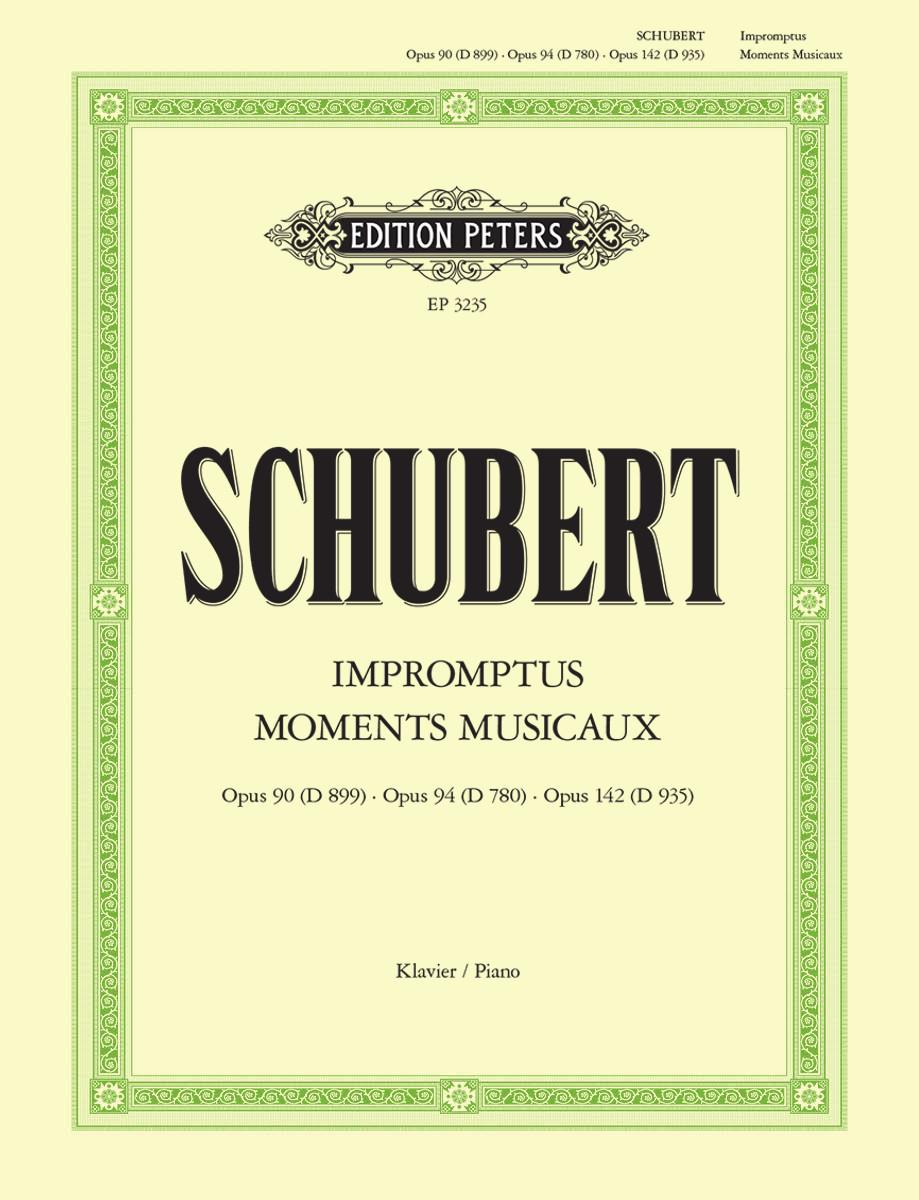 Published in 1828, the year Schubert died, and written between 1823 and 1828, the six Moments Musicaux (literally “musical moments”) are amongst Schubert’s best-loved works for piano and are as accessible to the competent amateur pianist as they are to the concert artist. They are akin to Beethoven’s Bagatelles in their brevity and quixotic character. I first encountered these pieces in my early teens when my mother bought me an Edition Peters copy of the two sets of Impromptus with the Moments Musicaux sandwiched between them; they, and the Impromptus, have remained favourites of mine ever since.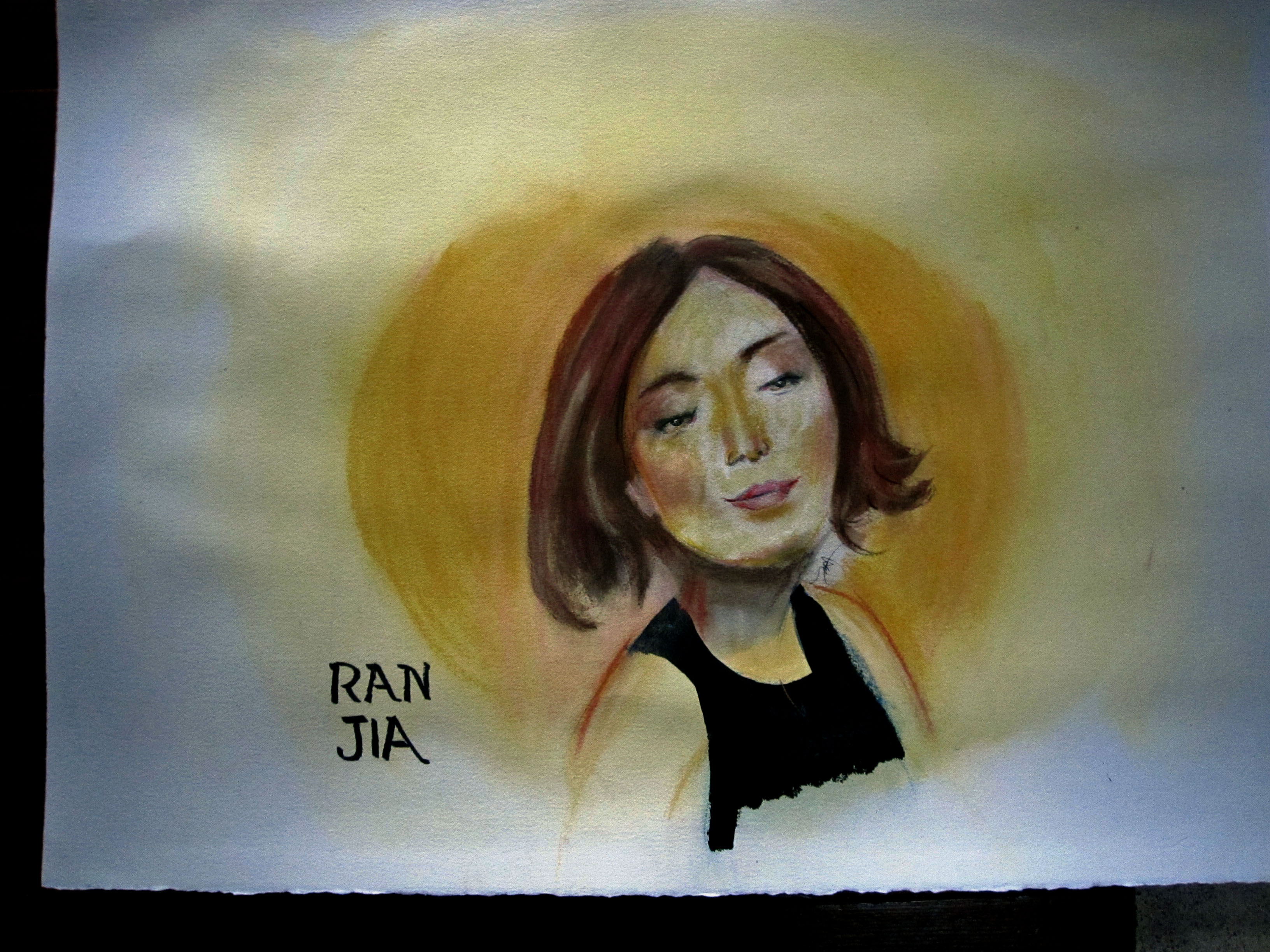




 The Cross-Eyed Pianist