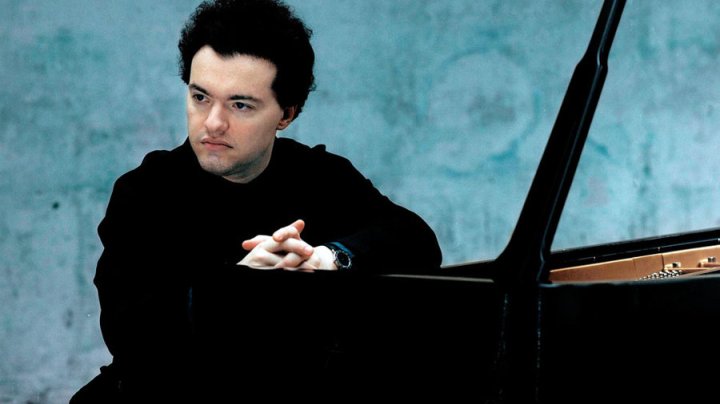
evgenykissin_wide-9aa53798ae987906571102878d8a12936652197c-s900-c85You know you’re at a special concert when the social areas around the concert hall, the bars and cafés, are abuzz with a very tangible sense of excitement? “When did you last hear him?”  “I hear he is magnificent….. ” Add to that an audience populated by “important people” of the music world, including pianist Menahem Pressler (now in his 90’s and still playing) – it promised to be an exceptional evening.

It’s over 20 years since I last saw Evgeny Kissin live. That concert, the first solo piano recital in the history of the Proms, was legendary for all sorts of reasons – coruscating performances of works by Haydn, Liszt and Chopin and no less than seven encores to a record-breaking audience (over 6000). In the course of his career, he has been criticized by some for his rather cool manner, smooth perfectionism, and style over substance, but there’s never been any doubt about his consistent dedication to his art and artistry. Listen to his recording of Chopin’s Berceuse and you hear refinement in every opalescent note and multi-hued filigree passage: Kissin has musical intellect and, more importantly, he has soul.

No longer the shock-haired wunderkind, he is now a mature artist in his mid-40s; he has written a slim volume of thoughtful memoirs and has married his childhood sweetheart. He’s still got the phenomenal technique, but his stage presence is noticeably more relaxed (much smiling during his curtain calls). Yet his style and demeanour hark back to an earlier era, including the way he dresses (evening suit, black tie, even a cummerbund – a rarity at concerts these days): I think audiences really love this – despite attempts by other artists to break down the “us and them” barriers of the concert stage – because it reminds us of the huge sense of occasion a concert by a pianist of this calibre creates and preserves the mystique of the virtuoso performer.

In the programme notes, Kissin was described as a “titan among pianists”, suggesting both physical and metaphoric presence. In an article last year, The Economist billed him as “one of the world’s greatest living musicians”. Both statements are of course subjective – while also being true. He is “great”, in the sense of possessing an ineffable multi-faceted talent which makes the reviewer’s job so hard – for how can one truly describe what he does?

In keeping with his “old school” stage demeanor, he does not indulge in showy piano pyrotechnics nor flashy gesture for the sake of gesture. His mannerisms may be restrained but his playing is full of commitment and a passion which transcends romanticism: it burns with a hypnotic intensity.

Beethoven’s mightly Hammerklavier is one of the high Himalayan peaks of the repertoire, never undertaken lightly. In interviews Kissin has stated that he felt a certain maturity – which he now has – was necessary to tackle this monumental work (other, younger pianists are not so modest…..). It certainly gave full rein to Kissin’s magisterial powers, not just his technique but his musical intelligence too. He made the infamously difficult opening of the Hammerklavier – a rapid leap of an octave and a half taken in the left hand alone – look easy (and indeed the entire programme!) and launched into the first movement with a heroic commitment wrought in myriad sound. This work is so pianistic, its nickname a constant reminder that it must be played on a piano (and Beethoven was alert to rapid developments in piano design at the start of the nineteenth century: he knew a new instrument could produce the effects he demands in his score), yet also rich in orchestral textures and voicings, all revealed so clearly, so musically by Kissin. His pianistic attack may be direct, but his fortissimos never compromise on quality of sound, and his edges are smoothly honed. But above all of this, it was his pacing and natural rubato which captivated: a clear through-narrative combined with interpretative spontaneity gave this large-scale sonata a fantasy-like character, yet with a rigorous sense of the work’s overall architecture – even in the Adagio Sostentuto, where time was suspended for a movement played with an intense almost Schubertian harmonic trajectory and introspection, yet managed with all the improvisatory qualities of a Chopin Nocturne. Out of this other-worldly space came a finale of restless physicality and strikingly dramatic contrasts.

The second half was all Rachmaninov Preludes, a selection from Opp 23 and Op 32, works with which Kissin is fully at ease. As in the Beethoven structures were fully understood, while sound was sculpted, grand gestures deftly chiseled, delicate motifs etched in filigree touch and a gentle haze of sound. We felt the composer’s emotional depth, his yearning and nostalgia, without a hint of false sentiment or surface artifice.

Four encores afforded more pianistic marvels – a crepuscular, haunting étude by Scriabin (Op 2, No. 1), Kissin’s own vertiginously virtuosic Toccata (proof that he could have been an excellent boogie woogie pianist as well!), another favourite Rachmaninov Prelude (in C minor), played with as much energy as if he was beginning the concert, and Tchaikovsky’s Méditation. He probably would have played more, such was his eagerness to return to the piano at each curtain call, but regretfully many of us had last trains to catch.


(photo: FBroede/IMG Artists)
original

Thursday 11 January 2018

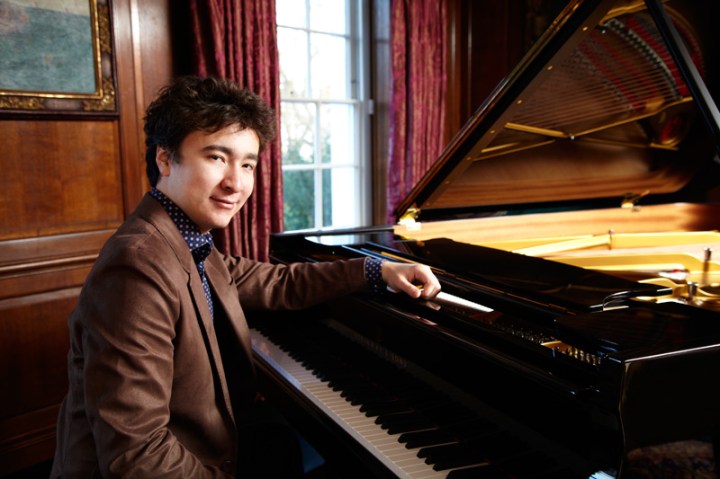
Samson Tsoy, piano

Schubert – Four Impromptus, Op 90

Rachmaninoff – Five Preludes Op 23

Two composers writing 75 years apart, both 30 and both entering significant periods of intense creativity in their compositional lives. By 1827 Schubert knew his life was drawing to a close. Ill with syphilis and the side-effects of its treatment since 1823, the year before his death, when his composed his Impromptus for piano, signalled a period of remarkable output. 75 years later in 1902 Rachmaninoff marries his cousin Natalia Satina and embarks on his Second Piano Concerto, the Cello Sonata, and Second Suite for Two Pianos, in addition to the Preludes Op 23.

Both sets of works are infused with their composer’s distinct psychology. Schubert’s bittersweet nostalgia, his markedly shifting moods, his long-spun melodies and the lilting rhythms of the ländler and the waltz run through the Four Impromptus Op 90, creating a unifying thread, and Samson Tsoy revealed these special qualities of Schubert’s writing with sensitivity and poise, from the desolate opening of the Impromptu in C minor, to the warm poetry of the fourth in A flat. This was refined and mature playing.

Rachmaninoff’s Op 23 Preludes are confident and exuberant, never more so than in the famous G minor, and Samson responded to with equal confidence and spirit, offering a rich palette of musical colours presented with stylish panache and an evident relish for this music. A special warmth and elegance was reserved for the D major Prelude.

A most enjoyable and rewarding lunchtime concert.


nzso20yevgenysudbin-4416

Haydn Sonata in B Minor HobXVI/32
Beethoven Bagatelles Op.126
Tchaikovsky Nocturnes, Selection from the Seasons
Scriabin Prelude & Nocturne for the left hand Op.9, Sonata No.5, Op.53

Yevgeny Sudbin, piano

Monday 13 November 2017, St John’s Church, Wimbledon

This was my first visit to Wimbledon International Music Festival, though I have been aware of the festival for some years. Now in its ninth year, the two week festival is very well established and offers an impressive roster of international musicians, together with opportunities and support for young and emerging artists. Concerts take place in a number of attractive churches and halls dotted around the hill leading up to Wimbledon village and are very well organised, with friendly helpful staff. This is in no small part due to the efforts of Anthony Wilkinson, festival director, who is, by his own admission, passionate about music and has created “a festival sharing the experience of hearing and meeting world class artists in the company of friendly festival audiences“.

The theme of this year’s festival is capital cities and Russian pianist Yevgeny Sudbin, who hails from St Petersburg, presented a programme featuring composers from two of the greatest European cultural capitals – Vienna and Moscow – represented by Haydn, Beethoven, Tchaikovsky and Scriabin. Vienna has always had a strong hold over the imagination of Russian composers, artists and performers, and although Tchaikovsky was born in St Petersburg, he spent time in Moscow teaching at the conservatory, which since 1940 has born his name, and where Moscow-born Scriabin studied under Anton Arensky.

Described by the Telegraph as “potentially one of the greatest pianists of the 21st century“, Yevgeny Sudbin possesses that rare talent of being able to move with apparent ease between different composers, eras and genres, yet always delivering pianism of the highest order, rich in expression and musical thought. I have enjoyed fine performances by him at London’s Wigmore and Queen Elizabeth Halls and have been impressed in particular by his performances of music by Scriabin and Scarlatti (Sudbin’s playing of this composer’s miniature sonatas is exquisite – poised, shapely and expressive – and confirms that this music can and should be played on a modern piano).

It is also rare to be at a concert where one is utterly captivated from the first note until the very last has faded to silence, but this was definitely my experience at Sudbin’s Wimbledon recital. He’s a modest presence on stage, restrained in gesture, so that the music can speak for itself. His Haydn was poised and precise, darkly-hued, the first movement paced to allow us to appreciate the composer’s rhetoric and wit and delight in the possibilities of the (then) recently invented pianoforte. The second movement was elegant, lyrical and intimate, while the Presto finale was delivered with an insistent pulsing intensity, replete with fermatas and false cadences to keep the audience guessing.

Beethoven’s Opus 126 Bagatelles were published almost 50 years after Haydn’s B minor sonata, the product of the same period in his compositional life as the Ninth Symphony and the late string quartets. Although a set of six miniatures, these are works of the profoundest emotions and a sense of “otherworldliness”, particularly in the slower works. Sudbin caught the individual character of each Bagatelle with supple phrasing and nuanced dynamics. The final movement, in E flat, was almost Schubertian in its expansiveness and long-spun melodies of its middle section.

More miniatures in the second half, this time by Tchaikovsky. Two Nocturnes and two movements from ‘The Seasons’, all tinged with a heartfelt poignancy and delivered by Sudbin with sensitivity and expression. Scriabin’s Prelude and Nocturne for the left hand offer the pianist technical and expressive challenges – to shape a melodic line with an accompaniment using the left hand alone. This was an impressive performance, graceful and intense. Sudbin launched into the Fifth Sonata with hardly a pause for breath. It opens like the Haydn, with a growling, rumbling figure deep in the bass, but that is where the similarity ends. This work is sensuous, and declamatory. Sudbin capered through it, artfully bringing together all the seemingly disparate elements and abrupt contrasts, from toccata-like scurryings to passages of swooning lyricism, and mercurial changes of rhythm and harmony (some of the more surreal tonalities look forward to Mahler and Schoenberg, who lived in Vienna). The final flourish was delivered with a cool wit and humour.

The Scarlatti encore felt like a palette cleanser after the perfumed excesses of Scriabin, played with an understated elegance and a wonderfully translucent sound, bringing to a lose this absorbing and varied programme.

(artist picture courtesy of the NZSO)

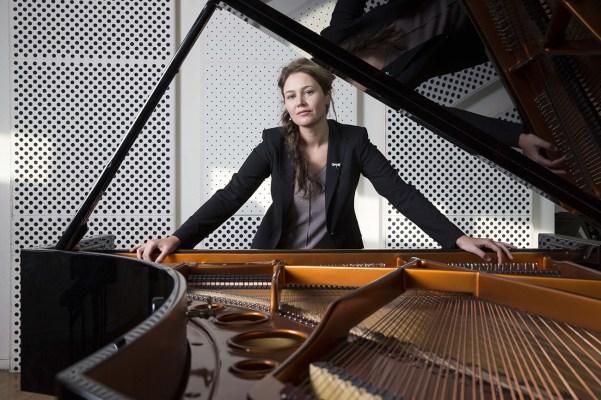
© Gerard Uferas Olga Jegunova 12_02_15

Who or what inspired you to take up the piano and pursue a career in music?

My grandfather who had a natural musical talent and could not imagine his life without his violin. He was played it passionately at every family gathering. He also bought our piano. Later, my mother taught me how to play a C major scale. Since then, I am still learning how to play it….

Who or what were the most important influences on your musical life and career?

Musically, it is J.S.Bach. He has always moved me, paralyzed any fear or disbelief. Later, recordings of great Rubinstein, Horowitz, Gilels, Gould, Richter, Michelangeli, Karajan, Callas, Oistrakh, Rostropovich. Then live concerts of Zacharias, Zimerman, Schiff, Argerich, Perahia, Maazel, Bartoli, Rattle and many others. They all form my musical taste and repertoire.

As per career, I should be influenced by the PR company of Lang Lang but sadly I am not!

What have been the greatest challenges of your career so far?

To actually have a career.

Which performance/recordings are you most proud of?

Ibert – Le petit ane (avalable on YouTube) when I was 10 years old because it made my mum proud.

Which particular works do you think you perform best?

4’33” by John Cage.

How do you make your repertoire choices from season to season?

Concert promoters always want a Moonlight sonata but I try to spice it up with some Bach & Ligeti (this season).

Do you have a favourite concert venue to perform in and why?

There are so many of them. I am not so obsessed with venue what worries me is no audience, empty hall or just a few people with ringing mobile phones.

Favourite pieces to perform? Listen to?

It is great to share great music with good audience. Yet the most non-judgemental experience was when I was playing “Peter and the wolf” to the 5-year old kids.

I like to listen to all sorts of music, I have my Ramstein moments, yet I listen to a lot of classical music, often jazz and some good pop/rock.

Who are your favourite musicians?

Elvis

What is your most memorable concert experience?

My very first concert at the age of 5 or 6 – very scary but I loved the applause.

What do you consider to be the most important ideas and concepts to impart to aspiring musicians?

Being a musician is a life-long service. It is hard, non-profitable and lonely. But it is a very important input into people’s minds and hearts. It gives another dimension to our being. And without this dimension it would be too miserable and too technical.

Where would you like to be in 10 years’ time?

At the piano, safe, warm and loved.

What is your idea of perfect happiness?

See above.

What do you enjoy doing most?

Being happily quiet.

Olga Jegunova’s disc ‘Poetic Piano Sonatas’ is available now

www.olgajegunova.com

(photo © Gerard Uferas)