
Sofia Gubaidulina Revue Music for Symphony Orchestra and Jazz Band
UK premiere
Ravel Piano Concerto in G major
Shostakovich Symphony No. 13 in B flat minor, ‘Babi Yar’
Benjamin Grosvenor piano
Kostas Smoriginas bass-baritone
Synergy Vocals
BBC National Chorus of Wales (lower voices)
BBC National Orchestra of Wales
Ryan Bancroft conductor
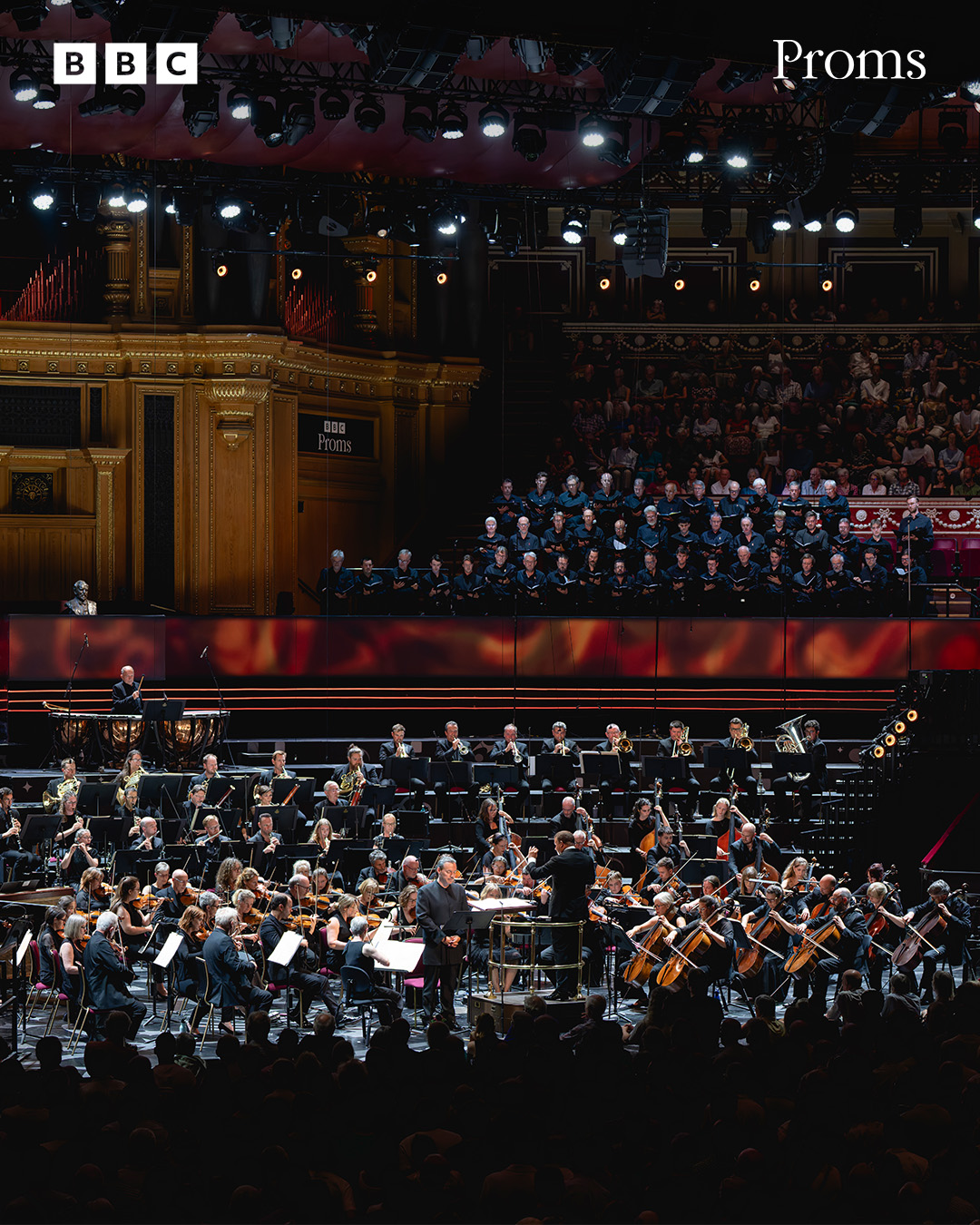
It’s eight years since I was last at the Proms in person. In that time, there is better air-conditioning in the Royal Albert Hall, and the queues for the ladies’ loos are not quite as long. People grumble about the deficiencies of the RAH, but it remains an impressive space and one can’t help feeling excited on entering the vast arena and sensing that pre-concert anticipation building amongst the audience.
We escaped the teeming crowds around South Kensington station and had a very civilised pre-concert supper just off High Street Kensington and then strolled back to the RAH through elegant streets lined with Porsches and other luxury vehicles. At the hall, there was the usual confusion about which door (“is it door 6 or door J??”) and then we were in our seats, behind the Prommers, with a direct sightline to where the piano would be for the Ravel (concert companion and I are piano nerds – and he chose the seats!).
The opening piece, Sofia Gubaidulina’s Revue Music for Symphony Orchestra and Jazz Band, receiving its UK premiere, was, frankly, utterly bonkers. A crazy mash up of groovy 60s psychedelics, 70s funk, movie soundtracks and big band jazz collided with lush orchestration and silky strings redolent of Korngold, with some spoken word and vocals thrown into the mix for good measure. It was foot-tappingly lively, unexpected, witty and fun: an uplifting and entertaining opener for this concert.
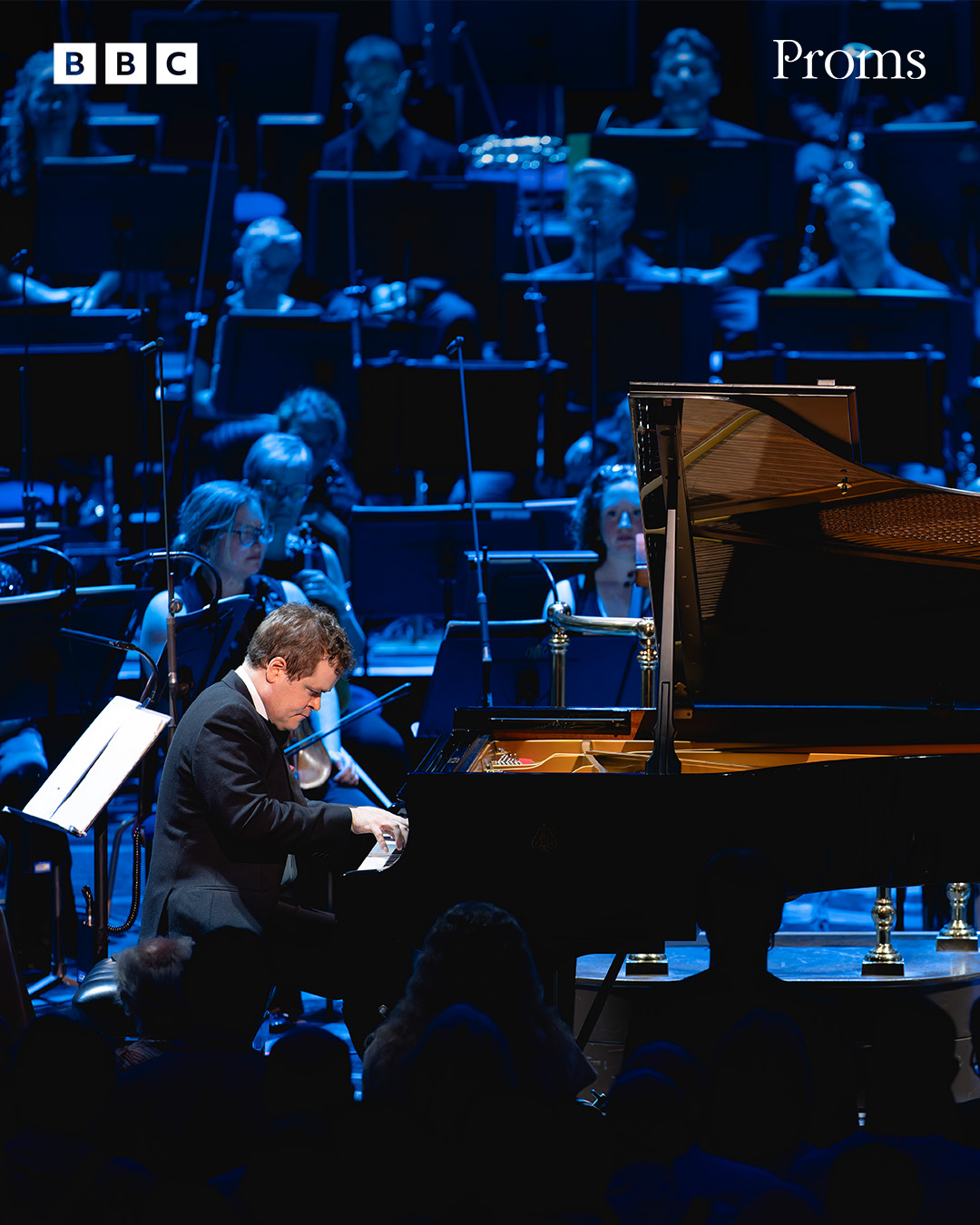
And it provided the perfect link to Ravel’s glittering G major concerto, a work of syncopated jazz brilliance, composed at the height of the Jazz Age in Paris, replete with nods to Spanish Basque music and the “blue notes” of Gershwin. Benjamin Grosvenor gave a stand out performance, playing what is perhaps his “signature piece” (in 2004 he won the Keyboard final of BBC Young Musician with this concerto, when he was just 11). And here, as in any piece he touches, he created the most beautiful sound, even in the fortissimo range. This was matched by remarkable versatility, switching from sparkling, playful runs across the keyboard to gorgeous passages of luminous lyricism, especially in the second movement, a sublime meditation set between the heady Spanish exoticism and jazz idioms of the outer movements. For an encore he gave a remarkable performance of the ‘Precipitato’ finale from Prokofiev’s Sonata No. 7, with its repeating “rock and roll” left hand idiom and angular, relentless drive.
The first half was a brilliant example of thoughtful programming, where the works connected and reflected upon one another. And then that encore, from a sonata composed in the depths of wartime, provided a bridge to the second half, and a complete change of mood.
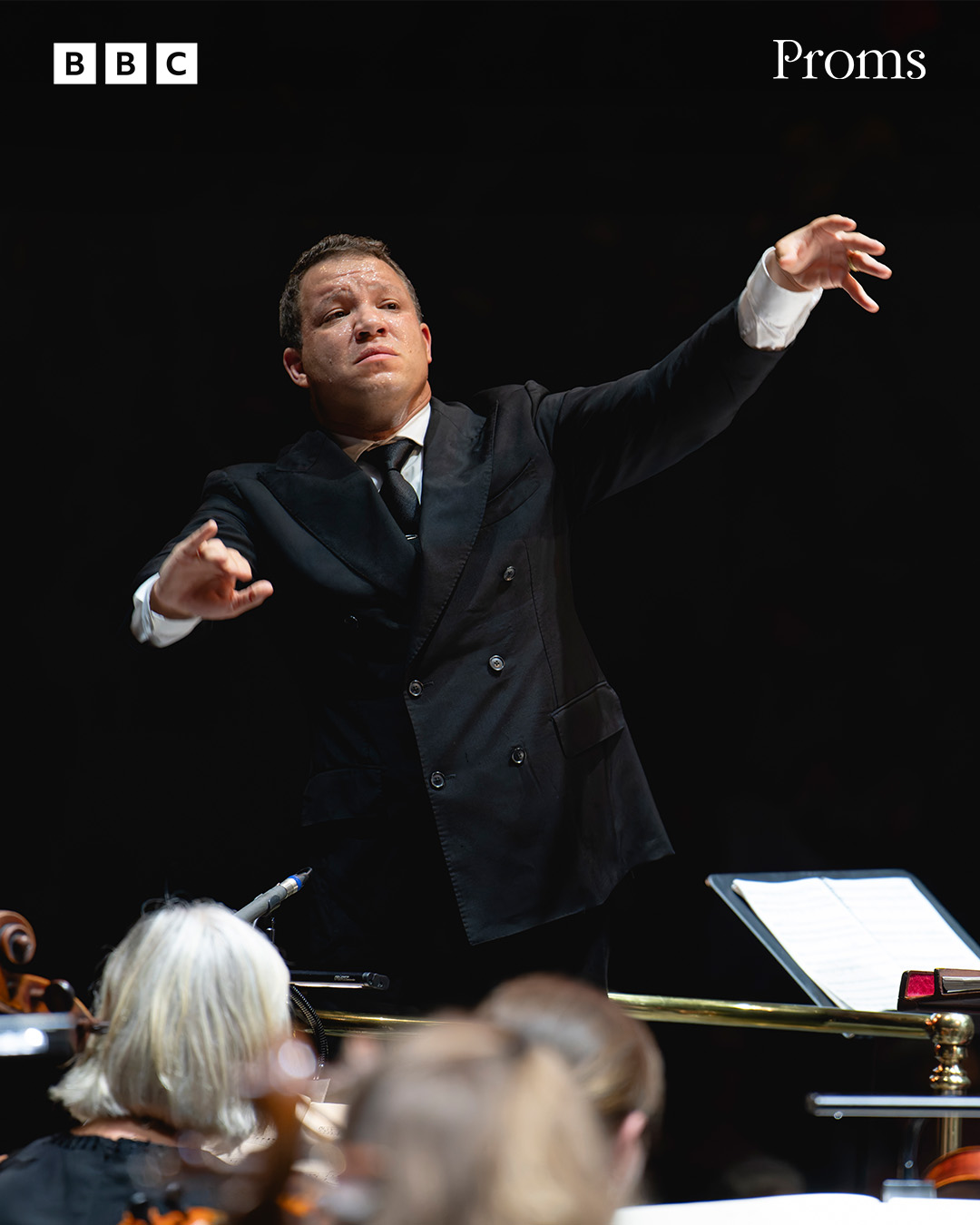
Where previously conductor Ryan Bancroft bounded onto the stage with all the exuberance of a puppy, now he was serious, quietly escorting bass-baritone Kostas Smoriginas for the performance of Shostakovich’s Symphony No. 13. Here, the composer set words by the Russian poet Yevgeny Yevtushenko , to commemorate and mourns a heinous act of mass murder, when in 1941 and 1943, during the Nazi occupation of Soviet Ukraine, more than 100,000 people, most of them Jews, were shot by Nazi soldiers, with the help of members of the local population, in a ravine called Babi Yar in Kyiv. The symphony is also a condemnation of anti-semitism, its five movements scored for bass-baritone, male chorus, and large orchestra with an expanded percussion section.
A tolling bell opens this work of immense power, bleakness and strange, granitic beauty. The music snarls and bites, soars and whispers, sardonic humour contrasts with moments of tenderness and profound poignancy. You don’t need the text to understand the narrative – the music does it all. In the final movement there is a sense of hope, with sweet string writing, a haunting solo on bass clarinet, a distant tolling bell and the gentle tinkling of the celesta to bring this monumental work to a quiet climax. Silence enveloped the hall for perhaps two minutes: how else could one respond to such a masterful performance of this compelling, profound and thought-provoking music.
Listen on BBC iPlayer
(Images BBC Proms, header image by Marco Borggreve)






 The Cross-Eyed Pianist