Mirrors & Echoes – Aïda Lahlou, piano

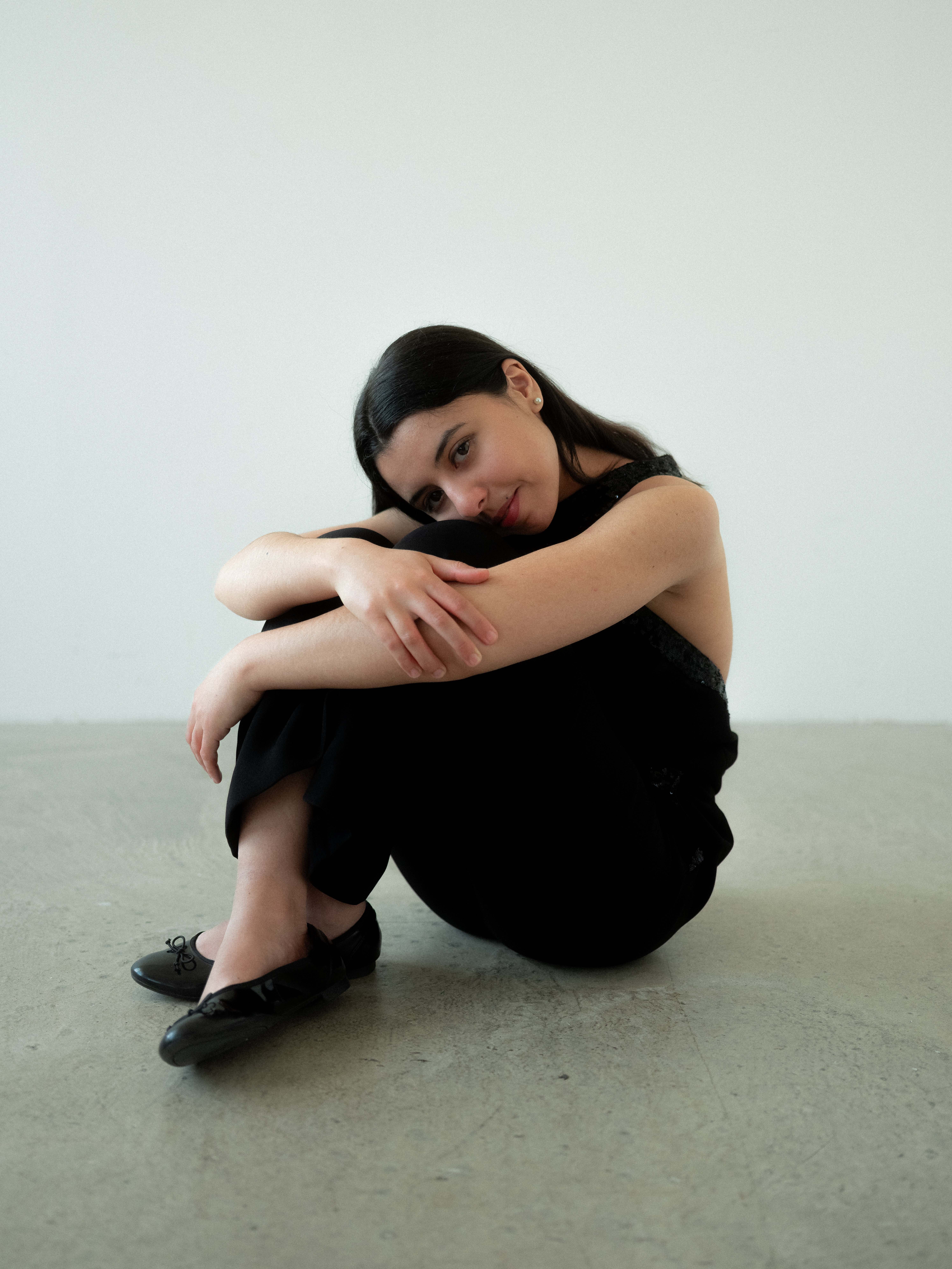
Moroccan pianist Aïda Lahlou makes an exciting and noteworthy recording début with Mirrors and Echoes, released by Resonus Classics on 19 September 2025.

Supported by Les Amis de Maurice Ravel, the album offers a vivid reimagining of Miroirs, placing it in dialogue with lesser-known piano miniatures from across the world to reveal surprising resonances and intertextual connections.

“Whether through spiritual texts, folkloric archetypes, or meditations on nature, each work in the album offers a moment of contemplation and self exploration.” Lahlou says. Drawing on Ravel’s own writing on Miroirs, she adds: “Ravel believed that music should act as a mirror, reflecting back the listener’s own interiority. This album seeks to transport the listener into that reflective space.”

Lahlou’s sensitive interpretation guides us through shifting sonic landscapes and themes of nature, spirituality, memory and transformation. The listening experience is not unlike a musical treasure hunt: Lahlou interweaves Ravel’s visionary five-movement cycle with rare piano miniatures from five continents—some rescued from obscurity, others newly arranged for this recording, like a Brahms motet or a 14th-century Andalucian song, each handpicked for its unexpected kinship with Ravel’s sonic world and its ability to evoke a sense of wonder.

My hope is that the album’s themes – nature, spirituality, and cross-cultural resonance – can inspire renewed awe for life and the richness of our world, especially at a time when it faces such urgent threats from war, pollution, and climate change.” (Aïda Lahlou)

Born in Casablanca and trained across Europe, Aïda Lahlou brings a multicultural lens to classical repertoire that feels both scholarly and deeply intuitive. The brilliant storytelling, weaving together works by Spendiaryan, Stevenson, Tansman, Garayev, Lecuona, and others, alongside arrangements of Brahms, Siloti and traditional melodies, culminates in a programme that is both exploratory and deeply personal. The result is a compelling artistic statement from a distinctive new voice in classical piano.

Mirrors & Echoes is released on CD and streaming on the Resonus Classics label.
Source: press release


About Aïda Lahlou

Born in Casablanca, pianist Aïda Lahlou began studying piano at the age of five with Yana Kaminska, and won her first international competition at eight. She later studied with Nicole Salmon-Boyer (École Normale Alfred Cortot) before receiving a scholarship to attend the prestigious Yehudi Menuhin School in Surrey. After reading Music at St John’s College, Cambridge, she continued her musical studies at the Guildhall School of Music and Drama, studying with Ronan O’Hora and Peter Bithell, and earning a Distinction in Piano Performance (MPerf).

Aïda has performed internationally from a young age, with appearances in venues including Wigmore Hall (London), BOZAR (Brussels), Théâtre National Mohamed V (Rabat), and the Hall of Organ and Chamber Music (Baku). She has performed as soloist with the Orchestre Symphonique Royal, becoming the youngest pianist to do so at the age of twenty, and has performed alongside artists such as Vadim Repin, Roby Lakatos, and Alina Ibragimova.

She has received over 20 national and international awards, most recently the Philip Crawshaw Prize at the Royal Overseas League Music Competition. A passionate educator and communicator, she also directs opera, volunteers with environmental groups, and created an award-winning one-woman show blending classical piano with stand-up comedy.

Praise for Aïda Lahlou

“Aïda Lahlou is a pianist of imagination and poetry, not shy of exploring sonority, colour, or inner voicings.” — The Classical Source

“Vivacious playing.” — Gramophone

“Aida…played with a poetic sensibility of refined beauty and a sense of style and musical intelligence of aristocratic authority.” — Christopher Axworthy

Website: aidalahlou.com
An important new recording, ‘The Spirit of Love’, featuring chamber music and songs by British composer Alisa Dixon (1932-2017), will be released on the Resonus Classics label on 22nd August.

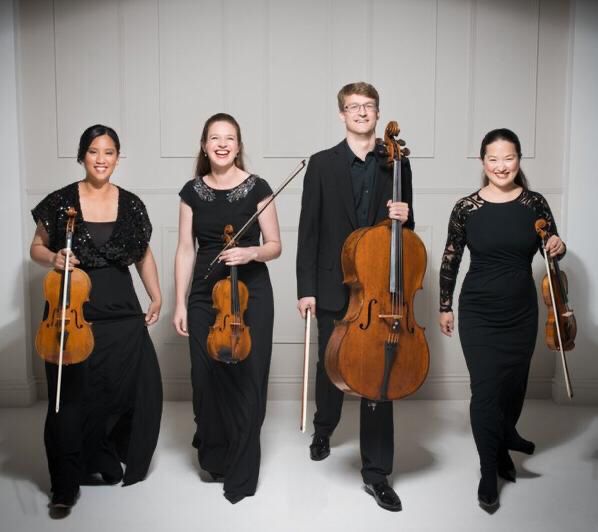
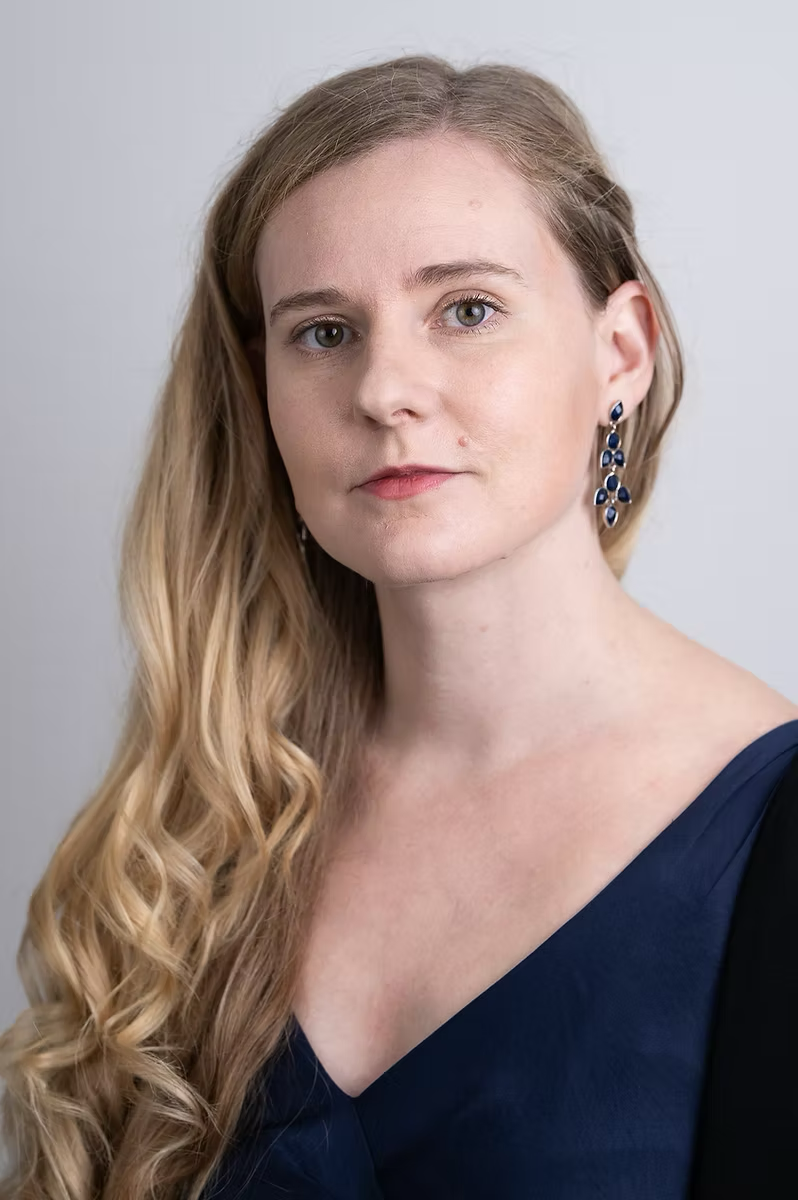
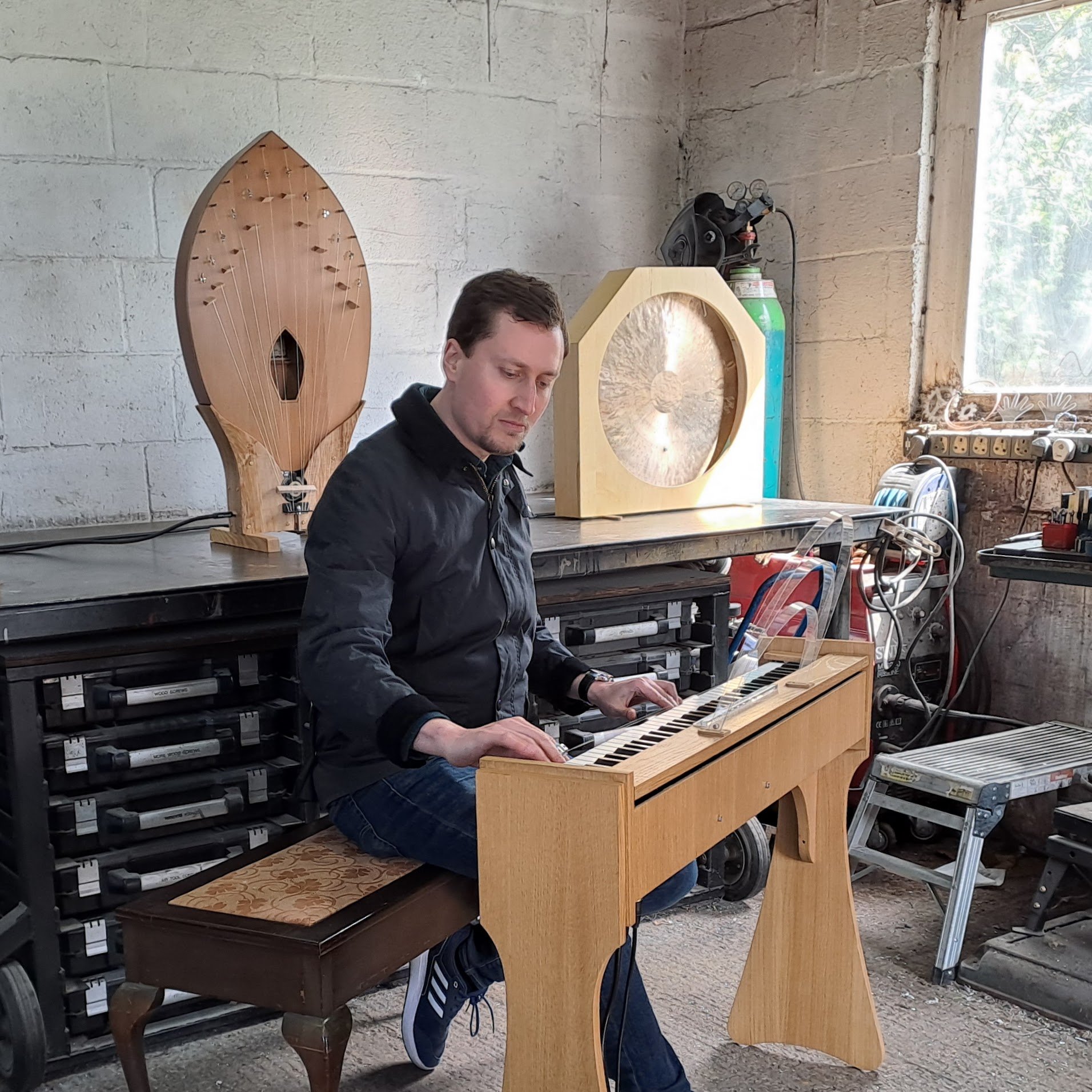
This landmark recording highlights Dixon’s chamber works, many of which have remained largely unknown, until now. With the combined talents of the Villiers Quartet, soprano Lucy Cox and ondes Martenot player Charlie Draper, this recording represents a vital step in rediscovering the depth and breadth of Dixon’s music.

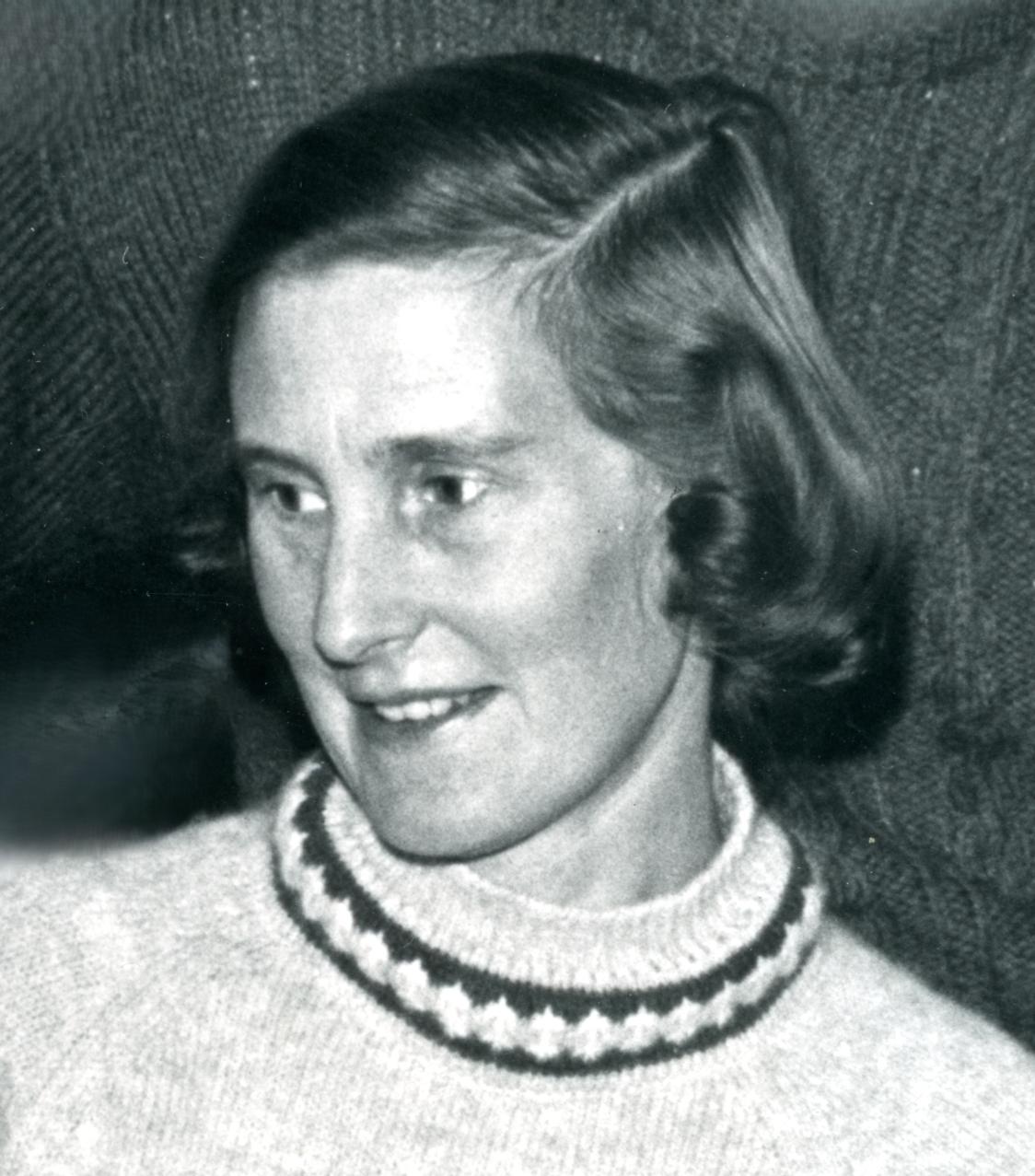
Born in 1932, Ailsa Dixon began composing before reading music at Durham University, and later studied with Paul Patterson, Professor of Composition at the Royal Academy of Music. Her works include a two-act opera, several pieces for string quartet, songs, chamber music and instrumental works including a sonata for piano duet.

In July 2017, five weeks before she died, her anthem for choir, These Things Shall Be, was premiered by the London Oriana Choir at the Cutty Sark in London. This marked the beginning of a revival of interest in her music and has led to a host of new performances of choral, vocal and instrumental works in concerts across Britain

Hailed as a ‘stunning find’, with its ‘lush harmonies’ and ‘strange yet still beautiful dissonances’ (Nottingham Chamber Music Festival, 2024), The Spirit of Love gives the title to this recording – a selection from her most fertile period of composition in the 1980s and 1990s. One of the many works found in Ailsa Dixon’s manuscript archive after she died, these songs for soprano and string quartet were premiered posthumously at St George’s Bristol, where a spellbound reviewer for the British Music Society registered ‘a feeling that something special had just occurred’.

Ailsa Dixon

A collection of three songs for soprano and string quartet, composed between 1987-88, and originally commissioned through Dixon’s lifelong musical friendship with Irene Bracher, The Spirit of Love sets texts by Dixon herself, along with works by A.E. Housman and F.W. Bourdillon. The work was given its posthumous premiere in 2020 at St George’s Bristol by the performers on this recording.

Another distinctive piece is Shining Cold for soprano, ondes Martenot, viola and cello. This work is characterized by its haunting vocalise and uniquely explores the sonorities created by the soprano voice, strings, and the ondes Martenot, an electronic instrument famously associated with Messiaen’s Turangalîla-Symphonie. This work highlights Dixon’s innovative use of instrumentation and vocal expression.

Other significant works on this recording include:

The ‘lost’ Scherzo for string quartet. Written in the 1950s while Dixon was at Durham University, this piece disappeared for over half a century before the manuscript came to light after her death. The recording presents its first performance, 70 years after it was written. Its changes of time signature may show an early interest in Bartok whom Dixon cited in later life as an inspiration for his ‘elasticity of musical motifs’.

Sohrab and Rustum for string quartet. This ambitious, through-composed work from 1987-88 was inspired by Matthew Arnold’s poem of the same name, depicting the tragic encounter between a father and son in battle. The music is a vivid response to the poem’s human drama and atmospheric setting.

Variations on Love Divine for string quartet. Written in 1991-92, this is Dixon’s final string quartet work and an exploration of religious chamber music, perhaps inspired by Haydn’s Seven Last Words. Woven around John Stainer’s Anglican hymn tune, it explores themes from St John’s Gospel, the Incarnation, Nativity, Passion and Ascension, culminating in a vision of heavenly joy. The Villiers Quartet recently gave the work its first complete concert performance.

This is more than just a new album; the release of The Spirit of Love represents a pivotal moment for the rediscovery and appreciation of Alisa Dixon’s diverse and compelling chamber music – music which combines lyrical lines, adventurous harmonies, and a spiritual undercurrent, brought to life with vibrant intensity and finesse by the Villiers Quartet, Lucy Cox and Charles Draper. This recording offers listeners an insightful journey into the rich, previously under-exposed world of a significant British composer.

The project has received support from the Vaughan Williams Foundation, and the release of this recording coincides with the publication of Ailsa Dixon’s scores by Composers Edition, making much of her previously unpublished material available for the first time, thereby enhancing scholarly and public access to her complete works.

Scores of the pieces featured on the recording are available from Composers Edition. The album is released on the Resonus Classics label, on CD and streaming, on 22nd August.

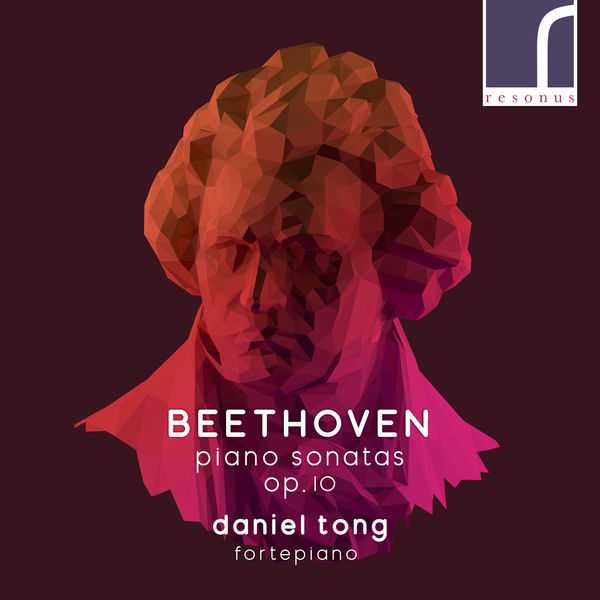
Beethoven
Piano Sonatas, Op. 10 Nos 1-3
Daniel Tong (fortepiano)
Resonus RES10307 

This sparkling new release from Daniel Tong opens with an explosive ‘Mannheim rocket’, the dramatic first sentence of the Piano Sonata in C minor, Op 10, No. 1, which sets the tone for an uplifting and very enjoyable listening experience.

Daniel Tong has been playing Beethoven “since I was nine years old and my teacher gave me a little Bagatelle by the master”, and the piano sonatas as well as the duo sonatas and piano trios are at the heart of Tong’s musical life. The pianist’s affection for this repertoire is evident not only in his close attention to details such as articulation or marks of expression, but also an appreciation of the composer’s wit and comic timing as well as his emotional depth.

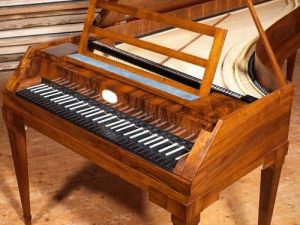
Fortepiano made by Paul McNulty

This new release was made possible via crowdfunding and Tong recorded the sonatas on a copy of an 1815 Walter fortepiano, an instrument with which Beethoven would have been very familiar. The result is a more intimate sound, much more suited to the salon or hauskonzert than the grand concert hall. Yet these pieces are concert works and I am sure Beethoven intended them as such: these sonatas were written for the composer himself to perform, as a young piano virtuoso keen to show off his skill.

Chronologically speaking, these are “youthful” or “early” works, published when Beethoven was not yet 30, yet in their wit and inventiveness, range of expression and appreciation of the capabilities of the instrument they reveal a composer who had already absorbed the finer – and finest – points of sonata form. In these sonatas, we encounter a young composer with the world at his feet.

I have a special affection for the Opus 10 sonatas because I learnt the first one, in C minor, for my Grade 8 exam, taken back in the day (early 1980s) when one was required to perform an entire sonata. I loved the energy of the outer movements and the contrasting warmth and elegance of the slow movement whose melody and structure looks forward to that of the Pathétique sonata (Op 13). Tong neatly captures these contrasts: after the explosive energy and drama of the first movement, the slow movement is a welcome balm. Indeed, it is in the slow movements of each of these three sonatas, that I found the greatest depth of expression: the slow movement of the D major sonata (No. 3) is darkly sombre, spacious and operatic, and freighted with emotion, prefiguring the most profound slow movements of later sonatas.

For the listener more used to hearing these sonatas on a modern piano, Tong coaxes a remarkably rich range of details and colours from the fortepiano. The instrument is far less resonant than a modern piano, and the result is a more incisive, percussive and vibrant sound, with some wonderfully punchy bass details and a gloriously transparent treble.

Is this Beethoven’s piano sonatas as he might have heard them himself? Who knows – we are, sadly, not able to time travel back to late 18th-century Vienna, nor get inside Beethoven’s head to find out – but what this recording confirms is that Beethoven was a master of the sonata form, and Daniel Tong a worthy exponent of this wonderful repertoire.