I recently visited Vienna, a city which I fell in love with on my first visit in 2015. At the risk of sounding incredibly bossy, if you are a musician you have to visit Vienna. It is the city of Mozart, Beethoven, Schubert, Brahms, Mahler, Schoenberg, Berg and more. It boasts two fine concert halls with world-class resident orchestras, two opera houses, and beautiful churches where music is performed regularly. The place positively oozes culture from every pore: its galleries and museums contain some of the finest collections of art I have ever seen, and its imperial buildings (from the time of the Hapsburgs) are beautifully maintained. You can visit the homes of Mozart, Beethoven, Schubert, Schoenberg….. and pay your personal homage to the great composers at the main cemetery.

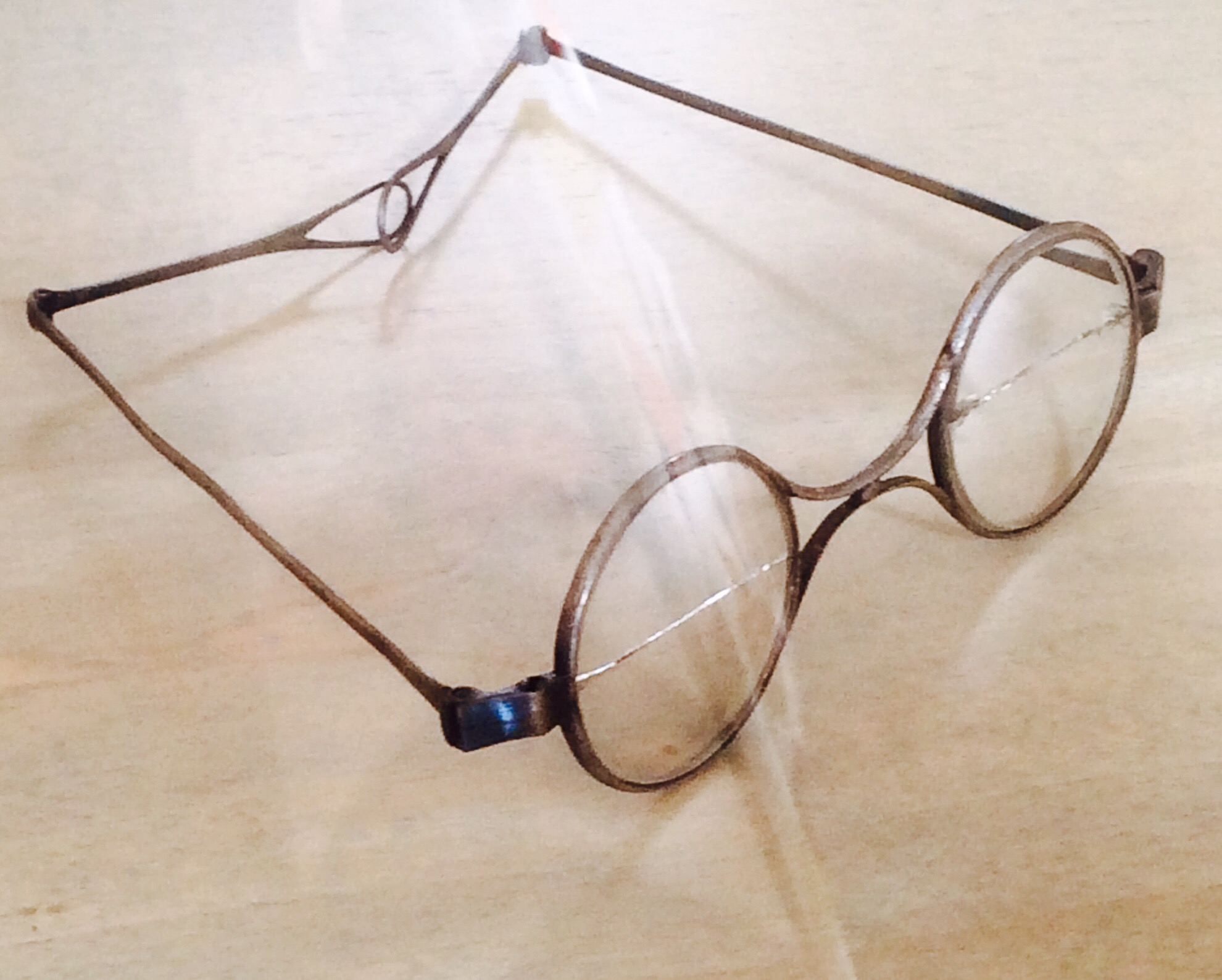
Schubert’s glasses

During my visit I overdosed on Secessionist art, walked the elegant boulevards in glorious and unexpectedly warm early spring sunshine, ate wurst from a stand behind the opera house, drank beer in a bierkeller, visited the (alleged) birthplace of Schubert (a tiny two-room museum with a touching display of mementos including his little round glasses), rode round the Ringstrasse on a retro tram, drank more beer, ate more wurst, attended a Sunday morning concert at the Konzerthaus, saw Dürer’s exquisite drawing of the hare, drank coffee with a colleague from HelloStage at a proper Viennese coffee house, toured Mozart’s house in the old city, and vowed I would return in the winter.

When I returned to London, replete with Weissbier, Mozartkugeln and kasekrainer, I felt that for the five days of my stay in Vienna I had steeped myself in its culture. When I practised music by Schubert I recalled the trip to his birthplace, a short tram ride from Schottenring to an area which was probably countryside in his day. My practising was coloured by recollections of the sounds and sights of Vienna – the noise of people (most obviously around St Stephen’s cathedral), the steady clop of horses’ hooves (you can take a horse-drawn carriage tour of the old city), the rattle and chime of the trams, the timbre and rhythm of conversations in cafes and bars. I’m a romantic at heart and it meant a lot to me to be able to walk the streets that Mozart, Beethoven and Schubert may have walked before me. When I returned to my piano and my practising, I felt I had a better handle on the music of these great Austrian composers, my understanding of their cultural background and their music deepened by my visit to their city.

Cutting oneself off from normal life by spending hours and hours in the practise room is not healthy. Aside from the law of diminishing returns (after about 3 hours you stop taking in information and are simply “typing” the music), it is important to remember that the composers whose music we love and revere were normal people too – and we can connect better to them and their music if we go out and live life, just as they did. As as student of mine remarked recently on the prospect of attending a specialist music school, “I’m not sure I could hack it, with all that practising. I’d want a social life too!”. And she’s right, because having a social life, meeting friends, going out together, eating and drinking, going to the theatre, the cinema, art exhibitions, reading trashy novels, falling in love, falling out of love, all feeds into our cultural and creative landscape to nourish and inform our music-making.

By the same token, placing the composers on high pedestals and turning them into demi-gods sets up expectations which we can never hope to fulfil, because we will never feel we can “do justice” to their music. Instead, treat them as ordinary people – they too had love affairs, went out drinking with mates, and enjoyed a good meal with friends and colleagues – but respect what they give us in their scores and show fidelity to the wonderful literature they have left us.


Sometimes – often! – learning a new piece of music can feel like ascending a steep mountain.

The first few weeks, when the piece is still very new, can be an uphill slog as you cope with note-reading and learning, understanding the structure and harmony, and trying to get a handle on the character and expressive elements of the piece. Then one day you go to practise it and suddenly it seems a whole lot easier: you’ve scaled that initial steep ascent and have arrived on a pleasant plateau where playing becomes enjoyable again. At this point your progress may suddenly become quite rapid as you feel more at ease with the music.

But then – and I’m sure you know the feeling – you reach a certain point where you feel stuck on a ledge, the summit in sight, but seemingly unattainable. You need a push, a burst of energy to get you up there.

When I am reach this point in my learning, it is usually a sign that I need to see my teacher to assess my progress and to give me a shot of inspiration and encouragement to push me to the next level.

Sometimes reaching a seemingly inescapable plateau indicates that we are over-thinking our practising, or fretting over small or imaginary issues which we have turned into bigger problems. In this instance, try shifting the focus of your practising: if you have been practising the same piece in the same way for the past few weeks, try a different approach.

Maybe it’s a sign that it’s the time to put the music away for a few weeks and look at something else. “Oh but I might forget everything I’ve learnt!” I hear you cry. Not true – if you’ve done the careful learning in the first place, revisiting the music after a break should be fairly straightforward and it will take a matter of days to reacquaint yourself with the score. Taking a break also revives our interest in our music and gives us pause for reflection. Returning to the music after a break often throws up interesting new insights and ideas about the music, enabling us to work with renewed energy and excitement.

Conversations with friends, colleagues, teachers can often shine a light on a seemingly intractable issues with a piece. Asking a trusted friend or colleague to hear you play and give feedback can be helpful too. Meanwhile listening to recordings or going to concerts can lead to moments of revelation and inspiration.

Playing the piano is hard – as my teacher regularly says, “If it was easy, everyone would do it!” – and some pieces remain difficult, despite the many hours of work and thought we put into them. Thus, it is important to celebrate the Eureka! moments, while also allowing ourselves time to evaluate and reflect on what we are doing.

If you’ve reached a plateau in your learning, don’t despair. See your teacher, if you have one, or learn something new, something easier, or return to a piece you know you play well (this can be a tremendous confidence booster). Go to a concert with friends and enjoy talking about the music afterwards, join a piano group where you can meet other pianists and discover that we all share the same afflictions, hopes and fears. We don’t have to be chained to the piano every day to gain useful support for our practising and musical thinking.

Above all – don’t give up! And enjoy your music.

Further reading

The Bulletproof Musician

Practising the Piano

Musicians will be familiar with this image of an iceberg. The tip, the visible part, represents our public persona and the music we perform and share with others, while the mass which is hidden below the surface of the water represents the many hours of practise, study and preparation which enable us to perform. Anyone who believes that music flows effortlessly from the musician’s body or who thinks it is “easy” should consider this illustration below and its metaphor.

But what if we allowed others a glimpse into our practise rooms, to watch us practising, working, refining and finessing our music, to sit in on rehearsals with colleagues, and to observe the long and detailed process that goes into making a concert which may only last for 90 minutes?

In a college of art and design in the US, students are being encouraged to do just that – to offer up their work-in-progress, their rough drafts and preliminary designs, even their mistakes, for scrutiny by others in a new exhibition called ‘Permission to Fail’. We are used in exhibitions, books and concerts to seeing and hearing the finished article and I think this often makes viewers and listeners rather complacent, or even ignorant, about the long and involved creative processes which go into producing a work of art or preparing a piece of music for performance. It is all the working out, the sketching, redrawing, practising and pondering which enables us to unleash our creativity, and by learning from our mistakes and our “workings out”, we reach a finished product wrought from a special mixture of curiosity, exploration, trial and error, hard graft, and imagination.

Music practise is usually undertaken alone and in private, except when colleagues come together to rehearse ahead of a concert. Do we really want others to see us sweating over a knotty section, swearing at that passage which always trips us up, hear 50 repetitions of the same section, practising to make the music permanent and perfect? There is however a great curiosity about how musicians, and other creative people, work: I find this often manifests itself in (sometimes daft) questions about “finding the time” and much exclaiming about the amount of time one spends doing it. Then there is the ongoing “not a proper job” aspect of being a musician (or writer or artist) whereby because one loves what one is doing it can’t possibly be serious or commercial, and that practising, or drafting a synopsis or sketching out a painting, is somehow self-indulgent and without value. The pianist Valentina Lisitsa filmed her practise sessions and it was the huge popularity of these video clips that enabled her to relaunch her career. In a way, these films proved that she was a fallible human being, and offered a glimpse into her world as a working musician, which made it more comprehensible to those outside the profession.

Many art exhibitions these days will include the artist’s ephemera, including notebooks, sketchbooks and scrapbooks. Of course for most artists, these books were private, not for public consumption and were the artist’s way of recording ideas to be worked up later in the studio: they were never intended to be shown to the public, yet they offer fascinating insights into the working practices, processes and mindset of a creative person. They also reinforce the fact that creativity is not just about the finished product, it is also about the journey to get there. I think it’s important that we as practitioners of a creative activity appreciate the the joys and frustrations, the mistakes and the eureka moments which we must go through, and to regard all of these as important staging points on the journey. The “10,000 hours rule” has largely been debunked, with an emphasis now placed more firmly on quality rather than quantity of practise. That said, one does need to put in the hours and practising should be habitual, concentrated and thoughtful.

I’ve never regarded my practising as some mystic art, to be kept secret and hidden. I’d much rather people better understand the process involved in learning and finessing music instead of saying daft things to me like “it’s amazing how it just comes out of your fingers” and “How do you do it?”. This is why I share my practise habits with my students, so that they understand that while we might undertake the practising alone, we are in fact engaged in a shared activity – creating music.

Further reading:

How Creativity is Helped by Failure

Accountability in Practice – article by pianist and teacher Graham Fitch

A guest post by Nora Krohn

One night after a concert I was having a drink with a colleague who told me a bizarre story about a graduate school audition he’d taken. While entering the subway en route to the audition, weighed down by his violin case and a large suitcase, he walked through the service gate behind someone else rather than swiping his card at the turnstile. Since he had an unlimited monthly pass, he had essentially pre-paid his fare and assumed there was nothing unlawful about walking through the gate. So he was stunned when a police officer stopped him, arrested him for fare evasion, and took him to jail.

With his violin case sitting on the other side of the bars enclosing his cell, he called the audition committee to explain the situation, and then waited anxiously, not knowing when he would be released. A few hours later, the officer finally let him go with a summons to appear in court a few weeks later. He grabbed his violin, rushed to the hall, made it there 20 minutes before his audition, played beautifully, and was accepted.

When he got to the end of his story, I was astounded. “How could you possibly stay focused with so much stress and distraction? Weren’t you furious?” I asked. “ I would have been a mess.”

“I wasn’t nervous or angry, I was totally relaxed actually,” he replied with a smile. “You see, the situation was so over the top I’d already let go of the outcome. Whatever happened I knew it wouldn’t be my fault.”

My colleague could relax and allow his great talent and preparation to shine through in spite of these acutely stressful events because he knew whatever flaws that resulted from them were clearly not his responsibility. The absurdity of the whole thing disarmed him, and he let go.

For many of us it’s not so easy to hold the things that go wrong with lightness—to regard them as vicissitudes of fortune rather than as tactical errors, character flaws, or divine punishment. But as I pondered my friend’s story, I began to see that letting go of the impulse to assign blame for our past and future mistakes—whether to others or to ourselves—is crucial for our growth. Instead of defining ourselves by our missteps, we can learn to see them as vital steps toward greater wisdom.

Here is an example from my own experience.

Trying to Be Right

This past spring I arranged a play-through of my recital program for a colleague in preparation for an upcoming concert. In starting to collaborate more with piano, I’d discovered that my knee-jerk habit, honed from years of orchestral playing, is to blend with and defer to what’s going on around me, instead of taking charge. After that realization I’d worked hard to learn what it meant to fully occupy, or request, if necessary, the musical space I needed to play with the command that performing as a soloist requires.

As the pianist and I played through our program for my colleague, I started to feel that the music was tumbling by too quickly and I that didn’t have space to execute things the way I wanted to. In my frustration, I tried to slow down, but the pianist and I weren’t aligning, and my frustration persisted through the end of the play-through.

After we finished, my colleague offered us warm praise, and then gently suggested that in my efforts to play everything as exquisitely as I’d set out to, I was blocking the flow of the music. I countered that I had been trying to slow things down to give myself space and strength. But she replied that while my intention was good, it couldn’t work in performance, when the music of the moment required me to join up with a gesture or tempo that was already in motion. Her words and voice were kind, but I felt chastened and confused. I’d been trying so hard to be “right.” Now I felt I was back to being “wrong.”

But as I thought about it, I saw the wisdom in my colleague’s advice. In rehearsal, it was important to lead by communicating how I thought the music should flow. But in the moment of performance, I had to let go of all of that effort and be flexible in working with the particular demands of the situation instead of fighting them, no matter how “right” or “wrong” they might feel.

“Just Relax”

A few weeks ago I encountered another situation where my desire to be “right on” was inhibiting I was playing with a pianist in a master class at Madeline Bruser’s Art of Practicing Institute summer program, and we were trying to get the ensemble of a particular cadence just right. From my previous experiences, of first trying to follow the pianist, and then trying too hard to lead, I instinctively knew that for us to be together, the main thing I needed was to be solidly connected to myself—that if I could stand clearly in my own feelings and convictions, I could naturally connect with the pianist and she would know exactly where to place her notes. But I also knew that making a big effort to connect to myself would tie me up in knots. It had to just happen, but I didn’t know how.

When I explained this predicament to Madeline she said, “It sounds like you just need to let your mind relax.” Luckily we had been meditating for two hours a day for the previous five days, so after closing my eyes for a few moments I was able to let go and merge my mind with the sounds I was hearing and with the feeling in my body. We played the passage again, and the cadence flowed effortlessly. Buoyed with confidence, we tried the same idea at another cadence and were again completely in sync. But at the last second the pianist was so relaxed she played a glaring wrong note, and everyone in the room burst out laughing. It was a really great mistake, because it loosened us up, and brought everyone closer together for a moment.

When “Wrong” is Just Right

While I was at the summer program, another friend told me he was in the process of writing a piece for a student orchestra. The previous day he’d gone on a walk and felt very inspired, and sat down to write several minutes of music. But he went on to confess that after listening to it the next day he found it mawkishly sentimental and embarrassing. He dubbed it “The Happy Bunny Farm,” and played it for me, and we laughed about it. But the day after we talked he felt fresh and full of good ideas, and ended up finding the thread that became the piece he did write. He just had to get the Happy Bunny Farm out of his system first. One songwriter I know recently told me he asks his students to do what he calls the “Bad Songs Challenge.” They write one complete “bad” song per day for a week, and in the process they accumulate valuable insights about what works, what doesn’t, and why. And presumably they share a few good laughs.

I’ve spent the last few years trying to get more comfortable with the idea of screwing up, but the truth is it’s still hard to deal with. I’d always heard the phrases “mistakes are inevitable,” or “you learn from your mistakes,” but it’s taken a long time to start acquainting myself with the palpable meaning of those words. In reflecting on the missteps I’ve made as a performer, I’ve begun to see them not as pitfalls I could have avoided by being better or smarter, but as necessary steps on the path toward true confidence, a confidence based not on protecting myself from being wrong, but on becoming big and bold enough to welcome any experience that comes my way, wrong or right.

The word “forgive” comes from the Old English forgiefan. Another translation of that word is “to give up.” In my case, forgiving myself for my mistakes means giving up feeling any certainty about whether I’m on the right track. I often feel lost, uncertain whether my next step will take me closer to or further from what I desire, which is to communicate truth and beauty. But the alternative is to remain paralyzed by the fear of being wrong, which makes it impossible to take even one step forward into the vast and beautiful wilderness that is ours to know. Getting lost is not only inevitable, but vitally important. When we can hold our missteps with gentleness and humor, we are exactly where we need to be. The path is in the walking of it.
A versatile performer and recording artist in the New York area, Nora Krohn has performed on three continents in a diverse range of venues and styles. She is the Assistant Principal violist of the Ridgefield Symphony, section violist in the Binghamton Philharmonic, and she performs frequently with a dozen other orchestral ensembles throughout the Northeast. Her numerous recording credits include collaborations with Phil Dizack and Declan O’Rourke, and commercial projects for Budweiser and Tiffany and Co. She can also be seen in several episodes of Amazon’s web series “Mozart in the Jungle.”  

Founding member of pioneering viola duo Folie à Deux, Nora is also an avid chamber musician. As a recitalist, she has performed on the St. John’s Noontime Concert Series in Williamstown, MA, on the Turtle Bay Music School Artist Series, the Project 142 Series at The Concert Space at Beethoven Pianos, and for the inaugural Art of Practicing Institute fundraising concert. In October 2011 she was featured as a soloist in Paul Hindemith’s Trauermusik with the Chelsea Symphony. 

Nora graduated magna cum laude and Phi Beta Kappa from Brown University, where she earned a BA in Music and Spanish Literature and was the recipient of the Buxtehude and Muriel Hassenfeld Mann Premiums in Music. She received her MM in Viola Performance from SUNY Purchase College, where she studied with Ira Weller.

www.norakrohn.com