London-based Chinese pianist Siqian Li announces her debut recording, Voyage among Fragments. Described as a ‘meditation on movement and memory’, the album serves as an artistic mosaic, gathering ‘shards of experience’ from Li’s life and career into a single, unified ‘language of sensitivity and refinement’.

The title reflects how my artistic identity has been shaped by many small but powerful moments rather than a single narrative. These “fragments” are memories, emotions, and cultural influences that have stayed with me – my Chinese roots, the elegance and sensitivity of French culture, and the free spirits and boldness I discovered during the years in America.

Siqian Li

Featuring transcriptions by virtuoso pianists such as Ignaz Friedmann and György Cziffra, the pieces ‘allow familiar voices to be rediscovered through the piano, inviting audiences to hear them with fresh intimacy and perspective’ (Siqian Li).

The repertoire charts Li’s development across three distinct cultural landscapes – China, France, and the United States – reflecting moments and encounters that have shaped her artistic identity.
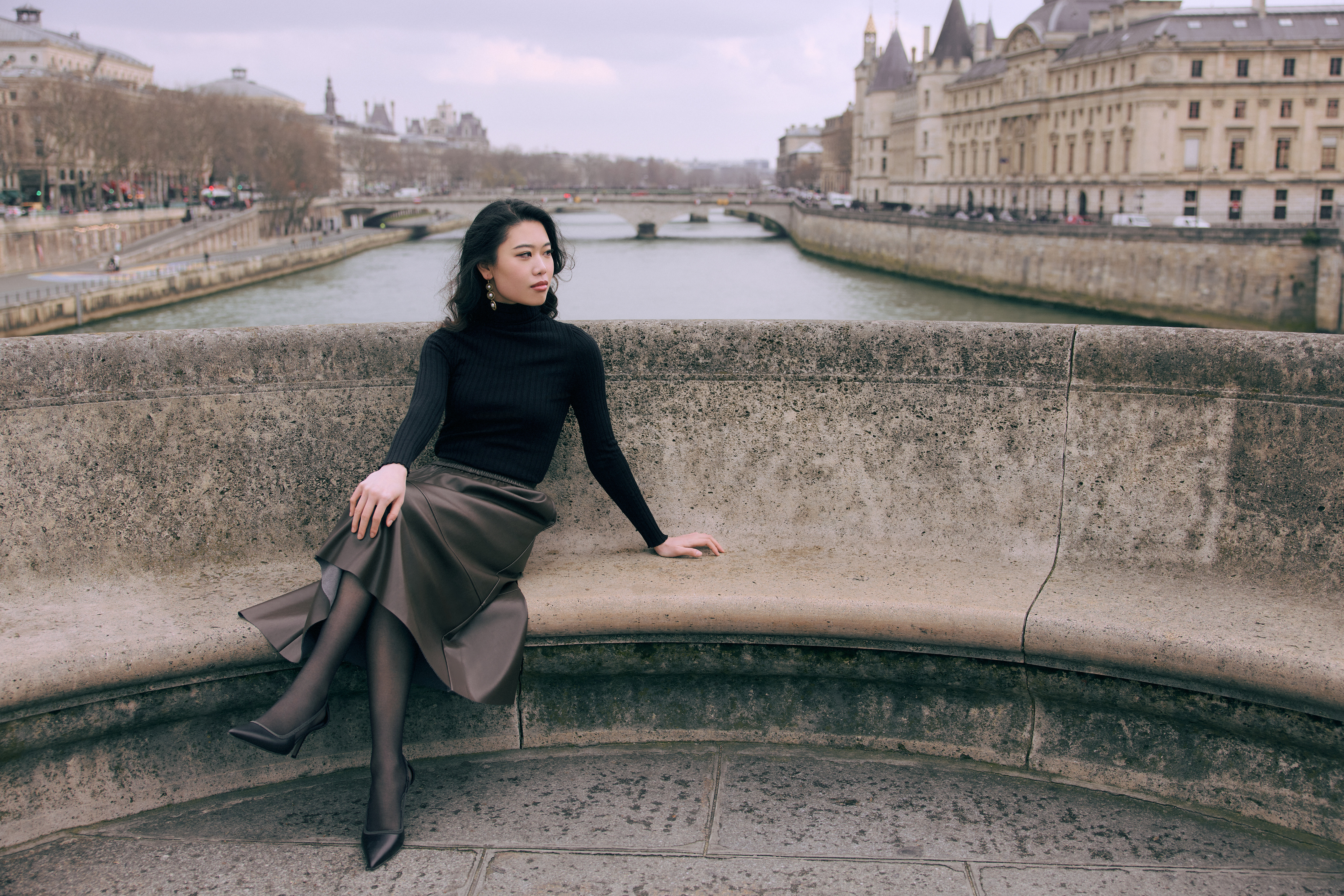
Her native musical language is explored through Chu Wanghua’s Jasmine Flowers Fantasy, a piece that transforms a beloved Chinese folk melody into a timeless work, providing the pianist with a ‘profound sense of home’. Her years of study at the New England Conservatory in the USA are captured through the energy of the city and the spontaneity of jazz found in George Gershwin’s Rhapsody in Blue. This American experience also includes the ‘first spark of inspiration’ for the album: Maurice Ravel’s La valse. Performed in a transcription by her teacher, the Georgian pianist Alexander Korsantia, the work represents a turning point for Li, marking a period of ‘boldness and fearless expression’.

The French spirit is woven throughout the recording, particularly in Alexis Weissenberg’s evocative transcriptions of Charles Trenet’s songs. These pieces recall Li’s first major recital outside of China at the Festival d’Auvers-sur-Oise, evoking memories of ‘floral Parisian streets’ and a ‘carefree spirit’. Other works, such as Dalayrac’s Romance and Cziffra’s arrangement of Vecsey’s Valse triste, explore bittersweet beauty and the sincerity of human connection.

The album’s voyage concludes in a state of serenity with Gounod’s Meditation on Bach’s Prelude in C Major. A prayer amidst the constant noise of our time, the final track invites the listener to ‘listen inward’ and find ‘truth in simplicity’.

Siqian Li regards this album as a personal reflection on her artistic life so far – a collection of ‘moments of courage, tenderness, discovery, and transformation’. As Li says: ‘May this music remind us all that beauty often lives in the most fleeting, delicate moments between what was and what is’.

Voyage Among Fragments is released in early March on the Sagitta Musica label, an independent record label, created by Siqian Li, devoted to artistic storytelling and the infinite horizons of emotion. Drawn by the inspiring arrow of sound, it is a space where stories unfold and music flows beyond – where classical roots meet imagination, sensitivity and freedom.

Siqian Li says,‘Through this debut, I wanted to highlight a pianistic personality rooted in curiosity, sensitivity, and emotional honesty. In curating the programme, I consciously moved away from a traditional idea of how a classical album should sound, allowing contrast, variety, and intuition to guide my choices. Rather than focusing on virtuosity for its own sake, my aim was to let imagination, colour, and inner listening shape the interpretation, placing freedom and vulnerability at the centre of musical communication.’

Find out more https://www.siqian-li.com/

Launch concert – Tuesday 10 March at Fidelio Cafe, London. Tickets/info


This site is free to access and advert-free, and takes many hours each month to compile and edit. If you find value and joy in this site, please consider making a donation to support its continuance:
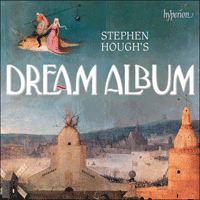

Stephen Hough’s Dream album

034571281766

A few years ago, I heard Stephen Hough in concert in a programme of “serious” music: the premiere of his ‘Trinity’ Piano Sonata III alongside Cèsar Franck’s mighty Prelude, Chorale & Fugue, plus works by Liszt and Schubert. And the encore? Eric Coates’ By the Sleepy Lagoon, which many will recognise as the theme tune from the BBC’s long running Desert Island Discs programme. Played with as much care and expression as the main programme, it was a delightfully witty and nostalgic close to the evening. This charming miniature appears on Stephen Hough’s latest release ‘Stephen Hough’s Dream Album’ and is given a lilting Chopinesque delicacy by Hough.

Dreaming – Isn’t this what we do when we listen to any kind of music? We suspend the reality of our ordinary lives, we long for spells to be cast, for phantoms to be grasped, to enter a state of ecstasy. (Stephen Hough).

Most of us go to concerts and listen to music to be taken to another place, and this album succeeds in this objective in spades, offering a varied selection of flights of fancy, erotic reveries, melancholy ponderings, and fleeting visions. All the works on the disc are transcriptions, by Hough himself and others (if you, like me, own Hough’s ‘Tributes and Transcriptions’ collection of piano music, you will be delighted to hear his mischievous Radetzky Waltz, the witty Niccolo’s Waltz with its nod to Paganini, Osmanthus Romp and Reverie, and Lullaby played by the composer/performer himself). Here, Hough the concert pianist is cast also as transcriber, interpreter and re-creator, and his own transcriptions are a testament to his musical insight, skill, and whimsy.

What makes this album so charming is Hough’s skilled programming, mixing high art with pieces, which in the hands of certain others, could sound schmaltzy and sentimental. Thus powerful performances of works Liszt and Dohnányi sit happily alongside Hough’s cheery Matilda’s Waltz (a reference to his father’s heritage and scored as a rumba) or amusing transcriptions of dances from Don Quixote. Hough avoids kitsch and brings to every piece his characteristic clarity, musical intelligence, wit, elegant phrasing, tasteful pedalling and an intoxicating kaleidoscope of expressive colours and moods to create an album which delights and surprises at every turn. It’s also deeply personal (two pieces were written for Hough’s partner), ending with “the piece I want to be the final piece I play in concert – the last encore of my last concert which I first heard on my first LP“. Nostalgic and bittersweet, redolent of “at homes” in Edwardian drawing rooms or pre-war cocktail hour, the music evokes a dreamy golden age tinged with poignancy. Hough’s magical soundworld brings an intense intimacy and elegance to every piece. Listen to it as an entire recital album or dip in and out of it: you will be utterly charmed and transported.


Stephen Hough’s Dream Album is available as a CD or download from Hyperion


A few years ago, I heard Stephen Hough in concert in a programme of “serious” music: the premiere of his ‘Trinity’ Piano Sonata III alongside Franck’s mighty Prelude, Chorale & Fugue, plus works by Liszt and Schubert. And the encore? Eric Coates’ By the Sleepy Lagoon, which many will recognise as the theme music from the BBC’s Desert Island Discs programme. Played with as much care and expression as the main programme, it was a delightfully witty and (for those of us of a certain age) a rather nostalgic close to the evening. This charming miniature appears on Stephen Hough’s latest release ‘Stephen Hough’s Dream Album’.

Dreaming – Isn’t this what we do when we listen to any kind of music? We suspend the reality of our ordinary lives, we long for spells to be cast, for phantoms to be grasped, to enter a state of ecstasy. (Stephen Hough).

Most of us go to concerts and listen to music to be taken to another place, and this album succeeds in this objective in spades, offering a varied selection of flights of fancy, erotic reveries, melancholy ponderings, and fleeting visions. All the works on the disc are transcriptions, by Hough himself and others (if you, like me, own Hough’s ‘Tributes and Transcriptions’ collection of piano music, you will be delighted to hear his Radetzky Waltz, Niccolo’s Waltz, Osmanthus Romp and Reverie, and Lullaby played by the composer/performer himself). Here, Hough the concert pianist is cast also as transcriber, interpreter and re-creator, and his own transcriptions are a testament to his musical insight, skill, and whimsy.

In others’ hands, this music could sound schmaltzy and sentimental, but Hough brings to it his characteristic clarity, wit and an intoxicating kaleidoscope of expressive colours and moods to create an album which delights and surprises at each turn. It’s deeply personal, ending with “the piece I want to be the final piece I play in concert – the last encore of my last concert which I first heard on my first LP“. Nostalgic and bittersweet, redolent of “at homes” in Edwardian drawing rooms or pre-war cocktail hour, the music evokes a dreamy golden age tinged with poignancy. Hough’s magical soundworld brings an intense intimacy and elegance to every piece. Listen to it as an entire recital album or dip in and out of it: I guarantee you will be utterly charmed and transported.

Stephen Hough’s Dream Album (Hyperion)

