The tenth London Piano Festival takes place between 9 and 12 October 2025 at Kings Place, London

  • Three world premieres written to celebrate the 10th anniversary of the Festival by composers Cheryl Frances-Hoad, Stephen Hough and Elena Langer
  • The central Gala, featuring co-founders Charles Owen and Katya Apekisheva with Stephen Hough, Ingrid Fliter, Ronan O’Hora, Seta Tanyel, Mishka Rushdie Momen, and Joseph Havlat performing four-, six- and eight-handed works
  • Solo recitals by Ingrid Fliter, Mishka Rushdie Momen, and festival co-founders Charles Owen and Katya Apekisheva
  • A family concert narrated by Michael Morpurgo and featuring Keelan Carew, James Kreiling and Janneke Brits
  • A masterclass led by Stephen Hough
  • A showcase of star pianists from the Julian Joseph Jazz Academy
  • Pre- and post-concert discussions led by Ella Lee, presenter of the Classical Circuit podcast

Pianists and co-Artistic Directors Katya Apekisheva and Charles Owen reveal another dynamic lineup for the tenth-anniversary edition of the London Piano Festival (LPF) which returns to Kings Place from 9-12 October 2025. Four days of classical and jazz piano performances will include three world premieres by internationally renowned composers, each commissioned especially for this year’s Festival. The programme sees Ronan O’Hora, and Julian Joseph returning to perform at the Festival, and Stephen Hough, Ingrid Fliter, Keelan Carew, Zoe Rahman, Joseph Havlat, Mishka Rushdie Momen and more making their Festival debuts.

Under 30s tickets are available for all concerts at a reduced price of £10. The Festival is delighted to be working with International Piano magazine as its media partner for the tenth year running.

Co-Artistic Directors Katya Apekisheva and Charles Owen commented, “It is our great pleasure to be announcing the programme for the 10th London Piano Festival alongside the world premiere of three new commissions by Cheryl Frances-Hoad, Stephen Hough and Elena Langer. When we first dreamt up the idea of starting a piano festival over a decade ago, we hoped to fill a gap in London’s musical offering by creating a festival devoted exclusively to the piano. Ten years on, having presented nine Festivals featuring over 45 exceptional jazz and classical pianists, we are immensely grateful to continue offering world-class piano performances at our Festival home – Kings Place.”


Sam McShane, Artistic Director of Kings Place, commented: “London Piano Festival is back with an epic programme to mark its 10th anniversary year. This year’s theme, ‘Maturity & Youth’, beautifully reflects the festival’s journey—celebrating a decade of artistic excellence while championing the future of piano music. From world premieres to classics, this programme embodies the spirit of sharing, friendship and collaboration that defines Kings Place.”

The Festival opens with a joint recital from Katya Apekisheva and Charles Owen, featuring two world premieres. Katya Apekisheva will perform Seasons by Elena Langer, inspired by Philip Larkin’s poetry and commissioned as a companion piece to Tchaikovsky’s The Seasons. Charles Owen performs Stones of the Sky, a new composition by Cheryl Frances-Hoad inspired by gemstones found in the Austrian Alps and the Gem Poems by Pablo Neruda, and conceived as a complimentary piece to Schumann’s Carnaval. The event will be preceded by a pre-concert talk with the composers, led by Ella Lee, presenter of the Classical Circuit podcast [9 October].

Argentinian pianist Ingrid Fliter makes her LPF debut with a solo recital including Beethoven’s Sonata in E Flat and Sonata in D Major, and Chopin’s Nocturne in B Major and Sonata No. 3 in B minor. Ella Lee will lead a discussion with Charles Owen and Katya Apekisheva beforehand, exploring the artists featured across the rest of the program and reflecting on the Festival’s decade-long legacy [10 October].

On Saturday, the Festival hosts a family concert, featuring a world premiere arrangement of Stravinsky’s The Firebird for two pianos, arranged and performed by James Kreiling and Janneke Brits, alongside Keelan Carew performing Poulenc’s Barbar the Elephant, with celebrated children’s author Michael Morpurgo as narrator. World-renowned pianist Stephen Hough will later present a piano clinic masterclass with pianists from the London conservatoires and beyond, closing with a Q&A led by pianist and broadcaster Keelan Carew [11 October].

The Saturday concludes with the Festival’s central event, the Two-Piano Gala, this year featuring no less than eight performers – Stephen Hough, Ingrid Fliter, Ronan O’Hora, Seta Tanyel, Mishka Rushdie Momen, and Joseph Havlat, in addition to Charles and Katya themselves. This year’s programme will include a world premiere composition by Stephen Hough, King’s Cross March, commissioned by the Festival and performed by Charles Owen and Katya Apekisheva. Joseph Havlat, Charles Owen and Katya Apekisheva will perform the UK premiere of Havlat’s own composition 64 Geese. Stephen Hough also joins Charles Owen and Katya Apekisheva for a rendition of Rachmaninov’s Romance for Six Hands, and Ingrid Fliter, Joseph Havlat, Mishka Rushdie Momen and Ronan O’Hora perform Smetana’s Sonata for Two Pianos, (Eight Hands). Other featured composers include Mozart, Brahms, Shostakovich, Britten, Babajanian, Ravel and more [11 October].

The Sunday begins with a morning recital from Mishka Rushdie Momen, centred around her acclaimed album Reformation, exploring the rich sound world of Renaissance repertoire. This recital will include pieces by Byrd, Gibbons, Bull, Sweenlinck and more, and will conclude with a post-performance Q&A with Ella Lee [12 October].

BBC Russia Editor Steve Rosenberg intersperses stories of his life in Russia with piano improvisations at an event hosted by BBC Radio 3 presenter Petroc Trelawny. Running in parallel with this conversation will be a special focus on the historical and political significance of Dmitri Shostakovich, including a selection of his Preludes and Fugues performed by Berniya Hamie and Jeremy Chan, making their Festival debuts [12 October].

Julian Joseph returns to LPF with Zoe Rahman (in her Festival debut),bringing the 2025 Festival to a close with a recital of outstanding young pianists from the Julian Joseph Jazz Academy, including Danny Piers, Emile Hinton, Emily Tran and Nnamdi Nnachi Cole, all performing at LPF for the first time [12 October].

The London Piano Festival was founded by pianists Katya Apekisheva and Charles Owen in 2016 and takes place every October at Kings Place, London. Previous visiting artists have included Alfred Brendel, Alexandra Dariescu, Julian Joseph, Gabriela Montero, Stephen Kovacevich, Jason Rebello, Vadym Kholodenko, Leszek Możdżer, Lara Melda, Reinis Zariņš and Kathryn Stott, amongst many others. The Festival has also commissioned several new works for two pianos, working with composers including Sally Beamish, Jonathan Dove, Elena Langer and Nico Muhly.

Full details at londonpianofestival.com

[Source: press release]

Image: Viktor Erik Emanuel

Guest post by Howard Smith


4 pianists, 4 passions

Two hours of piano music, accompanied by GenAI art projection and a smattering of poetry. Performers: Elena Toponogova, Ophelia Gordon, Howard Smith and Matthew Baker Music by Frank Bridge, Nikolai Medtner, Erik Satie, Francis Poulenc, Claude Debussy, Maurice Ravel & Nikolai Kapustin.

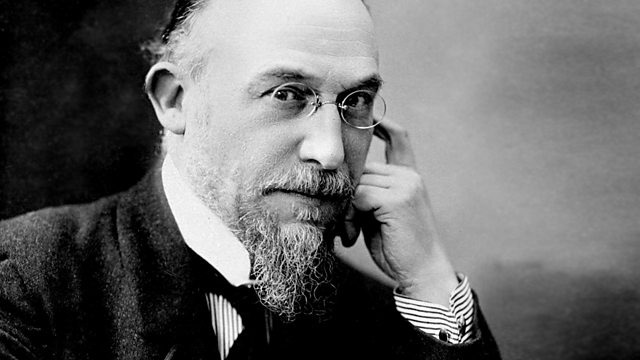
What’s behind our forthcoming event Personal Passions? Two years ago I had completed study of several works by Erik Satie, specifically, the Gnossiennes, the Gymnopedies and the Ogives. I had also  ‘composed’ a series of short sequences to sit between the pieces. Each of these rests on the tritone from the preceding key and acts to ‘reset the ear’ prior to the following piece. This helps clarify the transition. I felt this was necessary because the beguiling pieces are similar in character. I call each of these brief improvisations an ‘hiatus’. The concept was performed in fragments at various piano meetup groups. On April 5th this year, at October Gallery, I shall perform the full sequence and will be joined by Elena Toponogova, Ophelia Gordon and Matt Baker – three wonderful pianists and friends. We shall each play for around 30 minutes.

Elena Toponogova will play ‘Forgotten Melodies’ by Frank Bridge and Nikolai Medtner.

Matthew Baker will surround us with ‘Impressionism’, playing the music of Francis Poulenc, Claude Debussy and Maurice Ravel.

Ophelia Gordon will introduce her forthcoming CD: KAPUSTIN – Between The Lines, to be released on the Divine Arts label later this year. Ophelia will play 30 minutes of the CD. 

To add to the event, and based on my experience in the IT industry with GenAI (Generative Artificial Intelligence), we will be projecting sequences of images to support each of the four segments of the concert. Each has been themed around our ‘Passions’. The October Gallery space is ideal for this with its projection system and lighting.

We look forward to welcoming you to this unique venue. If successful, we hope the 4×4 format will be liked and can be repeated for other artists – both professionals and advanced amateurs from active piano circles in and around London, over the coming years. No promises but watch this space!

Event details:

Saturday 5th April 2025 at October Gallery, 24 Old Gloucester St, Bloomsbury, London, WC1N 3AL

Doors 7pm, Performances 7:30 until 10pm, 20 minute interval

Tickets £19. Book tickets at: https://billetto.co.uk/e/personal-passions-october-gallery-london-tickets-1098829

Reviews:

‘Her performance was mesmerizing!’

‘Serious, deep and rarely-performed pieces played with understanding and verve’

Poetic playing which draws the audience into her sound world’

‘Her captivating performance motivated me to aspire to her level. Having been a keen pianist myself in the past, I felt inspired to dive in and play the instrument again’

Programme

Satie, Erik – Gnossiennes: nos. 1 – 3
Satie, Erik – Ogive no. 1
Satie, Erik – Gymnopédies: nos. 1 – 3

Bridge, Frank – 3 Sketches, H.68
Medtner, Nikolay – Fairy Tale, Op.26 no.3

– Interval –

Poulenc, Francis – 3 Novelettes, FP 47/173
Poulenc, Francis – 8 Nocturnes, FP 56
Debussy, Claude – Ballade
Debussy, Claude – Suite Bergamasque: III, Clair de lune
Ravel, Maurice – Sonatine

Kapustin, Nikolai – programme to include the Concert Etudes, Op.40


Founded in 1979, October Gallery is a charitable trust which is supported by rental of the Gallery’s unique facilities, grants from various funding bodies and the active support of dedicated artists, musicians, writers and many friends from around the world. The Gallery promotes contemporary art from around the planet, as well as maintaining a cultural hub in central London for poets, artists, intellectuals, and hosts talks, performances and seminars.

Guest post by Dakota Gale, the latest article in his series aimed at adult amateur pianists


Not gonna lie: I had no idea what to write for this month’s Notes from the Keyboard.

Why? Well, honestly, for a lot of December and much of January, my enthusiasm for piano was lower than a gopher’s interest in sunbathing. 

Not that I wasn’t still playing consistently. I was, if less each day. I just didn’t feel that spark, the deep joy that I usually get from sitting down and banging on lovingly caressing the black and white keys.

Spoiler alert: I’m feeling much better now, back in the piano groove.

What changed?

Simple: my repertoire.

At the beginning of December, before a 6-week winter break from lessons, my teacher recommended – ok, convinced me – that it was time to learn a fugue. Specifically, Bach’s Cm Fugue from the Well-Tempered Clavier

I’d managed to mostly avoid Bach’s work, if only because I’m hard-headed and bring my own pieces to my teacher for study. (He does choose pieces for me, just not that often. The recent Beethoven sonata I wrote about, for one.)

Anyway, The F**kin’ Fugue. Out of the gate, I enjoyed it. Finding the theme, the left and right hand conversation, the different voicing. I dug the intellectual challenge.

Then… I stagnated with it. But I wanted to play it and knew it was good for my hand independence, among other things. My future piano self would be so.damn.grateful. I must persevere!

I’ve done this before, but (wisely) realized when I needed to back off and just enjoy myself. This time, I pushed too long and started skipping my morning piano session, only sitting down for a lackluster few minutes in the evening.

We all know what happens when you push the day’s exercise or homework or piano to the evening. Quality suffers and dogs yowl forlornly at the sky, that’s what!

For me, the former for sure happened, and I’m quite sure our elderly cat eyed me with disdain a few times too. That was enough: I realized I was in a slump and clawed my way out of the piano slump. 

You know what I did instead of the dang fugue? I went back to the repertoire I love. Chopin. Alexis Ffrench. I retackled a samba version of Happy Birthday. I even played the much-maligned LUDOVICO EINAUDI! (I’ve written about him before.)

My energy changed overnight. Revisiting older works and fun, lighter new pieces reinvigorated me. And it drove home a big reminder:

I’m an amateur. I’m doing this FOR FUN. I don’t have to learn anything on a deadline. That means it can be – should be – fun. 

We pianists know it’s a lonely pursuit filled with hours of solitude. It’s necessary to enjoy the scales, the sightreading practice, and the brain-melt of a new piece. Otherwise, this hobby isn’t happening. That’s like aspiring to run marathons, but hating the morning 5-mile jaunt!

And so I end this post, dear reader, with a reminder. If you find your interest flagging in piano (or any hobby), ask yourself “How could I make this more fun?” 

Perhaps it’s as simple as switching repertoire, or maybe it’s setting up a digital piano outside to mix things up. Playing with other people. Taking a break from the keys to strum a guitar? 

For me, the primary goal is enjoyment, personal fulfillment and being able to play Happy Birthday (samba version!) for a good friend. If I feel like digging a hole and chucking my piano deep into it, then I’m doing something wrong.

Now I just need to remember that next time I’m wrestling for too long with a difficult piece. For now, my love affair with piano continues.


Dakota Gale

When he isn’t playing piano, Dakota Gale enjoys exploring the great outdoors, learning languages and drawing. He also writes about reclaiming creativity as an adult and ditching tired personal paradigms in his newsletter, Traipsing About. He can often be spotted camping and exploring mountain bike trails around the Pacific Northwest.

Read more articles in his Notes from the Keyboard series here

To coincide with the release of her new album ‘Chopin: Voyage’, Russian pianist Yulianna Avdeeva talks about her life in music, balancing one’s artistic needs with the external pressures of a professional career, and how inspiration “can be found anywhere”.….


Who or what inspired you to pursue a career in music and who or what have been the most important influences on your musical life and career?

In my childhood I was surrounded by music. Although my parents are not professional musicians, they were great music lovers and had an upright piano at home, as well as a solid LP collection. At some point they realized that I was trying to play a melody that I had just heard with one finger on the piano, and took me to the Gnessin Special Music School. When I was 5 years old I entered the piano class of Elena Ivanova, with whom I studied for 13 years, until my graduation, and who became a family member for me. Thanks to her amazing admiration and approach to music, I was able to discover this magical world for me as well. However, the moment I remember so well, which was crucial to me, was my first public performance, when I was 6. I was supposed to play 2 Tchaikowsky pieces from his Children‘s album, and my parents and teacher were explaining that I shouldn‘t be scared by the light and people and the audience and should be concentrating on the music I’d play for them. I was not scared at all; on the contrary, I enjoyed very much communicating with the audience through the language of music! And I wished to perform again. So the solution for how to stay motivated for practice was found! I keep that feeling until today and am so grateful to be able to speak this universal language with people all over the world.  

What have been the greatest challenges of your career so far?

I think the greatest challenge is to find out what your mental and physical needs are in order to achieve the most satisfying artistic result. This result depends on many factors, which I had to recognize and acknowledge in my preparation work as well as in my stage performance. Time management is one of the most essential elements; it means that I must know how I should organize my practice, so that I give each piece I perform enough space not only in my daily practice but also in my soul, since I need to “live” with a piece for a while so that it becomes, in a way, my co-creation. On the other hand, I have to know my limits — for instance, if I have a very tight schedule, how many programmes can I really handle? And does it make sense, artistically? My personal goal is to be in the best shape when I walk onstage, and it is probably a never-ending process to understand myself.

Which performances/recordings are you most proud of? 

It is always very difficult for me to listen to my own recordings or the recordings of my own concerts. I almost always think, “Oh, now I would play that completely differently!”. This is the charm and challenge of music — it exists only in the moment when it is being performed, and it is not easy to capture this moment on any recording. So I very rarely listen to my own performances — with some exceptions, of course. For example, it is an amazing inspiration and joy to work with Bernhard Guettler, the sound producer I have worked with for my latest two recordings — Resilience, and Voyage, my new Chopin album, on the Pentatone label, featuring his late works, which has just been released. This particular recording experience was absolutely unique for me for two essential reasons: the location and the instrument. I was so lucky to make this recording at the one and only Tippet Rise Arts Center, in Fishtail, Montana, surrounded by nature and a wonderful team. And on top of that, I played the music on Vladimir Horowitz’s personal piano, which has an exceptionally long and warm sound that opens up like a flower.

When I first touched this piano in September 2022 at the TIppet Rise Arts Center, my first thought was, “This piano is my dream partner for Chopin’s music!”. So I am very thankful to Peter and Cathy Halstead and the entire team at Tippet Rise Arts Center for their most kind support; Mike Toya for his amazing care of the piano; Bernhard Guettler for his patience and his unlimited desire to explore the sound worlds; and the Pentatone team for bringing this recording to life.

Which particular works/composers do you think you perform best?

The moment I decide to play any piece, it becomes “the best and dearest piece” for me, otherwise I will not be able to find an authentic approach to it. Nevertheless, of course there are composers I admire so much, since they have an enormous emotional impact on me, such as Bach, Beethoven, Schubert, Schumann, Chopin, Liszt, Rachmaninoff, Mahler, Prokofiev, Shostakovich, and Bartok, to name just a few. A great discovery for me was Bernstein’s Second Symphony, “Age of anxiety,” in which the piano has a very important solo-like part. It was an exciting process to prepare this unique work, based on Auden’s poem, and I am so lucky to have performed it a couple of times in Spain and Italy and finally to play it in the United States with the Minnesota Orchestra and Robert Trevino on October 18th and 19th, 2024!

How do you make your repertoire choices from season to season?

The piano repertoire is just limitless, which is the pianist’s curse and blessing! My personal list of pieces I would love to play is getting longer every year, so I have to make decisions about what I would like to play next. Sometimes it takes a long while to decide on a recital programme; for me it is important that there is a certain concept, or at least a connecting idea between the pieces. The programme I am performing at Carnegie Hall on October 22, 2024 is a Chopin and Liszt recital. They were the two giants of the Romantic era, both unique performers, and both were trying out the most extreme ways of expression on the piano, even if they were moving on very different paths.

Next year I will be performing Shostakovich’s 24 Preludes and Fugues, op 87, which for me is one the greatest cycles for piano of all time. It was inspired by Bach’s The Well-Tempered Clavier, which I will be playing in 2027. These cycles require my entire concentration in the preparation. At the same time, for next year I also prepared a programme that connects two composers you wouldn’t expect to see together — Chopin and Shostakovich. But Shostakovich was a participant at the first Chopin Competition, in 1927, in Warsaw, and he played Chopin a lot in his younger years. So it is always kind of a work of investigation to create a recital programme.

Do you have a favourite concert venue to perform in and why?

There are many; I could not pick only one. Some of the halls are very inspiring because of their history and the musicians who have performed there — like Carnegie Hall, or the Musikverein in Vienna, but also some modern halls are amazing because of their acoustics and atmosphere — for example, Disney Hall in Los Angeles, or Elbphilharmonie in Hamburg. 

What do you do off stage that provides inspiration on stage?

I am convinced that inspiration can be found anywhere — it can be a color from the sky or of the leaves on a tree; it can be a conversation, or a great book, or even a smell — like the smell of the air in the autumn, or the aroma of a fantastic meal. I just have to be very open to be able to absorb it.

What is your most memorable concert experience?

It is difficult to say. In every concert I share a part of my soul, and my soul in turn keeps the memories of each single concert. And, as I mentioned, the music exists only in a moment when it is being performed and cannot be repeated — that is why each concert experience, even with the same repertoire, is always different.

As a musician, what is your definition of success?

Artistic success for me is probably when I am able to present an interpretation of a piece which on the one hand comes as close as possible to the composer’s will — though this criteria is very subjective — so, on the other hand, it is about my personal feelings about the music, which should be very strong and authentic. And the message of the music I perform should be acceptable for the audience, otherwise I have failed to translate the music score into human feelings. 

What do you feel needs to be done to grow classical music’s audiences?

It is essential to give access to music to the youngest. That can be through playing an instrument, singing, dancing, or any other kind of musical activity, because music also helps children to feel and articulate the emotions they experience. This is what makes human beings unique and irreplaceable. Later on, children who have been exposed to these experiences will decide whether they want to play or sing for their family, or go to concerts, or become a professional musician. Maybe they will not have any interest in it at all. But our goal should be to give them a chance to explore this magical world of music.

What advice would you give to young or aspiring musicians?

I would like to encourage young musicians to think, before they go on stage, about how lucky we are to be able to speak the language of music and share our passion with the audience. And it does not matter if their audience is big or small, or if it is a concert, an exam, or a competition — it is only music, which matters for the performer, and we should only focus on it. I am wishing you a long, happy life, full of wonderful sounds! 

Yulianna Avdeeva performs music by Chopin and Liszt at Carnegie Hall, New York, on 22nd October. Find out more here

Yulianna Avdeeva’s new recording ‘Chopin: Voyage’ is available now on the Pentatone label.