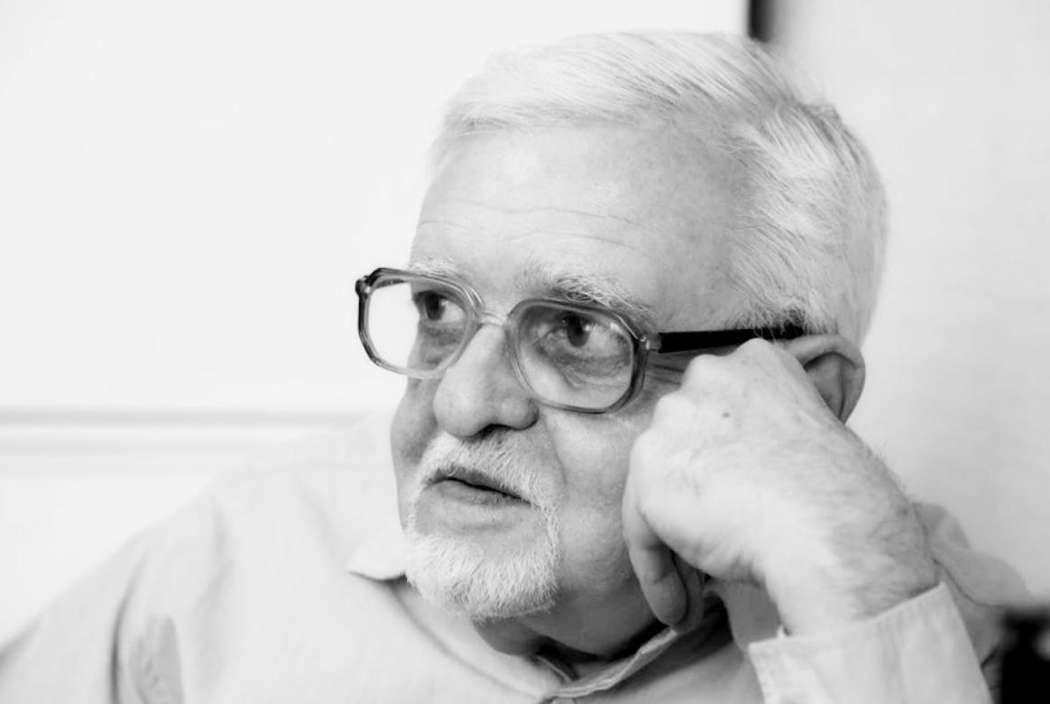
“Schubert’s music is the most human that I know.” – Sir András Schiff, pianist

I will never quite have the words to express what Schubert’s music has meant to me…and I will never stop looking for them. His ability to convey loneliness — and console in its wake — is perhaps his most ineffable quality…” – Jonathan Biss, pianist

Image credit Hadi Karimi

Schubert’s music provides the bridge between the classical and romantic eras. Yet his music was not well known during his lifetime outside of Schubert’s own intimate circle of friends. His piano music was largely neglected right up to the early part of the 20th century when it was given the attention it deserved by pianists such as Artur Schnabel, who can be partly credited for introducing it into the regular concert repertoire with pieces such as the late piano sonatas, the two sets of Impromptus, the Moments Musicaux, and the “Wanderer fantasie”. Today, these works are staples of the pianist’s repertoire, much loved by performers and audiences alike.

Schubert’s musical sensibilities and invention were inspired by the human voice – he wrote over 600 songs – and lyrical melody and long-spung cantabile lines are distinctive elements of all his music.

For the pianist, his music remains an interpretational challenge and the best Schubert players have absorbed the essentials from his songs and chamber music. Because of his proximity, and admiration for Beethoven, there is a tendency among some players to approach his music like Beethoven’s; but Schubert is a composer who speaks more quietly and introspectively, even in his more declamatory moments. The skill in playing his music well is a sensitivity to these aspects without sentimentality.

British pianist Clifford Curzon (1907-1982) had a special affinity for Schubert, fostered by his studies with Artur Schnabel. His performance of Schubert’s last sonata, the D960 in B-flat, is considered by many to be one of the greatest performances ever. In this recording, his concentration and nervous intensity are so palpable it is almost like eavesdropping.

Clifford Curzon Plays Schubert’s Piano Sonata in B-flat major, D.960

A protégé of the great Russian pianist Sviatoslav Richter, himself a fine Schubert player, Russian pianist Elisabeth Leonskaja is noted for her performances and recordings of Schubert’s piano music. As an artist, she is unfailingly intelligent, tasteful and musical, whose performances display great refinement, romantic fervour, delicacy, and power, all underpinned by commanding technique.

Franz Schubert: Fantasy in C Major, Op. 15, D. 760, “Wandererfantasie” – Allegro con fuoco ma non troppo (Elisabeth Leonskaja, piano)

No appraisal of Schubert pianists would be complete with András Schiff, who really honours every work, and who has recorded the piano music on Schubert-era instruments, offering listeners an intriguing insight into the range of colours and nuances afforded by Schubert’s writing. Always fastidious in his close attention to the details of the score, Schiff really gets to the heart, soul, and fundamental humanity of Schubert in his playing and brings a compelling intimacy to his performances, even in the largest of concert halls.

The great Romanian pianist Radu Lupu, who died in April 2022, was described by Gramophone magazine as “A lyricist in a thousand”, who placed Schubert’s music at the centre of his repertoire throughout his career. Sensitive to Schubert’s mercurial moods, his playing demonstrates immense control, subtlety of shading and dynamic nuance, an almost ethereal luminosity of sound, and a myriad range of colours which fully reveals Schubert’s inventiveness and imagination, the rich seam of his ideas, and his forward vision.

Like András Schiff, Mitsuko Uchida has an unerring ability to bring an intimacy and sense of a conversation to her performances of Schubert’s music, and she does so with clarity, commitment, and a clear sense of the narrative line, the lightness and lyricism, and also the roughness in his music. Uchida is very alert to Schubert’s idiosyncrasies, his chiaruscuro and elusive, shifting moods: beauty and delicacy, poignancy and loneliness abound in her performances of this composer whose music has been a lifelong presence for her.

Other fine Schubert players to explore include Shura Cherkassy, Rudolf Firkusny, Walter Gieseking, Rudolf Serkin, Wilhelm Kempf, Paul Lewis, Maria João Pires, Alexander Lonquich, Imogen Cooper, Krystian Zimerman, Murray Perahia, and of course Alfred Brendel. Of the younger generation, recent discoveries include Inon Barnatan, Yehuda Inbar, Pavel Kolesnikov and Samson Tsoy

An earlier version of this article appeared on the InterludeHK website


Support The Cross-Eyed Pianist

This site is free to access and ad-free, and takes many hours to research, write, and maintain. If you find joy and value in what I do, why not

Unearthed manuscripts reveal a new side of the eccentric French composer, brought to life by pianist Alexandre Tharaud in a recording of previously unheard works

A century after the death of Erik Satie, 27 never-before heard works are released to the public for the first time. The landmark digital album, Satie: Discoveries, performed by acclaimed pianist Alexandre Tharaud, is now available on Erato, just days ahead of the centenary of Satie’s death on 1 July 1925.

Erik Satie

The collection sheds new light on one of music’s most enigmatic figures. Reconstructed from forgotten manuscripts and unfinished sketches, these pieces, ranging from playful cabaret songs to minimalist nocturnes, were originally written by Satie for performance in the bohemian cafés of Montmartre, where he worked as a pianist in the late nineteenth century.

The album is the result of painstaking musicological research by Sato Matsui, a Japanese composer and violinist, and James Nye, a British musicologist and composer. The duo independently tracked down lost materials in the Bibliothèque nationale de France and a private archive in Boston, piecing together and reconstructing Satie’s sketches into fully performable scores. Some of these are to be published by Éditions de la Fabrique Musique.

Among the newly discovered gems are pieces in the same free, minimalist style of Satie’s Gymnopedies and Gnossiennes (for example, Réflexions nocturnes and Autour du 1st Nocturne). Other works draw on familiar dance styles, (including several Parisian Valses), the café-concert song and operetta arias (‘Le Champagne’, ‘Pousse l’amour’ and ‘Chanson andalouse’).

Further pieces reveal a more experimental Satie, such as the Esquisses bitonales (Bitonal Sketches) or the Soupirs fanés (Faded Sighs), a collection of miniatures with evocative titles such as ‘Poil’ (Hair), ‘Barbouillage’ (Daubings), ‘Familial désespoir’ (Domestic Despair) and ‘Souvenirs fadasses (Dusty Memories).

Though most of the tracks feature pianist Alexandre Tharaud performing solo, three also feature the acclaimed Serbian violinist Nemanja Radulović. Radulović’s violin takes on the role of the singer in a mélodie and two cabaret songs where the lyrics are now lost. 

In addition to these 27 world-premiere recordings, two already familiar pieces are included: the hypnotic ‘Chinese Conjuror’ from the ballet Parade, for piano four hands with Gautier Capuçon, and the ‘Chanson andalouse’, originally intended for the never-performed operetta Pousse l’amour. The ‘Cancan Grand-Mondain’ (High-Society Cancan) from La Belle Excentrique is recorded here in a new version for solo piano by Tharaud himself.

Alexandre Tharaud said of the album: “Satie remains very much an enigmatic figure today, held in enormous regard at the same time as being largely misunderstood and almost unknown…it is up to us to look beyond the Gnosiennes and the Gymnopédies, to try our sincere best to get closer to the music and to pay real attention.”


Satie: Discoveries is out now on Erato on all streaming services

Source: press release

When the first notes of Chopin sound through the concert hall there is a happy sign of recognition. All over the world men and women know his music. They love it. They are moved by it. When I play Chopin I know I speak directly to the hearts of people.

Arthur Rubinstein


Virtuosic, imaginative, and emotionally profound, Chopin’s music offers pianists a wealth of expressivity, requiring a combination of superior technique, which always serves the music (rather than as an end in itself), refined touch, a beautiful cantabile (singing) tone, highly nuanced dynamic shading, supple phrasing and rubato, and an appreciation of the interior architecture of this multi-layered music. Chopin is also symbolic of Poland, the country of his birth, whose musical idioms are evident in almost all his music, most obviously, the Mazurkas and Polonaises.

When asked, the great Chopin player Arthur Rubinstein could not explain why Chopin’s music spoke to him, but like the music of J.S. Bach (which Chopin greatly admired and studied), it expresses universal humanity which, combined with a certain vulnerability, speaks to so many of us, and on many different levels.

An unrivalled authority and one of the greatest interpreters of the music of Chopin, Rubinstein brought great dignity and refinement to the music, avoided unnecessary mannerisms and sentimentality, and revealed the structural logic of Chopin’s writing. His playing is memorable for its elegant vocal phrasing, beauty of tone, and natural yet sophisticated shaping.

Arthur Rubinstein Plays Chopin’s Polonaise in A Flat Major, Op.53

“A master of the keyboard” (Harold C Schonberg), Dinu Lipatti was the pupil of an older Chopin master, Alfred Cortot.

Lipatti’s immaculate performances of the waltzes, in particular, are spontaneous, light and nimble, lyrical and suitably dancing, with subtle rubato and great charm.

“It’s very inner music and very deep,” Maria João Pires has said of Chopin. For her, he is “the deep poet of music”. That depth is really evident in Pires’ playing of the Nocturnes: intimate, refined and passionate, her interpretations eschew drawing room night-time sentimentality and capture all the drama and emotional intensity of these much-loved pieces.

Described by one critic as “the greatest Chopin player to have emerged from Italy since the Second World War”, Maurizio Pollini’s association with Chopin goes right back to the beginning of his professional career when he won the Chopin Competition in Warsaw when he was just 18. His unsentimental, cultivated interpretations are notable for their clarity of expression, perfectly judged poetry, and close attention to the bel canto melodic lines which make Chopin’s music so immediately appealing.

Alfred Cortot is one of the most celebrated Chopin interpreters, combining flawless technique with a deep appreciation of the structure, voicing, and textures of Chopin’s music. His recordings are acclaimed to this day, and his detailed, annotated editions of Chopin’s music remain highly prized among pianists and teachers.

Hailed by her mentor Arthur Rubinstein as “a born Chopin interpreter”, Polish-Canadian pianist Janina Fialkowska captures the soul of Chopin, in particular in her performances of the Mazurkas, works which reveal Chopin’s patriotism and innermost sentiments towards his homeland. Fialkowska is sensitive to both the humble, peasant origins of the Mazurka and Chopin’s elevation of the genre into concert pieces. She really captures the poetry, poignancy, and whimsical emotions of these Polish folk dances, and her rubato is perfectly judged, especially important in these pieces where suppleness of pace lends greater emphasis to the emotional depth of the music.

An earlier version of this article appeared on the InterludeHK website


Support The Cross-Eyed Pianist

This site is free to access and ad-free, and takes many hours to research, write, and maintain. If you find joy and value in what I do, why not

Guest post by Frances Jones

I’ve never found it easy to keep New Year’s resolutions. Often, they are admirable but just not sufficiently motivating and are inevitably dropped before ever really achieving anything. Last year, though, I decided I would practice the piano more often and also give a concert, however low-key, for my students, most of whom were under the age of 10. One of the pieces I re-learnt and performed was Germaine Tailleferre’s Impromptu, a wonderfully spirited piece with an oft-repeated motif that ducks and dives through many keys before finally coming to rest with a ritardando and arpeggiated passage alighting on the tonic.

Rediscovering this piece led me to think of Tailleferre’s First Piano Concerto. I say rediscovering because Germaine Tailleferre’s music was the subject of my undergraduate thesis, back in 2005. It wasn’t long before I was listening to the concerto, now much more easily available on Youtube, and recalling an afternoon spent poring over the score in the dimly lit depths (or so it seemed to me) of the British Library.

Tailleferre wrote her first piano concerto in 1924 and, in a departure from the Romantic style of her earlier pieces for piano, embraced the neo-Classicism that had been emerging in France in the early years of the 20th century and that she had deployed in her string quartet of 1919. As far as I’m aware, there has been just one recording to date, by the University of California Santa Cruz Orchestra:

The first movement is in sonata form, but foreshadows the neo-Classical style of Stravinsky in his Dumbarton Oaks Concerto with its similarity to concerto grosso. The instrumentation, too, is reminiscent of earlier times, with strings, trumpet, horn, oboe, bassoon, flutes and timpani. The piano and orchestra start together in the first bar, and the musical themes are shared in a joyful back and forth full of counterpoint and syncopation. The opening theme, a descending melody with a repeated rhythm, is heard over a staccato bass which really bounces along and immediately conjures up a sense of exuberance. Later on, the harmonies are more Romantic and the piano is more obviously accompanied by the orchestra, but the melody is still propelled by a driving rhythm. The joyous, energetic character returns as the opening material is repeated, exchanging fragments of melody, overlapping and answering, until the final bars.

The second movement has a different feel. Indeed, when I was researching this work for my thesis, I was so struck by the similarity of the slow movement to the slow movement in Ravel’s Piano Concerto in G, that it led me to consider the influences that this concerto may have had upon Ravel. (Ravel wrote his concerto in 1934, and the two composers were good friends). This is a subject for another time, but it makes for an interesting discussion. The movement starts with solo piano, and a continuously evolving melody which defies a clear sense of beat and only becomes clearer when the flute enters in bar 4. This emphasis on melody harks back to the earlier style of her piano works, in which melodies evolved over a more static bass line. It’s a beautiful movement, wistful and yearning; it builds to heavy chords, anguish almost palpable in each, and subsides, the strings accompanying the piano to resolve onto a major chord, the sun shining again on the rain-soaked pavement (if you’ll excuse the weather analogy).

We return in the third movement to the uplifting character of the first and indeed, to a more obviously neo-Classical style. But it’s not without its individualism. The themes are characterized by off beat rhythms that cut through the texture but there is lyricism, too, always urgent, pushing forward, both orchestra and soloist involved in an intense communication. There’s a joyful, ascending

piano melody, followed by a conversation with the flute and oboe and, finally, a cadenza where the pianist emerges into the limelight. However it’s the interweaving of the melody through the orchestral parts, specifically flute, oboe and trumpet, that I really enjoy in this movement. Towards the end, the syncopated motif is shared around the orchestra, the soloist running up and down the piano in scalic passages until the trumpet breaks through the texture to end with a triumphant flourish.

Tailleferre’s Piano Concerto was premièred in London by Alfred Cortot in 1924. Although performed many times in the decade following its publication in 1925, the work has not since achieved a fraction of the commercial success enjoyed by other 20th century concertos. It perhaps just doesn’t quite have that level of virtuosity attained by other composers, such as Ravel in his Piano Concerto in G, or Shostakovich in his First Cello Concerto. Its neo-Classical style and lack of a really prominent part for the soloist may also have contributed to its gradual disappearance from the concert platform. However, the more I (re)listen, the more I’m drawn to this work which appears like a burst of musical sunshine from the Paris of the 1920s. I’d love to hear it performed live. Perhaps now, 100 years on, might be the time for its renaissance.


Frances Jones read music at York University, followed by a PGCE at Cambridge. She is Music Lead at a school in West London and also teaches piano.