Review by Karine Hetherington

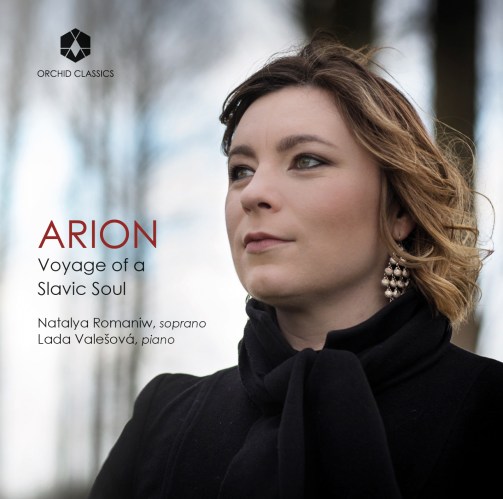
Natalya Romaniw’s star has been shining bright on the operatic stage for the past five years as her creamy soprano voice continues to draw an ever increasing legion of fans. A Daily Telegraph critic suggested in February this year that Romaniw was the next Netrebko of her generation.

At Opera Holland Park last season, I was enraptured by her lead performance in Tchaikovsky’s Iolanta. Her Tosca at Scottish Opera and, more recently, her Madame Butterfly at ENO, earned her the highest of accolades from critics and audiences alike. Her Cho Cho San at the Coliseum was unforgettable.

And now away from the heady world of live opera, Romaniw, together with pianist and long time collaborator, Lada Valešová, are bringing out Arion, an album of Slavic song repertoire.

Read more

Romaniw-ORC100131-WebCover-1

For American pianist Jonathan Biss, Beethoven has been a near-constant companion for almost his entire life. He has been playing and writing about the 32 Piano Sonatas, has spent nearly ten years recording Beethoven’s sonatas and has embarked on a cycle of concerts performing all the sonatas at London’s Wigmore Hall and in the US (and let us hope this wonderful series will be able to resume….).

the intensity of my current immersion with his music has become one of the most profound experiences of my life.

Jonathan Biss

This handsomely-produced boxset of the complete Piano Sonatas (Orchid Classics) presents the sonatas not in chronological order, as many sets do, but rather with a cross-section of sonatas on each disc, to demonstrate Biss’s conviction that each one stands as a brilliant masterpiece in its own right. This approach – one which he is also taking in his concert cycle – allows the listener to appreciate the individual qualities and distinct structures of each sonata, and the extraordinary development in Beethoven’s piano writing. Thus, the final sonatas, usually presented as a trilogy, in concert and on disc, are placed on separate discs within the context of sonatas from different periods of Beethoven’s compositional life. Biss refutes the notion that Beethoven had three distinct compositional periods as an over-simplification and instead urges the listener to view Beethoven’s compositional style in “a perpetual state of evolution”; even the final sonatas still betray some of his gruffness and a desire to shock, while the slow movements of the early sonatas look forward to later ones in their heart-stopping beauty and eloquence.

As individual works, each is endlessly compelling on its own merits; as a cycle, it moves from transcendence to transcendence, the basic concerns always the same, but the language impossibly varied

Jonathan Biss

As mentioned in my review of his most recent Beethoven sonatas concert at the Wigmore, Biss is a “thinking pianist”, with an acute intellectual curiosity and an ability to articulate the exigencies of learning, maintaining and performing this music, its challenges and its joys, offering remarkable insights, “behind the notes”, as it were, from the point of view of the performer. “Here was vivid expression, vitality and flamboyance; no standing back from the music as if in modest reverence but rather a deep dive into its every nook and cranny to winkle out and reveal details afresh.”

So does Biss achieve a similar spontaneity, vitality and expressivity in the recording? I think so – and the set gets off to an energetic start with the Sonata in C minor, No 5, Op 10/1, its first movement dramatic and commanding, the finale a throbbing, quickfire rondo bookending a slow movement of immense elegance.

Biss also appreciates Beethoven’s humour and wit, and selects pacing, particularly in the up-tempo movements, to highlight this. He often finds the humour in the music which others often gloss over: quirky ritardandos and accelerandos, which may irritate purists, and laugh-out-loud fermatas. 

Purists may also baulk at shifts in pace which are not always marked in the score, but I like the often dizzying, sometimes unruly tempi, as if Beethoven couldn’t get his ideas down fast enough. There’s a strong sense of storytelling here too, with dramatic bursts of narrative presented with a gripping immediacy – the finale of ‘Les Adieux’, for example, overflows with heartfelt joy. Slow movements, meanwhile, become transcendent poetic interludes infused with grace, tenderness and warmth; and these often reveal the true depths of Beethoven’s imagination.

The famous opening movement of the ‘Moonlight’ sonata (too often the subject of rather lugubriously clichéd readings) is hushed and haunting, just teetering on the edge of tragedy, but always eloquent. Biss’s sound is luminous (“moonlit”?!) and liquid, his pace a gently rippling moderato. This is contrasted by a finale of almost unrelenting restlessness, occasionally bordering on a comic hysteria. It’s this kind of playing, combined with airy passagework, dramatic tempi, crisp articulation, and a vivid aural imagination that can harness the breadth of the piano’s sonorities (listen to his pedalling in the finale of the Waldstein and the kaleidoscopic sound effects he achieves), that had me on the edge of my seat for much of Biss’s recent Wigmore concert.

But it’s not all about fleet fingers. Biss gives us thoughtful long-spun melodic lines, well-balanced harmonies, taut, driving rhythms, rumbling tremolandos, dramatic fermatas, carefully-considered voicing, subito dynamic swerves, and colourful orchestration – all devices Beethoven employs to express an amazing range of emotions from joy to despair, wit and uproarious humour, stubbornness and rage, passionate ardour and transcendent serenity. The sheer force of Beethoven’s personality, his capriciousness and inventiveness, is illustrated by Biss with clarity and proportion, beauty and commitment. His Beethoven is direct, lively and spontaneous, ever alert to Beethoven’s shifting moods. And while he undoubtedly respects the composer and his music, Biss does not allow reverence to get in the way of telling an entertaining story (certain other Beethoven pianists would have us believe that because this is “great music”, it must also be Very Serious). Instead, Biss’s approach is delightfully optimistic – one senses his constant curiosity and open-mindedness about this music – and refreshingly liberated from more mainstream interpretative choices. One also has the sense of a pianist with a profound affection for this music which comes from a long association with it, but also an ongoing fascination; for Jonathan Biss, the journey is far from over.

This is, in short, beautiful, thoughtful and incredibly vivid playing, and because of the organisation of the sonatas, each disc feels complete and satisfying in its own right, like a recital. An invigorating addition to the catalogue of Beethoven piano sonatas.

Recommended


Jonathan Biss | Beethoven: The Complete Piano Sonatas is available on the Orchid Classics label.

Who or what inspired you to pursue a career in music?

I was always a musical child; I used to sing a lot in choirs before playing the violin; this has had a big influence on my playing.  I’m not sure what made me want to play the violin, but I remember that it was something I nagged my parents to do for about a year before I finally started aged eight. Once I had my hands on one, I knew that I would be able to play the thing!  Once it became clear that I had something special, the choice of career was made for me!

Who or what have been the most important influences on your musical life and career?

I had a wonderful friendship and working relationship with my one and only teacher Mateja Marinkovic. I was very lucky to find a teacher at that top-level from the first lesson, so violinistically he was my biggest influence. Since then it has been making wonderful collaborations with other like-minded musicians.  I have always had a very strong musical instinct; later on in my career though teaching at the Royal Academy of Music I have had to unpick why I feel things in this strong way in order to explain it to others!

What have been the greatest challenges of your career so far?

Learning to play the violin to a world-class level is undoubtedly the most challenging thing I have ever experienced! We have to sacrifice so much as youngsters to get there, missing out on childish fun and shedding a lot of blood, sweat and tears.  Still, it was worth it in the long run.

It’s 25 years since I made my debut with the Hallé Orchestra, and another significant challenge is to continually evolve and develop yourself over time so as not to become stale. For me, that has meant pushing myself to try new things and taking risks with repertoire that other players shy away from.

I have always challenged myself to be the best I can and in order to evolve I have also had to be creative, from the founding of my Music, Science and Arts Festival in Oxford (www.OxfordMayMusic.co.uk) to recently being given the role as Artistic Director for the Australian Festival of Chamber Music (www.afcm.com.au). These roles take me out of being a just a player into a whole new creative world.

Which performances/recordings are you most proud of?

I am very proud of the three recordings I made for Hyperion of the complete Bruch works for violin and orchestra with the BBC Symphony Orchestra and Martyn Brabbins. In particular, the recording of Bruch Violin Concerto no. 2 is very close to my heart.  I’m also very excited by my latest recording of the Schoenberg and Brahms violin concertos (Orchid Classics). The Schoenberg was an incredible adventure to learn and get to grips with.  I have made some lovely movie soundtracks, and as I imagine music in terms of storytelling, the imagery and music make such a powerful combination; the soundtrack to Jane Eyre written by Dario Marianelli still makes me cry!

Which particular works do you think you perform best?

I have probably enjoyed performing Brahms Violin Sonatas with my regular collaborator Katya Apekisheva the most out of any of the smaller scale repertoire. In terms of concertos, I adore Mendelssohn Concerto, and I could play it over and over again without tiring of it. I love Brahms and Dvorak Concertos too. I have also had a great time performing more contemporary concertos like those by Magnus Lindberg (no 1) and Brett Dean.

How do you make your repertoire choices from season to season?

This happens kind of organically. Some things are requests from promoters (for instance an unusual concerto), others more ideas that come together because of a particular theme.  I am happy to juggle lots of repertoire, so sometimes there is no rhyme or reason!

Do you have a favourite concert venue to perform in and why?

In London I would say the Wigmore Hall is the most special – you can hear a pin drop!  Out of London where the best halls in the UK are, I particularly love Symphony Hall in Birmingham and Usher Hall in Edinburgh. The hall becomes an extension of the instrument, so the best halls allow the violin to fully vibrate and give a warmth to the sound, and the hall gives feedback to the musicians.

What is your most memorable concert experience?

I have always said that as a British soloist, you haven’t made it until you have played a Prom concert. This happened for me in 2015 when I played Paganini’s La Campanella with the BBC Concert Orchestra, and I’m looking forward to the next one!

Performing in Leipzig Gewandhaus with MDR Orchestra a few years ago was magical. My father’s side of the family came from Germany but fled the Nazis, and I could feel my (long dead) grandfather in the room; he would have been so proud!

As a musician, what is your definition of success?

See above re the Prom!

But, also I think longevity is a sign of success in the musical world, continuing to evolve and perform into your middle age (I’m getting there!) and then later is a real sign of success and stamina…

What do you consider to be the most important ideas and concepts to impart to aspiring musicians?

For me, integrity as a musician is the most important asset.  We are the voice of the composer, the notes didn’t accidentally land up on the page, so we have to justify every sound we make. No notes left behind!

What is your most treasured possession?

I have two; one is my incredible Guadagnini violin, a life partner that I have played for over twenty years. The other is my dog Mollie – although sometimes I think I am her possession.

Jack Liebeck’s new recording of the Schoenberg and Brahms violin concertos is available now on the Orchid Classics label.


Violinist, director and festival director Jack Liebeck, possesses “flawless technical mastery” and a “beguiling silvery tone” (BBC Music Magazine). Jack has been named as the Royal Academy of Music’s first Émile Sauret Professor of Violin and as the new Artistic Director of the Australian Festival of Chamber Music from 2021. Jack’s playing embraces the worlds of elegant chamber-chic Mozart through to the impassioned mastery required to frame Brett Dean The Lost Art of Letter Writing. His fascination with all things scientific has included performing the world premiere of Dario Marianelli’s Voyager Violin Concerto and led to his most recent collaboration, A Brief History of Time, with Professor Brian Cox and Benjamin Northey. This new violin concerto was commissioned for Jack by Melbourne Symphony Orchestra from regular collaborator and composer Paul Dean, and is written in commemoration of Professor Stephen Hawking; A Brief History of Time received its world premiere in November 2019.

Read more


Image credit: Kaupo Kikkas

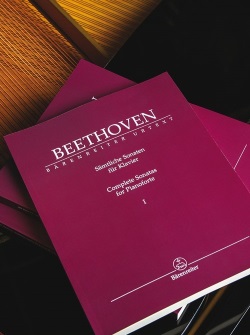
beethovenpianoimage1smallTo Wigmore Hall on Friday evening, at the invitation of music publisher Barenreiter, to celebrate the recent publication of a new three-volume edition of the complete Beethoven Piano Sonatas, edited by renowned Beethoven expert Jonathan del Mar.

Prior to the pre-concert talk, I had lunch with an old pal from university. We hadn’t seen each other for about 30 years, and had only recently reconnected thanks to Facebook. Our lunch conversation was a mixture of catching up and reminiscing about a very happy (and, to be honest, fairly well-behaved) three years at Exeter University in the mid-1980s, a time when there were no tuition fees, when gaining a degree still held a fair amount of cachet, and when it was relatively easy to find a job on graduation. Talking about music, we recalled the songs and bands which had been so meaningful to us at that time – Talking Heads, The Communards, The Smiths, Prefab Sprout, The Beastie Boys….. I almost had to “reset” when I walked through the gilded doors into the plush crimson-and-gold foyer of the Wigmore Hall.

2020 is Beethoven’s year, and however you may rail against it, protest that he’s getting far too much attention, demand more diversity in concerts programmes etc etc, you can’t escape the Old Radical and his music (and maybe there’s an undergraduate thesis to be written on whether Beethoven was the original Beastie Boy!). There’s a good reason for this, in my opinion, and that’s because in addition to this being the 250th anniversary of his birth, his music is absolutely bloody marvellous! He is “great” – and that was amply demonstrated in Jonathan Biss’ performance, the third concert in his odyssey through the complete Beethoven piano sonatas at London’s Wigmore Hall.

The compulsion to play and record this music, combined with, more often than not, a fair degree of reverence, is very much alive and well – and each generation brings a fresh crop of pianists willing to rise to the challenge; Biss’ cycle at the Wigmore comes hot on the heels of those of Igor Levit and Llyr Williams – and all three pianists have released recordings of the complete sonatas (Biss’ final instalment is due soon from Orchid Classics). This music enjoys an elevated stature which goes far beyond the notes on the score, and despite some relaxation in the rituals and etiquette of classical concerts, the 32 piano sonatas are still regularly presented in an atmosphere of awed reverence. This was palpable when I and my concert companion entered the sacred shoebox of the Wigmore auditorium (as my companion commented, hearing Beethoven is like an anticipating a grand meal, with steak as the main component!). Any pianist who takes on the colossal challenge of the piano sonatas enjoys special respect: not only is this music physically and psychologically demanding, but the hand of history, tradition and expectation weighs heavily upon their shoulders.

intense, immersive, impassioned, hugely demanding and hugely enriching

Jonathan Biss, pianist

Friday’s concert was prefaced by a special event hosted by Barenreiter in which Jonathan del Mar talked engagingly about the process of producing another edition of the complete piano sonatas when so many already exist. He outlined the obvious prerequisites for the “ideal” edition:

  • It consults all surviving sources, to ensure “all the right notes” are included
  • It provides a commentary for musicians which is open and transparent
  • It delights the musician’s eye in its clear design and spacious layout, with “as good as possible” page turns.

Del Mar’s research revealed some interesting and entertaining “mishaps” in previous editions; for example, a hole in the paper being mistaken for a staccato marking or essential details being lost in the conservation and cleaning up of manuscripts. His interesting commentary was illuminated by musical demonstrations on the piano.

Jonathan Biss is a “thinking pianist” with an acute intellectual curiosity, as evidenced by his writings on Beethoven, and other composers, and his online course on the Sonatas. It was therefore a surprise to encounter a performer who appeared anything but a stuffy academic. Here was vivid expression, vitality and flamboyance; no standing back from the music as if in modest reverence but rather a deep dive into its every nook and cranny to winkle out and reveal details afresh.

The programme offered an overview of Beethoven’s creative life, with sonatas from all three periods of his compositional output (No. 1 in F , No. 10 in G, No. 18 in E-flat, No. 24 in F-sharp and No. 30 in E), and the first half in particular suggested an exuberant lust for life on the part of the composer, the performer reflecting this with sparkly, febrile runs and dizzying tempi. A tiny memory lapse in the first sonata was handled with bravura (and gave hope to aspirational amateurs, a reminder that this pianist is also human!). The final sonata in the triptych, nicknamed ‘The Hunt’, was a rollicking romp, its barely-reined-in energy given only a brief respite in the elegant Menuetto. In the finale, horses and hounds were fully unleashed and galloped around the keyboard in a vigorous, earthy tarantella. Edge-of-the-seat playing for audience, Biss electrified his performance with the sense that this music could run out of control at any moment (except that it wasn’t going to because this pianist clearly understands the paradox “through discipline comes freedom”) lending a special frisson to the performance. I turned to my companion at the end of the first half and found he was equally open-jawed at what we had just experienced.

There’s something seductive about this process of really going to your limit with this music

– Jonathan Biss

And here’s the thing: live music, done this way, truly is an experience. Not a polite recreation of what’s exactly on the page, a solemn ceremony of reverence, of fidelity and and “authenticity” (whatever the f*ck that actually means!) and honouring the composer’s “intentions”, but a thrillingly personal, witty, eccentric, captivating and unpredictable account of music which this pianist clearly adores. It’s not to everyone’s taste and it’s the kind of playing that will probably irritate the keepers of the sacred flame, but I loved it because it made me feel energised, fully alive.

The second half further confirmed this (and any performer who causes me to spontaneously cry during the Op 109 is clearly “doin’ it right”). A sensitive, but never saccharine Op 78, dedicated to Therese, and then the transcendence that is the Op 109, No false sentiment here – from the lyrical opening movement through the rambunctious middle movement, and finally the gorgeous, seductive theme and variations which open and close with a prayer, this was beautiful, thoughtful and vivid playing.

Companion and I retired to a noisy pub down the road from the Wigmore for post-concert conversation and more wine, neither of us truly able to put into words what we had just experienced. My only comment then was that this is music which can “take anything a performer throws at it”. And therein, for me at least, lies its greatness.

Really, Music is above all other things a language, and since no one used that language more daringly than Beethoven the more of it you speak, the more of it you feel, the more you will find in his Music.
– Jonathan Biss


Jonathan Biss’ Beethoven cycle continues at Wigmore Hall on 20 April (with a talk by Biss on 19 April). Further details.

My concert companion writes: Biss at Wigmore

Meet the Artist interview with Jonathan Biss