This new release from prize-winning Russian pianist Anna Geniushene explores the early creativity of the great Romantic composers Chopin, Schumann, Brahms, Berg and Tchaikovsky, revealing the ambition, curiosity and individuality that shaped their musical identities.

‘The title Opus 1 carries profound significance. It represents a beginning, an assertion of identity, and the boundless potential of creativity. For some composers, an Opus 1 was a carefully chosen first statement; for others, it was simply the first work they deemed worthy of publication. Regardless of intention, each of these pieces marks a moment when a composer stepped forward and said, “This is where my journey begins.”’ – Anna Geniushene, pianist
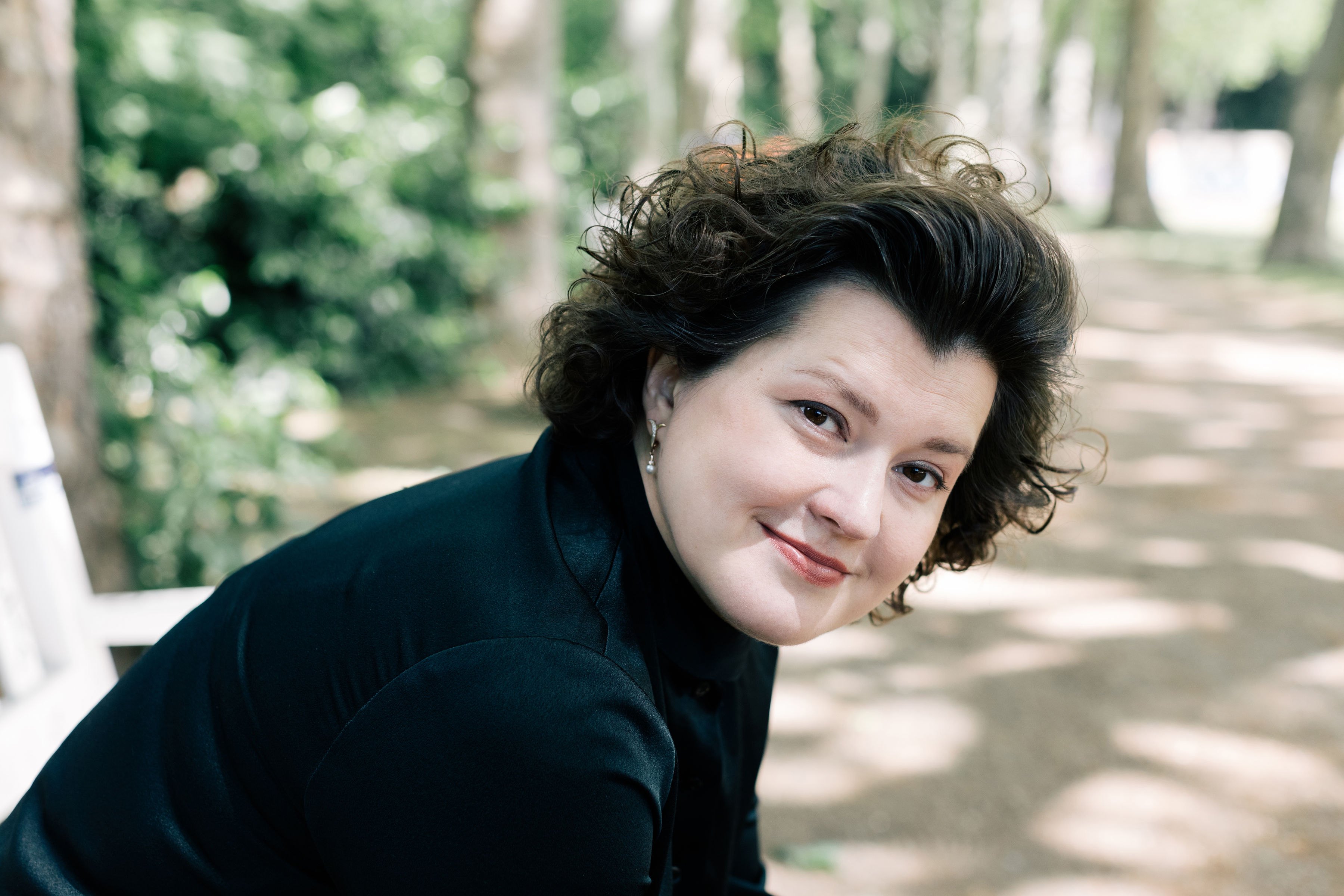
Anna Geniushene

‘Opus 1’ does not necessarily indicate the first ever piece written by the composer, but rather the first published work. The works featured on Anna Geniushene’s new album are interesting in that they all contain fascinating pre-echoes of the composers’ later music, as well as highlighting the diversity, originality and future maturity of these composers.

Chopin composed his Rondo in C Minor when he was just fifteen. This sparkling work is a vibrant opening for this album – a piece that already bears all the hallmarks of his mature style – virtuosity, expression and an unmistakable lyricism – yet feels that it owes more to the bravura tradition of early nineteenth-century pianism.

“My first published piece was Scherzo à la russe, Op. 1″ so wrote Tchaikovsky in a letter to Nadezha von Meck, in 1879. Dedicated to the great pianist Nikolai Rubinstein (who famously rejected Tchaikovsky’s first Piano Concerto as unplayable), the Scherzo a la russe and Impromptu in E-flat minor both show hints of the composer’s later style, particularly that of the Nutcracker ballet score. Tchaikovsky composed his Opus 1 when he was a young professor at the Moscow Conservatory and still finding his compositional voice.

The Scherzo, based on a Ukrainian song which the composer heard from the gardeners at Kamenka, the home of his sister, begins innocently enough, with a naive melody, played with a delightful simplicity by Geniushene, before moving into a warm, chorale-like section. The Impromptu, meanwhile, marked ‘Allegro Furioso’, opens with an excitable gallop, cast in unremitting quaver triplets, which gives way to an arresting, Chopin-esque middle section played with great expression and beauty of tone.

Schumann composed his ‘Abegg Variations‘ when he was 18. Despite its opus number, this work was neither Schumann’s first, nor his first set of variations. With its ‘letter-to-pitch’ derivations, the music prefigures ‘Carnaval’, and the later fugues on the name BACH, and showcases Schumann’s distinctive contrasting musical voice or rather “voices” – from lyrical grace to sudden dramatic outbursts, all infused with a poetic sensibility that came to define his music. Here, each variation is executed with delicacy of touch, a mellifluous, romantic tone, and sparkling flourishes coupled with a sensitive appreciation of Schumann’s contrasting moods.

The romanticism of Schumann is followed by Alban Berg’s single-movement Sonata. Composed in 1907-08 under the guidance of Arnold Schoenberg, the work is tightly constructed with a continuously unfolding narrative arc. Though written at the beginning of Berg’s career, this work sees Berg pushing towards the atonality, expressive depth and structural complexity that would come to define his later works, and the Sonata is deftly handled by Geniushene, bringing dramatic intensity and lyricism to this haunting piece.

While Berg’s compositional voice may not be fully formed in his Sonata, Brahms’s Sonata in C Major, Op. 1 is a work of towering ambition. Although it was not the first piece he composed, it was the first he chose to publish, signalling his arrival as a composer of serious intent. Completed in 1853, when Brahms was just twenty, the sonata was written at a time when he had recently made a profound impression on Robert and Clara Schumann—an encounter that would shape his early career.

Grand in scope, rooted in the German tradition of Beethoven and Schumann, the Sonata opens with a thrilling opening gesture reminiscent of Beethoven’s ‘Hammerklavier’ Sonata, offset by a tender second theme, which prefigures the composer’s later writing for the piano. The slow movement is tender and songful, the Scherzo all Beethovenian swagger and rhythmic vitality, while the Finale reprises the ‘Hammerklavier’ idea in a dancing Rondo theme with contrasting episodes. Here, Geniushene moves seamlessly between power and resolution, warmth and lyricism.

‘To perform these works is to engage with the raw energy of creation itself, to stand at the threshold of something new and full of possibility. This album is not just a collection of early works—it is a celebration of the act of beginning, a reminder that every great artistic journey starts with a first single step.’ – Anna Geniushene

This impressive release from Anna Geniushene offers fascinating insights into the early work of these great composers and demonstrates how their early creativity set them on a path of greatness, each with a distinctive and individual musical voice.

Opus 1 is available now on the Fuga Libera label.

Meet the Artist interview with Anna Geniushene

Peter Donohoe (image credit: Susie Ahlburg)

Tchaikovsky – Scherzo à la Russe, Op. 1 No. 1 Intermezzo in E flat minor, Op. 1 No. 2

Prokofiev – Sonata No. 1 in F minor, Op. 1

Bartók – Rhapsody, Op. 1

Schumann – Abegg Variations, Op. 1

Berg – Sonata, Op. 1

Brahms – Sonata No. 1 in C major, Op. 1

Peter Donohoe, piano

Acclaimed British pianist Peter Donohoe opened the 2012-13 season of concerts hosted by Sutton House Music Society with a coruscating performance of music by Tchaikovsky, Prokofiev, Bartók, Schumann, Berg and Brahms. Intriguingly entitled ‘Opus 1’, the programme featured early works by these great composers. As Peter said in his introduction, ‘Opus 1’ does not indicate the first ever piece written by the composer, but rather the first published work. These works are revealing in that they all contain fascinating pre-echoes of the composers’ later music, as well as highlighting the diversity, originality, and future maturity of these composers. The theme of the concert also enabled contrasting composers – Tchaikovsky and Berg, for example – to be programmed together. The first half of the concert was all Slavic composers, the second all Germanic.

“My first published piece was Scherzo à la russe, Op. 1″ so wrote Tchaikovsky in a letter to Nadezha von Meck, in 1879. Dedicated to the great pianist Nikolai Rubinstein (who famously rejected Tchaikovsky’s first Piano Concerto as unplayable), the Scherzo a la russe and Impromptu in E-flat minor both show evidence of the composer’s later style, particularly that of the Nutcracker ballet score.

The Scherzo, based on a Ukrainian song which the composer heard from the gardeners at Kamenka, the home of his sister, begins innocently enough, with a naive melody, executed with a disarming simplicity by Donohoe, before moving into more chorale-like territory. The return to the opening theme is marked by cascades of octaves, all handled with ease. The Impromptu, meanwhile, marked ‘Allegro Furioso’, opens in a brash, excitable gallop, cast in unremitting quaver triplets, which gives way to an arresting, Chopinesque middle section played with great expression and beauty of tone.

Anyone familiar with Prokofiev’s later works, striking for their uncompromising, exciting and original harmonic landscapes, could be forgiven for mistaking the Sonata No. 1 for a work by Glazunov (one of Prokofiev’s professors). Although not part of the composer’s juvenilia, nor does it hint at his later style: rather, it is a showcase of the composer’s pianistic skills. It was not especially well-received, and was attacked by modernists for being “too orthodox”, perhaps because it shows the influence of composers such as Tchaikovsky, Rachmaninov, Busoni, and, above all, Anton Rubinstein (a favourite composer of Prokofiev’s mother). Scored in a single movement in rigid sonata form (exposition, development, recapitulation), it suggests an unwritten second and third movement, and has a sweeping lyricism with a strong emphasis on melody. It was played with flamboyance, with bright fortes and passages of great warmth, intensity and romance.

Bartok’s Rhapsody Opus 1 is full of premonitions of his later works – bass drones, open fifths, folk melodies and dances – yet has a strong affinity with Liszt in its thunderous virtuosic passages, sweeping scale and its masterful juxtaposition of the ethereal (in the opening Adagio) with the ominous in the boisterous and colourful second section. It was performed with great involvement and commitment, Donohoe highlighting perfectly the contrasting moods, colours and textures of the music, including some wittily executed glissandi and hushed pianissimo passages.

Schumann’s ‘Abegg Variations‘ felt like more familiar territory, with arabesques and fiorituras, and cantabile melodies redolent of Chopin. Despite its opus number, this work was neither Schumann’s first work, nor his first set of variations. With its letter-to-pitch derivations, the music prefigures ‘Carnaval’, and the later fugues on the name BACH. Each variation was executed with delicacy of touch, a rich mellifluous tone, and sparkling flourishes.

The Berg Sonata, like the Prokofiev, is cast in a single movement, with an exposition that includes two contrasting themes, a development section in which the themes are expanded, a recapitulation, in which the themes are restated, and a plaintive coda. It makes use of many tonal suspensions, which create some particularly haunting passages. The work is poignant and passionate, with a dramatic intensity, which Donohoe maintained throughout, playing with great commitment, at times as if for himself alone.

In contrast, the Brahms Piano Sonata opens with a thrilling opening gesture reminiscent of Beethoven’s ‘Hammerklavier’ Sonata, offset by a tender second theme, which prefigures the composer’s later writing for the piano. The slow movement is tender and songful, the Scherzo all Beethovenian swagger and rhythmic vitality, while the Finale reprises the ‘Hammerklavier’ idea in a dancing Rondo theme with contrasting episodes. In it, Donohoe demonstrated his ability to switch seamlessly between power and resolution, and warmth and lyricism. This was truly a thrilling finale to a fascinating, insightful and deeply involving concert.

Sutton House Music Society is based at Sutton House, a Tudor house run by the National Trust in Hackney, east London. Concerts are held in Wenlock Barn, an intimate recital space which allows audience to feel very connected and involved with the performer/s. The Music Society hosts a varied selection concerts, offering audiences the chance to hear top-flight artists as well as up-and-coming talents. For details of forthcoming concerts, please click here.

The next concert at Sutton House is on Sunday 18th November and is given by pianist Elena Riu. Elena will feature in a Meet the Artist interview ahead of her concert.

My Meet the Artist interview with Peter Donohoe

Sutton House Music Society website


