Fusions

Nikolay Medvedev, piano (SOMM)

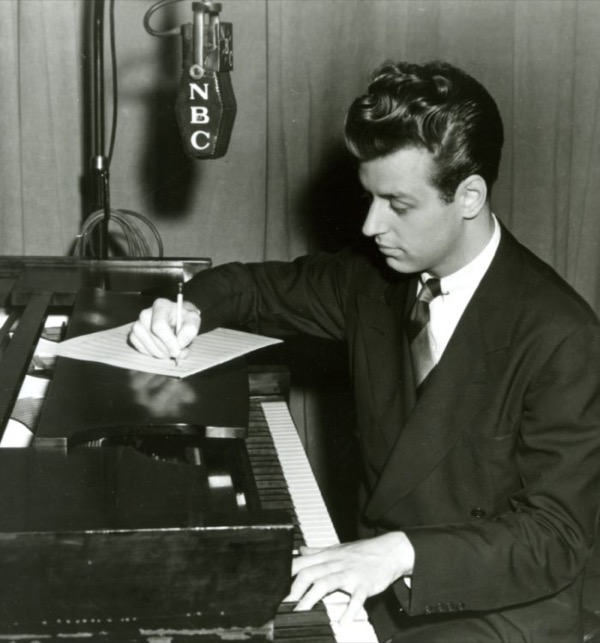
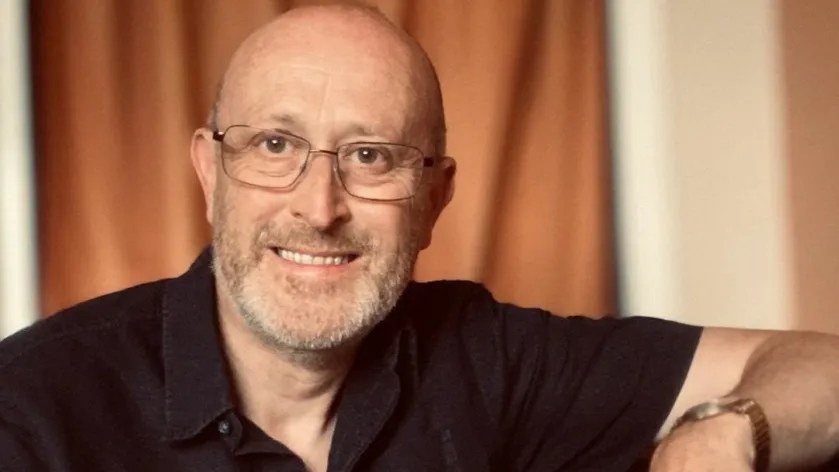
This aptly-named new release from Russian-born pianist Nikolay Medvedev brings together the music of George Gershwin and Nikolai Kapustin – two diverse pianist-composers who share the influence of jazz in their work – while also highlighting the virtuosity of Earl Wild, one of the greatest American pianists of the 20th century.
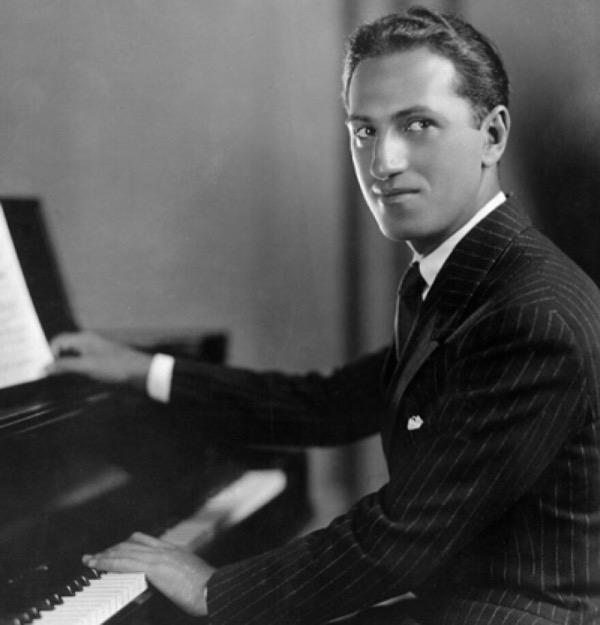
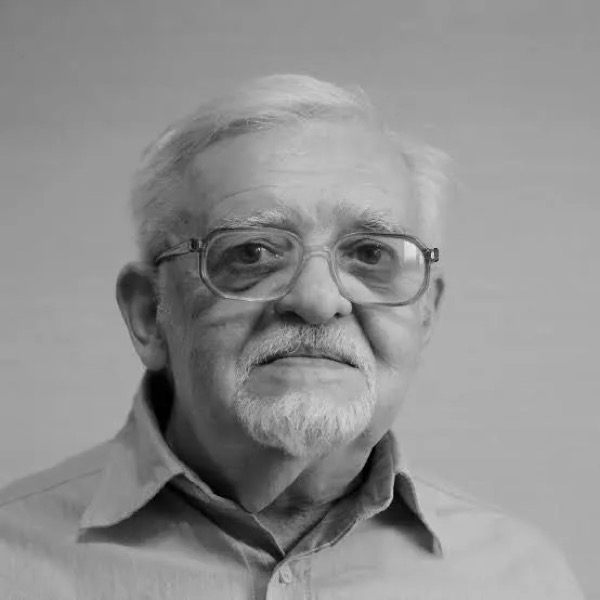
Nikolai Kapustin, born in 1937, the year Gershwin died, occupies a distinctive place in 20th- and 21st-century music. A classically trained pianist and composer, Kapustin cleverly fused the formal, structural rigour of classical music with the rhythmic vitality and improvisational idioms of jazz. His works defy categorisation: though they sound spontaneously jazzy, they are entirely notated in classical form, leaving no space for actual improvisation. This paradox became the hallmark of his style, and his music comprises the bulk of this new release.

Kapustin studied piano at the Moscow Conservatory at a time when jazz was still viewed with suspicion by the Soviet authorities. His fascination with American jazz pianists like Art Tatum, Oscar Peterson, and Erroll Garner led him to explore the genre in secret, and he absorbed its harmonic language, rhythmic energy, and phrasing to develop his own compositional language. His music – vibrant, cerebral, witty, exuberant and alive – was not internationally known in the early 2000s.

His second piano sonata, which opens this recording, was written in 1989, the year the USSR’s final collapse became increasingly apparent. Yet despite the turmoil in his homeland, the piano sonata is optimistic in mood – bright, spontaneous and rich in momentum and intriguing twists and turns.

Gershwin’s Three Preludes follow, written in the years after the instant success of his Rhapsody in Blue. Now, Gershwin found himself on the brink of realising his dream of being both a composer of popular and serious concert-hall music, and these three pieces reflect his ability to fuse classical forms with the rhythms and harmonies of American jazz. The first is an exercise in energetic syncopation; the second, lyrical, bluesy, and somewhat melancholy; while the third glitters with rugged rhythms and toe-tapping syncopations. Modest in scale, the preludes nonetheless reveal remarkable originality, blending blues idioms, syncopation, and chromatic colour within tightly structured miniatures.

The Concert Etudes are probably Kapustin’s best-known pieces, each with a distinct character – ebullient, impressionistic, groovy, funky. Despite the obvious jazz idioms, these pieces display an almost Lisztian classical sophistication and bravura in their harmonic and rhythmic language, and in their sparkling pianistic figurations (Kapustin composed at the keyboard to ensure that his music would fit the hand well). The second is redolent of another Russian composer – Sergei Rachmaninoff – while No. 6, Pastorale, has a jaunty Ragtime vibe, with a stride accompaniment.

American pianist Earl Wild (1915-2010) was a legendary virtuoso performer and renowned transcriber, bringing flamboyant brilliance to his arrangements, nowhere more evident than in his transcriptions of George Gershwin’s songs. These are not simple arrangements but rather imaginative re-compositions – richly textured pianistic fantasies filled with sweeping arpeggios, glittering passagework, and perfumed harmonies. In these dazzling concert pieces, Wild pays homage to Gershwin’s jazz-inflected originals, revealing their harmonic ingenuity and expressive depth, and to the great Romantic piano tradition of Franz Liszt and Sergei Rachmaninoff.

Nikolay Medvedev is the ideal advocate for this music, combining bravura flair and technical brilliance with a sensitivity to the repertoire and its shifting moods and colours. In Kapustin’s works, he pairs razor-sharp rhythmic control with an improvisatory sense of freedom and spontaneity, capturing the music’s brilliance and wit. In Gershwin’s Three Preludes, he balances jazz swagger with elegance, while in the Wild transcriptions, he transports us to the concert hall, relishing the theatricality and virtuosity of these pieces. Throughout the recording, the piano sound is bright and colourful, never harsh. There are moments when we might be listening in a late-night jazz club; at other times, in the opulent grandeur of Carnegie Hall.

The album offers a clear sense of continuity between composers often placed in separate musical worlds: the selection and order of the repertoire demonstrates how Gershwin’s jazz-inspired modernism paved the way for Kapustin’s sophisticated hybrid musical language, while Wild’s dazzling arrangements bridge popular song and concert virtuosity. This is a recording of brilliance and charm, played with poise, colour, and an infectious sense of enjoyment on the part of the pianist.

Fusions is released on the SOMM label.

(This review first appeared on the InterludeHK site)
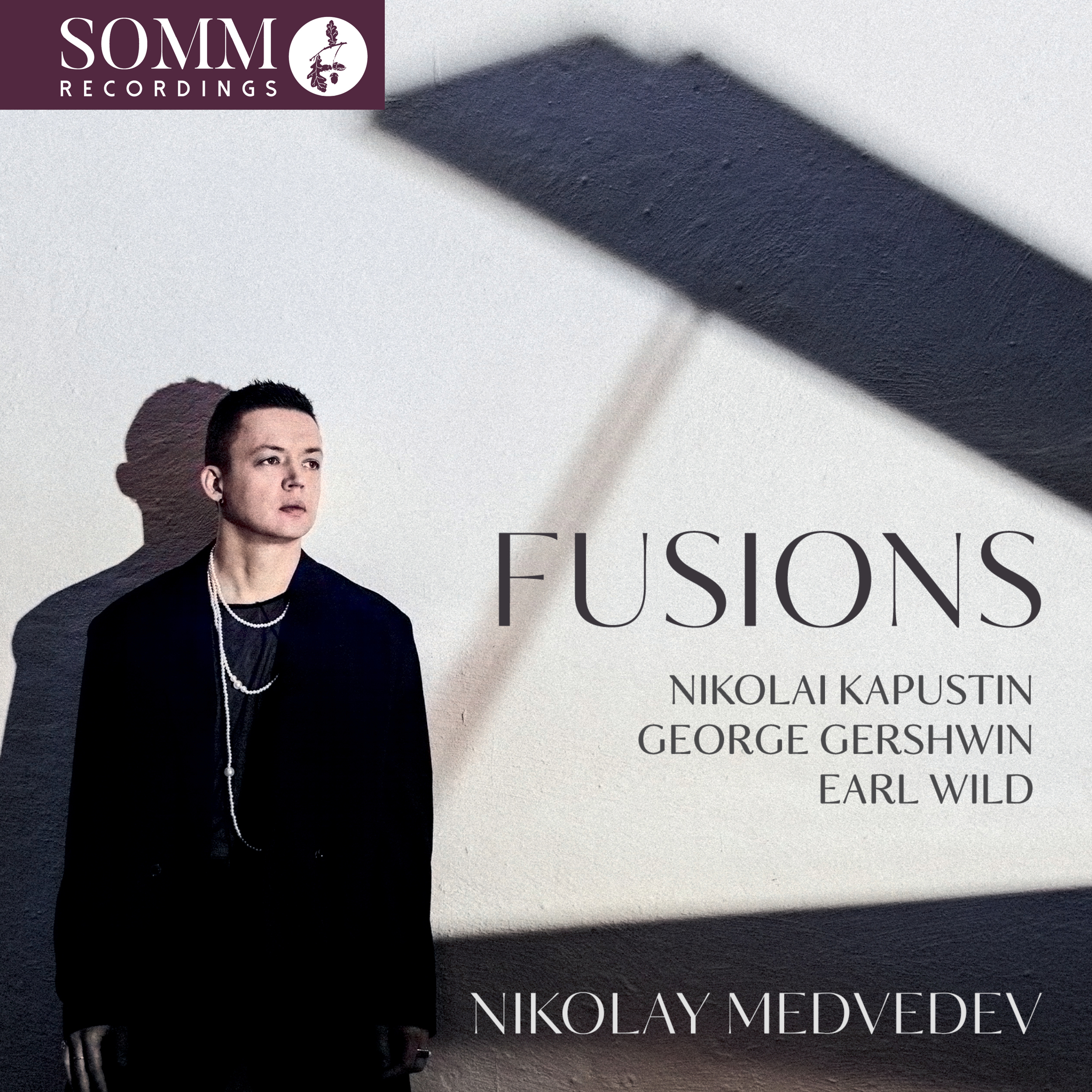
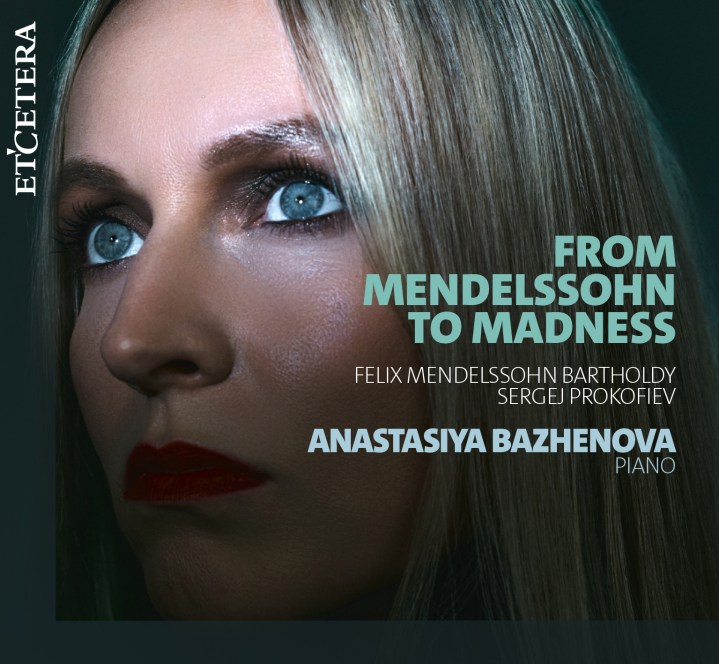
Pianist Anastasiya Bazhenova announces her debut album, From Mendelssohn to Madness, exploring how music reflects psychological shifts in the human condition when stability falters.

Bazhenova traces an inward journey through the music of Mendelssohn and Prokofiev, moving from certainty to uncertainty.

The journey begins with Mendelssohn’s Songs Without Words, representing an era where clarity and beauty served as fundamental ways of understanding reality and oneself. Yet, even in this apparent transparency, Mendelssohn hints at emerging instability, setting the stage for a deepening exploration.

In the Fantasia in F-sharp minor, Mendelssohn’s music becomes a field of resistance, depicting an inner struggle between the desire for wholeness and the forces that threaten to dismantle it.

As the narrative unfolds, the focus moves to Prokofiev’s Sixth Sonata. Here, the music records reality in its most exposed form. In a world where the pace of change exceeds human grasp, Prokofiev’s work navigates extreme emotional states—including fear, fury, despair, irony, and paranoia.

For Bazhenova, this album is not merely a collection of distinct works, but a “single inner trajectory”. It serves as a musical narrative of a human being searching for meaning even when the old order no longer holds.

Track Listing:

Felix Mendelssohn Bartholdy

• Lieder ohne Worte (Songs without Words, selections from Opp. 19, 38, 67, and 85)

• Fantasia in F-sharp minor, Op. 28

Sergej Prokofiev

• Piano Sonata No. 6 in A major, Op. 82

From Mendelssohn to Madness is released on CD and streaming on 1 April 2026 on the Etcetera label. Anastasiya performs in London at the 1901 Arts Club on Friday 24 April.

Pre-order From Mendelssohn to Madness

PRAISE FOR ANASTASIYA BAZHENOVA

“Superb musicianship and captivating stage presence.”

“A pianist capable of drawing an astonishing range of colour and depth from the instrument.

“A highly sincere and intelligent musician with a unique artistic voice.”

(Comments from colleagues and audience)

Anastasiya Bazhenova is a concert pianist based in Norway, recognised for her intense musical concentration, refined sound palette, and a strongly individual artistic voice. She received her early training in Russia through the ten-year specialised programme for gifted children, a rigorous system known for producing pianists of exceptional technical and artistic discipline. This formative background continues to shape her uncompromising approach to sound, structure, and musical narrative.

Bazhenova later completed her advanced studies in Norway, earning a Master’s degree from the Norwegian Academy of Music in Oslo, where she is now based.

Her artistry is defined by a deep inner world and a strong sense of dramaturgy, with programmes conceived as coherent artistic statements rather than conventional recital formats. Her interpretations are often described as psychologically focused, emotionally charged, and marked by a distinctive clarity of musical thought.

She performs internationally as a soloist and chamber musician across Europe and North America. Her debut album, From Mendelssohn to Madness, is released on Etcetera Records in 2026 and presents a sharply articulated artistic concept, positioning her as a distinctive voice on the contemporary piano scene.

anastasiyabazhenova.com

Pianist Anastasiya Bazhenova explores the fragility of the human condition in her debut album

In her debut recording, pianist Anastasiya Bazhenova presents a programme that goes beyond a simple chronological survey of keyboard music. From Mendelssohn to Madness is not just about contrasting different historical periods; it is a deep exploration of the human condition and how our inner worlds change when external stability starts to fade.
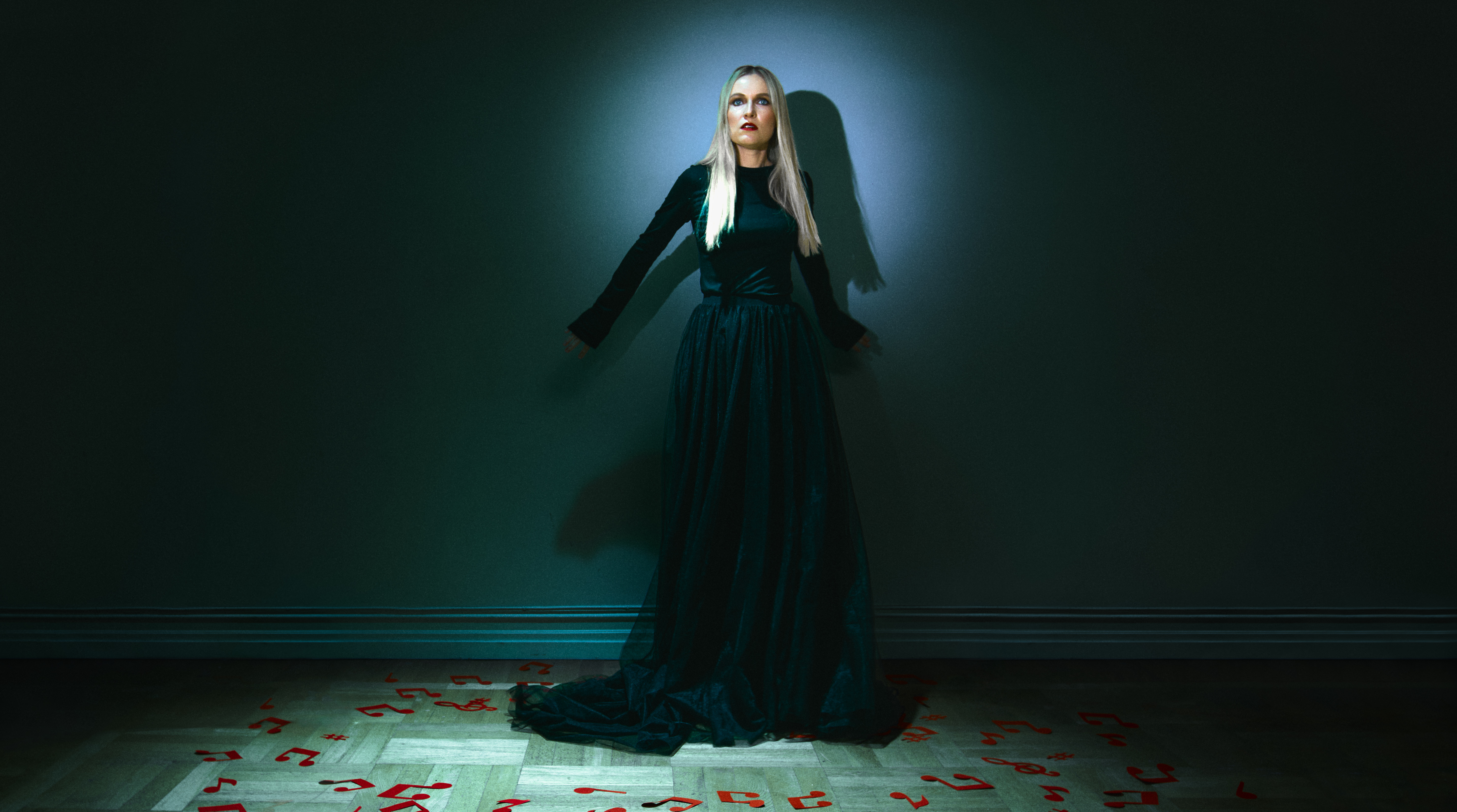

For me, the tension is already present in the Mendelssohn. His music often sounds lyrical and balanced, but there is also something fragile in it, as if the stability could break at any moment. The Fantasia in F-sharp minor begins to open up that tension — it is more restless, more searching. And by the time we reach Prokofiev, the tension is no longer hidden. It becomes direct, physical, almost violent. So the “madness” in the title is not only the destination. It is something that slowly reveals itself along the journey.

Anastasiya Bazhenova (interview with Indie Boulevard magazine)

The album begins within the world of Felix Mendelssohn Bartholdy, a composer whose music hails from an era where form offered a sense of reassurance. In his Songs Without Words, Bazhenova uncovers a serene human voice that communicates with the confidence that it can still be heard without exertion. During this period, qualities such as clarity, proportion, and beauty were not merely ornamental; they were fundamental tools for understanding both oneself and reality.

However, even within this transparent beauty, a subtle tension begins to emerge. In the Fantasia in F-sharp minor, this balance is no longer an automatic state but a conscious effort. Here, the music becomes a battleground where light and darkness clash, symbolising an inner struggle to preserve wholeness against forces that seek to dismantle it. For Mendelssohn, form serves as a final battleground against chaos.

The narrative takes a sudden turn with Sergej Prokofiev’s Sixth Sonata, which opens the space beyond the rupture of the old order. This is music for a world that no longer promises stability—a world where the pace of change has quickened beyond our ability to comprehend.

Within this sonata, intense emotional states coexist in a raw, exposed form: fear, fury, despair, irony, and paranoia. The music forsakes the pursuit of traditional harmony, opting instead to record reality in its most unfiltered state. As the album moves from Mendelssohn to Prokofiev, the listener undergoes a inward shift: a transition from trusting in form to living without guarantees, and from viewing beauty as a support to acknowledging the need to live without it.

Rather than viewing these pieces as a collection of separate works, Bazhenova considers the programme as a single internal trajectory. The album does not seek to resolve the tensions it presents or provide simple explanations. Instead, it allows the music to unfold as a continuous process – a musical narrative of a human being who keeps feeling, thinking, and searching for meaning even when the structures of the past have broken down.

We often think of madness as something extreme or pathological, but in reality it is much closer to ordinary human experience. It can grow out of fear, obsession, loneliness, or simply from the unbearable tension between what we feel inside and what the world expects from us. In that sense, “madness” in this album is not something distant or theatrical. It is something that lives quietly inside many people. Music simply gives it a voice.

Anastasiya Bazhenova

From Mendelssohn to Madness is released on CD and streaming 1 April 2026 on the Etcetera Records label

Anastasiya Bazhenova performs in London at the 1901 Arts Club, a delightful salon-style concert venue, on 24th April. Details here https://www.1901artsclub.com/24-apr-2026-from-mendelssohn-to-madness.html

Anastasiya Bazhenova pianist

Photo credits Torgeir Rørvik

24 Preludes for Piano by Nicholas Scott-Burt

Da-Hee Kim piano

Premiere recording

Listen to the opening measures of the sixth Prelude from Nicholas Scott-Burt’s 24 Preludes for Piano, and you might be forgiven for thinking this is actually by J S Bach, with its combination of rigour and elegance, counterpoint and Baroque flourishes.

The ghost of Bach is also present in the very first Prelude of the set, redolent of the C major Prelude from Book 1 of the WTC in its processional momentum, its rhythm, and expression. Played by pianist Da-Hee Kim with a luminous glow and clear articulation, it’s a wonderful opening to this intriguing new release of contemporary piano music, drawing you into a composer’s soundworld that is richly coloured, texturally diverse, witty, and at times quite beautiful. 

British composer Nicholas Scott-Burt composed his 24 Preludes during 2019 and 2020. Following a tradition established by J S Bach and continued by, among others, Chopin, Debussy, and Shostakovich, Scott-Burt’s cycle reimagines the prelude as both a brief musical statement and a means for expressive variety. Each piece acts as a standalone miniature whilst also contributing to the overall narrative of the complete set: the Preludes are organised into four ‘Books’, which can be performed as an integrated sequence, ‘pausing for longer at the end of each book, as one might pause between the movements of a sonata or symphony’ (Nicholas Scott-Burt).

Each book has its own distinct character: Book 1 is neat and neo-classical; Book 2 is more extravagant and romantic; Book 3 is somewhat more introspective; and Book 4 is bright and sunny, though not without some darker moments.

The composer was kind enough to allow me to see the score, and it’s clear that he draws on a wide range of pianistic textures, rhythmic gestures, and harmonic languages in his writing. Some preludes evoke lyrical introspection, others have driving rhythmic energy or contrapuntal interplay. There’s a powerful array of dynamics from hushed delicacy to declamatory chords, and many of the preludes experiment with colouristic sonorities that brilliantly celebrate the piano’s resonance, sonic variety and expressive range. 

With their imaginative harmonic progressions, rhythmic variety and shifting tonal perspectives, each prelude embodies its own character and atmosphere. The result is a sequence that invites both performer and listener to explore a wide range of moods – from reflective calm to virtuosic brilliance – within the intimate scope of the piano miniature.

While rooted in the tradition of the prelude cycle, Scott-Burt’s collection has a distinctly modern voice, with his musical influences clearly evident. It echoes composers such as Bach, Chopin, Shostakovich, as well as Handel, Purcell, Schumann, Liszt, Prokofiev, Bartók, Messiaen, and jazz. Scott-Burt skillfully integrates all the colours of his own compositional language to craft music that is individual and contemporary, while acknowledging the rich traditions from which it emerges.

Award-winning Korean pianist Da-Hee Kim performs the preludes on this premiere recording, bringing both sensitivity and virtuosity to the music, always alert to its shifting colours and textures. She delivers pristine articulation, supple phrasing, some impressive pedal technique, a luminosity of tone, and wonderfully weightless playing, when required, highlighting the individual character of each prelude, and ‘musical personality’ of each Book.

In addition to the 24 Preludes for Piano, this album includes two further works by Scott-Burt, his Minimalis I, ‘a self-imposed experimental exercise in structuring’, and Love Song, a contemporary on the tradition of the piano ‘Love Song’ by composers such as Mendelssohn, Schubert, Schumann, and Liszt.

This is a wonderful addition to the contemporary piano literature, and I truly hope the composer can find a publisher for his 24 Preludes, so that more pianists, both professional and amateur, can explore and enjoy it. 

24 Preludes for Piano is released on the Divine Art label on CD and streaming.

Read Meet the Artist interviews with Da-Hee Kim and Nicholas Scott-Burt