Duncan Honeybourne (piano) & Leora Cohen (violin)

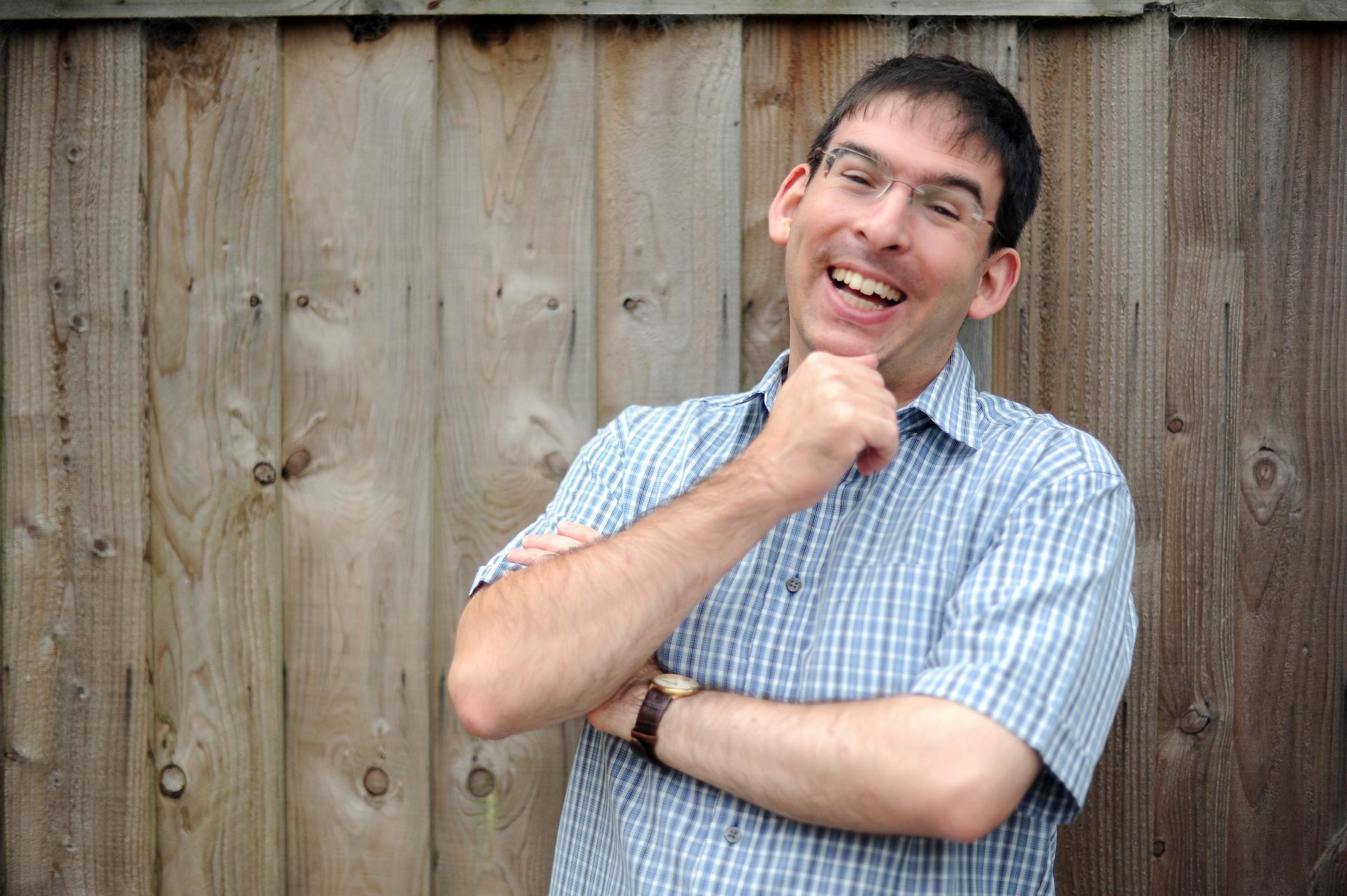
This interesting new release from British pianist Duncan Honeybourne, with British-American violinist Leora Cohen, introduces the hitherto little-known music of Jessy Reason, known somewhat cryptically during her lifetime as “J. L. Reason”.

A long-forgotten, enigmatic figure, Jessy Lilian Reason, née Wolton, was born in London in 1878, the daughter of a wealthy hop merchant. In 1902, in Cornwall, she married a gentleman of private means twenty years her senior, with whom she settled firstly in Devon and later in Tonbridge, Kent. In the late 1920s the couple made a final move, to Reading, where Jessy died in 1938.

In May 1992 a writer called Alan Poulton discovered a large stack of handwritten music manuscripts in a second-hand bookshop. He purchased the collection and during the 2020 Covid lockdown, now retired and with time on his hands, he set about exploring and cataloguing the manuscripts, and researching the life of the woman who had composed 70 handwritten works in the early decades of the twentieth century. The paperwork accompanying the collection reveals that Mrs Reason studied composition with the renowned composer and conductor Eugene Goossens; she was then in her mid-40s, her tutor some 15 years younger. How much of Reason’s music was performed during her lifetime remains unclear: all that has come to light so far is a performance of a single song at London’s Wigmore Hall and a song cycle given at a minor concert in West London, all in the early 1920s. (The current catalogue of Reason’s music, compiled by Alan Poulton, can be found on the British Music Society website.

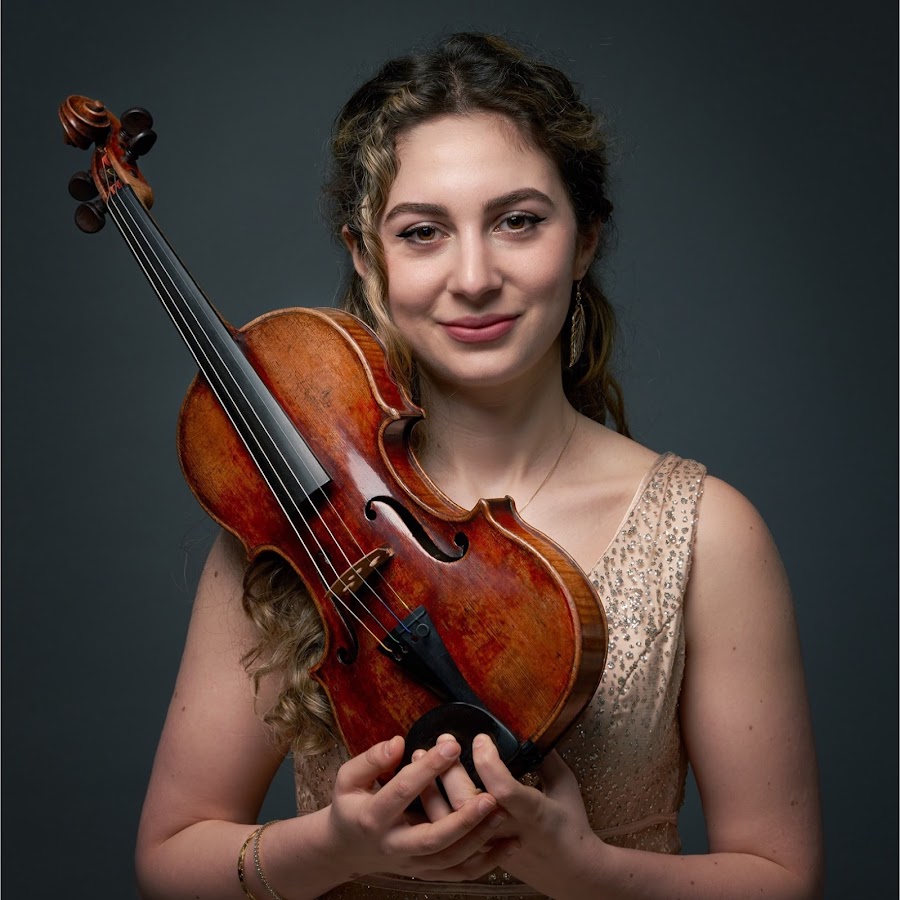
Pianist Duncan Honeybourne is a passionate advocate for lesser-known and rarely-performed music, and this new release by Prima Facie Records reflects his unerring ability to unearth really fine music and bring it to a wider audience by recording and performing it (see also his release, also on the Prima Facie label, of piano music by William Baines). On this recording he is joined by young British-American violinist Leora Cohen. She brings a wonderful range of colours and nuance to the Three Poems for Violin and Piano, matching Honeybourne’s playing with a remarkable sure-footedness, sensitivity and musical maturity.

This disc presents Jessy Reason’s entire output for solo piano, together with the Three Poems, and as such is a wonderful introduction to Reason’s writing. She was clearly a highly-skilled yet largely self-taught composer and musician (her writing for piano reveals an intimate knowledge of the geography of the keyboard): in his biography of his mother, Richard Reason describes her as “an ardent musician, with a fiery style of violin-playing . . .teaching herself the whole technique of writing for full orchestra”. Her scores, some of which I have seen, thanks to Duncan Honeybourne, are elegantly crafted and neatly laid out.
By turns richly romantic, impressionistic, darkly lyrical, sensuous and harmonically complex, there are hints of late Brahms, Debussy, Ravel, even early Messiaen in Reason’s sophisticated, inventive music. This inspiring legacy of work is brought vividly to life by Duncan Honeybourne on a piano contemporaneous with the music, a 1922 Bösendorfer.

Piano and Chamber Music by Jessy Reason

Duncan Honeybourne (piano) with Leora Cohen (violin)

Prima Facie Records, July 2024

leoraviolin.com

duncanhoneybourne.com

Ensemble La Notte announce the release of their second recording, La Folia, a selection of baroque repertoire on the themes of chaos, madness and the bizarre.

Released to coincide with the anniversary of Telemann’s death, and at a time when the world is still grappling with the chaos of a global pandemic, La Folia is particularly appropriate for our curious times.


From the liner notes:

Nowadays, we often associate the characteristics of Baroque music with order, but before the 17th century, the word “baroque” was used to describe art, architecture and music that was irregular, extravagant and ornate. French philosopher Michel de Montaigne associated the term ‘baroco’ with that which was ‘bizarre, and uselessly complicated’ – and this is how baroque music must have sounded to those used to the Renaissance style.

Many of the descriptive titles in this programme suggest these ideas of madness and chaos, and were often used to show a deliberate contrast to music that was more orderly. This CD is a celebration of this baroque idea of the bizarre, the chaotic and the mad, explored over a vast range of styles, nationalities and musical forms.


Launch video:

Track list:

Jean-Féry Rebel (1666 – 1747) arr. M.Wilson – ‘Le Chaos’, from Les Élémens & ‘Les Caractères de la Danse’

George Frideric Handel (1685 – 1759) – Trio Sonata Op.2 no.5 in g minor, HWV 390a

Nicola Matteis (c.1670 – c.1720) – ‘Diverse bizzarie Sopra la Vecchia Sarabanda ò pur Ciaccona’

Nicholas L’Estrange (1603 – 1655) – Collected antimasque music: ‘The Furies’ and ‘The Apes Dance at the Temple’

Georg Philipp Telemann (1681 – 1767) – Trio Sonata in d minor, TWV 42:d10

Henry Purcell (1659 – 1695) – ‘Dance for the Green Men’ Act 3 from ‘The Fairy Queen’, Z 629

Jean Philippe Rameau (1683 – 1764) – ‘Les Sauvages’ from Les Indes Galantes

Antonio Vivaldi (1678 – 1741) – Trio Sonata in d minor Op 1 no. 12 ‘La Folia’, RV 63


Performers:

Kate Allsop – Recorders

Maxim Del Mar – Violin

Mark Wilson – Bassoon

Mary Walton – Cello

Jonatan Bougt – Theorbo

Callum Anderson – Harpsichord

Recorded at St Francis of Assisi Church, Hemel Hempstead, Hertfordshire, UK, 5 – 10 April 2021


For further press information, review copies and interviews, please contact Frances Wilson 

The word “transcendental”, at least when applied to piano music, usually suggests rampant virtuosity and piano pyrotechnics, and the first pieces which come to mind are Lizst’s Études d’exécution transcendante. Liszt himself chose the word to allude to the extreme difficulty of the pieces, the implication being that the musician who masters these works will be able to “transcend” their technique, musicianship and the expressive capabilities of the instrument.

In Ivan Ilic’s hands, the word “transcendental” has a different meaning. His new disc, ‘The Transcendentalist’, draws inspiration from  Transcendentalism, America’s first indigenous intellectual community, which included literary luminaries Ralph Waldo Emerson and Henry David Thoreau. Emerson’s manifesto Nature (1836) laid out the philosophy of the movement, which was founded as a reaction to and against rationalism and materialism. The music included on Ilic’s new disc is by  Scriabin, John Cage and Morton Feldman, together with a new work by Scott Wollschleger, ‘Music Without Metaphor’. The composers have connections to the tenets of the Transcendentalist movement: Scriabin’s mysticism, Cage’s interest in Zen Buddhism, Feldman’s intuitive approach to composing and Wollschleger’s synaesthesia, and the works on this disc display virtuosity in their originality and thoughtfulness, contemplation and introspection, rather than showy technical prowess

The works by Cage, Feldman and Wollschleger demonstrate the influence of Scriabin on American avant-garde composers, while Wollschleger’s deeply haunting  ‘Music Without Metaphor’ subtly reflects on and refracts the other music on the disc. Scriabin’s miniatures reveal hints of Chopin in the early Preludes while the later works are exotic and ambiguous, rich in pre-Shoenbergian atonality and unusual and arresting harmonies.

Ilic’s touch is assured, sensitive and as thoughtful as the music, his sound rounded, the pedal used tastefully to create halos of blurred sound, particularly affecting in Cage’s ‘In a Landscape’. The entire disc is contemplative, dreamy and genuinely spiritual. Play this at the end of a busy day, with the lights turned low, and surrender to the music and Ilic’s subtle delivery.

Recommended

‘The Transcendentalist’ is available on the Heresy label and as a download from iTunes and Amazon.

Ivan Ilic will feature in a forthcoming Meet the Artist interview

