This is a solo piano album of austere wonder. Composer and performer Mark Deeks hails from Northumberland, and in tribute to his home patch, the eight original pieces here are named in the county’s old dialect (the album also includes a cover version of John Ireland’s ‘Sea Fever’). A water theme runs through the record like a river, with tracks named for waves, floods, showers, ice… so we have, in some ways, a tone poem: a suite of works that, over its running time, builds a picture of the North Sea coastline in audio.
To do this successfully, there would have to be a starkness to underpin the picturesque, and MD achieves that balance perfectly – the music is beautiful throughout, but favours sparse reflection over ‘prettiness’. I think listeners of Glass, say, or Satie would find much to enjoy in these pieces: that’s not to simplify and say that MD is ‘like’ those composers – more that he also prizes the effects of a rhythmic pattern, the power of a silence, and the value of unhurried contemplation.
While the album sustains a coherent mood, close and repeated listening reveals the individual personalities of each track, the way they embody their liquid titles. For example, opening track ‘Wǽg’ (‘Wave’) features an undulating rhythm in the bass, perhaps unsurprisingly – but above that, the melody not only turns about itself in an ebb and flow movement, the chords cut across the bassline as if ‘breaking’ onto the shore. While later in the sequence, ‘Scúr’ (‘Shower’) moves the initial, insistent rhythm into the right hand, as if the rain is starting to pitter-patter onto the ground.
The superb ‘Flódas’ (‘Floods’) moves along with a more hyperactive, unpredictable gait, and ramps up the intensity until the melody almost breaks – bursts its banks. While the serene ‘Gyrwe’ (‘Wetlands’) – for me, one of the album’s absolute highlights – allows its left-hand to glide calmly while the restrained, delicately-judged interventions of the right-hand conjure up the momentary drips and breeze-driven disturbances from the reeds and grasses.
I was completely won over by this record’s confident restraint: give it time and drift through its space.
It’s also worth mentioning that, perhaps due to its steady pace and focus on melodic ambience, much of the suite sounds accessible to fellow pianists – and sure enough, Mark Deeks has produced a very limited run of sheet music for the album, available to buy alongside the CD. To buy either – or, let’s not be coy, both, you can visit the artist’s Bandcamp page for the album here.
Adrian Ainsworth writes for a living, but mostly about things like finance, tax and benefits. For light relief, then, he covers his obsessions – overwhelmingly music, but with sprinklings of photography and art – on the ‘Specs’ blog, which you can find at http://www.adrianspecs.blogspot.co.uk
I would say to a young composer – be a rebel! Write something in D major, annoy your professor, but make it so damned interesting and beautiful that he/she has nothing to say; that is the real challenge for us now.
– David Braid, composer
Welsh-born composer David Braid is something of a rebel himself. In his music, he eschews the atonality, dissonance, and complexity which are so often hallmarks (and clichés) of contemporary classical music in favour of a personal compositional voice which draws inspiration from Sweelinck and Dowland to Britten and Messiaen, but which is in itself hard to categorise. It’s melodic and tonal with a spare lyricism and simple harmonic language which recalls early music and the distinctly “English” soundworlds of Vaughan Williams and Britten, as well as folk music with occasional jazz-infused harmonies, but this is most definitely not “crossover” repertoire.
Beautifully crafted and performed with elegance and expression by an ensemble of fine musicians, including mezzo-soprano Emily Gray, flautist Claire Overbury, and clarinettist Peter Cigleris, with David Braid himself on archtop guitar, the music on this album is accessible yet sophisticated. Braid’s archtop guitar, a hollow steel-stringed acoustic or semi-acoustic instrument with a full body and an arched top (hence its name), brings a clean, lute-like sound to the music, redolent of Dowland’s songs and Lachrimae, and the perfect foil for Emily Gray’s translucent mezzo voice. The combinations of instruments are original and intriguing – piano and archtop guitar work together surprisingly well, the piano sympathetic to the smaller voice of the guitar. The refined simplicity of Braid’s music is really captivating and it is a real pleasure to hear music which is immediately engaging to the ear.
With comprehensive liner notes written by David Braid and an excellent sound quality which is both direct and intimate, this album comes highly recommended.
Catalogue No: MSV 28575 EAN/UPC: 809730857522 Artists: Claire Overbury, David Braid, Elena Zucchini, Emily Gray, Peter Cigleris, Rossitza Stoycheva, Sergei Podobedov Composers: David Braid Release Date: October 2017 Total Playing Time: 76:35
As Borough New Music‘s new season begins on 3 October 2017, Artistic Director Clare Simmonds surveys the exciting new piano music on offer from October 2017 to June 2018.
Borough New Music sets out to share music by living composers and the music of today. In each of the eight Series of concerts this season, we feature a different instrument. For Series 2 – which is five free concerts every Tuesday in October 2017 at 1pm at St George the Martyr SE1 1JA – it’s the piano.
In fact, the piano became the featured instrument for this second Series simply because of the preponderance of piano premieres that month. These include a fascinating new piano sonata by Ben Gaunt, based around the architectural principles of light, written for the wonderful pianist Christopher Guild (24 October 2017); eight miniature ‘cryptograms’ by Patrick Nunn, each inspired by composers who have in some way influenced his output; and two works written specially for the virtuoso José Menor: a mighty five-movement cycle by Sam Hayden and a sparkling Toccata by fellow Catalan Tomas Peire Serrate (all on 3 October 2017). Plus there is a selection of new works written specifically for the pianists who will perform them, by composers Michael Worboys , Harry Palmer, Rotem Sherman and Toby Ingram – all outcomes of the 2017 Trinity Laban John Halford Piano and Composition Competition, a little-known public event held every April, which deserves high praise for its innovation.
But that’s just Series 2 – the tip of the iceberg. One of the most fascinating things about the piano is that every player makes it sound different. Over the 2017-18 season, we have the opportunity to hear the voices of 14 very different pianists. That includes established contemporary pianists such as Philip Mead (1 May 2018), who gave the UK premiere of George Crumb’s ‘Makrokosmos’ at the Southbank in 1977, and the first London performance of Henry Cowell’s piano concerto in 2013.
Plus, there is the master improviser Douglas Finch (17 April 2018), toy piano specialist Kate Ryder (20 March 2018), as well as Matthew Schellhorn (30 January 2018), Aleksander Szram (26 June 2018), Christopher Guild (24 October 2017) and José Menor (3 October 2017); and young artists such as Joe Howson, Ieva Dubova, Mahsa Salali, Rotem Sherman and Neus Peris Ferrer (31 October 2017). The pianist Ben Smith deserves special mention not only for his repertoire for piano and electronics (14 November 2017), but also for appearances in six different concerts (November 2017 and February 2018)! Here he is performing Helmut Lachenmann’s ‘Serynade’:
It is always interesting to hear what a composer chooses to give a pianist to play – and what pianists write or improvise for themselves to play. With compelling musical material in hand, what else is important to them: the listener’s impression, the player’s strengths, or the instrument’s potential? When pianists compose, do they opt for an easy life, and write what they find straightforward, or do they demand the (almost) impossible, to show their superhuman virtuosity? (Sometimes I think that’s the equivalent of those gourmets who go for the hottest vindaloo on offer!) It is not hard to be mesmerised by the multifaceted capabilities of the piano, and the programme this season certainly explores that. From a world premiere by Joseph Horovitz (even though he is over 90!) on 30 January 2018, to Edward Henderson’s refreshingly alternative look at piano performance (10 April 2018), the bluesy, frantic etudes of Nancarrow (21 November 2017) to the works of Janet Graham, Haris Kittos, Daryl Runswick and Simon Katan, there is a compelling range of piano works to discover.
Douglas Finch
Borough New Music concerts take place every Tuesday at 1pm from 3 October 2017 to 26 June 2018 at St George the Martyr Church, Borough High Street, London SE1 1JA (just a short walk from London Bridge and Borough tube stations). Admission is free to all events, and light refreshments are served afterwards.
· Thomas Ades (b. 1971) – Concert Paraphrase on Powder Her Face (2009) (Movts I & IV)
· Michael Worboys – Bone Memories (2017)
· Toby Ingram (b. 1998)- Into the Unknown (2017)
· Rotem Sherman – Home (2017)
· Hans Werner Henze (1926-2012) – Präludien zu Tristan (2003)
· Frederic Rzewski (b. 1938) – Piano Piece IV (1977)
Series 3
Tuesday 7 November 2017, 1pm ‘Last Words’
Patricia Auchterlonie (soprano), Antonia Berg (flute), Ben Smith (piano), Yoanna Prodanova (cello)
Salvatore Sciarrino (b. 1947) – Due melodie per soprano e pianoforte (1978)
· Ben Smith (b. 1991) – New Work (WORLD PREMIERE)
· Kate Soper (b. 1981) – Only the words themselves mean what they say (2010-11) (UK PREMIERE)
· Salvatore Sciarrino – Ultime rose (from Vanitas) (1981)
Tuesday 14 November 2017, 1pm ‘Babbitt-Haas-Emmerson’
Ben Smith (piano), Patricia Auchterlonie (soprano)
· Milton Babbitt (1916-2011) – Philomel (1964)
· Georg Friedrich Haas (b. 1953) – Ein Schattenspiel (2004)
· Simon Emmerson (b. 1950) – Time Past IV (1985)
Tuesday 21 November 2017, 1pm ‘Sensations’
PERFORMER: Ben Smith (piano)
· Robert Reid Allan (b. 1991) – The Palace of Light (2016) (LONDON PREMIERE)
· Colon Nancarrow (1912-1997) – Three Canons for Ursula (1988)
· Julian Anderson (b. 1967) – Sensation (2015-16)
Tuesday 28 November 2017, 1pm ‘Haikus’
FEATURED COMPOSER: Eva-Maria Houben
Antonia Berg (flute), Patricia Auchterlonie (soprano), Ben Smith (piano), Yoanna Prodanova (cello)
· Eva-Maria Houben (b. 1955) – Haikus for four (I, V, VIII, IX) (2003-04) (UK PREMIERE)
Series 4
Tuesday 16 January 2018, 1pm ‘Islands’
Carla Rees (flutes), Ian Mitchell (clarinets), Clare Simmonds (piano)
· Robert Percy (b. 1961) – Touching the Void (WORLD PREMIERE)
· Dan Kessner (b. 1946) – Genera
· Robert Percy (b. 1961) – New work (WORLD PREMIERE)
· Tom Ingoldsby (b. 1957) – The Cathedral (WORLD PREMIERE)
· Robert Percy (b. 1961) – Beacons (version for piano, flute and clarinet)
Tuesday 30 January 2018, 1pm ‘Muscle Memory’
Matthew Schellhorn (piano)
· Roger Briggs (b. 1952) – Jitterbug
· Robert Percy (b. 1961) – Chopsticks
· Edwin Roxburgh (b. 1937) – Prelude and Toccata
· Colin Riley (b. 1963) – Joplin Jigsaws
· Joseph Horovitz (b. 1926) – Pierrot’s Hornpipe (WORLD PREMIERE)
Series 5
Tuesday 6 February 2018, 1pm
Ben Smith (piano), Kirsty Clark (viola), Patricia Auchterlonie (soprano)
· Helmut Lachenmann (b. 1935) – Got Lost (2008)
· Peter Maxwell Davies (1934-2016) – The Door of the Sun (1975)
· Martin Lodge (b. 1954) – Pacific Rock (1999)
Tuesday 20 February 2018, 1pm ‘Songwriters of 2018’
Robert Reid Allan (glockenspiel/melodica), Ben Smith (piano, glockenspiel/melodica), Siân Dicker (soprano), Mimi Doulton (soprano), Delphine Mégret (soprano), Krystal Tunnicliffe (piano)
· Jake Dorfman (b. 1993) – Short Songs on Liberty (2016)
· Clare Elton (b. 1993) – Escape (2017)
· James Garner (b. 1992) – Emily Dickinson Settings (2015)
· Jules Pegram (b. 1991) – Valentines (2015)
· Mo Zhao (b. 1993) – Just Watching (2017)
· Rasmus Zwicki (b. 1979) – Fly Little Birdy (2017)
Tuesday 27 February 2018, 1pm ‘Two Sopranos, a Cello & a Piano’
· Joel Järventausta (b. 1995) – New work (WORLD PREMIERE)
· Janet Oates – A Lover (WORLD PREMIERE)
· Frederick Viner (b. 1994) – New work (WORLD PREMIERE)
· Dai Fujikura (b. 1977) – Away we play
Tuesday 26 June 2018, 1pm
Aleksander Szram (piano)
· Hollie Harding – Suite P
· Janet Graham (b. 1948) – Sonata for Piano (2016) (WORLD PREMIERE)
· Daryl Runswick (b. 1946) – Scafra Preludes Book 2
· Haris Kittos – Athrós (2001)
Clare Simmonds performs regularly as a soloist and ensemble pianist, and enjoys presenting unconventional programmes. From 2016-17 she was a staff accompanist at the Guildhall School of Music and Drama for Jane Manning’s contemporary song classes, as well as performing in several chamber groups. She also provides online marketing services to promote contemporary music and is a publicity consultant for Prima Facie Records.
Who or what inspired you to take up composing, and pursue a career in music?
I came to composing by a rather unusual route. I was studying cello at Birmingham Conservatoire and during a musicianship course was asked to compose a piece in the style of Bartok. I quickly realised how much I had enjoyed doing this and within a few weeks had an interview to change onto the composition course. In the following couple of years I became familiar with Mark-Anthony Turnage’s music and this inspired me to keep going and find my own voice. Two years later, after accepting to teach me for my Masters Degree at the Royal College of Music, Mark continued to inspire me, this time in person.
Who or what were the most significant influences on your musical life and career as a composer?
My family have been the most significant influence. Without their continual support and understanding I am sure I would not have a career as a composer.
What have been the greatest challenges/frustrations of your career so far?
I find the greatest challenge to be balancing my time between composing and all the other things a composer must do to maintain one’s career. Being able to do this successfully whilst still finding the concentration and imaginative space one needs should not be underestimated.
What are the special challenges/pleasures of working on a commissioned piece?
Imagining the sound of the musicians and the process of working together with them on a new piece is something that I find incredibly motivating since this is a highlight of the whole process. When the ideas are flowing, I find the working process of composing very pleasurable.
What are the special challenges/pleasures of working with particular musicians, singers, ensembles and orchestras?
Building a long relationship with a particular ensembles make the experiences of working together all the more pleasurable. Birmingham Contemporary Music Group stands out for me in this regard. I got to know the ensemble and organisation as a student, received opportunities to develop my compositional voice through working with them, and continue to have a strong relationship now in my career as a professional composer. Their virtuosity and brilliance makes every encounter special.
Of which works are you most proud?
When I achieve something in a piece that is ‘new’, adventurous or challenging for me, that is when I am most proud.
How do you work?
I start composing first thing and work through until I feel my concentration diminishing. I work with pencil on paper for much of the process, moving to Sibelius when I feel I have enough of an idea about the piece. I use a keyboard and sometimes my cello too, especially to try things out later on.
Who are your favourite musicians/composers?
My friends. I find nothing more enjoyable that hearing and watching a friend perform or a friends’ music being performed; feeling their sound, expression and interpretation, each time knowing them a little deeper.
What is your most memorable concert experience?
My Proms debut in 2012 with ‘At the Speed of Stillness’. I’ll never forget the feeling of standing on that stage for the first time to take a bow.
What do you consider to be the most important ideas and concepts to impart to aspiring composers?
Write the music that you want to hear.
And performers?
Play music that is being written now, before it is too late.
Where would you like to be in 10 years’ time?
Somewhere unexpected.
The composer Charlotte Bray has emerged as a distinctive and outstanding talent of her generation. Exhibiting uninhibited ambition and desire to communicate, her music is exhilarating, inherently vivid, and richly expressive with lyrical intensity. Charlotte studied under Mark Anthony Turnage at the Royal College of Music and previously under Joe Cutler at the Birmingham Conservatoire. She participated in the Britten-Pears Contemporary Composition Course with Oliver Knussen, Colin Matthews and Magnus Lindberg, and at the Tanglewood Music Centre with John Harbison, Michael Gandolfi, Shulamit Ran and Augusta Read-Thomas.
The Cross-Eyed Pianist is free to access and ad-free, and takes many hours every month to research, write, and maintain.
If you find joy and value in what I do, please consider making a donation to support the continuance of the site

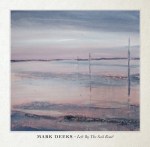 This is a solo piano album of austere wonder. Composer and performer Mark Deeks hails from Northumberland, and in tribute to his home patch, the eight original pieces here are named in the county’s old dialect (the album also includes a cover version of John Ireland’s ‘Sea Fever’). A water theme runs through the record like a river, with tracks named for waves, floods, showers, ice… so we have, in some ways, a tone poem: a suite of works that, over its running time, builds a picture of the North Sea coastline in audio.
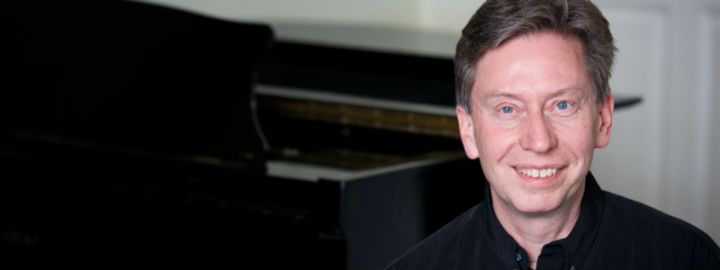
 Michael Wickham)



 The Cross-Eyed Pianist