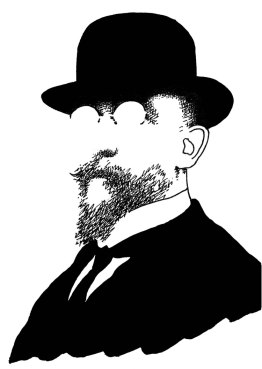
Piano pieces inspired by Erik Satie

biography-default2016 marks the 150th anniversary of the birth of Erik Alfred Leslie Satie, and to celebrate this occasion British composer Richard Fowles has released a personal hommage to Satie and his musical orginality.

Today Satie’s Three Gymnopedies are amongst the most well-known and much-loved music for piano, but during his lifetime, Satie was relatively unknown to much of the musical world. An unremarkable student, he was bohemian by nature, sceptical of established ideas and authorities, and was considered lazy by his teachers. Despite his relatively low profile during his lifetime, Satie helped shape the music of the 20th century: he was an inspiration and mentor to the group of composers known as “Les Six”, which included Poulenc, Milhaud and Honegger, and influenced contemporaries such as Debussy and Ravel who recognised him as a “new spirit” with a highly original approach to composition. It was not until the mid-20th century that his work became more widely known and appreciated, thanks in part to the endorsement of American composer John Cage.

Composer Richard Fowles was encouraged to pursue this composing project by his piano teacher at Brunel University, Sally Goodworth, after he wrote a couple of Satie-inspired pieces as a student. The result is a suite of 16 piano miniatures in part inspired by Satie’s own music (Knossienne Nos 1-3 being the most obvious, where the eastern melodies of the original Gnossiennes are woven into a harmonic framework redolent of the original, but never an imitation of it) and also by the composer’s life and unusual personality. For example, ‘Sea Bird’ (track no. 6) was the nickname given by Satie to his uncle Adrian, like Satie an eccentric character and an important figure in Satie’s early life. The music juxtaposes quirky melodies which unusual harmonies to create a work which is moody, enigmatic and witty.

In fact, wit pervades these charming miniatures, particularly in the triptych ‘The Velvet Gentleman’ which references aspects of Satie’s attire with which he was most associated, including his identical grey velvet suits:

On most mornings after he moved to Arcueil, Satie would return to Paris on foot, a distance of about ten kilometres, stopping frequently at his favourite cafés on route. According to Templier, “he walked slowly, taking small steps, his umbrella held tight under his arm. When talking he would stop, bend one knee a little, adjust his pince-nez and place his fist on his lap. The he would take off once more with small deliberate steps.”

Robert Orledge, Satie Remembered. French translations by Roger Nichols.

See also: “A Day in the Life of a Musician” by Erik Satie

From: ‘Daily Routines’, a blog by Mason Currey (published in book form as Daily Rituals)

In many of the pieces, Fowles mirrors the “walking beat” that seems to pervade many of Satie’s own piano pieces, a meter which may have been the results of his “endless walking back and forth across the same landscape day after day . . . the total observation of a very limited and narrow environment.” (Roger Shattuck, in conversation with John Cage).

Other pieces in the collection are more melancholy: ‘A Walk to the Chat Noir on a Snowy Day’ conjures up the solitary figure of Satie, dressed in his grey velvet suit, making his customary walk to a favourite haunt in the centre of Paris. Meanwhile the set called ‘Biqui’ recalls Satie’s relationship with Suzanne Valadon and his feelings of devastation when the affair ended. Each piece is offered in Andante and Lento, the slower metres and repeated chord motifs lending a desolate yet intimate atmosphere to the music.

‘Sylvie’, the final track on the disc, is named after one of three poems written by Satie’s friend J.P. Contamine de Latour that Satie put to music in 1886.Its jazz harmonies and winding melody is infused with a tender, almost elegaic air.

Throughout the collection, Fowles avoids pastiche by offering us the essence of Satie’s music, and some of his contemporaries,  viewed through the lens of own originality and inventiveness which fuses eastern melodies with sensuous perfumed harmonies.

The music is performed on this disc by pianist Christina McMaster, whose affinity for this type of music is evident in her crisp articulation, preciseness of touch, and an acute sense of pacing which brings the music to life with vibrancy and atmosphere. And there is an added bonus, for pianists may also purchase the collection as sheet music (roughly Grade 6-8 level). Fowles has scored the music in a traditional way and also without barlines, à la Satie.

There is much to enjoy in this evocative collection, for those who love the piano music of Satie, and for those who are just beginning to explore it.

The sheet music is available now. Order here

The CD is released on 8th April.

Sample tracks here

Richard Fowles is an English composer, guitarist and teacher. He has worked as both a composer and session musician in some of the UK’s biggest recording studios and has provided the scores for a number of films and television programmes. He is also an in demand orchestrator. ‘Un Hommage à Erik’ is Richard’s debut album and book.


Featuring Peter Donohoe in recital

and the world premiere of a new work by Paul Mealor

29 April – 2 May 2016

The Wales International Piano Festival will be held from 29 April – 2 May 2016 at Galeri, the iconic arts centre in Caernarfon. This year’s festival has a new Director, pianist Iwan Llewelyn-Jones and is the third festival to be presented by Canolfan Gerdd William Mathias (CGWM/The William Mathias Music Centre). The festival comprises concerts, competitions, masterclasses, workshops, lectures and interviews with guest artists.

Peter Donohoe, acclaimed international pianist, opens the festival on Friday 29 April at 7.45pm in a recital of works by Ravel, Debussy, Scriabin and Rachmaninov. A former winner and recent jury member of the Tchaikovsky International Piano Competition, Peter Donohoe will chair the Jury for the Senior Solo Piano Competition.

The first of three piano competitions begins on the morning of Saturday 30 April with the preliminary stage of the Junior Solo Piano Competition; the final round takes place on the afternoon of Sunday 1 May. The Senior Solo and Piano Accompanist Competitions begin on the morning of Sunday 1 May (preliminary rounds) with the public finals on the afternoon of Monday 2 May. Participants come from all over the UK and abroad.

At lunchtime on Saturday 30 April, there will be a concert entitled ‘Satie on the Sidewalk’, celebrating the music of Erik Satie.

The evening concert on the 30 April at 7.45pm showcases the versatility of Welsh music and musicians, featuring six world premieres of specially commissioned short works for solo piano, inspired by images and words on the theme of ‘Peace and Remembrance’. Three works are by young, upcoming composers and three by renowned composers of international standing: Paul Mealor, well known for his anthem for the marriage of The Duke and Duchess of Cambridge; Richard Baker, noted for his orchestral and chamber music, and Owain Llwyd who is at the cutting edge of film and media composition.  The young composers are Luke Lewis, Mared Emlyn and Maja Palser.

The Festival Education Project reaches its climax in this Saturday evening concert with the premiere performance of a new work for chamber ensemble by four young A-level students. This three-movement composition with accompanying fanfares will be performed by instrumentalists from CGWM.

On Sunday 1 May at 7.45 it’s ‘Fiesta’ mode when the piano take centre stage to raise the roof with other instrumentalists, singers and narrators in a concert of music from across the globe including Lambert’s Rio Grande, Poulenc’s delightful setting of Babar the Elephant and Milhaud’s Scaramouche. The programme features five pianists, including Festival Director Iwan Llewelyn-Jones, and the CGWM Chamber Choir.

On the final morning, Monday 2 May, two fun events will be held in Galeri’s atrium:  ‘Coffee and Croissants with Chopin and Debussy’ at 10.00am and at midday, the ‘Pianothon’, where pianists of all ages and abilities have an opportunity to tinkle the ivories.

www.pianofestival.co.uk 

Notes:

Festival commissions (first performances on Saturday 30th April) have been supported by the PRS for Music Foundation and the Ralph Vaughan Williams Trust.

Funding for the main prizes in the competitions:

Senior Solo Competition donated by Roberts of Port Dinorwic

Accompanists Competition donated by the Sickle Foundation

Junior Solo Competition donated by the Piano Tutors of Canolfan Gerdd William Mathias (funds raised from a public concert).

(source: press release)

For additional press information please contact: 

Nia Wyn Hughes (01286) 685 230 nia@cgwm.org.uk  

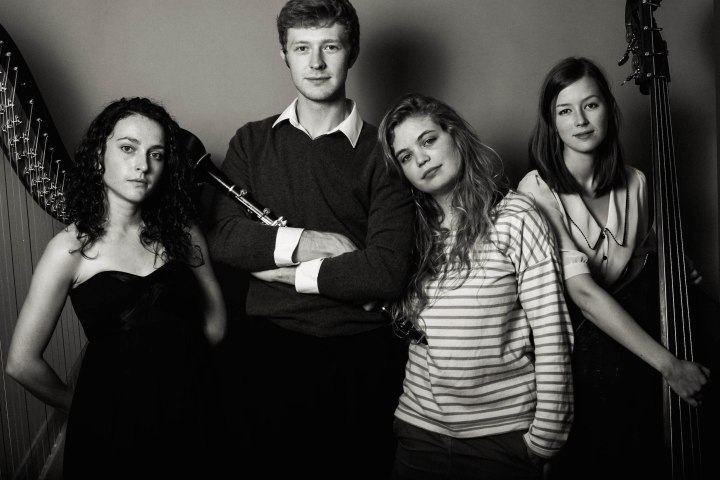
hermes-experiment-publicity-group-shot1

(photo credit: Thurstan Redding)

Who or what inspired you to form the ensemble and pursue a career in music?

As an ensemble we wanted to create something completely new and innovative, and believed we had creative ideas that could make us different to other groups.  The aim was ultimately to build something that could become a central part of our careers as freelance musicians.

Who or what were the most important influences on your musical life and career?

In the two years since we formed our ensemble, we have been lucky enough to meet and work with a number of individuals and organisations that have inspired us and influenced our work. There have been so many, but a notable experience was a gig we did with the experimental composer collective, Bastard Assignments; we saw such bizarre and new things and this was so eye-opening for us musically! Equally, we continue to be inspired by the composers we work with; we all remember a workshop with Stevie Wishart during which she pushed us to discover so many new techniques and completely challenged our approach to the sounds we made.

What have been the greatest challenges of your career so far?

There have been several challenges we’ve had to overcome as an ensemble, and there continue to be new challenges as the group moves forwards. Initially, it was getting started in London and balancing studying with developing as an ensemble. A constant challenge is developing concepts and programmes that encourage people to come and watch us: attracting an audience for experimental music. And of course one challenge we continue to face on a regular basis is learning extremely complex pieces of music!

Which performance/recordings are you most proud of? 

Our season concerts are always a feat to bring together, but also hugely rewarding and inspiring; we get to explore our own themes, and every organisational element lies with us from the beginning. One we are particularly proud of was our LOVESCAPES concert in June 2015 which brought us together with six young composers and a photographer, and culminated in a concert-exhibition in a beautiful crypt in Clerkenwell.

Which particular works do you think you perform best?

We are very proud of our semi-improvised (devised) pieces, which require an unconventional approach in their preparation in that we as an ensemble take on more of a compositional role.  These are works that more traditional ensembles might perhaps struggle with, but we find they bring us much closer together as an ensemble. Similarly, we really love improvising and experimenting with our sounds.

How do you make your repertoire choices from season to season?

We start off by choosing themes for our season concerts (which have included Metropolis, Sonic Visions, Soundscapes, Rhythm…) and we then commission new pieces around these themes, and choose pertinent arrangements to supplement them. We always try to think as creatively as possible and nearly always have full control over our repertoire choices.

Do you have a favourite concert venue to perform in and why?

We really enjoy playing at The Forge in Camden, and will be playing there for the third time on 16 February. The Aubazine Abbey in France was also a fantastic and beautifully atmospheric venue to play and sing in. We have been very lucky to perform in some amazing museums (the Fitzwilliam Museum in Cambridge, New Walk Museum in Leicester, and looking forward to the National Portrait Gallery in May). The Wigmore Hall, albeit full of kids for For Crying Out Loud and Chamber Tots, always has a special atmosphere too!

Favourite pieces to perform? Listen to?

We love performing Giles Swayne’s Chansons devotes et poissoneuses, one of the first large-scale pieces written for us, as well as our more upbeat arrangements, for example Meredith Monk’s Double Fiesta, Bernstein’s I Got Rhythm and Richard Rodney Bennett’s Slow Foxtrot (we do most of the arrangements ourselves) – and of course our free improvisation!

Who are your favourite musicians? 

We all have our own individual heroes that we look up to: instrumentalists and singers who inspire us to bring something different and unique to the group and to aim for the highest possible musical standards.

What is your most memorable concert experience? 

We all had different answers to this! We vividly remember our first ever gig at the Rag Factory in December 2013, as well as the marathon that was our Soundscapes concert in November 2014.

Héloïse’s (accidental) improvised singing at Aubazine Abbey at the start of the concert was also pretty memorable! One of the audience members came up to us afterwards saying ‘Hallelujah!’ so it must have made a good impression regardless.

What do you consider to be the most important ideas and concepts to impart to aspiring musicians?

We’re learning a lot still but here are a few things we have learnt already:

  • Don’t take shortcuts with any aspect of work (e.g. learning pieces / publicity), it’s not worth it in the long run
  • Dare to be different
  • Be confident in what you are doing and why
  • But consider carefully all advice you are given (even if you then choose to ignore it!)

The Hermes Experiment presents ‘Sonic Visions’ at The Forge, Camden, London NW1 on Tuesday 16th February 2016. The concert includes premieres of new works by Kate Whitley and Soosan Lolavar, together with works by Ed Scolding, Richard Rodney Bennett, Claude Debussy and Don McLean

Full details and tickets

The Hermes Experiment is:

Oliver Pashley, clarinet

Marianne Schofield, double bass

Anne Denholm, harp

Héloïse Werner, soprano / co-director

Hanna Grzeskiewicz, co-director

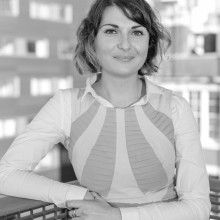
soosan-220x220Who or what inspired you to take up composing, and pursue a career in music? 

I always enjoyed music as a child and played recorder and then oboe growing up. I only really got into composing at the age of 16 when I was experiencing such horrific stage fright that it became clear I needed a different outlet. However, I came from a completely non-musical family so had no concept of how to turn this thing I enjoyed doing into an actual career. Perhaps the penny dropped at some point in my third year of undergraduate – studying Social and Political Sciences – when I realised that composing gave me the greatest pleasure of any activity in my life, and that if I wasn’t doing something creative I would lose my mind.

Who or what were the most significant influences on your musical life and career as a composer? 

All of my teachers who have helped me more than I can say, but especially Cecilia McDowall, Oliver Leaman, Dominic Murcott, Stephen Montague and Reza Vali. Also, hearing ‘Atmospheres for Orchestra’ by Ligeti completely changed my life.

What have been the greatest challenges of your career so far? 

Believing that I can do it, having the courage to make an artistic statement, dealing with failure, organising my life and work despite the total absence of a schedule, making money.

What are the special challenges/pleasures of working on a commissioned piece? 

Commissioned pieces are wonderful because you know you are working with people who are excited about contemporary music and keen for a challenge. There is always that worry that you’re going to deliver something that they will absolutely hate, but you can’t think about that, as then you will simply never write anything. You just have to believe that if you do something with enough integrity, it will work as a piece of art.

What are the special challenges/pleasures of working with particular musicians, singers, ensembles and orchestras? 

I’ve done quite a bit of work with children and voluntary musicians so that has its own challenges in terms of how difficult you can make the parts, but also how interesting they have to be too. If you’re writing for an orchestra of children and you make the trombones count 200 bars rest then it’s likely those trombonists will be put off contemporary music forever. I feel that in a case like that, I have a duty to make their parts interesting so in the past I have experimented with handheld percussion and singing in the context of a large ensemble. The great thing about working with an ensemble like The Hermes Experiment is that you feel nothing is off limits. When I told them I wanted to write a piece that combined the melodies of Iranian classical music with Renaissance Counterpoint, they didn’t even bat an eyelid. And that was wonderful.

Which works are you most proud of?  

The pieces where I held onto an artistic idea in spite of being terrified it wouldn’t work; working my way through that vulnerability and coming out the other side intact always makes me feel quite proud.

Who are your favourite musicians/composers? 

Ligeti is my shining beacon of inspiration at all times. Also Stravinsky, Berio, Morton Feldman, Rebecca Saunders and Xenakis. And I believe Bach is good for the soul.

What is your most memorable concert experience? 

Memorable concerts seem to either be incredibly exciting or make me sob uncontrollably. One was Johannes Moser playing the Lutoslawksi Cello Concerto and then a Bach Cello Suite as an encore (I sobbed in my cheap seat). Another was Lisa Batiashvili performing Shostakovich’s 1st violin concerto which was just incredible. And also a rehearsal of the Berlin Phil conducted by Simon Rattle performing Mahler 2 (I couldn’t get a ticket for the performance), in which I cried throughout.

What do you consider to be the most important ideas and concepts to impart to aspiring musicians? 

That self-doubt is both productive and good and will make you a better artist in the end. That you should strive at all times to do something new, whatever that may mean. To remember to be nice to people, as everyone in music is baring their soul and doing the best they can. To not neglect your personal life and relationships: practising the piano for 8 hours a day may make you a great pianist but it won’t ultimately make you happy, only people can do that.

Where would you like to be in 10 years’ time? 

I actually wrote a 10 year plan as an exercise with some friends last year. It involved composing, teaching, travelling and love. I don’t want to tell you the details as for some reason I’m scared it won’t then come true.

New works by Soosan Lolavar will be premiered by The Hermes Experiment at The Forge, Camden, London on 16th February, together with works by Giles Swayne, Ed Scolding, Claude Debussy and Richard Rodney Bennett. Further information

Soosan Lolavar is a British-Iranian composer, sound artist and educator who works in both electronic and acoustic sound, and across the genres of concert music, contemporary dance, installation, film, animation and theatre.

Her work has been performed at the Royal Festival Hall, V&A,  National Maritime Museum,  ICA, Chisenhale Gallery,  LSE New Academic Building, Blackheath Concert Halls,  Jacqueline Du Pré Music Centre,  Bonnie Bird Theatre, Circus Space and broadcast on BBC Radio 3.

In 2013 she was selected as one of two Embedded composers in residence at the Southbank Centre and received funding from Arts Council England, Jerwood Charitable Foundation and Iran Heritage Foundation to pursue ‘Stay Close’, a ten-month project exploring contemporary classical music as a means of cultural exchange between the UK and Iran. In 2012 she won the John Halford Prize for Composition awarded by Ian Pace and was selected as part of the Adopt a Composer scheme funded by PRS for Music Foundation and run by Making Music, in partnership with Sound and Music and BBC Radio 3.

She holds degrees in Social and Political Sciences (University of Cambridge), Musicology (University of Oxford) and Composition (Trinity Laban Conservatoire of Music and Dance) and her research interests include the politics of gender and sexuality, post-colonialism and the music industry and postmodernism in electronic musics. She has worked as an Assistant Lecturer at Trinity Laban Conservatoire, leading a course on music, gender and sexuality and at City Lit Adult Education college where she teaches classes on music and opera appreciation, film music and music gender and sexuality.

www.soosanlolavar.com