nzso20yevgenysudbin-4416

Haydn Sonata in B Minor HobXVI/32
Beethoven Bagatelles Op.126
Tchaikovsky Nocturnes, Selection from the Seasons
Scriabin Prelude & Nocturne for the left hand Op.9, Sonata No.5, Op.53

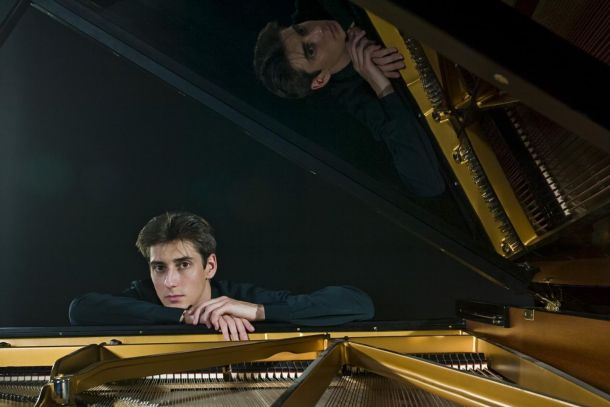
Yevgeny Sudbin, piano

Monday 13 November 2017, St John’s Church, Wimbledon

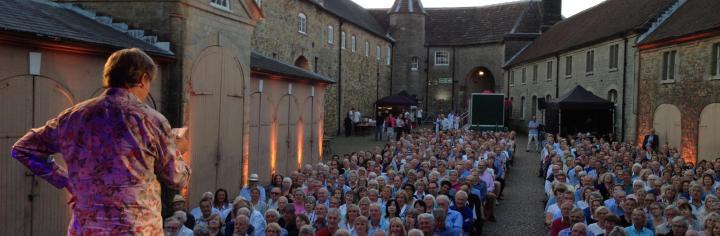
This was my first visit to Wimbledon International Music Festival, though I have been aware of the festival for some years. Now in its ninth year, the two week festival is very well established and offers an impressive roster of international musicians, together with opportunities and support for young and emerging artists. Concerts take place in a number of attractive churches and halls dotted around the hill leading up to Wimbledon village and are very well organised, with friendly helpful staff. This is in no small part due to the efforts of Anthony Wilkinson, festival director, who is, by his own admission, passionate about music and has created “a festival sharing the experience of hearing and meeting world class artists in the company of friendly festival audiences“.

The theme of this year’s festival is capital cities and Russian pianist Yevgeny Sudbin, who hails from St Petersburg, presented a programme featuring composers from two of the greatest European cultural capitals – Vienna and Moscow – represented by Haydn, Beethoven, Tchaikovsky and Scriabin. Vienna has always had a strong hold over the imagination of Russian composers, artists and performers, and although Tchaikovsky was born in St Petersburg, he spent time in Moscow teaching at the conservatory, which since 1940 has born his name, and where Moscow-born Scriabin studied under Anton Arensky.

Described by the Telegraph as “potentially one of the greatest pianists of the 21st century“, Yevgeny Sudbin possesses that rare talent of being able to move with apparent ease between different composers, eras and genres, yet always delivering pianism of the highest order, rich in expression and musical thought. I have enjoyed fine performances by him at London’s Wigmore and Queen Elizabeth Halls and have been impressed in particular by his performances of music by Scriabin and Scarlatti (Sudbin’s playing of this composer’s miniature sonatas is exquisite – poised, shapely and expressive – and confirms that this music can and should be played on a modern piano).

It is also rare to be at a concert where one is utterly captivated from the first note until the very last has faded to silence, but this was definitely my experience at Sudbin’s Wimbledon recital. He’s a modest presence on stage, restrained in gesture, so that the music can speak for itself. His Haydn was poised and precise, darkly-hued, the first movement paced to allow us to appreciate the composer’s rhetoric and wit and delight in the possibilities of the (then) recently invented pianoforte. The second movement was elegant, lyrical and intimate, while the Presto finale was delivered with an insistent pulsing intensity, replete with fermatas and false cadences to keep the audience guessing.

Beethoven’s Opus 126 Bagatelles were published almost 50 years after Haydn’s B minor sonata, the product of the same period in his compositional life as the Ninth Symphony and the late string quartets. Although a set of six miniatures, these are works of the profoundest emotions and a sense of “otherworldliness”, particularly in the slower works. Sudbin caught the individual character of each Bagatelle with supple phrasing and nuanced dynamics. The final movement, in E flat, was almost Schubertian in its expansiveness and long-spun melodies of its middle section.

More miniatures in the second half, this time by Tchaikovsky. Two Nocturnes and two movements from ‘The Seasons’, all tinged with a heartfelt poignancy and delivered by Sudbin with sensitivity and expression. Scriabin’s Prelude and Nocturne for the left hand offer the pianist technical and expressive challenges – to shape a melodic line with an accompaniment using the left hand alone. This was an impressive performance, graceful and intense. Sudbin launched into the Fifth Sonata with hardly a pause for breath. It opens like the Haydn, with a growling, rumbling figure deep in the bass, but that is where the similarity ends. This work is sensuous, and declamatory. Sudbin capered through it, artfully bringing together all the seemingly disparate elements and abrupt contrasts, from toccata-like scurryings to passages of swooning lyricism, and mercurial changes of rhythm and harmony (some of the more surreal tonalities look forward to Mahler and Schoenberg, who lived in Vienna). The final flourish was delivered with a cool wit and humour.

The Scarlatti encore felt like a palette cleanser after the perfumed excesses of Scriabin, played with an understated elegance and a wonderfully translucent sound, bringing to a lose this absorbing and varied programme.

(artist picture courtesy of the NZSO)

Music at Paxton Festival

14 – 23 July 2017

www.musicatpaxton.co.uk

“Intimate festival presenting the finest international chamber music in a stunning backdrop of works from the National Galleries collection.”

  • Mahan Esfahani plays the Goldberg Variations
  • Promenade concert taking in main reception rooms
  • Carducci Quartet play Ravel’s Introduction and Allegro with young Scottish musicians
  • Cello Masterclass with Pieter Wispelwey
  • Sunday morning concerts
  • Continuing this year: two FREE ‘Music at Paxton…Plus’ concerts

Music at Paxton, a summer festival of top class international chamber music, takes place in Paxton House on the banks of the River Tweed in the Scottish Borders from 14 – 23 July 2017. The daily concerts offer an intimate, friendly and relaxed experience and take place in Paxton House’s splendid Picture Gallery. With its large, domed roof-light that lets in the summer sun, and walls hung high with paintings from the National Galleries of Scotland’s collection, it is an idyllic setting for chamber music.

The string quartet features prominently and the festival welcomes three this year: the Elias Quartet (Saturday 22 July, 7.30pm) who make their Paxton debut with two pillars of the chamber music repertoire Schubert’s String Quartet in D minor ‘Death and the Maiden’ and Schumann’s Piano Quintet; the Carducci Quartet (Saturday 15 July, 7.30pm) with a programme of Shostakovich, Arvo Pärt, Philip Glass, and Ravel’s gloriously sunny Introduction and Allegro; and the Quatuor Zaïde from Paris, (Tuesday 18 July, 7.30pm) who open with the glittering sonorities of Debussy, followed by Schubert’s towering G major Quartet.

Harpsichord virtuoso Mahan Esfahani returns to Music at Paxton with two recitals this year. Renowned for his championing of the instrument, from the Baroque to the 20th century, Mahan Esfahani’s morning concert features music by Rameau, Martinů, and Swiss composer Pieter Mieg (Sunday 16 July, 11.30am). He returns that evening (Sunday 16 July, 6pm) to perform J S Bach’s Goldberg Variations.

No stranger to Music at Paxton, pianist Steven Osborne (Friday 14 July, 7.30pm) performs his critically acclaimed interpretations of Rachmaninov’s virtuosic tonal studies Études Tableaux Op 33 and Études Tableaux Op 39 alongside Debussy and Brahms.

Following his visit last year, the renowned cellist Pieter Wispelwey returns to complete the set of Suites for Solo Cello by J S Bach (Sunday 23 July, 6pm), with a public masterclass immediately beforehand (Sunday 23 July, 1.30pm).

On Thursday 20 July at 7.30pm, Baroque violinist Bojan Cicic brings his star-studded Illyria Consort (Bojan Cicic violin and viola d’amore, Susanne Heinrich viola da gamba, David Miller theorbo and baroque guitar, and Steven Devine harpsichord) for a feast of Baroque music in this celebration of Handel and his London contemporaries including Handel, Carbonelli, Ariosti and Corbetta. Former BBC New Generation artist, soprano Ruby Hughes makes her debut at the Festival, performing Schubert, Schumann and Mahler, with pianist Joseph Middleton (Friday 21 July, 7.30pm).

Presenting musicians earlier in their careers and integrating them into the programme remains of key importance to Music at Paxton. The Festival proudly continues its relationship with Live Music Now Scotland and this year sees the return of many of their alumni, some sharing the stage with leading international artists, in addition to those currently under their wing. Featured artists in this year’s Festival are Sirocco Winds, Emma Wilkins (alumni), and Calum Robertson, Marco Ramelli and Aonach Mòr (current).  New this year will be the Promenade Concert, taking in some of Paxton House’s reception rooms and featuring music from Emma Wilkins (flute), Esther Swift (harp) and Calum Robertson (clarinet) (Saturday 15 July, 4pm).

Aonach Mòr combines the talents of Claire Hastings, Grant McFarlane and Ron Jappy to create an exciting blend of songs and tunes (Sunday 16 July, 3.30 pm) featuring accordion, fiddle and guitar. Sirocco Winds, a brilliant young ensemble of current Masters students and graduates of the Royal Conservatoire of Scotland, perform Ligeti, Berio, Barber, Schifrin, Gershwin and Piazzolla (Wednesday 19 July, 7.30pm).

Young Milan born guitarist and composer Marco Ramelli performs works from Spain and South America (Saturday 22 July, 4pm) in the intimate surroundings of the Dining Room at Paxton House and Benjamin Frith brings a lyrical programme of Scarlatti, Mendelssohn, Chopin and Stanford, designed for a relaxing hour on a Sunday morning (Sunday 23 July, 11.30am).

Once again, in conjunction with Live Music Now Scotland and Paxton House, the extremely successful free one-hour taster concerts ‘Music at Paxton…Plus’ return to the festival. On Sunday 14 May at 2.30pm, guitarist Marco Ramelli performs works by Tarrega, Albéniz and Paganin and Calum Robertson (clarinet) and Juliette Philogene (piano) join forces on Sunday 4 June at 2.30pm for a programme of Jean Françaix, George Gershwin and Edward Gregson.

Helen Jamieson, Artistic Director for Music at Paxton, said: “This year’s festival is more ambitious than ever and we will be using every available space – from the marquee to the magnificent Dining Room – and every minute of these wonderful musicians’ time to provide the best and most varied event possible. There will be music from Bach to Beamish and from Scottish Traditional to Philip Glass. New this year is a cello masterclass by the renowned Pieter Wispelwey, a Promenade concert, for which Paxton House will open its main reception rooms to our musicians and audiences and two Sunday morning concerts for the early risers.”

Music at Paxton offers Sunday morning keyboard recitals, varied afternoon events including folk music in the marquee, two intimate recitals in the Dining Room, and a musical tour exploring some of the principal reception rooms of the 18th century neo-Palladian mansion.

(source: press release)

conchordfestival2016

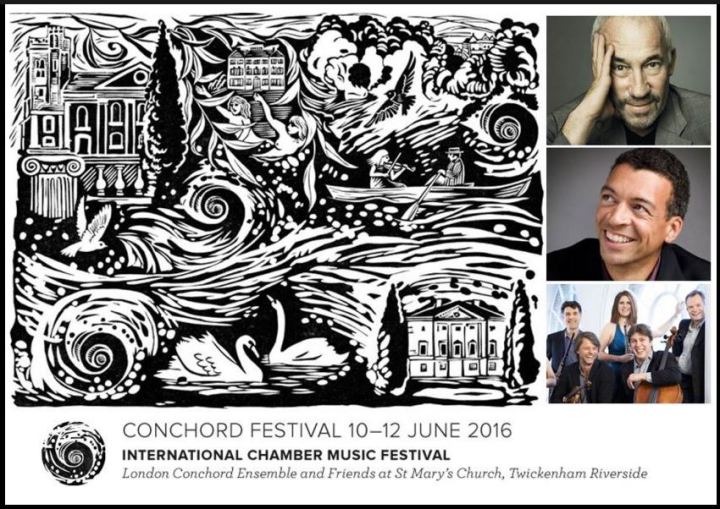
10-12 June 2016
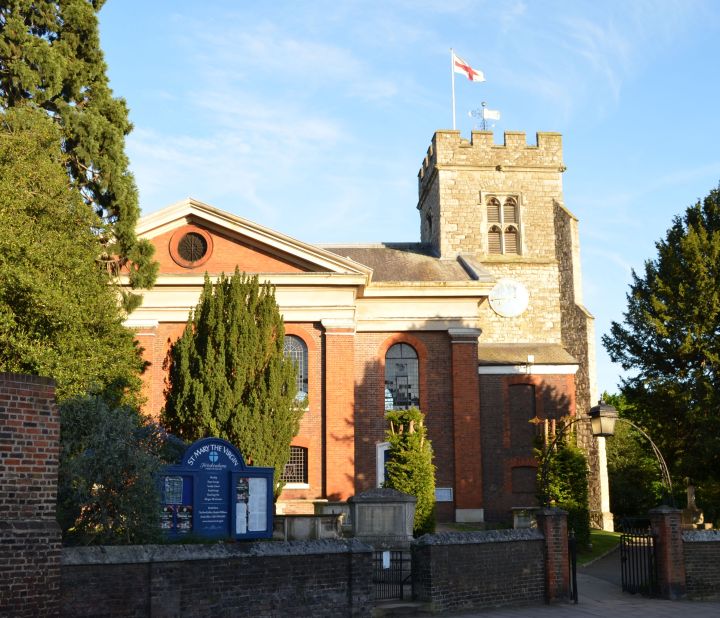
St Mary’s Twickenham
A new weekend festival of chamber music in a beautiful setting by the river Thames in Twickenham

The festival, which takes place over three days, features performances by international artists including baritone Roderick Williams (who will also premiere a new work), Julian Milford, Alisdair Beatson, Thomas Carroll, Emily and Daniel Pailthorpe, and the London Conchord Ensemble, with special guests Simon Callow and James Redwood.

The opening concert showcases soloists from London Conchord Ensemble playing well-loved pieces by J S Bach, musical master of the Baroque. Featuring the Oboe d’amore Concerto and Flute Suite, with its famous dancing ‘Badinerie’, the programme culminates in the eternally popular Double Violin Concerto. All concerts take place in St Mary’s church, Twickenham, an elegant eighteenth-century church with views to the river.

For more information and tickets, please visit the Conchord Festival Website

st-marys-church-twickenham

FestPromo
The Dulwich Music Festival is now in its fifth year. It is an annual event that takes place several times during the year to provide performance and feedback opportunities for pianists, harpsichordists and fortepianists. In 2016, the Festival comprises two separate events:
  • The Clementi House Piano Competition – a chance to perform in the London home of pianist and composer Muzio Clementi. Alongside the competition, there will be concerts by leading harpsichordists and fortepianists. 6th March 2016
  • The Piano Competition – a full day of classes from beginners to advanced and adult recital classes. 11th June 2016

These events are designed to celebrate the piano (and harpsichord and fortepiano) and to encourage enjoyment and progress amongst players of all levels.

Repertoire has been carefully chosen to allow complete beginners the chance to gain their first experience of performing to a friendly and welcoming audience. We seek out innovative repertoire by contemporary composers who also adjudicate the classes. In addition to the contemporary repertoire, we also have graded classes and recital and exhibition classes. The piano competition is well established and fully booked months in advance. We recommend early booking. Some of the June classes are already fully booked.

I am delighted to be involved with the Dulwich Music Festival once again in 2016 as an adjudicator, a role which offers me the opportunity to hear young pianists in action in a variety of repertoire.
Full details about the Festival can be found here:

http://www.dulwichmusicfestival.co.uk/