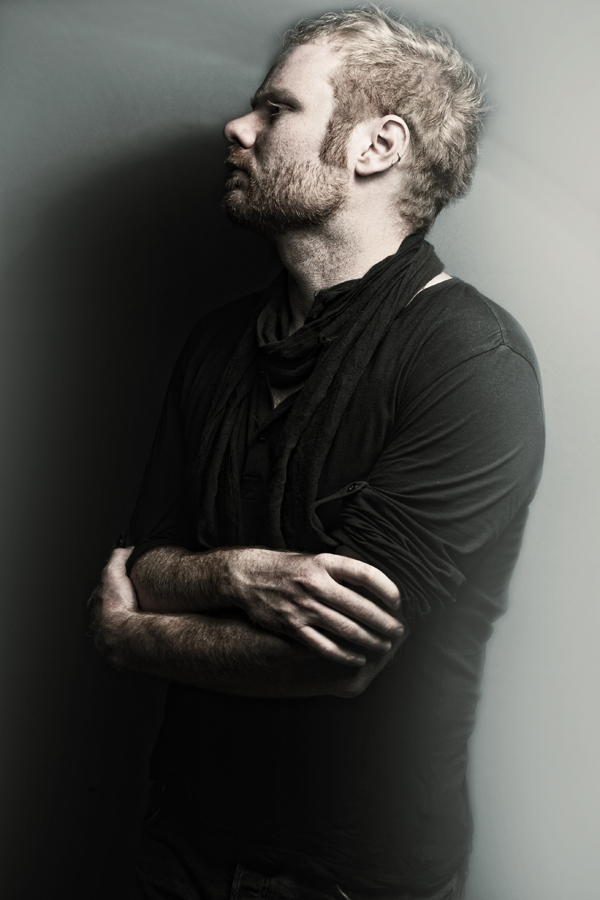
Francesco-032 by Marie Staggat

Who or what inspired you to take up the piano and pursue a career in music?

There has always been a piano at my house, perhaps a strategic move by my mother. Soon I found myself curious about which sounds I could trigger out of the instrument. Then I realized the piano is itself a world.

Who or what have been the most important influences on your musical life and career?

Growing up I found the most inspiration in three musicians of the twentieth century: Paco de Lucia, Ryuichi Sakamoto, and Joe Zawinul. And the discovery of Johann Sebastian Bach’s Goldberg Variations.

What have been the greatest challenges of your career so far?

Not to repeat myself, not to fall into a routine.

Which performance/recordings are you most proud of?

Pride is not a feeling I measure I measure my achievements with. Perhaps my album ‘Idioynkrasia’ (inFine, 2011) is my most personal, and ‘Piano Circle Songs’ (Sony, 2017) the most challenging.

Which particular works do you think you play best?

When I was 5 years old, I said to my piano teacher: “I only want to play the music of Bach, and my own music” She thought I was a cute little boy, and taught me how to play the piano.

How do you make your repertoire choices from season to season?

The complete works for keyboard of J S Bach is a project for a lifetime, not necessarily a season.

Do you have a favourite concert venue to perform in and why?

I like a variety of venues, and also alternating them. There are some fantastic concert halls in Japan for instance, really pristine acoustics. D-Edge, a club in Sao Paulo, Brazil, has a great sound system and vibe.

What is your most memorable concert experience?

Probably a show at Jeita Grotto in Lebanon. Stalactites and stalagmites, plus a 7-second reverb.

As a musician, what is your definition of success?

To be in line with what you do artistically. (Whether this works out commercially speaking is another question)

What do you consider to be the most important ideas and concepts to impart to aspiring musicians?

Wake up, listen up, be yourself.

What is your present state of mind?

Aspiring serenity.


Francesco Tristiano’s ‘Piano Circle Songs’ is released on the Sony label. Francesco performs music from his new album, with Canadian pianist and songwriter Chilly Gonzales with whom the project was developed, at the Southbank Centre on 20 September 2017 – details here

Francesco Tristiano’s biography


Artist photo by Marie Staggat

lisa_smirnova_presspic2
Who or what inspired you to take up the piano and pursue a career in music?
It was an coincidence that I took up the piano. But later I chose independently to pursue a career as a musician, because I noticed that nothing other than making
music made me feel great.

Who or what were the most important influences on your musical life and career?
Practically, it was my teacher Karl Heinz Kaemmerling, and my wonderful colleague, the violinist Benjamin Schmid – both during my studies at Mozarteum in Salzburg. Exposure to Friedrich Gulda and Nikolaus Harnoncourt were turning
points and led to greater inspiration for my musical understanding.

You are performing in the London Piano Festival this October – tell us more about this?
I loved Katya and Charles’ idea of performing what one likes most, and immediately said “yes”. Repertoire from the baroque and classical periods is my best repertoire. My interests and performing style have nothing to do with the “Russian piano school”, and I am deeply convinced that the modern piano offers the widest range of possibilities to create the sound appropriate for these works.
So I chose three composers: Scarlatti – his sonatas, of which there are so many, are one better than the next and always perfect for a discovery. Mozart is simply my favourite composer – I feel very close not only to his music, but to his entire personality. And Handel’s Suite is part of my award winning recording project for ECM.

What have been the greatest challenges of your career so far?
To start up from absolute zero with no money whatsoever. And to realize later on, that it is not only the musicianship, but Marketing and PR that you have to put your efforts in – a very disappointing discovery.

Which performance/recordings are you most proud of?
The already mentioned Handel Suites for ECM, and the brand new Mozart Piano Concerti with my New Classic Ensemble Vienna – we just recorded and produced them for the Austrian Broadcasting Corporation.

Which particular works do you think you perform best?
Mozart Piano Concerti

How do you make your repertoire choices from season to season?
It is a mixture between requests from promoters and the works I would like to study or perform again – I try to find challenging combinations.

Do you have a favourite concert venue to perform in and why?
The Concertgebouw Amsterdam. Everything feels perfect to me: The size, the acoustics, they always had a wonderful piano when I played…. and the red carpet on the stairs when you come down on stage feels like Hollywood….

Who are your favourite musicians?
Glenn Gould, Maria Callas, Friedrich Gulda, Nikolaus Harnoncourt, Andras Schiff

What is your most memorable concert experience?
The one when my “plan” with a certain piece of music worked out, and fortunately there have been many.


What do you consider to be the most important ideas and concepts to impart to aspiring musicians?

To be honest, I don’t know, as I am still learning something new myself each day.

What is your idea of perfect happiness?
Happiness is the flow to be so entirely occupied with what you do at the moment that nothing else exists. Naturally this cannot last your whole life, but also happiness cannot.

What is your most treasured possession?
My time.

Lisa Smirnova performs in the 2017 London Piano Festival at Kings Place in two concerts on 7 October. Further information and tickets here


Austrian-Russian pianist Lisa Smirnova is an internationally recognized concert artist renowned for her interpretations of baroque and Classical repertoire. The Frankfurter Allgemeine Zeitung recently remarked that her “sense of style, use of phrasing and ornamentation and tempi, that make the piano an instrument of harmony of vibrating strings, gave her performance its transcendent and unmistakable character.”
(picture © Lisa Smirnova)

Who or what inspired you to take up the cello and pursue a career in music?

My parents have a music school, Harpenden Musicale, where we grew up. Music was always going on around the house and inevitably it rubbed off on me and my siblings. The cello has been there as long as I can remember and I simply can’t imagine life without it. We would try all sorts of instruments in the music shop (where my grandmother worked until she was around 90 years old!), but the cello kept my attention most. One day we were in our local town and a lady came up to my mother and started to chat. I didn’t really recognise her and she asked how I was getting on with my new cello teacher. I responded enthusiastically, “Oh, much better than the last”, only to discover that she was my previous teacher! The real turning point was when I was 16 and went to Tanglewood in the States for 8 weeks. I heard the Boston Symphony Orchestra perform each week with soloists from all over the world and heard many great chamber concerts. I enjoyed this experience so much that when I returned home I worked harder than ever and two years later won the BBC Young Musician competition.

Who or what were the most important influences on your musical life and career?

I was fortunate to study with teachers from the same musical tradition, including Nicholas Jones at Chetham’s, Steven Doane at the Eastman School of Music in the States, and Steven Isserlis and David Waterman at IMS Prussia Cove. All of these mentors studied with a wonderfully eccentric musical guru called Jane Cowan at the London Cello Centre and later at her home in Scotland. She was a formidable influence on all of them and her wisdom lives on. Their influence has been so infectious that I now play on covered gut strings and I often hear them on my shoulders when I’m working with students at the Royal Academy of Music. I also studied privately with Ralph Kirshbaum, Bernard Greenhouse and have more recently been playing Bach for Anner Bylsma.

What have been the greatest challenges of your career so far?

I was catapulted into the profession from the age of 19 and the biggest challenge early on in my career was learning repertoire for the first time for important concerts. For example, I remember performing the Walton Concerto live on radio which was the first time I’d performed it with orchestra, but I’ve also performed the Elgar Concerto live on TV opening the BBC Proms in 2001 and broke a string during the live final of the BBC competition! These were immense challenges, as was premiering a new cello Concerto by Charlotte Bray at the Proms. But one thrives off these opportunities and it’s what continues to spur you on every day to learn from the past, live in the present, and dream for the future.

Which performance/recordings are you most proud of?

My debut recital CD with Kathryn Stott is a happy memory, although I haven’t listened to it for years. The disc includes 3 British composers; Frank Bridge, Benjamin Britten and Mark Anthony Turnage. I’m Godfather to Mark’s son, Milo, and we recorded a piece that Mark wrote for Milo’s christening alongside the Sonata of Bridge and Britten. Kathy’s experience is so vast that being my first recording I was grateful to have her guidance and support throughout. I’m now greatly looking forward to releasing this latest CD – it has captured my current journey and has lots of variety on the disc including works by Barrière, Beethoven, Respighi and 3 new commissions.

Which particular works do you think you perform best?

I like to think I’m performing whatever music is in front of me as best I can. It’s hard to answer this question, but I give everything to whatever music I’m communicating in the moment. Premiering a new work is always thrilling because nobody can compare it to another performance and everyone is hearing it for the first time. This is always refreshing and alive. On the other hand, performing the Bach Suites or Beethoven Sonatas is quite terrifying because not only are these works revered by cellists, but they are also so well known and often performed.

How do you make your repertoire choices from season to season?

Some things are planned and others are asked for by promoters. As the years go by, there are certain works I’m more and more keen to get round to performing. For example, works like the Grieg and Franck Sonatas.

Do you have a favourite concert venue to perform in and why?

I’ve been fortunate to perform in many great concert halls in London, Paris, Berlin and Tokyo, but I think that the Concertgebouw in Amsterdam is a particularly special hall. There’s so much history there and the setting and acoustic is a real inspiration to all musicians. I also like the Birmingham Symphony Hall and Bridgewater Hall. If only London could get a new concert hall, although we are lucky with the Wigmore Hall!

Who are your favourite musicians?

I grew up listening to many cellists from Casals to Tortelier, Rostropovich, Du Pré, Fournier, Feuermann etc etc and then living cellists including Yo Yo Ma, Truls Mørk and Steven Isserlis. What an incredible crop from the past and present! I think artists like these have helped to inspire the current generation of cellists that have been emerging in recent years. I also grew up listening to the Beaux Art Trio, Amadeus Quartet and, on the other side of the spectrum, to Sting! Now one can turn to YouTube and not only hear, but also see all these unique artists in action, which is a pleasure to tap into from time to time.

What is your most memorable concert experience?

I think it was when I was a member of the National Youth Orchestra performing Britten’s Young Person’s Guide to the Orchestra and Shostakovich’s 10th Symphony with Rostropovich at the helm at the BBC Proms. That concert knocked all of us youngsters sideways! There are a few particularly special experiences that I can think of. One other I could mention was performing Messiaen’s Quartet for the End of Time in the Concertgebouw with Michael Collins, Kathryn Stott and Isabelle van Keulen when I was 20 years old. This was a great honour, to perform such an extraordinary work with musicians I looked up to in this setting at the beginning of my career.

What advice would you give to young or aspiring musicians?

I think you need to find music from deep within you. Parents, teachers and friends are a big part of your development, but you need to love what you do if it is going to be sustainable in the future. Have fun, read music with friends, work hard and find a teacher who you connect with. Concentrate during your practice session, particularly if schoolwork is taking up much time (and not least sport!). Know what you need to work on and improve. Be patient – this is not a sprint, but a marathon and with daily practice and commitment with the right sort of guidance you will feed off the improvements and be motivated to continue to develop as an artist and a musician. Listen to lots of music and influences, go to concerts and read about composers’ lives. Enjoy your music making and don’t be too hard on yourself. Forget how you’ve learnt things when you go on stage and liberate yourself to live in the moment.


Guy Johnston is one of the most exciting British cellists of his generation. His early successes included winning the BBC Young Musician of the Year, the Shell London Symphony Orchestra Gerald MacDonald Award and a Classical Brit. He has performed with many leading international orchestras including the London Philharmonic, Philharmonia Orchestra, Ulster Orchestra, BBC Philharmonic, NHK Symphony Orchestra, BBC Symphony, Britten Sinfonia, Deutsches Symphonie-Orchester Berlin, Orquestra Sinfônica do Estado de São Paulo, Moscow Philharmonic and St Petersburg Symphony under conductors such as Illan Volkov, Sakari Oramo, Vassily Sinaisky, Yuri Simonov, Alexander Dmitriev, Sir Roger Norrington, Robin Ticciati, Yan Pascal Tortelier, Sir Andrew Davis, Leonard Slatkin, Daniele Gatti.

Read more

gallery072

Who or what inspired you to take up the piano and pursue a career in music?

When I was a teenager, I never thought of pursuing a career as a pianist. I used to play a lot of classical and romantic piano repertoire but just for the personal joy of playing. I was much more into rock and punk music. The life of a classical musician seemed to be quite boring and bourgeois to me, even after starting my piano studies at university. At this point I was totally uninterested in any contemporary classical music and pieces I heard by composers like Boulez or Stockhausen sounded too academic for my taste. At the time, I didn’t know about contemporary genres like minimalism or any electro-acoustic music and I never imagined that there could be “classical” composers out there influenced by the same music as me. My view completely shifted after I started listening to “The people united will never be defeated” by Frederic Rzewski. The eclecticism of this work, the political attitude, and the combination of elements from both popular and classical music made me reconsider my view of what a pianist is able to express on stage. From this point on I wanted to be a professional pianist.

Who or what have been the most important influences on your musical life and career?

Frederic Rzewski definitely had a large effect on my decision to pursue a career as a pianist but, for my own musical style, there are a wide range of influences. I admire composers like George Antheil and Henry Cowell for their uncompromising and radical approaches towards the piano as a noisy sound monster, but also composers like Erik Satie or Philip Glass who are able to create an almost transcendental sound out of the most simplistic material. At the moment I’m very much into post-rock, which to me feels like a mash-up of both of these sound aesthetics. This mood somewhere between mania and meditation is what I try to transfer to the piano when doing my own arrangements.

What have been the greatest challenges of your career so far?

At the end of my studies after I was about to leave the comfort zone of the university, I recognised that I was a classical pianist but with quite a strange repertoire and an unusual way of setting up my concert programs. I felt too superficial for the contemporary music hardliners, too progressive for the classical traditionalists but still too serious to be part of the popular culture. Falling between these schools became my niche. I liked the idea of being kind of intangible for the audience, and it gave me the opportunity to reinvent myself with every new project or album. But that’s sometimes a long journey.

Which performance/recordings are you most proud of?

Every recording is a very unique project to me, reflecting just a current idea or an aesthetical statement at a certain point of my life so I would say that there isn’t one particular album I’m most proud of. There is, however, obviously always a moment after finishing each album when you feel a great sense of pride as a result of all of the hard work put in: from the first conceptual idea to the last mixing session.

Which particular works do you think you play best?

I stopped playing Beethoven piano sonatas in concerts after I recognised that my interpretations had nothing more to add to the interpretations I’d already heard by all those great pianists. I’m convinced that you can only be a true musician if you have something new to say through the music you play. My motivation as a musician is not to try and imitate what hundreds of pianists have previously done before me but to explore hidden links within different genres by reworking pieces or discovering rarely performed works. I hugely favour American piano music; from George Gershwin’s colourful jazzy rhythms, to the dark and sensual soundscapes of George Crumb, to the works of the American minimalists. This music suits me best.

How do you make your repertoire choices from season to season?

The process usually starts with a piece that I’m obsessed with at the time. This work then forms the conceptual basis for a new program. In the case of “Beauty in Simplicity”, there was a track called “A new error” by German techno group Moderat. This work reminded me of Philip Glass’ piano works. My first thought was then to prepare a program that picks up on classical minimalism but also explores elements of Techno and Ambient Music. There is a strong aesthetical connection between Brian Eno and the music of Erik Satie so there was suddenly a new storyline going back to the 19th century. For the next step, I went through a lot of original piano music repertoire as well as tracks I wanted to rearrange for piano. From this, I compiled a set ranging from the Paris salons to Berghain held together by the compositional ideas of patterns and loops.

Do you have a favourite concert venue to perform in and why?

I really love playing in planetariums. I started this two years ago with my “Insomnia” program and I am planning on doing this with my upcoming album “Beauty in Simplicity”. It’s a place that gives me the opportunity to create a very special concert experience by combining the music with fulldome visual art and building up a three-dimensional soundscape. You’ll hardly find this kind of hypnotic atmosphere in any other concert venue.

What is your most memorable concert experience?

I think it was when I first performed Rzewski´s “The people united will never be defeated” back in 2009. I worked on this masterpiece for almost two years until I had the courage to go on stage with it. I was totally absorbed into the background story of the piece. Playing this piece felt like being part of a revolutionary fight using the notes as weapons. There was just so much adrenaline released during these 65 minutes of music.

As a musician, what is your definition of success?

There is always a sense of ambivalence in the life of an interpreting artist: are you a servant of the performed work or should the work serve to the performer? I feel successful if both of these are fulfilled: by making another’s work my own either on stage or during a recording.

What do you consider to be the most important ideas and concepts to impart to aspiring musicians?

As a pianist I can say: don’t expect to be a universal genius, focus on a repertoire that fits your personality and makes you authentic. If you were a pop musician, no one would tell you to play jazz today, heavy metal tomorrow and drum ‘n’ bass the day after, just because it’s all part of the pop culture. Classical pianists are often expected to cover more than 300 years of music history. A classical education requires you to play Bach just as well as Mozart, Chopin or Stravinsky. Find the mistake.

What is your idea of perfect happiness?

Like a famous German entertainer once said: “having nowhere to be and being tipsy”.


Kai Schumacher’s new album Beauty in Simplicity is released on 1 September


Kai Schumacher delights in pushing the boundaries between classical and popular music while avoiding the wellworn clichés “Crossover.” Boasting an impressive pedigree, Kai studied at the renowned Folkwang University Essen with Prof. Till Engel, passing his „Konzertexamen“ with distinction in 2009. Since then, like a musical mad scientist, he has been constantly experimenting and combining seemingly incompatible elements with surprising results. His solo performances are acts of pure musical – and stylistic – alchemy, serving up heady mixes of Dadaism and Dancefloor, Avantgarde and Pop culture – sometimes all at once!

When not engaged in genre-defying pursuits, Kai Schumacher‘s repertoire focuses on American piano music of the twentieth and twenty-first centuries. His debut recording of Frederic Rzewski‘s monumental “The People United Will Never Be Defeated” (2009) was hailed by Fono Forum magazine as a “pianistic sensation” and voted CD of the month. On his second album, “Transcriptions” (2012), he bravely turned to the musical heroes of his youth – Rage Against the Machine, Nirvana, Slayer and others – remixing them and transforming the concert grand into a four squaremeter sound monster, a mechanical sound-effects board, complete with prepared percussion. His third album “Insomnia” (2015) is the story of a nocturnal odyssey, at once soothing and disturbing. It´s five restless “hymns” to the night feature the works of five American composers written over the past 80 years.

On his current album „Beauty in simplicity“ (September 2017, NEUE MEISTER) Kai Schumacher is combining original piano compositions with his own arrangements for „enhanced piano“ to create a repetitive set between meditation und mania. Including works from three centuries ranging from Erik Satie through Steve Reich to Moderat Minimal Music meets its classical pioneers and descendants in Ambient, Techno and Post-Rock.

Kai Schumacher also works as a producer, regularly appears as an orchestral soloist and has toured throughout Europe, Asia and North- and South-America.

kaischumachersite.wordpress.com

(artist photo by Bonny Cölfen)


