Who or what inspired you to take up the piano and pursue a career in music?
My first piano was my uncle’s wedding gift to my aunt. At the time he was moving houses and the piano was ‘temporarily’ housed in my home, where it stayed for another 6 years! My first piano teacher (a small ballet company’s piano accompanist) was the person who really pushed me and my parents to think that it was really possible to consider a career path in Western classical music, a very new concept in China at that time. You must remember that this was merely only five years after the end of the Cultural Revolution!
Who or what have been the most important influences on your musical life and career?
The support of my mother throughout my life, and how she let me pursue what I loved to do, regardless of any social or financial consideration.
What have been the greatest challenges of your career so far?
Juggling being a ‘hands-on’ mother of two young children and pursuing a performing career!
Which performances/recordings are you most proud of?
There are some gems which I recorded for Pianist Magazine that turned out unexpectedly well. I have now recorded a large number of CDs for the magazine and I am very proud of issue 100, both for its significance and the music in it.
Do you have a favourite concert venue to perform in and why?
Not really. I would say perhaps the audience play a more important part in influencing my performance on the day rather than the venue itself.
Who are your favourite musicians?
I am not what you call a loyal listener, I go through phases. However, the old masters seem to always make me stop and pay attention whenever I hear them: Guido Agosti, Shura Cherkassky, Vladimir Sofronitsky, Pablo Casals, Alfred Cortot, Benjamin Britten, Louis Kentner… the list will go on and on.
What is your most memorable concert experience?
Collaborating with James Loughran and the Aarhus Symphony Orchestra on Mozart’s Piano Concerto K.488. Also a small recital I gave in the Scottish border when the front leg of the old Bechstein piano suddenly broke during the final movement of Beethoven’s ‘Les Adieux’ Sonata; in happiness I hope!
As a musician, what is your definition of success?
Great question! Without sounding a cliché and being corny, all I want is just to play to people. My definition of success is being able to make that special bond with the audience – even if it is just to one single person on the night – in a short magic moment music can touch special places deep within.
What do you consider to be the most important ideas and concepts to impart to aspiring musicians?
To be forever inquisitive – one always finds answers if one keeps asking questions.
Where would you like to be in 10 years’ time?
Pretty much the same as I am now, but perhaps travelling further afield to play more concerts, as the children will be more grownup. Also, dare I hope for much better gardening skills?!
What is your idea of perfect happiness?
Waking around with my family the day after a good concert.
What is your most treasured possession?
I am a very laid back Buddhist; I think that one of the main ideas of Buddhist teaching is to try not to hold on to many earthly possessions.
Chenyin Li performs two piano sonatas by Beethoven, Stravinsky’s Petrushka Suite and three Chinese transcriptions as part of the Bluthner Piano Series at St John’s Smith Square on 23 May. Further information and tickets here
The Chinese pianist Chenyin Li is internationally acknowledged as one of the most exciting and sought-after musicians of her generation. Her career was launched after winning the 6th Scottish International Piano Competition in Glasgow, as well as being the first prizewinner of the Campillos International Piano Competition, Dudley International Piano Competition and the European Beethoven Gold Medal. She has been described as a “gritty, fiery and athletic pianist, backed by a strong technique arsenal” (The Daily Telegraph), and “a player of remarkable subtlety” (The Scottish Herald), who “understands the original intentions of the composers as well as bringing her own individual interpretation which invests the music with a new life” (National Business Review). Read more
Who or what inspired you to take up composing, and pursue a career in music?
I always wanted to be a musician. My grandparents on my mother’s side were both opera singers – my grandmother was a soprano and my grandfather a tenor, both were principals in the D’Oyly Carte and sang with Carl Rosa. My mother was an artist, an outstanding painter. So I was brought up surrounded by music and art, a lot of it surrealist. I went to some dreadful prep schools, but my mum got me to a Rudolf Steiner School, and there, at Michael Hall, I met the inspiring Mr Masters – Brien Masters. He was a wonderful teacher, musician and poet. He urged me to compose seriously and taught me how to notate, so I have him and that beautiful school to thank especially.
Who or what were the most significant influences on your musical life and career as a composer?
Many people and things have influenced and inspired me and I have seriously eclectic taste. My childhood and grandmother’s stories about Gilbert and Sullivan productions no doubt triggered my passion for opera. Oscar Peterson inspired my teenage years. As a trumpeter, I initially wanted to be a jazz musician, then turned to the baroque natural trumpet and was hooked on Maurice Andre. My student years at the Royal College of Music were the best musical years of my life! Edwin Roxburgh had a profound impact on me, and every lesson was a masterclass in composition. So too did John Wallace, who was an utterly inspirational trumpet teacher and support. But I also learned much from Joseph Horovitz and Richard Blackford, and Michael Finnissy at Sussex – all very different composers. In my twenties I became obsessed with the art and architecture of South East Asia and spent a good twelve years writing pieces directly inspired by Angkor and Javanese temples. I could instil a clear design and adorn it with colourful fantasy – just as the temples are so direct in proportions yet so ornate in final result. In a curious way, that ties in with my love of jazz and spontaneous and effervescent lines. Symbolism too. I love saying things in music that I cannot dare to say in public.
What have been the greatest challenges/frustrations of your career so far?
I remember Ken Russell’s film about Delius. Towards the end, Delius grumbles that his music is only played on BBC radio once a fortnight when it had been on every day. It said at a stroke that composers/musicians/humans can often be unsatisfied with their lot – even lucky Delius! Personally, I have a hugely fulfilling creative life, which encompasses so many aspects of musical endeavour. However, I always wish for more time to compose. That is a general frustration. I would also say that the contemporary music scene can be too closed. When I ran Sounds New, I believe we broke the mould. We embraced contemporary music of a wide variety and were proud to do so. As a result we attracted ever-growing and increasingly engaged audiences. I think that in an attempt to appear ‘modern’ and ‘of the moment’, too many contemporary music platforms favour hard, gritty and sometimes ugly and dull music. Other more ‘mainstream’ organisations can choose the ‘soft focus’ and ‘easy listening’ approach, which achieves little in the long term. I don’t say that as a fuddy-duddy, traditionalist or dye-hard, just as an aficionado and devotee of all types of contemporary music who wishes to see it more widely appreciated, understood and regularly incorporated into concert life. I know very many who quietly agree with me.
What are the special challenges/pleasures of working on a commissioned piece?
I am impelled to compose, irrespective of whether or not a work is commissioned. And… Commissions are not always easy to fulfil. They can be for forces or subjects that doesn’t immediately get the creative juices flowing. So one has to ‘make’ inspiration out of that challenge. That said, my last serious commission, for the London Chamber Orchestra and around 150 young people (performed May 2017), was something I’d always dreamed of doing – a substantial piece of music that was uncompromising yet totally ‘educational’. That was exceptionally rewarding to do, but hugely challenging in that I had to be totally flexible and continually write a range of parts that embraced the easiest possible – a challenge for us ‘complex’ souls.
What are the special challenges/pleasures of working with particular musicians, singers, ensembles and orchestras?
Working with a special musician, artist or ensemble in mind can be deeply inspiring. To be able to take into account a specific human voice, for instance, understand its most special characteristics and incorporate those into the creative process, can be a beautiful thing. However, I would say that I think of particular musicians even when I am writing for personal pleasure. And when writing operas (my crazy passion) I do think of specific voices as I compose, indeed create a character or role. I think it’s fair to say that every mezzo-soprano part I have ever written has had Sarah Connolly in mind. Hers is the mezzo voice of perfection!
Of which works are you most proud?
At the time, I was very proud of my first opera, ‘The Fisherman’, which was (and I believe remains) the only full-length student opera that the RCM produced in many decades. I was told since Vaughan Williams. That said, VW’s first opera was written after he left the RCM, so I can’t work that out. Maybe it was someone else? However, I now see shortcomings in that early piece. Of other works, there are two specific operas: ‘Bayon’ (totally impractical, in five acts with an enormous cast and vast orchestra) and ‘La Belle et La Bête’ (just completed one act opera, for two voices and another foolishly large orchestra). Both are unperformed and may probably remain so, but I’m most proud of them. Of performed works, I’d cite ‘Three Old Gramophones’ (highly autobiographical, and not without humour) and ‘Don – a Cello Concerto’.
How would you characterise your compositional language?
People tell me that my music is strangely accessible. Often they say that in a surprised way, because it is often so complex, and they had anticipated it to be daunting. That pleases me. I like complex musical webs, yet I like music to be understood and to directly impact on people. Fundamentally, I believe that so-called hard-edged contemporary music can be beautiful and can beguile. I don’t ascribe to compromise, yet I do want the listener to be absorbed ‘within’ a musical voyage that has an effect on them and – for want of a better expression, ‘moves’ them.
How do you work?
In blocks of weeks – ideally uninterrupted, usually in the summer months as university work allows. I create in the morning, setting a rigorous routine. Then in the afternoon and often long into the night, I refine, orchestrate, develop the material I established at the start of the day. Ideas flow that way, and there is continuity to the creation. During the period of composition I am basically totally lost to all others! I write very quickly as a result.
Who are your favourite musicians/composers?
Mahler, Messiaen, Takemitsu, Strauss, Mozart and Bach are among the composers I most adore and whose sound worlds continually inspire me. Exceedingly close behind are Beethoven, Stravinsky, Debussy, Ravel and Xenakis. Oscar Peterson is at the top of the first list too. If a genie ever granted me one musical wish, I’d choose to be able to play the piano like that. ‘OP’ had a profound influence on my development in my early years and I never tire of listening to him.
As a musician, what is your definition of success?
Creative fulfilment and the ability to make a positive impact on others.
What do you consider to be the most important ideas and concepts to impart to aspiring musicians?
Be open minded, hard working, focussed, creatively ambitious and giving. We are all vessels through which art passes, and we have a duty to nurture it, support it, create it, foster it and develop it. In other words, be a full part of the creative cycle.
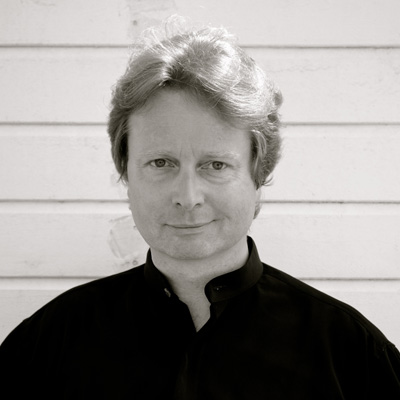
Paul Max Edlin has a career that combines composing, conducting, trumpet playing, lecturing and artistic direction.
His compositions have been performed both nationally and abroad by many leading artists, ensembles and orchestras. He has a particular interest in opera, and his first opera, The Fisherman, was premiered to wide critical acclaim in a production for the London International Opera Festival. Opera Magazine described Paul as ‘our latest operatic prodigy’. His most recent full-length opera is an adaptation of Federico Garcia Lorca’s Blood Wedding in the translation by Ted Hughes. In 2013 he completed an operatic monodrama, Frida, a setting of the diaries of the Mexican artist Frida Kahlo. Recent commissions include a new work for Sarah Connolly (Wigmore Hall, 2014), the UK Society of Recorder Players (Kings Lynn, 2015). In 2015 he completed a new work for orchestra, Five Illusions. In 2016 he succeeds Cheryl Frances Hoad as Composer in Residence for London Chamber Orchestra’s Music Junction programme.
Edlin’s works have received broadcasts on BBC 2, BBC Radio 3, as well as on Radio and Television abroad.
He was a founder member of the Artistic Group of Sounds New Contemporary Music Festival, of which he was Artistic Director from 2007 to 2013, a period in which it flourished. In 2005 he was asked to become Artistic Director of the Deal Festival of Music and the Arts, following on from the cellist Steven Isserlis and composer David Matthews. He stepped down in 2010, but was once again asked to return to this role in 2014.
He has many years of experience in university lecturing and teaching and is currently Director of Music at Queen Mary University of London, one of the country’s leading universities and in the Top World 100 (THE 2015). Formerly, he was Professor of Music at Canterbury Christ Church University from 2009 to 2012 having worked there in a series of roles for almost thirty years. In 2011 he was elected President of the Incorporated Society of Musicians.
As a conductor, Edlin tends to focus on contemporary repertoire. He has conducted many premieres of new works as well as UK premieres of such pieces as Beat Furrer’s Ensemble II and Ernst Krenek’s Sestina. In 2010 he conducted the National Philharmonic Orchestra of Malta, allowing him an opportunity to explore the more romantic repertoire of Puccini and Verdi. As a trumpet player, he particularly enjoys the ‘clarino’ repertoire of Bach, Handel and Purcell and has played in many performances of works such as the B Minor Mass, Christmas Oratorio, etc.
Paul Max Edlin studied at the Royal College of Music (composition with Edwin Roxburgh, Richard Blackford and Joseph Horovitz; trumpet with John Wallace and Richard Walton, and conducting with Christopher Adey). He has won many composition prizes including the IX Premio lnternazionale Ancona. He received a Leverhulme Studentship for further postgraduate study at the RCM. He continued his studies with Michael Finnissy at the University of Sussex where he took his doctorate.
A Fellow of the Royal Society of Arts and a Fellow of the Incorporated Society of Musicians, he has served on the boards of several music and music education organisations and charities, including Cantoris Charitable Trust, which supports Canterbury Cathedral choristers. He is Chair of the Board of Ora, one of the UK’s most prestigious vocal ensembles, and he sits on the board of the newly formed East London Music Group. Paul Max Edlin has two musical sons. Peter, an artist, photographer and designer, plays lead guitar in the progressive rock group The Boot Lagoon, while Timothy is a bass-baritone.
Who or what inspired you to take up the piano and pursue a career in music?
I might not be doing this at all had it not been for my father, who was a very good amateur pianist. I’m told that as a very young boy I’d go to the piano when he played and watch him open-mouthed! I have a clear memory of the moment when he asked me if I wanted to take piano lessons. I said yes without hesitating! I seemed to have a predisposition for learning quickly, and it didn’t take long to discover that I had perfect pitch, like my dad.I remember his playing vividly. He mostly favored the Romantic period (Liszt and Chopin above all) and through him I was exposed very early to a sizable chunk of the literature.
At that point, of course, I had no notion of what a career in music would represent; at the beginning, music was something natural — a game, perhaps. I first studied with a local teacher for four years, and then my dad enrolled me at the Vincent-d’Indy school in Montréal, which was very prestigious at the time. And although I showed a natural facility almost from the very beginning, I was never touted as a prodigy.
Who or what have been the most important influences on your musical life and career?
Again I must mention my father, because he was directly responsible for one important part of my development. His favorite artists were the pianists of the so-called Golden Age, the ones who were active during the 78RPM era. He collected all the reissues he could find, which in Canada wasn’t always easy, especially earlier on. He listened to these treasures constantly. He was much less attracted to more contemporary pianists and was in general very critical of them. I think the reason he liked the older pianists so much is because of the unbridled freedom inherent to their performances, a freedom which meant that the true letter of the score was often distorted or even disregarded. This cavalier attitude toward the finer points of notation became a part of my musical thinking. It was only much later, in my twenties, that I was sensitized to the necessity of taking composers’ markings seriously, probably because I had begun writing my own music and had become aware of how deeply meaningful and intricate musical notation really is.
And then there were my teachers, all of whom brought something different to my development. First there was Yvonne Hubert, who had once been Alfred Cortot’s assistant in France, and who had come to Canada in the twenties, completely revolutionizing the pianistic landscape at the time. She watched my purely pianistic progress very closely, but above all, she really awakened me to the importance of detail. I vividly remember one of my earliest lessons with her, at which I’d brought Bach’s D minor sinfonia. It was the most complicated piece I’d worked on by that time, and after an exhausting half-hour of her correcting elementary voicing details – several in every bar, it seemed – I realized that I hadn’t known the piece at all beforehand. She was also very instrumental in getting me to pay attention to my sound. An amusing detail: any of her students will recall how she could, sitting on your right as she always did, demonstrate a right-hand passage you had just played, with her left hand, perfectly.
After I moved to America, I spent some years under the wing of Harvey Wedeen, who had, I could say, a more broadly cultured outlook of pianism in general. Through him I really developed a keener awareness of style, among many other things. Lastly, I had a few lessons with Russell Sherman, who above all is a master in stimulating his students by providing constant musical or extra-musical sources of inspiration. I will never forget bringing him Beethoven’s Sonata in F major, op.10 no.2. In the middle movement – the second half of the trio, more specifically – whatever I was doing didn’t have the character he was looking for, so he said ‘Imagine these gigantic Roman temples, with these huge columns…..and behind one of them, Julius Caesar is being murdered!’
It’s a blessing that none of my teachers was ever ill-tempered or despotic. (The sole exception to this is the one lesson I had in 1987 with Juilliard’s Adele Marcus where, after two hours, I was reduced to feeling like an untalented, sub-human ignoramus. But that’s another conversation entirely.)
It would be a grave omission if I didn’t underscore the vital role that my wife Cathy has played in my life. Many friends of mine have taken special delight in pointing out her influence on my character, and how my playing seems to have transformed for the better ever since we’ve been together. To them there’s no doubt she’s the reason! Beside the fact that she has a heart of gold, her musical sensitivity is truly a thing of wonder. She is also an extremely gifted pianist, and all of this gives a real dimension to our life as a couple.
What have been the greatest challenges of your career so far?
The biggest difficulty I’ve had over the years was overcoming a disastrous choice of management I made early on in America, one which I had to live with for thirteen years. Throughout that period, developing regular concert activity in the U.S. was very hard work. It wasn’t until I was finally able to change agents in the U.S. (around 2001-2002) that things really began to happen, almost exponentially you might say. Fortunately, in the meantime, I had acquired a very efficient manager in the UK, and that helped me start to get a good foothold in Europe. And all this time I was able to build a catalog of recordings which, in many countries, was the only way anyone could hear me.
Which performance/recordings are you most proud of?
I always say that if I could play Schubert’s final sonata in every one of my recitals until the day I die, I wouldn’t be unhappy! For that reason, the recording of it that is just now being released is extremely important to me, and I would love it to do well; I value it almost as much as everything else I’ve ever done, combined.
Concerning performances on video that can be seen on YouTube – none of which I’ve ever posted myself – my thoughts on those vary a great deal. While I am proud of some of the things that have appeared there recently, a Brahms Second Concerto with the Warsaw Philharmonic being a good example, a lot of my solo performances, especially ones from the distant past, now make me cringe with embarrassment. I often didn’t realize just how quickly I was playing then, and I wish I could go back to that period and put everything right! I’d be telling myself, “Slow down, man! Smell the flowers!”
Which particular works do you think you play best?
If you asked audience members, you might get different answers! But for myself, works like the Schubert B-flat Sonata, the Schumann Fantasy, the Liszt Sonata, the Debussy Images and second book of Préludes, and the Brahms concerti come to mind.
How do you make your repertoire choices from season to season?
There can be many factors which might influence these decisions — too many to mention here. If you’re talking about a new work in your repertoire, I guess the main motivating impulse to program it for the first time is an instinctive feeling of being “ready” for it (whether right or wrong!). And even though I constantly try to expand my repertoire, I often revisit old friends — like the Schumann Fantasy, which I learned 40 years ago. On the other hand, I just recently learned Chopin’s Polonaise-Fantaisie and 4th Scherzo.
As far as building a program, I usually start with one special work, then fashion a balanced set of pieces around it. I don’t generally tend to try to establish deep thematic connections of any kind between the works; my only aim is to provide an experience that is stimulating, thought-provoking, perhaps even challenging. This is why I usually include one or more less-often heard pieces on the program, as part of a lifelong wish to expand awareness of what pianists have been unjustly neglecting. (These days I’m becoming crazy over C.P.E. Bach – see for yourself what an explosively creative individual he was.)
And above all, though I have indeed played a great amount of highly demanding music — the type usually called “showpieces” (a word which I dearly wish would vanish from the dictionary), I do not go on stage to exhibit myself. For me, it’s all about sharing. I consider the public a friend, since I am fortunate enough never to have experienced stage fright. So, any outing on stage for me is an occasion for celebration, an extolment of the miracle of human creativity.
Do you have a favourite concert venue to perform in and why?
Living in Boston affords me the pleasure of being able to attend concerts in Symphony Hall and Jordan Hall, two of the most magnificent venues anywhere from an acoustical point of view. There have been many places over the years where I’ve felt the relationship between my musical intentions and the aural result was near-perfect. The concert space at the Domaine Forget in Saint-Irénée in Québec is truly wonderful – many CD recordings have been realized there – and some Japanese spaces I’ve played in were absolutely fantastic with their varnished-wood walls and flooring.
Who are your favourite musicians?
Impossible to answer with just a few names! I could fill a page with musicians who at one time or another have given me true pleasure – and we’re not just talking about pianists! As far as pianists are concerned, I always have time for those who truly treat the instrument as a singing, speaking, living, breathing entity, and who have a complete emotional connection to it. The occasional references one hears about the piano being a percussion instrument, to me, amount to blasphemy.
What is your most memorable concert experience?
I don’t have too many anecdotes of that type, but there is something that happened a few years ago that will linger in my memory forever (and safe to say, in the memories of most of those who were there).
I was giving a recital in New York in the summer about 4 years ago, and one of the works on the program was Ravel’s triptych Gaspard de la nuit. It was very hot, but fortunately not enough to wreck my concentration. Near the end of the first piece (Ondine), I heard a slight buzzing sound, followed by the feeling of something landing squarely on my head. I had no idea what it was at the time. They told me after the concert that it was a fly, about as big as my thumb! I continued to play – there was no reason to stop, really – but I wondered what the audience was thinking. And that fly proceeded to stay there, on my head, unmoving from the spot where it landed, for the entire length of Le Gibet! That’s 7 minutes!! And the best part is that the terrifying poem that Le Gibet is based on describes a winged beetle plucking a hair from a corpse! I learned afterwards that some people in the audience were fantasizing that this creature was sucking my brains out…!
As a musician, how do you define “success”?
Achieving total trust from the public as well as from concert promoters, and being able to sustain it over decades.
What do you consider to be the most important ideas and concepts to impart to aspiring musicians?
First, it should go without saying that a thorough knowledge of the science of music – harmony, counterpoint, theory, aural training, analysis – is indispensable. Without these you cannot begin to truly understand what you’re doing. I am convinced, and have become more and more convinced over the years, that being naturally conversant in these matters will have a crucial influence on your playing. A clear musical mind with an overarching mastery of theoretical matters will have a much better chance at developing fluent pianism, even though this will probably not be apparent for a long while. I try to avoid using the word ‘technique’, since it’s really a misnomer; the word is usually used to indicate the purely mechanical side of piano playing, whereas it should also encompass the artistic and the emotional.
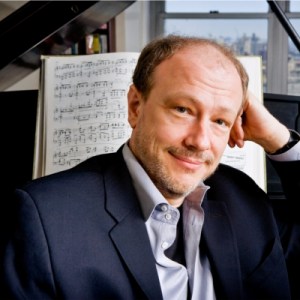
But, even more importantly, take time out of the practice room! The much-overused expression ‘get a life!’ fully applies here. It is pure folly to think that you can ultimately achieve anything artistically significant when the only landscape you ever glance at is the four walls of a practice space. Learn to concentrate your work as much as you can by zeroing in mercilessly on your shortcomings and don’t spend so much time on what you already know. This will allow you the time to blossom as a human being and to expand your horizons. Marc-André Hamelin’s recording of Schubert’s last piano sonata and the second set of Impromptus is available now on the Hyperion label
Who or what inspired you to take up the piano and pursue a career in music?
My first love was accordion which was brought to my attention in a very spontaneous way by my father when I was around 4 years old. The accordion is used in Macedonia mostly for folk music, although there are many talented people who can play classical music on it as well. I grew up playing folk music on it and I believe that being part of that tradition helped me a lot from the rhythmic point of view, as well as developing a natural musicality especially in terms of lyricism. At the time when I was entering the primary music school there was no accordion to study as a subject, so it seemed more natural to take up on piano.
Who or what have been the most important influences on your musical life and career?
I certainly had a great influence and great schooling from my Russian teachers, the Romanovs, who taught me the greatest things from the good old Russian tradition and understanding of the music in general. Than I listened to many of the pianistic legends who have inspired me in many different ways. During my concert career I have met many people from different fields around the world who have inspired me to share the musical views and the depths with music lovers. One learns each day and has many different experiences which are part of personal life and interpretation as well.
What have been the greatest challenges of your career so far?
The music is a challenge by itself. In a good way of course – because it enriches the soul and makes life much more beautiful, especially in these crazy times. It is a challenge to keep such a high level of understanding and sophisticated taste on the music circuit and in the music scene nowadays, especially due to the very commercialized world. I am a person who likes purity and embraces life and tries to share that in the most natural way with the colleagues and audiences.
Which performance/recordings are you most proud of?
Oh that is a very difficult question! Each concert or recording is a special in its own way. One concert differs from the other but the truth is that a professional and truly dedicated artist always gives his/her best to each performance. If I really have to give one example, then my very first CD for EMI with the Scriabin and Prokofiev Sonatas as well as Pletnev’s Nutcracker arrangement and Stravinsky’s Petrushka is a special one for me for many reasons. Certainly, I am looking forward to the recording that was done at the beginning of this year of my new folk project “Makedonissimo”, with transcriptions of Macedonian folk music, which will hopefully be released in the near future.
Which particular works do you think you play best?
It would be unfair to my understanding of the music and my total dedication that I have towards all the different styles to answer this question. I think it is good to leave it to the listeners to judge that.
How do you make your repertoire choices from season to season?
I try to have a variety first of all due to the fact that I want to have a more interesting life rather than staying mostly with the same repertoire. Then, I always try to accommodate to the promoters’ wishes and at the end we come to the mutual agreement. I do try to broaden the repertoire carefully each season.
You’re performing the Tchaikovsky Piano Concerto No. 1 with Kirill Karabits and the Bournemouth Symphony Orchestra in May. Tell us more about this?
I’m glad I was invited to play this piece with the BSO on tour to Dublin as well. I remember that I played this piece with the orchestra several years ago with Kees Bakels and as always with this group, I have really wonderful memories. I am also very happy to rejoin Kirill in this old warhorse which always brings an immense joy in performance, but we must not forget that it brings a great sense of responsibility due to the fact that it is one of the most popular pieces in the piano repertoire. That is why I always have a very serious approach to the “well known played notes” and I am looking forward to this collaboration again.
Do you have a favourite concert venue to perform in and why?
There are certainly great halls around that I have played in, especially in the UK. One really feels nice at the Wigmore Hall, the Light House, Liverpool Philharmonic Hall, Birmingham Symphony Hall, Edinburgh and Perth and Dundee halls for example. But I also like playing in churches which give some majestic feeling. In any case I feel privileged.
Who are your favourite musicians?
The ones who show really natural musicianship and are very natural and simple people. No need to be cautious nor careful. Everything goes smoothly.
What is your most memorable concert experience?
There are really several ones. The first are certainly strong ones. It is not easy. If I have to give one or few, I will mention my debut with the Macedonian Philharmonic as well as my Wigmore Hall debut. I certainly remember my recital at the Light House in Poole which brings back wonderful memories.
As a musician, what is your definition of success?
Being truly dedicated to what you do, pure and unpressured, and share that in the most natural way without any “external” needs. That should help you to be at one with the music, and that can be felt by the audiences. Keeping the feet strongly on the ground and not “flying in the clouds” artificially. That way you can certainly sleep calm during the nights. And fulfilled.
What do you consider to be the most important ideas and concepts to impart to aspiring musicians?
To be true to themselves after following the most natural guidance of the composers – written in the scores. Keep the logic and nature in the music. Do not try to pretend just for the sake of being different in an unnatural way. It gives the opposite effect.
Where would you like to be in 10 years’ time?
Hopefully in a “safe” place both privately and professionally. Most importantly, to be healthy and with a peace in the soul and mind.
What is your idea of perfect happiness?
To see my family happy.
What is your most treasured possession?
My children.
Simon Trpčeski performs Tchaikovsky’s Piano Concerto No. 1, conducted by Kirill Karabits, with the Bournemouth Symphony Orchestra on 9 and 10 May in Poole (Lighthouse) and Dublin (National Concert Hall).
Macedonian pianist Simon Trpčeski performs with the world’s foremost orchestras including London Symphony Orchestra, Royal Concertgebouw, Russian National Orchestra, NDR Elbphilharmonie Orchester, WDR Sinfonieorchester Cologne, Helsinki Philharmonic, Oslo Philharmonic, Orchestre National de France, Real Filharmonía de Galicia, New York and Los Angeles Philharmonics, New Japan Philharmonic, China Philharmonic and Melbourne Symphony Orchestra. He regularly gives solo recitals in such cultural capitals as New York, London, Paris, Munich, Prague and Tokyo, and performs chamber music at festivals such as Verbier, Aspen Music Festival, Bergen International Festival, the Baltic Sea Festival and the BBC Proms.
Conductors he regularly collaborates with include Marin Alsop, Lionel Bringuier, Thomas Dausgaard, Gustavo Dudamel, Jakob Hrůša, Vladimir Jurowski, Susanna Mälkki, Andris Nelsons, Gianandrea Noseda, Sakari Oramo, Antonio Pappano, Vasily Petrenko, Jukka-Pekka Saraste, Lahav Shani, Dima Slobodeniouk, Robin Ticciati and Krzysztof Urbański.
During the 2017/18 season Trpčeski will reunite with the San Francisco Symphony, St. Louis Symphony, City of Birmingham Symphony Orchestra, Philharmonia Orchestra, New Zealand Symphony Orchestra and the Tonhalle-Orchester Zürich on tour, as well as joining Stavanger Symphony Orchestra, Orchestra del Teatro di San Carlo, BBC Scottish Symphony Orchestra, Tasmanian Symphony Orchestra, Ulster Orchestra and Slovenian Philharmonic, amongst others. Autumn 2017 marks the beginning of a string of diverse performances at London’s Wigmore Hall as an Artist in Residence, featuring his regular duo partnership with the cellist Daniel Müller-Schott, as well as including the UK debut of the self-made folk-based project, “Makedonissimo”, celebrating the music, culture and people of his native Macedonia.
Trpčeski has recorded prolifically to widespread acclaim. His first recording (EMI, 2002) received both the “Editor’s Choice” and “Debut Album” awards at the Gramophone Awards. In 2010 and 2011, his interpretations of Rachmaninov’s four piano concertos with Vasily Petrenko and the Royal Liverpool Philharmonic Orchestra were recognized with Classic FM, Gramophone “Editor’s Choice,” and Diapason d’Or accolades. Trpčeski’s March 2012 recital at the Wigmore Hall, released on “Wigmore Hall Live”, was immediately hailed by The Telegraph as “Classical CD of the Week.” His most recent recording for Onyx Classics features Prokofiev’s Piano Concertos No. 1 and 3, and again won him the Diapason d’Or in September 2017.
With the special support of KulturOp — Macedonia’s leading cultural and arts organization — and the Ministry of Culture of the Republic of Macedonia, Trpčeski works regularly with young musicians in Macedonia in order to cultivate the talent of the country’s next generation of artists.
Born in the Republic of Macedonia in 1979, Simon Trpčeski is a graduate of the School of Music in Skopje, where he studied with Boris Romanov. He was previously a BBC New Generation Artist, and was honoured with the Royal Philharmonic Society Young Artist Award in 2003.
The Cross-Eyed Pianist is free to access and ad-free, and takes many hours every month to research, write, and maintain.
If you find joy and value in what I do, please consider making a donation to support the continuance of the site





 The Cross-Eyed Pianist