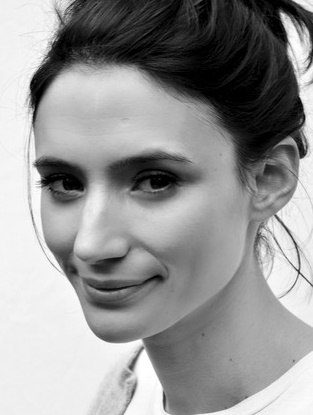
Who or what inspired you to take up composing, and pursue a career in music?


One of my earliest memories is going to our neighbour’s house to play on their piano. Irene had been a professional singer and I remember spending a lot of time making up music – I must have been 4 or 5 – and she was really encouraging.

I got hold of a recording of Debussy’s La Mer when I was 11 or 12. I grew up a few minutes walk from the beach and I remember being absolutely blown away by Debussy’s ability to paint pictures with sound. The piece is still one of my favourites.

Who or what were the most significant influences on your musical life and career as a composer?

I went to the Royal Academy of Music junior department when I was 14. I was at a very sporty comprehensive boys school and those Saturdays opened up a whole new world of opportunity. My lessons were supported by a county council scholarship and it saddens me that these specialist opportunities for ‘normal kids’ from ‘normal schools’ are now so scarce. I have no doubt that I wouldn’t be where I am today if it wasn’t for that experience.

What have been the greatest challenges/frustrations of your career so far?

I had a real crisis of confidence about my composition at university. There’s a real pressure nowadays to have everything sorted early on I definitely feel that it took me until my 30s to write music which I was happy with and which I felt was honest and representative of me. Some composers do get themselves sorted very early on and the composing and publishing world perpetuates that, but through my teaching work, I’m aware how off-putting this can be for those who need to develop their creativity more slowly.

What are the special challenges/pleasures of working on a commissioned piece?

I always feel that the rough guideline of a commission helps to put a few marks on the terrifying blank piece of paper. Some ideas of timing, instrumentation and occasion do help to get the creative juices flowing. I’ve been lucky enough to be asked to write some pieces for special occasions [wedding anniversaries/birthdays/weddings] and it’s lovely to be reminded in this context that music is a gift: we are as composers giving music to an audiences and performers and its important to be mindful of that when we’re composing.

What are the special challenges/pleasures of working with particular musicians, singers, ensembles and orchestras?

It’s a real treat to write music for musicians we’ve got to know. I wrote quite a few pieces for the Schubert Ensemble and it was a real pleasure to develop a real working relationship with an ensemble. The concerto I wrote for Simon Blendis [From Crystal Heav’ns Above] grew out of my relationship with the Schubert Ensemble and it feels like a very personal piece because of that.

Of which works are you most proud?

I’ve written a series of concerti over the last while. Aside from the violin concerto for Simon, I was commissioned by the Presteigne Fetival to write a new concerto for pianist Tom Poster [Laments and Lullabies] and wrote an oboe concerto [The Rider from Artemision] for Magdalen College School in Oxford last year. There’s something about the concerto genre which I love – the inherent narrative and drama seems to suit me.

How would you characterise your compositional language?

So this is the question I’ve been dreading. I mentioned the crisis of confidence I had in my late teens and twenties and it was due in part to spending time with composers with a very clear idea about what was ‘good contemporary music’. I’m delighted that many of the composers I teach now have a delightfully broad and eclectic outlook but I really felt a bit suffocated by what I felt was a very narrow band of composers writing music which didn’t speak to me.

People often describe my music as lyrical, a label which I’m happy with. And I always consider audiences and players when I’m writing – that triangle between composer, audience and performer is the holy trinity of composition as far as I’m concerned!

How do you work?

I was the slowest composer I ken for a very long time but I do write more quickly and more instinctively than I used to. I think you get better at trusting your own judgement.

Who are your favourite musicians/composers?

I mentioned Debussy earlier and my interest in his music is a constant. Michael Tippett has always been a big inspiration: his music is so full of energy and colour and he was someone who very much ploughed his own furrow: the music is very distinctive, adventurous and creative. In the same mould, perhaps, is Judith Weir. I know a piece of hers after I’ve heard 2 bars: her musical language is not really like any one else’s and I’m always drawn into her sound world immediately. I’ve shared my life for many years with composer Alasdair Nicolson and he’s a great inspiration personally and compositionally. His music has real clarity and he’s one of the finest orchestrators I know.

I grew up in a music-loving household. Mum and Dad spent their 20’s at concerts of all of the jazz greats [Ella Fitzgerald, Sarah Vaughan, Louis Armstrong]. I know the great American songbook recordings back to front and Nelson Riddle’s orchestrations are second to none.

As a musician, what is your definition of success?

I’m delighted when an audience member pops up and says how much they got from a performance of one of my pieces.

What do you consider to be the most important ideas and concepts to impart to aspiring musicians?

Be yourself, trust your instincts.


David Knotts first came to public attention as a finalist in the 1994 Young Musician of the Year Competition when the London Sinfonietta premiered his first large scale work, Songs of Parting. The exceptional warmth and lyricism of these Whitman settings brought interest from many quarters and a string of commissions from some of the country’s finest soloists, orchestras and chamber-music ensembles followed.

These have included the BBC Symphony Orchestra, the Scottish Chamber Orchestra, the Endymion Ensemble, English National Opera, the Composers Ensemble, the Britten Estate (to celebrate the re-opening of Aldeburgh’s Jubilee Hall) and a series of pieces for the Schubert Ensemble.

Born in West Sussex in 1972, David Knotts began formal piano tuition at the age of seven. His interest in composition soon followed and he studied for five years as a junior exhibitioner at the Royal Academy of Music. He went on to study with Robin Holloway at Cambridge University, Robert Saxton at the Guildhall School of Music and Drama and completed a doctorate in composition with Martin Butler in 2004. In 2007, he was made an honorary associate of the Royal Academy of Music where he has taught since 1994 and is also a member of staff at Trinity College of Music.

The genesis of David Knotts’ intensely lyrical and personal style can be traced back to his early settings of Walt Whitman. Since their première, he has been preoccupied with poetry and prose as a source of inspiration. Many of his titles reflect this interest in writers ranging from Virgil (Secret Gardens) to Viginia Woolf (…and fall and rise, and fall and rise again…/To the Lighthouse) and Tasso (Adorni di Canto) to Zhang Dai (Nightwatching: ways of looking at the moon). There is also a keen interest in folk poetry: Albanian laments in A Sea Green Partridge of April, Cretan love poetry in Bring Down an Angel and Spanish ballads in The Count Arnau.

David has also been drawn to compose for the stage. He has worked extensively with writer, Katharine Craik, a relationship which has produced two chamber operas, Stormlight and Bake for One Hour. His 2006 opera, Mister Purcell – His Ground was premièred at the Royal Opera House and his latest operatic venture, a macabre cabaret opera with writer and singer, Jessica Walker entitled An Eye for an Eye was premièred at the 2013 Bath and St Magnus International Festivals.

Recent highlights have included The Count Arnau for Bassoon and Orchestra, commissioned by the BBC and performed by all of the BBC Orchestras and a new piece for the Schubert Ensemble, On such a night as this is! premièred at the South Bank in a concert to celebrate the birthday of composer, Howard Skempton. This piece was subsequently featured in a tour of the US and was featured in the BBC’s festival of the music of Judith Weir and broadcast on BBC Radio 3. Recent commissions have included a collaboration with Barnsley poet, Ian McMillan for Robert Ziegler and the Matrix Ensemble, (Outstruments: A Sound Adventure)The Long Way Home for the Lawson Trio (recorded on the Prima Facie label) Tsirana for Pipers3, Fossegrimmen for cellist Gemma Rosefield and a violin concerto for Simon Blendis, From Crystal Heavn’s Above. Recent commissions have included Laments and Lullabies, a piano concerto for Tom Poster for the 2015 Presteigne Festival,Toads on a Tapestry, a large scale cantata with poet John Gallas commissioned for the nationwide Magna Carta celebrations and Grimm Tales for guitarist, Craig Ogden. Future plans include an opera based on Shakespeare’s late romance, Pericles.

davidknotts.co.uk


(Photograph by Alasdair Nicolson)

a23_inumvx_2019-01-05-17-00-29Who or what inspired you to take up composing, and pursue a career in music?

I was always drawn to music from a very young age. We used to live in Poland when I was about five or six, and the house we rented had a piano in it. Even though I didn’t know how to play, I would spend hours trying to reproduce the music that I heard on TV, or write tunes to go along with my favourite books and stories. Soon after I started taking lessons, and when I realised writing music for films and for stage was an actual, real job, well, my heart was set on it.

Who or what were the most significant influences on your musical life and career as a composer?

Film and theatre music has always been a huge influence on my life. I didn’t listen to a lot of classical music, so I was mainly introduced to the orchestra by way of the screen and the stage. Bernard Hermann had a big impact on me as a child, as did Franz Waxman, Alfred Newman, Dimitri Tiomkin, John Williams, and Alan Silvestri…to name just a few! My parents also had some cassettes of Offenbach operettas which we used to listen to in the car on repeat, so that also really drew me towards the operatic voice. Later, at music college, I was thrown in at the deep end and discovered the world of contemporary classical music. As you can imagine this was quite a change from John Williams and Offenbach! It was a complete revelation for me, opening up a world of textures and sounds I had never even considered.

What have been the greatest challenges/frustrations of your career so far?

Probably the greatest challenge in my work is convincing directors and producers to fund recording with live musicians, particularly on smaller-scale film projects with very small budgets. A lot of film music is produced electronically with instrumental samples, which can be a great tool for demonstrating ideas or mocking up sketches for editors. But even though there is a huge industry in place working to produce some very refined orchestral samples, nothing compares to real musicians. Without them, the music is simply two-dimensional. It lacks humanity.

What are the special challenges/pleasures of working on a commissioned piece?

The greatest pleasure is that it will actually be heard by an audience! As a film composer, we produce huge amounts of material that does not necessarily see the light of day: different sketches, pitches, or music for scenes that end up on the cutting-room floor… So it’s nice to work on something with the knowledge that it will be performed or broadcast. From a more practical point of view, film and TV work always provides a certain framework that music has to fit in to, and I really enjoy being creative within the architecture of the visuals. Often these projects have extremely tight deadlines, and I strangely find something extremely exciting and, ultimately, gratifying about pushing oneself creatively when working to the clock.

What are the special challenges/pleasures of working with particular musicians, singers, ensembles and orchestras?

I’ve been very lucky to work with some fantastic musicians and I particularly value the common understanding that builds over years of working performers again and again. It really is unique. I guess there are challenges to that relationship too: remaining rigorous and not getting lazy with my notation…!

Of which works are you most proud?

I’m particularly proud of my score for Amma Asante’s new feature film ‘Where Hands Touch’, which comes out in the UK on 10 May. It was the first feature I scored and so it holds a very special place in my heart. I also really love working on a series of comedic operettas I’ve been writing for the past ten years which, although something of a side project compared with the film and TV work, are still very dear to me. They are tremendous fun to develop and extremely liberating. I aim to write a new show every couple of years. My current one is called Pygmalion 2.0, a one-woman opera about a scientist trying to engineer a better generation of men using artificial intelligence.

How would you characterise your compositional language?

As you’d probably guess from my first answer, I’d say my musical language is first and foremost cinematic: tonal, narrative and melodic.

How do you work?

I write every day but ideas and projects tend to get finished in focused bursts. As for a particular piece, I work things through mostly in my head so will spend an awful lot of time thinking about a piece of music, envisioning it. Then I move to paper, rather than the piano; I find that if I move to the piano too quickly things can easily get altered by my fingers, which will automatically go into a certain key or add musical idioms that aren’t necessary. So I make it a rule never to play through anything I have in mind until I have written the core of it out on paper first. That way the idea feels somehow truer to its conception.

Who are your favourite musicians/composers?

That’s a hard question. It’s an ever-changing list really, I listened to a lot of Takemitsu over Christmas. I also love Xenakis, Reich, Ravel, Chopin. I’m writing an EP for trombone, viola, and electronics at the moment, and I tend not to listen to any music in the weeks surrounding a project. Instead, during those time sI like to research traditions of music that have been lost. At the moment I’m looking at musical traditions in ancient Greek drama and what modes and scales might have sounded like 2500 years ago.

As a musician, what is your definition of success?

This is a difficult one to define, I suspect for many other artists too. Often it can be blurred with external perception and audience validation, so for me the important thing is to focus on having personal pride in what I do.

What do you consider to be the most important ideas and concepts to impart to aspiring musicians?

A strong work ethic and, above all, perseverance. It’s an industry which can be truly gruelling and often completely contradictory in its nature: one day it feels meritocratic, the next it’s about who you know and not the music you make. Maybe because of this it can be easy to get swayed by hype and trends – but the constant in any musician’s life has to be one’s work, and one’s voice.

What do you enjoy doing most?

I love improvising along to narratives, and one of my favourite ‘exercises’ is to put books up on the music stand and improvise on the piano while reading them. At the moment I do this with a Belgian comic book series called Yoko Tsuno.


Anne Chmelewsky is a composer and writer for screen and stage. 

Anne composed the score for Amma Asante’s feature film Where Hands Touch, (TIFF 2018). Past projects include the music for Mark Weeden’s feature film Only People (2018), Sofian Khan’s Do We Belong (The Atlantic Selects 2018) and An Act of Worship, (Field of Vision 2017), as well as the Emmy & Golden Globes nominated Derek (dir. Ricky Gervais, Netflix / C4).

Her third opera ‘Pygmalion 2.0’ has been developed with the support of the PRS foundation, and is currently previewing in the UK. Her second opera, The Looking Screen, was performed extensively both throughout the UK and internationally, as well as broadcast on UK TV and radio. She has also written for The Independent and The Huffington Post. 

Read more

Who or what inspired you to take up the piano and pursue a career in music?

I actually never dreamed of becoming a classical musician, and I feel very privileged to have had such a natural and in many ways unexpected career path. The piano choice was purely practical – it was an instrument that was offered to us by a friend so I could start lessons. Of course, now I can say that I was very lucky because I love my instrument for the endless colours and possibilities it offers, for the many sounds – big and small – and the vast repertoire.

Who or what have been the most important influences on your musical life and career?

Influence on my musical life and career can be linked directly to the influence on my life, and that has been mainly by my parents, who have instilled morals, discipline, and enjoyment upon my life. I gather inspiration from everything that surrounds me, the experiences I have, and those I encounter both on and off stage.

What have been the greatest challenges of your career so far?

I cannot, with certainty, separate challenges from successes, as these are inextricably linked in my mind. On the one hand, I do not come from a musical family, but I have learned everything from scratch. When I persevere through the most challenging segments of my calendar, they make me stronger, and enable me to know what I am capable of and what I wish (not) to do.

Which performances/recordings are you most proud of?

I hope to be proud of every performance, and especially of every recording. The way I judge past performances includes elements such as the piano, the hall, and the audience, and these are intertwined with the memories I kept of that particular week – a very large cauldron. I have especially fond memories of some performances, such as the first time I performed in Warsaw, where all my grandparents heard me perform in a concert environment for the first time ever, or my BBC Proms debut in sweltering London summer weather.

Which particular works do you think you play best?

I would not programme works I do not think myself capable of performing, and I hope to add something unique with my interpretation.

How do you make your repertoire choices from season to season?

As a pianist I am in the position of having seemingly endless repertoire to choose from. I have certain pieces on the horizon that I would like to perform, and when there’s the opportunity to do so, I will add them to my repertoire. Recordings dictate the choices of repertoire somewhat, in that I need to prepare it beforehand and perform it after. Large multi-concert tours likewise; these decisions are mutual, made years in advance.

Do you have a favourite concert venue to perform in and why?

I’m terrible at picking favourites (favourite colour, country, person, city, etc.) and this extends to all walks of life. I enjoy the variety of concert halls, and believe it is a skill to adjust appropriately to each environment, from the ultra-accurate 21st-century “high-definition” halls, to some beautiful 19th-century acoustically warm ones, to the Italian opera houses which make you feel suffocated (acoustically, of course), not to mention everything in between. Every hall presents a challenge – and an opportunity – and overcoming the challenges while exploiting the opportunities is part of what makes a performance successful.

Who are your favourite musicians?

I have too many to name – from those I’ve worked with and admire, to those I am friends with, to others who may inspire me in performance.

What is your most memorable concert experience?

I flew to a remote community in Saskatchewan, Canada; an outreach concert from my performance with the Saskatoon Symphony. In La Ronge, most people had never heard a piano before – it was also sent for the recital. The concert was packed, the excitement was palpable, and the genuine appreciation was unlike anything I’ve felt before or since. Falling snow, children in “Sunday’s best” sitting on the floor of the school gymnasium in complete silence. A concert I will gather strength from for years to come.

As a musician, what is your definition of success?

Success is deeply individual, and I consider myself very fortunate to be where I am today.

What do you consider to be the most important ideas and concepts to impart to aspiring musicians?

Make sure you stay true to yourself, practice only just enough, and learn about other things beyond music.

Where would you like to be in 10 years’ time?

Walking on planet Earth.

What is your idea of perfect happiness?

Enjoying the small things that make life magical.

What is your most treasured possession?

My memories.

What is your present state of mind?

Always the same – happy.


Canadian pianist Jan Lisiecki has won acclaim for his extraordinary interpretive maturity, distinctive sound, and poetic sensibility. The New York Times has called him “a pianist who makes every note count”. Lisiecki’s insightful interpretations, refined technique, and natural affinity for art give him a musical voice that belies his age.

Jan Lisiecki was born to Polish parents in Canada in 1995. He began piano lessons at the age of five and made his concerto debut four years later, while always rebuffing the label of “child prodigy”. His approach to music is a refreshing combination of dedication, skill, enthusiasm and a realistic perspective on the career of a musician.

Read more


(Artist photo: JL Holger-Hage)

Who or what inspired you to take up the piano and pursue a career in music?

My childhood dream was to become an astronaut. The infinite, remote worlds, the unknown, mysteries, everything that has to do with indeterminate intrigued my imagination. Than, playing and discovering the nature of sound itself, the same infinity unfolded in music…..

This child’s desire to become an astronaut was also a yearning for contact, the desire to meet a different Other. That longing has evolved into a deep encounter while performing, while being at one with the music that reaches out to the others and creates the moment of grace, the ultimate, most intimate yet transpersonal union.

Having heard for the first time the Allegretto of Beethoven’s 7th I shivered. The tragic and grandeur of human expression left an indelible mark forever. My childhood fascination with Beethoven’s personality made of him einen fernen Geliebten (a “distant beloved”) and his oeuvre has become that place of encounter; love, belonging, togetherness and utopia.

My first instrument was my voice. In my early childhood I often sang the solo part in children’s choirs.

Than one day, standing in front of the shopwindow with my mother in Belgrade, I was mesmerised by the blissful black August Foerster upright piano – it looked exactly as my toy piano yet huge and gleaming. Mom bought it and I raved about that jewel that had a marvellous singing tone. No one ever forced me to practice. I stayed the long hours wrapped up in playing my huge toy. Later in my adolescent years, mom used to say ”do not play so much, go out and meet the boys….

Who or what have been the most important influences on your musical life and career?

Singing voice, the astonding beauty of voices and songs …songs my (grand)mother taught me……

In my music education the most impressive encounter was with Tatjana Nikolaeva. It was the deftness of her touch, that ineffable legato that I was trying to reproduce by listening to her and her recordings on Melodiya. It was Nikolaeva’s otherworldly Bach that influenced me the most. That’s how my piano epiphany commenced.

I always wanted the piano to sing in a velvet tone as if the hammers do not really touch the strings. Later I read that Debussy expressed the same about the art of touch.

Rudolf Kehrer, whom I met in Weimar, was a fascinating personality who inspired me a lot. When I settled in Paris I was lucky to work with amazing Eugen Indjic who has incredible gift for teaching; one feels confident and masters the instrument like an absolute wizard!

However – I hope it does not sound pretentious – what formed me as musician was discovering and understanding the language of music by myself alone.

The one thing that really matters is to have a personalised sound.

Now in the time of revival of the music of my grandfather, Czech-born composer and conductor Jan Urban ( 1875-1952) who passed away before I was born, everyone considers that he and his music influenced me the most in the bosom of family. It was not so. The story is less idylic, rather heavy. As my parents divorced when I was three years old, I was separated from my father and the paternal Urban side was covered by silence.

But the silence is inhabited.

What have been the greatest challenges of your career so far?

Paradoxically – to avoid “career”….

Schnabel said ”Safety last.” Taking a risk on the podium has been the most challenging issue for me. The intensity of human expression dwells in intuition, to play at the very edge of control to deliver the music most spontaneusly, directly, to be totally wrapped up in the very moment of the execution. I recall Thomas Bernhard citating Glenn Gould ”you enter the music or you don’t.” The price to pay might be less perfection.

Further, I refused to participate the competitions. I dare say that competitiveness is not the way of dealing with music. Deciding not to compet has probably cost me a wider popularity.

Which performance/recordings are you most proud of?

I am very proud of my recordings of the complete piano legacy of the Czech composer Jan Vaclav Hugo Vorišek – three CDss on Grand Piano record label.

One perfomance at the Orlando Festival in the Netherlands is very dear to me. I shared the stage with the great Menahem Pressler who put me at ease with his wise remarks and divine lightness.

Invitation to perform in the jubilee year of the renowned American Philip Lorenz International Keybord Series was an honour. The series presents exclusievly the world’s greatest pianists, such as Emanuel Ax, Garrick Ohlssohn, Trifonov, etc.

Which particular works do you think you play best?

Difficult question. There are two forces in human nature – Apollonian and Dionysian.

I feel at home with sonatas of Beethoven. Through him I can structure, form, build and forge. The affirmative experience of enlightenment prevails the tragic and reaches the Apollonian shor . Through his music one conquers the state of pain and humiliation and reaches dignity – a cathartic experience.

The other part of me dwells in the sensuality of Debussy’s works. Seeking for deepest sensors to catch the immediate, the instantaneous is in essence an erotic experience….. The hands are touching the nude nerve of the instrument.

How do you make your repertoire choices from season to season?

This question reveals for me an other issue related to it.

I feel the larger music works of my repertoire as if they were human beings. Most of them I have known and lived with for a long time. There is an alive interaction between me and an oeuvre in the subconcious. That’s why the choice of programme is very spontaneous and comes from the bottom of soul. Giving the programme sp far in advance, as it has to be in today’s concert planning, is very frustrating.

Whenever possible I choose to perform the gems of lesser known and undeservedly neglected composers.

Do you have a favourite concert venue to perform in and why?

No – yet I dream about Viennese Musikverein for its Boesendorfer and its acoustics.

Who are your favourite musicians?

To mention a few – Alfred Cortot, Tatiana Nikolaeva, Alexander Jocheles, Arthur Schnabel, Claudio Arrau, Radu Lupu, Carlos Kleiber, Gregor Piatigorsky, Georg Prêtre, also Jacques Brel, Léo Ferré, Leonard Cohen….

What is your most memorable concert experience?

A long time ago, a concert in the Jeanine Rose series in Paris with Argerich and Hirschorn…..

As a musician, what is your definition of success?

I am a sort of ‘anti diva’. Music making is about touching souls. In that ability lies the success.

I feel succesful when I open my music studio and I recognize in me that ebullient child that was in love with that black Foerster piano and the feeling of gratitude fills my heart. If I finish may days with such a feelings, I will consider I’ve had an amazingly successful life.

Of course the recognition is very important but the glory is infirm……….

What do you consider to be the most important ideas and concepts to impart to aspiring musicians?

Highly idealistic – to be free from the dictats of entrenched values or prevailing musical tastes. To be free from competitivness and the industry of competitions. Sharing, loyalty, solidarity, mutual support, imagination and truth – everything that musicians aspire to give to and create in the world should be cultivated more between musicians themselves.


Biljana Urban comes from a family with a rich musical tradition. Her Czech-born grandfather, Jan Urban (1875–1952), was a composer and conductor. Biljana Urban received her Ph.D. in Music (Piano Performance) summa cum laude from the Academy of Music in Zagreb. In her native country she received the most prestigious awards. She also studied at the Ecole Normale de Musique de Paris – Alfred Cortot and settled in Paris in 1985. Her musicianship has been strongly influenced by Elisso Virsaladze, Tatiana Nikolayeva, and Eugene Indjic. Since 1991 she has been based in Amsterdam and has Dutch nationality. Urban has performed in the most renowned international concert halls, including the Fresno Concert Hall, California, for the Philip Lorentz Memorial concert series. She has taken part in international music festivals, including the Dubrovnik Summer Festival, the Festival of Flanders and the Orlando Festival in The Netherlands. As a chamber musician she has performed with soloists of the Royal Concertgebouw Orchestra, the Monnaie Orchestra, Brussels, and the Prague Philharmonic Orchestra. Her recitals and recordings have been broadcast by BBC Radio 3, Radio France Musique, Radio 4 in The Netherlands, Radio Klara in Belgium, by radio and television companies in Croatia and Slovenia, and by Valley Public Radio in the United States. Urban is a commited teacher, having her own piano school in Amsterdam and giving masterclasses and lectures world wide. In Paris she has taught at the École Supérieure César Franck and the Conservatoire de Neuilly. In 2012 she was artist-in-residence at California State University in Fresno. In 2010 Biljana Urban released an acclaimed recording on Naxos [9.70120] of the piano works of her grandfather Jan Urban. Her first album of Voríšek’s Complete Works for Piano, released on Grand Piano, was recognised as one of the best albums of the year by Culture Catch.