image1(1)

Who or what inspired you to take up composing, and pursue a career in music?

Music has always been a large part of my life.  My granddad used to play 7 instruments and work in radio, my Nana was a great pianist, my dad plays guitar and my cousin is a songwriter, so I was always surrounded by music. Playing music from a young age, I always wanted to play my own music and make things up rather than do my classical practice. Playing guitar, saxophone and piano gave me a diverse range of music to play and from which to draw influences.

It was only in my late teens that the prospect of pursuing a career in music became a real idea that would never leave me. My dad being a cinematographer meant that I was always going on set from a young age, so that, plus music, is probably where my love for film music came from, and from wanting to know more about the relationship between music and visual elements.

Who or what have been the most significant influences on your musical life and career as a composer?

My family have played a vital role in my musical life.  If it wasn’t for their constant support and belief in me, then I might not be doing what I love today. I got my break into the film music world working with and alongside composer, Ilan Eshkeri, working my way up as an assistant then to additional composer where I then met more composers on different projects. Through this I was able to learn a variety of skills required to succeed in this industry.

It’s important to have a mentor to offer advice and guidance. I definitely learnt the art and skill of film music writing from Ilan; also from film music producer Steve Mclaughlin.

What have been the greatest challenges/frustrations of your career so far? 

One of the greatest challenges so far would be taking the step away from working as an additional composer on larger films under composers to focus on my own composing career. It didn’t happen overnight, it was a gradual process over a few years. Film music is very much a service industry and as a composer, you need to be willing to adapt and shift your music style to accommodate each particular project. The key thing to remember is that the film is the most important thing, so being able to maintain a form of musical language that is true to one’s self whilst being able to accompany the visuals perfectly can sometimes be difficult, especially under the frequent tight time constraints that occur.

What are the special challenges and pleasures of working on film and tv scores?

The greatest challenges in working in film is to remember that composing is really only a small part of the job.  You need to understand film and how to help tell the story alongside the images with which you are working . You also need to be accepting to the constant changes that might be asked of you and to be made in the music you are writing.

Working in film is all about collaboration, either with the director, producer or another composer. This can be such a rewarding process and hive of creativity. I am always blown away in how a particular scene from a film can be changed so much by the music. The pleasure comes when you know that you have got it right and the two art forms are working seamlessly together.

Of which works are you most proud?

Alongside my debut album PASSAGE that took about 3 years to write and release, I am most proud of the score I wrote to a documentary called ‘Three Identical Strangers’. I had a tight budget so resources were small but this forced me to think of different ways to achieve an immensely cinematic score. It was also probably one of the hardest films I had worked on. Tim Wardle, the director, knew exactly what he wanted which made the process so much easier and by the end we both had a clear vision of what we wanted to achieve in the music.  This is all a composer can ask for.

How would you characterise your compositional language/musical style?

I am classically trained but I like to combine a lot of electronics in my writing with more classical instrumentation. I feel that my writing style pulls me between smaller more intimate emotional music to then much larger, epic styles of music. My album PASSAGE touches on a line between the two, interspersing the more euphoric pieces with intimate solo piano works.

How do you work? What methods do you use and how do ideas come to you?

Most of my initial ideas will start in their simplest forms either in my head or on the piano. Other times an idea can be inspired by a sound or a rhythm, depending on the kind of music I am writing. I love to record a lot of found sounds and turn them into instruments using a sampler such as Kontakt,, making something unique and new.

Sometimes I can be working on a piece of music or cue to a film and be so focussed that 5 hours can slip by in a blink. It’s only when you take a break and listen back that I sometimes think, “how did I do that”?!

Who are your favourite musicians/composers?

Growing up, I listened to a large variety of music but it was listening to the music of Hans Zimmer (most notably his score to ‘The Last Samurai’) that got me interested in film scores, then film composers like Thomas Newman, Brian Tyler, Alan Silvestri, and the choral work of Morten Lauridsen and Eric Whitacre. I am also very inspired by more minimalist composers such as Michael Nyman, Phillip Glass, Brian Eno, The Cinematic Orchestra and Nils Frahm, to name a few.

As a musician, what is your definition of success?

Success to me is doing that which you love for a living and enjoying every minute of it. Music was my hobby and is now my career.

What do you consider to be the most important ideas and concepts to impart to aspiring musicians?

Try not to compare yourself to others. Everyone has their own path so it’s an impossible ideology that one composer’s path could be compared to a path of another composer. Try to enjoy the ever-changing road that lies ahead, there is no need to rush. I am naturally quite an impenitent person, so there have been times where I have had to tell myself to take a step back and reflect on my own achievements.

What next? Where would you like to be in 10 years time?

I am about to start work on Season 8 of SKY ONE’s action drama STRIKE BACK with Scott Shields. In ten years time I hope to have written a few more solo albums as well as working on larger scale films and productions, a goal which I am sure is shared with many other composers.

Paul Saunderson’s debut album Passage is available now. More information


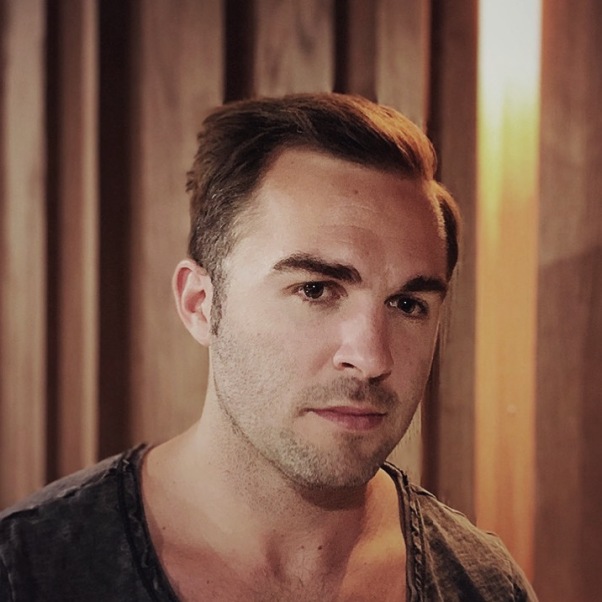
Paul Saunderson is a British film composer with a career spanning over 40 feature films and 8 TV shows. His work includes RAW’S latest award winning documentary THREE IDENTICAL STRANGERS (Tim Wardle dir.), Jim O’Hanlon’s 100 STREETS (Idris Elba + Gemma Arterton), Bill Clark’s heartbreaking true story STARFISH (Joanne Froggatt + Tom Riley) and most recently Justin Edgar’s gripping noir thriller, THE MARKER (Frederick Schmidt + Ana Ularu). Other works include collaborating on hit SKY One action series STRIKE BACK now in its 8th season, SKY Atlantic’s mystery thriller RIVIERA (Julia Styles) and MTV’s action adventure series THE SHANNARA CHRONICLES. Saunderson also wrote the music to Aram Rappaport’s debut feature RomCom SYRUP starring Amber Heard & Kellan Lutz and John Shackleton’s psychological gothic horror THE SLEEPING ROOM.


Read more

Who or what inspired you to take up the piano and pursue a career in music?

I took up piano as a hobby after my grandmother asked if I’d be interested in learning it. Growing up on a farm in southern Tasmania meant there wasn’t much else to do, so I said yes. I didn’t decide to pursue a career in music until the end of my school years, when the head of music suggested I apply for conservatoires in London.

Who or what have been the most important influences on your musical life and career?

Probably my dad and my teacher. The former because he is inadvertently responsible for much of my taste in music, and my teacher Joanna MacGregor because she allowed and helped me to take a path less travelled in my musical development (no repertoire is off-limits!), and instilled in me a passion for new music.

What have been the greatest challenges of your career so far?

Moving to the other side of the world by myself at age 18.

Which performance/recordings are you most proud of?

I couldn’t say for certain, but in recent times I have been particularly pleased with a performance I gave of Michael Finnissy’s 2nd Piano Concerto with Ensemble x.y and An Assembly. Sometimes things do hold together when you need them to.

Which particular works do you think you play best?

I think I play modern/new music best, but I also like to think that I play Romantic-era works quite well too.

How do you make your repertoire choices from season to season?

Briefly:

It depends on the concert and the context of the concert. One thing I hate vehemently is uninspired programming. A programme needs to be more than a series of pieces one after the other without connection other than ‘similarity’ or ‘contrast’. I like forming narratives, be it stylistic, historical, emotional etc. and I feel it is necessary to talk to an audience (either verbally or through your own programme notes) to offer this information, and offer an approach to listening. I strive to choose programmes that will be relevant to either the venue, the context of the concert or a featured piece. So this is primarily what drives my repertoire choices. It usually means I have to learn new pieces quite regularly, but that’s fine.

Who are your favourite musicians?

I couldn’t say, it would change from week to week or day to day even.

What is your most memorable concert experience?

I don’t know, mostly because I have a bad memory. Although I once did a certain concert with a certain friend of mine where between us we performed about two thirds of Boulez’s output for piano(s) and in retrospect it was a completely ridiculous idea and I have no idea how we pulled it off.

As a musician, what is your definition of success?

Owning a home.

What do you consider to be the most important ideas and concepts to impart to aspiring musicians?

Do things other than music at least as regularly as you do music.

What is your idea of perfect happiness?

I don’t know. But I think if I owned at least three pianos, and a celesta, and maybe throw in a few harpsichords and/or a clavichord and a few other things with keyboards I reckon that would do for a start. You could ask me again then.

Joseph Havlat is a St John’s Smith Square Young Artist for 2019/20


Joseph Havlat was born in Hobart, Australia, and studied at the Royal Academy of Music in London under Prof. Joanna MacGregor from 2012 – 18. Joseph has performed in major concert venues around the UK and in Europe, America, Japan and Australia as a soloist and as part of chamber groups and orchestras. He is a keen sock enthusiast and chamber musician, performing frequently with multiple groups – Tritium (clarinet) trio, Trio Derazey, Duo Ex Libris as well as the LSO percussion ensemble, with whom he toured Japan in 2018 giving the premiere of a work by John Adams. Passionate about contemporary music, he is a founding member and artistic director of contemporary music collective Ensemble x.y and is also an avid composer, having written for the aforementioned ensembles, among others. Having now graduated from the Academy, he is there serving as a Piano fellow for 2018-19, having also been a Chamber music fellow for the previous year.

josephhavlat.com

music.


If you enjoy the content of this site, please consider making a donation towards its upkeep:

Buy me a coffee


Your father, Masaaki Suzuki, must have had a major impact on your musical development as a child. Can you tell us about this, and what else inspired you to pursue a career in music?

My father had a lot of influence on me as a musician, though I never actually studied with him properly apart from at the Tokyo University for Fine Arts and Music, when I was a student in Masaaki’s class. This was quite special in a way, as I was able to see the way he works, as every other student in the class. Whilst Masaaki introduced me to the world of Baroque music, I became inspired whilst studying composition at the University of Tokyo, where I became familiar with many fascinating contemporary composers. This is especially interesting to me as the composers are still living, so I am able to see the inspiration of their compositions, relating to the world I live in now.

What have been the greatest challenges of your career so far?

Becoming Principal Conductor of the Bach Collegium Japan was a great challenge, as I was formerly the organist, and therefore my relationship with those I work with in the orchestra changed considerably. Every day presents new and exciting challenges that I look forward to tackling. Conducting an orchestra is pure fun for me!

You feature on numerous recordings with Bach Collegium Japan, and have recently been appointed their Principal Conductor. Which performances/recordings with Bach Collegium Japan are you most proud of?

The first would be ‘Bach: Cantata’s, Volume 28’ (BIS) my first recording as harpsichordist of the Bach Collegium Japan! I’m also proud of our Cantata’s Volume 44, where I played the solo part in Bach’s Organ Concerto.

Your new recording project with Antoine Tamestit sees you perform JS Bach’s three sonatas for Viola da Gamba and Harpsichord. What inspired you to take on this project?

Antoine and I have been very good friends for years, and share a love of sushi which always brings us together, and of course music. We have been talking about making a recording for a while, and it has been the greatest joy to finally work with him on this. The result has been so fruitful and I look forward to sharing this with people.

You will be making your debut at Edinburgh International Festival this season. What are you looking forward to about performing there?

I’m very happy to be returning to Edinburgh to make my debut at the International Festival. The press were very kind about my harpsichord playing last time I was here, and I’m of course looking forward to sampling Scotland’s famous whisky!

You seem to have a very busy workload! How do you make your repertoire choices from season to season?

I believe you have to enjoy making the music you choose to perform. I have always chosen music I love, and I’m happy with the results so far.

Do you have a favourite concert venue to perform in and why?

The Concertgebouw in Amsterdam is special to me as I used to live in this area. I always love visiting Tokyo’s Suntory Hall, and Wigmore Hall for its warm atmosphere.

As a musician, what is your definition of success?

I don’t have a definition of success, as such. I’m happy with the way my career is growing and developing, and believe musicians should always take a humble stance on their career. Acknowledging success might encourage you to stop striving as much, and there is always better music to be made!

What do you consider to be the most important ideas and concepts to impart to aspiring musicians? What advice would you give to a younger artist?

I once attended a masterclass given by the great Yo-Yo Ma who explained the three steps to becoming a musician. The first evolved around being confident and proud of what you are making. The second focused on overcoming your insecurities and inexperience as a young musician, and the third encouraged us to continue making music against all odds! I think this third step is the most important but also the most difficult.

Where would you like to be in 10 years’ time?

After 10 more years I hope I am still making music and still happy!

Masato Suzuki’s recording with Antoine Tamestit of J S Bach’s three sonatas for Viola da Gamba and Harpsichord is released on 23 August 2019 on the Harmonia Mundi label

Masato Suzuki joins the Dunedin Consort in a performance of keyboard concertos by J S Bach at this year’s Edinburgh International Festival. Further information


A multifaceted musician, Masato Suzuki appears on the concert platform as conductor, organist, harpsichordist and composer. His conducting engagements have seen him work with orchestras such as the Bach Collegium Japan (as Principal conductor), Hiroshima Symphony, Kyushu Symphony, NHK Symphony, Tokyo Philharmonic, and the Yomiuri Nippon Symphony Orchestras, with repertoire from Haydn and Mozart to Ravel, Tchaikovsky and Schnittke. As organist and harpsichordist Suzuki’s relationships with ensembles such as Bach Collegium Japan as well as chamber music have taken him to major concert venues and festivals across Europe and the US. In the capacity of composer, Suzuki is published by Schott Japan and has recently received commissions from Sette Voci, Tokyo Musik Kreis and Yokohama Minato Mirai Hall among others.


Who or what inspired you to take up conducting and pursue a career in music?

For my tenth birthday I was taken to London for the first time to see ‘Joseph and the Amazing Technicolour Dreamcoat’ at the London Palladium, I loved the experience so much that in the programme I circled the name ‘Mike Reed – Musical Supervisor’ and ‘Mike Dixon – Musical Director’ and in my dodgy ten year old hand writing I wrote ‘this is what I want to be when I grow up’.

Cut to eight years later I was lucky enough to get a place at the Royal College of Music as a pianist, which was until that point my main passion in life. To support myself through college I got a job as a church organist in Chiswick, the first Sunday I played the Vicar said to me I like to introduce you to somebody who I think you might find useful, and in walked Mike Dixon. At that moment I thought it was the most incredible coincidence, until the following week once again after the church service the Vicar said to me there’s somebody else I’d like you to meet, and in walked Mike Reed. At that moment I realised coincidences wasn’t a part of this, the stars had aligned and I knew that as a ten year old child I had wished for something and it was going to come true.

Mike Dixon and Mike Reed were then generous enough over the next few years to introduce me to the world of musical theatre, and their inspiration is what turned me into the musician I am today.

Who or what are the most significant influences on your musical life?

Beside the two Mikes, I was lucky enough to work for many years with Russell Watson, who not only inspired me to bring classical music to a wider audience, but was also a guiding light on the complicated side of business in the music industry.

I’m a firm believer that music is something that grows deep inside and the earlier it can start the stronger the music is. I was also lucky to have this from an early age with my first music teacher at primary school, June Davenhill. Because of Mrs Davenhill’s approach to music education, I had a ‘duvet’ of music surrounding me from an early age, I strongly believe that was what sparked my musical journey, and without that education I’m sure that today I would simply be a business man.

What, for you, is the most challenging part of being a conductor? And the most fulfilling aspect?

The most challenging part is the divide between the orchestral musicians and the conductor; due to its nature, a conductor has to lead, and as I started conducting when I was 18 years old, I found many of the older orchestra players had an attitude with a leader who was considerably younger than them. This is slowly easing as I get older, but it’s still one of the factors of my profession.

However, when I conduct wonderful orchestras, who also have wonderfully accepting players, these are easily the most fulfilling aspects of my career.

As a conductor, how do you communicate your ideas about a work to the orchestra?

Like all difficult things in life I find the key to being successful is in its preparation: if I’m well prepared and confident when I communicate this to the orchestra they tend to follow me very well.

How exactly do you see your role? Inspiring the players/singers? Conveying the vision of the composer?

For me music is all about energy, music played technically well but with boredom in the eyes of the players, equals a bad performance. I wouldn’t dare try to tell experienced players who are infinitely more capable of making music on their instrument than I am, how to improve their playing. I see my role as the source of the energy in the music, and I’m the ringmaster trying to combine all the talents in front of me to make a harmonious sound.

Of course the composer’s writing has a lot to do with that, but nobody wants to hear the same performance of Beethoven’s 9th again and again and again, therefore for me it’s more about the interpretation and creating a special performance which the audience will remember.

Is there one work which you would love to conduct?

As I’m still a pianist as well, I sometimes get the opportunity to conduct from the piano, one of the pieces I’ve always wanted to do this with but haven’t had the chance yet, is Rachmaninoff’s piano concerto No 2

Do you have a favourite concert venue to perform in?

I’m lucky enough that I’ve conducted in some of the great venues in the world, namely Sydney Opera House, Singapore Esplanade and all of the major venues in the UK. My favourite however is still a joint tie with the Birmingham Symphony Hall (this is where I grew up and the venue has a special place in my heart) and of course the awe inspiring Royal Albert Hall. Admittedly the acoustics at the RAH are possibly some of the worst in the world but the atmosphere is second to none.

Who are your favourite musicians/composers?

I love the piano playing of Stephen Hough, the conducting and outreach work of Esa-Pekka Salonen, and the music of Ravel, Rachmaninoff, Gershwin, Eric Whitacre and Fauré to name but a few.

As a musician, what is your definition of success?

This is the easiest question of all; players who are enjoying their work equals audiences who enjoy their playing

What do you consider to be the most important ideas and concepts to impart to aspiring musicians?

Always think big. Always trust your gut instinct. Work hard but not at the expense of gaining life experience. Dive into the deep end and learn on the job. Be gracious to everyone you meet. And above all, realise that if you’re not enjoying the thing you’re doing, the people you are trying to please will never be satisfied.

Where would you like to be in 10 years’ time?

For the past ten years I’ve been extremely grateful that I’ve never had a moment with no work, if I can say the same in ten years time I’ll be a happy man.

What is your idea of perfect happiness?

Being on a beach in Maldives whilst preparing some music for a concert, or composing/orchestrating for a forthcoming project (and probably with a g&t in my hand, with my wife next to me moaning I’m working, and my son tugging on me to play…!)


Robert Emery is a conductor, pianist, record producer and serial entrepreneur. He is lucky enough to travel the world; ranging from performances in London’s Royal Albert Hall, through to the Sydney Opera House. The Times called him ‘the eccentric barefooted maestro’ and the Mail quoted that ‘the assured baton was controlled by the rather energetic and brilliant conductor’.

Read more
