When the first notes of Chopin sound through the concert hall there is a happy sign of recognition. All over the world men and women know his music. They love it. They are moved by it. When I play Chopin I know I speak directly to the hearts of people.
Arthur Rubinstein
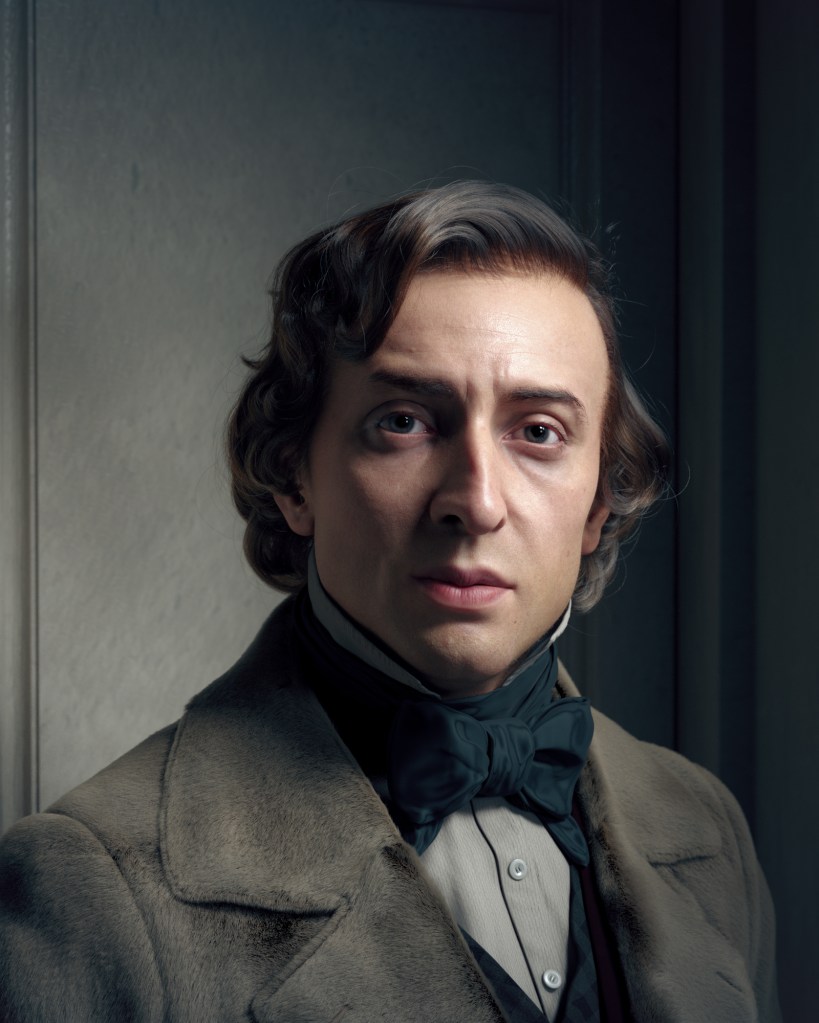
Virtuosic, imaginative, and emotionally profound, Chopin’s music offers pianists a wealth of expressivity, requiring a combination of superior technique, which always serves the music (rather than as an end in itself), refined touch, a beautiful cantabile (singing) tone, highly nuanced dynamic shading, supple phrasing and rubato, and an appreciation of the interior architecture of this multi-layered music. Chopin is also symbolic of Poland, the country of his birth, whose musical idioms are evident in almost all his music, most obviously, the Mazurkas and Polonaises.
When asked, the great Chopin player Arthur Rubinstein could not explain why Chopin’s music spoke to him, but like the music of J.S. Bach (which Chopin greatly admired and studied), it expresses universal humanity which, combined with a certain vulnerability, speaks to so many of us, and on many different levels.
An unrivalled authority and one of the greatest interpreters of the music of Chopin, Rubinstein brought great dignity and refinement to the music, avoided unnecessary mannerisms and sentimentality, and revealed the structural logic of Chopin’s writing. His playing is memorable for its elegant vocal phrasing, beauty of tone, and natural yet sophisticated shaping.
Arthur Rubinstein Plays Chopin’s Polonaise in A Flat Major, Op.53
“A master of the keyboard” (Harold C Schonberg), Dinu Lipatti was the pupil of an older Chopin master, Alfred Cortot.
Lipatti’s immaculate performances of the waltzes, in particular, are spontaneous, light and nimble, lyrical and suitably dancing, with subtle rubato and great charm.
“It’s very inner music and very deep,” Maria João Pires has said of Chopin. For her, he is “the deep poet of music”. That depth is really evident in Pires’ playing of the Nocturnes: intimate, refined and passionate, her interpretations eschew drawing room night-time sentimentality and capture all the drama and emotional intensity of these much-loved pieces.
Described by one critic as “the greatest Chopin player to have emerged from Italy since the Second World War”, Maurizio Pollini’s association with Chopin goes right back to the beginning of his professional career when he won the Chopin Competition in Warsaw when he was just 18. His unsentimental, cultivated interpretations are notable for their clarity of expression, perfectly judged poetry, and close attention to the bel canto melodic lines which make Chopin’s music so immediately appealing.
Alfred Cortot is one of the most celebrated Chopin interpreters, combining flawless technique with a deep appreciation of the structure, voicing, and textures of Chopin’s music. His recordings are acclaimed to this day, and his detailed, annotated editions of Chopin’s music remain highly prized among pianists and teachers.
Hailed by her mentor Arthur Rubinstein as “a born Chopin interpreter”, Polish-Canadian pianist Janina Fialkowska captures the soul of Chopin, in particular in her performances of the Mazurkas, works which reveal Chopin’s patriotism and innermost sentiments towards his homeland. Fialkowska is sensitive to both the humble, peasant origins of the Mazurka and Chopin’s elevation of the genre into concert pieces. She really captures the poetry, poignancy, and whimsical emotions of these Polish folk dances, and her rubato is perfectly judged, especially important in these pieces where suppleness of pace lends greater emphasis to the emotional depth of the music.
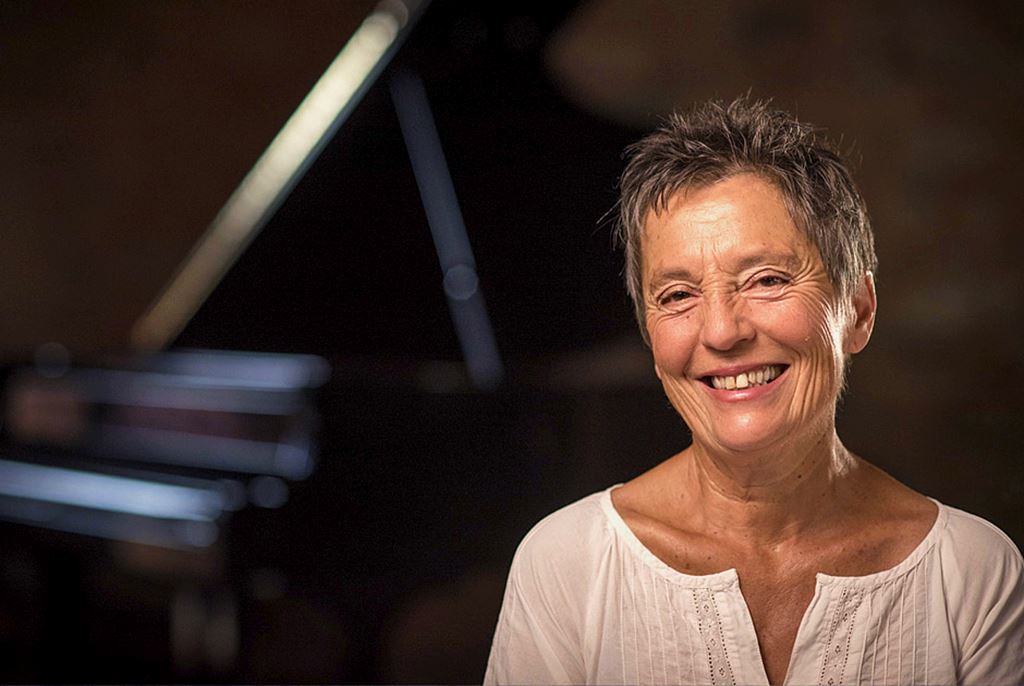
A noticeable stir arose in piano circles around Bordeaux recently when Maria Joao Pires scheduled a rare recital in the city’s Auditorium concert hall. One of the greatest living pianists of our time, she has become increasingly absent from the concert stage in the past few years. Her commitment to interests outside of the music world has taken over much of her time and interest.
In Bordeaux she played a modest programme of Mozart sonatas and two Debussy pieces. For 90 minutes without intermission, she displayed her famous keyboard touch, her blinding virtuosity and her respect for the score. Gracious bows between numbers showed her appreciation for the audience which, she said, came for the music, not the show.
As she said in our interview (below), “It’s not about me, you know.” She believes we have “more values to protect – nature and art, life itself “.
We met backstage at the Auditorium on a sunny June afternoon. She was relaxed in conversation, with an easy smile and a refreshing frankness about the piano world and about the effects of ageing.
A highlight of her teaching avocation was her U.S. production of her Partitura Workshop at Northwestern University in Chicago and at the Gilmore Festival in Kalamazoo, Michigan, last year.
Gilmore director Pierre van der Westhuizen recalled for me the impact she made in Kalamazoo. “Ms Pires took us back to the way music should be instructed,” he said. “These pianists almost became as apprentices. (The six participants) spent the whole day together, learning together, socializing together. Ms Pires asked as many questions of them as they of her.”
Ms. Pires also recalled the warmth and enthusiasm she encountered in Chicago and Kalamazoo.
In our interview, she spoke about life at 80. Her playing is hampered, she said, by a case of dystonia but she is not ready to retire. In the Autumn she heads for Asia, playing in Japan, Taiwan and South Korea. She will skip China because she has been blacklisted there for playing at a conference that the Dalai Lama attended.
She explained her restricted repertoire by showing me her small hands. She placed her palm against my “piano hands”, which easily engulfed hers. She avoids composers such as the big Russians, Rachmaninov and Prokofiev, whose demands on the pianist stretch well beyond the reach of an octave.
In our wide-ranging discussion, she said she still needs to practice, sometimes for one hour a day, sometimes for five hours. “What shrinks is not only your skills, it’s your repertoire. That’s life,” she said.
Here is an edited transcript of our interview.
MJ: At your recent recital in Bordeaux, the audience went wild. You got a standing ovation over your very fine Mozart and Debussy programme.
MJP: It’s not about me, you know. The real ovation should be about the dialogue with the music. We don’t need the ovation because we have more values to protect — nature and art, life itself.
You have just turned 80. Your fans have been expecting you to retire for some time. What does your agenda say?
No, I am not ready to retire. I have a couple of concerts coming soon, then I need a vacation, then in the fall I go to the Far East, to Taiwan, Korea, Japan.
What? Not China, site of the world’s biggest piano craze?
I have played a lot in Japan over my career but I don’t play in China any more because they won’t grant me a visa.
Did they give you a reason?
Yes, at a conference a few years ago l played for the Dalai Lama. To the Chinese leaders, that’s a no-no! But I still have many private students in China working with me online.
In Asia there are large numbers of serious piano students – too many for their local needs. Some of them will become great artists and they will come to the West, won’t they?
Certainly.
Are you concerned about the influx awaiting us?
I’m very concerned . Mainly about the number of people who don’t get the transmission of knowledge from a school or a culture to them, the players.
Your Gilmore workshop in Kalamazoo last year had six students, five of whom were Asians. Is that a sign of the future?
It is. No more comment.
Isn’t piano study a big problem in the USA, with all the electronic games and distractions from music lessons?
The problem is also in Europe. We have lost a lot of quality, in terms of knowledge behind the music. The schools do not make the transmission from the composers to us. We owe that to the composers. And it’s very sad because now we focus on goals and competition, and competition does not go well with art.
You had a life in the competition world, did you not?
Not really. At about age 28 I was obliged to compete because I was chosen by the (Salazar) dictatorship in Portugal and I had to go to the Beethoven Competition in Brussels.
You won that first prize didn’t you?
Yes but I am absolutely not proud at all of that.
Do you have an opinion about competitions?
I have an opinion, a very strong opinion. Competition and art do not go together. Unfortunately young people believe that if they don’t participate in competitions, they cannot earn a living. That’s an illusion, I promise you, it’s a total illusion. A pianist with skills and knowledge can do many other things.
Don’t young pianists from wealthy backgrounds have an easier way forward?
I have nothing against money or rich people. But I have something against how much can this can disturb our view. I see more and more young people being distracted by that idea. Money is replacing everything. It is replacing the clear view over everything. We need more empathy with other people. If we don’t have that empathy we are blind, in terms of consciousness. This is the worst thing that could happen.
Are you still playing regularly?
Yes, but I have a big problem with my right hand dystonia [involuntary muscle contractions in the hands]. This is taking too much effort. I also have small hands, so I always have problems. Age just makes it worse. [She presses her open palm against my “piano hands”. I easily envelope hers in mine.]
Ashkenazy also has tiny hands and yet he manages to jump octaves, even tenths.
Tiny is one thing. This is another. I have a child’s hands and that’s different from “tiny” hands.
Your repertoire seems tightly controlled, with accent on Bach, Mozart, Chopin, Schubert, Debussy.
Even among the French impressionists, I play with great difficulty. It’s not easy. And neither can I do the Russians, Rachmanniov, Prokofiev. But I like to teach pieces that I don’t play.
You have recorded Schumann and Brahms.
Yes, but I play them but in very small amounts.
You have been quoted as blaming Liszt for inventing the modern solo piano format.
No, Liszt was a great composer. How can I blame him? If I cannot play some pieces, it’s my fault, not his.
Over the past twenty years, workshops and teaching are taking you more and more away from the concert stage.
Yes, I have always been interested in the transmission of skills and knowledge. As an adult, I realized that the transmission is cut back. So the transmission of art is not happening any more. I wish we could be stronger in our complaining about what’s going on. We have no clear view over future generations. How to teach them, how to deal with problems.
How much energy do you have left? How much more stamina is there in you, living in hotels, taking planes and trains throughout Europe and Asia? Doesn’t that wear you down?
Yes, it does, and I was sick really badly for six months and this was a very good lesson for me. My body and spirit were saying “Come on, take care of yourself.” I still have a bit of energy but I rest when I need to rest.
You have said you suffer from stage fright.
I have a lot of stage fright. We have this responsibility, and that can give you a lot of pressure. So you don’t want to go on stage. I prefer if I wake up on a day that I have nothing on stage, I am happy. And if I don’t have to go into an airplane, I am happy. It is not a pleasant life. But it is a life that brings a lot of experience. A vision of the world, and of the people — how they react to things.
Are you still uncomfortable playing in public?
Yes, but I am comfortable with people who collaborate with me, people who are there to listen to the music. I feel they are friends.
Do you still need to practice?
Yes, I need to practice more and more. Sometimes an hour a day, sometimes five, sometimes nothing. What shrinks is not only your skills, it’s your repertoire. That’s life.
If you could choose, how do you want to be remembered after your time runs out?
No problem. I have no wish at all. All right, I have one wish. When I die, I don’t want to die stupid or mean.
Michael Johnson and Frances Wilson recently published a collection of interviews with concert pianists, under the title “Lifting the Lid”. The book is available through Amazon.
MICHAEL JOHNSONis a music critic and writer with a particular interest in piano. He has worked as a reporter and editor in New York, Moscow, Paris and London over his journalism career. He covered European technology for Business Week for five years, and served nine years as chief editor of International Management magazine and was chief editor of the French technology weekly 01 Informatique. He also spent four years as Moscow correspondent of The Associated Press. He is a regular contributor to International Piano magazine, and is the author of five books.Michael Johnson is based in Bordeaux, France. Besides English and French he is also fluent in Russian.
Schubert works for piano duet and piano solo – Maria Joao Pires & Ricardo Castro
Deutsch Grammophon 2004
I was given this album by a friend for my 40th birthday in autumn 2006. I thought turning 40 would be easy: I told myself it was “just a number” and that it had no real significance, that it was just another day in my life. In fact, my birthday coincided with a difficult period in my adult life, when I realised, with a shock, that the boundaries of one’s emotional life are not completely impermeable, and that being married does not make one immune to another person’s attention and admiration.
During the year of my birthday, I started playing the piano seriously again after an absence of nearly 20 years (in the preceding years I was busy getting married, setting up home, working in publishing and antiquarian bookselling, having a child, and I lost interest in the thing about which I cared very passionately when I was at school).
Some of the first pieces I returned to were Schubert’s D899 Impromptus and the Moments Musicaux, pieces I had always liked, and attempted and played rather badly as a precocious teenager (my mother bought me the Edition Peters score after hearing Alfred Brendel play them). Returning to the piano after such a long time away was very hard, yet it was gratifying to find pieces that had been carefully learnt in my teens had not been entirely forgotten and were still “in the fingers” (as a professional pianist colleague of mine said once “the body does not forget that easily” – and it’s true). At that time, I didn’t even have a piano: I was playing, and teaching, on a digital piano, which did the job, but had none of the subtlety nor refinement of an acoustic piano.
At the time of my birthday, I was doing a lot of reading about Schubert’s Impromptus, pretending this was “research” for my (still unpublished!) novel. The D899 Impromptus have a special significance for the hero of my book – a young concert pianist poised on the cusp of a brilliant career until the First World War cruelly intervenes – and each one connects him to particular people or events in his life. It is significant that in his first concert after the war is over he plays the Impromptus as a way of reaffirming these connections and celebrating life and love.
Of course, in reality these late piano pieces of Schubert, together with the D935 Impromptus and the final three sonatas, are the works of a man at the end of his short life, yet Schubert was less than 10 years older than the hero of my novel when he wrote these wonderful works. These pieces, composed during a remarkable outpouring of late masterpieces, display many emotions, from anger and defiance (the D958 Sonata in C minor) to resignation and valediction (the last Sonata in B-flat, D960). The Impromptus are in many ways miniature versions of these big works: full of variety, containing a broad sweep of emotions from the chillingly bare G which opens the first of the D899 set to serenity of the third in G-flat and the final, life-affirming cadence in A-flat major of the fourth Impromptu.
The Fantasie in F minor, D940, which opens «Resonance de l’Originaire», was composed in 1828, the last year of Schubert’s life, and is written for four hands (two pianists at one piano). It has a four-part structure, not unlike a sonata, but the “movements” run into one another with stylistic bridges between each. Schubert had already explored the Fantasy form in his Wanderer Fantasie D760, a bravura work full of heroism and energy. By contrast, the opening motif of the D940 is elegaic and wistful, a distant horn call accompanied by murmurings in the lower register. In the hands of the pianists on this recording, the mood is melancholy, almost desperately tragic, yet tinged with great tenderness. Typically of Schubert, the mood soon takes a volte face with a new, more hopeful motif in the lower register, and throughout the work there are contrasting shifts of mood from poignant and heart-rending to dramatic, longing, intimate, charming and dance-like, and characteristic shifts between minor and major. The textures, shared between the two pianists, give the work an inner richness, and the reprise of the first theme is a touching reminder of the work’s underlying sadness.
This piece has, on occasion, reduced me to tears. When I was fortunate enough to hear it performed live by the artists on this disc, during Maria Joao Pires’ memorable Wigmore Hall residency in 2007, I think I cried through almost the entire performance, moved not only by the music, but also the fact that I was in the presence of an artist whom I greatly admired and respected (and continue to).
The other work for four hands on this double CD recording is the Rondo in D951, which provides a delightful salve after the emotional impact of the D940. Maria Joao Pires also plays one of the earlier sonatas, the genial D664 in A, while Ricardo Castro opens the second disc with the D784 in A minor, which shares some of the same emotional territory as the D940 in its sombre opening statement and dramatic Beethovenian gestures throughout the first movement. The final work on the disc is the dramatic Allegro in A minor, D947 “Lebensstürme”, also for four hands.
Musically and emotionally Pires and Castro seemed conjoined in the works for four hands on this album, while Pires’ solo performance in the Sonata in A is tender and delicately shaded. Between them, the two pianists on this disc give a sensitive and passionate reading of some of Schubert’s finest music for piano.
I was given this album by a friend for my 40th birthday in autumn 2006. I thought turning 40 would be easy: I told myself it was “just a number” and that it had no real significance, that it was just another day in my life. In fact, my birthday coincided with a difficult period in my adult life, when I realised, with a shock, that the boundaries of one’s emotional life are not completely impermeable, and that being married does not make one immune to another person’s attention and admiration.
During the year of my birthday, I started playing the piano seriously again after an absence of over 15 years (in the preceding years I was busy getting married, setting up home, working in publishing and antiquarian bookselling, having a child, and I lost interest in the thing about which I cared very passionately when I was at school). Some of the first pieces I returned to were Schubert’s D899 Impromptus and the Moments Musicaux, pieces I had always liked, and attempted and played rather badly as a precocious teenager (my mother bought me the score after hearing Alfred Brendel play them – more about this here). Returning to the piano after such a long time away was very hard, yet it was gratifying to find pieces that had been carefully learnt in my teens had not been entirely forgotten and were still “in the fingers” (as a professional pianist colleague of mine said once “the body does not forget that easily” – and it’s true). At that time, I didn’t even have a piano: I was playing, and teaching, on a digital piano, which did the job, but had none of the subtlety nor refinement of an acoustic piano.
At the time of my birthday, I was doing a lot of reading about Schubert’s Impromptus, pretending this was “research” for my (still unpublished!) novel ‘Facing the Music’. (Looking back, I realise the writing and “research” was a kind of displacement activity, self-preservation against a tide of confusing emotions.) The Impromptus have a special significance for the hero of my book – a young concert pianist poised on the cusp of a brilliant career until the First World War cruelly intervenes – and each one connects him to particular people or events in his life. It is significant that in his first concert after the war is over he plays the Impromptus as a way of reaffirming these connections and celebrating life and love.
Of course, in reality these late piano pieces of Schubert, together with the D935 Impromptus and the final three sonatas, are the works of a man who almost certainly knew the end was near. Dying from (probably) syphilis, these works, composed during a remarkable outpouring of late masterpieces, display many emotions, from anger and defiance (the D958 Sonata in C minor) to resignation and valediction (the last Sonata in B-flat, D960). The Impromptus are in many ways miniature versions of these big works: full of variety, containing a broad sweep of emotions from the chillingly bare G which opens the first of the D899 set to serenity of the third in G-flat and the final, life-affirming cadence in A-flat major of the fourth Impromptu.
The Fantasie in F minor, D940, which opens «Resonance de l’Originaire», was composed in 1828, the last year of Schubert’s life, and is written for four hands (two pianists at one piano). It has a four-part structure, not unlike a sonata, but the “movements” run into one another with stylistic bridges between each. Schubert had already explored the Fantasy form in his Wanderer Fantasie D760, a bravura work full of heroism and energy. By contrast, the opening motif of the D940 is elegaic and wistful, a distant horn call accompanied by murmurings in the lower register. In the hands of the pianists on this recording, the mood is melancholy, almost desperately tragic, yet tinged with great tenderness. Typically of Schubert, the mood soon takes a volte face with a new, more hopeful motif in the lower register, and throughout the work there are contrasting shifts of mood from poignant and heart-rending to dramatic, longing, intimate, charming and dance-like, and characteristic shifts between minor and major. The textures, shared between the two pianists, give the work an inner richness, and the reprise of the first theme is a touching reminder of the work’s underlying sadness.
This piece has, on occasion, reduced me to tears, not least for its connection to my emotional crisis mentioned above. When I was fortunate enough to hear it performed live by the artists on this disc, during Maria Joao Pires’ memorable Wigmore Hall residency in 2007, I think I wept throughout the entire performance, moved not only by the music itself, but also the fact that I was in the presence of an artist whom I greatly admired and respected (and continue to).
The other work for four hands on this double cd recording is the Rondo in D951, which provides a delightful salve after the emotional impact of the D940. Maria Joao Pires also plays one of the earlier sonatas, the genial D664 in A, while Ricardo Castro opens the second disc with the D784 in A minor, which shares some of the same emotional territory as the D940 in its sombre opening statement and dramatic Beethovenian gestures throughout the first movement. The final work on the disc is the Allegro in A minor, D947 “Lebensstürme”, also for four hands.
Musically and emotionally Pires and Castro seemed conjoined in the works for four hands on this album, while Pires’ solo performance in the Sonata in A is tender and delicately shaded. (This was more than borne out in their live performances at the Wigmore in 2007.) I haven’t listened to this recording for a long time: for a while, I found it just too painful, but when I decided to launch my new series ‘Music Notes’, it was the one thing I knew I wanted to write about. Listening now, with the benefit of 8 years of hindsight, life experience, this blog, two music Diplomas under my belt, a thriving and popular piano teaching practice, my concert and exhibition reviewing, and many other exciting and stimulating musical and writing activities, I have enjoyed the album for what it is: a sensitive and passionate reading of some of Schubert’s finest music for piano.
Maria Joao Pires returns to the Wigmore Hall later this year for a series of ‘Artist Portrait’ concerts to mark her 70th birthday.
The Cross-Eyed Pianist is free to access and ad-free, and takes many hours every month to research, write, and maintain.
If you find joy and value in what I do, please consider making a donation to support the continuance of the site

 The first of a



 The Cross-Eyed Pianist