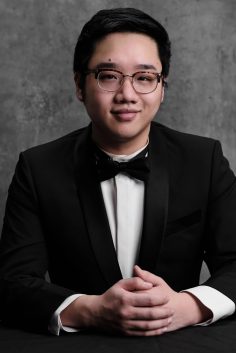
Professional instructor and internationally celebrated pianist Matthew Xiong teaches musicians how to battle through performance anxiety

Guest article by Alexander Ross

Australian concert pianist and educator Matthew Xiong is bringing his talents to the United States, teaching musicians of all levels, as a specialist in the skill of helping pupils work through performance anxiety issues. Matthew began learning the piano at age five and went on to an internationally celebrated career. An instructor at multiple schools, including his school, Talent! Music Academy, and the well-known Merry Melody Music Academy in Boston that produces piano students who have won multiple awards at national piano competitions and performed at the renowned Carnegie Hall in Manhattan New York, Matthew began embracing the techniques and psychology behind defeating performance anxiety after battling through his own stage fright issues as a performer.

My students’ fears are very real, and I completely empathize with their situation,” said Matthew. “Performance anxiety holds so many back from realizing their true potential. It’s a common problem, but very important that it be addressed methodically and carefully. Musicians can learn to work through these issues, but it takes slow, patient instruction from a seasoned performer who’s been through it.”

Matthew received his B.M in piano performance at the prestigious New England Conservatory of Music and holds a Master of Music degree from Boston University. He has worked with some of the most prominent piano pedagogues of this century, including John Perry, Margaret Hair, Robert McDonald, Gabriel Chodos, and Boaz Sharon. He has concertized at an international level as an artist, working at celebrated festivals such as the Kawai International Piano Masterclass Festival; the Sydney International Piano Masterclass Festival; the International Klaviersommer in Cochem, Germany; the Ian Hobson Steinway Society Festival in Puerto Rico; as well as the Beethoven Institute at Mannes, where he played works in dedication to the late composer, George Walker – the first African-American to receive a Pulitzer Prize for music composition.

Matthew was a prize-winner at several prestigious piano competitions, including the Sydney Classical Concerto Competition at the national Sydney Eisteddfod, where he won 2nd place, and he took runner-up in the Carnegie Concerto Competition at Boston University. Currently the Piano Director at Talent! Music Academy, Matthew now draws on his extensive experience in performance psychology to help scores of students overcome their fears, having first developed his teaching style while studying at the New England Conservatory. His innovative approach involves prolonged exposure to performance under pressure, by gentle, incremental intensity. By doing this, musicians slowly develop confidence on stage, without becoming overwhelmed by their fears.

Many musicians come to me suffering from what looks like, a mild kind of PTSD. They are brilliant musicians that have been shell-shocked by the pressures of performing on stage,” said Matthew. Indeed, even the most renowned musicians have tasted the bitter fruit of anxiety that often goes hand in hand with performance. From mainstream artists such as Adele and Katy Perry to classical superstars such as soprano Renée Flemming and the legendary pianist, Vladimir Horowitz, they have all attested to feeling the claws of performance anxiety on their ankles, holding them back from their full potential. Many musicians claim that it only took one poor performance for their anxiety to spiral out of control as they become fully aware of just how vulnerable they are on stage.

Matthew holds classes with his piano studio where the students can choose just how much pressure they are willing to shoulder as to not become overwhelmed or tense. This may mean, they only play a few pages of music in front of 2 people; the student is in control of their environment. Matthew monitors the student carefully as they perform and stops them if he notices any indication of anxiety. It may be tension in the body, rushed and anxious playing, or hyperventilation, which he says is a physical embodiment of anxiety that generally doesn’t arise if the performer is calm and confident on stage. He points out what he notices to the student, and asks the student to draw their attention to the area which is showing the signs of anxiety (perhaps it’s tension in the arms, or shoulders shrugged up to their ears). The student will resume playing, and as their awareness of the part of themselves that generates the anxious response grows, the calmer they become on stage. After each performance, Matthew gives the student positive reinforcement so that they feel triumphant over their anxiety. He then keeps a log of the pressure level that each student willingly submitted to and encourages them to add a little bit more pressure in each subsequent session.

In conclusion, Matthew says, “We are often told that the act of performing is a muscle that needs to be trained to get better. Yet what happens if that metaphorical muscle is torn? – are athletes asked to push through a torn muscle? No. They go through rehabilitation to learn how to use that muscle again. Musician’s need to think the same way, performance anxiety is a trauma that is developed from psychic injury, and should be approached with the same care as a physical injury; gently and without overexertion.


155451881_456029508784091_9056883481354279496_nMatthew Xiong is an Australian classical pianist based in Boston, Massachusetts. Born into a family with no musical roots, Matthew fell in love with classical music when he had a close encounter with Brahms’s 1st Symphony at a young age. Soon after, Matthew began his studies in piano. He has studied under many of the leading musicians of this time, among them are Margaret Hair, John Perry, Ian Hobson, Robert Mcdonald, and Ignat Solzhenitsyn. An avid chamber musician, Matthew has also worked with members of the Borromeo and Brentano quartets. Matthew received his Bachelor of Music at the New England Conservatory under the tutelage of Gabriel Chodos and Bruce Brubaker, and his Masters of Music at Boston University under Boaz Sharon.

Read more

Guest post by Dr. Elizabeth Brooker

Music Performance Anxiety (MPA) is a widespread problem. It affects musicians of any age, instrument, level of expertise, professional and amateur musicians alike. It can be a crippling experience for anyone who suffers, turning a performance into a nightmare. Promising and talented musicians have given up the idea of professional careers because of MPA. In fact research has shown that over 60% of performing musicians are afflicted with this.

This phenomenon not only affects musicians but also individuals in other fields of performance. It’s a feeling of being ‘in the spotlight’ or ‘on show’ in what is deemed to be a threatening situation. Of course up to a point anxiety can be a good thing, it can focus the mind and enhance the performance; however when cognitive anxiety becomes uncontrollable (catastrophising, imagining the worst possible scenario) it can have devastating effects.

It is said that a small amount of anxiety focuses the mind, but a large amount paralyses it. The mind affects the body, and a whole raft of unwanted physiological and somatic symptoms can occur when performance anxiety sets in, such as palpitations, heart racing, sweating, shaking/trembling, loss of focus and a feeling of being out of control. I know from first-hand experience what performance anxiety is like as in the past I could feel physically sick before a piano performance; and over the years of teaching both piano and singing have noticed how some of my students have also suffered from anxiety in performance.

A large amount of research over the last 40 years has focused on MPA, yet the problem still exists. Therefore you may wonder why MPA is still so prevalent! I believe that the reason for this is that the majority of investigative research has looked at the effectiveness of interventions that focus on the conscious mind. Cognitive Behavioural Therapy (CBT) is the main therapy in vogue at the present time. I would argue that the nature of this therapy, which focuses only on the conscious mind, does not get to the root cause of the problem only dealing with the presenting or surface issues.

I qualified as a Cognitive Hypnotherapist (CH) and Eye Movement Desensitisation and Reprocessing (EMDR) practitioner several years before my PhD research and adopted these therapies in my private practice. I noticed how beneficial these were for the rapid and long-lasting treatment of anxiety. Both therapies have the potential to reduce anxiety quickly and effectively and this is sustainable over time. The protocols and procedures are designed to desensitise and reprocess dysfunctional cognitions, emotions, and memories linked to past and present negative experiences: the underlying unconscious processes that an individual may not actually be aware of that can be maintaining the problem.

CH changes the memory and meaning of distressing events by reducing the perception of threat, and also the somatic symptoms of anxiety associated with the event (threat). Hypnosis dates back over 200 years as an area of scientific research and clinical practice and is used to bring about positive change in a wide variety of psychological conditions. EMDR used initially in the treatment of post-traumatic stress disorder has expanded widely over the last ten years now treating a wide range of pathological conditions, including anxiety disorders and associative problems. It has also been used for enhancement of performance in the arts.

Having noted these positive effects in private practice I wanted to test the therapies from a scientific standpoint. My thesis therefore focused on cognitive anxiety (specifically relating to pianists) and the role of the unconscious mind in maintaining and exacerbating the problem of MPA. It is the first clinical outcome study to compare two psychotherapies, CH and EMDR, for the reduction of MPA. Investigating the efficacy of these therapies therefore became the primary focus of my research.

The procedure and method of my research into MPA is given in brief below.

Pilot Study

The therapies were tested initially in a pilot study of six Grade 8 pianists from the University of Leeds and Leeds College of Music. All were suffering from MPA to a lesser or greater extent. Baseline measures of state and trait anxiety were first taken. State anxiety is the anxiety that someone can experience when performing (it has been described by one of my students as ‘feeling like a rabbit when caught in headlights’) and trait anxiety is an individual’s generic level of anxiety. The cognitive, physiological and behavioural aspects of anxiety were also tested before and after application of the therapies. Students played the same Bach Prelude and Fugue in two small concert performances. After the first performance participants were randomly assigned to either a therapy or control group. In the period between the concerts the therapy groups received 2 one-hour sessions of either CH or EMDR.

The results of the pilot study showed a significant decrease in state anxiety at the second performance post-therapy in both the CH and EMDR groups but not in the control group.

Main Study

Having tested the effects of the therapies in a pilot study I then continued the research with a much larger sample of 46 advanced pianists. (Students were from the Universities of Leeds and Sheffield and Leeds College of Music). The main study basically followed the same procedures as the pilot study but with participants choosing their own repertoire. In this study self-report questionnaires were also completed by the students prior to each performance. These gave personal insights into thoughts and feelings experienced in both performances and showed that cognitive perception of performance relates directly to the physiological symptoms experienced, and to the performance outcome.

The results of the main study demonstrated that after only two therapy sessions there was a substantial decrease in state anxiety in both therapy groups, but not in the control group. This resulted in fewer physiological symptoms and greater enhancement of performance in the therapy groups. Also the general level of anxiety (the trait level) decreased substantially below baseline levels in the EMDR group.

This research highlighted a number of important issues. The findings suggest that CH and EMDR have an important contribution to make to our understanding and treatment of MPA and the role of the unconscious mind. It demonstrated the effectiveness of the therapies in both significantly reducing MPA and enhancing performance outcome after only two therapy sessions. There is also evidence that EMDR decreases an individual’s trait level of anxiety, which can be interpreted as a change in personality. Given the importance of these results it is suggested that clinical studies now be conducted comparing cognitive behavioural therapy (CBT) with CH and EMDR. The effectiveness of each therapy can be assessed as well as the number of sessions required to bring about a beneficial result. Research has shown that CBT often requires 10 or more sessions, with sometimes little positive change as the outcome. Furthermore a comparison of the cost-effectiveness of CH and EMDR with CBT should be undertaken given the beneficial effects of CH and EMDR after only two sessions.

For those interested in looking at my research in greater depth I give a list of my publications below:

Brooker, E. (2015). Music performance anxiety: An investigation into the efficacy of cognitive hypnotherapy and eye movement desensitisation and reprocessing when applied to Grade 8 pianists. Doctoral dissertation eThesis, University of Leeds. Retrieved from http://ethesis,whiterose.ac.uk/12130.

Brooker, E. (2018). Music performance anxiety: A clinical outcome study into the effects of cognitive hypnotherapy and eye movement desensitisation and reprocessing in advanced pianists. Psychology of Music, 46(1, 107-124).

Brooker, E. (2019). Transforming Performance Anxiety Treatment Using Cognitive Hypnotherapy and EMDR. London and New York: Routledge. ISBN: 978-1-138-61493-2 (hbk) ISBN: 978-0-367-60676-3 (pbk, 2020).

Brooker, E. (2019). Cognitive hypnotherapy and EMDR. The longitudinal effects on trait anxiety and music performance in advanced pianists. Advances in Complementary and Alternative Medicine. 2019; 5(4); acam.000616.

Brooker, E. (2020). Cognitive Hypnotherapy. In C. Mordeniz (Ed.), Hypnotherapy and Hypnosis (pp.103-117). IntechOpen: London, UK. http://.doi.org/10.5772/intechopen.83045.

Do you ever get the feeling you are watching yourself playing, seeing yourself from a distance, as if sitting in the audience?

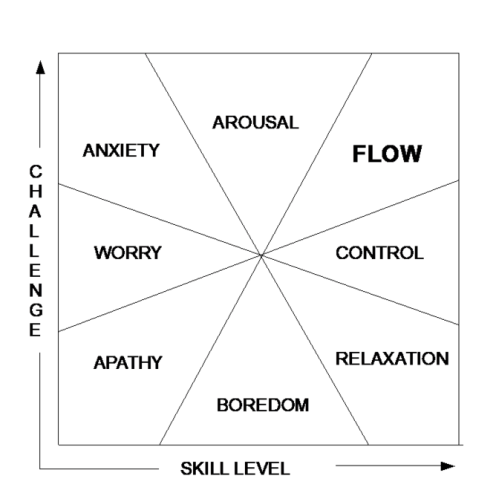
Sports people describe this quasi out-of-body sensation as being “in the zone”. It is related to “flow”, a psychological concept first proposed in 1969 by Hungarian psychologist and professor Mihaly Csikszentmihalyi, in which the person performing the activity is fully immersed in a feeling of focus, deep involvement, and enjoyment in the process. In short, flow is a total absorption in what one is doing. It occurs when one is engaged in an activity regarded as highly self-rewarding and characterized by clear goals, unambiguous feedback, a loss of self-consciousness and a balance between the challenges and skills required to best perform it.

According to Csikszentmihalyi, flow is a single-minded immersion and represents the ultimate in harnessing the emotions to perform and serve. The emotions are contained and channeled, energised and aligned to the task at hand; one may also experience a heightened sense of freedom, disengagement and lost time, as if everything is happening unconsciously. Flow can create a sense of confidence, enjoyment or even ecstasy, but fundamentally it is about absolute focus and intense concentration.

The best moments in our lives are not the passive, receptive, relaxing times . . . The best moments usually occur if a person’s body or mind is stretched to its limits in a voluntary effort to accomplish something difficult and worthwhile

Mihaly Csikszentmihalyi, 1990

A flow state also includes physical attributes, such as a feeling of synergy between mind and body, and the sense of everything working smoothly: the joints feel well-oiled, the muscles are warm and super-responsive, movement feels effortless.

Csikszentmihalyi defines the eight characteristics of flow as:

  1. Complete concentration on the task
  2. Clarity of goals and reward in mind and immediate feedback
  3. Transformation of time (speeding up/slowing down)
  4. The experience is intrinsically rewarding
  5. Effortlessness and ease
  6. There is a balance between challenge and skills
  7. Actions and awareness are merged, losing self-conscious rumination
  8. There is a feeling of control over the task

Flow state, in musical practice and performance, is hard won, however, and while Csikszentmihalyi believes that music and flow are closely linked – mainly because music is a positive, pleasurable activity that can sustain intrinsic motivation, one of the chief features of flow experience – people with particular personality traits are more likely to experience flow than others. Such people have what is called an “autotelic” personality, characterised by curiosity with a predilection for doing things for their own sake rather than chasing an external goal, persistence, conscientiousness and the ability to successfully manage a rewarding, positive balance between the challenge and one’s skill level. Research has shown that people with a tendency to anxiety, neuroticism and self-criticism are less likely to experience flow.

For the musician, flow is a significant intrinsic motivator because a flow state can induce positive emotions and pleasurable sensations, and achieving flow in practising, for example, will encourage one to stick to the task. In this respect, flow is related to self-determination, self-esteem, autonomy and resilience – all imperatives for the musician – and the ability to find joy in challenges and the motivation for mastery is essential to one’s personal musical development.

flow+imaggeee

Csikszentmihalyi’s nine dimensions of flow:

1. Challenge-skills balance: If the challenge is too great, we grow frustrated; too easy and we get bored. In the flow experience, an equal balance between the challenge and our skill ensures we are engaged by the task, not overwhelmed by it.

2. Action-awareness merging: Merging results in a feeling of body/mind unity and unity between musician and music.

3. Clear Goals: in a flow experience, when musicians have clear goals, they know what needs to happen, engage with the task, and let go of irrelevant stimuli and distractions that may interfere with their performance.

4. Unambiguous Feedback: Direct, immediate feedback is constantly present so that we can remain connected to the activity and adjust our reactions accordingly to meet current demands.

5. Concentration on the task at hand: intense concentration narrows our attention to exclude unnecessary distractions. When absorbed in the activity, we are only aware of what is relevant to the task at hand.

6. Sense of control/no fear of failure: Control helps us overcome anxiety. When in flow, musicians often report feeling they give their best performances.

7. Time transformation: When in flow we experience a distorted sense of time – it speeds up, slows down or stops. This can occur during practising or in performance, when one is intently absorbed in the task.

8. Autotelic experience: Flow is an intrinsically rewarding experience: the activity is done for its own sake, an end in itself, and produces feelings of satisfaction, fulfilment and pleasure.

9. Loss of self-consciousness: When in a flow state, we experience a reduced self-awareness, including a transcendence of the self. Lack of self-consciousness results in an pleasurable experience because we no longer experience anxiety, fear, or self-doubt, and the inner critic is silenced.

The unselfconscious musician is unconcerned with criticism, real or imagined. There is no fear of failure, no consideration of an unsuccessful performance. These moments of unselfconscious action allow one’s potential to be fully realised, without the limiting influence of anxiety. Musicians treasure such moments, as they bring physical and emotional freedom, and a sense of conviction and natural artistry to their performance.

The paradox is that when one is performing in a flow state, the music will appear effortless, spontaneous, created “in the moment”, yet is the result of many thousands of hours of concentrated, focussed practising, the intense honing of one’s skills and the acquisition of mastery. The British pianist Stephen Hough has a good description for this, that one must be “a bohemian on stage” and “a perfectionist in the practice room”; in effect, that artistic freedom is achieved through intense discipline.

We can create the right circumstances in the practice room to achieve flow. These include:

  • a heightened awareness of touch (for the pianist, the pads of the fingers)
  • tension-free whole-body movements to create a sense of oneness with the instrument and the music
  • quality of sound and constant self-feedback (“do I like this sound?”, “what can I hear?”)
  • avoid over-thinking and replace negative self-talk with positive affirmation
  • appreciate and transmit the meaning of the music and be alert to its imagery and narratives
  • always play with expression, even when practising scales or exercises
  • remain “in the moment” when playing

Practising with this mindful awareness increases our ability to bring joyful and absorbing feelings of flow into performance, resulting in greater expression, conviction and emotional engagement, physical freedom, quality of sound, and reduced anxiety.

For the audience too the experience may be equally absorbing, a sense of being at one with performer and music, a state of relaxed concentration, and, literally, “going with the flow”…..


From healthy technique to natural artistry


Not so long ago a book as comprehensive and user-friendly as this would not be possible. It would require essential supplementary materials – DVDs and CDs – to cover all the ground. But with ease of access to the internet and smart phone technology at one’s fingertips, The Complete Pianist is exactly what it says it is: a comprehensive, generous guide to playing and teaching the piano, and one of the most significant volumes on piano technique to appear in recent decades. The benefit of technology means that pianists, whether professional or amateur, teachers and students can access some 300 video demonstrations via QR codes within the text, all of which have been recorded by Penelope Roskell herself to demonstrate a specific exercise, aspect of technique or musical point described in the pages of the book.

The Complete Pianist is the result of a lifetime of piano playing, teaching and research, and in it Penelope Roskell, renowned pedagogue and concert pianist, aims to help pianists of all levels improve their playing from the very earliest stages of learning a piece, through all the technical challenges and interpretative decisions to finding inspiration in the act of performance itself. Throughout, there is a strong emphasis on healthy technique and playing without tension, and Penelope continually reiterates that technique should serve the music, that it is a means to enable the player, whatever their level of expertise, to play with expression, vibrant colour and confidence.

Penelope Roskell’s approach to technique grew out of personal experience. As young pianist she experienced unpleasant physical symptoms while practising Liszt’s second piano concerto, and found that physical tension adversely affected her sound. She set out on a lifelong mission to develop a healthier approach to piano playing, drawing on yoga, Alexander Technique, Tai Chi and Feldenkrais, an understanding of anatomy, and her own research, often trying out exercises and techniques with her students to establish what worked or was most beneficial, both to the physical body of the pianist and the production of expressive sound.

Anyone who has studied with Penelope Roskell will be familiar with her technical and musical exercises, such as Empty Sleeves or The Hot Air Balloon and Parachute Touch, which aim to balance and relax the body or simplify and explain the physical movements required to create a particular sound or effect on the piano. Such descriptive, easily understood exercises can be particularly appealing to young people or early students who may find visual cues more helpful than verbal explanations. In addition, many of the exercises which Penelope advocates are based on the naturally flowing bodily movements we use in everyday life, thus making them relevant and more easily put into practice at the piano. The Complete Pianist contains 250 exercises, newly-devised by the author.

This comprehensive book covers all aspects of piano technique including posture, finger touch and tone production, chords, octaves, rotation, and lateral movements. There are also sections on mental preparation, effective practice, sight reading, memorisation, phrasing, rhythm, articulation, sound production, pedalling, injury prevention and understanding and managing performance anxiety.

The emphasis on preventing and managing injury is particularly important: until fairly recently, musicians’ health and wellbeing were rarely discussed and hardly touched upon in their teaching and training. Injury was regarded as a taboo subject, not to be mentioned for fear of revealing a weakness that may lead to loss of work, and musicians tended not to seek specialist help for health issues such as RSI or tendonitis. As the UK’s foremost piano teacher specialising in pianists’ injuries, and Piano Advisor for the British Association for Performing Arts Medicine ((BAPAM), Penelope Roskell offers highly informed, but straightforward and pragmatic advice for pianists of all ages and levels to encourage healthy technique. The Complete Pianist includes sections on injury recovery, rehabilitation and prevention, developing hand and finger strength, and hypermobility (double-jointedness) and specific issues relating to this for the pianist. In addition, section 22 (The Inspired Pianist) debunks many of the myths and obstacles of piano playing and performance, and offers intelligent suggestions to encourage motivation, set realistic goals and build confidence to maintain one’s interest in and enthusiasm for the piano. There is also a lengthy section on understanding anxiety, a significant issue for many pianists, professional and amateur. Once again, Penelope offers sensible, sympathetic advice – from understanding the physiology of anxiety and the effects of the release of adrenaline to dealing with perfectionism and negative thinking.

In addition to the many videos throughout the book, which range from simple piano pieces to concert repertoire, there are detailed appendices on anatomy and a glossary of terms which occur in the text.

In sum, The Complete Pianist is a remarkable achievement, a comprehensive manual for pianists and teachers, packed with invaluable accumulated wisdom and intelligent advice, and excellent supporting materials. Penelope Roskell simplifies the craft and art of piano playing, without ever devaluing musical ability, talent and artistry, and provides pianists with the tools to practice and work independently, yet with the sense of a supportive, sympathetic teacher always at one’s side, encouraging one to continually develop one’s artistic skill.

Highly recommended

The Complete Pianist is published by Edition Peters UK and retails at £44.95


A postscript….

I took private lessons with Penelope Roskell for six years from 2008, a few years after I had returned to playing the piano seriously after an absence of some 20 years. I went to her initially with a hand injury – tenosynovitis which had developed as a result of attempting to play the octave passages in Schubert’s first Klavierstück, D946, too quickly, too loudly and with poor technique. In the space of 6 months, she had transformed my technique, filling in the gaps which were missing from my piano studies as a teenager, and built my confidence to such an extent that I felt able to attempt a professional performance diploma, which I passed with distinction in 2011 (I subsequently took my licentiate diploma just 14 months later, with Penelope’s encouragement, also achieving a pass with Distinction).

Returning to the piano as an adult was not easy, but Penelope’s intelligent, sympathetic and respectful approach made a huge difference, not only to my own playing but also to my fledgling teaching career. She was always generous with her advice and suggestions, urging me to try her exercises with my own students and report back to her. Her weekend piano courses were stimulating events and through them I discovered new repertoire and met other pianists, a number of whom have become close friends.

Her new book is a comprehensive and inspiring distillation of her experience and wisdom.

(Frances Wilson, The Cross-Eyed Pianist)

peneloperoskell.co.uk

Meet the Artist interview with Penelope Roskell