Who or what inspired you to take up piano and make it your career?

I don’t remember much about what made me decide to play the piano and make it my life’s dedication, I only know that I always knew that I wanted to become a concert pianist.

I do remember getting a cassette tape with Chopin ‘Heroic’ Polonaise played by Ashkenazy and couldn’t get around how somebody could write something so beautiful and full of life.

Who or what were the most important influences on your musical life and career?

When I was in high school I met a classical guitarist who had a sensitivity and honesty as an artist which I had not seen. We would listen and discuss wonderful pieces of art in which he showed me delicacy in colour, shape and space which I didn’t think were possible. I was raised in a small coastal town in the Netherlands and in this seemingly non-artistic environment he was somebody who gave me the confidence to pursue the search for beauty.

Steven Osborne has been a big influence in the last years. He has helped me a lot, not only by his occasional mentoring but also seeing him perform and his work in seeking expression, character and technical confidence.

What have been the greatest challenges of your career so far?

I think the greatest challenge is still to come in securing a career and being able to reach a large audience in a world where classical music is still understood by a small number of people and where the artist has to deal with big political and intercontinental power shifts.

Which performances/recordings are you most proud of?

I have recently recorded my first disc. The things I have heard sound really good in terms of clarity and expression. But most proud am I to have been able to work with an incredible team – producer Andrew Keener and engineer Aleksandar Obradovic.

Which particular works do you think you perform best?

This is very difficult to answer: as an artist I am constantly looking to understand style and the composer’s score more and more thoroughly. Sometimes I have a pretty clear feeling of a particular expression in a particular style but realise that it couldn’t be the composer’s intention. It is a long search in which we must take our own life and experiences into account.

How do you make your repertoire choices from season to season?

Depending to what certain halls and concert series have programmed and wish to listen to, I try to build a program in which I feel confident and in which the pieces have common ground in terms of expression and character.

Do you have a favourite concert venue to perform in and why?

Not so long ago I performed in the Concertgebouw in Amsterdam. The experience was truly wonderful because the hall and the acoustics worked together so beautifully. My concept of sound in certain passages was suddenly so much more achievable as the circumstances were perfect.

Favourite pieces to perform? Listen to?

I very much enjoy performing Schumann Allegro Opus 8. I love the tremendous drive and power of this particular piece. It brings so many questions to me which I don’t always know how to answer, and this is the beauty of it.

I am constantly return to listening to Buckner symphonies, they give me such a sense of space and structure. There something about these works that gives me clarity of mind in times when I need it.

Who are your favourite musicians?

There are a lot of musicians and artists in general whom I admire for their contribution to art and music. Each of them, in their personal view of music, has taught me things and changed or affected the way I see things nowadays.

What is your most memorable concert experience?

When I was living in Rotterdam the first concert I attended was Bach’s St Matthew Passion with the Rotterdam Philharmonic. The experience of such an incredibly powerful piece in a setting of a beautiful concert hall was something which has stayed with me.

What do you consider to be the most important ideas and concepts to impart to aspiring musicians?

I think the most important thing for young artists is to have a very clear idea of how to reach the younger generation, and to be able to show why art is a necessity for the well being of our internal life.

What is your idea of perfect happiness?

Hopefully that is when mind, body and spirit become one and there is complete peace of mind.

What is your present state of mind?

At the moment I consider myself having a clear state of mind as I am able to make deeply-felt artistic decisions. In a world which is captured by an economical crisis, political shifts, and is in need of a new vision towards our perception of how we experience art, I find myself sometimes overwhelmed by all the possibilities on the one hand and doubts on the other.

Cyrill Ibrahim performs at St James’s Piccadilly, London on 11th January at 1pm

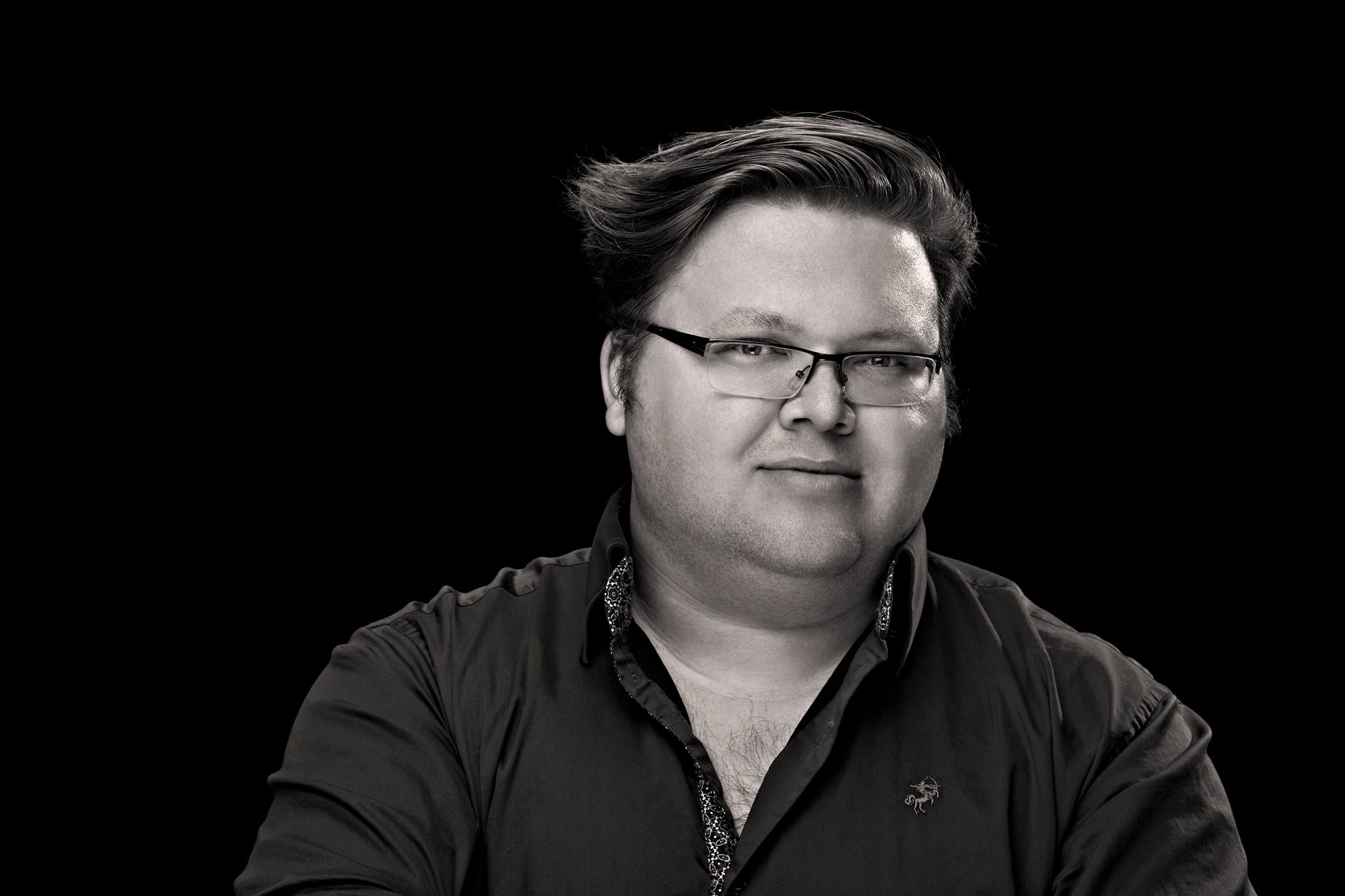
Born in Rotterdam in The Netherlands, in 1984, Cyrill Ibrahim started playing the piano at the age of seven. One of his first mentors was Leonardo Palacios, a classical guitarist from Uruguay. He subsequently enrolled at the age of 18 at the Rotterdam Conservatory. He graduated as Bachelor of Music with Distinction.

During his studies, his tutors were Aquiles Delle Vigne, Barbara Grajewska and Marcus Baban. To his delight, Cyrill was loaned a grand piano by the Dutch Music Foundation during his studies in the Netherlands.

In 2009, the pianist Paolo Giacometti offered him a place at the Utrecht Conservatory to follow the Master of Music programme. He studied there for a year before moving to the United Kingdom.

Cyrill graduated from the Royal College of Music after undertaking the Master’s Degree in Performance under the tutelage of Professor Andrew Ball. The Dutch Government showed its faith in Cyrill’s skills as a pianist by offering him a full Huygen’s Scholarship for the entirety of his studies with the RCM.

He participated in the masterclass of the Portuguese pianist Maria Joao Pires at the Karma Ling Institute in France. In addition to this, he studied at the Birmingham Piano Academy, Chetham’s Summer School, the Lucca Estate and the Orchestral Conducting Course that is run by Antonio Ros Marba in Spain. Over the years, he has received tuition from, among others, Philip Fowke, Peter Donohoe, Ruth Nye, Matthias Kirschnereit, Dr. Robert Markham, Malcolm Wilson, John Humpreys and Katarzyna Popowa-Zydron.

He has performed both as soloist and a chamber recitalist on the national and international stage for such halls as the Berliner Philharmonie and Concertgebouw in Amsterdam.

Cyrill has had the privilege of working with the concert pianist Steven Osborne. In a magazine interview, he said of the pianist: “I recently met a talented young Dutch pianist called Cyrill Ibrahim, who has an intensity and openness that really impressed me. I think he could be someone really worth listening to.”

www.cyrillibrahim.com


(photo: Jean-Baptiste-Millot)

Who or what inspired you to take up the piano and pursue a career in music?

I first heard the sound of the piano in my grandmother’s house. She had taken up piano studies late in life, with real devotion. I remember looking at the scores and asking her lots of questions… Later on, my sister began to take lessons – I was fascinated. The dream of a career came much later, when I was a teenager and had had the chance to listen to some great artists in the flesh and on recordings; I naturally wanted to play like them! One of the most inspiring souvenirs from those early years are the Chopin Nocturnes, recorded by Artur Rubinstein – truly unforgettable.

Who or what have been the most important influences on your musical life and career?

First of all my teachers: Jorge Garrubba, Juan Carlos Arabian, Carmen Scalcione, Maria Tipo. Very different personalities, but all true musicians whose advice have never left me. Their aim was to make you a musician with your own voice, to help give you the means to express what you have inside you and to avoid many of the traps every young aspiring musician encounters. Something I try to do myself when I teach…

What have been the greatest challenges of your career so far?

One of the greatest challenges has been to leave my family and come to live alone in Europe when I was eighteen. It was not easy, but I grew as a person and as an artist. The second big challenge came after winning the Geneva Competition (1990). Concert engagements did not arrive immediately, and when finally things started to happen, I realised that I was only at the beginning of a lifelong process of searching inside myself and the music I play – which I consider the greatest possible challenge.

Which performance/recordings are you most proud of?

I enjoyed listening to a live recording of Brahms 2nd Concerto I played a few years ago with the NHK Symphony Orchestra at Suntory Hall, and also enjoyed some of the many performances I gave at the Chopin and His Europe Festival in Warsaw – one of my favourite festivals. But I seldom listen to my old recordings: there is actually something almost terrifying when we do so. We evolve, and to face earlier performances is not easy! On the other hand, it can sometimes be refreshing. Maybe one had less experience at that time, less knowledge and so on, but a fresh, perhaps more intuitive look at the music.

Which particular works do you think you play best?

I probably have most affinity with the Romantic repertoire: Chopin, Brahms, Liszt, Schumann…but I have never tried to be an specialist. For instance, I believe that if you play Mozart well. you will play Chopin well too, so important is the classical element in the big Polish master’s music. I don’t believe in ‘closed compartments’ in music.

How do you make your repertoire choices from season to season?

I simply choose the pieces that I really need to play in that particular moment of my life – that’s the key thing. Pieces I’ve been living with for a while until I feel I might have something to say, and that conviction – modest but strong at the same time – guides me. Apart from that, a programme must have an inner logic and contrasts, too: it sometimes takes me many months to decide.

Do you have a favourite concert venue to perform in and why?

Teatro Colon in Buenos Aires is undoubtedly one of my favourites: in this great hall, one has also the feeling of intimacy you get in a chamber hall, and the sound is so warm! I also love the big hall of the Liszt Academy in Budapest – one of the best you can dream of – and Suntory Hall in Tokyo. Both are very special venues.

Favourite pieces to perform? Listen to?

Last season I was performing Beethoven’s ‘Hammerklavier’ Sonata very often. When I play the work, there is nothing on my horizon that I could find greater, more fulfilling. The same is true of every great piece of music: for a performer, the favourite piece should be the one you are playing at that moment, as if your life depends on it.

Who are your favourite musicians?

Among pianists, the great ones from the past: Rachmaninoff, Cortot, Schnabel, Lipatti, Artur Rubinstein, Vladimir Horowitz. You can easily recognise them after hearing any of them play just one phrase: their sound was so individual, so special. And, among those from today: Radu Lupu, Grigory Sokolov, Martha Argerich, to name but a few…

What is your most memorable concert experience?

If I had to choose one, I would choose when I played Rachmaninoff’s Third Concerto at the final stage of the Geneva Competition: I managed to forget I was in a contest and evaluated by a jury. So the music started to flow, even though I was playing the piece in public for the first time. Later I happened to listen to the recording of that evening with pleasure.

What do you consider to be the most important ideas and concepts to impart to aspiring musicians?

For an aspiring musician, the essential thing is to remain true to oneself. It is increasingly difficult to achieve; the striving to make a career can easily push a young musician to be swallowed up by the concept of ‘profile’ and marketing. And that can be dangerous: it may stop the development of a true personality. One needs lots of patience, to think of the long term, and believe in what one has to say.

You are on the jury of the Chopin Competition and performing at the opening concert. What are you looking forward to about your time in Poland?

The prestige of the Chopin Competition will naturally attract fascinating young artists and I am of course eager to discover them. It is so inspiring to hear so much talent, with their fresh ideas, and to guess their projection in the future.  I hope I will accomplish my duty as a juror – it’s a very tough one. We are all subjective and respond more easily to someone who has a picture of a particular piece that is somehow close to yours. I will try not to fall into that trap!

What do you enjoy doing most?

I could not imagine myself doing something different! I just wish I have the inner strength to serve music the best I can for many more years to come. And never to stop developing…

The grand finale of the 17th International Chopin Competition takes place in Warsaw from 18-20 October. Further information here

Nelson Goerner’s new disc of complete Chopin Preludes is released in December 2015 (Alpha Classics) and his Beethoven Hammerklavier Sonata & 6 Bagatelles Op.126 will be released in March 2016 (Alpha Classics)

Nelson Goerner has performed with many of the major orchestras including the Philharmonia Orchestra under Claus Peter Flor, the Deutsche Symphonie Orchestra of Berlin under Andrew Davis, the London Philharmonic Orchestra under Emmanuel Krivine, the Hallé Orchestra under Mark Elder, the Suisse Romande with Neemi Jarvi and Raphael Fruhbeck de Burgos, the Orchestra of the 18th Century with Frans Bruggen, the Deutsche Kammerphilharmonie with Ivor Bolton, and the NHK Symphony Orchestra of Tokyo under Fabio Luisi.

His festival appearances include the Salzburg Festival, La Roque d’Anthéron, La Grange de Meslay, Edinburgh, Schleswig-Holstein and Verbier, as well as the BBC Proms.

In the 2013-14 season, Nelson Goerner was the subject of the Artist Portrait series at the Wigmore Hall in London, where he gave four recitals exploring such diverse repertoire as Bach, Mozart, Beethoven, Brahms, Schumann, Chopin, Debussy and Bartok.

A keen chamber musician, Nelson Goerner has collaborated with artists such as Martha Argerich (in repertoire for two pianos), Janine Jansen, Steven Isserlis and Gary Hoffman.

Nelson Goerner has a strong connection with the Mozarteum Argentino in Buenos Aires, and a student scholarship has since led to many performances. Mr Goerner also enjoys a long association with the Chopin Institute in Warsaw, where he is a member of the artistic advisory committee. With the Institute, he recently explored the interpretation of Chopin on contemporary pianos by Pleyel and Erard dating from 1848 and 1849. These performances were recorded for the Chopin Institute’s own label, with the recording of the Ballades and Nocturnes winning a Diapason d’Or.

Mr Goerner is very active in the recording studio and his discography includes recordings of Chopin, Rachmaninov, Liszt and Busoni, and a DVD of repertoire by Beethoven and Chopin in a live performance from the Verbier Festival. His Chopin recording on the Wigmore Hall Live label was instrumental Choice of the Month in BBC Music Magazine, and his recording of Debussy for the Outhere/ZigZag Territoires label was awarded the Diapason d’Or of the Year 2013. Nelson Goerner’s most recent recording of repertoire by Schumann was BBC Music Magazine’s Recording of the Month in March 2015. His next recording project will feature repertoire by Beethoven.

Born in San Pedro, Argentina, in 1969, Nelson Goerner has established himself as one of the foremost pianists of his generation. After studying in Argentina with Jorge Garrubba, Juan Carlos Arabian and Carmen Scalcione, he was awarded First Prize in the Franz Liszt Competition in Buenos Aires in 1986. This led to a scholarship to work with Maria Tipo at the Geneva Conservatoire, and in 1990 Nelson Goerner won the First Prize at the Geneva Competition.

www.nelsongoerner.com

11009397_406902086138349_6883018641379446363_o

Who or what inspired you to take up the piano and pursue a career in music? 

During a family holiday in Jersey in 1988, I heard a cocktail pianist at the Hotel de France.  I became transfixed with the piano sound, and each evening at the hotel restaurant would stand next to the artist and gaze (realising now how irritating it would have been for an eight year old in chinos and a gaudy shirt, to be peering and examining the artist’s fingers).  I also remember eating each course terribly slowly to maximise on the listening potential!

After much nagging (persistence usually pays off!), and against my late father’s intentions (S.A.S. fighting machine), Ma bought me my first piano for £50.00.  It was an Erard, and I adored it until I wore it out.  My world gradually became totally music and arts orientated, and I felt it was the only thing I excelled in; there was no option other than to forge a musical path.  Looking back, I had no idea what colourful and wonderful opportunities it would hand to me.

Who or what were the most important influences on your musical life and career? 

This is the easiest of the questions to answer.  Margaret Fingerhut, who believed in me at a time when I was having quite a major confidence wobble in my life, taught me at the RNCM, and on occasion privately afterwards.  I learned more in the short time I had with Margaret, than I did from any other principal study tutor I studied with during my degree course.

Before this, Arthur Williams taught me organ (I ended up covering five different church organist posts at the same time!), and piano encompassing everything I needed to know to set me up in moving forward with my career.  He took me on many trips to concerts and hands on playing events across the country, and in his will left me his entire sheet music and recordings collection.  It was one of the most harrowing days of my life having to play for his funeral, and listening to Elgar’s ‘Dream of Gerontius’ in its entirety looking at the 7 foot gentle giant lay in his coffin!  On a lighter note, I amusingly curse the huge collection Arthur left me, each time I have to move house, as do the friends that help me pack it up each time.

After Arthur had sadly passed away, Doctor Stephen Collisson took on the challenge of preparing me for conservatoire entry auditions, and had playing Bach English Suites, Brahms Ballades, Mozart Sonatas and Rachmaninoff Preludes in the short space between A levels and conservatoire entry.  He had time and patience and gave me extra time whenever I needed, or was having a mini-meltdown, and probably understood me more than I did at the time!

What have been the greatest challenges of your career so far?

This has to be when I went across to the dark side, and organ was my principal study.  I was fortunate enough to land a position as Organ Scholar at Her Majesty’s Chapel Royal Hampton Court Palace when I was 17.  This involved learning up to an hour’s worth of new choral accompaniments per week, plus some taxing voluntaries.  My first service there, the setting for Evensong was Stanford in A (orchestral reduction); alone in the organ loft in such an auspicious setting, my heart was in my mouth, all trussed up in the royal livery.  That place was magical, most notably at Midnight Mass.

Which performances/recordings are you most proud of?

I have one recording available which was awarded a five star review, and demanded a second album.  Also a telling off from the reviewer who had never heard of me, and that my modesty and lack of online presence is holding me back.  The recording was done in whole takes only, and I insisted that the ‘inaccuracies’ were kept in as part of the performance.  Hidden on the album cover is my insignia “there are no mistakes, just happy accidents”, I also have this on a plaque next to my piano at home, as I feel it is vital for students to be aware of this, as well as me.  The recording is very special in another way I have never revealed until now, in that I was head-over-heels for the page-turner.  Shortly after he moved to the other side of the world.

In terms of performances, it has to be 2012 Manchester Pride Concert Series, promoting LGBT composers.  I was due to accompany the Poulenc Trio for piano, oboe and bassoon amongst other chamber works.  Sadly the oboist got stuck in another country the day before, and I had twelve hours to pull together a solo recital to be recorded live and aired on BBC Radio 3, BBC Manchester and Gaydio!  After dealing with a stroppy audience lady who screamed “WHAT, no oboe….I’m off” … Chaminade, Debussy, Hahn, d’Indy, Dukas, Ravel, Saint-Saens and Widor were played, and this recording kick-started my YouTube channel in an attempt to embrace technology and my reviewer’s advice!

Which particular works do you think you perform best? 

The pinnacle two works in my repertoire are unusual French sonatas.  Chaminade and Dukas!  The Chaminade I learned back in 1996, and the Dukas in 2003.  The Chaminade I use as a cornerstone in recitals a lot as it covers many forms; Fantasia, Fughetta, Nocturne, Toccata.

The Dukas has been allowed by programmers twice due to its need to be served with a good dose of happy pills and a course of counselling afterwards.  I also find it is quite an aerobic challenge, and gave it the nickname “French Hammerklavier”.

How do you make your repertoire choices from season to season?

I am constantly on the discovery path, delving far too deep into the byways of the gargantuan repertoire available to us, sadly a vast amount now out of print I uncover from what seems another world.  Often, after playing through the unknown, one can see why it never caught on.  Other times, it makes no sense why it never made it past a first edition.

I leave the core repertoire to the high-masters.  I have far too much fun in the unknown, and tracing ancient scores whose printing plates were destroyed in the wars.  My most recent example of this is the Scharwenka Piano Sonata No. 1 in C sharp minor (first version), and works by Granville Bantock.  The piano works of the great French organists such as Dubois, Tournemire, Vierne and Widor are also an interesting route to follow.

Do you have a favourite concert venue to perform in and why? 

I found myself puzzling over this question, then my answer came to me in my own living room.  The recital work I have enjoyed the most is in the salon setting, where people can discuss music, enjoy food, cake and wine, and follow a less formal protocol such as the concert halls.  I always enjoy socialising with people who have come to share the music.  To perform, hide in a dressing room, then retire to a hotel room would not make me happy at all.  Excitement is to be shared.

Favourite pieces to perform? Listen to? 

Although I have what I call phases of favourite pieces, I always end up hurtling back to Chaminade for her simple yet effective turn of melody and exotic harmonies, and of course her largest form of writing, her Piano Sonata, which even then, is totally accessible to anyone.  Many links, (albeit tenuous), can be made to other wonderful works as Chaminade’s brother-in-law and eminent pianist Moszkowski.  Even Stokowski wrote his first opus for Chaminade’s sister, Henriette Moszkowski née Chaminade!

In terms of listening, I adore the freshness of Rameau and the Couperins.  I have also recently discovered Lebegue thanks to a recent trip to Vienna with friends, and some harpsichordal geekyness.

Who are your favourite musicians?

I have found over recent years, my personal preferences lie in the hands of lady pianists and accompanists, too many to mention by name here; but, I am pleased to see this fairly recent surge after a male-saturated scene.

What is your most memorable concert experience? 

This was actually a ballet performance at a very young age, when Ma sneaked me to see Tchaikowsky’s Nutcracker and parked her car outside her place of work in case my father was checking up.  From there Ma’s boss at work drove us to the ballet.  I found the whole evening spell-binding and magical, although still confused as to the travel arrangements!

What do you consider to be the most important ideas and concepts to impart to aspiring musicians? 

The most important thing I learned at conservatoire was how not to treat people and students.  The favouritism and bullying I witnessed and experienced shocked me to the core.  My impossible situation was such that had I made any more fuss, I’m pretty sure it would have ended my study and career.  I stood my ground, and tunnelled, surfacing into the light at the end with some scratches and bruises, but to the annoyance of some hierarchy, unscathed.

I tell students I work with about my experience, and that there are many wonderful people in the field, and as a minority career group, we should all support each other.  Sadly this is not the case, and I feel duty bound to give warning about the blockades and barriers (aka unpleasant people in powerful positions), students may face.

Where would you like to be in 10 years’ time? 

This is a taxing question at present, as I am currently caring full time for Ma.  I would like to say, “exactly what I am doing now”, but when the new start comes, my secret intention is to start again somewhere exiting and new, surrounded by my close network of wonderful friends, and lots of exposure to the arts.

What is your idea of perfect happiness? 

Perfect happiness for me, is spending time with friends, being creative, whether it be baking or what we call “danger concerts” …. all this without having to clock-watch.

What is your most treasured possession?

This has to be the autographed manuscript I am lucky enough to possess of Chaminade’s Piano Sonata.  When my number gets called in, my vast Chaminade collection will be available for borrowing, and viewing via the Cornulier family in France (Chaminade descendants).

What do you enjoy doing most? 

When I’m not working on a musical project, hunting library archives, or catching up with social networking gossip, I enjoy exploring all things Art Nouveau and French cinema.  Period dramas are a big favourite and practising concert harp.

You are performing Dukas’ Sonata in E-flat minor on 4th December. What is the special fascination of this sonata for you and how did you discover it in the first place?
 
I shall answer this question backwards if I may, as it is the Sonata that found me, a little like Bilbo and the ring in The Hobbit! “It came to me, my own, my precious”
 
Searching in the dimly lit archive wheelie-to-and-fro stacks within a French private collection left to Henry Watson Library, for some very early Chaminade; the moving of the casing on the tracks must have dislodged some scores and the Dukas came down like a feather from heaven (not a horn from hell as one colleague put it), and landed on the linoleum tiling infront of me. It is jolly good fun turning those wheels and watching several thousand books move gracefully, then reading the sign to check if anyone is inbetween cases, and having an ‘ah well too late now’ moment There are worse ways to go, other than being pressed between Chambonnieres and Vianna da Motta!
 
I had one of my ‘ooooooooh’ moments, picking the score up, and watching the cover-page waft away as it cracked off of its binding. It felt heavy, all 56 A3 pages of it printed on that wonderful French (latrine) paper of the day, that goes brittle at the edges, and eats itself inwards. Clefs are usually to go first, then the key signature…what I call the vitals first….then the dots. Leafing through I could see Dukas had been very busy with his ‘note pepperpot’, and there were some gloopy nutella like textures throughout all four movements. For the first time I abandoned poor Chaminade, I thought ‘challenge accepted’, and power-minced out of the stacks home to the piano. Again like Tolkien, it felt as though I had dug too deep, and released a demon from the ancient world, a shadow wreathed in flame! I could not get out from this music and the way was shut! … It is dark and brooding covering all forms, fantaisie and prologue, nocturne et chorale, toccata-scherzo et fugue, culminating in a rapsodie. Here Dukas tries to outdo Liszt in places where the line, “Go back to the shadow….you shall not pass” comes to mind, and after 40 minutes of forboding gloom and battle, and vagrant Balrog-like chromaticism; triumph wins, and we finally are released into the major tonality.
The special fascination for me is the emotion Dukas conveys and that the sonata carries. Tragedy, pity, defeat, surrender, plunder, gloom, tranquility, tyranny, heroism, peace, relentlessness, mysticism and nostalgia. It is exhausting to play physically and emotionally, with all these facets packed into 50 minutes and four movements, and preparing to perform it is what I imagine preparing for a hefty marathon would be like (those that know me, I am no sports icon). The only thing I can compare it to is my 22 mile charity bicycle ride across Sandringham with zero training on a beautiful bicycle that weighed 5 stone. (I was only meant to be on the finish line handing out Robinson’s squash and cake). I had a wonderful cyclist encouraging me forward with snackettes on a stick, and this person has transmogrified now into my page-turner (the parallels are amusing), for the ‘Dukas after Dark’ event.
It has had a few mini-outings to select ears, and the first question people ask is how long it took to learn. 18 months to learn the dots back in 2004, and since then it has been quietly stirring under my fingers like a languishing beast, for over a decade, ready for it’s first big outing on December 4th at 1901 Arts Club for South London Concert Series. Curious, as Dukas finished lavishing over the work in 1901, and I am extremely excited and thankful to be finally performing this keystone of the piano repertory. It has been one hell of a journey, nevermind about Hobbits!


Peter performs Paul Dukas’s Piano Sonata in E-flat minor in a special concert at the 1901 Arts Club, Waterloo, London on 4 December 2015. Further details and tickets here

Born in 1980, Peter embarked upon piano tuition aged 8 after hearing a cocktail pianist perform in the Hotel de France, Jersey and after much persistence was bought an Erard as his first instrument. Three years later he took up the church organ too, studying with Arthur Williams, Paul Hale and David Briggs. After numerous parish church organ scholarships in Birmingham, Olton, Solihull and Bickenhill, (including work on the famous Handel organ for Lord and Lady Guernsey and The Earl of Aylesford in their private estate chapel), he undertook organ scholarships at Solihull School for Boys and at Her Majesty’s Chapel Royal, Hampton Court Palace.

Having received a bursary from his L.E.A. Special Awards Committee, Peter entered the Birmingham Conservatoire Junior School where he performed Grieg’s Piano Concerto. He has also performed the piano concerti of Chaminade, Pierné, Boieldieu, Lalo, Massenet, Saint-Saens, Widor, Vierne, and Rubinstein. In 2004 he graduated with a BMus(Hons) from the Royal Northern College of Music after studying with Margaret Fingerhut. Since then he has established a busy career having taught for Manchester High School for Girls and Ashton-under-Lyne Sixth Form College, has a busy private practice, is an instrumental accompanist, and has a full time post specialising in French music at Forsyth Brothers Limited, Manchester.

Now specialising in only piano, Peter continues to seek professional coaching from Margaret Fingerhut (recording artist), and has had duo performance coaching with Peter Dixon (BBC Philharmonic). He is especially keen to champion unjustly neglected solo and chamber repertoire, particularly that of the French Romantic School, Dukas’ piano oeuvre and Cécile Chaminade for whom he gave a BBC Radio 3 interview in 2013. Peter has broadcast on BBC Radio 3, BBC Radio Manchester and Gaydio taking part in the Manchester Pride Chamber Concert Series performing Saint-Saens, Chaminade, Dukas, Ravel and Hahn. In March 2005 Peter recorded ‘A Gallery of Miniatures for Piano’, a full length disc of piano byways that received an acclaimed 4.5 star review.

Who or what inspired you to take up the piano and pursue a career in music?

At a very young age I was drawn to the music room where my mother would be teaching the piano some evenings. When I was six she started teaching me and a few years later took me to audition at the Royal College of Music. During my ten years at the Junior Department I studied with Emily Jeffrey, who cultivated my love of music and inspired me to pursue the career of a concert pianist.

Who or what are the most important influences on your musical life and career?

The most influential years of my musical and personal development were when I studied with Emily Jeffrey. Over the many years she always challenged me to be more disciplined and strive for greater heights. Apart from the wealth of knowledge she imparted upon me I can remember the many laughs and fun we had together. Her unerring passion and all-consuming dedication to music were a constant source of inspiration for me.

I am also immensely grateful for the constant support and guidance that my parents have given me, and their unequivocal belief in me.

What have been the greatest challenges of your career so far?

At a young age I was always a little agitated and anxious before a performance. I disliked the tense moments before walking onto the platform, however once I started to play those feelings dissipated and the enjoyment took over.

After a few successful concerts my confidence began to grow and it gradually became less challenging

Which performance are you most proud of? 

I am proud of my performances throughout BBC Young Musician, at the ‘BBC Proms in the Park’ in Belfast and also my recent debuts at the Queen Elizabeth Hall and the Royal Albert Hall.

Which particular works do you think you perform best?

I greatly enjoy performing and listening to so many works from totally different periods. Personally I feel a natural affinity to the works of Bach, Mozart and Rachmaninoff, however I also love the works of Schumann and Prokofiev.

How do you make your repertoire choices from season to season?

I hope to offer fresh interpretation and convey the emotions from the repertoire that I perform, so I keep this in mind when I select certain pieces.

I also spend many hours deciding on programme length, balancing the stylistic aspects and contrasts.

Do you have a favourite concert venue to perform in and why?

I wouldn’t say I have a favourite hall, because there are many different aspects from every hall that I enjoy. I love the intimate atmosphere and acoustic of halls such as Cadogan Hall and Wigmore, however I also appreciate the immense space and grandeur of halls such as Usher Hall and the Royal Albert Hall.

Favourite pieces to perform? Listen to?

I greatly enjoy listening to operas such as ‘Tosca’, ‘La Traviata’ and ‘Tristan und Isolde’ and all the Tchaikovsky Symphonies. My current favourite pieces to perform are Gershwin ‘Rhapsody in Blue’, Prokofiev Sonata no. 7 and Mozart Concerto in D minor K466.

Who are your favourite musicians?

I hugely admire Leonard Bernstein, for his immense talent as a musician but also his dedication to musical education and inspiring younger generations. Maria Callas is another idol of mine, due to her unwavering, serious dedication to Opera.

Pianistically I am inspired by so many different artists, but Vladimir Horowitz and Martha Argerich are amongst my favourites.

What is your most memorable concert experience?

The final of BBC Young Musician is a performance I will never forget. The BBC team were so supportive and encouraging and on stage I was totally immersed in the atmosphere and the music.

What do you consider to be the most important ideas and concepts to impart to aspiring musicians?

Firstly, to embark on a musical career, one must absolutely love and enjoy music. Of course there is a huge amount of dedication and work to be done to succeed, but the most important aspect is to passionately devote yourself to it. Stay true to yourself, the composer and the music.

What is your idea of perfect happiness?

Watching the sunset with a glass of red wine, an excellent book and a recording of Dinu Lipatti performing ‘Jesu, Joy of Man’s Desiring’

What is your most treasured possession?

I have a collection of complete recordings from Vladimir Horowitz, Maria Callas and Shura Cherkassky that I could not live without!

What is your present state of mind?

Introspective, a little anxious and excited for the future.


In May  2014, at the age of 17, Martin James Bartlett was awarded the title of BBC Young Musician. His winning performance of Rachmaninov’s ‘Rhapsody on a Theme of Paganini’, with conductor Kirill Karabits and the BBC Scottish Symphony Orchestra, received overwhelming acclaim from Edinburgh’s Usher Hall audience and from those tuning into the live recording broadcast on BBC4 and BBC Radio 3.

Martin began his piano studies with Emily Jeffrey at the Royal College of Music Junior Department when he was 8 years of age, and then at the Purcell School also some 5 years later. Last autumn, he commenced his undergraduate studies with Vanessa Latarche at the Royal College of Music, notably as a coveted Foundation Scholar. Martin also previously studied the bassoon and the recorder, achieving Grade 8 Distinction on all three instruments by the age of 12.

Read more at martinjamesbartlett.com