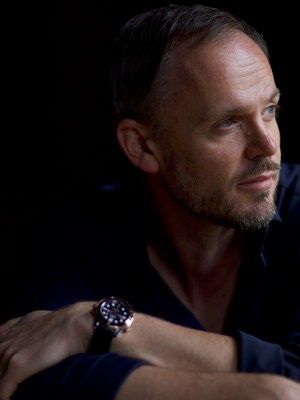
Ashley Wass pianist

Who or what inspired you to take up the piano and make it your career?

My (non-musical) parents ran a seafront guesthouse and had an electric organ standing (unused) in the corner of the lounge. I’m an only-child and got nominated fairly early on to be the one who’d put it to use. (As a 5 year-old I suppose I couldn’t really argue.) I used to play Christmas carols and Richard Clayderman hits to the guests and haven’t looked back since.

Who or what were the most important influences on your musical life and career?

I think it was Stravinsky who said “great artists steal”. Now, I’m not calling myself a great artist by any means, but I do empathise with that quote; I feel I’m constantly learning – or ‘stealing’, if you like – from other musicians. I guess we all do really; part of what ultimately defines our individual musical personalities is the process of choosing which bits of ‘stolen’ information we nurture and which bits we cast aside.

What have been the greatest challenges of your career so far?

Deciding exactly what kind of career it is I want.

Which performance/recordings are you most proud of?

I’m (thankfully) quite fond of my last two CDs. The first – Bach to the Future – features a collection of solo pieces that have been particularly significant in my life and career to date. It was actually recorded just a couple of weeks after my daughter was born, so the fact I managed to produce something vaguely coherent is quite an achievement. More recently, my piano trio released its debut album. It’s called The Seafarer and includes a collaboration with Willard White and a brand new transcription of Debussy’s La Mer by Sally Beamish. It’s a project which took a tremendous amount of time and effort to realise, so it’s lovely to see it hit the shelves.

Which particular works do you think you play best?

Ha – that’s a question which is probably best answered by others. I know what I enjoy playing, but musicians are often their own worst judges.

How do you make your repertoire choices from season to season?

I love the process of developing repertoire-led ideas into fully-fledged projects that can be toured (and sometimes recorded) over a full season. They tend to be getting more eclectic and adventurous as I get older; I think I’m driving my poor agent mad.

Do you have a favourite concert venue to perform in and why?

St. George’s in Bristol. It has the best acoustic of any chamber hall in the UK, a fine piano and – best of all – is within 30 minutes of my home. It means I can play a concert in a beautiful space and still be home in time for Match of the Day. That’s the ideal set-up as far as I’m concerned.

Favourite pieces to perform? Listen to?

In truth, I hardly ever listen to music these days unless I’m in the car, and then it’s either jazz (my choice) or nursery rhymes (my daughter’s choice). The Wass household is a strict no-music zone (piano practice aside).

Who are your favourite musicians?

Ella Fitzgerald, Nina Simone and Oscar Peterson. Oh, and I’d better say my trio [Trio Apache] partners – Matthew Trusler and Thomas Carroll – too. They’d kill me otherwise.

What is your most memorable concert experience?

Probably my Proms debut. Though that’s less because of the performance itself and more because I’d got engaged to my now-wife during the overture.

What do you consider to be the most important ideas and concepts to impart to aspiring musicians?

Variety. It’s essential, both to the maintenance of a career and to one’s musical well-being.

What are you working on at the moment?

I’m working on a big project with Matt Trusler for 2015 which involves commissioning 12 pieces from 12 different composers, plus a yet-to-be-written script, so that’s taking up a huge amount of time. It’s going to be awesome – watch this space.

Where would you like to be in 10 years’ time?

Doing what I’m doing now, but with another ‘0’ added to my fees.

What is your most treasured possession?

Photos of my trek to Everest Base Camp. Not only because going there was a dream come true, but because it also reminds me that I was once relatively fit.

The Seafarer‘, Trio Apache’s debut album, featuring Sally Beamish’s transcription of Debussy’s La Mer alongside her original work, The Seafarer Trio (with Sir Willard White narrating), is now available on the Orchid Classics label.

Ashley Wass, began playing the piano at 5, and studied music at Chethams Music School from age 11. In his teens he studied on scholarship at the Royal Academy of Music, where his teachers included Christopher Elton and Hamish Milne. Wass later studied with Murray Perahia. He is the only British winner of the London International Piano Competition (1997), prize-winner at the Leeds Piano Competition, and a former BBC Radio 3 New Generation Artist.

Described as an ‘endlessly fascinating artist’, Ashley Wass is firmly established as one of the leading performers of his generation. Increasingly in demand on the international stage, he has performed at many of the world’s finest concert halls including Wigmore Hall, Carnegie Hall and the Vienna Konzerthaus. He has performed as soloist with numerous leading ensembles, including all of the BBC orchestras, Philharmonia Orchestra, Orchestre National de Lille, Wiener Kammerorchester, Hong Kong Philharmonic, Royal Liverpool Philharmonic Orchestra, and under the baton of conductors such as Simon Rattle, Osmo Vanska, Donald Runnicles, Ilan Volkov and Vassily Sinaisky.

Ashley Wass’s full biography

www.ashleywass.com

Who or what inspired you to take up the piano and make it your career? 

There was always a piano in the house, which we inherited from my great grandmother.  It was by no means a good instrument (quite a tired old upright) but I took to it immediately, apparently playing with both hands and picking out tunes before I began lessons as the age of 8.  I never practiced as such (at least not until I went to Chetham’s at 16), but just loved playing right from day one!

Who or what were the most important influences on your musical life and career? 

Bernard Roberts (my teacher at Chetham’s) lived and breathed music and was a constant source of inspiration.  He was a kind, warm person and never strict in the lessons – he really made me want to improve, but in a relaxed way and always with the pure love of music in mind.  Yonty Solomon at the RCM was also invaluable in my development.  He never talked about technique but the magic and colour in his playing is something I will never forget.

What have been the greatest challenges of your career so far? 

I found my first solo recording one of the greatest challenges so far.  I felt so uncomfortable when the red light went on, that it was such a stressful experience!  It taught me a lot about relaxation in performance and about the importance of focusing on the music, not just on accuracy!  Now having a few recordings under my belt, I feel much more relaxed in the studio and actually quite enjoy it.

Which performance/recordings are you most proud of? 

It’s always difficult to listen to one’s own recordings, but I am particularly satisfied with the two-volume set (on SOMM) I did with Hiro Takenouchi.  There are several world premieres of Delius works in arrangements for two pianos, recorded in the Adrian Boult Hall at the Birmingham Conservatoire.  I thoroughly enjoyed discovering these wonderful works and the two piano arrangements (while not coming close to replicating the orchestral sonorities) provide a special clarity and transparency.

Which particular works do you think you play best?

I love playing works by composer-pianists of the twentieth century, especially Rachmaninoff.  I’ve performed the Third Piano Concerto a number of times and despite the infamous technical challenges I feel at home in this repertoire and while I strive with every performance to find something better, Rachmaninoff’s world is one in which I always feel welcome.  At the other end of the spectrum, Beethoven’s early chamber works (especially the cello sonata and trios) provide such excitement and inspiration that they are always a joy to perform.

How do you make your repertoire choices from season to season? 

I guess this largely depends on who I am collaborating with (I play a lot of chamber music) and the requirements of concert promoters.  I have been part of a number of ‘composer immersion’ projects in recent seasons, such as a complete cycle of Brahms chamber music, all the Beethoven trios etc – a wonderful way to get inside the musical ‘journey’ of these great composers.  I also try to always include an element of lesser-known repertoire in all my performances so new ideas and discoveries feature high on my list of priorities when planning future concerts.

Do you have a favourite concert venue to perform in and why? 

I have played in a number of wonderful halls (particularly the Royal Festival Hall and Wigmore Hall), but probably my favourite so far is Symphony Hall in Birmingham.  Despite being such a large venue, the feeling on stage is an intimate one and not at all intimidating, and the acoustic is the most satisfying of any of the larger halls I’ve played in.  St John’s Smith Square comes in a close second, with one of the finest Steinways ever!

Favourite pieces to perform? Listen to? 

I listen to quite a variety of music (not only classical but even – dare I say it – some musical theatre!) However as I spend most of my waking hours involved in music performance or teaching, I do appreciate silence when I am relaxing!  I love listening to the great orchestral repertoire (especially Mahler Symphonies) and opera also provides wonderful inspiration.

Who are your favourite musicians? 

I have always admired Martha Argerich – I once commented to one of my teachers that watching her performances had taught me more about technique and musicality than any of my teachers – I don’t think this went down so well!  I’ve been to quite a number of her live performances and am always struck by the way she communicates raw emotion and energy, and by the fact that she is so humble in person.  For me, she epitomizes the musician as communicator.

What is your most memorable concert experience? 

There have been so many!  That said, I particularly enjoyed a performance of Rachmaninoff’s Third Concerto a few years ago with a wonderful amateur orchestra in London, the Corinthian Chamber Orchestra.  I love performing – especially in chamber music and concertos – and the performances with amateur groups have often been the most satisfying.  I’ve played with some wonderful amateur orchestras and the fact that the musicians are there out of choice rather than to earn money means that they are constantly striving for higher standards and love every moment – something that is quite infectious!

What do you consider to be the most important ideas and concepts to impart to aspiring musicians?

Having recently returned from three weeks teaching on a course for 14-18 year olds, one thought that is very much on my mind right now is that aspiring musicians must learn how to listen to their own playing.  We spend a good deal of time playing and of course we hear the sounds, but how often do we actually listen and analyse the sounds we are producing?  I often encourage my students to record their performances and they are frequently shocked by what they hear!

What are you working on at the moment? 

I am working on some interesting repertoire for a new solo album – further details to be announced soon!  I am also learning some new piano quartets (Walton, Mendelssohn, Beethoven, Fauré, Mozart) and revising the Franck Quintet for a performance with the Edinburgh Quartet later this year.  Next year is Scriabin’s anniversary year and as such I will be playing his concerto in several performances, so this is also on my long practice list!

You have been Artistic Director of Conway Hall Sunday Concerts since 2008.  Tell us more about this.
As I had no experience whatsoever at the outset, it was a steep learning curve and was so grateful to be given the opportunity to see the music business from the other side!  The concert series has gone from strength to strength and we now programme around 27 concerts per season by some of the finest chamber music groups around.  We also have generous support from several distinguished patrons including Timothy West and Prunella Scales and pianist, Stephen Hough.  Working at Conway Hall is hugely challenging as well as rewarding, but I greatly value this variety in my career.

Where would you like to be in 10 years’ time? 

Doing exactly what I’m doing now, but at an even higher level and performing even more often.

What is your idea of perfect happiness?

A life in which I can enjoy what I love most – making music – and with plenty of time for relaxing and spending time with people close to me, and my beloved dachshund, Fergus!

What is your most treasured possession? 

Probably my Steinway Model D.  It’s a great instrument and constantly maturing, so makes practicing a pleasure!

What do you enjoy doing most? 

When not performing, I enjoy eating!  I love discovering new cuisines, and spend rather too much money on eating out at exquisite restaurants.

What is your present state of mind? 

Excited.  I’m discovering lots of new repertoire at the moment – it’s always great to have this freshness.

Conway Hall Sunday Concerts

Recognised as an exciting performer of the new generation, Steinway Artist Simon Callaghan’s recent schedule has included Wigmore Hall, Royal Festival Hall, Bridgewater Hall, Birmingham Symphony Hall, Liverpool Philharmonic Hall, and St David’s Hall, Cardiff. His engagements have taken him all over the UK, throughout Europe and to the US, Canada, Japan, South Korea, Malaysia and Thailand. He has also broadcast on BBC Radio 3, ITV and BBC Television. In September 2013 he took up the Anthony Saltmarsh Junior Fellowship at the Royal College of Music.

Following his highly successful release of English piano music on the Belgian De Rode Pomp label (featuring several world premières), Simon Callaghan’s collaboration with SOMM Recordings began in 2012 with two volumes of Delius Orchestral Music in arrangements for two pianos, with Hiroaki Takenouchi. Receiving great critical acclaim, the BBC Music Magazine commented that “Simon Callaghan and Hiroaki Takenouchi… play with such love, panache and exact synchronisation.” Simon’s burgeoning relationship with SOMM has led to two further volumes of Brahms chamber music with award-winning cellist James Barralet, violinist Anna-Liisa Bezrodny and violist Hannah Strijbos (including the first recording of all the Hungarian Dances in Barralet’s arrangement for ‘cello and piano). He also recorded a highly-acclaimed disc of violin sonatas with Midori Komachi and will release a further solo album in spring 2015.

Simon Callaghan’s busy performing schedule has included two residencies at the Banff Centre (Canada), rare performances of Michael Tippett’s Piano Concerto and the Third Concerto of Nikolay Medtner (the first in the UK since 1946). He has also collaborated with Prunella Scales, Ilona Domnich, Timothy West, Jack Liebeck, Thomas Gould, Raphael Wallfisch and the Maggini, Sacconi, Carducci and Coull Quartets in a broad range of repertoire. Simon is a founder member of the Werther Ensemble, brought together at the inaugural Whittington International Chamber Music Festival 2013. Recent and forthcoming projects for this ensemble include recitals throughout the UK, a complete cycle of the chamber music of Brahms, a return to the Whittington Festival playing works by Mendelssohn and a three-concert series at St John’s, Smith Square, exploring the jewels of the piano quartet repertoire. Together with pianist Hiroaki Takenouchi, Simon is also part of the Parnassius Piano Duo, which has a particular interest in championing lesser-known English works, particularly those of Parry and Sterndale Bennett.

As a teacher, Simon is Head of Piano of the Ingenium Music Academy (Winchester), a member of the faculty at Harrow School, and has given masterclasses around the world, most recently in Malaysia and Thailand. He is also Artistic Director of the renowned Conway Hall Sunday Concerts (London), the longest-running chamber music series in Europe. Alongside this work he is co-producer of MusicUpClose, a highly successful series in collaboration with sound collective, introducing non-musicians to the world of classical music. Following his studies at Chetham’s School of Music with Bernard Roberts, Simon was awarded a full scholarship to study with Yonty Solomon at the Royal College of Music, from where he graduated with first class honours and won numerous prizes.

simoncallaghan.com


(photo: Marc Borggreve)

Who or what inspired you to take up the piano and make it your career?

When I was young there was always music at home: my father was an amateur pianist and my parents used to play old records with all sorts of classical music: opera, lied, symphonic repertoire and piano music.

Who or what are the most important influences on your musical life and career?

Studying with truly wonderful piano teachers: Peter Feuchtwanger, Bernard Roberts at the Royal College of Music and Hamish Milne at the Royal Academy of Music. But also the legendary German baritone Hermann Prey with whom I was fortunate to work in my early twenties.

What have been the greatest challenges of your career so far?

Rachmaninov’s Piano Concerto no. 3, I guess.

Which performance/recordings are you most proud of?

I’d rather leave this for the critics to decide! But I am quite happy with my latest recording, Ravel’s complete works for piano solo.

Which particular works do you think you play best?

I have developed a very soft spot for Schumann since I started recording his entire piano oeuvre four years ago.

How do you make your repertoire choices from season to season?

Generally, the concerto repertoire is decided by the orchestras and conductors. The choice of chamber music pieces, in turn, is a result of a dialogue with the chamber partners I love working with. For my solo recital repertoire I am almost 100% in the driving seat in terms of making the decisions. Often I try to programme pieces I am about to record during or just after a given season.

Do you have a favourite concert venue to perform in and why?

The Wigmore Hall in London and the Musikverein in Vienna – wonderful acoustics and atmosphere!

Favourite pieces to perform? Listen to?

Beethoven’s Piano Concertos

Who are your favourite musicians?

Martha Argerich, Leonard Bernstein, Chick Corea, Jacqueline du Pré – at least one for each letter of the alphabet…

What is your most memorable concert experience?

2007 in Caracas: performing Penderecki’s Piano Concerto under the baton of the composer with the Simon Bolivar Youth Orchestra of Venezuela.

What do you consider to be the most important ideas and concepts to impart to aspiring musicians?

True passion for what you do, hard work, patience, perseverance and a good sense of humour

Your new disc is the complete solo piano music of Maurice Ravel. What is the particular attraction of this composer’s music for you? And what are the special challenges of his piano music?

Ever since my childhood I have been in love with Ravel’s music: the colours, the atmosphere, the exotic beauty and inner lucidity of his writing. The special challenges: an enormously nuanced virtuosity, subtlety of hearing and colouring.

What is your idea of perfect happiness?

Being with my family.

What is your present state of mind?

Onwards and upwards!


Florian Uhlig’s new Ravel: Complete Solo Piano Works is available now on the Hänssler Classic label.

Born in Dusseldorf, pianist Florian Uhlig gave his first solo recital at the age of 12. He studied with Peter Feuchtwanger and continued his studies at the Royal College of Music and at the Royal Academy of Music in London where he now lives, as well as in Berlin.

Full biography on Florian’s website:

florian-uhlig.com


(Photo: Katya Kraynova)

Who or what inspired you to take up the piano, and make it your career? 

I was fortunate to be playing many instruments as a child and conducting choirs and chamber orchestras. Then suddenly I met a great pianist and person- Felicitas LeWinter- she has been a pupil of Emil von Sauer who had been a pupil of Liszt. She had the most amazing sound and talked about Friedman’s sound. She inspired me- I was 16 – and I was then determined to be a pianist- I had had wonderful teachers in Ireland but she had a very distinctive and important lineage of course! Later on I was touched when she said that I had finally achieved the Arthur Friedman sound!

Who or what were the most important influences on your musical life and career? 

I studied with John Barstow at the Royal College and he was very important in my musical development- great passion for music and all music including opera- he opened my eyes. Then Maria Curcio who had studied with Schnabel was central in a very different way. She had a complete command of the piano and a great integrity – there was no showmanship unless it helped the expression of the music.

Other influences are of course- Richter, Giles, Carlos Kleiber and all the wonderful musicians I have worked with and continue to work with such as Svetlanov, Kurt Sanderling, Previn and Maazel – all great conductors.

What have been the greatest challenges of your career so far? 

Right now I am recording the complete Brahms and Schubert solo works for Chandos – this is a huge task and very daunting but I am taking it slowly and methodically and I am learning so much.

Which performance/recordings are you most proud of?  

I love all my recordings. However, the ones I did with Janowski in Paris hold a special place for me. And of course I love these Chandos recordings.

Which particular works do you think you perform best? 

I am not sure – I wouldn’t like to say. It is for others to decide I guess?

How do you make your repertoire choices from season to season? 

I play anything that inspires me and that I feel I bring something to. Of course Brahms and Schubert figure a lot at the moment- that is a privilege!

Do you have a favourite concert venue to perform in and why? 

I don’t have one. There are great acoustics all around the world, there are great halls in beautiful places, there are places I like because of personal connections, like Ireland.

Favourite pieces to perform? Listen to? 

I don’t often listen to music per se as I want to concentrate on my own solutions – but I adore opera and go to performances a lot. When I was 18 and fresh in London I practically lived in Covent Garden and the ENO.

Who are your favourite musicians? 

I love my friends who come to my festival every August in Clandeboye, Northern Ireland. They are warm passionate and brilliant people. I love Alison Balsom – she played with my orchestra Camerata Ireland many times. I love Lynn Harrell the cellist and Chio Liang Lin the violinist – we worked together often.

What is your most memorable concert experience? 

I think there are many – too many. I can’t choose one in particular.

What do you consider to be the most important ideas and concepts to impart to aspiring musicians? 

You must be true to the music and be honest. Performance is not for show, but it must also look good- it is an entertainment (a refined one of course) but people want to see and hear something that will change them, and inspire them.

What are you working on at the moment? 

My next Brahms and Schubert CDs – sonatas, Impromptus and intermezzi and the Paganini and Schumann variations of Brahms,

What is your idea of perfect happiness? 

Sitting in Provence reading a book by the pool – perfect antidote to the pressurized concert season!!

What is your most treasured possession? 

Apart from my family whom I don’t “possess” of course…….my Steinway piano I guess, and my Audi Quattro!!

What do you enjoy doing most? 

Driving around Provence in the summer and eating a long lunch

Barry Douglas has established a major international career since winning the Gold Medal at the 1986 Tchaikovsky International Piano Competition, Moscow. As Artistic Director of Camerata Ireland and the Clandeboye Festival, he continues to celebrate his Irish heritage whilst also maintaining a busy international touring schedule.

Barry Douglas’s complete biography