‘The World of Yesterday’ – written & performed by Sir Stephen Hough with the Bournemouth Syphony Orchestra, conducted by Mark Wigglesworth. Wednesday 26th February, Lighthouse, Poole

British pianist Sir Stephen Hough hadn’t intended to write a piano concerto. But during the dark days of the COVID pandemic, he was approached to write a score for a film about a concert pianist writing a piano concerto… With little to do but take Zoom calls, “it seemed like a wonderful way to keep me busy”, and, intrigued by the film’s plot, he began jotting down ideas.

As the world emerged from the pandemic, the film project stalled and Stephen’s concert diary began to fill up again, but he still had the sketches for the film score and, with the support of four orchestras (the Utah, Singapore and Adelaide symphonies, and the Hallé) he wrote his piano concerto ‘The World of Yesterday’. It received its world premiere with the Utah Symphony Orchestra in January 2024 and a recording made with the Hallé and Sir Mark Elder is available on the Hyperion label.

I had the pleasure of hearing Hough perform his concerto with the Bournemouth Symphony Orchestra in a well-conceived programme called Notes of Nostalgia. Given its theme, the concerto sat perfectly between Brahms’ Third Symphony and Elgar’s Enigma Variations – all three works infused with a certain wistfulness interposed with personal reflection, warmth and wit.

Hough’s concerto takes its inspiration, in part, from Austrian author Stefan Zweig’s atmospheric memoir of the same name, which depicts Vienna and Viennese culture in the last golden days of the Habsburg Empire before Europe was torn apart by war. You can almost smell the aroma of Viennese coffee and taste the Sacher-Torte in the quieter passages of the piece.

The music is rich in nostalgia, but without the heart-tugging poignancy of Chopin, for instance: it’s a more reflective yet positive reminiscence of another time. Scored in a single movement but with distinct sections, ‘The World of Yesterday’ has a filmic quality (“something from the 1940s”, my husband commented as we left the concert hall) – you certainly hear nods to Korngold’s film scores, and it shares Korngold’s romantic sweep, but there are also references to Rachmaninov (particularly in the very glittery virtuosic solo sections), Copland, the Warsaw Concerto…but at no point do these references feel like pastiche. And if you’re familiar with Hough’s wonderful transcriptions of Rodgers and Hammerstein, you’ll find similar idioms here (I half-expected Hough to segue into the Carousel Waltz at one point). And yes, there is a waltz too – not so much a Viennese waltz but something more sultry, redolent of Bill Evans and a smoky, late-night jazz club.

Hearing the composer play his own work was like a bridge across time to another world of yesterday, a time when composers wrote piano concertos which they performed themselves: Mozart, Beethoven, Mendelssohn, Chopin, Liszt, Rachmaninov and Prokofiev all performed their own concertos. Showcasing their prowess and personality as both performer and composer, these works becoming their “calling cards” as they toured to give concerts.

The music has an almost “vintage” quality: surprisingly traditional in its direct communication with orchestra and audience, and its idioms, motifs and references to other composers (there’s not a hint of that “squeaky gate” atonality one often associates with contemporary classical music). The piano enjoys Brahmsian interactions with the orchestra and Rachmaninov-esque cadenzas, but Hough’s does break with tradition in a few significant ways. First, the concerto has a narrative title, rather than just an opus number or key, which undoubtedly guides the audience, even without a programme note. Additionally, the cadenza, traditionally heard at the end of a movement, comes very early, after an orchestral ‘prelude’. Here the piano is solo, notes and motifs sparkling in the upper register (later mirrored by the piccolo).

Above all, The World of Yesterday is a richly textured, virtuosic and joyful celebration of past influences, rather than a poignant glance back to a better time. It’s full of warmth and wit, affection and humour: it made me smile, it thoroughly uplifted.

After all, isn’t that what music should do?

The World of Yesterday’ is released on 28 February on the Hyperion label

Who or what inspired you to take up conducting and pursue a career in music?

I would say it was a mixture of circumstances: parents, musicians, the environment in which I grew up, and an intuitive love for music and instruments. I was just a normal child until the turning point at the age of 13, when I made the decision to pursue a career in music (as a conductor). It engaged a personal responsibility for that decision, which was —and still remains —a motor in my professional life.

Who or what are the most significant influences on your musical life?

My father, who was a prominent Ukrainian composer, Ivan Karabits, and my teachers at the music academies in Kiev, Vienna and the Bach Academy Stuttgart. Today, I hugely respect musicians and personalities that remain true to themselves and “serve music” rather than their personal careers and ambitions. Artists I respect include: Yuri Temirkanov, Ivan Fischer, Mikhail Pletnev and a few others.

What, for you, is the most challenging part of being a conductor? And the most fulfilling aspect?

The most challenging part is the daily life of travel and inconstancy, and how to balance that with family and relationships, with friends and the close circle of relatives and colleagues. Also, keeping in good shape —physically and mentally —remains a challenge. The greatest fulfillment comes from music-making with great orchestras around the world, it simply breaks boundaries, and gives a feeling of being useful in changing the world for the better. Being Chief Conductor at the Bournemouth Symphony Orchestra (BSO), an orchestra with a clear mission to serve its communities throughout the South West of England, is great; we engage with all ages both on and off the stage.

As a conductor, how do you communicate your ideas about a work to the orchestra?

Through my gestures and expressions first of all, then come words.

How exactly do you see your role? Inspiring the players/singers? Conveying the vision of the composer?

My role is to put together several elements —the audiences, musicians in front of me and the composer’s message written in the score —and my job to make those elements collaborate and harmonically function together. The methods of achieving that harmony can vary: it might be inspiring musicians, or just helping them to play together; communicating more with the audience; and sometimes it just happens during the concert without any special effort, but it is rare. I’ve been Chief Conductor of the BSO for over 10 years now, and the way in which I’m able to work with the players has become gradually more instinctive, this has been one of the greatest achievements of my career and it’s a great feeling.

Is there one work which you would love to conduct?

I try to follow the principle that the work (a score) that is on my table today is the best and I would love to conduct it.

Do you have a favourite concert venue to perform in?

I like my home venue (Lighthouse, Poole) and other places with a warm atmosphere and audiences, like Musikverein, in Vienna, or the Lincoln Center in New York.

What are you looking forward to in the coming BSO season of concerts? Any particular highlights?

Every single concert is a highlight for me, but I especially look forward to conducting Elektra by Strauss (18 March, Poole, 21 March, Birmingham) and Schubert’s Symphony No. 5 (19 February, Poole, 20 February, Basingstoke). This year, we released recordings of music by Terterian and Lyatoshynsky on Chandos, as part of our Voices from the East series. I’m really looking forward to exploring music by Chary Nurymov with the BSO in a programme that also features Mahler’s Fifth Symphony, in May.

As a musician, what is your definition of success?

Success to me is when at least one member of the audience comes away having felt special during your performance. Also success is a feeling that your dreams come true.

What do you consider to be the most important ideas and concepts to impart to aspiring musicians?

Being honest.

What is your idea of perfect happiness?

Perfect happiness to me is a state of mind when you love yourself and every moment of your life as it is.


Kirill Karabits is Chief Conductor of Bournemouth Symphony Orchestra. Forthcoming performances include: Handel’s Messiah(18 December, Poole), Beethoven 250 (29 January, Poole, 1 February, Barbican Centre, 22 February, Sage Gateshead), Haydn, Mendelssohn, Schumann and Schubert with Jeremy Denk (19 February, Poole, 20 February, Basingstoke), Richard Strauss’ Elektra (18 March, Poole, 21 March, Birmingham)

For full details see bsolive.com


(photo by Konrad Cwik)


The Stabat Mater, a Medieval hymn which portrays Mary’s suffering as Christ’s mother during his Crucifixion, has been set to music by numerous composers, most notably Pergolesi, Schubert, Dvořák, Pärt and Macmillan. In this new setting, Pietà, a co-commission from the Bournemouth Symphony Chorus and St. Albans Choral Society, British composer Richard Blackford interweaves the text of the Stabat Mater with poems from the ‘Requiem’ cycle by Anna Akhmatova, whose husband was taken away and ‘disappeared’ by Stalin’s KGB; her son was also arrested and she feared she would never see him again. In our troubled, turbulent times, contemporary Pietàs are tragically all too familiar – refugee parents desperately cradling babies and children, mourning mothers in war-ravaged communities, the anger and grief of victims of tragedies like the Manchester Arena terrorist attack or the Grenfell Tower fire…. Through the settings of Akhmatova’s poetry, Blackford makes the Stabat Mater a universal reflection on grief and loss – and the attendant rage, pain and incomprehension.

For seventeen months I’ve pleaded

Pleaded that you come home,

Flung myself at the hangman’s feet

For you, my son,

For you, my horror

from ‘Requiem’ by Anna Ahkmatova

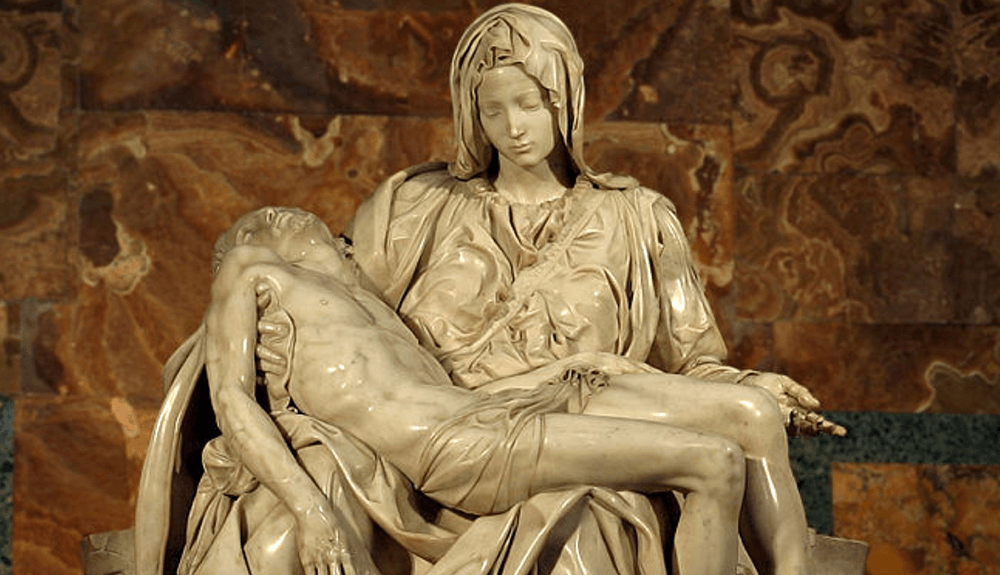
Blackford chose the title after seeing Michelangelo’s marble Pietà in Rome, and, like the sculpture, his new work encompasses grief, rage and sorrow with tenderness, poignancy and, ultimately, beauty and hope. The work is scored for string orchestra, chorus, children’s choir, mezzo-soprano, baritone and solo saxophone. While the chorus and soloists present the main narrative – the pain and grief of Mary and Anna Ahkmatova – the saxophone provides a third, abstract voice, the voice of every grieving mother. Blackford chose the soprano saxophone to create “a modern instrumental dimension, very close to the sound of the human voice”.

michelangelo-pieta-index-new
Michelangelo’s Pietà (St. Peter’s Basilica, Vatican City, Rome)

In its world premiere performance on 22 June 2019 at Poole Lighthouse, Pietà was preceded in the first half by Fauré’s Requiem, which was given a meditative, other-worldly performance by the excellent BSO Chorus under Gavin Carr, with soloists Issie Curchin and Stephen Gadd. This provided a wonderful foil to Blackford’s music, which is intellectual and sophisticated, yet accessible in its use of carefully-crafted melody and counterpoint. Rooted in tonality and modality, Pietà is characterised by rhythmic dynamism, breadth of expression and lush textures, redolent of Janácek and Syzmanowski. The use of a children’s choir (in the fifth movement of the work) is a nod to another of Blackford’s influences – Benjamin Britten – and provides an episode of innocence and sweetness in this grief-scorched narrative.

With powerful, operatic singing by mezzo Jennifer Johnston and baritone Stephen Gadd, a fine, emotionally engaging performance by the BSO and BSO Chorus (whose intonation, timing and precision was impressive), the entire work has a filmic, visual quality with its gripping narrative and vividly descriptive scoring – tumultuous strings, passionate dramatic climaxes, ‘snapping’ pizzicato in the cellos (to represent Christ’s flagellation), jagged syncopated rhythms, an acapella movement of intense concentration and beauty. Organised in three parts, Pietà moves from grief and rage to redemption and hope via nine distinct movements. The obligato saxophone, eloquently played by Amy Dickson, provides a unifying link between the movements, initially haunting, mournful and timeless, evocative of an ancient shawm, and later calm and tender as the music moves towards its hopeful, redemptive close.

An absorbing and committed performance by all, supplemented by detailed programme notes by the composer with translations of the text.

This arresting, emotionally intense and accessible work for choir and orchestra receives its London premiere at Cadogan Hall on 19th October. A recording on the Nimbus Label is expected very soon.


Meet the Artist interview with Richard Blackford


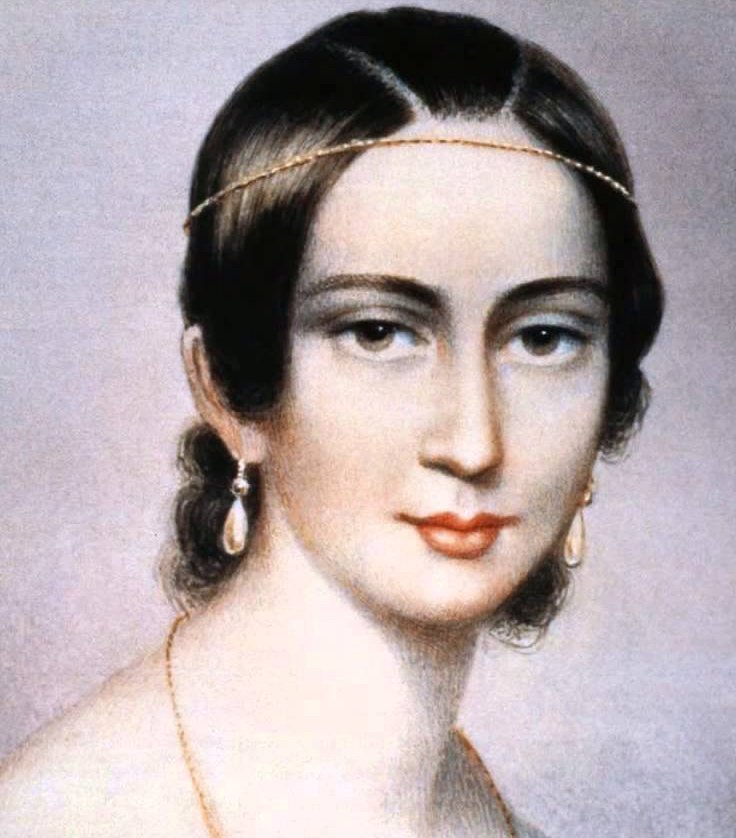
dm9xki0xoaehe2wClara Schumann: Prodigy, Muse, Virtuoso

Reiko Fujisawa, piano

Brahms – Intermezzo Op 119, no. 2

Clara Schumann – Scherzo Op 10, Romance Op 21, no. 3

Chopin – Impromptu no. 1

Schumann – Faschingsschwank aus Wien Op 26

Schumann/Liszt – Fruhlingsnacht & Widmung

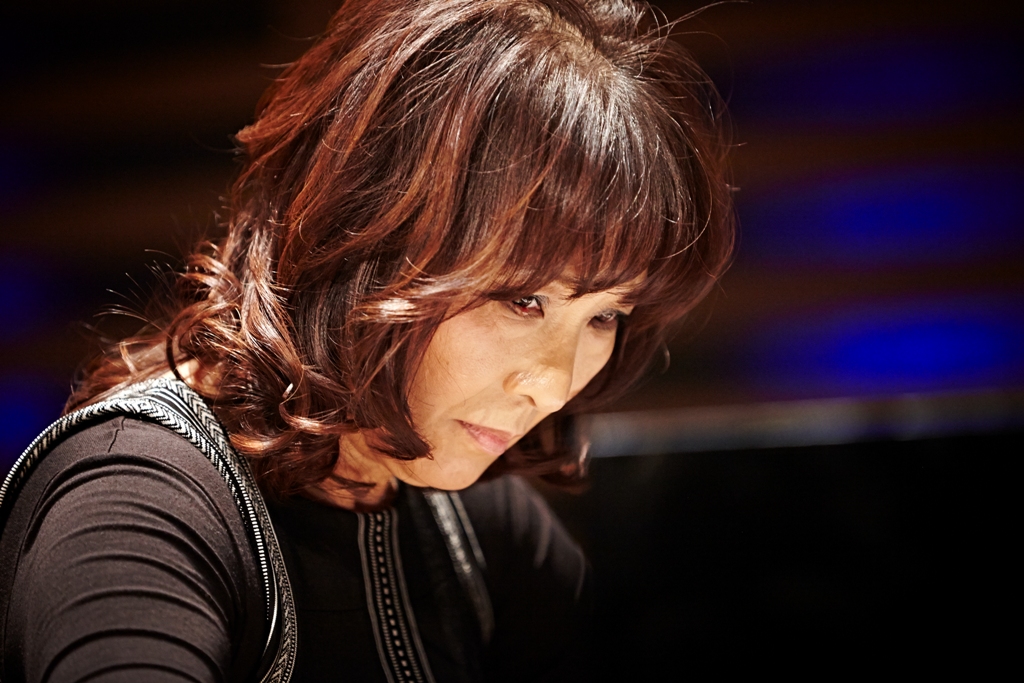
The Sherling Studio, a small theatre space at the Lighthouse Poole, proved the ideal venue for Reiko Fujisawa’s lunchtime recital celebrating the life and career of Clara Schumann and the key personalities in her artistic and musical circle.

This concert marked the premiere of this programme, part of Reiko’s new Clara Schumann project – a series of narrated recitals, chamber music and concerto performances which will take place throughout the 2018/19 season and autumn 2019, to coincide with the 200th anniversary of Clara’s birth.

The size of the performance space, with the audience arranged on three sides of the pianist, combined with Reiko’s poised and self-contained presence, created an intimate ambiance which was entirely appropriate for this programme of music which would have been enjoyed in the home or salon rather than the concert hall. It allowed for very close communication between pianist, music and audience, from Brahms at his most passionately introspective in a late Intermezzo to the sparkling virtuosity of Clara Schumann’s music (written for herself to perform) and Robert Schumann’s exuberant ‘Carnival Jest from Vienna”, written to show off their twin talents as composer and agile performer. This engaging programme was presented with elegance, colour and commitment.

More about Reiko Fujisawa’s Clara 2019 project

Meet the Artist interview with Reiko Fujisawa

reiko-rehearsal-nov-2013-530aa