Alim Beisembayev and Eric Lu, winners of the Leeds International Piano Competition in 2021 and 2018 respectively, have both released new albums. 

Eric Lu impressed at the 2018 competition with his beautiful tone and the phrase “poet of the piano” is regularly attached to his playing. Elegant lyricism is highly appealing, especially in the music of Chopin, which Lu recorded for his previous album.  There is no doubt that Schubert too was a spinner of beautiful, long-spun melodies, but in the case of the music selected by Lu for his latest release, I do not believe that poetry and golden cantabile are enough to convince in this instance.

Lu says in interviews that Schubert is “the composer who moves me most intensely….I love Schubert. It is difficult to describe how meaningful his music is to me.” Yet I felt on listening to this album that Lu had not fully absorbed the “essence” of Schubert’s writing: to play this music pianistically, one must also absorb the songs, chamber music, other piano music et al. The result, for me at least, is a rather contrived sound. Lu aims for expression, overly romanticising the “tragedy” he perceives in Schubert’s writing, in particular in the Allegretto in c and the Sonata in A, D959, and clearly subscribing to the rather hackneyed, oft-quoted view that this work, along with the other two final sonatas, is a portent of the composer’s imminent demise. He portrays this through ponderous tempi (the Andantino of the D959 is positively funereal) and rather suspect use of rubato and agogic accents, which I suppose are intended to emphasise the pathos, poignancy, tragedy et al, in this music, but too often just sound artificial and interrupt the rhythmic flow of the music (most obviously in the Allegretto in c). Throughout the album, I found Lu’s playing rather too ‘safe’, too concerned with beauty of sound rather than highlighting the dramatic shifts of mood and contrasting colours in this music. Personally, I would have liked a little more “bite”, both rhythmically and dynamically, to disturb the beauty.

Contrast this with the new release from Alim Beisembayev, the young Kazakh pianist who at just 23 wowed the 2021 Leeds competition judges and audience with a dashing performance of Rachmaninov’s Variations on a Theme of Paganini in the final, and who displayed remarkable poise, musicianship and maturity in his playing throughout the competition. 

In Liszt’s Transcendental Etudes, an ambitious choice for anyone, Beisembayev positively glitters: superlative, secure technique underpin playing which is daring and fearless from the outset (the Preludio is a stunning opener), with perfectly managed tempi and split-second precision (at no point does one feel that the pianist is in any way out of control), elegant lyricism when required (Paysage – the only piece in this set which I can actually play! – is tender, freighted with poignancy; likewise, the middle section of a fiercely dramatic Mazeppa), tasteful, subtle rubato, vibrant colours and contrasts, and a remarkable control of the momentum and drama within each piece. Feux Follets trips along with gossamer lightness and wit; Vision emerges from the darkness of G minor into heroism, while Harmonies du Soir is delicate yet sweepingly passionate. There is so much to enjoy and marvel at in this album, from tumultuous tumbling descents to sparkling virtuosity, tonal depth and colour, reverie and delicacy. And never once does one feel an ego getting in the way of the music. It’s showy playing, as demanded by the score, without being showy. A absolute treat of an album which reveals the myriad facets of Liszt’s musical personality, played by this young pianist who fully appreciates the variety and range of expression in this music. 
Who or what inspired you to pursue a career in music and who or what have been the most important influences on your musical life and career?

For me, my earliest memories of listening to various great works for the first time was the biggest catalyst for me wanting to learn the piano. There was never really an exact point in which I decided this would be my career, but I guess I always pretty much had a one-track mind in wanting music to be my life. Partly a reason for this is that I don’t think I was good at anything else! My first piano teacher Dorothy she, who recently just passed away, was certainly an extremely instrumental figure in my life. She was the one who taught me everything from the beginning. All of my teachers each played a very important role in my development, from my professors in my early teenage years, A. Ramon Rivera and Alexander Korsantia, to the teachers that really molded my development from the age of 15 onwards up until today: Robert McDonald, Dang Thai Son, and Jonathan Biss. Aesthetically, I would say that the pianists whose musical language and careers have inspired me the most are Radu Lupu, Grigory Sokolov, and Mitsuko Uchida.

What do you do off stage that provides inspiration on stage?

I listen to a lot of recordings of various works frequently. Whether it be a Bach Cantata, Schubert Lieder, or Mozart Piano Concerto, etc. I always want to have music in my ears, and somewhat subconsciously and consciously get deeper into the musical and emotional worlds of these great composers. Further, when I’m listening to a great piece of music whilst enjoying a beautiful part of nature, this inspires me the most.

How do you make your repertoire choices from season to season?

This process varies all the time, but I would say first and foremost I would choose pieces I really want to play. The burning desire must be there for me to have to play this work at this time. Then, the decisions come where a programme must make sense musically, and also I have to imagine how it would work and sound to an audience. I don’t like programmes that are random, and are more of a showcase of all the different types of pieces a musician can play. I much prefer a programme that has cohesion and relation in its aesthetic, and the musical worlds of certain composers. This would apply mostly to the music within one half of a recital programme. After an intermission it can either be completely different, or continue on a common thread.

What is your most memorable concert experience?

There really have been so many very memorable concert experiences, and in a way, all of them have been, because of how unique each experience is, and you never know what will happen on stage. However, one that has stood out very much so far was my BBC Proms debut. This was a concert that I had prepared a lot of time for, and there was nothing quite like that experience of walking out on stage to this ocean of people at the Albert Hall. I really did feel this unique and electric energy, and general warmth coming from the public that day.

Where would you like to be in 10 years’ time?

I would hope that I can continue to have the chance to play music for people in all corners of the globe. I think despite all its unique challenges, and immense stress, our profession as a performing musician is a very lucky one. What an opportunity it is to be able to travel the world, see so many different countries and cultures, whilst doing what you love. Music is a very active and living thing. So much of this music left to us by these transcendent geniuses is so unbelievably great. However, without it being brought to life and played, it’s simply notes on a page. I just feel very lucky to be able to have a part in this wonderful process of bringing these works to more people.


Eric Lu won First Prize at The Leeds International Piano Competition in 2018, the first American to win the prestigious prize since Murray Perahia. He made his BBC Proms debut the following summer, and is currently a member of the BBC New Generation Artist scheme. Eric is a recipient of the 2021 Avery Fisher Career Grant, and is an exclusive Warner Classics recording artist.

Read more

Pianists, aged between 20 and 29 and representing 28 countries, have been carefully selected to compete in the first ever Virtual International First Round, taking place in London, Berlin, Paris, Beijing, Tokyo, Seoul, New York, 6-10 April 2021


Second Round, Semi-Finals & Finals of the 2021 Leeds International Piano Competition to be held in Leeds, 8-18 September 2021


The Leeds International Piano Competition today announced that 63 pianists have been shortlisted for the First Round of the 20th edition of the competition. 

The pre-selection Jury, chaired by Artistic Director Adam Gatehouse, listened to 264 applicants – a 43% increase in applications from the last Competition in 2018. Jurors commented on the challenges of choosing the 63 due to the “exceptionally high quality of applicants.” The 63 pianists represent 28 nationalities, with 44% selected from East Asian countries. Four British nationals have been selected as well as competitors from Morocco, Kazakhstan, Tajikistan, Iran, Israel and Peru.

The First Round Jury, chaired by Adam Gatehouse and including Simone Dinnerstein (USA), Noriko Ogawa (Japan) and Martin Sauer (Germany), will hear a 25-minute recital from each of the 63 pianists before selecting 24 to go through to the Second Round in Leeds in September 2021.

‘The Leeds’, with its defining qualities of excellence and musical integrity, has long attracted some of the world’s most exciting young pianists. 

Detailed safety measures are in place at all venues with a local film crew deployed in each venue, centrally directed and produced from London, to capture the performances in high-definition sound and vision that The Leeds is known for via its partnership with medici.tv. 

All the performances from the International First Round will be made public in the summer, and the Leeds rounds will be streamed by medici.tvon their dedicated platform, which is free to watch in 190 countries around the world.

Adam Gatehouse, Artistic Director of The Leeds said: 
“It is of paramount importance that our artists and jurors are able to take part as safely as possible, whilst maintaining the integrity of the Competition experience. This means we have decided to make the First Round ‘virtual’, by filming Competitors’ performances in a small selection of venues closest to them. With the amazing support and enthusiasm of conservatoires and venues around the world, we can ensure the pianists have the shortest possible journey to their First Round performance. Our partners also enable us to make sure that all our pianos are of the world-leading standard we demand and that we can capture the highest quality performances for our remote Jury to hear.” 

With the speedy rollout of vaccines in the UK, The Leeds organisers are very confident that the September rounds will be a live celebration in their spectacular venues at the University of Leeds and Leeds Town Hall. All rounds will be streamed worldwide by medici.tv and BBC Radio 3 and BBC Four TV will cover the Finals. The Concerto Final performances, with the Royal Liverpool Philharmonic, will be conducted by Andrew Manze, their Principal Guest Conductor.

The stakes are higher than ever with cash prizes worth over £90,000 and a prize package which has redefined what a competition can offer young artists. It includes artistic management with Askonas Holt, one of the world’s most renowned music management agencies; concerts and engagements with some of the world’s premiere venues and orchestras, including London’s Wigmore Hall, South Bank Centre and the Royal Liverpool Philharmonic Orchestra; concert and recording engagements with BBC Radio 3, a media partner of The Leeds; a European tour organised with partners Steinway & Sons; a studio recording with Warner Classics; a programme of recital engagements in Yorkshire and other UK venues; and mentoring from Artistic Director Adam Gatehouse and other members of the performer-led Jury, chaired by Imogen Cooper (England), which includes Adam Gatehouse (England), Inon Barnatan (Israel/ USA), Adrian Brendel (England), Gaetan Le Divelec (France), Ingrid Fliter (Argentina), Ludovic Morlot (France/ USA) and Steven Osborne (Scotland).

Adam Gatehouse said:
“It is clear from the large increase in the number of applicants we’ve received that musicians have a strong need to be heard and connect with their audiences. We are here to support all our pianists on their Leeds journey, and will provide a programme of advice, masterclasses and industry insights to help build their careers, no matter how far the journey with the Competition takes them. We aim for everyone to be transformed by the experience of coming to our city and taking part, whether that’s through the friendships they make or the opportunities they find.”


A full list of Competitors can be viewed here.


Source: press release

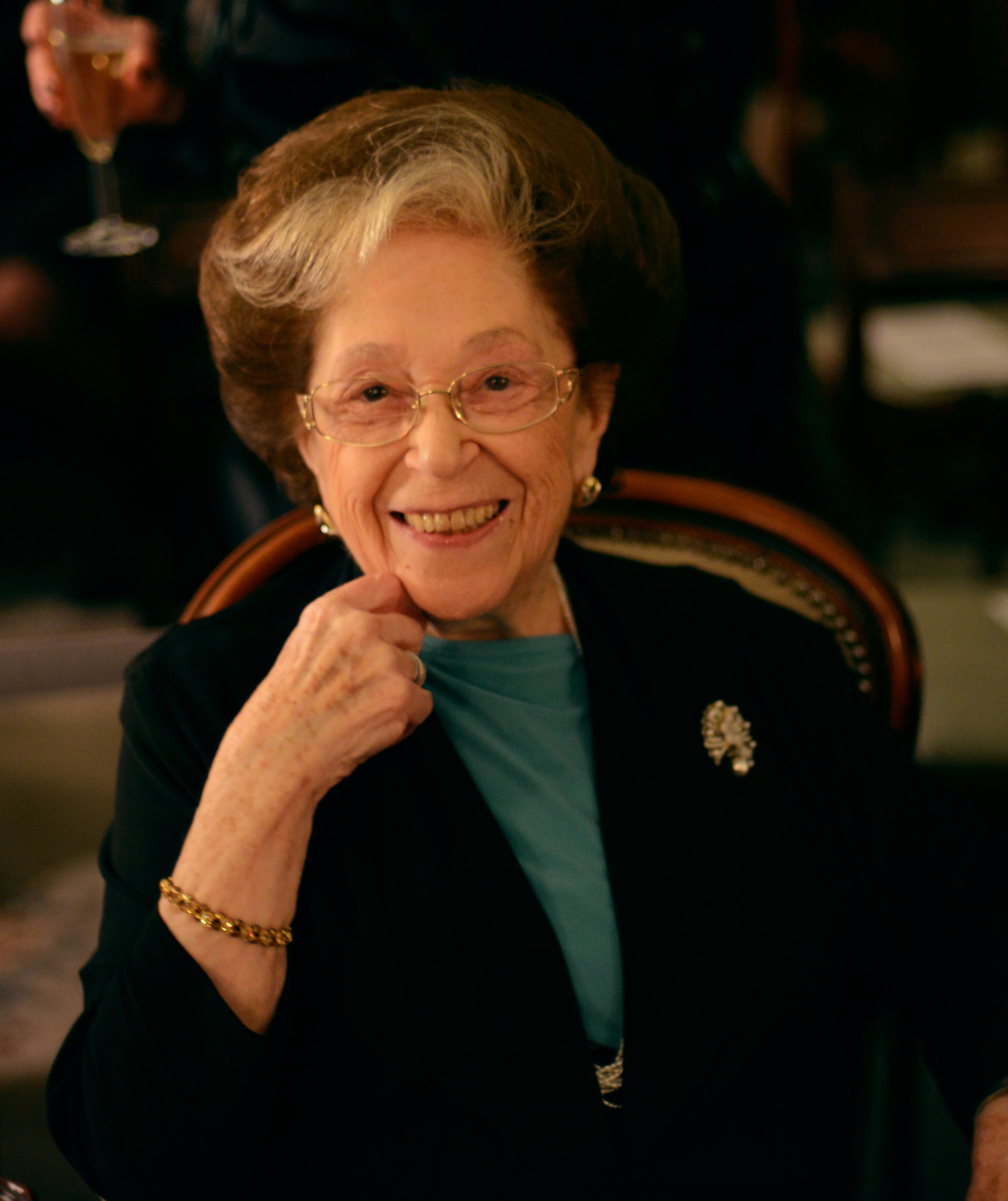
Dame Fanny Waterman, 22 March 1920 – 20 December 2020
 

It is with great sadness that The Leeds International Piano Competition announces the death of its founder and President Emeritus Dame Fanny Waterman at the age of 100

Dame Fanny died peacefully this morning in her residential care home in Ilkley, Yorkshire. She is survived by her two sons, Robert and Paul, and six granddaughters.

Adam Gatehouse, Artistic Director of The Leeds, said:

“Dame Fanny was a force of nature, a one-off, a unique figure in our cultural firmament who infused everyone with whom she came into contact with a passion and enthusiasm and sheer love of music, particularly piano music, that was totally impossible to resist. From nothing she created the world’s most prestigious piano competition and chose to do so not in London but in Leeds, at the time a dark, industrial but incredibly lively and vibrant town in the North of England. From small beginnings it swiftly grew as word spread that here was a competition where music and the musicians came first. The lives she has touched, both through the Competition, but also through her teaching and piano books, are too numerous to mention. She was quite simply irreplaceable, and to have had the chance to work with her and eventually succeed her as Artistic Director of The Leeds has been one of the greatest privileges and joys of my life.”

Dame Fanny Waterman founded The Leeds International Piano Competition in 1961 with her late husband Dr Geoffrey de Keyser and Marion Thorpe CBE, then the Countess of Harewood. The first event followed in 1963 and she remained its Chairman & Artistic Director until her retirement in 2015 at the age of 95. As President Emeritus she attended live concerts and events until the beginning of 2020, although ambitious plans to celebrate her 100th Birthday in March 2020 had to be cancelled due to the COVID-19 pandemic.

Thanks to Dame Fanny Waterman’s artistic integrity, passion, charisma and hard work, ‘The Leeds’ became the most coveted prize in the piano world and internationally acclaimed for introducing some of the greatest pianists of our time. Artists including Radu Lupu, Murray Perahia, Sunwook Kim and most recently Federico Colli and Eric Lu launched their careers by taking first prize; Sir András Schiff, Mitsuko Uchida, Lars Vogt and Denis Kozhukhin meanwhile, are among the Competition’s illustrious finalists. 

Born in Leeds (22 March, 1920), she studied with Tobias Matthay, and later as a Scholar at the Royal College of Music, London, with Cyril Smith. After a notable performing career, including a performance at the 1942 Proms with Sir Henry Wood, she felt that her real vocation would be as a teacher. Over the years she gave masterclasses on six continents, appeared on television and radio, and compiled a series of publications entitled Piano Lessons with Fanny Waterman/Marion Harewood, which now runs to thirty volumes and has achieved sales of over three million copies.

Among her greatest achievements as a teacher was in the 1950s when she trained four pianists under the age of 11 from Leeds to such a standard that they received invitations to perform piano concertos at London’s Royal Festival Hall. The four pianists were Alan Schiller, Wendy Waterman (her niece), Kathleen Jones and future winner of the first Leeds International Piano Competition, Michael Roll.

In recognition of her services to music, Fanny Waterman was awarded an OBE in 1971, the CBE in 1999 and in 2005 she was appointed Dame Commander of the Order of the British Empire. In 2004 Dame Fanny Waterman received the Freedom of the City of Leeds, the highest honour the City can bestow and, in 2009, was invited to become President of the esteemed Harrogate International Festivals. She was made an Honorary Member of the Royal Philharmonic Society in 2010.

A full biography of her life and archive images of Dame Fanny are available at https://www.leedspiano.com/dame-fanny-waterman/

@leedspiano


Source: press release


