I was delighted to have the opportunity to attend some of the events and concerts at the inaugural London Piano Festival, conceived and directed by pianists Katya Apekisheva and Charles Owen. For the opening edition of the festival, the directors invited artists who they admired and worked with personally. As Charles and Katya stated in the Festival programme:

“Pianists meet each other far too rarely in the real world, mostly at auditions and competitions when we take our first steps in the music profession, and then at each other’s concerts. The professional soloist’s life is, by its very nature, a demanding and often solitary one. [The festival] is especially designed to bring these soloists together…..”

And it was perhaps a mark of the organisers’ success in achieving this aim that so many eminent pianists and music lovers were in the audience for the concerts, including Stephen Hough and Alexandra Dariescu, amongst others.

img2171sim-canetty-clarkecurated
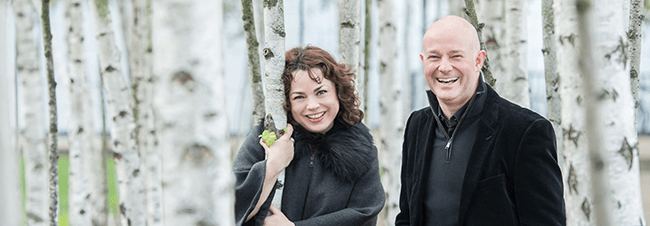
Katya Apekisheva and Charles Owen

The festival was held in the stylish, contemporary concert spaces at London’s Kings Place, fast becoming a popular hub for culture and arts in the newly-redeveloped area around King’s Cross station. The sense of “music by friends and for friends” was very clear from the warm atmosphere in and out of the concert halls, and the two-piano gala concert on Saturday evening, which was at the heart of the festival, was a wonderful celebration of musical friendship and collaboration. I attended two concerts with pianist friends, always enjoyable as we discussed what we had heard during the intervals and after the events. As one of my pianist friends remarked when I met her for the two-piano gala concert, “I feel completely intoxicated by music!”. I can think of no better endorsement for this wonderful weekend of piano music.

My reviews are on the Bachtrack.com site – follow the links below to read them:

‘Liszt’s b minor Sonata – from exuberance to asceticism’: lecture by Alfred Brendel and performance by Denes Varjon

A feast of phenomenal pianism: two-piano gala concert


picWho or what inspired you to take up the piano and pursue a career in music?


I started piano aged 6 and didn’t show much interest in the first few months but a family trip to London when I was just 7 included a night at the Proms, with Malcolm Sargent conducting the Berlioz Symphonie Fantastique which just blew me away. When I got back home they couldn’t get me off the piano ! As far as a career was concerned I really had no idea what was entailed … I just drifted into it…one thing led to another. 

Who or what have been the most important influences on your career as a musician?

My teachers to start with: Marjorie Clementi, who sorted out my technique when I went to her aged 13 and who taught me to listen to myself for the first time. Gordon Green, who taught me how to practise in so many imaginative ways, and whose infectious love and enthusiasm for music overall was very inspiring. He really was a great human being. When I was a student Alfred Brendel’s early recordings were a great inspiration, and also the playing of so many pianists… Richter, Rubinstein , Kempff and Curzon to name a few of the most important.

What have been the greatest challenges of your career so far?

Recording all the major Schubert works for Radio3 in the 1980’s and more recently recording all the Beethoven Sonatas for Deux-Elles. Playing at the Proms was a great experience , but very challenging!

Which performances/recordings are you most proud of?

My performance of Rachmaninov’s Second Concerto at the Proms in 1989, and my recordings of the Beethoven Sonatas

Which particular works/composers do you think you play best?

Beethoven and Schubert for sure. Mozart’s Concertos, Brahms, Dohnanyi, and Debussy.

How do you make your repertoire choices from season to season?

I’ve started to play themed programmes in the last few seasons….The piano and nature for example this year including Beethoven’s Pastoral Sonata and shorter works by Liszt, Schumann, Dohnanyi Ireland and Debussy all inspired by nature. Next year The piano and Art …works by Liszt, Debussy and Granados culminating in Mussorgsky’s Pictures. Also a lot of all Beethoven programmes when recording the sonatas. Now all Schubert programmes in preparation for recording his works.

Do you have a favourite concert venue to perform in and why?

S0 many! – but Manchester’s Bridgewater Hall for concertos…. The clarity and immediacy make it so exciting. For solo it’s difficult to beat Kings Place. For chamber the warmth of sound in the Wigmore is very special

Favourite pieces to perform? Listen to?

Too many to list….but for listening I’m still as obsessed by Wagner now as I was when I discovered his music as a teenager. Haydn Quartets are an endless treasure trove…..

Who are your favourite musicians?

Again, where to start ? Just recently I heard two stunning performances from very contrasting pianists whose work I love and admire…….Richard Goode and Martha Argerich

What is your most memorable concert experience?

Taking part in the final concert of Kathy Stott’s Piano 2000 festival at the Bridgewater Hall in Manchester…all the Rachmaninov Concertos in one evening. I played No.2

What do you consider to be the most important ideas and concepts to impart to aspiring musicians?

Fidelity to the score and the communication of the music without personal interference. Meaning is more important than style, yet a sound knowledge of style is also necessary. An interest in all the works of the major composers, not just the piano music.

What do you enjoy doing most?

Apart from playing Schubert and Beethoven, walking on the hills of Scotland and the Lake District, cooking, watching films, and listening to Wagner


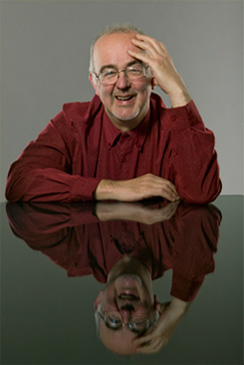
With an extraordinary career spanning over 4 decades, Martin Roscoe is unarguably one of the UK’s best loved pianists. Renowned for his versatility at the keyboard, Martin is equally at home in concerto, recital and chamber performances. In an ever more distinguished career, his enduring popularity and the respect in which he is universally held are built on a deeply thoughtful musicianship allied to an easy rapport with audiences and fellow musicians alike.


Read more about Martin Roscoe here

img2171sim-canetty-clarkecurated

7-9 October 2016, Kings Place, London

The London Piano Festival is a brand new celebration of the piano created by Katya Apekisheva and Charles Owen. These two highly-acclaimed pianists have enjoyed extensive performing careers both as soloists, chamber musicians and as a widely-admired duo partnership. Their shared love of the instrument has led them to curate this weekend especially for the city’s many piano lovers.

The festival – co-curated by Owen and Apekisheva – will include performances from some of the world’s leading pianists such as Kathryn Stott, Noriko Ogawa, Stephen Kovacevich and Julian Joseph in addition to a lecture on Liszt From Exuberance to Asceticism by Alfred Brendel. Owen and Apekisheva will perform the world premiere of a new work for two pianos written by American composer Nico Muhly.

“There is a lot of laughter in our rehearsals and we have created the London Piano Festival because we wanted to share our enjoyment of the repertoire with many of our friends.” Charles Owen

The duo has created the London Piano Festival to bring together their friends and colleagues for an entertaining and collaborative weekend of piano music. The festival begins with Alfred Brendel’s lecture on Liszt on 7 October, followed by a performance of Liszt’s piano sonata in B Minor by Hungarian pianist Dénes Várjon. On 8 October co-Artistic-Director Charles Owen performs a selection of Bach Partitas, Kathryn Stott performs a French recital of Fauré, Ravel, Messiaen and Dutilleux and co-Artistic-Director Katya Apekisheva performs a programme of Chopin, Scriabin and Fauré. The highlight of the London Piano Festival is the two piano gala on 8 October with Stephen Kovacevich, Katya Apekisheva, Ronan O’Hora, Charles Owen, Martin Roscoe, Kathryn Stott and Ashley Wass. The varied programme includes duets by Busoni, Debussy, Rachmaninoff, Ravel, Milhaud, Piazzolla and Grainger, in addition to the world premiere of Nico Muhly’s Fast Patterns – a rearrangement of an organ piece.

On Sunday 9 October, Japanese pianist Noriko Ogawa gives three children’s concerts with the theme of the magical world of the piano. Ogawa’s short 30-minute concerts are aimed at 2–5 year-olds followed by a 45-minute concert for children aged 6+. Pianist Lucy Parham joins actor Henry Goodman for Réverie – a composer portrait on Debussy combining his words and music. The 2016 London Piano Festival ends with a jazz recital by Julian Joseph, featuring a mixture of pieces including a selection of his own compositions and jazz standards by Gershwin, Ellington and Porter.

charlesowen-steinway-810x540

Who or what inspired you to take up piano, and pursue a career in music?

I gravitated quite instinctively towards the little cottage upright piano which we had at home when I was a child. Neither of my parents are musicians – vicar and teacher respectively – but both love music and encouraged my earliest fumbling attempts at the keyboard!

There was never an actual moment when I decided to pursue a career in music. It all happened very organically from the earliest lessons with a Hampshire County Award teacher  followed by a place at the inspirational Yehudi Menuhin School and then onto the Royal College of Music. I’ve never had any real doubts or regrets about following the musical path

Who or what have been the most important influences on your musical life and career?

Two exceptional pianists have guided my playing and approach to the piano and music making in general:

The wonderful Russian pedagogue Irina Zaritskaya taught me at the RCM in the early 1990s. She revealed and shared her special secrets into achieving pianistic fluency, a huge variety of touches and rich musical imagery. Her warm personality coupled with a generosity of spirit are qualities I remember and treasure.

I later had the privilege of working closely with Imogen Cooper on a wide range of repertoire. Imogen’s focus, intellect and sheer intensity of listening are truly exceptional. She demanded a greater sense of ‘digging deep’ into the scores, really focusing on long lines, balance of sound, projection, colour and style. All of the qualities that make her own playing so memorable and remarkable’

What have been the greatest challenges of your career so far?

For me these are threefold:

Studying, developing and maintaining a huge range of music is a challenge for the vast majority of pianists. Tackling certain epic works such as Bach’s ‘Goldberg Variations’ or Brahms’ 2nd Piano Concerto stand out in my mind as particularly demanding but immensely rewarding experiences.

The ability to cope with long journeys, strange environments and a wide range of different instruments, whilst always aiming to deliver the best performances is a perennial challenge!

Keeping a sense of long term perspective in one’s aims as a musician. Managing leaner times, dealing with difficult aspects of the music profession, remaining motivated and hopeful whilst keeping the flickering flame of that essential love of music alive and well’

Which performance/recordings are you most proud of? 

It is difficult to be truly proud of any particular performance or recording as so many aspects can always be improved upon.

Having said that, certain concerts where all the elements seem to combine do remain in my memory. Recent positive concert experiences include a Wigmore Hall performance of the Brahms Piano Quintet with the Takács Quartet, the Beethoven concertos at the magical St Endellion Summer Festival in Cornwall and a concert from last summer’s Ryedale Festival where I played the Goldberg Variations to a rapt, packed audience in one of Yorkshire’s grandest stately homes.

In terms of recordings, my have fond memories of a beautiful September weekend in Barnes when I recorded a solo Poulenc disc at St Paul’s School with super views across the Thames. I had just met my partner and was ‘walking on air’ at the time of the sessions. All that was back in 2003!

Which particular works do you think you play best?

Another impossibly embarrassing question! If forced to answer, I would mention the Debussy Preludes, Bach Partitas, some of the big Schubert sonatas and of course my beloved Janáček.

How do you make your repertoire choices from season to season?

I am not one of those musicians who has a clear plan for their whole playing career in terms of repertoire. Perhaps I should try to be!

I gravitate towards certain composers and their works rather as you may pick up a book from your packed library shelves. There is a little bit of divination going on here.

My aim is to constantly learn new works, to react to the suggestions of others and to regularly revisit pieces from earlier in life. Returning to these with new experiences and musical knowledge is one of the best aspects of being a full time musician. I’m becoming increasingly interested in contemporary music and feel excited to have recently worked with/recorded music by Jonathan Dove, James Macmillan and Nico Muhly

Do you have a favourite concert venue to perform in and why?

The Wigmore Hall for its sublime acoustics, stunning pianos and sheer history

Favourite pieces to perform? Listen to?

Concerto wise, I love to perform any of the five Beethoven, also the Schumann and Bartok’s 3rd. Plenty of two piano works are a thrill to play, particularly Ravel’s La Valse and the Rachmaninoff Suites. As a listener my list is utterly endless –  Bach Brandenburg concertos, Janacek operas, Mahler, Sibelius symphonies, Schubert & Schumann lieder, Joni Mitchell, David Bowie, Rufus Wainwright…

Who are your favourite musicians?

Alfred Brendel, Radu Lupu, Murray Perahia, Martha Argerich, Andras Schiff, Brigitte Fassbaender, Gerald Finley. Of those no longer with us – Carlos Kleiber, Claudio Abbado, Jacqueline du Pré to name just a handful

What is your most memorable concert experience?

Impossible to select just one! Perhaps the most unexpected was a performance in the South of France at the En Blanc et Noir Festival, Lagrasse where pianists perform in a semi covered, stone market place. I was giving my first ever concert of Liszt’s Anneés de Pelerinage, Switzerland and whilst launching into the octave deluge of ‘Orage’, a genuine summer storm raged overhead complete with crashing thunder and flashes of lightning. Perfect timing, coincidence and choreography!’

What do you consider to be the most important ideas and concepts to impart to aspiring musicians?

Commitment, passion, patience and a sense of giving your all to the works of the truly wonderful composers who enrich our lives.

On a practical front, each musician needs to acquire the essential knowledge of musical building blocks – harmonic movement, structure/architecture, a feeling for melodic shaping, precise rhythmic grasp – whilst constantly developing their abilities to listen closely to what is actually coming out of the instrument!

What is your idea of perfect happiness?

Having clear headspace and a mind free of extraneous worries

What is your most treasured possession?

My 2009 Steinway Model B Piano

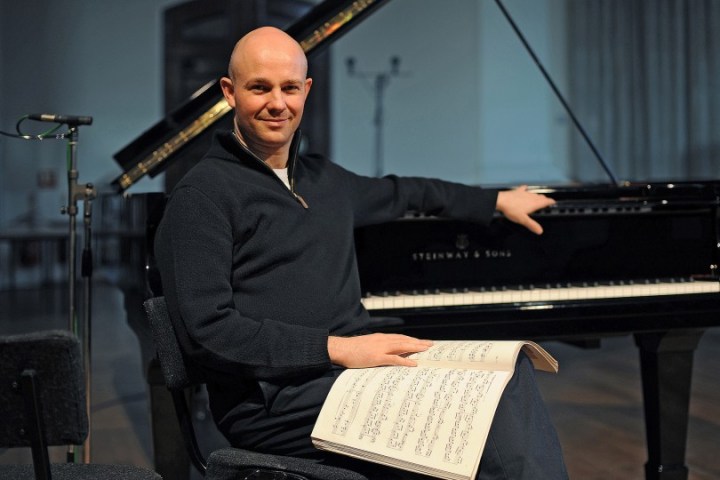
Charles Owen is co-Artistic Director of the London Piano Festival


Charles Owen is recognised as one of the finest British pianists of his generation with an extensive series of performances and recordings to his name.

Charles has appeared at London’s Barbican and Queen Elizabeth Hall and regularly gives recitals at the Wigmore Hall and Kings Place. Internationally he has performed at the Lincoln Center, Weill/Carnegie Hall, the Brahms Saal in Vienna’s Musikverein, the Paris Musée d’Orsay, and the Moscow Conservatoire.

His chamber music partners include Adrian Brendel, Nicholas Daniel, Augustin Hadelich, Chloë Hanslip, Julian Rachlin and Mark Padmore as well as the Carducci, Elias, Takács and Vertavo Quartets. In addition he has an established piano duo partnership with Katya Apekisheva with whom he has recorded the duo versions of Stravinsky’s Rite of Spring and Petrushka

Charles studied in London at the Yehudi Menuhin School, the Royal College of Music with Irina Zaritskaya and later furthered his studies with Imogen Cooper and Valeria Szervánszky. He has won numerous awards, including the Silver Medal at the Scottish International Piano Competition (1995) and the 1997 Parkhouse Award with the violinist Katharine Gowers. A regular guest at many leading festivals such as Aldeburgh, Bath, Cheltenham, Leicester and West Cork , Charles has also performed concertos with the Philharmonia, Royal Scottish National, London Philharmonic and the Moscow State Academic Symphony orchestras.

Charles’ solo recordings include discs of piano music by Janácek, Poulenc and the complete Nocturnes and Barcarolles by Fauré. Together with Natalie Clein, he has recorded cello and piano sonatas by Brahms, Schubert Rachmaninov and Chopin for EMI.

Charles Owen is a Professor of piano at the Guildhall School of Music and Drama in London.

www.charlesowen.net


(photo: John Batten)