
Guest post by Jill Timmons
These days we hear a lot about the allure of talent: gifted, extraordinary, special, something extra, blessed, graced, anointed, enviable. And as we know, the arts have been a particular repository for dazzling talent display.
Talent can be a kind of entry card. In music and dance we have such iconic artists as Arthur Rubinstein, Jascha Heifetz, Rudolf Nureyev, Margot Fonteyn, Taylor Swift, Fred Astaire, and the list goes on. There is a near religious fervour surrounding these folks who are perpetually confined to an archetypal pedestal – heroic figures living in a rarified alternate universe on Mount Olympus. To the lay person, it can seem almost magical that fame and fortune are readily available to those with exceptional talent. Often, there is a special entitlement afforded to these luminaries, and it may appear that with a bit of talent, we could all partake of these benefits. For some, there is the belief that talent alone should offer some measure of reward, a kind of requisite entitlement. Therein lies the shadow side of talent: acquiring something without the necessary earning of it.
As an artist, I stumble over the recognition of my own talent. To say that I am gifted strikes a difficult chord, so to speak. It feels like self-aggrandizement, ego inflation, and entitlement. Yet, if I don’t recognize my talent in an authentic and detached fashion, dare I say strategic, I would not be able to serve my gifts, perhaps my mission, and a sense of meaning and purpose to my life – making things better in the world through music. It’s a reminder, that the arts often contain paradox – two things can be true. I’m reminded of M. C. Escher’s lithographs where stairs simultaneously ascend and descend!
It is difficult to explain that talent and work go hand in hand. There can often be a disconnect (entitlement) between the temporal reality of musical study and the concrete requirements for what one may wish to achieve. As I regularly remind my students, there is no cramming for the concert, or for serious artistic growth. It’s a kind of marathon, and you wouldn’t just train for a few hours on Saturdays to take on those twenty-six miles!
Artists are individuals with varying skills and proclivities. While I might be a quick sight reader, it took me several months to learn J. S. Bach’s Goldberg Variations. Moreover, it wasn’t until I had performed it 6 times, that I really set to work! I had to marshal all my patience through this process, even with decades behind me as a professional pianist (perhaps some free-floating entitlement here!). These concepts are difficult to convey when entitlement is at play.
Add to this the fact that mostly our elementary and secondary education systems are now reduced to teaching to the test (reading and maths), and there is very little space in the curriculum for the arts, the creative process, and the fundamental human act of original thought. The notion of talent becomes a kind of bromide instead. Very little may be required to be considered talented. With that comes the risk of instant gratification, the dumbing down of quality and artistry, and a core understanding about what the arts require and what they can offer humanity.
Case in point: church music. This is by no means a declaration of any sort of religious affiliation. Consider, however, some of the greatest musical works from western European art music created by the likes of J. S. Bach, Mozart, Schubert, Bernstein (the Mass), Fauré, Poulenc, Elgar, and so forth. While there are still places where you can hear this exalted and compelling music, much of the American protestant church has withered into a kind of musical pablum: two chord changes with Jesus words. It doesn’t take much to master the ability to perform this music, nor does it require from the listener any level of artistic sophistication. It’s satisfying much in the same way as a bowl of Doritos. Oddly enough, many of the folks who deliver this music are often hailed as very talented.
For those of us who are educators, we can often encounter in our students that shadowy world of entitlement. It’s not just with the children we teach, but adult students as well. I recall one client who was a physician by profession. He had always wanted to play the piano at the advanced level, and so after reading Malcolm Gladwell’s edgy book, ‘Outliers: The Story of Success’, he asked me if after 10,000 hours of practice he could play one of the Chopin Ballades. Meanwhile, he was struggling with an early intermediate-level Haydn Sonata. Nonetheless, I lauded his efforts, and reminded him that the development of technic and musical capacity takes time – its own time, and that his responsibility would be to practice intelligently and regularly with a goodly amount based upon his goals, to follow my instruction, and to remember the long game. His sense of entitlement, however, overrode what I had hoped would be a gentle yet pointed reality check. He assumed that since he had weekly lessons, he was highly intelligent and disciplined, was committed to those 10,000 hours, and that in working with me he was entitled to have access to the advanced repertoire through some sort of short cut. Sadly, that sense of entitlement prevented him from serving his talent, of making a strategic plan in his practicing and study, honestly assessing his challenges along with his achievements, and trusting that together, he and I could move the cause forward. It would, however, require the long game as it does for most of us.
With young students, the struggle is more systemic. Parents are often driving their children to overload their schedules: A’s in everything, numerous sports, extra curriculars that might be the ticket to getting into Harvard or Oxford, and a schedule with every hour accounted for. Where is the time to daydream, to imagine, to create something original? Who will teach them the value and efficacy of this? Where is the education for the sublime, for beauty, for the inherent power of the arts to uplift humanity? How do they discover their own gifts, and more importantly how do they humbly serve music? How can they become inner directed, avoiding the distractions, the pressures to conform, and the seductions and misinformation that float around in the outer world?
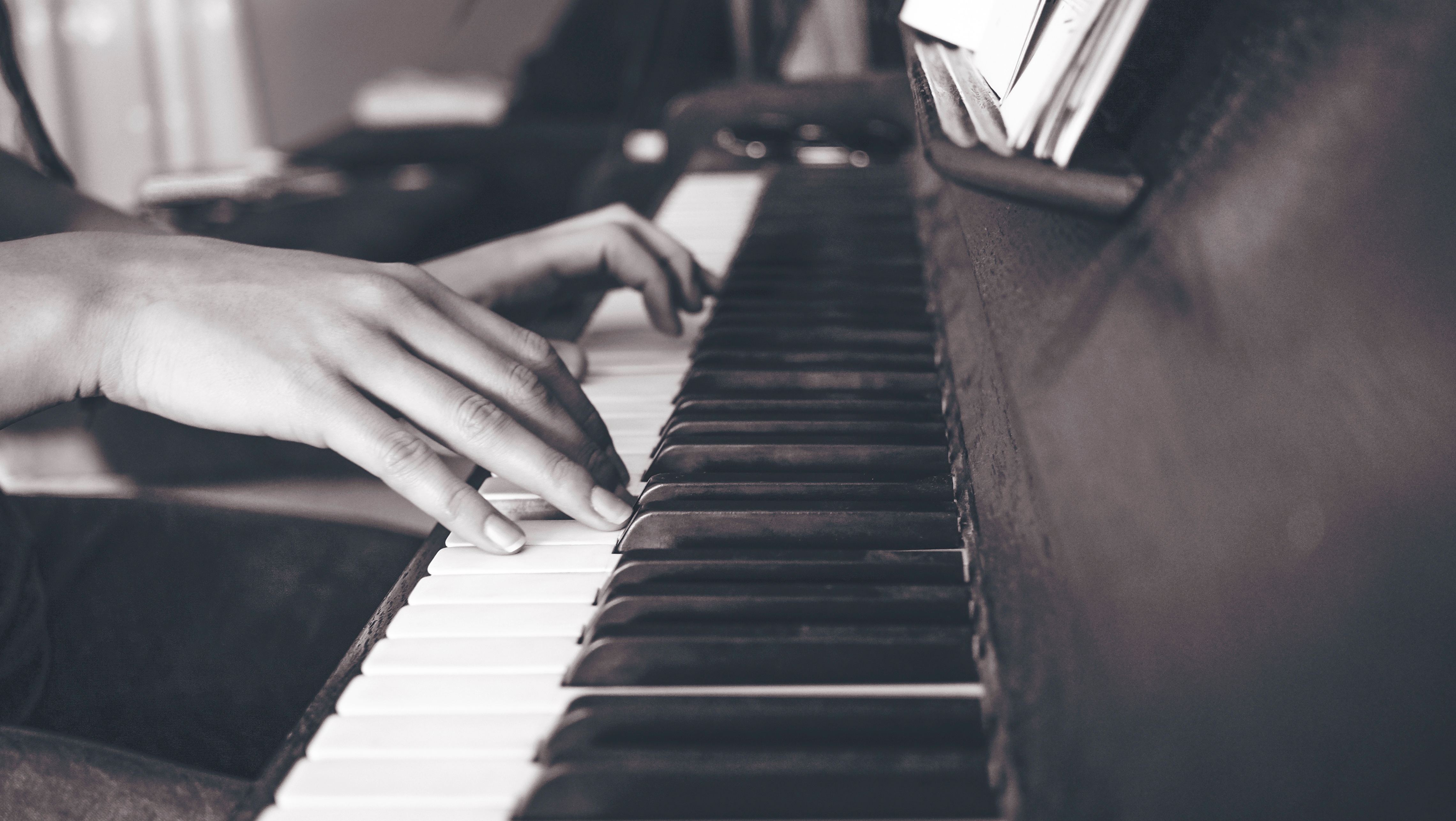
Nurturing one’s talents takes time, commitment, appropriate education, inspiring and skilled mentors, confidence, patience, a keen work ethic, self-reflection, humility, and the long view. Moreover, one must acquire the ability to be ruthlessly honest about one’s work. What are my strengths? How can I build upon those? What led me to fluency in a performance? Conversely, what are the barriers to my progress? What blind spots do I have? Am I open to learning new things? Is my practice time allotment sufficient and effective for my goals? By the way, my definition of practicing is rehearsing solutions to musical and technical challenges. If you are not rehearsing solutions, what is it that you are drilling? Never mind those 10,000 hours! Can you measure yourself by what you strengthen in your own work? One can learn a great deal from mastering a new capacity! What is your artist vision and is it undergirded by a searingly honest and doable plan?
No matter how brilliant a mind, there will be a substantial, regular time commitment required if one is to develop artistry. For example, with musicians, the development of technic can take many years. I may dream of playing Beethoven’s Waldstein Sonata, but without the necessary technique, a grounding in historical performance practice, and a willingness to musically serve that style period, it will remain aspirational. No amount of will, talent, or entitlement will achieve that objective. Ask the artists at the top of the industry and they will regale you with stories of decades of practice, study, self-reflection, perseverance, sacrifice, challenges, luck, and yes, the long game.
So, in moving forward, how do we eschew entitlement in our own artistic work and that of our students? It may be that the way out is through. That Zen saying speaks volumes about the process required. In my own teaching, I have observed that when a student really wants to achieve something, they are apt to work for it if they can lift the veil of entitlement. It’s what I call concrete teaching. It’s a black and white approach (no pun intended) with weekly achievable goals, a constant check-in on reality, and that ruthless honestly. We ask our students as to how practicing is going? What is the quality of one’s practice time? Is it sufficient? Are we rehearsing solutions to musical and technical challenges? Are our musical goals congruent with our skills and time available? Needless to say, these points of practice apply equally to our own artistic work.
Moreover, all musical compositions have dues that one must pay in order to master fluency. It is relative to one’s skill and experience of course. The more experience you have, the more accurately you can assess the work ahead that is required. Back to the Goldberg Variations.
When I received an invitation to perform it, I had a year to prepare. I figured I could learn it in roughly three months with three to four hours of practice most days. I had other performances and professional tasks, but that time frame seemed appropriate. Wrong. It took me five months to learn it, during which time I had the flu, was preparing to move, and received a contract to write a book. Needless to say, I learned a great deal from that experience. Clearly, one’s musical skills and capacity are realized by the amount of time needed in order to learn a piece of music. This measurable and temporal reality may be your greatest weapon in combating entitlement: yours, or your students!
Speaking of students, the overarching concern that most music educators harbor is usually with sufficient and regular practice for their pupils. Moreover, that practice time must be informed, efficient, and consequential. As most of us know, many hours can be spent at the piano, even 10,000 hours, but there must be conscious awareness of how one is practicing. In those hours of practice, ideally, we become our own best teacher, and we train our students to embrace this concept as well. Mindless, disengaged drill at the piano does not engender mastery. One tool, however, can move the cause forward. If your student is motivated and is not under the spell of entitlement, they can greatly benefit from what I call a “mock practice session.” I periodically take an entire lesson time (usually one to two hours) and guide the student in what constitutes effective practicing. I am experientially teaching the student how to practice effectively and efficiently. This session is recorded for the student to review between lessons. Often, the student discovers that in a short period of time a great deal can be achieved in learning the score. Moreover, I remind students that they can continue this exciting path to mastery if they practice like they did in the lesson!
Ultimately, whatever way we approach the nurturing of talent, we need adequate time. This can be challenging in our cluttered and distracted world. I still struggle with this every now and then. There are, however, myriad solutions. Time management is a powerful tool, especially if you can review your schedule on a weekly basis. You are in charge, after all. As a side bar, I highly recommend Cal Newport’s groundbreaking book, ‘Digital Minimalism’. You will find a wealth of information, advice, and strategies to remain artfully engaged in your environment, but not possessed or distracted by the endless commotion from the digital world.
Lastly, I will leave you with several thoughts. My sense of music making is that it is 80 percent work and 20 percent talent. And moreover, the making of that music is not about me. I am merely the vessel. But without me, fully present, humbly prepared, and devoted to the composer and audience, that music remains on the page. It is indeed a sacred mission. In the final analysis, there is no entitlement, only devotion to the highest level our talent can take us. Music then becomes an act of service.
Jill Timmons is a leading performing arts consultant, serving individuals and nonprofits. As an international artist-educator, her work is sculpted by the ever-changing global market. The second edition of her book The Musician’s Journey is published by Oxford University Press.






 The Cross-Eyed Pianist