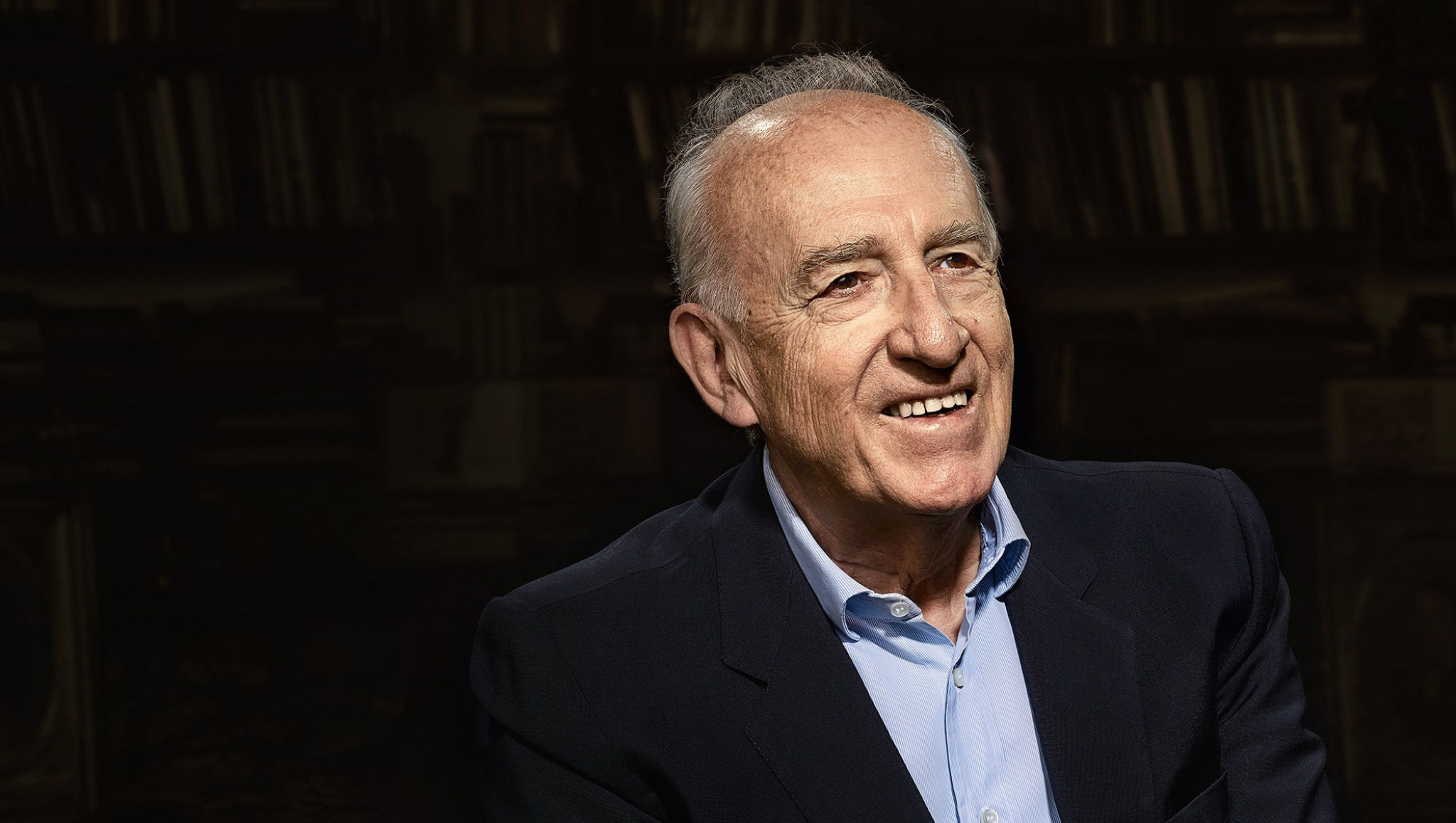
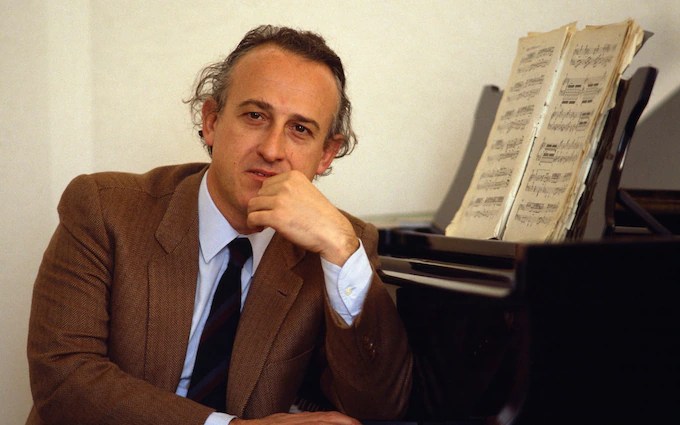
A tribute from pianist François-Frédéric Guy

« ON VOULAIT ÊTRE POLLINI ». Hommage

Oui. On voulait être Pollini.

Non par je ne sais quelle prétention ou folie, mais plutôt par nécessité.

Quand on écoutait l’un de ses très nombreux enregistrements, quand on sortait de l’un de ses concerts.

Lorsqu’adolescent, on se préparait à une vie de musicien et que l’on écoutait Pollini jouer, une force, une énergie vitale prométhéenne – beethovenienne – s’emparait de chacun d’entre nous. Passée la sidération, voire l’incrédulité devant ce qu’il venait d’accomplir sur scène, c’est un sentiment volontariste qui s’emparait de nous. Pour ma part j’allais immédiatement travailler, lire de la musique, éberlué par les programmes que Pollini proposait au «grand public».

Quand on écoutait Gilels ou Richter on était renversé, quand on écoutait Radu (Lupu) on pleurait à chaudes larmes devant sa poésie désarmante et Brendel, avant qu’il ne renonce à se produire en public nous livrait les secrets de la beauté pure des classiques viennois comme on solutionne un rébus mystérieux.

Mais quand Pollini venait de jouer… on voulait être Pollini … Quand je l’entendis jouer la Hammerklavier je voulais immédiatement la travailler. Peu importait qu’elle fut inaccessible … j’ai fini par en faire 3 enregistrements et la jouer plus d’une centaine de fois … On voulait être Pollini!!!

Un soir à Pleyel en 1981 c’est le premier concerto de Bartok avec Baremboim à la baguette. « J’oblige »mes parents à braver les embouteillages de l’autoroute A13 et m’y emmener alors que mon père n’écoutait que du Chopin et du Rachmaninoff !! J’avais 11 ans…

Quelque temps plus tard, j’achète mon premier CD: Pollini justement dans les deux premiers concertos de Bartok avec son complice de toujours Claudio Abbado. Dès lors je n’eus de cesse que de jouer ces concertos et c’est ce qui arriva bien plus tard!

C’était cela la magie « Pollini » : il donnait envie de se surpasser; d’aller au-delà de ses capacités réelles, au-delà du répertoire conventionnel! Car ses programmes étaient, pour notre génération, une source d’inspiration EN SOI.

En 2004 je suis invité à jouer avec l’Orchestre de Paris au festival Musica de Strasbourg sous la direction d’Alexander Briger. Il s’agit du mal-aimé concerto de Schoenberg – mais que moi j’adore depuis que j’ai entendu le disque de Pollini – et que je cherche une occasion de jouer. Vient la question du complément car le concerto est court (et foudroyant!)je suggère la grande pièce de Luigi Nono «Come Una ola do fuerza y luz» avec piano principal. Frank Madlener le directeur artistique du festival me dit que Pollini a joué l’œuvre à Paris sous la direction d’Abbado en 1975 avec le concerto de Schoenberg !!!! Je voulais être Pollini, encore une fois!

Quand il interpréta le 25 janvier 2009 à la Salle Pleyel la deuxième sonate de Boulez, comme s’il s’agissait d’une ultime sonate de Beethoven récemment retrouvée dans une bibliothèque d’une obscure université, après la tempête et l’Appassionata, le public pourtant réputé conservateur à l’époque, salle Pleyel – et qui quittait souvent la salle après l’entracte si quelques dissonances apparaissaient dans les œuvres proposées, est resté silencieux quelques secondes – une éternité! – après que le Géant ait joué par cœur sans la moitié d’un quart de huitième d’erreur ce monument INATTEIGNABLE pour la plupart d’entre nous. Puis ce fut l’explosion jubilatoire, incontrôlable, libératrice des applaudissements avec douze rappels à la clé pour Boulez le compositeur-présent ce soir-là- et son interprète venu d’un autre monde. Les mots pour qualifier ce à quoi on venait d’assister oscillaient entre « que c’est beau » tout simplement, à « comment est-ce possible », « cela dépasse tout ce qu’on peut imaginer » et qu’on ne se méprenne pas: ce n’était pas juste la « performance ». Et ce n’était pas la « beauté » de la musique comme on l’entend habituellement – d’ailleurs ce chef d’œuvre organise presque le CHAOS de la beauté Traditionnelle et la PULVÉRISE. NON, ce qui était beau c’était POLLINI qui domptait le chaos, qui surpasse l’humain : Sur(passe)humain. Le sentiment d’assister à quelque chose qui nous dépasse, du domaine de la transcendance.

On me demandait il y a quelques heures quel disque de Pollini était le plus cher à mon cœur. Ce choix est tout simplement impossible pour moi (ce qui est rarissime !). Chacun de ses disques est immédiatement devenu une référence quel que soit le répertoire abordé! Je ne connais pas de disque de Pollini que je rejetterais.

Et c’est là qu’on réalise l’envergure de ce Seigneur. Son ambitus de répertoire laisse pantois, tout simplement. Comment choisir entre ses préludes de Chopin, la sonate en fa dièse de Schumann- qui n’a pas en tête l’entrée hautaine de l’introduction du premier mouvement, , subtilement, provoquant un choc émotionnel originel qui ne nous quittera pas de toute la sonate – ou alors la fantaisie de Schumann ou celle de Chopin(!), les sonates de Beethoven : les dernières? La Waldstein qu’il jouait comme personne à en donner le tournis? Les concertos? l’Empereur où il régnait en maître ? Ou bien les premiers avec Jochum, pétillant comme du Prosecco ? les Brahms ? Mais alors le 1er avec Karl Böhm (pas de second car Böhm décède), ou alors ceux avec Abbado? En live ou en studio? Petrouchka, la septième de Prokofiev ? Les œuvre solo des trois viennois? Ou le concerto du plus célèbre d’entre eux, Schoenberg ? Le 488 de Mozart avec Böhm encore?

À chaque parution que nous guettions (combien de discussions avec Nicholas Angelich!), c’était l’excitation maximale ! « Alors, les dernières sonates de Schubert? Sa Wanderer était tellement olympienne »….. ah oui, il jouait Schubert…aussi … et la sonate de Liszt ! Je viens d’écouter une Totentanz en concert. Je ne me souvenais pas qu’il ait jamais joué cette œuvre ! Époustouflant ! Et les polonaises de Chopin tout comme la première ballade qu’il jouait si souvent en Bis ! Et les études ! Au cinquième bis après la ballade, l’opus 90 entière et le premier opus 11 de Schoenberg, on attendait tous l’étude opus 25/11 de Chopin pour clôturer un nouvel événement musical qui allait nous tenir éveillés des jours entiers comme dopés à l’énergie Pollinienne!

Et, quelquefois, le Sur-homme, Übermensch, était tendu presque crispé devant le clavier, comme conscient de l’énormité de la tâche à accomplir, mais une conscience de sur- homme! Il plaçait tellement haut la barre de son exigence et celle de la musique qu’il interprétait, qu’il y avait curieusement des soirs difficiles où l’on s’accrochait à notre siège espérant qu’il « tienne le coup » comme dans ce deuxième concerto de Chopin avec Barenboim et l’Orchestre de Paris il y a si longtemps… et que j’avais piraté avec un Walkman !!! C’était cette fragilité momentanée qui le rendait humain et qui parlait à notre for intérieur, pétri d’angoisses de toutes sortes, de doutes, de folles espérances, à la veille d’embrasser la carrière de musicien.

Pour toutes ces raisons et mille autres encore, pour son incarnation musicale, son insatiable soif de défis, de découvertes, d’avant-garde, on voulait être Pollini !

Adieu au Géant, adieu au Maître, adieu au Seigneur du clavier.

Translation:

Yes. We wanted to be Pollini.

Not because of I don’t know what pretense or folly, but rather because of necessity.

When we listened to one of his many recordings, when we left one of his concerts.
As teenagers, we were preparing for the life of a musician and listening to Pollini play, a strength, a Promethian – Beethovenian – vital energy seized from each of us. After the seduction, seeing the disbelief of what he had just accomplished on stage, it was a voluntary feeling that was overwhelming us.

For me, I immediately went to work, read music, amazed by the programmes Pollini proposed to the general public.

When we listened to Gilels or Richter we were knocked down, when we listened to Radu (Lupu) we cried hot tears in front of his disarming poetry and Brendel, before he gave up performing in public, delivered the secrets of the pure beauty of Viennese classics like solving a mysterious puzzle.

But when Pollini came to play… we wanted to be Pollini… When I heard him play the Hammerklavier I immediately wanted to work on it. Never mind that it was inaccessible… I ended up recording it three times and played it over a hundred times… We wanted to be Pollini!!!

One evening in the Salle Pleyel in 1981 – Bartok’s first concerto with Baremboim conducting. “Forcing” my parents to brave the A13 traffic and take me there when my dad only listened to Chopin and Rachmaninoff!! I was 11 years old…

Some time later, I buy my first CD: Pollini in the first two concertos of Bartok with his constant accomplice Claudio Abbado. From then on I never stopped playing these concertos, and that’s what happened much later!

This was the “Pollini” magic: he wanted to exceed himself; to go beyond his real abilities, beyond the conventional repertoire! Because his programmes were, for our generation, an inspiration IN ITSELF.

In 2004 I was invited to play with the Orchestre de Paris at the Musica de Strasbourg festival under the direction of Alexander Briger. It’s Schoenberg’s much-loved concerto – I’ve loved it since I heard Pollini’s CD – and I’m looking for a chance to play it. The question of the pieces to complement the programme comes up because the concerto is short (and lightning!). I suggest Luigi Nono’s great piece “Come Una ola do fuerza y luz” with principal piano. Frank Madlener, artistic director of the festival, tells me that Pollini played the work in Paris under Abbado’s direction in 1975 with the Schoenberg concerto!!!! I wanted to be Pollini, again!

When he performed Boulez’s second sonata on January 25, 2009 at the Salle Pleyel, as if it were a final sonata by Beethoven recently found in a library of an obscure university, after the storm and the Appassionata, the audience, although considered conservative at the time – and who often left after the intermission if some dissonance appeared in the works performed – remained silent for a few seconds – an eternity! – after the Giant had played the Boulez from memory without half a quarter of an eighth of an error, this monument UNATTAINABLE for most of us. Then there was the jubilant, uncontrollable, liberating explosion of applause with twelve encores for Boulez, the composer – present that evening – and his interpreter from another world. The words to describe what we had just witnessed oscillated between “how beautiful it is” quite simply, to “how is this possible?”, “this goes beyond anything we can imagine”, and, make no mistake, it wasn’t just the “performance”. And it was not the “beauty” of music, as we usually hear it – in fact this masterpiece almost organizes the CHAOS of traditional beauty and PULVERIZES it. NO, what was beautiful was POLLINI who tamed chaos, who surpasses the human, sur(passes)human. The feeling of witnessing something beyond us, in the realm of transcendence.

I was asked a few hours ago which Pollini album was dearest to my heart. This choice is simply impossible for me (which is rare!) ). Each one of his albums immediately became a reference no matter what the repertoire presented! I don’t know of a Pollini album I would turn down.

And that’s when we realize the magnitude of this Lord. His breadth of repertoire simply leaves you speechless. How to choose between Chopin’s preludes, Schumann’s sonata in f minor – which does not have in mind the haughty entry of the introduction to the first movement, subtly, provoking an original emotional shock which will not leave us throughout the entire sonata – or Schumann’s fantasy or Chopin’s, Beethoven late Sonatas? The Waldstein that he played like a dizzy person? The concertos? The ‘Emperor’, where he reigned as a master? Or the first ones with Jochum, sparkling like Prosecco? Brahms? But then the first one with Karl Böhm (no second because Böhm dies), or the ones with Abbado? Live or Studio? Petrouchka, Prokofiev’s seventh? Solo work of the three Viennese? Or the concerto of the most famous of them all, Schoenberg? Mozart’s K488 with Böhm again…

With each release (so many chats with Nicholas Angelich!), it was maximum excitement! “So, Schubert’s last sonatas?”. “His Wanderer was so Olympian”… Ah yes, Schubert again…. and the Liszt sonata! Just heard Totentanz live. I don’t remember him ever playing this piece! Breathtaking! And Chopin’s polonaises, just like the first Ballade he played so often in encore! And the etudes! At the fifth encore after the Ballade, the whole Opus 90 and Schoenberg’s first opus 11, we were all waiting for Chopin’s opus 25/11 study to close a new musical event that would keep us awake all day as if we were drugged with Pollinian energy!

And, sometimes, the Superman, Übermensch, was tense in front of the keyboard, as if aware of the enormity of the task to be accomplished, but with a consciousness of superman! He set the bar so high for himself and that of the music he played, that there were curiously difficult evenings when we clung to our seat hoping he would “hold on”, like in the second Chopin concerto with Barenboim and the Orchestre de Paris so long ago … and I pirated it with a Walkman!!! It was this momentary fragility that made him human, and spoke to our inner strength, filled with all kinds of anguish, doubts, crazy hopes, on the eve of embracing the career of a musician.

For all these reasons and a thousand more, for his musical incarnation, his insatiable thirst for challenges, discoveries, the avant-garde, we wanted to be Pollini!

Farewell to the Giant, farewell to the Master, farewell to the Lord of the keyboard.
Maurizio Pollini
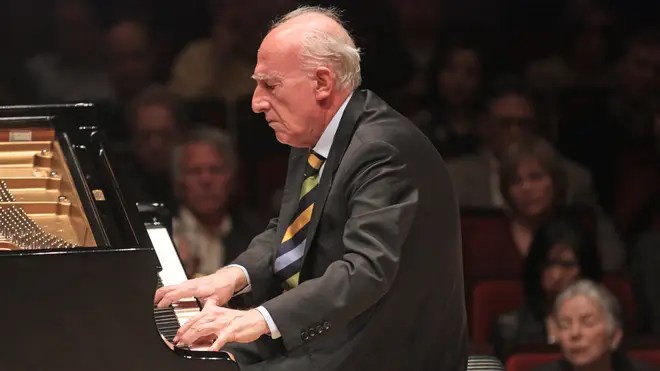
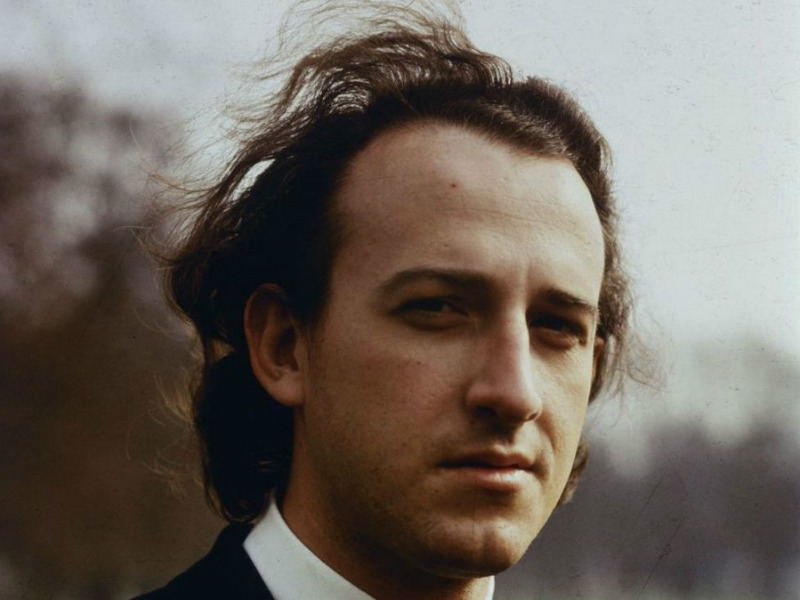
This tribute first appeared on Facebook. Thank you to François-Frédéric for allowing me to reproduce it here
Who or what inspired you to take up piano, and pursue a career in music?

My parents introduced me to several activities when I was very young; there was ballet and sports (I reached competition level in swimming). Music was already present in the house – my father was a surrealistic painter and always worked while listening to music in his studio. But it wasn’t until we visited a friend who owned a piano that the idea cthat I could start taking lessons came about.

Later on, growing up, I started making a selection, making my own choices. First, I decided to stop ballet in order to learn the violin. I was already leaning more towards music. But soon I realized that the piano was closer to my heart and my abilities, and at age 12 I told my parents I wanted to pursue music seriously.

Since then, and despite the many ‘detours’ and experiences I had – undergoing an academic course and taking a two-and-a-half-year break from music in my mid twenties –  an inner calling has always led me back to the piano and that motivated me to pursue a career in music. Intuitively, I understood that this professional path would satisfy the needs of my body, mind and soul at the same time. It is a balance of intellectual and manual work. Indeed, I perceive “art” in its full meaning, crystallized by the Ancient Greeks in the word τέχνη (technè), which gave our modern word “technique”, but, depending of the context, could signify both craft-like knowledge, skill and “art” – that is to say, the capacity to express emotions. Another ancient concept that I find particularly interesting to describe a musical career comes from Dionysius from Halicarnassus that talks about introducing “diversity into homogeneity”. What we do is every day the same,  it is never the same. The possibility to reinvent oneself daily and the freedom that it implies in music is something that I very soon understood I couldn’t live without.

Who or what have been the most important influences on your musical life and career?

I have always been in search of a mentor, and wasn’t fortunate enough to find one during my studies. Until recently I have been looking for someone to fit the role, and fate made me meet Jorge Luis Prats, who inspired me for years as a musician, and the polished the artist I wanted to be.

On a personal level, my father’s paintings, work ethic and dedication to art and beauty have been a huge influence in my approach to music. My mother’s sensibility and at the same time practicality helps me to look at the bigger picture whenever I tend to get stuck in small things and details, since I am an eternal perfectionist.

On a larger level, I want to stress that the other art forms have always been an influence on my musical life, and they help to nourish it. Amongst them, poetry – I write poetry myself in Italian, French and English – and dance, everything that has to do with the body’s movement, as for me music is movement, flow.

Nature too, as much as it inspired composers, is something I have to feel close to in order to create.

In the end, I was blessed by my father’s surrealistic philosophy and imagination, by the way he taught me to look at everything that surrounds me with a new and personal perspective, as a potential inspiration, to make it my own. And to take time. To be an observer and a listener. This are crucial components for me in order to be a good musician.

What have been the greatest challenges of your career so far?

Having access to a piano. Having access to a good piano. Nothing is more frustrating than when you want to play or have to practice and you can’t.

Evolving in a very conventional and constrained world – especially in today’s music education system – when you are different and your approach is unconventional. So a real challenge was and is to make my path and my vision accepted and not to be judged for not having done or doing things that are “expected”. Being a free spirit in a way is a challenge in the “business”.

Accepting where you are, being patient in achieving your fullest potential and enjoying the process!

Which performance/recordings are you most proud of?

I can honestly say that I am never satisfied with a performance or recording. The ones that I am most proud would have to be the ones that involve the highest degree of challenge as this is a factor that helps me push my limits. As an example, a recent and improvised recording of 3 contemporary pieces by French composer Jean-Luc Gillet, during an artistic residency with him, done on an old 1984 Steinway that had a very uneven keyboard and piercing sound in the higher register and that hadn’t been played for 15 years. But at the same time that piano had a wonderful soul and sound signature. When I manage to reach new levels of interpretation on challenging instruments, that’s when I am most satisfied.

Which particular works do you think you play best?

It tends to change, as it is deeply connected with one’s maturity and knowledge of certain pieces. But in general, the repertoire that explores the sound possibilities of the piano. I have more a sonic approach to the piano than a technical one. That’s why the virtuoso repertoire doesn’t speak to me as much. I can’t really speak of particular composers or eras, rather a way of writing music. When I see a score, I know instantly if it is music that I will play well. And this goes from Rameau, Scarlatti and Bach, through Brahms, Rachmaninov to contemporary music. Piano is an instrument-orchestra, and I like to play the composers that best keep that in mind.

How do you make your repertoire choices from season to season?

My father always used to tell me that he had more ideas than he would ever have time during his life to paint them all. And he kept lists of all of them so he didn’t forget them and could come back to them later when he has the time or inspiration to accomplish them.

I feel the same about the pieces I want to perform. So I keep a list of composers and pieces that I discover year after year. And by looking at the list, I start creating connections. Sometimes it is between composers and then I would do some meticulous research to find the right pieces to put together. Sometimes, it is precisely while researching on a certain piece that I create connections with others I know or I read about those connections in the literature I am reading.

I particularly like to put unknown or forgotten pieces in my repertoire, and I love to collaborate with contemporary composers and premiere their works.

Do you have a favourite concert venue to perform in and why?

If I had the ideal concert venue, I know I wouldn’t feel the same in it twice. Acoustics are a very subtle matter. They can significantly change between a rehearsal when the hall is empty and the actual performance, where the filling of the hall with members of the audience can sometimes drastically modify your perceptions. For me it is also a matter of having or creating the right energy. Some venues have better “energies” than others, but the audience’s energy is equally important, no matter where you perform. In the end, because these are all factors that you can’t control, I’d like to think that the best concert venue has to be in the musician’s mind, in a process that is close to what Glenn Gould described in the way that you have to recreate a “good piano” conditions in your mind when you have to play on a not so good instrument.

Who are your favourite musicians?

Those who are passionate and have a “signature sound”. But in order to keep an interpretative authenticity, I don’t listen to classical pianists too much. I am fascinated by some conductors – Kurt Masur, Seiji Ozawa, Herbert von Karajan, Zubin Mehta, Lorin Maazel…

Outside the classical world, amongst the ones that I keep going back to and that have emerged as inspirational figures, I would like to mention: Aziza Mustafa Zadeh, jazz pianist, Estrella Morente, flamenco singer, Hayley Marie, lead vocalist of Australian indie rock band “The Jezabels”, the rock band “Dream Theater”, Lisa Gerrard, Rodrigo Costa Felix, fado singer, and many others…

What is your most memorable concert experience?

One where I came out of my body and was able to watch myself perform from the outside, as if I was a spectator.

As a musician, what is your definition of success?

Not just as a musician, but as an artist, the greatest success is when you make the audience feel something, when you surprise them, touch them, and maybe, through your art, make them discover something about themselves; when they walk out of the concert hall and they are a new person; when your art has an impact on someone’s life and is able to bring hope.

What do you consider to be the most important ideas and concepts to impart to aspiring musicians?

Humbleness. To be aware that everything has already been created, and the only approach possible to art is by being true to yourself and authentic.

And to not be afraid to question yourself and not always find the answers. And to take time. Even time off, if needed. Sometimes taking a break will make you evolve much faster afterwards.

Of course, as in all classical disciplines, an almost sacred devotion to music is necessary in order to do it justice (from work ethic and rigour, to the life sacrifices that a musical career involves, to achieving a mind, body and spirit balance…)

And to be smart. You are who you are without all the expectation and pressure or the perspective of what people think of you. Taking all that aside and really homing in on who you are and embellishing it with your craft is the way to go.

Where would you like to be in 10 years’ time?

I live in the moment, and try to be as “present” as possible. I live from day to day and can’t see myself a week from now, let alone 10 years in the future!

What is your idea of perfect happiness?

To be at peace with oneself. Live life to its fullest without having any regrets.

What is your most treasured possession?

My parents’ handwritten notes.

What is your present state of mind?

I am constantly in a meditative state of mind, with a flow of different thoughts in it.


Ida Pellicioli’s website

Who or what inspired you to take up the piano and pursue a career in music?

I was born into a family of musicians, all quite normal. I do not remember any particular choice but of course many of my ideas and beliefs on how to live with music come from mutual and significant experiences like the traditional band, which is very important in the south of Italy, or watching the day-to-day activities of my brothers (both brass players) of practicing and much music making with other musicians, and so a great deal of chamber music.

Who or what were the most important influences on your musical life and career?

In the first instance my parents. Later on, having understood the meaning of the word “influence”, it was my guide to many choices. My enthusiasm, my curiosity and my views are a combination of continual searching and outside influences from people, books, events or encounters. That is why I think a young person should be more worried about the things that surround them; a choice that needs great care. The objectives are continually changing and will come naturally. I can only name my teacher Maestro Franco Scala as a major influence; also  the composer Marco Di Bari and the singer Alda Caiello, amongst many other artists.

What have been the greatest challenges of your career so far?

I do not see my career as a game or a challenge. That does not mean I do not have goals to dedicate myself to or do not set myself challenges. I have many challenges with myself but not with others. For now, I must say that, having understood what I am not and having had to accept it can be very tiring. Where it will take me to is something still to be seen….

Which performance/recordings are you most proud of?

I cannot really say but to have played the two Ravel Concertos in one evening was certainly something to remember.

Which particular works do you think you perform best?

I have a particular penchant for French music of the last century – e.g. Poulenc, Ravel, Debussy, Messiaen etc.

How do you make your repertoire choices from season to season?

No precise rule; it just happens that a programme is born from an idea or taking a specific line, but on many occasions it is also the exact opposite. Playing a lot of chamber music, it is easy to discover something new and to include those composers in my solo repertoire.

Do you have a favourite concert venue to perform in and why?

Not really. I have played many times in La Fenice Theatre in Venice. I love the city and I feel at home in its theatre.

Who are your favourite musicians?

There are many and a lot are still performing today

What is your most memorable concert experience?

I think my debut at 17 in the Konzerthaus in Berlin. I was very excited.

What do you consider to be the most important ideas and concepts to impart to aspiring musicians?

To feel your own dreams and your own music as an act of generosity. Not to feel yourself as a “son” or “daughter” of the music awaiting gifts and unconditional love, but on the contrary to be yourself the creator of that sincere love and insight of which music is in much need.

André Gallo performs in Manchester Camerata UpClose: The Next Generation at Stoller Hall, Manchester on 4th October 2018. More information

Mozart Sonata for Two Pianos in D major K. 448

Schumann Andante and Variations in B flat major WoO 10

Saint-Saëns Carnival of the Animals

Piano Galla Chistiakova

Piano André Gallo

Manchester Camerata Principal Musicians


For this concert, I exchanged the deep red plush seats of London’s Wigmore Hall for my first visit to Plush Festival, held in the tiny village of Plush, deep in Thomas Hardy country in Dorset. Here in 1995, far from the madding crowd, Adrian Brendel established the festival in a spirit of collaboration and shared music-making. A deconsecrated church, which sits in the arcadian grounds of Plush Manor (bought by the Brendel family in the early 1990s as a bucolic retreat) is the venue for the concerts. Its generous acoustic and small size make it perfect for intimate chamber music and solo recitals; in addition, visitors may sit in on open rehearsals.

I’d known about the village of Plush (the pub, the Brace of Pheasants does a good Sunday lunch) and the Brendel connection for years, but this was my first visit to the Festival – part of my determination to seek out quality classical music in Dorset, my new home since I moved from London in May.

The drive to Plush suggests one is entering a special place. Leaving Dorchester (Hardy’s “Casterbridge”), I left the A-road and passed through the villages of Piddletrenthide and Piddlehinton (“Longpuddle”). Then a sharp right turn and up a steep hill and there was a sign to Plush Festival, guiding the way. The village is chocolate-box-pretty, with the pub at its heart. The signs to the festival pointed beyond the centre of the village and a winding, tree-lined lane takes you into the grounds of Plush Manor. A helpful gentleman guided me to park my car in an adjacent field and asked if I’d been to Plush before.

Outside the church, small groups of people lolled in foldout camping chairs or lounged on picnics rugs. Some were even enjoying a picnic ahead of the concert. A small bar offered wine, prosecco and soft drinks, and there was a bunting-draped stall next door selling CDs. The murmur of conversation was accompanied by birdsong. A friend texted (before my mobile reception disappeared) to say he was at Glyndebourne for the afternoon, and I thought there was a touch of the Glyndebourne experience, in microcosm, at Plush – though minus the dinner jackets: people were dressed casually. After all, this was a lunchtime on a sunny Saturday in August…..

10567-b5caaf2a50ce50da7f81d22244175770The soloist for this concert was Filippo Gorini, a prize-winning young Italian pianist. His programme was unexpected for a weekend lunchtime recital – Schumann’s Geistervariationen (“Ghost” Variations) and Beethoven’s mighty Hammerklavier Sonata – but Kat Brendel, Festival Director, told me afterwards that this was “the programme he wanted to play”. It proved a bold and successful choice.



Schumann composed his Ghost Variations in 1854, shortly before he was committed to a mental asylum. It was his final piece, dedicated to his beloved Clara, and the work is freighted with melancholy and tenderness. Filippo Gorini caught the tragic intensity and intimate poignancy of the work. Understated, elegant and restrained, one felt Gorini fully appreciated that Schumann is a composer who wears his heart on his sleeve; the final variation ended on a whisper, with Gorini allowing the sound to fade into the stillness of the church.

Beethoven, by contrast, is at his most declamatory in the Hammerklavier Sonata, which opens with a daring leap across the keyboard and a rollicking fanfare motif. This was masterfully shaped by Gorini who brought energy and vivid colour to the music. At its heart is the Adagio, a huge slow movement of infinite serenity and profundity which in Gorini’s hands felt like a stand-alone piece of music. Time was suspended, and while a butterfly fluttered, agitato, around the church, nothing could break Gorini’s concentration – nor the audience’s (who were as committed as any Wigmore audience). This movement, played with an intense concentration which echoed Gorini’s sensitive approach to the Schumann, has an almost Schubertian harmonic trajectory and introspection, with the improvisatory qualities of a Chopin Nocturne. Out of this other-worldly space came a finale of restless physicality.

Chatting afterwards, I mentioned to one audience member that I felt Gorini had the ability to make one forget a pianist was actually present during the performance. It’s a rare talent, and his lack of ego or unnecessary gesture undoubtedly contributed to this impressive performance.

If you think great music is only to be found in the metropolis, think again: Sir Andras Schiff returns to Plush Festival tomorrow for a sold out concert, and past seasons have enjoyed performances by Paul Lewis and Till Fellner.


This years Plush Festival continues from 14-16 September. Full details here


Header image: courtesy of Plush Manor