If you haven’t yet discovered the delightful gem that is the 1901 Arts Club, now is the time to do so….
7 Star Arts present a trio of concerts at the 1901 Arts Club this autumn featuring leading musicians, including pianist Viv McLean and up-and-coming soprano Sofia Kirwan-Baez, in a range of imaginative programmes of music from Nadia Boulanger to George Gershwin and Benjamin Britten – and much more besides. These concerts are in support of English National Opera’s Benevolent Fund
Housed in a converted schoolmaster’s house a stone’s throw from Waterloo Station, the 1901 Arts Club is an intimate, convivial chamber music venue whose ethos, ambiance and decor is inspired by Europe’s ninteenth-century Salon culture. It’s the perfect place to enjoy music with friends, and it boasts an elegant upstairs bar for pre- and post-concert socialising. And at these concerts with 7 Star Arts, you’ll have the chance to meet the artists as well.
Tuesday 24 September HIDDEN GEMS OF FRENCH SONG with Sofia Kirwan-Baez
Hotfoot from her recent appearance at Longborough Festival Opera, soprano, pianist and songwriter Sofia Kirwan-Baez takes you on a journey through French song, from Nadia and Lilli Boulanger to Edith Piaf and Barbara. Plus a few surprises along the way…
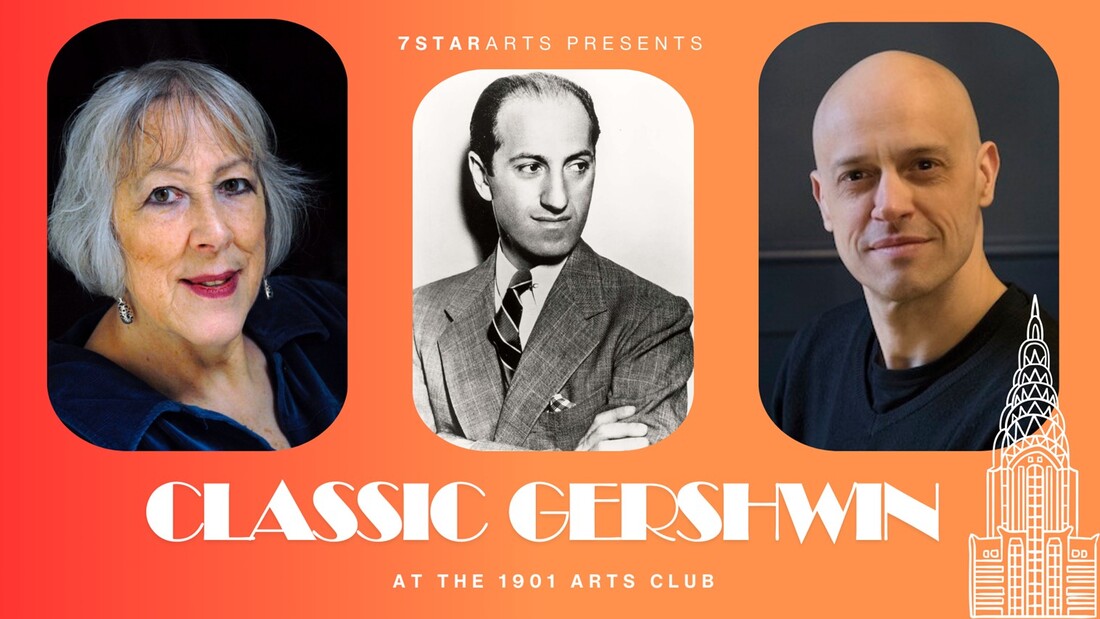
Wednesday 4 December CLASSIC GERSHWIN with VIV McLEAN piano & SUSAN PORRETT narrator
7 Star Arts most popular words and music production makes its 1901 Arts Club debut. This “glorious celebration of Gershwin’s life and music” weaves the vibrant music of the ever-popular composer with his fascinating life story from birth in the colourful, teeming New York of 1898 to his tragically early death in 1937. Programme includes Gershwin favourites The Man I love and Rhapsody in Blue as well as lesser-known works.
I will never forget a concert I attended in the mid-1980s in a tiny Medieval church in Zadar, a small seaside town in former Yugoslavia. Amidst the ancient stone pillars and arches, a string quartet played music by Beethoven and Schubert, lit only by the waning evening sun and, later, candles.
In the realm of live music, small concert venues serve as magical spaces to create a unique connection between performers and audiences. While grand concert halls have their place, it is within the intimate confines of these smaller places that a profound and transformative musical and emotional experience unfolds.
Such places are often not purpose-built music venues but simply small spaces which lend themselves to a more intimate concert experience. They may be converted churches, a former school house (the 1901 Arts Club in London, for example), a café, a river barge, or even someone’s home. Music presented in such settings is also a reminder of how music was performed up until the mid-19th century, when performers like Franz Liszt and Clara Schumann transformed the intimate concert to the rather grander, large-scale affair which we understand today.
1901 Arts Club
Treehouse Shoreditch
Steven Isserlis at Fidelio Orchestra Cafe
Small venues provide an unparalleled level of intimacy that is often absent in larger venues. The close proximity of the audience allows for a more immediate and personal connection between performers and listeners. Musicians can see and feel the energy of the listeners, creating a symbiotic relationship where the audience’s response fuels the performer’s passion. This intimate connection can foster a sense of vulnerability and authenticity, enhancing the overall experience for both parties.
In smaller concert venues, performers have the freedom to express themselves authentically and with spontaneity. These venues often attract artists who prioritize creative exploration and experimentation over commercial success. Artists feel more comfortable taking risks and showcasing their true artistic vision, as they are performing for a receptive and engaged audience who appreciates the rawness of their craft. The absence of overwhelming production elements, such as special lighting or stage-setting, encourages musicians to rely on their talents and ability to communicate which creates a genuine and organic musical experience.
For the audience, there is a heightened sense of engagement: they are not mere spectators but active participants in the unfolding narrative of the performance with more direct interaction with the musicians, a non-verbal ‘conversation’, as it were, which creates a sense of community and shared experience that is deeply gratifying for both performers and audiences alike. Audiences can get ‘up close and personal’ with music and musicians, watching the musicians interact with one another through eye contact and gestures, and actually witnessing music being created ‘in the moment’.
Small concert venues can also act as breeding grounds for emerging artists and composers, and the discovery of new, lesser-known or rarely-performed repertoire. These intimate spaces provide a platform for performers to showcase their talent and gain exposure. Audiences, in turn, have the opportunity to discover hidden gems and witness the growth of rising stars firsthand. The sense of discovery and being part of an artist’s journey adds an element of excitement and exclusivity that is often absent in larger or more commercial venues.
Smaller venues are often less formal than the grand concert hall, making them ideal places for newcomers to classical music to explore the artform, free of anxieties about what to wear, when to applaud, and other niceties of concert etiquette. These spaces often provide opportunities for audience members to meet the artists after the performance and to mingle with other music-lovers.
Above all, the atmosphere in a small venue can be truly memorable. The intimate setting creates a special ambiance of a shared, often transformative or immersive experience that resonates long after the performance ends.
If you enjoyed this article and would like to support this site, why not
The Cross-Eyed Pianist is free to access and ad-free, and takes many hours every month to research, write, and maintain.
If you find joy and value in what I do, please consider making a donation to support the continuance of the site








 The Cross-Eyed Pianist